Background: Heart rate variability (HRV) is the fluctuation of heart rhythm between two consecutive beats. It reflects the autonomic control of the heart, which is also influenced by physical activity. Objective: Thus, the objective of our study was to investigate the HRV of Senegalese football players. Methods: This was a cross-sectional and descriptive study based on the analysis of HRV of Senegalese footballers at rest, during orthostatic, the Ruffier test and its recovery using a Schiller AR4Plus® brand holter EKG. HRV parameters in the temporal and frequency domains were used, as well as cardiac adaptation indices during the Ruffier test. Data were analyzed using R software version 3.4.2. Results: A total of 32 players, all male, were explored. Majority of them had resting sinus bradycardia and cardiovascular adaptation was considered normal for all players according to the Ruffier index. Parasympathetic tone, as measured by RMSSD, pNN50 and HF.nu, was normal or elevated at rest and decreased in orthostatic and during the Ruffier test, but increased during recovery. Whereas sympathetic tone, explored by LF.nu and the LF/HF ratio, was low or normal and evolved in the opposite direction. Good cardiovascular adaptation was linked to good resting variability. Conclusion: Football players had a good total HRV of rest and responded normally to stress and recovery. Their cardiovascular adaptation is linked to overall variability.
This is an Open Access article, distributed under the terms of the Creative Commons Attribution 4.0 International License (http://creativecommons.org/licenses/by/4.0/), which permits unrestricted use, distribution and reproduction in any medium or format, provided the original work is properly cited.
Heart Rate Variability, Football Players, Ruffier Test
1. Introduction
Heart rate variability (HRV) is the fluctuation of heart rate over time between two consecutive beats. Indeed, in a normal subject, the time between heartbeats is not absolutely regular. It depends primarily on the extrinsic regulation of heart rate. This HRV is supposed to correspond to the balance between sympathetic and parasympathetic influences, as well as hormonal influences, on the rhythm of the sinoatrial node
[1]
Rajendra Acharya U, Paul Joseph K, Kannathal N, Lim CM, Suri JS. Heart rate variability: a review. Medical & biological engineering & computing 2006; 44(12): 1031-51. 2006/11/18.
. It is also influenced by several factors such as the degree of physical training, mental stress
[2]
Rohleder N, Wolf JM, Maldonado EF, Kirschbaum C. The psychosocial stress-induced increase in salivary alpha-amylase is independent of saliva flow rate. Psychophysiology 2006; 43(6): 645-52. 2006/11/02.
and certain physiological situations such as breathing, variations in blood pressure and circadian rhythm
[3]
Shaffer F, McCraty R, Zerr CL. A healthy heart is not a metronome: an integrative review of the heart's anatomy and heart rate variability. Frontiers in psychology 2014; 5: 1040. 2014/10/18.
. Other factors such as dietary habits and smoking also interfere with the heart's autonomic control
[4]
Cagirci G, Cay S, Karakurt O, et al. Influence of heavy cigarette smoking on heart rate variability and heart rate turbulence parameters. Annals of noninvasive electrocardiology: the official journal of the International Society for Holter and Noninvasive Electrocardiology, Inc 2009; 14(4): 327-32. 2009/10/07.
. This HRV therefore constitutes a quantitative marker of cardiac control, which is essentially carried out by the autonomic nervous system (ANS)
[5]
Heart rate variability. Standards of measurement, physiological interpretation, and clinical use. Task Force of the European Society of Cardiology and the North American Society of Pacing and Electrophysiology. European heart journal Guideline Practice Guideline 1996; 17(3): 354-81.
[5]
.
HRV can be measured by a lot of maneuvers. Currently, many methods allow the assessment of HRV by continuous recording of heart rhythm
[6]
Schuurmans AAT, de Looff P, Nijhof KS, et al. Validity of the Empatica E4 Wristband to Measure Heart Rate Variability (HRV) Parameters: a Comparison to Electrocardiography (ECG). Journal of medical systems 2020; 44(11): 190. 2020/09/24.
. Akselrod et al. in 1981 were the first to propose this test to quantify the heart control by the ANS
[7]
Akselrod S, Gordon D, Ubel FA, Shannon DC, Berger AC, Cohen RJ. Power spectrum analysis of heart rate fluctuation: a quantitative probe of beat-to-beat cardiovascular control. Science (New York, NY) Research Support, Non-U S Gov't Research Support, U S Gov't, Non-P H S 1981; 213(4504): 220-2.
[7]
. This test can be performed on a short-term or long-term ECG recording of up to 24 hours. It allows monitoring of the evolution of HRV parameters during maneuvers exploring the different branches of the ANS. Usually, HRV recordings are performed at rest in supine or orthostatic position. Given that during orthostatic position or on physical activity, the influence of the sympathetic system is accentuated.
In top athletes, parasympathetic nervous system cause resting sinus bradycardia
[8]
McCorry LK. Physiology of the autonomic nervous system. American journal of pharmaceutical education 2007; 71(4): 78. 2007/09/06.
through its cardio-moderating effect. This later gives of athletes an increase of their cardiac reserve, thus enabling them to improve their performance during exercise. At the same time, regular physical activity also improves heart performance by increasing its preload and inotropism both at rest and during exercise. All these modifications fall under the umbrella of the "athlete's heart". These modifications vary according to genetic predisposition, type of sport, sex, and ethnic origin
[9]
Carre F. Qu’est ce qu’un cœur d’athlete. Arch Mal Coeur Vaiss 2006; 99(11): 951-4.
[10]
Bouchard C, Rankinen T. Individual differences in response to regular physical activity. Medicine & Science in Sports & Exercise 2001; 33(6): S446-S51.
[9, 10]
.
Although there are notable physical and physiological differences between athletes training for different sporting activities
[11]
Bosquet L, Papelier Y, Leger L, Legros P. Night heart rate variability during overtraining in male endurance athletes. The Journal of sports medicine and physical fitness 2004; 43: 506-12.
[11]
, HRV is becoming one of the most widely used training and recovery monitoring tools in sports science
[12]
de Oliveira Ottone V, de Castro Magalhães F, de Paula F, et al. The effect of different water immersion temperatures on post-exercise parasympathetic reactivation. PloS one 2014; 9(12): e113730. 2014/12/02.
Plews DJ, Laursen PB, Stanley J, Kilding AE, Buchheit M. Training adaptation and heart rate variability in elite endurance athletes: opening the door to effective monitoring. Sports medicine (Auckland, NZ) 2013; 43(9): 773-81. 2013/07/16.
. Indeed, playing football, a sport with a strong dynamic component, will lead to changes affecting the influence of the autonomic nervous system on cardiovascular and respiratory functions.
[14]
Dimitros ET, Koutlianos NA, Anifanti M, Kouidi EI, Deligiannis AP. Comparative study of cardiorespiratory adaptations in elite basketball players of different age groups. The Journal of sports medicine and physical fitness 2021; 61(9): 1193-201. 2020/12/04.
Thus, the objective of our study was to investigate heart rate variability of Senegalese football players.
2. Methods
A descriptive cross-sectional study was conducted among Senegalese footballers playing for the Camberene Sport Association (AS) of football team, a Senegalese League 2 club. Measurements of physiological parameters were taken during the period from September to October 2024. The manipulations took place at the Camberene Health Centre in Dakar City. The data analysis was done at the Laboratory of Physiology and Functional Explorations of the Faculty of Medicine, Pharmacy and Odontostomatology (FMPOS) of the Cheikh Anta Diop University (UCAD) of Dakar.
2.1. Population
The study focused on players from the football team of the AS Camberene. Included in this study were all male players with a senior or junior level license playing for AS Camberene. We excluded any player who met the criteria but had not given their free and informed consent or who presented a non-sinus heart rhythm on EKG.
Protocol
After receiving the player, we explain to him the different measures he will have to undergo after a rest of at least 15 minutes.
Measurement of anthropometric data
Anthropometric parameters such as the body weight of our football players, which was measured using a MyScale® brand bioimpedance analyzer after the subject's height and age were entered into the Fitdays software. The body mass index obtained was then classified according to reference standards
[15]
Cole TJ, Lobstein T. Extended international (IOTF) body mass index cut‐offs for thinness, overweight and obesity. Pediatric obesity 2012; 7(4): 284-94.
[15]
.
Measurement of HRV parameters
HRV data were collected in an air-conditioned room with an ambient temperature around 24°C, in subjects lying supine for 10 minutes on an examination table, then standing for 7 minutes and during a Ruffier test and its recovery. This Ruffier test was carried out after having the player sit for about two minutes after the 7 minutes in a standing position. Next, we ask him to perform 30 squats in 45 seconds to the rhythm of a metronome. Heart rate was measured at rest (P1), immediately after the test (P2), and after one minute of recovery (P3), and the Ruffier index was then calculated according to the proposed formula by Dickson et al. in 1950
[16]
Dickson J. Utilisation de l’indice cardiaque de Ruffier dans le controle medico-sportif. Med Educ Phys Sport 1950; 2: 65.
[16]
. Thus, throughout this entire period of manipulation, a continuous recording of the heart's electrical activity was made using a Schiller AR4Plus® Holter EKG. The duration of the RR intervals was then exported in text format (.txt) by the Medilog Darwin software and imported into the Kubios HRV Standard software. These different maneuvers allowed us to collect the HRV parameters in supine and orthostatic position, during Ruffier and recovery. Thus, HRV parameters of the temporal domain (RR interval (RR), heart rate (HR), "Standard Deviation of the NN interval" (SDNN), "Square Root of the Mean Squared Differences of Successive NN intervals" (RMSSD) and "Percentage of pairs of adjacent NN intervals that differ by more than 50 ms in the entire recording" (pNN50) and frequency domain (total power (TP), low frequencies (LF) and high frequencies (HF) in ms² and in "normalize unit"; and the LF/HF ratio) were collected over 5-minute time intervals in both supine and orthostatic positions. These same parameters were then collected over the 45 seconds of Ruffier's test and during the first minute of recovery. A classification of its parameters was then carried out according to the reference standards proposed by Sammito et al. in 2016
[17]
Sammito S, Böckelmann I. Reference values for time- and frequency-domain heart rate variability measures. Heart rhythm 2016; 13(6): 1309-16. 2016/02/18.
Data entry was done using Excel version 2019. The data was analyzed using R software version 3.4.2. The Kolmogorov-Smirnov test was used to investigate whether the variables followed a normal distribution. Parameters that followed the normal distribution were expressed as mean ± standard deviation, while others were expressed as median (Interquartile or IQ). The ANOVA test was used to compare the means of parameters following the normal distribution, while the non-parametric Wilcoxon test was used to compare non-Gaussian parameters. Research of link between parameters was studied using Pearson correlation. The graphs were created using GraphPad Prism 5 and R software. The significance threshold was set at p < 0.05.
3. Results
A total of 32 football players, all male, playing for AS Camberene, were recruited for our study. Physiological parameters had been measured for all players.
3.1. Anthropometric Data
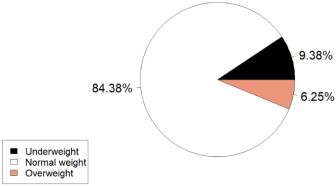
The average age of our football players was 24 ± 3.5 years with extremes ranging from 17 to 32 years. Mean dody mass index was 20.97 ± 2.67 kg/m² with extremes between 16.31 and 29.17 kg/m². Figure 1 represents the proportion of the different BMI classes found in our study population.
Figure 1. Distribution of BMI classes in our study population.
Analysis of this Figure shows that subjects with a normal BMI were significantly more numerous in our study population (p<0.001). However, no cases of obesity were found. We subsequently studied the cardiovascular adaptation of the players.
3.2. Cardiovascular Adaptation
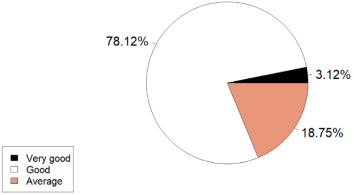
The mean of the Ruffier index was 3.6 ± 1.88 with extremes ranging from 0 to 8.8. The classification of players’ adaptability according to reference standards is shown in Figure 2.
Figure 2. Distribution of players according to cardiovascular adaptation by Ruffier index.
Analysis of this Figure shows that the vast majority of players had good cardiovascular adaptation to exertion as measured by the Ruffier index. This cardiovascular adaptation was considered normal for all players.
3.3. Heart Rate Variability Parameters
Temporal domain
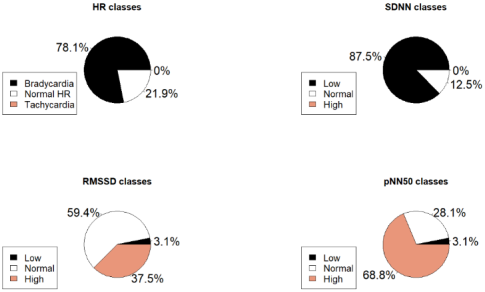
Figure 3 represents the classification of the different parameters of the resting time domain. in our players.
Figure 3. Repartition of our study population according to rest time domain values.
Analysis of this Figure shows that at rest the majority of players presented with sinus bradycardia. However, SDNN was low for almost all players. Parasympathetic tone assessed by pNN50 and RMSSD was often normal or elevated at rest.
The time domain HRV parameters during the different conditions of the study were represented in Table 1.
Analysis of this table shows that all temporal domain HRV parameters varied significantly between supine position and other study conditions. Between orthostatic position and Ruffier test, heart rate increased in relation to the increased of sympathetic activity, while RMSSD and pNN50 decreased. During recovery, we observed a tendency towards reversal with an admittedly non-significant increase in parasympathetic tone.
Table 1. Time domain HRV parameters between different conditions.
Lying
Standing
Ruffier
Recovery
p
N=32
N=32
N=32
N=32
RR (ms)
1069 ± 103
821 ± 110aaa
648 ± 59,2aaabbb
624 ± 62,4aaabbb
<0.001
SDNN (ms)
64.4 ± 30.5
51.4 ± 14.6a
42.1 ± 12.3aaa
35.3 ± 14aaab
<0.001
HR (bpm)
56.6 ± 5.58
74.3 ± 9.84aaa
93.4 ± 8.54aaabbb
97.1 ± 9.73aaabbb
<0.001
RMSSD (ms)
85.8 ± 49.2
40.2 ± 21.9aaa
33.5 ± 14.1aaa
36.9 ± 18.9aaa
<0.001
pNN50 (%)
48.3 ± 25.8
17.5 ± 16.8aaa
9.91 ± 6.4aaa
13 ± 10.3aaa
<0.001
RR: RR interval; SDNN: Standard Deviation of the NN interval; RMSSD: Square Root of the Mean Squared Differences of Successive NN intervals; pNN50: Percentage of pairs of adjacent NN intervals that differ by more than 50 ms in the entire recording
a: Lying vs Standing, Ruffier, Recovery; b: Standing vs Ruffier, Recovery; c: Ruffier vs Recovery
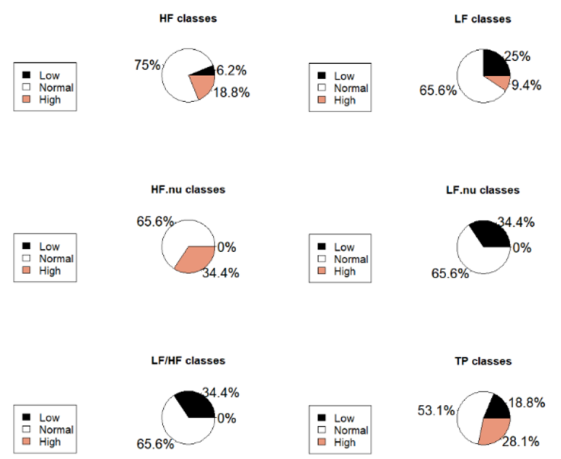
Figure 4. Repartition of study population according to classes of resting HRV parameters of frequency domain.
Analysis of this Figure shows that parasympathetic tone, especially HF.nu, was normal or elevated for all players, with normal or low resting sympathetic tone, especially LF.nu.
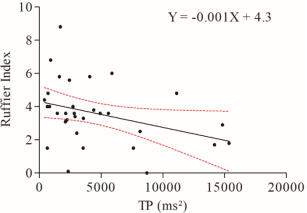
Resting total power was correlated with the Ruffier index, and the results are shown in the Figure below.
Figure 5. Correlation between Ruffier index and TP.
Analysis of this Figure shows that the Ruffier index was negatively correlated with total power (r = -0.35; p = 0.04). That is to say, the Ruffier index is better if the total power or overall variability is better.
The variation of the frequency domain HRV parameters during the different physiological conditions was shown in Table 2.
Analysis of this table shows that the majority of the parameters studied varied significantly between the supine position and the other times of the study. The powers in ms² decreased from supine to Ruffier test. Normalized values better explain the evolution of vegetative tone during stress. Indeed, parasympathetic tone via HF.nu decreased from supine position to Ruffier and then began to increase in the first minute of recovery. Whereas sympathetic tone by LF.nu and sympathovagal balance by LF/HF evolved differently at HF.nu.
Table 2. Evolution of HRV parameters of the frequency domain during the different conditions.
Lying
Standing
Ruffier
Recovery
p
N=32
N=32
N=32
N=32
VLF (ms²)
179 ± 258
133 ± 96.7
422 ± 316aabbb
136 ± 171ccc
<0.001
LF (ms²)
1719 ± 2070
1450 ± 956
454 ± 509aab
522 ± 511aab
<0.001
HF (ms²)
2587 ± 2623
572 ± 678aaa
117 ± 169aaa
366 ± 423aaa
<0.001
LF (n.u.)
44.6 ± 18.9
75.8 ± 16.8aaa
81.2 ± 12.4aaa
58.2 ± 19.4abbccc
<0.001
HF (n.u.)
55.3 ± 18.8
24.2 ± 16.8aaa
18.7 ± 12.3aaa
41.6 ± 19.3abbccc
<0.001
TP (ms²)
4491 ± 4237
2156 ± 1370aa
994 ± 822aaa
1024 ± 922aaa
<0.001
LF/HF
1.08 ± 0.9
5.96 ± 5.63a
8.82 ± 10.4aaa
2.22 ± 2.12cc
<0.001
VLF: Very Low Frequencies; LF: Low Frequencies; HF: High Frequencies; nu: Normalize unit; TP: Total Power
a: Lying vs Standing, Ruffier, Recovery; b: Standing vs Ruffier, Recovery; c: Ruffier vs Recovery
Football is a sport with a strong dynamic component and physiological adaptations characterized, among other things, by an increased resting parasympathetic tone. This will lead to a decrease in resting heart rate with an increase in their cardiac reserve during physical activity. This is how we set ourselves the objective of studying the variability of resting and activity heart rate of football players from AS Camberene. Physiological parameters were explored and analyzed. The results showed: 1) resting bradycardia was found in the majority of players; 2) cardiovascular adaptation was normal for all players; 3) global resting variability was normal and related to the Ruffier index; 4) an appropriate response of the sympathetic and parasympathetic systems to the passage of different physiological circumstances.
The majority of our players presented with resting bradycardia. This result is consistent with those of other previous studies. Indeed, Azevedo et al.
[18]
Azevedo LF, Brum PC, Rosemblatt D, et al. Cardiac and metabolic characteristics in long distance runners of sport and exercise cardiology outpatient facility of a tertiary hospital. Arquivos brasileiros de cardiologia 2007; 88(1): 17-25. 2007/03/17.
had found a prevalence of sinus bradycardia of approximately 80% in athletes training in endurance. In Senegal, Ba et al.
[19]
Ba A, Sow A, Ouedraogo V. Resting electrocardiogram of top athlete: comparative study between football players and wrestlers in Senegal. J Physiol Pharmacol Adv 2015; 5(8): 1.
[19]
in 2015 found a prevalence of 55.34% of sinus bradycardia in their population of Senegalese footballers. Their study focused on professional players, some of whom played for the Senegalese national team. However, our study found a higher rate of resting sinus bradycardia compare to them. This difference could be methodological. Indeed, Ba et al.
[19]
Ba A, Sow A, Ouedraogo V. Resting electrocardiogram of top athlete: comparative study between football players and wrestlers in Senegal. J Physiol Pharmacol Adv 2015; 5(8): 1.
[19]
obtained their heart rate from a resting ECG tracing unlike our study where it was measured over a 5-minute interval in a 10-minute recording in supine position. Thus, our results show that the majority of our players had developed physiological adaptations resulting in sinus bradycardia at rest, indicative of high resting parasympathetic tone. This high frequency of sinus bradycardia could also explain the cardiovascular adaptation to exertion, judged by the Ruffier index to be normal.
At rest, our players had good heart rate variability, with TP values that were mostly normal or high. Resting parasympathetic tone was also normal or elevated. Indeed, pNN50, RMSSD, HF, and HF.nu were normal or elevated for the majority of players. Whereas sympathetic tone (LF.nu) was either normal or low at rest in our players. In the scientific literature, few studies have classified resting HRV data from athletes according to reference standards. However, these results seem to explain the adaptations to exercise of the autonomic nervous system destined for the heart. Indeed, elite athletes are characterized at rest by high parasympathetic tone. This is due to the pronounced cardioinhibitory action of the vagus nerve
[20]
Corrado D, Pelliccia A, Heidbuchel H, et al. Recommendations for interpretation of 12-lead electrocardiogram in the athlete. European heart journal 2010; 31(2): 243-59. 2009/11/26.
. This action explains the normal or high values noted for the parameters exploring the parasympathetic system and the decrease in sympathetic tone. This finding revealed that the values of the LF/HF ratio or sympathovagal balance were low or normal. Thus, the athlete at rest should have low values of pNN50, RMSSD, HF and HF.nu with a decrease in LF and LF.nu.
During the installation of mild stress such as the transition to orthostatism or moderate stress such as during the Ruffier test, we noted a decrease in parasympathetic tone associated with an increase in sympathetic tone. This increase in sympathetic tone was very marked when moving into an orthostatic position, where the LF increased considerably. However, during the Ruffier test, the increase in sympathetic tone was more marked on LF.nu or on the LF/HF ratio. This improved sensitivity of LF.nu or of the LF/HF ratio to effort was reported by Pagani et al.
[21]
Pagani M, Lombardi F, Guzzetti S, et al. Power spectral analysis of heart rate and arterial pressure variabilities as a marker of sympatho-vagal interaction in man and conscious dog. Circulation research 1986; 59(2): 178-93. 1986/08/01.
in 1986. These authors have shown that to control for decreases in TP, LF and HF in response to exercise, it is more appropriate to report LF and HF in.nu and/or using the LF/HF ratio, which is considered a marker of sympathetic-vagal balance. Thus, when the sympathetic system is put into play, the modifications will be better appreciated by LF.nu and the LF/HF ratio. However, this increase did not allow all our players to have a high level of sympathetic tone. This last observation could be related to the intensity of the effort, which was not intense, but to its short duration of 45 seconds. All of these factors could mean that a well-trained athlete does not react very strongly to a lower intensity effort, hence the absence of a very significant increase in LF.nu in some players.
When this stress tends to decrease, such as during recovery where sympathetic tone should begin to decrease at the expense of parasympathetic tone. Our results also showed a more marked increase in HF.nu associated with a decrease in LF.nu. However, time domain HRV parameters such as pNN50 and RMSSD did not significantly increase during recovery. Note that the Ruffier test and its recovery are short in duration, and this may explain the low variability observed. The kinetics of recovery vary with the intensity and duration of physical exercise. Indeed, Heffernan et al.
[22]
Heffernan KS, Kelly EE, Collier SR, Fernhall B. Cardiac autonomic modulation during recovery from acute endurance versus resistance exercise. European journal of cardiovascular prevention and rehabilitation: official journal of the European Society of Cardiology, Working Groups on Epidemiology & Prevention and Cardiac Rehabilitation and Exercise Physiology 2006; 13(1): 80-6. 2006/02/02.
found a greater reduction in HF power, 25 minutes after a short resistance exercise compared to an aerobic exercise. Chen et al.
[23]
Chen JL, Yeh DP, Lee JP, et al. Parasympathetic nervous activity mirrors recovery status in weightlifting performance after training. Journal of strength and conditioning research 2011; 25(6): 1546-52. 2011/01/29.
had reported a significant decrease in HF contrasting with a significant increase in LF.nu after a short duration resistance exercise session in healthy young men trained in resistance. The differences found compared to our study could be explained by the fact that these authors had explored healthy and trained subjects. In our study, the subjects were athletes playing football. This meant that athletes could show a progressive increase in their parasympathetic tone from the first minutes of recovery, unlike non-athletes. This is how Barak et al.
[24]
Barak OF, Ovcin ZB, Jakovljevic DG, Lozanov-Crvenkovic Z, Brodie DA, Grujic NG. Heart rate recovery after submaximal exercise in four different recovery protocols in male athletes and non-athletes. Journal of sports science & medicine 2011; 10(2): 369-75. 2011/01/01.
[24]
in 2011 found better recovery after 60 seconds in athletes compared to sedentary people who performed endurance exercise. Regular endurance physical activity therefore reduces the recovery time of heart rate after exercise, resulting in good cardiovascular adaptation.
This cardiovascular adaptation was also linked to the overall variability (PT) at rest. Our results had shown that the higher the TP, the better the Ruffier index and therefore the cardiovascular adaptation to exercise. The latter is given by the resting, physical activity and recovery heart rates, thus giving a kinetic profile of this parameter under the successive influence of parasympathetic and sympathetic tone. Indeed, previous studies had shown that regular physical activity lowers resting heart rate
[25]
Carter JB, Banister EW, Blaber AP. Effect of endurance exercise on autonomic control of heart rate. Sports medicine (Auckland, NZ) 2003; 33(1): 33-46. 2002/12/13.
and improves heart rate recovery after short-duration physical activity
[25]
Carter JB, Banister EW, Blaber AP. Effect of endurance exercise on autonomic control of heart rate. Sports medicine (Auckland, NZ) 2003; 33(1): 33-46. 2002/12/13.
Figueroa A, Baynard T, Fernhall B, Carhart R, Kanaley JA. Endurance training improves post-exercise cardiac autonomic modulation in obese women with and without type 2 diabetes. European journal of applied physiology 2007; 100(4): 437-44. 2007/04/05.
as in our study. These various modifications allow for low values of the Ruffier index calculated in athletes due to increased resting parasympathetic tone.
5. Conclusion
Regular football practice develops cardiovascular adaptations mediated by branches of the autonomic nervous system. The influence of the parasympathetic system will lead to an increase in parameters such as pNN50, RMSSD, HF and HF.nu. This influence will be manifested by a resting sinus bradycardia, falling within the framework of the "athlete's heart" syndrome. Thus, the athlete at rest, due to the influence of the parasympathetic system, exhibits increased overall variability. During stress, there will therefore be a reversal of the sympathovagal balance in the direction of the sympathetic. This will sometimes result in an increase in LF power, as during orthostatic recording of HRV over a period of at least 5 minutes. However, during short-duration physical activity such as the Ruffier test, LF.nu and the LF/HF ratio appear to be the best parameters to explore the increase in sympathetic tone. Indeed, during these short activities a decrease in overall variability will be noted and only the parameters resulting from the ratio between parameters measured at the same time better reflect the evolution of HRV. During recovery, these normalized parameters such as HF.nu and LF.nu, as well as the LF/HF ratio, better showed cardiovascular adaptations to exercise in the athlete. This good adaptation explains the increase in overall variability found at rest in athletes.
Abbreviations
HRV
Heart Rate Variability
RMSSD
Square Root of the Mean Squared Differences of Successive NN Intervals
pNN50
Percentage of Pairs of Adjacent NN Intervals That Differ by More Than 50 ms in the Entire Recording
LF
Low Frequencies
HF
High Frequencies
ANS
Autonomic Nervous System
FMPOS
Faculty of Medicine, Pharmacy and Odonstomatology
UCAD
Cheikh Anta Diop University
HR
Heart Rate
SDNN
Standard Deviation of the NN Interval
TP
Total Power
Acknowledgments
The authors would thank all patients who accepted to participate in the present study.
Author Contributions
Abdou Khadir Sow: Conceptualization, Data curation, Formal Analysis, Investigation, Methodology, Validation, Writing – original draft, Writing – review & editing
Cherif Ousseynou Laye Thiom: Investigation, Methodology, Writing– original draft
Mor Diaw: Conceptualization, Formal Analysis, Writing– original draft, Writing – review & editing
Fatou Kine Ndoye: Data curation, Formal Analysis, Investigation
Rajendra Acharya U, Paul Joseph K, Kannathal N, Lim CM, Suri JS. Heart rate variability: a review. Medical & biological engineering & computing 2006; 44(12): 1031-51. 2006/11/18.
Rohleder N, Wolf JM, Maldonado EF, Kirschbaum C. The psychosocial stress-induced increase in salivary alpha-amylase is independent of saliva flow rate. Psychophysiology 2006; 43(6): 645-52. 2006/11/02.
Shaffer F, McCraty R, Zerr CL. A healthy heart is not a metronome: an integrative review of the heart's anatomy and heart rate variability. Frontiers in psychology 2014; 5: 1040. 2014/10/18.
Cagirci G, Cay S, Karakurt O, et al. Influence of heavy cigarette smoking on heart rate variability and heart rate turbulence parameters. Annals of noninvasive electrocardiology: the official journal of the International Society for Holter and Noninvasive Electrocardiology, Inc 2009; 14(4): 327-32. 2009/10/07.
Heart rate variability. Standards of measurement, physiological interpretation, and clinical use. Task Force of the European Society of Cardiology and the North American Society of Pacing and Electrophysiology. European heart journal Guideline Practice Guideline 1996; 17(3): 354-81.
[6]
Schuurmans AAT, de Looff P, Nijhof KS, et al. Validity of the Empatica E4 Wristband to Measure Heart Rate Variability (HRV) Parameters: a Comparison to Electrocardiography (ECG). Journal of medical systems 2020; 44(11): 190. 2020/09/24.
Akselrod S, Gordon D, Ubel FA, Shannon DC, Berger AC, Cohen RJ. Power spectrum analysis of heart rate fluctuation: a quantitative probe of beat-to-beat cardiovascular control. Science (New York, NY) Research Support, Non-U S Gov't Research Support, U S Gov't, Non-P H S 1981; 213(4504): 220-2.
[8]
McCorry LK. Physiology of the autonomic nervous system. American journal of pharmaceutical education 2007; 71(4): 78. 2007/09/06.
Carre F. Qu’est ce qu’un cœur d’athlete. Arch Mal Coeur Vaiss 2006; 99(11): 951-4.
[10]
Bouchard C, Rankinen T. Individual differences in response to regular physical activity. Medicine & Science in Sports & Exercise 2001; 33(6): S446-S51.
[11]
Bosquet L, Papelier Y, Leger L, Legros P. Night heart rate variability during overtraining in male endurance athletes. The Journal of sports medicine and physical fitness 2004; 43: 506-12.
[12]
de Oliveira Ottone V, de Castro Magalhães F, de Paula F, et al. The effect of different water immersion temperatures on post-exercise parasympathetic reactivation. PloS one 2014; 9(12): e113730. 2014/12/02.
Plews DJ, Laursen PB, Stanley J, Kilding AE, Buchheit M. Training adaptation and heart rate variability in elite endurance athletes: opening the door to effective monitoring. Sports medicine (Auckland, NZ) 2013; 43(9): 773-81. 2013/07/16.
Dimitros ET, Koutlianos NA, Anifanti M, Kouidi EI, Deligiannis AP. Comparative study of cardiorespiratory adaptations in elite basketball players of different age groups. The Journal of sports medicine and physical fitness 2021; 61(9): 1193-201. 2020/12/04.
Cole TJ, Lobstein T. Extended international (IOTF) body mass index cut‐offs for thinness, overweight and obesity. Pediatric obesity 2012; 7(4): 284-94.
[16]
Dickson J. Utilisation de l’indice cardiaque de Ruffier dans le controle medico-sportif. Med Educ Phys Sport 1950; 2: 65.
[17]
Sammito S, Böckelmann I. Reference values for time- and frequency-domain heart rate variability measures. Heart rhythm 2016; 13(6): 1309-16. 2016/02/18.
Azevedo LF, Brum PC, Rosemblatt D, et al. Cardiac and metabolic characteristics in long distance runners of sport and exercise cardiology outpatient facility of a tertiary hospital. Arquivos brasileiros de cardiologia 2007; 88(1): 17-25. 2007/03/17.
Ba A, Sow A, Ouedraogo V. Resting electrocardiogram of top athlete: comparative study between football players and wrestlers in Senegal. J Physiol Pharmacol Adv 2015; 5(8): 1.
[20]
Corrado D, Pelliccia A, Heidbuchel H, et al. Recommendations for interpretation of 12-lead electrocardiogram in the athlete. European heart journal 2010; 31(2): 243-59. 2009/11/26.
Pagani M, Lombardi F, Guzzetti S, et al. Power spectral analysis of heart rate and arterial pressure variabilities as a marker of sympatho-vagal interaction in man and conscious dog. Circulation research 1986; 59(2): 178-93. 1986/08/01.
Heffernan KS, Kelly EE, Collier SR, Fernhall B. Cardiac autonomic modulation during recovery from acute endurance versus resistance exercise. European journal of cardiovascular prevention and rehabilitation: official journal of the European Society of Cardiology, Working Groups on Epidemiology & Prevention and Cardiac Rehabilitation and Exercise Physiology 2006; 13(1): 80-6. 2006/02/02.
Chen JL, Yeh DP, Lee JP, et al. Parasympathetic nervous activity mirrors recovery status in weightlifting performance after training. Journal of strength and conditioning research 2011; 25(6): 1546-52. 2011/01/29.
Barak OF, Ovcin ZB, Jakovljevic DG, Lozanov-Crvenkovic Z, Brodie DA, Grujic NG. Heart rate recovery after submaximal exercise in four different recovery protocols in male athletes and non-athletes. Journal of sports science & medicine 2011; 10(2): 369-75. 2011/01/01.
[25]
Carter JB, Banister EW, Blaber AP. Effect of endurance exercise on autonomic control of heart rate. Sports medicine (Auckland, NZ) 2003; 33(1): 33-46. 2002/12/13.
Figueroa A, Baynard T, Fernhall B, Carhart R, Kanaley JA. Endurance training improves post-exercise cardiac autonomic modulation in obese women with and without type 2 diabetes. European journal of applied physiology 2007; 100(4): 437-44. 2007/04/05.
Sow, A. K., Thiom, C. O. L., Diaw, M., Ndoye, F. K., Coly, M. S., et al. (2026). Evaluation of the Heart Rate Variability of Resting and Activity of Senegalese Football Players. Advances in Applied Physiology, 11(1), 1-9. https://doi.org/10.11648/j.aap.20261101.11
Sow, A. K.; Thiom, C. O. L.; Diaw, M.; Ndoye, F. K.; Coly, M. S., et al. Evaluation of the Heart Rate Variability of Resting and Activity of Senegalese Football Players. Adv. Appl. Physiol.2026, 11(1), 1-9. doi: 10.11648/j.aap.20261101.11
Sow AK, Thiom COL, Diaw M, Ndoye FK, Coly MS, et al. Evaluation of the Heart Rate Variability of Resting and Activity of Senegalese Football Players. Adv Appl Physiol. 2026;11(1):1-9. doi: 10.11648/j.aap.20261101.11
@article{10.11648/j.aap.20261101.11,
  author = {Abdou Khadir Sow and Cherif Ousseynou Laye Thiom and Mor Diaw and Fatou Kine Ndoye and Mame Saloum Coly and Awa Ba and Salimata Diagne Houndjo and Maimouna Toure and Aissatou Seck and Fabienne Bregeon and Stephane Delliaux and Abdoulaye Ba},
  title = {Evaluation of the Heart Rate Variability of Resting and Activity of Senegalese Football Players},
  journal = {Advances in Applied Physiology},
  volume = {11},
  number = {1},
  pages = {1-9},
  doi = {10.11648/j.aap.20261101.11},
  url = {https://doi.org/10.11648/j.aap.20261101.11},
  eprint = {https://article.sciencepublishinggroup.com/pdf/10.11648.j.aap.20261101.11},
  abstract = {Background: Heart rate variability (HRV) is the fluctuation of heart rhythm between two consecutive beats. It reflects the autonomic control of the heart, which is also influenced by physical activity. Objective: Thus, the objective of our study was to investigate the HRV of Senegalese football players. Methods: This was a cross-sectional and descriptive study based on the analysis of HRV of Senegalese footballers at rest, during orthostatic, the Ruffier test and its recovery using a Schiller AR4Plus® brand holter EKG. HRV parameters in the temporal and frequency domains were used, as well as cardiac adaptation indices during the Ruffier test. Data were analyzed using R software version 3.4.2. Results: A total of 32 players, all male, were explored. Majority of them had resting sinus bradycardia and cardiovascular adaptation was considered normal for all players according to the Ruffier index. Parasympathetic tone, as measured by RMSSD, pNN50 and HF.nu, was normal or elevated at rest and decreased in orthostatic and during the Ruffier test, but increased during recovery. Whereas sympathetic tone, explored by LF.nu and the LF/HF ratio, was low or normal and evolved in the opposite direction. Good cardiovascular adaptation was linked to good resting variability. Conclusion: Football players had a good total HRV of rest and responded normally to stress and recovery. Their cardiovascular adaptation is linked to overall variability.},
 year = {2026}
}
TY  - JOUR
T1  - Evaluation of the Heart Rate Variability of Resting and Activity of Senegalese Football Players
AU  - Abdou Khadir Sow
AU  - Cherif Ousseynou Laye Thiom
AU  - Mor Diaw
AU  - Fatou Kine Ndoye
AU  - Mame Saloum Coly
AU  - Awa Ba
AU  - Salimata Diagne Houndjo
AU  - Maimouna Toure
AU  - Aissatou Seck
AU  - Fabienne Bregeon
AU  - Stephane Delliaux
AU  - Abdoulaye Ba
Y1  - 2026/05/26
PY  - 2026
N1  - https://doi.org/10.11648/j.aap.20261101.11
DO  - 10.11648/j.aap.20261101.11
T2  - Advances in Applied Physiology
JF  - Advances in Applied Physiology
JO  - Advances in Applied Physiology
SP  - 1
EP  - 9
PB  - Science Publishing Group
SN  - 2471-9714
UR  - https://doi.org/10.11648/j.aap.20261101.11
AB  - Background: Heart rate variability (HRV) is the fluctuation of heart rhythm between two consecutive beats. It reflects the autonomic control of the heart, which is also influenced by physical activity. Objective: Thus, the objective of our study was to investigate the HRV of Senegalese football players. Methods: This was a cross-sectional and descriptive study based on the analysis of HRV of Senegalese footballers at rest, during orthostatic, the Ruffier test and its recovery using a Schiller AR4Plus® brand holter EKG. HRV parameters in the temporal and frequency domains were used, as well as cardiac adaptation indices during the Ruffier test. Data were analyzed using R software version 3.4.2. Results: A total of 32 players, all male, were explored. Majority of them had resting sinus bradycardia and cardiovascular adaptation was considered normal for all players according to the Ruffier index. Parasympathetic tone, as measured by RMSSD, pNN50 and HF.nu, was normal or elevated at rest and decreased in orthostatic and during the Ruffier test, but increased during recovery. Whereas sympathetic tone, explored by LF.nu and the LF/HF ratio, was low or normal and evolved in the opposite direction. Good cardiovascular adaptation was linked to good resting variability. Conclusion: Football players had a good total HRV of rest and responded normally to stress and recovery. Their cardiovascular adaptation is linked to overall variability.
VL  - 11
IS  - 1
ER  -
Sow, A. K., Thiom, C. O. L., Diaw, M., Ndoye, F. K., Coly, M. S., et al. (2026). Evaluation of the Heart Rate Variability of Resting and Activity of Senegalese Football Players. Advances in Applied Physiology, 11(1), 1-9. https://doi.org/10.11648/j.aap.20261101.11
Sow, A. K.; Thiom, C. O. L.; Diaw, M.; Ndoye, F. K.; Coly, M. S., et al. Evaluation of the Heart Rate Variability of Resting and Activity of Senegalese Football Players. Adv. Appl. Physiol.2026, 11(1), 1-9. doi: 10.11648/j.aap.20261101.11
Sow AK, Thiom COL, Diaw M, Ndoye FK, Coly MS, et al. Evaluation of the Heart Rate Variability of Resting and Activity of Senegalese Football Players. Adv Appl Physiol. 2026;11(1):1-9. doi: 10.11648/j.aap.20261101.11
@article{10.11648/j.aap.20261101.11,
  author = {Abdou Khadir Sow and Cherif Ousseynou Laye Thiom and Mor Diaw and Fatou Kine Ndoye and Mame Saloum Coly and Awa Ba and Salimata Diagne Houndjo and Maimouna Toure and Aissatou Seck and Fabienne Bregeon and Stephane Delliaux and Abdoulaye Ba},
  title = {Evaluation of the Heart Rate Variability of Resting and Activity of Senegalese Football Players},
  journal = {Advances in Applied Physiology},
  volume = {11},
  number = {1},
  pages = {1-9},
  doi = {10.11648/j.aap.20261101.11},
  url = {https://doi.org/10.11648/j.aap.20261101.11},
  eprint = {https://article.sciencepublishinggroup.com/pdf/10.11648.j.aap.20261101.11},
  abstract = {Background: Heart rate variability (HRV) is the fluctuation of heart rhythm between two consecutive beats. It reflects the autonomic control of the heart, which is also influenced by physical activity. Objective: Thus, the objective of our study was to investigate the HRV of Senegalese football players. Methods: This was a cross-sectional and descriptive study based on the analysis of HRV of Senegalese footballers at rest, during orthostatic, the Ruffier test and its recovery using a Schiller AR4Plus® brand holter EKG. HRV parameters in the temporal and frequency domains were used, as well as cardiac adaptation indices during the Ruffier test. Data were analyzed using R software version 3.4.2. Results: A total of 32 players, all male, were explored. Majority of them had resting sinus bradycardia and cardiovascular adaptation was considered normal for all players according to the Ruffier index. Parasympathetic tone, as measured by RMSSD, pNN50 and HF.nu, was normal or elevated at rest and decreased in orthostatic and during the Ruffier test, but increased during recovery. Whereas sympathetic tone, explored by LF.nu and the LF/HF ratio, was low or normal and evolved in the opposite direction. Good cardiovascular adaptation was linked to good resting variability. Conclusion: Football players had a good total HRV of rest and responded normally to stress and recovery. Their cardiovascular adaptation is linked to overall variability.},
 year = {2026}
}
TY  - JOUR
T1  - Evaluation of the Heart Rate Variability of Resting and Activity of Senegalese Football Players
AU  - Abdou Khadir Sow
AU  - Cherif Ousseynou Laye Thiom
AU  - Mor Diaw
AU  - Fatou Kine Ndoye
AU  - Mame Saloum Coly
AU  - Awa Ba
AU  - Salimata Diagne Houndjo
AU  - Maimouna Toure
AU  - Aissatou Seck
AU  - Fabienne Bregeon
AU  - Stephane Delliaux
AU  - Abdoulaye Ba
Y1  - 2026/05/26
PY  - 2026
N1  - https://doi.org/10.11648/j.aap.20261101.11
DO  - 10.11648/j.aap.20261101.11
T2  - Advances in Applied Physiology
JF  - Advances in Applied Physiology
JO  - Advances in Applied Physiology
SP  - 1
EP  - 9
PB  - Science Publishing Group
SN  - 2471-9714
UR  - https://doi.org/10.11648/j.aap.20261101.11
AB  - Background: Heart rate variability (HRV) is the fluctuation of heart rhythm between two consecutive beats. It reflects the autonomic control of the heart, which is also influenced by physical activity. Objective: Thus, the objective of our study was to investigate the HRV of Senegalese football players. Methods: This was a cross-sectional and descriptive study based on the analysis of HRV of Senegalese footballers at rest, during orthostatic, the Ruffier test and its recovery using a Schiller AR4Plus® brand holter EKG. HRV parameters in the temporal and frequency domains were used, as well as cardiac adaptation indices during the Ruffier test. Data were analyzed using R software version 3.4.2. Results: A total of 32 players, all male, were explored. Majority of them had resting sinus bradycardia and cardiovascular adaptation was considered normal for all players according to the Ruffier index. Parasympathetic tone, as measured by RMSSD, pNN50 and HF.nu, was normal or elevated at rest and decreased in orthostatic and during the Ruffier test, but increased during recovery. Whereas sympathetic tone, explored by LF.nu and the LF/HF ratio, was low or normal and evolved in the opposite direction. Good cardiovascular adaptation was linked to good resting variability. Conclusion: Football players had a good total HRV of rest and responded normally to stress and recovery. Their cardiovascular adaptation is linked to overall variability.
VL  - 11
IS  - 1
ER  -





 Share This Article
 Twitter
 Linked In
 Facebook
 Copy
Copy Download