
Earthen pond aquaculture remains the dominant production system for Nile tilapia (Oreochromis niloticus) in resource-constrained regions, yet inappropriate pond siting continues to undermine productivity and sustainability. This study assessed fish farmers’ knowledge, attitudes, and practices (KAP) regarding pond site suitability prior to GIS-based suitability modelling in Kisumu County, Kenya. A cross-sectional survey of 309 earthen-pond fish farmers was conducted, and KAP responses were analysed using descriptive statistics, multiple linear regression, and multivariate techniques (Principal Component Analysis and Factor Analysis). Results revealed marked imbalances in farmers’ KAP. Knowledge was relatively high for water availability indicators, particularly proximity to rivers and groundwater access, but consistently low for critical water quality parameters (dissolved oxygen, salinity, and pH) and soil quality attributes (organic matter, nitrogen, clay content, and cation exchange capacity). Attitudes strongly favoured water security, flood avoidance, and market proximity, while water chemistry and soil fertility received weak endorsement. Practices mirrored these patterns, with limited water and soil quality testing but high consideration of socio-economic and visually observable land characteristics. Multiple linear regression showed that farmer age, household income, prior aquaculture training, and extension visits were significant predictors of KAP, jointly explaining 81% of the observed variation. PCA and Factor Analysis further identified four latent dimensions structuring site-selection decision-making: water availability and quality, land and soil characteristics, socio-economic feasibility, and training and extension support. The findings demonstrate that pond site selection among smallholder farmers is driven primarily by experiential and economic considerations, with insufficient integration of technical biophysical criteria. Strengthening targeted training, extension services, and access to affordable water and soil testing tools is therefore essential to improve site-selection decisions and enhance the sustainability of Nile tilapia pond aquaculture.
| Published in | Agriculture, Forestry and Fisheries (Volume 15, Issue 2) |
| DOI | 10.11648/j.aff.20261502.13 |
| Page(s) | 67-85 |
| Creative Commons |
This is an Open Access article, distributed under the terms of the Creative Commons Attribution 4.0 International License (http://creativecommons.org/licenses/by/4.0/), which permits unrestricted use, distribution and reproduction in any medium or format, provided the original work is properly cited. |
| Copyright |
Copyright © The Author(s), 2026. Published by Science Publishing Group |
Nile Tilapia, Earthen Pond Site Suitability, Fish Farmers’ Knowledge, Attitudes, Practices (KAP), Aquaculture Training, Kisumu, Kenya
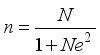

Sub-county | Pond-owning households (N) | Proportion (%) | Sample size (n) |
|---|---|---|---|
Kisumu East | 122 | 9.0 | 28 |
Kisumu Central | 75 | 5.6 | 17 |
Kisumu West | 102 | 7.6 | 23 |
Muhoroni | 425 | 31.5 | 97 |
Nyakach | 202 | 15.0 | 46 |
Nyando | 265 | 19.6 | 61 |
Seme | 159 | 11.8 | 37 |
Total | 1,350 | 100 | 309 |
Variable | Response category | Frequency (n) | % |
|---|---|---|---|
Age (years) | 18–35 | 16 | 5.2 |
36–50 | 58 | 18.9 | |
51–65 | 171 | 55.2 | |
Above 65 | 64 | 20.8 | |
Gender | Male | 203 | 65.6 |
Female | 106 | 34.4 | |
Level of education | None | 13 | 4.2 |
Primary | 117 | 37.7 | |
Secondary | 163 | 52.9 | |
Tertiary | 16 | 5.2 | |
Household size | <3 | 106 | 34.4 |
3–5 | 117 | 37.7 | |
6–10 | 48 | 15.6 | |
11–20 | 38 | 12.3 | |
Household income (US$ / month) | <50 | 149 | 48.1 |
50–100 | 91 | 29.2 | |
101–200 | 59 | 18.9 | |
201–500 | 10 | 3.3 | |
Occupation | None | 59 | 18.9 |
Salaried employment | 38 | 12.3 | |
Casual labour | 42 | 13.7 | |
Self-employed | 26 | 8.5 | |
Technical expert | 128 | 41.5 | |
Business | 16 | 5.2 |
Criteria | Factor | Yes n (%) | No n (%) | Not sure n (%) |
|---|---|---|---|---|
Water availability | Precipitation | 163 (52.8) | 34 (10.8) | 112 (36.3) |
Groundwater availability | 179 (58.0) | 31 (9.9) | 99 (32.1) | |
Distance to lake | 109 (35.4) | 16 (5.2) | 184 (59.4) | |
Distance to rivers | 239 (77.4) | 33 (10.8) | 37 (11.8) | |
Water quality | Temperature | 162 (52.4) | 49 (16.0) | 98 (31.6) |
Salinity | 29 (9.4) | 18 (5.7) | 262 (84.9) | |
Water pH | 130 (42.0) | 48 (15.6) | 131 (42.5) | |
Dissolved oxygen (DO) | 13 (4.2) | 25 (8.0) | 271 (87.7) | |
Soil quality | Organic matter | 19 (6.1) | 31 (9.9) | 259 (84.0) |
Total nitrogen | 18 (5.7) | 23 (7.5) | 268 (86.8) | |
Clay content | 12 (3.8) | 25 (8.0) | 272 (88.2) | |
CEC | 18 (5.7) | 38 (12.3) | 253 (82.1) | |
Land characteristics | Elevation | 49 (16.0) | 45 (14.6) | 215 (69.3) |
Slope | 159 (51.4) | 18 (5.7) | 132 (42.9) | |
Land use | 165 (53.3) | 16 (5.2) | 128 (41.5) | |
Flooding risk | 48 (15.6) | 28 (9.0) | 233 (75.5) | |
Socio-economic factors | Distance to roads | 22 (7.1) | 19 (6.1) | 268 (86.8) |
Availability of labour | 31 (9.9) | 19 (6.1) | 259 (84.0) | |
Availability of manure | 57 (18.4) | 61 (19.8) | 191 (61.8) | |
Access to market | 163 (52.8) | 34 (10.8) | 112 (36.3) |
Factor | Statement | SDn | Dn | Nn | An | SAn | Mean | SD |
|---|---|---|---|---|---|---|---|---|
Water availability | Rainfall is critical for ensuring consistent pond water supply | 9 | 15 | 33 | 79 | 173 | 4.27 | 0.90 |
Groundwater should be readily accessible for fish pond siting | 10 | 12 | 19 | 71 | 197 | 4.40 | 0.89 | |
Proximity to lakes improves pond water supply | 17 | 28 | 35 | 188 | 41 | 3.67 | 0.75 | |
Proximity to rivers is an essential factor for site selection | 7 | 22 | 35 | 178 | 67 | 3.89 | 0.90 | |
Water quality | Optimal water temperature enhances tilapia growth | 17 | 17 | 35 | 172 | 73 | 3.84 | 0.94 |
Salinity negatively affects fish health and should be considered | 70 | 31 | 45 | 143 | 20 | 3.04 | 1.08 | |
Water pH should be tested before pond establishment | 79 | 48 | 79 | 53 | 50 | 2.83 | 0.95 | |
Dissolved oxygen levels affect fish survival and should be monitored | 66 | 39 | 89 | 106 | 9 | 2.85 | 1.13 | |
Soil quality | Organic matter content improves pond soil fertility | 55 | 66 | 66 | 111 | 11 | 2.86 | 1.06 |
Total nitrogen levels should be known before pond construction | 66 | 64 | 48 | 123 | 8 | 2.82 | 1.21 | |
Clayey soils are ideal for pond construction due to water retention | 13 | 22 | 48 | 157 | 69 | 3.80 | 0.94 | |
CEC is an important soil property for ponds | 108 | 74 | 83 | 33 | 11 | 2.24 | 1.28 | |
Land characteristics | Elevation affects water drainage and fish growth | 51 | 121 | 45 | 82 | 10 | 2.61 | 0.97 |
Gentle slopes are preferred for pond stability | 9 | 47 | 33 | 184 | 36 | 3.62 | 0.83 | |
Land use planning is important before pond establishment | 22 | 57 | 69 | 149 | 13 | 3.24 | 0.72 | |
Flood-prone areas should be avoided when siting ponds | 13 | 18 | 18 | 125 | 135 | 4.14 | 0.84 | |
Socio-economic factors | Closeness to roads enhances market access and reduces transport cost | 53 | 61 | 93 | 90 | 12 | 2.83 | 0.76 |
Availability of labour influences pond management effectiveness | 106 | 85 | 49 | 60 | 9 | 2.29 | 0.87 | |
Availability of manure enhances pond fertilization and productivity | 73 | 58 | 32 | 130 | 16 | 2.86 | 0.89 | |
Nearness to market improves profitability of fish farming | 16 | 18 | 39 | 61 | 175 | 4.17 | 0.66 |
Criteria | Practice | Yes n (%) |
|---|---|---|
Water availability | Recorded rainfall amount | 147 (47.6) |
Assessed groundwater availability | 143 (46.2) | |
Considered distance to lake | 152 (49.1) | |
Considered distance to rivers | 111 (35.8) | |
Water quality | Measured water temperature | 99 (32.1) |
Measured water salinity | 49 (16.0) | |
Measured water pH | 48 (15.6) | |
Measured dissolved oxygen (DO) | 114 (36.8) | |
Soil quality | Assessed organic matter | 80 (25.9) |
Assessed total nitrogen | 36 (11.8) | |
Assessed clay content | 39 (12.7) | |
Assessed CEC | 33 (10.8) | |
Land characteristics | Measured/considered elevation | 154 (50.0) |
Measured/considered slope | 195 (63.2) | |
Considered land use | 207 (67.0) | |
Considered flooding risk | 159 (51.4) | |
Socio-economic factors | Considered distance to roads | 149 (48.1) |
Considered availability of labour | 244 (78.8) | |
Considered availability of manure | 260 (84.0) | |
Conducted market survey | 226 (73.1) |
Model Summary | |||
|---|---|---|---|
Multiple R | 0.908 | ||
R2 | 0.824 | ||
Adjusted R2 | 0.810 | ||
Standard Error | 0.487 | ||
ANOVA (F(8, 300) | F = 48.9 | p < 0.001 | |
Unstandardized Coefficients | Standardized Coefficients | t | p-value |
Variable | B | Std. Error | Beta |
Intercept | 9.84 | 1.15 | - |
Farmer age | 0.29 | 0.04 | 0.62 |
Gender | 0.15 | 0.58 | 0.03 |
Education | -0.05 | 0.08 | -0.06 |
Household size | 0.06 | 0.12 | 0.05 |
Income | 0.26 | 0.02 | 0.71 |
Occupation | 0.04 | 0.23 | 0.01 |
Prior aquaculture training | 1.99 | 0.58 | 0.29 |
Extension visits | 1.43 | 0.27 | 0.42 |
Component | Eigenvalue | % of Variance | Cumulative % |
|---|---|---|---|
PC1 (Water availability and quality) | 4.15 | 29.2 | 29.2 |
PC2 (Land and soil characteristics) | 3.12 | 22.3 | 51.5 |
PC3 (Socio-economic factors) | 2.01 | 14.4 | 65.9 |
PC4 (Extension and training) | 1.45 | 6.5 | 72.4 |
Variable | PC1 Water & Quality | PC2 Land & Soil | PC3 Socio-economic | PC4 Training & Extension |
|---|---|---|---|---|
Groundwater availability | 0.85 | 0.09 | 0.12 | 0.05 |
Water pH | 0.82 | 0.12 | 0.20 | 0.02 |
Soil organic matter | 0.19 | 0.75 | 0.14 | 0.13 |
Clay content | 0.08 | 0.78 | 0.23 | 0.17 |
Elevation | 0.15 | 0.76 | 0.12 | 0.03 |
Slope | 0.25 | 0.80 | 0.22 | 0.14 |
Market access | 0.10 | 0.13 | 0.81 | 0.17 |
Labor availability | 0.13 | 0.04 | 0.80 | 0.07 |
Prior aquaculture training | 0.04 | 0.17 | 0.10 | 0.91 |
Extension visits | 0.16 | 0.12 | 0.09 | 0.93 |
CEC | Cation Exchange Capacity |
CIDP | County Integrated Development Plan |
DO | Dissolved Oxygen |
GIS | Geographic Information System |
GPS | Global Positioning System |
KAP | Knowledge, Attitudes and Practices |
KMFRI | Kenya Marine and Fisheries Research Institute |
KNBS | Kenya National Bureau of Statistics |
NACOSTI | National Commission for Science, Technology and Innovation |
O. niloticus | Oreochromis niloticus |
PCA | Principal Component Analysis |
Q–Q Plot | Quantile–Quantile Plot |
SPSS | Statistical Package for the Social Sciences |
VIF | Variance Inflation Factor |
Predictor | VIF |
|---|---|
Farmer age | 1.21 |
Gender | 1.08 |
Education level | 1.12 |
Household size | 1.03 |
Household income | 1.25 |
Occupation | 1.10 |
Prior aquaculture training | 1.18 |
Extension visits | 1.22 |
| [1] | Adewumi, A. A., Olaleye, V. F. Pond aquaculture production trends in Nigeria: A review. Journal of Applied Aquaculture. 2011, 23(2), 113–127. |
| [2] | Ahmed, N., Thompson, S., Turchini, G. M. Environmental sustainability of aquaculture: Analysis of resource use and environmental impacts of pond-based aquaculture systems. Aquaculture Research. 2019, 50, 1823–1835. |
| [3] | Asfaw, S., Scognamillo, A., Di Caprera, G., Sitko, N., Ignaciuk, A. Heterogeneous impact of improved agricultural technologies on household welfare: Evidence from Sub-Saharan Africa. Food Policy. 2020, 91, 101871. |
| [4] | Aura, C. M., Musa, S., Yongo, E., Okechi, J. K., Njiru, J. M., Ogello, E. O. Integration of aquaculture into the Lake Victoria Basin farming systems: Impacts on livelihoods and food security. Aquaculture Research. 2018, 49, 3638–3650. |
| [5] | Bartley, D. M., De Silva, S. S., Hasan, M. R. Improving productivity and environmental performance of aquaculture. FAO Fisheries and Aquaculture Proceedings. 2015, 39, 1–12. |
| [6] | Boone, H. N., Boone, D. A. Analyzing Likert data. Journal of Extension. 2012, 50(2), Article 2TOT2. |
| [7] | Boyd, C. E. Soil and water quality management for pond aquaculture. Aquaculture Engineering. 2015, 69, 1–11. |
| [8] | Boyd, C. E., Tucker, C. S. Pond Aquaculture Water Quality Management. New York, NY: Springer; 2012. |
| [9] | Boyd, C. E., Tucker, C. S. Pond Aquaculture Water Quality Management. New York, NY: Springer; 1998. |
| [10] | Boyd, C. E. Guidelines for aquaculture effluent management at the farm-level. Aquaculture. 2003, 226(1–4), 101–112. |
| [11] | Brummett, R. E., Williams, M. J. The evolution of aquaculture in African rural and economic development. Ecological Economics. 2000, 33(2), 193–203. |
| [12] | Bryman, A. Social Research Methods. 5th ed. Oxford, UK: Oxford University Press; 2016. |
| [13] | Charo-Karisa, H., Rezk, M. A., Bovenhuis, H., Komen, H. Heritability of growth traits of Nile tilapia (Oreochromis niloticus) in earthen ponds. Aquaculture. 2005, 246, 125–134. |
| [14] | Cochran, W. G. Sampling Techniques. 3rd ed. New York, NY: John Wiley & Sons; 1977. |
| [15] | Creswell, J. W., Creswell, J. D. Research Design: Qualitative, Quantitative, and Mixed Methods Approaches. 5th ed. Thousand Oaks, CA: Sage; 2018. |
| [16] | Dapieve, A., Valenti, W. C., Portella, M. C. Socio-economic and environmental determinants of small-scale pond aquaculture sustainability. Aquaculture International. 2023, 31, 115–130. |
| [17] | DeVellis, R. F. Scale Development: Theory and Applications. 4th ed. Thousand Oaks, CA: Sage; 2017. |
| [18] | El-Sayed, A. F. M. Tilapia Culture. 2nd ed. London, UK: Academic Press; 2019. |
| [19] | El-Sayed, A. F. M., Fitzsimmons, K. Tilapia culture: Biology, production systems and sustainability. Aquaculture. 2023, 569, 739394. |
| [20] | El-Sayed, A. F. M. Tilapia Culture. Wallingford, UK: CABI Publishing; 2006. |
| [21] | El-Sayed, A. F. M. Tilapia culture and sustainability. Aquaculture. 2019, 507, 263–272. |
| [22] | Food and Agriculture Organization of the United Nations (FAO). The State of World Fisheries and Aquaculture 2020: Sustainability in Action. Rome, Italy: FAO; 2020. |
| [23] | Food and Agriculture Organization of the United Nations (FAO). The State of World Fisheries and Aquaculture 2022: Towards Blue Transformation. Rome, Italy: FAO; 2022. |
| [24] | Food and Agriculture Organization of the United Nations (FAO). Small-Scale Aquaculture in Sub-Saharan Africa. FAO Fisheries and Aquaculture Technical Paper No. 647. Rome, Italy: FAO; 2018. |
| [25] | Food and Agriculture Organization of the United Nations (FAO). Aquaculture zoning, site selection and area management under the ecosystem approach to aquaculture. FAO Fisheries and Aquaculture Technical Paper No. 588. Rome, Italy: FAO; 2017 |
| [26] | Kothari, C. R. Research Methodology: Methods and Techniques. 2nd ed. New Delhi, India: New Age International Publishers; 2004. |
| [27] | Saunders, M., Lewis, P., Thornhill, A. Research Methods for Business Students. 8th ed. Harlow, UK: Pearson Education Limited; 2019. |
| [28] | Kisumu County Government. Kisumu County Integrated Development Plan (CIDP) 2018–2022. Kisumu, Kenya: Kisumu County Government; 2018. |
| [29] | Kenya National Bureau of Statistics (KNBS). 2019 Kenya Population and Housing Census. Volume I: Population by County and Sub-County. Nairobi, Kenya: KNBS; 2020. |
| [30] | Yamane, T. Statistics: An Introductory Analysis. 2nd ed. New York, NY: Harper & Row; 1967. |
| [31] | Israel, G. D. Determining Sample Size. University of Florida IFAS Extension. 2013. |
| [32] | Lohr, S. L. Sampling: Design and Analysis. 2nd ed. Boca Raton, FL: Chapman & Hall/CRC; 2019. |
| [33] | Kish, L. Survey Sampling. New York, NY: John Wiley & Sons; 1965. |
| [34] | Hair, J. F., Black, W. C., Babin, B. J., Anderson, R. E. Multivariate Data Analysis. 8th ed. Boston, MA: Cengage Learning; 2019. |
| [35] | Nunnally, J. C., Bernstein, I. H. Psychometric Theory. 3rd ed. New York, NY: McGraw-Hill; 1994. |
| [36] | Tavakol, M., Dennick, R. Making sense of Cronbach’s alpha. International Journal of Medical Education. 2011, 2, 53–55. |
| [37] | Resnik, D. B., Shamoo, A. E. Reproducibility and research integrity. Accountability in Research. 2017, 24(2), 116–123. |
| [38] | Likert, R. A Technique for the Measurement of Attitudes. Archives of Psychology, No. 140. New York, NY: The Science Press; 1932. |
| [39] | Joshi, A., Kale, S., Chandel, S., Pal, D. Likert scale: Explored and explained. British Journal of Applied Science & Technology. 2015, 7(4), 396–403. |
| [40] | Field, A. Discovering Statistics Using IBM SPSS Statistics. 5th ed. London, UK: SAGE Publications; 2018. |
| [41] | Hecht, T. A review of small-scale aquaculture in Sub-Saharan Africa. Aquaculture Economics & Management. 2000, 4(1–2), 1–14. |
| [42] | Kassam, L., Dorward, A., Longhurst, R. A comparative assessment of the poverty impacts of pond and cage aquaculture in Ghana. World Development. 2011, 39(9), 1621–1635. |
| [43] | Kunda, M., Phiri, M., Mwansa, C. Determinants of pond aquaculture adoption in Sub-Saharan Africa. Aquaculture Economics & Management. 2020, 24(3), 245–261. |
| [44] | El-Sayed, A. F. M. (2013). Tilapia culture in warm water systems: Water quality and management challenges in small-scale aquaculture. Aquaculture Research, 44(12), 1875–1888. |
| [45] | Njiru, M., Aura, C. M., Okechi, J. K. Knowledge gaps and extension needs in Kenyan aquaculture. Aquaculture International. 2021, 29, 131–145. |
| [46] | Boyd, C. E. Water Quality: An Introduction. Cham, Switzerland: Springer; 2020. |
| [47] | Munguti, J. M., Kim, J. D., Ogello, E. O. An overview of Kenyan aquaculture: Current status, challenges and opportunities. Fisheries and Aquatic Sciences. 2014, 17, 1–11. |
| [48] | Limbu, S. M., Shoko, A. P., Mgaya, Y. D. Pond productivity and soil–water interactions in tropical aquaculture. Aquaculture International. 2016, 24, 1559–1574. |
| [49] | Beveridge, M. C. M. Cage Aquaculture. 3rd ed. Oxford, UK: Wiley-Blackwell; 2004. |
| [50] | Tesfahun, A. Site selection and management of small-scale fish ponds. Aquaculture Reports. 2020, 17, 100365. |
| [51] | Belton, B., Little, D. C. Immanent and interventionist inland Asian aquaculture development and its outcomes. Development Policy Review. 2011, 29(4), 459–484. |
| [52] | Kahindi, J. H. P., Maina, J. G., Muturi, G. M. Climate variability and pond aquaculture productivity in Kenya. Aquaculture International. 2018, 26, 1161–1176. |
| [53] | Gomiero, T., Pimentel, D., Paoletti, M. G. Environmental impact of climate variability on aquaculture systems. Aquaculture International. 2021, 29, 2147–2163. |
| [54] | Munguti, J. M., Musa, S., Ogello, E. O. Environmental and institutional constraints to aquaculture development in Kenya. Aquaculture International. 2020, 28, 1–18. |
| [55] | Funge-Smith, S. Review of the state of aquaculture in Sub-Saharan Africa. FAO Fisheries and Aquaculture Circular. 2018, No. 1135. |
| [56] | Martins, C. I. M., Eding, E. H., Verreth, J. A. J. The effect of water quality on fish welfare and productivity. Reviews in Aquaculture. 2019, 11(3), 673–690. |
| [57] | Ndirangu, S. N., Nyonje, B. M., Maina, J. G. Market access and profitability of smallholder aquaculture. Aquaculture Economics & Management. 2017, 21(4), 421–436. |
| [58] | Ngugi, C. C., Bowman, J. R., Omolo, B. O. A New Guide to Fish Farming in Kenya. Corvallis, OR: Aquaculture CRSP, Oregon State University; 2007. |
| [59] | Kifle, D., Desta, Z., Tesfahun, A. Constraints to small-scale aquaculture development in Ethiopia. Aquaculture Reports. 2019, 15, 100214. |
| [60] | Njiru, M., Aura, C. M., Okechi, J. K. Challenges facing pond aquaculture development in East Africa. African Journal of Aquatic Science. 2017, 42(3), 221–231. |
| [61] | Mrosso, H. D. J., Limbu, S. M., Mgaya, Y. D. Farmer decision-making and pond management in Tanzania. Aquaculture International. 2019, 27, 153–168. |
| [62] | Nguyen, T. T., Rada, N., Pham, T. H. Adoption of improved aquaculture technologies. World Development. 2018, 105, 190–203. |
| [63] | Kassam, L., Subasinghe, R., Phillips, M. Aquaculture farmer behaviour and adoption of improved practices. Aquaculture. 2019, 512, 734289. |
| [64] | Phiri, M., Chisanga, B., Musuka, C. Extension services and aquaculture adoption in Africa. Aquaculture International. 2018, 26, 1041–1056. |
| [65] | Onyango, P. O., Owiti, D. O., Ogello, E. O. Role of extension in aquaculture development. Aquaculture International. 2019, 27, 965–978. |
| [66] | Kassie, M., Jaleta, M., Shiferaw, B., Mmbando, F., Mekuria, M. Adoption of interrelated sustainable agricultural practices. Agricultural Economics. 2015, 46(3), 1–16. |
APA Style
Mokoro, A., Matolla, G., Njiru, J., Kimanzi, J. (2026). Fish Farmers’ Knowledge, Attitudes and Practices in Assessing Suitability of Earthen Pond Sites for Nile Tilapia in Kisumu County, Kenya. Agriculture, Forestry and Fisheries, 15(2), 67-85. https://doi.org/10.11648/j.aff.20261502.13
ACS Style
Mokoro, A.; Matolla, G.; Njiru, J.; Kimanzi, J. Fish Farmers’ Knowledge, Attitudes and Practices in Assessing Suitability of Earthen Pond Sites for Nile Tilapia in Kisumu County, Kenya. Agric. For. Fish. 2026, 15(2), 67-85. doi: 10.11648/j.aff.20261502.13
@article{10.11648/j.aff.20261502.13,
  author = {Anne Mokoro and Geraldine Matolla and James Njiru and Johnstone Kimanzi},
  title = {Fish Farmers’ Knowledge, Attitudes and Practices in Assessing Suitability of Earthen Pond Sites for Nile Tilapia in Kisumu County, Kenya},
  journal = {Agriculture, Forestry and Fisheries},
  volume = {15},
  number = {2},
  pages = {67-85},
  doi = {10.11648/j.aff.20261502.13},
  url = {https://doi.org/10.11648/j.aff.20261502.13},
  eprint = {https://article.sciencepublishinggroup.com/pdf/10.11648.j.aff.20261502.13},
  abstract = {Earthen pond aquaculture remains the dominant production system for Nile tilapia (Oreochromis niloticus) in resource-constrained regions, yet inappropriate pond siting continues to undermine productivity and sustainability. This study assessed fish farmers’ knowledge, attitudes, and practices (KAP) regarding pond site suitability prior to GIS-based suitability modelling in Kisumu County, Kenya. A cross-sectional survey of 309 earthen-pond fish farmers was conducted, and KAP responses were analysed using descriptive statistics, multiple linear regression, and multivariate techniques (Principal Component Analysis and Factor Analysis). Results revealed marked imbalances in farmers’ KAP. Knowledge was relatively high for water availability indicators, particularly proximity to rivers and groundwater access, but consistently low for critical water quality parameters (dissolved oxygen, salinity, and pH) and soil quality attributes (organic matter, nitrogen, clay content, and cation exchange capacity). Attitudes strongly favoured water security, flood avoidance, and market proximity, while water chemistry and soil fertility received weak endorsement. Practices mirrored these patterns, with limited water and soil quality testing but high consideration of socio-economic and visually observable land characteristics. Multiple linear regression showed that farmer age, household income, prior aquaculture training, and extension visits were significant predictors of KAP, jointly explaining 81% of the observed variation. PCA and Factor Analysis further identified four latent dimensions structuring site-selection decision-making: water availability and quality, land and soil characteristics, socio-economic feasibility, and training and extension support. The findings demonstrate that pond site selection among smallholder farmers is driven primarily by experiential and economic considerations, with insufficient integration of technical biophysical criteria. Strengthening targeted training, extension services, and access to affordable water and soil testing tools is therefore essential to improve site-selection decisions and enhance the sustainability of Nile tilapia pond aquaculture.},
 year = {2026}
}
TY  - JOUR
T1  - Fish Farmers’ Knowledge, Attitudes and Practices in Assessing Suitability of Earthen Pond Sites for Nile Tilapia in Kisumu County, Kenya
AU  - Anne Mokoro
AU  - Geraldine Matolla
AU  - James Njiru
AU  - Johnstone Kimanzi
Y1  - 2026/03/14
PY  - 2026
N1  - https://doi.org/10.11648/j.aff.20261502.13
DO  - 10.11648/j.aff.20261502.13
T2  - Agriculture, Forestry and Fisheries
JF  - Agriculture, Forestry and Fisheries
JO  - Agriculture, Forestry and Fisheries
SP  - 67
EP  - 85
PB  - Science Publishing Group
SN  - 2328-5648
UR  - https://doi.org/10.11648/j.aff.20261502.13
AB  - Earthen pond aquaculture remains the dominant production system for Nile tilapia (Oreochromis niloticus) in resource-constrained regions, yet inappropriate pond siting continues to undermine productivity and sustainability. This study assessed fish farmers’ knowledge, attitudes, and practices (KAP) regarding pond site suitability prior to GIS-based suitability modelling in Kisumu County, Kenya. A cross-sectional survey of 309 earthen-pond fish farmers was conducted, and KAP responses were analysed using descriptive statistics, multiple linear regression, and multivariate techniques (Principal Component Analysis and Factor Analysis). Results revealed marked imbalances in farmers’ KAP. Knowledge was relatively high for water availability indicators, particularly proximity to rivers and groundwater access, but consistently low for critical water quality parameters (dissolved oxygen, salinity, and pH) and soil quality attributes (organic matter, nitrogen, clay content, and cation exchange capacity). Attitudes strongly favoured water security, flood avoidance, and market proximity, while water chemistry and soil fertility received weak endorsement. Practices mirrored these patterns, with limited water and soil quality testing but high consideration of socio-economic and visually observable land characteristics. Multiple linear regression showed that farmer age, household income, prior aquaculture training, and extension visits were significant predictors of KAP, jointly explaining 81% of the observed variation. PCA and Factor Analysis further identified four latent dimensions structuring site-selection decision-making: water availability and quality, land and soil characteristics, socio-economic feasibility, and training and extension support. The findings demonstrate that pond site selection among smallholder farmers is driven primarily by experiential and economic considerations, with insufficient integration of technical biophysical criteria. Strengthening targeted training, extension services, and access to affordable water and soil testing tools is therefore essential to improve site-selection decisions and enhance the sustainability of Nile tilapia pond aquaculture.
VL  - 15
IS  - 2
ER  -
Department of Fisheries and Aquatic Sciences, University of Eldoret, Eldoret, Kenya
Biography: Anne Mokoro is a Fisheries Officer and researcher affiliated with the University of Eldoret, Kenya, with professional expertise in fisheries management, aquaculture development, and aquatic resource conservation. She has actively participated in field-based research focusing on sustainable utilization of freshwater fisheries, community co-management approaches, and improvement of fish production systems in western Kenya and surrounding regions. Her work integrates scientific research with extension services to enhance livelihoods among fishing communities while promoting environmental sustainability. Anne has contributed to several applied research projects addressing fish stock conservation, water quality management, and aquaculture productivity. She is passionate about bridging the gap between research and practice, ensuring that scientific findings translate into practical solutions for resource users and policy stakeholders. Her professional interests include climate-smart fisheries, ecosystem-based management, and capacity building for small-scale aquaculture enterprises.
Research Fields: Small-scale aquaculture, Pond site suitability, Farmer knowledge diagnostics, Aquaculture extension systems, Spatial planning for aquaculture, Sustainable tilapia production, Aquaculture livelihoods.

Department of Fisheries and Aquatic Sciences, University of Eldoret, Eldoret, Kenya
Biography: Geraldine Matolla is a Senior Lecturer at the University of Eldoret, Kenya, specializing in fisheries science, aquaculture, and aquatic ecology. She holds advanced academic qualifications in fisheries and environmental sciences and has extensive experience in teaching, research supervision, and community outreach. Her research focuses on fish health management, sustainable aquaculture systems, aquatic environmental quality, and the impacts of human activities on freshwater ecosystems. Dr. Matolla has published in peer-reviewed journals and contributed to research projects aimed at improving food security through sustainable fisheries and aquaculture development. She actively mentors postgraduate students and participates in interdisciplinary research addressing environmental conservation and aquatic resource sustainability. Her professional commitment lies in promoting science-based fisheries management and innovative aquaculture technologies to enhance productivity while safeguarding aquatic ecosystems.
Research Fields: Pond aquaculture management, Farmer practices assessment, Aquaculture value chains, Extension and training, Aquaculture sustainability, Community-based aquaculture.

Kenya Marine and Fisheries Research Institute, Mombasa City, Kenya
Biography: James Njiru is a distinguished fisheries scientist at Kisii University and a former Di-rector General of the Kenya Marine and Fisheries Research Institute (KMFRI). He possesses decades of experience in fisheries research, policy development, and aquatic resource management across both marine and inland waters of East Africa. His scholarly work includes fish stock assessment, fisheries governance, ecosystem-based management, and sustainable exploitation of aquatic resources. Professor Njiru has led numerous national and regional research programs and contributed significantly to fisheries policy formulation in Kenya. He has published extensively in high-impact scientific journals and supervised many postgraduate students who now serve in academia and fisheries institutions. His leadership at KMFRI strengthened fisheries research capacity and regional collaboration. He remains actively involved in advancing sustainable fisheries science and evidence-based management.
Research Fields: Fisheries science, Aquaculture development policy, Lake Victoria basin studies, Aquatic food systems, Resource management, Applied fisheries research.

Department of Wildlife Management, University of Eldoret, Eldoret City, Kenya
Research Fields: Environmental management, Spatial analysis and planning, Natural resource governance, Landscape suitability assessment, Livelihoods and sustainability.

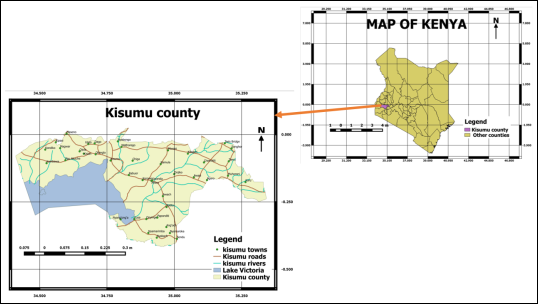
Figure 1. A Map of Kisumu County (the study area) and the map of Kenya.
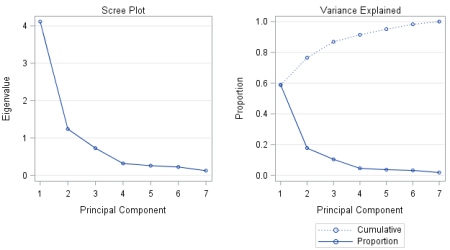
Figure 2. Scree plot showing eigenvalues and component retention for PCA of KAP variables.
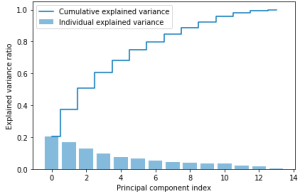
Figure 3. Percentage contribution of principal components to total variance in farmers’ KAP.
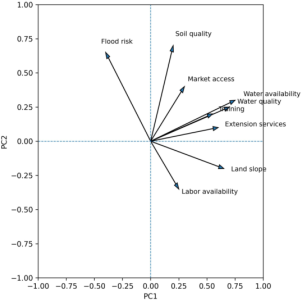
Figure 4. PCA biplot illustrating relationships between KAP variables and principal components.
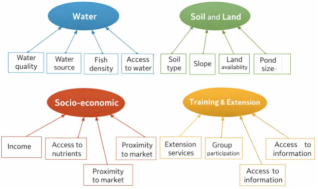
Figure 5. Conceptual factor-loading diagram showing four latent factors influencing pond site suitability decisions.
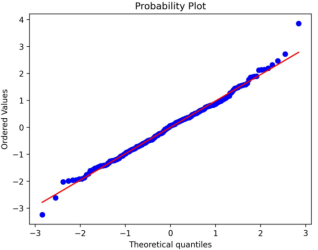
Figure A1. Normal Q–Q plot of standardized residuals. The standardized residuals closely follow the reference line, indicating approximate normal distribution and satisfying the normality assumption of linear regression.
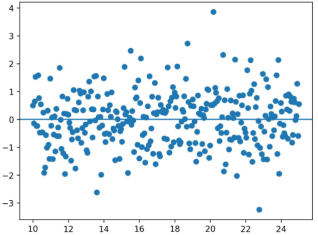
Figure A2. Scatter plot of standardized residuals versus fitted values. Residuals show random dispersion around zero with no visible funneling or systematic pattern, confirming homoscedasticity.
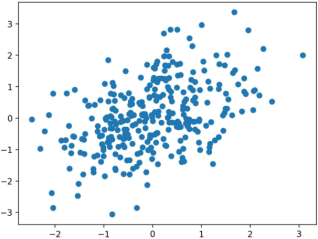
Figure A3. Partial regression plot illustrating linear relationship between predictor and KAP score. The absence of curvature or systematic deviation confirms the appropriateness of the linear functional form.

Information



 Share This Article
 Twitter
 Linked In
 Facebook
 Copy
Copy Download