Research Article | | Peer-Reviewed

Banana Production, Research Cum Extension in Daraga Albay: An Assessment

Received: 17 December 2025     Accepted: 13 January 2026     Published: 13 April 2026
Views:       Downloads:
Abstract

Bananas are among the world’s most traded and consumed fruits, providing vital nutrients and serving as a significant income source, especially in low-income and food-deficit countries. According to the Food and Agriculture Organization over 1,000 varieties exist globally, with production concentrated in Africa, Asia, the Caribbean, and Latin America due to favorable climatic conditions. Asia accounts for 60% of global production, led by India, China, the Philippines, and Indonesia (FAO, 2009). In the Philippines, the Davao Region, Northern Mindanao, and SOCSARGEN are the top producers. This study, conducted by Bicol College in Daraga, Albay, aims to enhance banana production in the Bicol Region (Region V) to increase exports and contribute to the Sustainable Development Goals (SDGs), particularly in environmental protection and livelihood sustainability. The objectives are to: (1) determine factors affecting banana production, (2) identify farming methods, (3) determine various uses of bananas, (4) describe community attitudes toward production, (5) identify problems encountered, and (6) prepare an action plan to address challenges. A mixed-method design using total enumeration was employed in Barangay Nabasan as the pilot area, with data gathered through questionnaires and interviews. Findings revealed that socio-cultural and economic factors influence production; farmers practice backyard, single-crop, and mixed-crop growing; banana parts have multiple uses—for food, fertilizer, medicine, and export; farmers exhibit positive attitudes; and main challenges include limited information, land area, and capital. Recommendations include providing additional training and organizing a Banana Farmers’ Cooperative to support sustainable production and commercialization.

Published in American Journal of Agriculture and Forestry (Volume 14, Issue 2)
DOI 10.11648/j.ajaf.20261402.14
Page(s) 111-119
Creative Commons

This is an Open Access article, distributed under the terms of the Creative Commons Attribution 4.0 International License (http://creativecommons.org/licenses/by/4.0/), which permits unrestricted use, distribution and reproduction in any medium or format, provided the original work is properly cited.

Copyright

Copyright © The Author(s), 2026. Published by Science Publishing Group

Keywords

Banana Production, Research, Extension, Assessment, Albay, Philippines

1. Introduction
Bananas (Musa Sapientum; M. Cavendishi; M. Nana) scientific names are the most important traded fruits in terms of export value and consumed fruits globally. They are rich in vitamins and minerals. They are the safest and cheapest fruit ensuring nutritional security to people of all age groups and economic status. According to the FAO of the United Nations, there exists more than 1,000 varieties in the world which provide vital nutrients to populations of producing and importing countries alike . Of these varieties, the most traded is Cavendish banana which accounts for just under half of the global production at an estimated annual production volume of 50 million tonnes. They are particularly significant in most of the least developed, low-income and food-deficit countries where they can contribute not only to household food and health but also to income generation as a cash crop. Among the key drivers are abundant supply growth in the leading export countries which are Ecuador and the Philippines and a significant increase in import demand especially in China and the European Union (EU).
Global banana production reached 116 million metric tons with Global banana production areas being approximately 5.5 million hectares of land. India is the largest producer at 30.5 million metric tons on 866,000 hectares. China comes second with 12 million metric tons per year on 356,924 hectares . The cultivation of bananas and engaging in the banana industry is a response to the Sustainable Development Goals (SDG) which are mentioned in the United Nations Sustainable Development Report, (2022). Of the 17 goals eight (8) of them can be responded to by a large-scale banana production. The specific goals are: eradication of poverty (goal 1), zero hunger (goal 2), good health and well-being (goal 3), decent work and economic growth (goal 8), promoting the banana industry (goal 9), sustainable communities (goal 11), responsible consumption and production (goal 12), partnership and collaboration (goal 17).
These fruits are popular globally not only for their nutritional value but also for their economic importance especially to small and marginal farmers in developing countries. These are grown in over 130 countries across the world in an area of 10.1 million hectares producing 121.85 million tonnes. World banana production is concentrated in Africa, Asia, the Caribbean and Latin America because of the climatic conditions. Among the various continents, Asia has the lion’s share of 60% of the global banana production and India, China, Philippines and Indonesia are the major producers in the South-East Asian regions .
In Brazil, the bananas’ production quantity in 2021 was 6,811,374 million tonnes. Though Brazil banana production fluctuated substantially in recent years, it tended to increase through 1972 - 2021 period ending 6.81 million tonnes in 2021 .
In India, bananas which have year-round availability provide a permanent source of income not only to the farmers and rural populations, but also to the traders and retailers, thus, playing an important role in poverty alleviation . Interestingly, in India there has been an appreciable increase in area production and productivity of bananas during 1962-2011 and 1991-2011 owing to technological interventions. In many banana growing states of India, there has been a steady increase in area, production and productivity which is partly due to increased area under cultivation and largely due to adoption of high yielding varieties like Grand Naine, Robusta and other Cavendish clones, virus free quality planting material and improved production technologies etc. Selection of high-yielding varieties, planting of healthy, disease-free planting material, choosing the right planting density, need-based and timely application of inputs, viz., irrigation water and nutrients, maintenance of weed-free conditions, etc., are important to bridge the gap between actual yield and potential yield per unit area. For commercial varieties of banana, India is home to a wide range of Musa cultivar.
In the Philippines, from October to December 2022 banana production was estimated at 2.37 million metric tons, indicating a decrease of -0.8 percent from the 2.30 million metric tons output in the same period of 2021. The most produced variety was Cavendish with 1.17 million metric tons which is 49.4 percent of the total banana production . During this period, Davao Region (Region XI) was the top producer of bananas with 842.60 thousand metric tons output or 35.5 percent share of the total production. Northern Mindanao (Region X) and SOCSARGEN (Region XII) followed with 21.6 percent and 13.8 percent shares, respectively. The area planted with bananas from July to December 2022 was 440.81 thousand hectares of Saba variety and the biggest area planted with 181.51 thousand hectares.
According to the Philippine Statistics Authority the Philippines remained as the world's second-largest exporter of bananas for the fourth consecutive year in 2021 despite stiff competition from Ecuador, a Latin American producer. This is the significant role the fruit plays in the country's economy. By itself, bananas are an important source of revenue for farmers; moreover, its byproducts constitute their own industry. As the second largest producer of bananas in the world, the Philippines has become a major player in the banana exporting industry. Being an agro-industrial city, (Davao del Norte) is known as the "Banana Capital of the Philippines" due to numerous banana plantations scattered throughout the city. The two major destination countries for the Philippine bananas are China and Japan. The Philippines exported $1.49 billion of bananas in 2021, ranking second in the world for banana exports .
One of the regions in the Philippines is Region V, Bicol where Bicol College is specifically located in the Municipality of Daraga, in the Province of Albay. The place is a landlocked municipality. According to the 2020 census, it has a population of 133,893. The municipality is home to the famous Ruins of Cagsawa Church, a national heritage and the newly constructed Bicol International Airport.
Banana plantations in the area and the surrounding places benefit from the region's favorable climate conditions, including abundant rainfall and fertile volcanic soil. These factors contribute to the successful cultivation of bananas which has played a significant role in the local economy. While the region is primarily known for its agricultural products such as rice, coconut, copra and abaca, bananas have emerged as a lucrative crop in recent years. The start of the cultivation of bananas in the Bicol region was sporadic, which motivated this study in order to enhance its production to provide employment opportunities for many local residents and respond to local, national and international issues of environmental protection and pollution control. That is why Bicol College is taking this lead in order to stimulate the growth of supporting industries such as transportation, packing and processing.
2. Framework
2.1. Theoretical Framework
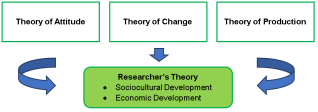
The theoretical framework in the study includes the theories which serve as the basis of the study. Among the theories included are the theory of attitude, change, and production. On the Theory of Attitude, Temitayo D. Olufemi Adewuyi (2012), explained attitude as the feelings, beliefs and reactions of an individual towards an event., phenomenon, object or person. They are not innate attributes of mankind. They are learnt, relatively stable but can be modified. They could be explicit, implicit, conscious or unconscious, rational or irrational, extroversion or introversion. They can be positive or negative, neutral or toxic which is the most dangerous attitude which destroys every image that comes in connection with a positive image .
Daniel Katz (1960) identified a functionalist theory of attitudes. He takes the view that attitudes are determined by the functions they serve for men. People hold given attitudes because these attitudes help them achieve their basic goals. Katz distinguishes four types of psychological functions that attitudes meet: 1) knowledge function, ego defensive function, 2) value expressive function and the adjustment function .
The Theory of Change where Reinholz & Andrews (2020) state that there is a diagram or written description of the strategies, actions, conditions and resources that facilitate change and achieve outcomes . The theory explains the cycle of change as follows: pre-contemplation (no intention of changing behavior), contemplation (aware that problem exist but no commitment to action), preparation (intent on action to address the problem), action (modification of behavior), maintenance (sustained change, new behavior replaces old, relapse (fallback to old pattern of behavior). There is a need to learn from each relapse.
Another theory is the Production Theory which states that the main choices center upon what to produce (which product or combination of products), how much to produce (the level of output) and how to produce (the combination of inputs to use) . In economics, it explains the principles in which the business has to make decisions on how much of each commodity it sells and how much of raw materials e.g. fixed capital and labor it employs and how much it will use. The theory of production is based on the “short run” or a period of production to change the amount of variable input, like labor. The “long run” is a period of production that is long enough for producers to adjust various inputs to analyze the best mix of the factors of production.
All these theories contributed to the Researcher’s Theory formulated based on the different theories cited. The researcher theorized that the development of a project encompasses both sociocultural and economic factors of its production, attitudes of households, challenges and meeting them through an action plan.
Figure 1. Theoretical Paradigm.
2.2. Conceptual Framework
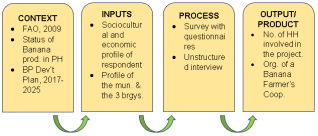
The Conceptual Framework which utilizes Stufflebeam’s (1966) CIPP Model of (CONTEXT, INPUT, PROCESS, PRODUCT OR OUTPUT) . The CONTEXT refers to the legal bases why the research was conducted such as the FAO Report (2009) and the Status of Banana Production in the Philippines, BP Development Plan, 2017-2025. The INPUTS are the sociocultural and economic profile of the respondents. The PROCESS were the activities conducted during the study. This includes the preparation of the questionnaire, the validation of the questionnaire, the revision, the actual conduct of the study and the retrieval. Another activity conducted was the interview and the documentary analysis. The OUTPUT/PRODUCT - is the results of the study, especially the data, and the recommendations to prepare an Action Plan for implementation.
Figure 2. Conceptual Paradigm.
3. Objectives
This study aims to provide a comprehensive understanding of banana production in Daraga, Albay by examining the various factors, practices, and challenges that influence its sustainability and growth. Specifically, it seeks to: (1) determine the factors that contribute to the production of bananas in Daraga, Albay along sociocultural aspects such as age, sex, number of household members, education level of the household head, number of years planting bananas, and knowledge on the uses of bananas, and economic aspects such as land area, labor, capital, and output; (2) identify the methods used by the farmers in producing bananas, including backyard growing, single cropping, and mixed cropping; (3) determine the uses of each part of the banana such as the fruits, leaves, blossom, stalks, and suckers; (4) describe the attitudes of community members toward banana production; (5) determine the challenges or problems encountered by banana growers and farmers; and (6) prepare an action plan to address the identified challenges and enhance banana production in the area.
4. Methodology
The research utilized the mixed design: the quantitative where statistical data on the profile of the respondents and the documentary data on the record of banana production in the province of Albay, municipality of Daraga and Barangay Nabasan in Daraga as the pilot study area. The qualitative data were taken from the responses of the respondent interviewees on their experiences in planting /producing bananas.
Barangay Nabasan as the pilot area. This is one of the barangays of Daraga, Albay. Its population as determined by the 2020 Census was 634. This represented 0.47% of the total population of Daraga. The population of Nabasan grew from 477 in 1990 to 634 in 2020, an increase of 157 people over the course of 30 years. The latest census figures in 2020 denote a negative growth rate of 0.94%, or a decrease of 29 people, from the previous population of 663 in 2015. It has a newly discovered underground cave named Nabasan Milaos Cave, an inviting scene for tourists. It has its Sangguniang budget based on Municipal Resolution No. 55-2022, Sangguniang Kabataan Annual Budget .
Data were gathered through the use of researcher’s prepared questionnaire composed of four (4) parts: Part 1- the sociocultural and economic profile of the respondents, Part II the method of banana production, Part III - Challenges/Problems met and Part IV are the Strategies undertaken to address the problems. The research tool, questionnaire, was validated by 20 household respondents and 2 experts. The qualitative was taken from the respondent’s answers during the interview using an unstructured interview guide. The total number of household heads is 175. The 20 household heads were used for validating the questionnaire. The remaining 155 were all used as the respondents of the study. Data was gathered from all the household respondents with a retrieval rate of 80% or 124.
5. Results and Discussions
Bananas are a staple food in many parts of the world and rank as the fourth most important crop globally. This study on Banana Production, research cum extension is conducted in order to determine the status of its production locally in Daraga, Albay, the factors that contribute to its production, the varieties produced, method of production, uses of the different parts, the attitudes of the households, and the challenges they met.
On the socio-cultural factors of age, sex, number of household members, education level of the household head, number of years planting bananas, knowledge on the uses of bananas showed the following results: for age the lowest is 22 while the highest age is 71; for the sex, 95% are males engage in planting and harvesting while 5% are females engaged in entrepreneurial activities. For the civil status, 70% are married while the 30 percent were widow/widower and single. The number of members of the household ranged from 5 to 12. In terms of educational attainment 50% elementary level, the other 50% is a combination of non-high school graduates and high school graduates. On the number of years planting bananas, the range is from 2 years to 60 years.
Along with the economic factors, in terms of land area planted, the range is from 0.25 hectare to 1 hectare. The number of workers, the range is from 1 to 10, while the capital spent ranged from Php 500.00 to Php 5,000.00, mostly personally supplied. On the output/harvest the range is from 20 bunches to 140 bunches, some consumed, others are sold in the market. Among the most common varieties planted were latundan, bongoran, lakatan and saba. In the barangay of Nabasan, Daraga, Albay even if the area planted is still small, this made the residents aware that there is a need for them to utilize their vacant lots in increasing the number of bananas they will plant after harvesting the mature ones. Through their own initiative, they can ask permission from landowners with vacant lots in the neighborhood so they can plant some more which can be sold to augment their livelihood. In the 2017 report in the Philippines, the area planted to lakatan was 54,978 hectares while Saba had 185,279 hectares planted . Asia accounts for 60% of global production, with major producers including India, China, the Philippines, and Indonesia.
On the methods used for production, for backyard growing- the total number of banana plants grown was 1,610; for single cropping there is a total of 1,505 while for the mixed method of cropping there is a total of 1,446 banana plants. This sums up to 6,007 growing banana plants. Some are fruiting while others are still young. The varieties include latondan, bongoran, saba, tindok, seniorita, red bananas,
The respondents identified varied uses of the different parts of the plants: for food, source of income, food wrappers’, cleaning the floor, fertilizer, roofing, for growing other plants, plates, for handbags, doormats, these uses are shown in the table below.
Table 1. Uses of the Different Parts of Banana Plant.

Part of the Plant

Use/s

No of respondents

%

Fruit

Food

124

100

Domestic consumption

68

55

Sold in the market

56

45

Blossom

Food

124

100

Domestic consumption

74

60

Sold in the market

50

40

Leaves (Saba variety)

Food/kakanin wrappers

62

50

Cleaning the floor

12

10

Roof (temporary shelter)

10

8

Fertilizer

40

32

Stalks

Plates during picnics

99

80

Fiber for doormats

12

10

Fertilizer

124

100

Medium for grafting other plants

12

10

The table shows that different parts of a banana plant have multiple uses. They can be used for food and fertilizer which has the majority as reflected in their responses. In case they will be given seminars by the Department of Agriculture (DA), Department of Science and Technology (DOST), and Department of Trade and Industry (DTI) they will learn more about other uses of the plant’s peelings, fruits, stalks, and other parts. With the help of these agencies, more households will be enjoined to participate and become small-scale planters at the start.
While the majority of the studies and literature were more on the export and commercialization aspects because of large plantations, in this barangay majority are only small-scale farmers. Mostly, their banana plants grew in their backyards or in neighboring lots. Based on further studies and references all parts of the banana plants have other multiple uses. These are:
5.1. The Fruits
In India bananas are also treasured in their raw form as well, Green Banana or Kaccha Kela is a part of various savory Indian dishes. It can be boiled, steamed, stir-fried, deep-fried with batter, fried as chips, mashed, and curried, and also used as stuffing or in dips. Green bananas are laden with a wealth of dietary fiber, which is valuable for treating digestive and bowel issues. Packed with potassium, which acts as a vasodilator controlling blood pressure levels and augments heart health. It should be cooked well for better assimilation of nutrients.
Green bananas are often used for cooking in savory dishes, making chips, or as a gluten-free flour alternative when dried and ground. Nutritional Profile Of Green Banana: Fiber: 3 grams, Potassium: 9% of the daily value (DV), Vitamin B6: 25% of the DV, Vitamin C: 11% of the DV, Magnesium: 7% of the DV, Copper: 10% of the DV, Manganese: 14% of the DV, (USDA, n.d.) Green bananas support weight loss, promote gut health, manage diabetes, cure irritable bowel syndrome, augment heart health and are packed with anti-health oxidants.. Green bananas are steamed or boiled, roasted, and fried to make some delectable dishes. The healthiest way to have them is steamed or boiled. They are also deep-fried to make chips and fritters, but these add up to the calories. Also, green banana flour is used to make pasta, bread, or cakes, which enhance the nutrient content of the product. Green Banana Poriyal is a simple dish straight from South India. It is an aromatic mix of spices, cooked with green bananas and coconut.
Green bananas are nutrient-dense and offer multiple health benefits. They contain Vitamin C, which supports immune function and collagen production; Vitamin B6, which aids in energy metabolism and brain development; dietary fiber, which improves digestion and regulates blood sugar; resistant starch, which can help lower blood sugar levels; and pectin, which may assist in regulating blood sugar and inflammation. Green bananas are also low FODMAP, making them suitable for individuals with digestive sensitivities such as IBS, and they provide potassium, which can help manage blood pressure. Additional benefits include antidiarrheal effects, potential cancer prevention, enhanced nutrient absorption, and support for healthy hair .
5.2. The Leaves
Banana leaves have many uses, for cooking, packaging, wound dressing, hair nourishment, digestion, blood sugar control, and environmental sustainability. For cooking they are good heat conductors and can be used to wrap dishes during cooking. The leaves can also be used to line baking sheets for desserts like rice cake, a popular coconut cake in the Philippines. Steamed banana leaves can be used to package and preserve food. They can also be used as an alternative to plastic bags for packaging fresh fruits and vegetables. Banana leaves can be used as a dressing for wounds like cuts, burns, and blisters.
Banana leaves have multiple health and functional applications. They can provide a cooling effect on burns and, when used with coconut oil, can protect blisters. Extracts from the leaves promote scalp health, prevent dandruff, and maintain natural hair color. They also aid digestion, relieve gastrointestinal discomfort such as bloating and indigestion, and may help regulate blood sugar due to their low glycemic index. In addition, banana leaves are biodegradable and environmentally sustainable. They are rich in antioxidants, have anti-inflammatory properties, and support skin health. Culturally, they are used to make cones for wrapping sticky rice, commonly sold at bus terminals for travelers .
5.3. The Peels
Banana peels are rich in bioactive compounds, including phenolics, carotenoids, polyphenols, antioxidants, and anti-inflammatory agents, which give them multiple applications. They can be used in gardening as fertilizer or to deter pests, in household care to polish houseplants, leather, and silverware, and in personal care to reduce wrinkles, brighten the skin, and repel insect bites. The natural oils and antioxidants in banana peels also support first-aid use, such as soothing mosquito bites. ‌A Brazilian study revealed that banana peels can be transformed into bioplastic films by using simple, eco-friendly pre-treatment methods, making a sustainable alternative to traditional plastics. Another study demonstrated that starch extracted from Musa acuminata peels, combined with glycerol, forms biodegradable plastics, as confirmed via Fourier Transform Infrared (FTIR) Spectroscopy analysis. The production of biodegradable plastic using banana peel components, illustrating how banana peel waste can be valorized into sustainable material alternatives .
5.4. The Blossom or Banana Heart
Banana blossom has many uses, including in cooking, as a health supplement, and for its potential health benefits: In cooking it is a common ingredient in Southeast Asian and Indian cooking, used in curries and chutneys. It has a flaky, neutral flavor and can be used fresh or canned. It can be cooked mixed with coconut milk and shrimps as a health supplement, banana blossom extract is recommended by researchers as a food supplement due to its antioxidant properties.
It has many potential health benefits, including: reducing menstrual bleeding: When cooked with curd, banana blossoms can increase progesterone levels, which can reduce menstrual bleeding. It can aid in digestion because it is high in fiber, which can help with digestion and food absorption. It can be a Vegan fish alternative due to its flaky texture. It can help reduce blood sugar levels, weight, cholesterol, and keep the stomach healthy. It contains vitamins A, C, and E, which are antioxidants that support cellular growth, bone health, and the immune system. It controls diabetes, reduces menstrual bleeding, improves digestion and lactation, weight loss, cures anemia, promotes kidney function, averts cancer and heart disease and decreases anxiety, uses of banana blossom .
5.5. Banana Flowers (Inflorescence)
Banana Flowers (Inflorescence) have both nutritional and medicinal values. A 2016 rat study found that including banana blossom in the diet reduced serum cholesterol and glucose levels, suggesting lipid-lowering effects via caecal fermentation. Banana flowers (or blossoms) are rich in dietary fiber, carbohydrates, protein, and minerals, with specific nutrient values varying by study. They also contain beneficial bioactive compounds like phenolics, flavonoids, and other antioxidants, which are often measured using standardized laboratory methods. Banana flowers are a good source of dietary fiber and carbohydrates, PMC values of banana flowers. An updated 2025 review highlights health benefits: antioxidants, fiber, protein, and minerals like magnesium, iron, and potassium. They also contain bioactive compounds such as flavonoids, phenols, and tannins which provide antioxidant, anti-inflammatory, and anti-cancer properties. These are beneficial for diabetes and weight management, supporting gastrointestinal health, promoting lactation, and having potential application in treating ulcers and reducing menstrual bleeding .
5.6. Banana Stalks (Stem)
Banana stalks have many uses, including: food, fertilizer, compost, fiber, health, wastewater treatment, and biofertilizers. For food banana stalks can be eaten in a variety of ways, such as in stir-fries, salads, or raitha. The central core of the banana stalk can be used to make candy, pickles, or soft drinks. For fertilizer: banana stalks are rich in nutrients like potassium, calcium, and magnesium, making them a natural fertilizer for plants. For compost banana stalks decompose quickly, making them a good addition to compost piles. The fiber can be used to make textiles, paper, composites, power transmission ropes, fishing nets, and more. For health: banana stem juice has many potential health benefits, including: reducing weight. managing diabetes, detoxifying, relieving constipation, protecting kidneys, regulating blood pressure, treating anemia, reducing bad cholesterol, and relieving hyperacidity. Wastewater treatment: Banana stalks can be used in wastewater treatment. As biofertilizers, livestock feed is used as fodder for livestock. uses of banana stalks .
5.7. Banana Suckers
Banana Suckers, also known as pups, have multiple uses: for planting, commercial farming and for yield. For planting, suckers are the primary method of propagating banana plants, and have been used since the early days of banana domestication. To plant a banana, remove a sucker from the base of the parent plant and transplant it to a new location. Suckers are a form of asexual reproduction, meaning they share the same genes as the parent plant. For commercial farming, suckers are often treated with rooting hormones to encourage faster growth. Commercial plantations prefer suckers with a large rhizome system and rapidly growing buds. For yield, suckers yield much faster than seeds, but they may harbor diseases or nematodes and produce an uneven harvest. uses of banana suckers .
5.8. The Banana Pseudostem Fiber
Studies have analyzed the chemical composition and morphology of banana pseudostem fiber to evaluate its suitability for industrial and textile applications. Another study evaluated the potential of mechanically extracted banana pseudostem fibers as a textile raw material. Another publication details sustainable paper production from banana pseudostem, emphasizing benefits like rapid biodegradability—ideal for circular economies. A 2024 materials science study in Scientific Reports analyzes how drying temperature (40 °C vs. 90 °C) affects physicochemical and mechanical properties of banana fibers, useful in composite reinforcement. Banana Fiber Products & Innovations, such as bananatex: A sustainable, biodegradable, canvas-like fabric made from abacá (Manila hemp) fibers. It’s used in bags, sneakers (e.g., H&M x Good News), and furniture, combining durability with biodegradability. Banana Paper: Produced from banana fiber or bark, it has lower density, higher stiffness, renewability, and tensile strength compared to traditional paper. Its history dates back centuries. A general article on bananas notes that abacá and other banana fibers have been used in the Philippines since ancient times for weaving textiles like t’nalak and dagmay, with the oldest textile sample (Banton Burial Cloth) dating to the 13th–14th centuries. Banana fiber is a versatile product, an eco-friendly material used to make textiles for clothing and door mats. It is also used for paper products, like currency and packaging, as well as for composite materials, furniture, and crafts, even biopesticides. Its high cellulose content, strength, and moisture-wicking properties make it a sustainable alternative to traditional materials and contribute to the circular economy by repurposing banana plant waste. .
5.9. Banana Pith
Banana pith (the soft inner core of the pseudostem) is used as a food source for its fiber and nutritional content, in textiles and paper, and for its role in water purification and wastewater treatment. It also has potential health benefits, including supporting digestive health, and can serve as a substrate for growing mushrooms and microalgae. As food Ingredient: banana pith is eaten as a vegetable in some parts of Asia and is rich in starch, sugars, and minerals. uses of banana pith .
While the majority of the studies and literature were more on the export and commercialization aspects because of large plantations, in this barangay majority are only small-scale farmers. Mostly their banana plants grew in their backyards or in neighboring lots.
The study revealed that households exhibited both positive and negative attitudes toward the subject. Among the positive attitudes identified, the following were ranked from one to six based on the respondents’ perceptions:
1) This is a good plant because you will not spend so much time and effort after planting. (Marhay ining pananom ta dai ka na masyado magastos buda dai na dapat bantayan pag nagbuhay na). - Rank 1
2) I want to know more information about the banana industry because here in Albay our most common products are abaca and coconuts. (Muya kong maka-aram ki dakul pang informasyones manongod kan industriya kan saging ta digdi sa Albay an pinaka produkto nyato abaka buda niyog.) - Rank 2
3) I want to know more about the income from the banana plants. (Muya ko maaraman kn guran-o ang makukuhang kwarta sa dakulang tanoman.) - Rank 3
4) I want to try to plant more bananas. (Muya ko mag tanom ki dakul na puno ki batag) - Rank 4
5) I want to plant more bananas so I can earn more for the schooling of my children. (Muya ko magtanom ki dakul na batag para makadagdag sa pagpa eskwela kan aki ko.) - Rank 5
6) I want to try this banana plantation to add to the production of all the barangays in Daraga where these plants will grow well, and to the production of Albay Province and then the Bicol Region so that we will become the 4th or 5th region producing bananas. (Muya ko mag balo kaining pagtanom ki dakol na batag para madagdagan an ani kan gabos na barangay kan Daraga, an buong probinsya kan Albay asin ang Rehiyon Bikol tanganing maging pang 4 o pang 5 rehiyon sa pag ani ki batag sa Pilipinas). - Rank 6
These are very challenging reasons by the respondents which need action to be continuously motivated and sustained by the respective barangay officials and the extension program of the school.
Studies have shown that respondents especially banana growers, generally have a positive attitude toward planting bananas. Their willingness is influenced by various social and economic factories, such as potential profit, access to resources, education and family size. However, their attitudes are also shaped by the significant challenges and risks associated with banana farming.
6. Conclusion
Sociocultural and economic factors contributed to the production of bananas in the barangay. There were different methods identified in producing the bananas such as backyard growing, single cropping and mixed cropping in small and medium sized lots. There were different uses of the different parts of the banana plant which were identified which ranged from food and domestic consumption, medicine, as fertilizer, as medium for grafting other plants and to selling them in the market for additional income. The respondents’ attitudes were both positive and negative. The positive attitudes serve as motivators for barangay officials to act immediately in order to sustain the farmer’s enthusiasm to venture in the banana industry while the negative attitudes can serve as the basis for an action plan to be addressed also by the barangay officials and the farmers themselves.
Abbreviations

FAO

Food and Agriculture Organization

SDGs

Sustainable Development Goals

EU

European Union

PSA

Philippine Statistics Authority

FTIR

Fourier Transform Infrared Spectroscopy

ICI

Index Copernicus International

Author Contributions
Milagros Salvador Esparrago: Conceptualization, Formal Analysis, Methodology, Project administration, Resources, Supervision, Validation, Writing – original draft, Writing – review & editing
Menchie Arandia Llamasares: Resources, Supervision
Conflicts of Interest
The authors declare no conflicts of interest.
References
[1] Adewuyi, T. D. O. (2012). Theories of attitudes. In C. D. Logan & M. I. Hodges (Eds.), Psychology of attitudes (pp. 61-78). Nova Science Publishers.
[2] DA Communications Group. (2022, May 30). PHL still second-largest banana exporter - FAO. Official Portal of the Department of Agriculture.
[3] Food and Agriculture Organization of the United Nations. (2019). FAOSTAT statistical database: Crops and livestock products.
[4] Healthline Editorial Team. (2024). Banana blossom: Nutrition, benefits, and uses. Healthline.
[5] Healthline. (2024). Banana leaves: Uses, benefits, and nutritional value. Healthline.
[6] Healthline. (2024). Banana peels: Health benefits, uses, and remedies. Healthline.
[7] Healthline. (2024). Green bananas: Nutrition, health benefits, and uses. Healthline.
[8] Katz, D. (1960). The functional approach to the study of attitudes. Public Opinion Quarterly, 24(2), 163-204.
[9] Kumar, K. P. S., Bhowmik, D., Duraivel, S., & Umadevi, M. (2018). Traditional and medicinal uses of banana (Musa spp.): A review. Journal of Pharmacognosy and Phytochemistry, 1(3), 51-63. Retrieved May 11, 2016, from
[10] Mamauod, M. I., Abu Hassan, M. H., & Mamauod, S. N. L. (2024). The effect of glycerol concentration on starch?based bioplastics derived from banana peels (Musa acuminata). Malaysian Journal of Analytical Sciences, 28(5), 1003-1011. Retrieved October 27, 2024, from
[11] Mendiola, I. (2022, February 8). An overview of Philippine bananas. Food Philippines.
[12] Mohapatra, D., Mishra, S., & Sutar, N. (2010). Banana and its by-product utilisation: An overview. Journal of Scientific & Industrial Research, 69, 323-329.
[13] Montoya Berrio, J., Negrete Martínez, J., Altamiranda Suárez, J., Ávila Díaz, C., Rivero?Romero, O., & Unfried?Silgado, J. (2024). Influence of drying temperature on the properties of Colombian banana fibers for its potential use as reinforcement in composite materials. Scientific Reports, 14, 25180.
[14] Municipality of Daraga Tourism Office. (2023). Nabasan Milaos Cave [Facebook post]. Facebook.
[15] Municipal Resolution No. 55-2022. (2022, February 28). Sangguniang Bayan - Bayan ng Daraga.
[16] Nabasan, Daraga, Albay profile. (1990, May). PhilAtlas.
[17] Nicholson, W., & Snyder, C. (2012). Microeconomic theory: Basic principles and extensions (11th ed.). Cengage Learning. Retrieved from
[18] Noualyny, N. (2022). Global banana production statistics and distribution. International Journal of Agricultural Science and Research, 12(4), 45-52.
[19] Philippine banana farmers: Their cooperatives and struggle for land reform and sustainable agriculture. (2018). Food First.
[20] Philippine Statistics Authority. (2023). Banana situation report: October-December 2022. PSA.
[21] Pohoață, I., Diaconaşu, D. E., & Crupenschi, V. M. (2020). The sustainable development theory: A critical approach (Vol. 1). SpringerLink.
[22] Reddy, N., & Yang, Y. (2005). Structure and properties of fibers from banana pseudostems. Journal of Natural Fibers, 2(4), 21-30.
[23] Reinholz, D. L., & Andrews, T. C. (2020). Change theory and theory of change: What’s the difference anyway? International Journal of STEM Education, 7(2), 1-12.
[24] Robinson, J. C., & Galán Saúco, V. (2010). Bananas and plantains (2nd ed). CABI Publishing.
[25] Romero?Cárdenas, E., Romero?Romero, B. R., Tapia?Núñez, D. W., Zúñiga?Santillán, X. L., & Valenzuela?Cobos, J. D. (Sustainable paper from agricultural 2025). residues: Differentiating treatment effects in banana pseudostem fibers using X?STATIS multiblock analysis. Frontiers in Sustainability, 6, 1628095.
[26] Ruangnarong, C., Khojitmate, S., Srivorradatphisan, S., Panyathikun, N., & Chonsakorn, S. (2024). Evaluation of mechanically extracted banana fibers from pseudostem layers: A sustainable textile raw material. Heliyon, 10(21), e39880.
[27] Silva, R. D., Azeredo, H. M. C., Pacheco, T. F., de Santi, A. D., Manarelli, F., Bozzo, B. R., & Otoni, C. G. (2024). From bulk banana peels to active materials: Slipping into bioplastic films with high UV?blocking and antioxidant properties. Journal of Cleaner Production.
[28] Singh, A., Singh, B., Singh, R., & Singh, R. (2018). Nutritional composition and antioxidant properties of banana (Musa spp.) flower. Journal of Food Science and Nutrition, 6(4), 1090-1098.
[29] Stufflebeam, D. L. (2003). The CIPP model for evaluation. In T. Kellaghan & D. L. Stufflebeam (Eds.), International handbook of educational evaluation (pp. 31-62). Springer.
[30] World data atlas: Agriculture - Brazil. (2022). Knoema.
Cite This Article
  • APA Style

    Esparrago, M. S., Llamasares, M. A. (2026). Banana Production, Research Cum Extension in Daraga Albay: An Assessment. American Journal of Agriculture and Forestry, 14(2), 111-119. https://doi.org/10.11648/j.ajaf.20261402.14

    Copy | Download

    ACS Style

    Esparrago, M. S.; Llamasares, M. A. Banana Production, Research Cum Extension in Daraga Albay: An Assessment. Am. J. Agric. For. 2026, 14(2), 111-119. doi: 10.11648/j.ajaf.20261402.14

    Copy | Download

    AMA Style

    Esparrago MS, Llamasares MA. Banana Production, Research Cum Extension in Daraga Albay: An Assessment. Am J Agric For. 2026;14(2):111-119. doi: 10.11648/j.ajaf.20261402.14

    Copy | Download

  • @article{10.11648/j.ajaf.20261402.14,
      author = {Milagros Salvador Esparrago and Menchie Arandia Llamasares},
      title = {Banana Production, Research Cum Extension in Daraga Albay: An Assessment},
      journal = {American Journal of Agriculture and Forestry},
      volume = {14},
      number = {2},
      pages = {111-119},
      doi = {10.11648/j.ajaf.20261402.14},
      url = {https://doi.org/10.11648/j.ajaf.20261402.14},
      eprint = {https://article.sciencepublishinggroup.com/pdf/10.11648.j.ajaf.20261402.14},
      abstract = {Bananas are among the world’s most traded and consumed fruits, providing vital nutrients and serving as a significant income source, especially in low-income and food-deficit countries. According to the Food and Agriculture Organization over 1,000 varieties exist globally, with production concentrated in Africa, Asia, the Caribbean, and Latin America due to favorable climatic conditions. Asia accounts for 60% of global production, led by India, China, the Philippines, and Indonesia (FAO, 2009). In the Philippines, the Davao Region, Northern Mindanao, and SOCSARGEN are the top producers. This study, conducted by Bicol College in Daraga, Albay, aims to enhance banana production in the Bicol Region (Region V) to increase exports and contribute to the Sustainable Development Goals (SDGs), particularly in environmental protection and livelihood sustainability. The objectives are to: (1) determine factors affecting banana production, (2) identify farming methods, (3) determine various uses of bananas, (4) describe community attitudes toward production, (5) identify problems encountered, and (6) prepare an action plan to address challenges. A mixed-method design using total enumeration was employed in Barangay Nabasan as the pilot area, with data gathered through questionnaires and interviews. Findings revealed that socio-cultural and economic factors influence production; farmers practice backyard, single-crop, and mixed-crop growing; banana parts have multiple uses—for food, fertilizer, medicine, and export; farmers exhibit positive attitudes; and main challenges include limited information, land area, and capital. Recommendations include providing additional training and organizing a Banana Farmers’ Cooperative to support sustainable production and commercialization.},
     year = {2026}
    }
    

    Copy | Download

  • TY  - JOUR
    T1  - Banana Production, Research Cum Extension in Daraga Albay: An Assessment
    AU  - Milagros Salvador Esparrago
    AU  - Menchie Arandia Llamasares
    Y1  - 2026/04/13
    PY  - 2026
    N1  - https://doi.org/10.11648/j.ajaf.20261402.14
    DO  - 10.11648/j.ajaf.20261402.14
    T2  - American Journal of Agriculture and Forestry
    JF  - American Journal of Agriculture and Forestry
    JO  - American Journal of Agriculture and Forestry
    SP  - 111
    EP  - 119
    PB  - Science Publishing Group
    SN  - 2330-8591
    UR  - https://doi.org/10.11648/j.ajaf.20261402.14
    AB  - Bananas are among the world’s most traded and consumed fruits, providing vital nutrients and serving as a significant income source, especially in low-income and food-deficit countries. According to the Food and Agriculture Organization over 1,000 varieties exist globally, with production concentrated in Africa, Asia, the Caribbean, and Latin America due to favorable climatic conditions. Asia accounts for 60% of global production, led by India, China, the Philippines, and Indonesia (FAO, 2009). In the Philippines, the Davao Region, Northern Mindanao, and SOCSARGEN are the top producers. This study, conducted by Bicol College in Daraga, Albay, aims to enhance banana production in the Bicol Region (Region V) to increase exports and contribute to the Sustainable Development Goals (SDGs), particularly in environmental protection and livelihood sustainability. The objectives are to: (1) determine factors affecting banana production, (2) identify farming methods, (3) determine various uses of bananas, (4) describe community attitudes toward production, (5) identify problems encountered, and (6) prepare an action plan to address challenges. A mixed-method design using total enumeration was employed in Barangay Nabasan as the pilot area, with data gathered through questionnaires and interviews. Findings revealed that socio-cultural and economic factors influence production; farmers practice backyard, single-crop, and mixed-crop growing; banana parts have multiple uses—for food, fertilizer, medicine, and export; farmers exhibit positive attitudes; and main challenges include limited information, land area, and capital. Recommendations include providing additional training and organizing a Banana Farmers’ Cooperative to support sustainable production and commercialization.
    VL  - 14
    IS  - 2
    ER  - 

    Copy | Download

Author Information
  • Abstract
  • Keywords
  • Document Sections

    1. 1. Introduction
    2. 2. Framework
    3. 3. Objectives
    4. 4. Methodology
    5. 5. Results and Discussions
    6. 6. Conclusion
    Show Full Outline
  • Abbreviations
  • Author Contributions
  • Conflicts of Interest
  • References
  • Cite This Article
  • Author Information