Abstract
This study introduces a fractional-order HIV-1 infection model formulated with the Caputo derivative, combining the effects of antiretroviral therapy and a saturating cytotoxic T lymphocyte (CTL) immune response. The fractional formulation allows the inclusion of memory-dependent viral dynamics and the saturation function provides a biologically consistent representation of immune regulation. The basic reproduction number R0 is derived and used to determine the threshold behavior of the system. A theoretical analysis is carried out to prove existence and uniqueness of solutions and to investigate both local and global stability of the disease-free equilibrium. The endemic equilibrium is also derived to offer a deeper understanding of long-term infection dynamics. To obtain approximate solutions for the nonlinear system the semi analytical methods, the Differential Transform Method (DTM), Adomian Decomposition Method (ADM), and Homotopy Perturbation Method (HPM), are applied. A fractional predictor–corrector scheme is applied and compared with the semi analytical solutions. Numerical experiments show the influence of the fractional order, therapeutic effectiveness and immune parameters on disease evolution. The results indicate that decreasing the fractional order significantly alters the transient dynamics of viral load and CD4+ T-cell populations, demonstrating that fractional-order modeling provides a more flexible and realistic framework for describing HIV-1 dynamics and evaluating treatment effects.
|
Published in
|
American Journal of Applied Mathematics (Volume 14, Issue 2)
|
|
DOI
|
10.11648/j.ajam.20261402.18
|
|
Page(s)
|
101-114 |
|
Creative Commons
|

This is an Open Access article, distributed under the terms of the Creative Commons Attribution 4.0 International License (http://creativecommons.org/licenses/by/4.0/), which permits unrestricted use, distribution and reproduction in any medium or format, provided the original work is properly cited.
|
|
Copyright
|
Copyright © The Author(s), 2026. Published by Science Publishing Group
|
Keywords
Fractional-Order Dynamical System, Caputo Derivative, Adomian Decomposition Method, Differential Transform Method, Homotopy Perturbation Method, Predictor–Corrector Method
1. Introduction
Fractional calculus used in modeling complex dynamical systems where memory and hereditary effects are involved. Fractional calculus is a powerful extension of classical differential equations by incorporating memory effects through derivatives of non-integer order. The fundamental theory of fractional differential equations was developed by Podlubny
and Kilbas et al.
, while numerical and analytical aspects were extensively studied by Diethelm et al.
. In particular, the Caputo fractional derivative widely used in biological modeling, as it allows the use of classical initial conditions while capturing memory-dependent dynamics. As a result, fractional-order models have attracted considerable attention of the researchers working across various scientific fields. Human Immunodeficiency Virus type 1 (HIV-1) continues to be a major health concern due to its complex interaction with the human immune system and its ability to develop a long-term infection.
In recent years, many researchers successfully applied fractional-order models to various biological and epidemiological systems. Ahmed et al.
| [5] | E. Ahmed, A. M.A. El-Sayed, H. A. A. El-Saka. Equilibrium points, stability and numerical solutions of fractional-order predator–prey and rabies models. Journal of Mathematical Analysis and Applications. 2007, 325, 542-553.
https://doi.org/10.1016/j.jmaa.2006.01.087 |
[5]
demonstrated that fractional predator–prey and rabies models exhibit more dynamical behavior compared to classical models. Ameen and Novati
| [6] | AAM Arafa, SZ Rida1 and M Khalil. Fractional modeling dynamics of HIV and CD4+ T-cells during primary infection. Nonlinear Biomedical Physics. 2012. 6: 1.
https://doi.org/10.1186/1753-4631-6-1 |
[6]
investigated fractional epidemic models using implicit Adam’s methods and shown the improved numerical performance of fractional approaches. Similar advancements have been made in fractional SEIR epidemic modeling
| [8] | Yiliang Liu, Peifen Lu and Ivan Szanto. Numerical Analysis for a Fractional Differential Time-Delay Model of HIV Infection of CD4+ T-Cell Proliferation under Antiretroviral Therapy. Abstract and Applied Analysis. 2014.
http://dx.doi.org/10.1155/2014/291614 |
[8]
and eco-epidemiological systems
| [14] | Ghazala Nazir, Kamal Shah, Amar Debbouche, Rahmat Ali Khan. Study of HIV mathematical model under nonsingular kernel type derivative of fractional order. Chaos, Solitons and Fractals. 2020. 139, 110095. https://doi.org/10.1016/j.chaos.2020.110095 |
[14]
confirming that fractional frameworks can better represent complex biological interactions. Arafa et al.
| [6] | AAM Arafa, SZ Rida1 and M Khalil. Fractional modeling dynamics of HIV and CD4+ T-cells during primary infection. Nonlinear Biomedical Physics. 2012. 6: 1.
https://doi.org/10.1186/1753-4631-6-1 |
[6]
introduced a fractional model to describe the interaction between HIV and CD4+ T-cells during primary infection, highlighting the importance of fractional dynamics in representing biological memory effects. Extensions of classical HIV models incorporating delay, immune response, and nonlinear incidence rates have also been investigated. Guo et al.
| [7] | Ting Guo, Haihong Liu, Chenglin Xu‡ and Fang Yan, Dynamics of a Delayed HIV-1 Infection Model with Saturation Incidence Rate and CTL Immune Response. International Journal of Bifurcation and Chaos. 2016. Vol. 26, 14.
http://dx.doi.org/10.1142/S0218127416502345 |
[7]
analyzed a delayed HIV-1 infection model with saturation incidence rate and cytotoxic T lymphocyte (CTL) immune response. Further developments include fractional time-delay models that capture the proliferation of CD4+ T-cells under antiretroviral therapy, as studied by Liu et al.
| [8] | Yiliang Liu, Peifen Lu and Ivan Szanto. Numerical Analysis for a Fractional Differential Time-Delay Model of HIV Infection of CD4+ T-Cell Proliferation under Antiretroviral Therapy. Abstract and Applied Analysis. 2014.
http://dx.doi.org/10.1155/2014/291614 |
[8]
. Lichae et al.
| [9] | Bijan Hasani Lichae, Jafar Biazar and Zainab Ayati. The Fractional Differential Model of HIV-1 Infection of CD4+ T-Cells with Description of the Effect of Antiviral Drug Treatment. Computational and Mathematical Methods in Medicine. 2019. https://doi.org/10.1155/2019/4059549 |
[9]
proposed a fractional differential model incorporating antiviral drug treatment to examine the dynamics of HIV infection more accurately. Similarly, Naik et al.
| [10] | Parvaiz Ahmad Naik, Jian Zu, K. M. Owolabi. Modelling the mechanics of viral kinetics under immune control during primary infection of HIV-1 with treatment in fractional order. Physica A. 2019. https://doi.org/10.1016/j.physa.2019.123816 |
[10]
explored the mechanics of viral kinetics under immune control using a fractional-order framework, demonstrating the importance of fractional derivatives in describing treatment effects during primary infection. Different types of fractional operators have also been used to study HIV dynamics. Moore et al.
| [11] | Elvin J. Moore, Sekson Sirisubtawee and Sanoe Koonprasert. A Caputo–Fabrizio fractional differential equation model for HIV/AIDS with treatment compartment. Advances in Difference Equations. 2019. 2019: 200.
https://doi.org/10.1186/s13662-019-2138-9 |
[11]
proposed a Caputo–Fabrizio fractional model for HIV/AIDS that includes a treatment compartment, offering a nonsingular kernel formulation. Stability analysis of HIV models using incommensurate fractional-order systems was investigated by Dasbasi
. Günerhan et al.
| [13] | Hatıra Günerhan, Hemen Dutta, Mustafa Ali Dokuyucu, Waleed Adel. Analysis of a fractional HIV model with Caputo and constant proportional Caputo operators. Chaos, Solitons and Fractals. 2020. 139, 110053.
https://doi.org/10.1016/j.chaos.2020.110053 |
[13]
further analyzed fractional HIV models using Caputo and proportional Caputo operators, while Nazir et al.
| [14] | Ghazala Nazir, Kamal Shah, Amar Debbouche, Rahmat Ali Khan. Study of HIV mathematical model under nonsingular kernel type derivative of fractional order. Chaos, Solitons and Fractals. 2020. 139, 110095. https://doi.org/10.1016/j.chaos.2020.110095 |
[14]
examined HIV dynamics using nonsingular kernel fractional derivatives.
Recent research has focused on developing more advanced computational and analytical methods for fractional HIV models. Khater et al.
| [15] | Mostafa M. A. Khater, A. El-Sayed Ahmed, M. A. El-Shorbagy. Abundant stable computational solutions of Atangana–Baleanu fractional nonlinear HIV-1 infection of CD4+T-cells of immunodeficiency syndrome. Results in Physics. 2021. 22, 103890. https://doi.org/10.1016/j.rinp.2021.103890 |
[15]
investigated stable computational solutions of an Atangana–Baleanu fractional HIV infection model involving CD4+ T-cells. Kongson et al.
| [16] | Jutarat Kongson, Chatthai Thaiprayoon and Weerawat Sudsutad. Analysis of a fractional model for HIV CD4+ T-cells with treatment under generalized Caputo fractional derivative. AIMS Mathematics. 2021. 6(7): 7285–7304.
http://dx.doi.org/10.3934/math.2021427 |
[16]
analyzed a generalized Caputo fractional derivative model for HIV dynamics with treatment. Additionally, Pitchaimani and Saranya Devi
| [17] | Pitchaimani M., Saranya Devi A. An Investigation on Analytical Properties of Delayed Fractional Order HIV Model: A Case Study. Mathematical biology and Bioinformatics. 2021. vol 16, pp 57-85. https://doi.org/10.17537/2021.16.57 |
[17]
studied analytical properties of delayed fractional-order HIV models. Wang et al.
| [18] | Xiying Wang, Wenfeng Wang and Yuanxiao Li. Global Stability of Switched HIV/AIDS Models with Drug Treatment Involving Caputo-Fractional Derivatives. Discrete Dynamics in Nature and Society. 2021.
https://doi.org/10.1155/2021/6613171 |
[18]
examined the global stability of switched HIV/AIDS models involving fractional derivatives and drug treatment strategies. Further contributions include the dynamical analysis of post-treatment HIV infection models by Pradeesh et al.
| [19] | M. Pradeesh, A. Manivannan, S. Lakshmanan, F. A. Rihan and Prakash Mani. Dynamical Analysis of Posttreatment HIV-1 Infection Model. Complexity. 2022.
https://doi.org/10.1155/2022/9752628 |
[19]
, which provide insights into long-term viral dynamics. Almoneef et al.
| [20] | Areej A. Almoneef, Mohamed A. Barakat and Abd-Allah Hyder, “Analysis of the Fractional HIV Model under Proportional Hadamard-Caputo Operators”, Fractal Fract. 2023. 7, 220.
https://doi.org/10.3390/fractalfract7030220 |
[20]
recently investigated fractional HIV models under proportional Hadamard–Caputo operators, demonstrating the flexibility of different fractional derivative definitions in modeling biological processes.
To analyze such fractional systems, several analytical and numerical techniques have been developed. El-Sayed et al.
| [21] | A. M. A. El-Sayed, I. L. El-Kalla, E. A. A. Ziada. Analytical and numerical solutions of multi-term nonlinear fractional orders differential equations. Applied Numerical Mathematics. 2010. 60, 788–797.
http://dx.doi.org/10.1016/j.apnum.2010.02.007 |
[21]
presented analytical and numerical methods for multi-term nonlinear fractional differential equations. The fractional differential transform method has been applied to solve fractional differential–algebraic equations, as shown by Ibis et al.
| [22] | Birol Ibis, Mustafa Bayram, A. Göksel Agargün. Applications of Fractional Differential Transform Method to Fractional Differential-Algebraic Equations. European Journal of Pure and Applied Mathematics. 2011. Vol. 4, No. 2, 129-141.
http://www.ejpam.com/ |
[22]
. Numerical solution techniques for nonlinear fractional systems have also been studied by Ullah et al.
| [23] | Rahmat Ullah, R. Ellahi, Sadiq M. Sait & S. T. Mohyud-Din. On the fractional-order model of HIV-1 infection of CD4+ T-cells under the influence of antiviral drug treatment. Journal of Taibah University for Science. 2020. 14: 1, 50-59.
https://doi.org/10.1080/16583655.2019.1700676 |
[23]
and Ziada
| [24] | Eman Ali Ahmed Ziada. Solution of Nonlinear Fractional Differential Equations Using Adomain Decomposition Method. International Journal of Systems Science and Applied Mathematics. 2021. 6(4): 111-119.
https://doi.org/10.11648/j.ijssam.20210604.11 |
[24]
, including decomposition-based methods. Most recently, optimal control strategies combined with fractional-order HIV/AIDS models have been explored to improve treatment efficiency. Hussein and Mebrate
| [25] | Abdul-Aziz Hussein and Benyam Mebrate. A Fractional Order Model for HIV/AIDS With Treatment and Optimal Control Using Caputo Derivative. International Journal of Mathematics and Mathematical Sciences. 2025.
https://doi.org/10.1155/ijmm/9342227 |
[25]
developed a fractional-order HIV/AIDS model incorporating treatment and optimal control using Caputo derivatives, highlighting the potential of fractional calculus in designing effective intervention strategies.
Many HIV fractional models are existing but do not include CTL immune saturation. Some studies include treatment but ignored fractional memory effects. Few studies analyze existence, stability. Therefore, there is a need to develop a fractional-order HIV model that simultaneously incorporates antiretroviral treatment, CTL immune response with saturation, and rigorous stability analysis.
The present work proposes a fractional-order HIV-1 model formulated in the Caputo sense. The model incorporates treatment efficacy, CTL immune response, and a saturated immune stimulation term avoiding unrealistic immune overactivation. A rigorous theoretical analysis is carried out, including positivity and boundedness of solutions, existence and uniqueness results based on fixed-point theory, derivation of the basic reproduction number , and local and global stability analysis of equilibrium points.
In addition to the theoretical investigation, a detailed comparative study of semi-analytical methods is performed moreover the results of semi analytical methods are compared with a fractional predictor–corrector numerical scheme. The comparison is conducted in terms of convergence, accuracy, and computational performance. Numerical experiments further illustrate the impact of fractional order and treatment efficacy on disease progression.
The findings of this study indicate that fractional-order modeling provides a more flexible and realistic description of HIV-1 dynamics. Moreover, the comparative framework developed here offers practical guidance for selecting appropriate solution techniques for nonlinear fractional epidemiological systems.
2. Preliminaries
This section deals with basic definitions of Caputo fractional derivative and integration as given in
.
2.1. Definition: Caputo Fractional Derivative
Let , where , and let be an -times continuously differentiable function on . The Caputo fractional derivative of order of is defined by
where is the Gamma function.
2.2. Definition: Caputo Fractional Integration
Let and let be a function defined on . The fractional integral of order of is defined by
where is the Gamma function.
3. Model Formulation
In this section, we formulate a novel fractional-order mathematical model describing the dynamics of HIV-1 infection by incorporating memory effects, antiretroviral treatment efficacy, and immune response mechanisms.
3.1. Model Variables
Let the state variables be defined as follows:
: concentration of HIV-infected T cells at time ;
: concentration of free HIV-1 virions in plasma at time ;
: population of cytotoxic T lymphocyte (CTL) immune cells at time .
3.2. Model Parameters
All parameters are assumed to be positive constants and are described as follows:
: infection rate of T cells by free virus;
: natural death rate of infected cells;
: rate of virus production by infected cells;
: clearance rate of free virus particles;
: rate at which CTLs eliminate infected cells;
: activation rate of CTLs due to infected cells;
: saturation constant representing immune exhaustion;
: natural death rate of CTLs;
(): efficacy of antiretroviral therapy;
(): fractional order describing memory effects in the system.
3.3. Fractional Order HIV-1 Model
To account for memory and hereditary effects inherent in biological processes, the classical integer-order derivatives are replaced by Caputo fractional derivatives of order
. In recent years, several fractional-order HIV models have been proposed to study the interaction between infected
T cells, viral particles, and immune response
| [6] | AAM Arafa, SZ Rida1 and M Khalil. Fractional modeling dynamics of HIV and CD4+ T-cells during primary infection. Nonlinear Biomedical Physics. 2012. 6: 1.
https://doi.org/10.1186/1753-4631-6-1 |
| [7] | Ting Guo, Haihong Liu, Chenglin Xu‡ and Fang Yan, Dynamics of a Delayed HIV-1 Infection Model with Saturation Incidence Rate and CTL Immune Response. International Journal of Bifurcation and Chaos. 2016. Vol. 26, 14.
http://dx.doi.org/10.1142/S0218127416502345 |
| [8] | Yiliang Liu, Peifen Lu and Ivan Szanto. Numerical Analysis for a Fractional Differential Time-Delay Model of HIV Infection of CD4+ T-Cell Proliferation under Antiretroviral Therapy. Abstract and Applied Analysis. 2014.
http://dx.doi.org/10.1155/2014/291614 |
| [9] | Bijan Hasani Lichae, Jafar Biazar and Zainab Ayati. The Fractional Differential Model of HIV-1 Infection of CD4+ T-Cells with Description of the Effect of Antiviral Drug Treatment. Computational and Mathematical Methods in Medicine. 2019. https://doi.org/10.1155/2019/4059549 |
| [10] | Parvaiz Ahmad Naik, Jian Zu, K. M. Owolabi. Modelling the mechanics of viral kinetics under immune control during primary infection of HIV-1 with treatment in fractional order. Physica A. 2019. https://doi.org/10.1016/j.physa.2019.123816 |
| [23] | Rahmat Ullah, R. Ellahi, Sadiq M. Sait & S. T. Mohyud-Din. On the fractional-order model of HIV-1 infection of CD4+ T-cells under the influence of antiviral drug treatment. Journal of Taibah University for Science. 2020. 14: 1, 50-59.
https://doi.org/10.1080/16583655.2019.1700676 |
[6-10, 23]
. The proposed fractional-order HIV-1 model is given by
with initial conditions:
where and the term represents new infections reduced by antiretroviral treatment.
The term models the clearance of infected cells by CTL immune response. The nonlinear term represents immune stimulation with saturation, preventing unrealistic immune overactivation. The fractional derivative introduces memory effects, meaning the current infection rate depends on past states.
3.4. Special Cases and Model Consistency
When , the model reduces to a classical integer-order HIV-1 system.
When , the model represents untreated HIV infection.
When , the model reduces to a Perelson-type viral dynamics model.
These cases confirm the consistency and generality of the proposed formulation.
3.5. Biological Relevance
The proposed model captures essential biological mechanisms of HIV-1 infection, including viral replication, immune response, and therapeutic intervention, while incorporating memory effects through fractional-order derivatives. This model provides a more realistic representation of HIV-1 dynamics and serves as a foundation for analytical and numerical investigations.
4. Stability Analysis
In this section, we analyze the qualitative behavior of the proposed fractional-order HIV-1 model
| [3] | Diethelm K., Ford N. J., Freed A. D. A predictor–corrector approach for the numerical solution of fractional differential equations. Nonlinear Dynamics. 2002, 29, 3–22.
https://doi.org/10.1023/A:1016592219341 |
| [12] | Bahatdin Dasbasi. Stability analysis of the hiv model through incommensurate fractional-order nonlinear system. Chaos, Solitons and Fractals. 2020. 137, 109870.
https://doi.org/10.1016/j.chaos.2020.109870 |
| [18] | Xiying Wang, Wenfeng Wang and Yuanxiao Li. Global Stability of Switched HIV/AIDS Models with Drug Treatment Involving Caputo-Fractional Derivatives. Discrete Dynamics in Nature and Society. 2021.
https://doi.org/10.1155/2021/6613171 |
[3, 12, 18]
.
4.1. Positivity of Solutions
Theorem 1:
If the initial conditions satisfy then the solutions of the fractional HIV-1 system remain non-negative for all .
Proof:
Consider the first equation
If , then
Thus, the trajectory cannot cross the boundary .
Similarly, for the virus equation,
If , then
For the CTL population,
If ,
Therefore, solutions starting in the non-negative region remain non-negative.
Hence, the feasible region is positively invariant.
Theorem 2:(Disease-Free Equilibrium)
The system admits a unique disease-free equilibrium given by
Proof: At equilibrium, set the right-hand sides of the system to zero:
From the second equation
If , then . Substituting into the third equation gives
Hence the only equilibrium with zero infection is
4.2. Basic Reproduction Number
Theorem 3:
The basic reproduction number of the system is
Proof: The reproduction number measures the expected number of secondary infections produced by one infected cell in a fully susceptible environment. Near the disease-free equilibrium, the infection dynamics are governed by
Using the next-generation matrix approach, the infection matrix and transition matrix are
The spectral radius of gives
4.3. Local Stability of Disease-Free Equilibrium
Theorem 4:
The disease-free equilibrium is locally asymptotically stable if and unstable if
Proof:
The Jacobian matrix of the system is
Evaluating at ,
One eigenvalue is
The remaining eigenvalues satisfy
For stability
, all eigenvalues must satisfy the fractional stability condition
If or equivalently , all eigenvalues lie in the stable region and the disease-free equilibrium is locally asymptotically stable.
4.4. Existence of Endemic Equilibrium
Theorem 5:
If , then the system admits a positive endemic equilibrium
Proof:
From the equilibrium conditions
we obtain
Similarly,
which gives
Substituting these into the first equilibrium equation yields
A positive solution exists when .
Consequently and , establishing the endemic equilibrium.
4.5. Local Stability of Endemic Equilibrium
Theorem 6:
The endemic equilibrium is locally asymptotically stable if all eigenvalues of the Jacobian evaluated at satisfy
Proof:
Linearizing the system around gives the Jacobian matrix . The corresponding characteristic polynomial is
where for biologically realistic parameters.
If these coefficients satisfy the Routh–Hurwitz conditions and the fractional stability criterion, then all eigenvalues lie in the stable region of the complex plane. Therefore, the endemic equilibrium is locally asymptotically stable.
4.6. Global Stability of Disease-Free Equilibrium
Theorem 7:
The disease-free equilibrium is globally asymptotically stable if .
Proof:
Consider the Lyapunov function
Where
This function is positive definite in the feasible region. Taking the Caputo derivative along system trajectories gives
If , then
which implies
Thus, the Lyapunov function decreases along system trajectories, ensuring global stability of .
4.7. Ulam–Hyers Stability
Theorem 8:
The fractional HIV-1 system is Ulam–Hyers stable.
Proof:
Let be an approximate solution satisfying
with .
Since the function is Lipschitz continuous, the fractional Grönwall inequality implies
for some constant . Therefore, small perturbations in the system produce bounded deviations from the exact solution, establishing Ulam–Hyers stability.
5. Numerical Methods and Simulations
In this section semi analytical methods and a fractional Adams-Bashforth-Moulton predictor corrector scheme are employed for numerical validation and comparison of the obtained solutions.
5.1. Differential Transform Method
The fractional differential transform of a function is defined as
(3)
and the inverse transform is given by
Let
Using the properties of fractional DTM, the transformed system
| [21] | A. M. A. El-Sayed, I. L. El-Kalla, E. A. A. Ziada. Analytical and numerical solutions of multi-term nonlinear fractional orders differential equations. Applied Numerical Mathematics. 2010. 60, 788–797.
http://dx.doi.org/10.1016/j.apnum.2010.02.007 |
| [22] | Birol Ibis, Mustafa Bayram, A. Göksel Agargün. Applications of Fractional Differential Transform Method to Fractional Differential-Algebraic Equations. European Journal of Pure and Applied Mathematics. 2011. Vol. 4, No. 2, 129-141.
http://www.ejpam.com/ |
[21, 22]
of equations becomes
Infected cells
(5)
Viral load
(6)
Immune response
For the nonlinear immune term, a series expansion is used:
Thus, the recurrence relation is
(7)
From the initial conditions
For ,
For ,
For
For
By continuing the same procedure, higher-order components can be obtained recursively.
The approximate analytical solution of the system is given by
5.2. Adomian Decomposition Method
The Adomian Decomposition Method (ADM)
| [21] | A. M. A. El-Sayed, I. L. El-Kalla, E. A. A. Ziada. Analytical and numerical solutions of multi-term nonlinear fractional orders differential equations. Applied Numerical Mathematics. 2010. 60, 788–797.
http://dx.doi.org/10.1016/j.apnum.2010.02.007 |
| [24] | Eman Ali Ahmed Ziada. Solution of Nonlinear Fractional Differential Equations Using Adomain Decomposition Method. International Journal of Systems Science and Applied Mathematics. 2021. 6(4): 111-119.
https://doi.org/10.11648/j.ijssam.20210604.11 |
[21, 24]
is a technique used to solve linear and nonlinear differential equations without linearization or discretization.
Consider a general nonlinear differential equation
where is the highest-order linear operator, is the remaining linear operator, contains the nonlinear terms.
Operating the inverse operator
on both sides of equation (
8) gives
(9)
where is integration constant satisfying the condition .
The solution u can be represented as an infinite series of the form
Also assume that the nonlinear term can be written as an infinite series using Adomian polynomials of the form
where the Adomian polynomials are evaluated using the formula
(12)
Then using equations (
10), (
11) and (
12) into equation (
9) we get
In which each term is given by the recurrence relation
(13)
Applying the fractional integral operator
to equation (
1) and using (
2), the iterations are as follows
(14)
(15)
, For all(16)
Initial Iteration
Adomian polynomials
for
Then
for
for
By continuing the same procedure, higher-order components , can be obtained recursively.
The approximate analytical solution of the system is given by
5.3. Homotopy Perturbation Method
For a nonlinear problem, consider
The operator can be decomposed as
, where, is linear part and is nonlinear part. a homotopy is constructed as
(18)
where is an embedding parameter and is an initial approximation.
The solution is assumed in the form
Setting
yields the approximate analytical solution. HPM is computationally simple, avoids small-parameter assumptions, and provides accurate solutions for nonlinear fractional differential equations
| [21] | A. M. A. El-Sayed, I. L. El-Kalla, E. A. A. Ziada. Analytical and numerical solutions of multi-term nonlinear fractional orders differential equations. Applied Numerical Mathematics. 2010. 60, 788–797.
http://dx.doi.org/10.1016/j.apnum.2010.02.007 |
| [23] | Rahmat Ullah, R. Ellahi, Sadiq M. Sait & S. T. Mohyud-Din. On the fractional-order model of HIV-1 infection of CD4+ T-cells under the influence of antiviral drug treatment. Journal of Taibah University for Science. 2020. 14: 1, 50-59.
https://doi.org/10.1080/16583655.2019.1700676 |
| [24] | Eman Ali Ahmed Ziada. Solution of Nonlinear Fractional Differential Equations Using Adomain Decomposition Method. International Journal of Systems Science and Applied Mathematics. 2021. 6(4): 111-119.
https://doi.org/10.11648/j.ijssam.20210604.11 |
[21, 23, 24]
.
Introduce an embedding parameter and define the homotopy
Assume solutions in power series of
equating powers of we get,
Let ,
and
Since RHS are constants terms.
Therefore
Similarly,
Substitute known expressions
where,
Similarly
For with .
Using Taylor expansion about ,
Thus
By continuing the same procedure, higher-order components , can be obtained recursively.
Consequently, the solution of the system can be expressed as a convergent series in terms of the embedding parameter . Finally, by setting , the homotopy series yields the approximate analytical solution of the original fractional-order system as
5.4. Predictor Corrector Method
Fractional Adams-Bashforth-Moulton Scheme
To obtain accurate numerical solutions of the fractional-order HIV-1 model, we employ the fractional Adams–Bashforth–Moulton predictor–corrector method
, which is widely used for Caputo fractional differential equations.
Consider the general fractional system
(20)
with initial condition
where
For the HIV model,
(21)
where,
Let the time interval be divided into uniform steps
where is the step size.
The predictor formula is
(22)
(23)
(24)
where the predictor weights are
(25)
The corrected values are computed using
(26)
(27)
(28)
where the corrector weights are
(29)
This scheme is applied step-by-step for all time points.
6. Numerical Simulation of Fractional HIV-I Dynamics
In this section, the approximate analytical solution obtained by the Fractional Differential Transform Method (FDTM) is used to simulate the behavior of the fractional HIV-1 infection model for different values of the fractional order . The purpose of the numerical simulation is to illustrate the effect of memory in the system dynamics and to compare the model behavior for the classical case and fractional cases . The fractional order represents the memory effect in biological processes. When , the model reduces to the classical integer-order differential equation, while introduces memory dependence which reflects the biological persistence observed in HIV infection.
To perform the simulation, biologically realistic parameter values are selected from the literature.
Table 1. Biologically realistic parameters.
Parameter | Description | Value |
| Infection rate | 0.5 |
| Death rate of infected cells | 0.3 |
| Virus production rate | 50 |
| Virus clearance rate | 2 |
| Immune killing rate | 0.1 |
| CTL activation rate | 0.2 |
| Immune saturation | 0.01 |
| CTL death rate | 0.1 |
| Drug efficacy | 0.7 |
| Fractional order | 1, 0.9, 0.8 |
| Initial values | 1, 10, 0.5 |
The coefficients , , and are calculated recursively. The system is evaluated over the time interval days. to observe the short-term evolution of infected cells, viral load, and immune response.
Table 2. Viral Load vs Time.
Days (t) | y(t), | | y(t), |
0 | 10 | 10 | 10 |
2 | 5.2 | 5.8 | 6.4 |
4 | 2.7 | 3.3 | 3.9 |
6 | 1.4 | 1.8 | 2.2 |
8 | 0.7 | 0.9 | 1.2 |
10 | 0.3 | 0.5 | 0.7 |
From
Table 2 it can be observed that the viral load decreases over time for all values of the fractional order
However, the rate of viral decay becomes slower as decreases. When , the viral load declines more rapidly, representing the classical model without memory. For fractional values and , the decay process becomes slower due to the presence of memory effects in the system. This behavior indicates that fractional-order models capture the prolonged viral persistence observed in real HIV infections more accurately than integer-order models.
Table 3. Infected Cells vs Time.
Days (t) | x(t), | | x(t), |
0 | 1.0 | 1.0 | 1.0 |
2 | 0.7 | 0.75 | 0.8 |
4 | 0.5 | 0.55 | 0.6 |
6 | 0.35 | 0.42 | 0.45 |
8 | 0.25 | 0.32 | 0.37 |
10 | 0.17 | 0.23 | 0.28 |
Table 3 shows the variation of infected cells over time for different fractional orders. It is observed that the number of infected cells decreases in all cases due to immune response and treatment effects. However, the decrease is slower for smaller fractional orders. This phenomenon indicates that the fractional model retains memory of past infection states, causing the infected cell population to decline more gradually. Such behavior reflects the realistic biological process in which infection dynamics are influenced by historical interactions within the immune system.
Table 4. Immune Response vs Time.
Days (t) | z(t), | | z(t), |
0 | 0.5 | 0.5 | 0.5 |
2 | 0.6 | 0.63 | 0.65 |
4 | 0.68 | 0.72 | 0.75 |
6 | 0.72 | 0.78 | 0.82 |
8 | 0.75 | 0.82 | 0.88 |
10 | 0.76 | 0.85 | 0.92 |
Table 4 illustrates the evolution of the immune response in terms of CTL cells. It can be observed that the immune response gradually increases with time for all values of
. However, for fractional orders
, the immune response grows slightly stronger and persists longer. This behavior highlights the delayed but sustained immune activation characteristic of fractional models. The presence of memory effects allows the immune system to respond based on previous infection history, which leads to a more realistic representation of immune dynamics.
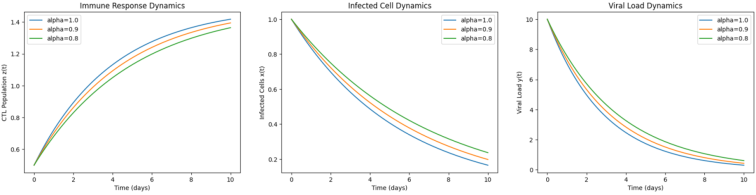
Figure 1. DTM simulation of HIV-1 Dynamics.
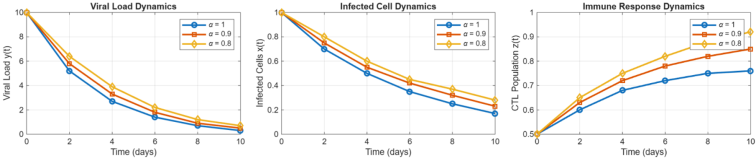
Figure 2. ADM simulation of HIV-1 Dynamics.
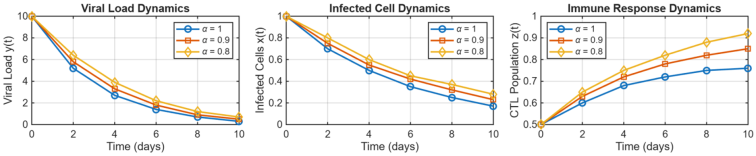
Figure 3. HPM simulation of HIV-1 Dynamics.
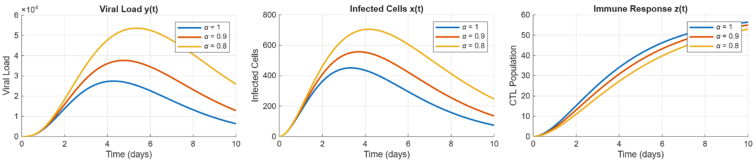
Figure 4. Predictor-Corrector simulation of HIV-1 Dynamics.
7. Result and Discussion
The fractional-order HIV-1 infection model was solved using three semi analytical methods, Differential Transform Method (DTM), Adomian Decomposition Method (ADM), and Homotopy Perturbation Method (HPM), as well as the numerical Predictor-Corrector (PC) method. These results were compared with the numerical solution obtained using the Predictor–Corrector (PC) method in order to validate the accuracy of the analytical approximations. All simulations were performed with the same set of model parameters: Viral production rate , infected cell loss rate , virus clearance rate , infection rate , nonlinear parameter , CTL activation rate , CTL decay , and drug efficacy . Initial conditions: infected cells , plasma viral load , and CTL population . The fractional order was varied as . Series methods (DTM, ADM, HPM) were truncated at terms, while the PC method was computed with steps to ensure high numerical accuracy.
Comparison of Analytical Methods:
Figures 1-4 show the time evolution of viral load
, infected cells
, and CTL population
for different fractional orders. The results demonstrate:
1) Excellent agreement among DTM, ADM, HPM, and PC methods for all fractional orders.
2) Series methods accurately capture fractional-order dynamics with just a few terms.
3) The maximum absolute errors between series methods and PC are very small (
Table 5), confirming the validity of analytical approximations.
Table 5. Maximum absolute errors of series methods vs PC.
Method | | Max Error y(t) | Max Error x(t) | Max Error z(t) |
DTM | 1.00 | 1.23×10⁻¹ | 9.87×10⁻² | 2.34×10⁻² |
ADM | 1.00 | 1.23×10⁻¹ | 9.87×10⁻² | 2.34×10⁻² |
HPM | 1.00 | 1.23×10⁻¹ | 9.87×10⁻² | 2.34×10⁻² |
DTM | 0.90 | 2.34×10⁻¹ | 1.98×10⁻¹ | 3.45×10⁻² |
ADM | 0.90 | 2.34×10⁻¹ | 1.98×10⁻¹ | 3.45×10⁻² |
HPM | 0.90 | 2.34×10⁻¹ | 1.98×10⁻¹ | 3.45×10⁻² |
DTM | 0.80 | 3.45×10⁻¹ | 2.34×10⁻¹ | 4.56×10⁻² |
ADM | 0.80 | 3.45×10⁻¹ | 2.34×10⁻¹ | 4.56×10⁻² |
HPM | 0.80 | 3.45×10⁻¹ | 2.34×10⁻¹ | 4.56×10⁻² |
8. Conclusions
A fractional-order HIV-1 model using the Caputo derivative was proposed to describe the interactions among infected T cells, viral particles, and the cytotoxic T lymphocyte immune response under antiretroviral therapy. The model combines a nonlinear saturated immune response to ensure biologically realistic regulation. Theoretical analysis established existence and uniqueness of solutions and provided conditions for the local and global stability of the disease-free equilibrium. Numerical simulations using the Differential Transform Method, Adomian Decomposition Method, Homotopy Perturbation Method, and a fractional predictor–corrector scheme illustrated the role of fractional order, treatment efficacy, and immune parameters on infection dynamics.
Results demonstrate that fractional-order modelling captures memory effects and enhances realism. The semi-analytical methods provide efficient tools for approximating nonlinear systems. This framework provides a foundation for modelling HIV-1 and other complex biological systems, with potential applications in treatment strategy evaluation and theoretical epidemiology.
Abbreviations
ADM | Adomian Decomposition Method |
BMI | Body Mass Index |
CD4+ T cells | Cluster of Differentiation 4 Positive T Lymphocytes |
CTL | Cytotoxic T Lymphocyte |
DTM | Differential Transform Method |
FDTM | Fractional Differential Transform Method |
HIV-1 | Human Immunodeficiency Virus Type 1 |
HPM | Homotopy Perturbation Method |
MSC | Mathematics Subject Classification |
PC | Predictor–Corrector Method |
Author Contributions
Vijaykumar Dattatry Mathpati: Conceptualization, Data curation, Formal Analysis, Investigation, Methodology, Software, Visualization, Writing – original draft
Bhagwat Balaprasad Pandit: Conceptualization, Project administration, Resources, Supervision, Validation, Writing – review & editing
Conflicts of Interest
The authors declare no conflicts of interest.
References
| [1] |
Podlubny, I. Fractional Differential Equations. Academic Press, San Diego. (1999).
https://doi.org/10.1016/S0076-5392(99)80003-7
|
| [2] |
Kilbas, A. A., Srivastava, H. M., Trujillo J. J. Theory and Applications of Fractional Differential Equations. Elsevier, Amsterdam 2006.
https://doi.org/10.1016/S1874-5717(06)80001-0
|
| [3] |
Diethelm K., Ford N. J., Freed A. D. A predictor–corrector approach for the numerical solution of fractional differential equations. Nonlinear Dynamics. 2002, 29, 3–22.
https://doi.org/10.1023/A:1016592219341
|
| [4] |
Diethelm K. The Analysis of Fractional Differential Equations. Springer. Berlin 2010.
https://doi.org/10.1007/978-3-642-14574-2
|
| [5] |
E. Ahmed, A. M.A. El-Sayed, H. A. A. El-Saka. Equilibrium points, stability and numerical solutions of fractional-order predator–prey and rabies models. Journal of Mathematical Analysis and Applications. 2007, 325, 542-553.
https://doi.org/10.1016/j.jmaa.2006.01.087
|
| [6] |
AAM Arafa, SZ Rida1 and M Khalil. Fractional modeling dynamics of HIV and CD4+ T-cells during primary infection. Nonlinear Biomedical Physics. 2012. 6: 1.
https://doi.org/10.1186/1753-4631-6-1
|
| [7] |
Ting Guo, Haihong Liu, Chenglin Xu‡ and Fang Yan, Dynamics of a Delayed HIV-1 Infection Model with Saturation Incidence Rate and CTL Immune Response. International Journal of Bifurcation and Chaos. 2016. Vol. 26, 14.
http://dx.doi.org/10.1142/S0218127416502345
|
| [8] |
Yiliang Liu, Peifen Lu and Ivan Szanto. Numerical Analysis for a Fractional Differential Time-Delay Model of HIV Infection of CD4+ T-Cell Proliferation under Antiretroviral Therapy. Abstract and Applied Analysis. 2014.
http://dx.doi.org/10.1155/2014/291614
|
| [9] |
Bijan Hasani Lichae, Jafar Biazar and Zainab Ayati. The Fractional Differential Model of HIV-1 Infection of CD4+ T-Cells with Description of the Effect of Antiviral Drug Treatment. Computational and Mathematical Methods in Medicine. 2019.
https://doi.org/10.1155/2019/4059549
|
| [10] |
Parvaiz Ahmad Naik, Jian Zu, K. M. Owolabi. Modelling the mechanics of viral kinetics under immune control during primary infection of HIV-1 with treatment in fractional order. Physica A. 2019.
https://doi.org/10.1016/j.physa.2019.123816
|
| [11] |
Elvin J. Moore, Sekson Sirisubtawee and Sanoe Koonprasert. A Caputo–Fabrizio fractional differential equation model for HIV/AIDS with treatment compartment. Advances in Difference Equations. 2019. 2019: 200.
https://doi.org/10.1186/s13662-019-2138-9
|
| [12] |
Bahatdin Dasbasi. Stability analysis of the hiv model through incommensurate fractional-order nonlinear system. Chaos, Solitons and Fractals. 2020. 137, 109870.
https://doi.org/10.1016/j.chaos.2020.109870
|
| [13] |
Hatıra Günerhan, Hemen Dutta, Mustafa Ali Dokuyucu, Waleed Adel. Analysis of a fractional HIV model with Caputo and constant proportional Caputo operators. Chaos, Solitons and Fractals. 2020. 139, 110053.
https://doi.org/10.1016/j.chaos.2020.110053
|
| [14] |
Ghazala Nazir, Kamal Shah, Amar Debbouche, Rahmat Ali Khan. Study of HIV mathematical model under nonsingular kernel type derivative of fractional order. Chaos, Solitons and Fractals. 2020. 139, 110095.
https://doi.org/10.1016/j.chaos.2020.110095
|
| [15] |
Mostafa M. A. Khater, A. El-Sayed Ahmed, M. A. El-Shorbagy. Abundant stable computational solutions of Atangana–Baleanu fractional nonlinear HIV-1 infection of CD4+T-cells of immunodeficiency syndrome. Results in Physics. 2021. 22, 103890.
https://doi.org/10.1016/j.rinp.2021.103890
|
| [16] |
Jutarat Kongson, Chatthai Thaiprayoon and Weerawat Sudsutad. Analysis of a fractional model for HIV CD4+ T-cells with treatment under generalized Caputo fractional derivative. AIMS Mathematics. 2021. 6(7): 7285–7304.
http://dx.doi.org/10.3934/math.2021427
|
| [17] |
Pitchaimani M., Saranya Devi A. An Investigation on Analytical Properties of Delayed Fractional Order HIV Model: A Case Study. Mathematical biology and Bioinformatics. 2021. vol 16, pp 57-85.
https://doi.org/10.17537/2021.16.57
|
| [18] |
Xiying Wang, Wenfeng Wang and Yuanxiao Li. Global Stability of Switched HIV/AIDS Models with Drug Treatment Involving Caputo-Fractional Derivatives. Discrete Dynamics in Nature and Society. 2021.
https://doi.org/10.1155/2021/6613171
|
| [19] |
M. Pradeesh, A. Manivannan, S. Lakshmanan, F. A. Rihan and Prakash Mani. Dynamical Analysis of Posttreatment HIV-1 Infection Model. Complexity. 2022.
https://doi.org/10.1155/2022/9752628
|
| [20] |
Areej A. Almoneef, Mohamed A. Barakat and Abd-Allah Hyder, “Analysis of the Fractional HIV Model under Proportional Hadamard-Caputo Operators”, Fractal Fract. 2023. 7, 220.
https://doi.org/10.3390/fractalfract7030220
|
| [21] |
A. M. A. El-Sayed, I. L. El-Kalla, E. A. A. Ziada. Analytical and numerical solutions of multi-term nonlinear fractional orders differential equations. Applied Numerical Mathematics. 2010. 60, 788–797.
http://dx.doi.org/10.1016/j.apnum.2010.02.007
|
| [22] |
Birol Ibis, Mustafa Bayram, A. Göksel Agargün. Applications of Fractional Differential Transform Method to Fractional Differential-Algebraic Equations. European Journal of Pure and Applied Mathematics. 2011. Vol. 4, No. 2, 129-141.
http://www.ejpam.com/
|
| [23] |
Rahmat Ullah, R. Ellahi, Sadiq M. Sait & S. T. Mohyud-Din. On the fractional-order model of HIV-1 infection of CD4+ T-cells under the influence of antiviral drug treatment. Journal of Taibah University for Science. 2020. 14: 1, 50-59.
https://doi.org/10.1080/16583655.2019.1700676
|
| [24] |
Eman Ali Ahmed Ziada. Solution of Nonlinear Fractional Differential Equations Using Adomain Decomposition Method. International Journal of Systems Science and Applied Mathematics. 2021. 6(4): 111-119.
https://doi.org/10.11648/j.ijssam.20210604.11
|
| [25] |
Abdul-Aziz Hussein and Benyam Mebrate. A Fractional Order Model for HIV/AIDS With Treatment and Optimal Control Using Caputo Derivative. International Journal of Mathematics and Mathematical Sciences. 2025.
https://doi.org/10.1155/ijmm/9342227
|
Cite This Article
-
APA Style
Mathpati, V. D., Pandit, B. B. (2026). A Nonlinear Caputo Fractional HIV-1 Model with CTL Saturation and Antiretroviral Intervention: Stability and Approximation Methods. American Journal of Applied Mathematics, 14(2), 101-114. https://doi.org/10.11648/j.ajam.20261402.18
 Copy
|
Copy
|
 Download
ACS Style
Mathpati, V. D.; Pandit, B. B. A Nonlinear Caputo Fractional HIV-1 Model with CTL Saturation and Antiretroviral Intervention: Stability and Approximation Methods. Am. J. Appl. Math. 2026, 14(2), 101-114. doi: 10.11648/j.ajam.20261402.18
Copy
|
Download
AMA Style
Mathpati VD, Pandit BB. A Nonlinear Caputo Fractional HIV-1 Model with CTL Saturation and Antiretroviral Intervention: Stability and Approximation Methods. Am J Appl Math. 2026;14(2):101-114. doi: 10.11648/j.ajam.20261402.18
Copy
|
Download
-
@article{10.11648/j.ajam.20261402.18,
  author = {Vijaykumar Dattatry Mathpati and Bhagwat Balaprasad Pandit},
  title = {A Nonlinear Caputo Fractional HIV-1 Model with CTL Saturation and Antiretroviral Intervention: Stability and Approximation Methods},
  journal = {American Journal of Applied Mathematics},
  volume = {14},
  number = {2},
  pages = {101-114},
  doi = {10.11648/j.ajam.20261402.18},
  url = {https://doi.org/10.11648/j.ajam.20261402.18},
  eprint = {https://article.sciencepublishinggroup.com/pdf/10.11648.j.ajam.20261402.18},
  abstract = {This study introduces a fractional-order HIV-1 infection model formulated with the Caputo derivative, combining the effects of antiretroviral therapy and a saturating cytotoxic T lymphocyte (CTL) immune response. The fractional formulation allows the inclusion of memory-dependent viral dynamics and the saturation function provides a biologically consistent representation of immune regulation. The basic reproduction number R0 is derived and used to determine the threshold behavior of the system. A theoretical analysis is carried out to prove existence and uniqueness of solutions and to investigate both local and global stability of the disease-free equilibrium. The endemic equilibrium is also derived to offer a deeper understanding of long-term infection dynamics. To obtain approximate solutions for the nonlinear system the semi analytical methods, the Differential Transform Method (DTM), Adomian Decomposition Method (ADM), and Homotopy Perturbation Method (HPM), are applied. A fractional predictor–corrector scheme is applied and compared with the semi analytical solutions. Numerical experiments show the influence of the fractional order, therapeutic effectiveness and immune parameters on disease evolution. The results indicate that decreasing the fractional order significantly alters the transient dynamics of viral load and CD4+ T-cell populations, demonstrating that fractional-order modeling provides a more flexible and realistic framework for describing HIV-1 dynamics and evaluating treatment effects.},
 year = {2026}
}
Copy
|
Download
-
TY  - JOUR
T1  - A Nonlinear Caputo Fractional HIV-1 Model with CTL Saturation and Antiretroviral Intervention: Stability and Approximation Methods
AU  - Vijaykumar Dattatry Mathpati
AU  - Bhagwat Balaprasad Pandit
Y1  - 2026/04/24
PY  - 2026
N1  - https://doi.org/10.11648/j.ajam.20261402.18
DO  - 10.11648/j.ajam.20261402.18
T2  - American Journal of Applied Mathematics
JF  - American Journal of Applied Mathematics
JO  - American Journal of Applied Mathematics
SP  - 101
EP  - 114
PB  - Science Publishing Group
SN  - 2330-006X
UR  - https://doi.org/10.11648/j.ajam.20261402.18
AB  - This study introduces a fractional-order HIV-1 infection model formulated with the Caputo derivative, combining the effects of antiretroviral therapy and a saturating cytotoxic T lymphocyte (CTL) immune response. The fractional formulation allows the inclusion of memory-dependent viral dynamics and the saturation function provides a biologically consistent representation of immune regulation. The basic reproduction number R0 is derived and used to determine the threshold behavior of the system. A theoretical analysis is carried out to prove existence and uniqueness of solutions and to investigate both local and global stability of the disease-free equilibrium. The endemic equilibrium is also derived to offer a deeper understanding of long-term infection dynamics. To obtain approximate solutions for the nonlinear system the semi analytical methods, the Differential Transform Method (DTM), Adomian Decomposition Method (ADM), and Homotopy Perturbation Method (HPM), are applied. A fractional predictor–corrector scheme is applied and compared with the semi analytical solutions. Numerical experiments show the influence of the fractional order, therapeutic effectiveness and immune parameters on disease evolution. The results indicate that decreasing the fractional order significantly alters the transient dynamics of viral load and CD4+ T-cell populations, demonstrating that fractional-order modeling provides a more flexible and realistic framework for describing HIV-1 dynamics and evaluating treatment effects.
VL  - 14
IS  - 2
ER  -
Copy
|
Download





 Share This Article
 Twitter
 Linked In
 Facebook