
Considering the individual or collective appropriation of food security, can the reuse of organic waste be a waste management solution? The use of organic matter in market gardening. Bio-waste refers to organic waste produced by human and animal activities. In my research, it represents approximately 30% of household waste. Bio-waste can be recovered through composting or methanization. Organic waste recovery should be of interest to many people, and each of them should have reasons for using the organic waste they produce. The objective of this contribution is to demonstrate that the recovery of solid household waste can be a solution for managing urban household waste. The method adopted is essentially based on a combination of techniques for collecting data in the field. This is the so-called empirical method. Following a field assessment, we developed interview guides and created a questionnaire. The underlying premise of this contribution is that the recovery of organic waste helps reduce the amount of waste going into household garbage, and public action should focus on raising awareness among local populations. This contribution is structured around three main areas: firstly, the sorting of household waste (food waste) at the source; secondly, composting methods for this waste; and finally, the use of compost for small-scale market gardening.
| Published in | American Journal of Environmental Protection (Volume 15, Issue 4) |
| DOI | 10.11648/j.ajep.20261504.11 |
| Page(s) | 88-97 |
| Creative Commons |
This is an Open Access article, distributed under the terms of the Creative Commons Attribution 4.0 International License (http://creativecommons.org/licenses/by/4.0/), which permits unrestricted use, distribution and reproduction in any medium or format, provided the original work is properly cited. |
| Copyright |
Copyright © The Author(s), 2026. Published by Science Publishing Group |
Valorization, Organic Waste, Market Gardening, Home, Ngor, Senegal
Nature | Function |
|---|---|
Cut fruit and vegetable peelings (raw, cooked or spoiled). | help with decomposition |
Banana peels (rich in potassium) | improve the quality of the compost |
Wood chips, sawdust, and small branches | undefined |
Coffee grounds, paper filter | undefined |
wood ash | undefined |
Rice, wheat, millet, bread, pasta (spaghetti, etc.) - raw, cooked, or moldy | undefined |
eggshells (crushed, they're better) | decompose more easily |
Fish scales (calcium) | undefined |
Ears of corn | Undefined |
Poultry droppings | undefined e |
Fresh (shredded) tree leaves | decompose more quickly |
Dried herbs | Undefined |
Hay or straw | undefined e |
Soil and manure (nitrogen), sheep and goat manure contain microorganisms. | favorable to decomposition and act as activators to heat the pile |
Garden waste and grass clippings | undefined e |
Seedless weeds | undefined e |
Walnut shells, peanut shells, avocado or peach pits | undefined e |
Shredded newspaper (good for compost as it's printed with vegetable-based inks) | undefined e |
Prepared meals | undefined e |
Tea leaves and tea bag | undefined e |
Natural, untreated fabric such as wool, cotton, leather, cotton rags | undefined e |
Crushed bones (to be isolated and crushed at the composting site) | undefined e |
Crushed fish heads | undefined e |
Non-compostable waste | Metals (iron/steel, cast iron, copper, aluminum, etc.) |
plastics (all forms of plastic such as PVC, blue or black bags, polypropylene, PET (plastic bottle), lycra, polyester, etc. | |
Broken glass and mirror | |
Treated wood and plywood sawdust (are toxic) | |
Meat (cooked or raw) and bones (whole) attract prowlers | |
Fishes | |
Liquid waste | |
Red or yellow inks from dye works or elsewhere (contain cadmium and other heavy metals) | |
Dust from the house | |
Diseased plants and plants treated with pesticides | |
dairy products (curdled milk, yogurt, leftover "lakh", cheese, butter, etc.) | |
Fat (vegetable oils, mayonnaise, vinaigrette, salad dressings, etc.) must be removed from the thieboudiene (fish and rice) with water before it can be composted. | |
Wax paper or colored paper | |
Seafood shells ("bouthe") | |
Animal excrement (dog and cat) | |
Wicks |
FESMAN | World Festival of Black Arts |
SDE | The Senegalese Water Company |
SENELEC | The National Electricity Company of Senegal |
SONATEL | The National Telecommunications Company |
PET | Polyethylene Terephthalate |
PVC | Polyvinyl Chloride (widely used for plastic bottles) |
| [1] | ONIBOKUN A. G. 2001. Urban waste management: solutions for Africa. Paris: IDRC-Karthala, 250 p. |
| [2] | MBENGUE Ramatoulaye. 2015: Local management strategies for urban solid waste in Ngor. Forms of sanitation organization and problems. Doctoral thesis, EDEQUE, FST, UCAD, 266 p. |
| [3] | MODECOM 2006, Method for Characterizing Household Waste / 3rd edition, ADEME editions, Paris, 64p. |
| [4] | CISSE O. 2012, Garbage dumps in Africa Mbeubeuss in Dakar, Senegal, Karthala and CREPOS, 329 p. |
| [5] | MBENGUE Ramatoulaye., Sambou H; Traore V. B; Ndour A.; Thiam M. D. & Diaw A. T. 2015: Local management and perceptions of urban waste: Case of the Commune of Ngor (Dakar/Senegal), November 2015, Annals of the Faculty of Letters and Human Sciences, ETHOS UCAD Review, pp. 53-72. |
| [6] | Environmental Code 2001, Law No. 2001-01 of January 15, 2001 establishing the Environmental Code, Decree No. 2001-282 of April 12, 2001 implementing the Environmental Code, Ministry of Youth, Environment and Classified E Local Authorities Code, 1996, Law No. 96-06 of March 22, 1996 establishing the Local Authorities Code, 76 p. stablishments, GTZ, 79 p. |
| [7] | Sidy Tounkara 2016: The valorization of organic waste in “peri-urban” agriculture in Dakar (Senegal): analysis of a strategic multifunctionality. Sociology. University of Toulouse-Le Mirail, Toulouse II, 2015. French. ⟨NNT: 2015TOU20085⟩. ⟨tel-01257664⟩, 458 pages. |
| [8] | CISSE O. & WONE S. S, 2013, Waste management in Dakar (2000-2012): The institutional imbroglio. Momar-Coumba Diop (ed.), CRES-Karthala, (2012) pp 759-788. |
| [9] | CISSE O., 2007, The Money of Waste: The Informal Economy in Dakar, Paris, Karthala, Coll. Men and Societies, 165 pages. |
| [10] | Cirelli C. and Maccaglia F., 2021, “Thinking about politics through waste,” Geocarrefour, 95/1. |
| [11] | TCHAOU M. C. 2011, contribution to the improvement of the urban solid waste management system in the municipality of Lome: case of the Gbadago district, International Master, Environment, Water and Health, 51 p. |
| [12] | HOUNKPATIN Romance and KOTTIN Marie Caroline, 2009: The management of household solid waste (HSW) in Cotonou: proposal for an appropriate territorial planning framework, 178 p. |
| [13] | DIENE KANE Ahmadou, 2010: The problem of household waste management in the Borough Communes of Dakar. Case of the Borough Commune of Grand Dakar, final year dissertation at the National School of Specialized Social Workers (ENTSS), 17th class, 133 p. |
| [14] | Ramatoulaye Mbengue Ndiaye, Bouna Ndiaye, Vieux Boukhaly Traore, Amadou Tahirou Diaw (2021): Household Solid Waste, a Challenge of Urban Sanitation: Case of Ngor Municipality (Dakar, Senegal). American Journal of Remote Sensing, Vol. 9, No. 1, Pages: 47-54. Published online: April 26, 2021, |
| [15] | OOSTERVEER, P. 2009. “Urban environmental services and the state in East Africa; between neo-developmental and network governance approaches”. GeoForum, vol. 40, n° 6, November, pp. 1061-1068. |
| [16] | PATIN R. H & KOTTIN M. C., 2009, Household solid waste (HSW) management in Cotonou: Proposal for an appropriate pre-collection planning framework, EEAM/UAC-DST in Planning and Land Use, Study report, 50 p. |
| [17] | Coortel D., 2024, Making Do with Waste: Living and Working in a Damaged World, Vulaines-Sur-Seine, Croquant Publishing. |
| [18] | Rocher L., 2006: Governing waste. Territorial management of household waste and public participation, 2006, Doctoral thesis in spatial planning-urbanism (dir. Larrue C.), University of Tours, 409 p. |
| [19] | Gregson N., 2023, The Waste of the World: Consumption, Economies and the Making of the Global Waste Problem, London, Bristol University Press. |
| [20] | Hajek I., 2021, “Recycling, Gleaning, Zero Waste: A New Conception of Politics?” Geocarrefour, 95/1|2021. |
| [21] | Koszewska M., 2018, “Circular Economy: Challenges for the Textile and Clothing Industry.” Autex Research Journal, vol. 18, n°4, p. 337-347. |
| [22] | Leal Sayonara, 2024, “From the mediatization of social suffering to the public experience of injustice: online testimonies of recyclable material collectors regarding the deactivation of the Jóquei Landfill, in the Federal District”, Ciências Sociais Em Revista, 60(2). |
| [23] | Compaore E. and Nanema L. S., 2010, “Composting and quality of compost from solid urban waste in the city of Bobo-Dioulasso, Burkina Faso”, Tropicultura, vol. 28, n°4, pp. 232-237. |
| [24] | Chalmin P. and Gaillochet C., 2009, From the rare to the infinite: a global overview of waste, Paris, Economica. |
| [25] | Kakai S. H. F. et al, 2010, “Urban agriculture and waste valorization in Benin: a sustainable development approach”, VertigO-the electronic journal in environmental sciences, vol. 10, no. 2, |
APA Style
Mbengue, R. (2026). Valorization of Small-scale (Domestic) Organic Household Solid Waste for Market Gardening in Ngor, Senegal: A Case Study. American Journal of Environmental Protection, 15(4), 88-97. https://doi.org/10.11648/j.ajep.20261504.11
ACS Style
Mbengue, R. Valorization of Small-scale (Domestic) Organic Household Solid Waste for Market Gardening in Ngor, Senegal: A Case Study. Am. J. Environ. Prot. 2026, 15(4), 88-97. doi: 10.11648/j.ajep.20261504.11
@article{10.11648/j.ajep.20261504.11,
  author = {Ramatoulaye Mbengue},
  title = {Valorization of Small-scale (Domestic) Organic Household Solid Waste for Market Gardening in Ngor, Senegal: A Case Study},
  journal = {American Journal of Environmental Protection},
  volume = {15},
  number = {4},
  pages = {88-97},
  doi = {10.11648/j.ajep.20261504.11},
  url = {https://doi.org/10.11648/j.ajep.20261504.11},
  eprint = {https://article.sciencepublishinggroup.com/pdf/10.11648.j.ajep.20261504.11},
  abstract = {Considering the individual or collective appropriation of food security, can the reuse of organic waste be a waste management solution? The use of organic matter in market gardening. Bio-waste refers to organic waste produced by human and animal activities. In my research, it represents approximately 30% of household waste. Bio-waste can be recovered through composting or methanization. Organic waste recovery should be of interest to many people, and each of them should have reasons for using the organic waste they produce. The objective of this contribution is to demonstrate that the recovery of solid household waste can be a solution for managing urban household waste. The method adopted is essentially based on a combination of techniques for collecting data in the field. This is the so-called empirical method. Following a field assessment, we developed interview guides and created a questionnaire. The underlying premise of this contribution is that the recovery of organic waste helps reduce the amount of waste going into household garbage, and public action should focus on raising awareness among local populations. This contribution is structured around three main areas: firstly, the sorting of household waste (food waste) at the source; secondly, composting methods for this waste; and finally, the use of compost for small-scale market gardening.},
 year = {2026}
}
TY  - JOUR
T1  - Valorization of Small-scale (Domestic) Organic Household Solid Waste for Market Gardening in Ngor, Senegal: A Case Study
AU  - Ramatoulaye Mbengue
Y1  - 2026/07/22
PY  - 2026
N1  - https://doi.org/10.11648/j.ajep.20261504.11
DO  - 10.11648/j.ajep.20261504.11
T2  - American Journal of Environmental Protection
JF  - American Journal of Environmental Protection
JO  - American Journal of Environmental Protection
SP  - 88
EP  - 97
PB  - Science Publishing Group
SN  - 2328-5699
UR  - https://doi.org/10.11648/j.ajep.20261504.11
AB  - Considering the individual or collective appropriation of food security, can the reuse of organic waste be a waste management solution? The use of organic matter in market gardening. Bio-waste refers to organic waste produced by human and animal activities. In my research, it represents approximately 30% of household waste. Bio-waste can be recovered through composting or methanization. Organic waste recovery should be of interest to many people, and each of them should have reasons for using the organic waste they produce. The objective of this contribution is to demonstrate that the recovery of solid household waste can be a solution for managing urban household waste. The method adopted is essentially based on a combination of techniques for collecting data in the field. This is the so-called empirical method. Following a field assessment, we developed interview guides and created a questionnaire. The underlying premise of this contribution is that the recovery of organic waste helps reduce the amount of waste going into household garbage, and public action should focus on raising awareness among local populations. This contribution is structured around three main areas: firstly, the sorting of household waste (food waste) at the source; secondly, composting methods for this waste; and finally, the use of compost for small-scale market gardening.
VL  - 15
IS  - 4
ER  -
Department of Geography, Cheikh Anta DIOP University, Dakar, Senegal
Biography: Ramatoulaye Mbengue, a geographer by training, is a lecturer and researcher in the Department of Geography Cheikh Anta Diop University in Dakar, Senegal. She specializes in urban geography, focusing on environmental governance, waste management, rudology, the circular economy, geomatics, remote sensing, and GIS. She defended her doctoral thesis, entitled "Strategy for Waste Management," with a specialization in coastal governance and the coastal environment. This thesis was part of the doctoral program in coastal environment at the Faculty of Sciences and Techniques of Cheikh Anta Diop University in Dakar, Senegal. She has published extensively in peer-reviewed national journals, with the majority of her publications indexed. Her research focuses on environmental governance, quality of life management, the challenges of managing urban solid waste, sanitation, and related issues.
Research Fields: environmental governance, waste management, rudology, the circular economy, geomatics, remote sensing, GIS

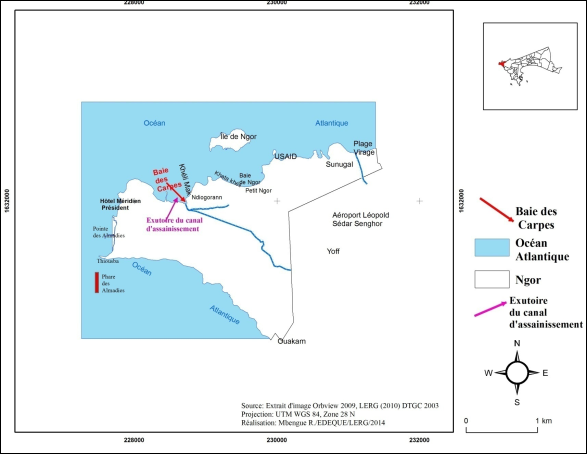
Figure 1. Location of the study area.
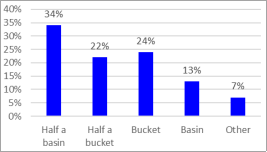
Figure 2. Estimated waste production in Ngor.
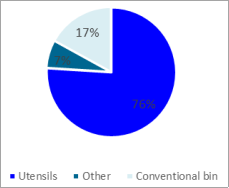
Figure 3. Types of bin used.
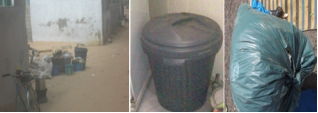
Figure 4. Method of waste disposal at home.
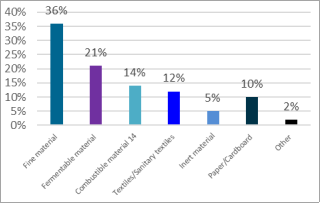
Figure 5. The composition of solid waste in Ngor.
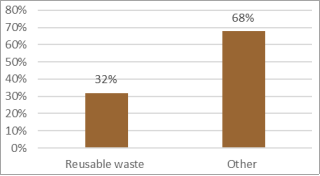
Figure 6. Reusable waste.
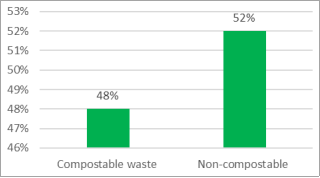
Figure 7. Percentage of compostable waste.
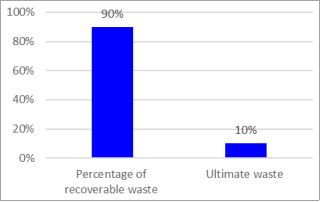
Figure 8. Ultimate waste.
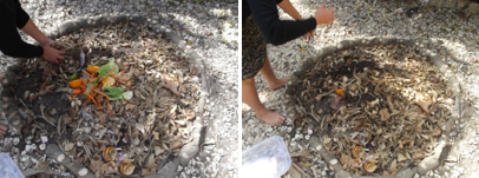
Figure 9. Composting in the home garden.
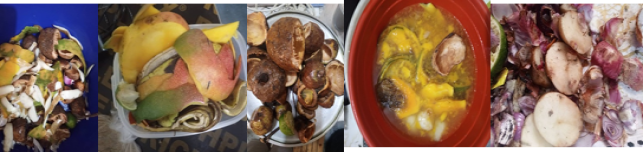
Figure 10. Organic waste.
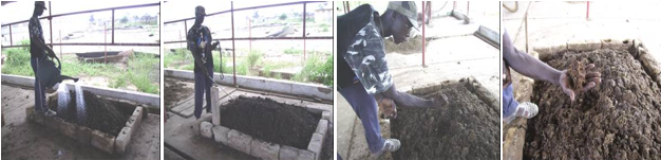
Figure 11. Evolution of a Compost Process.
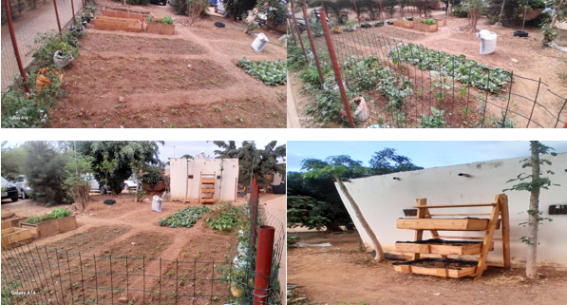
Figure 12. Use of Compost.

Information



 Share This Article
 Twitter
 Linked In
 Facebook
 Copy
Copy Download