Research Article | | Peer-Reviewed

Assessment of Knowledge, Attitudes and Utilisation of Professional Dental Care Services Among Rural Residents of Ikwerre Local Government Area, Rivers State, Nigeria

Received: 6 February 2026     Accepted: 20 February 2026     Published: 4 March 2026
Views:       Downloads:
Abstract

Oral health is an essential component of overall health and quality of life; however, utilisation of professional dental care services remains low in many rural communities in Nigeria. Knowledge and attitudes toward dental care are key determinants of service utilisation, particularly in underserved populations. This study assessed the knowledge, attitudes, and utilisation of professional dental care services among rural residents of Ikwerre Local Government Area, Rivers State, Nigeria. Method: A community-based cross-sectional study was conducted among 300 rural residents selected using multistage sampling. Data were collected using a structured interviewer-administered questionnaire. Descriptive statistics were used to summarize respondents’ knowledge, attitudes, and utilisation of dental care services, while Chi-square tests were used to examine associations between socio-demographic characteristics and knowledge and attitudes. Statistical significance was set at p < 0.05. Result: Most respondents demonstrated good knowledge of oral/dental health (84.3%). Despite this, attitudes toward dental care utilisation were largely negative, with 63.7% of respondents exhibiting unfavourable attitudes. Utilisation of professional dental care services was generally low and largely symptom-driven. Sex and monthly income were significantly associated with knowledge of oral/dental health (p < 0.05). Attitude toward dental care utilisation was significantly associated with level of education, occupation, and monthly income (p < 0.001), while age, marital status, and sex showed no significant association. Conclusion: Although knowledge of oral health was relatively high among rural residents of Ikwerre Local Government Area, negative attitudes toward dental care and low utilisation of professional services persist. Socioeconomic factors play a significant role in shaping attitudes and knowledge, underscoring the need for targeted oral health education, attitude-focused interventions, and improved accessibility and affordability of dental services in rural communities.

Published in American Journal of Health Research (Volume 14, Issue 2)
DOI 10.11648/j.ajhr.20261402.11
Page(s) 65-76
Creative Commons

This is an Open Access article, distributed under the terms of the Creative Commons Attribution 4.0 International License (http://creativecommons.org/licenses/by/4.0/), which permits unrestricted use, distribution and reproduction in any medium or format, provided the original work is properly cited.

Copyright

Copyright © The Author(s), 2026. Published by Science Publishing Group

Keywords

Oral Health, Dental Care Utilisation, Attitude, Knowledge, Rural Population, Ikwerre LGA

1. Introduction
Oral health is a critical component of overall well-being and general health, with a substantial influence on quality of life. Good oral health supports essential functions such as eating, speaking, and social interaction, while poor oral health contributes to pain, functional limitations, psychological distress, and reduced productivity . Recognising its importance, the World Health Organisation (WHO) identifies oral health as an integral part of universal health coverage and emphasises its close relationship with systemic health and non-communicable diseases .
Globally, oral diseases, including periodontal diseases, tooth loss, dental caries, and oral infections, are among the most prevalent non-communicable diseases, affecting approximately 3.5 billion people worldwide . Despite being largely preventable, these conditions continue to impose a substantial health and economic burden, particularly in settings where access to preventive oral healthcare and early treatment is limited .
In developed nations, oral health systems prioritise preventive care, routine dental check-ups, and early treatment, with professional dental care embedded within mainstream healthcare services [4]. In these contexts, positive public attitudes toward professional dental care, characterised by high perceived importance of oral health, trust in dental professionals, and acceptance of routine dental visits, have contributed to higher utilisation of dental services and improved oral health outcomes . Preventive dental attendance is commonly regarded as a normative health behaviour rather than a response to pain or advanced disease .
Evidence from developed countries further indicates that favourable attitudes toward preventive dental care are shaped by long-standing oral health education, widespread dental insurance coverage, and well-established primary oral healthcare systems . Nevertheless, even within these settings, attitudinal barriers such as dental anxiety, fear of pain, and negative past dental experiences continue to influence utilisation patterns among certain population groups, particularly rural residents and socioeconomically disadvantaged individuals . This underscores the central role of attitudes in dental service utilisation, even where services are widely available .
In contrast, attitudes toward professional dental care in developing countries are often less favourable and more strongly shaped by cultural beliefs, limited awareness of preventive dentistry, and competing socioeconomic priorities . In many developing nations, dental care is commonly perceived as curative rather than preventive, with professional services sought primarily for pain relief or advanced oral disease . Negative attitudes, such as the belief that tooth loss is an inevitable part of ageing, fear of dental procedures, and reliance on traditional or informal care providers, remain prevalent and contribute significantly to low utilisation of professional dental services .
Nigeria exemplifies these challenges. Despite increasing awareness of oral health issues, attitudes toward professional dental care among Nigerians remain largely symptom-driven. Empirical studies consistently report that dental visits are motivated mainly by pain or severe discomfort, while routine preventive dental attendance is uncommon . Negative perceptions of dental care, including fear of tooth extraction, concerns about cost, and mistrust of dental procedures, have been identified as major attitudinal barriers to utilisation, particularly among rural populations . These attitudes are further reinforced by the unequal distribution of dental facilities and personnel, which are predominantly concentrated in urban areas .
Within Rivers State, disparities in oral health attitudes and utilisation mirror national patterns. While urban residents may demonstrate relatively more positive attitudes toward professional dental care due to better access and exposure, rural communities often exhibit entrenched negative perceptions that discourage routine dental visits . Preventive dental care is frequently undervalued, and professional services are commonly perceived as necessary only when oral pain becomes severe. Such attitudes contribute to delayed care-seeking, advanced disease presentation, and poorer oral health outcomes among rural dwellers .
Ikwerre Local Government Area of Rivers State consists largely of rural settlements where access to dental facilities is limited and community-level attitudes toward professional dental care remain poorly understood. The paucity of empirical evidence on how residents perceive oral diseases, professional dental services, and preventive oral healthcare constrains the ability of policymakers and health planners to design effective, culturally appropriate oral health interventions. Understanding local attitudes is therefore essential, as attitudes strongly influence whether available dental services are utilised.
Given the demonstrated role of attitudes in shaping dental care utilisation across diverse settings, from developed to developing contexts, there is a clear need to examine attitudinal dispositions alongside utilisation patterns in rural Nigerian communities. The study, therefore, assessed the attitudes and utilisation of professional dental care services among rural residents of the Ikwerre Local Government Area, Rivers State, Nigeria, to generate context-specific evidence to inform oral health education, improve service uptake, and reduce oral health inequalities.
2. Materials & Methods
2.1. Study Area
The research was conducted in Ikwerre Local Government Area (LGA), one of the 23 Local Government Areas in Rivers State, Nigeria. Ikwerre LGA is predominantly rural and comprises several communities engaged mainly in farming, trading, and artisanal occupations, with a population of approximately 265,400 and 121,905 adults . The area has limited health infrastructure, with few public and private health facilities and minimal access to dental health services. These characteristics make Ikwerre LGA a suitable setting for examining dental care utilisation among rural dwellers.
2.2. Study Design, Population, and Data Source
A descriptive, community cross-sectional design was adopted. This design was appropriate for assessing the current level of knowledge, attitude, and utilisation of professional dental care services among the rural population in Ikwerre Local Government Area, Rivers State, Nigeria.
The study population consisted of adult rural dwellers residing in selected communities in Ikwerre Local Government Area. Eligible participants included individuals aged 18 years and above who had lived in the community for at least six months before the study.
Data sources: Primary data.
2.3. Dependent and Independent Variables
The dependent (outcome) variable in this study was dental care utilisation, measured by respondents’ history of dental clinic attendance, dental visits within the past year, frequency of dental visits, reasons for dental visits, and place of dental care received.
The independent variables included age, gender, marital status, educational level, occupation, income level, awareness of dental clinics, reasons for non-utilisation, and satisfaction with dental services received. These variables were examined to determine their influence on dental care utilisation among rural dwellers.
2.4. Sample Size Determination
The minimum number of participants required for this study was estimated using the formula for a single population proportion . A prevalence rate of 14.9% (0.149), obtained from a previous related study by , was used as the reference value. At a 95% confidence level and a precision of 5%, the computed sample size was 217 respondents.
To account for the multistage sampling design, a design effect of 1.5 was applied, increasing the sample size to 326 participants (1.5 × 217). Accordingly, 326 questionnaires were administered. Of these, 300 were correctly completed and returned, yielding a response rate of 92.0%. The 300 valid questionnaires were then included in the final data analysis.
2.5. Sampling Technique
Participants were recruited through a multistage sampling procedure to ensure adequate coverage and representativeness of the study area. At the initial stage, four wards: Omagwa, Ozuaha, Ubima, and Isiokpo, were randomly chosen by balloting from the thirteen wards in Ikwerre Local Government Area.
In the second stage, a comprehensive list of all settlements within each selected ward, along with their population figures, was compiled. From each ward, three settlements were selected using simple random sampling by ballot. Subsequently, houses within the selected settlements were enumerated and assigned numbers to establish a sampling frame. Using a systematic sampling method, every fourth house was selected proportionately to the total number of houses in each settlement. This process continued until the allocated sample size for each ward was achieved.
At the final stage, one eligible participant was randomly chosen from each selected household. This multistage approach helped to enhance representativeness and reduce potential selection bias. In total, 300 respondents were enrolled in the study, with 75 participants drawn from each ward.
2.6. Eligibility Criteria
The target population for this research consisted of adult residents living in rural communities within Ikwerre Local Government Area, Rivers State. Participants eligible for inclusion were adults who had lived in the selected communities for a sufficient length of time to be well acquainted with the available health services and prevailing practices in the area. Only individuals who were present at the time of data collection and who voluntarily gave informed consent were enrolled in the study.
Individuals who refused to participate were not included. Also, residents who could not be reached after repeated household visits were excluded. To maintain the integrity and reliability of the data, questionnaires that were incompletely filled or contained inconsistent responses were removed before the final analysis.
2.7. Data Collection Instrument and Procedure
Data were collected using a semi-structured, pretested questionnaire developed based on the objectives of the study and relevant literature. The questionnaire captured information on socio-demographic characteristics, awareness of dental services, utilisation patterns, reasons for dental visits and non-visits, perceived barriers, and satisfaction with dental services.
The questionnaire was administered through an interviewer-administered approach to accommodate varying literacy levels among respondents. Trained research assistants fluent in English and the local language assisted with data collection. Each interview session lasted approximately 15–20 minutes. A total of 326 questionnaires were administered during fieldwork. Of these, 300 questionnaires were correctly completed and analysed, yielding a response rate of 92.0%, which is considered adequate for community-based surveys.
2.8. Validity and Reliability
Content and construct validity were ensured through expert review by academic supervisors and public oral health professionals. The questionnaire items were assessed for clarity, relevance, and consistency with the study objectives. Necessary modifications were made to eliminate ambiguity and bias. A pilot study was conducted among respondents in a similar rural community outside the study area. The internal consistency of the questionnaire was tested using Cronbach’s Alpha. A reliability coefficient of 0.7 or above was considered acceptable, indicating good internal consistency of the instrument.
2.9. Data Analysis
All completed questionnaires were carefully reviewed, coded, and cleaned before data entry. The dataset was subsequently analysed using IBM Statistical Package for the Social Sciences (SPSS). Descriptive statistical methods such as frequencies, percentages, and mean values were applied to present the socio-demographic profile of respondents as well as patterns of dental service utilisation. To examine relationships between dental care utilisation and categorical explanatory variables, inferential analyses including the Chi-square test and Fisher’s exact test were performed where appropriate. A p-value of less than 0.05 was adopted as the threshold for statistical significance.
3. Results
The Level of Knowledge of Dental Care Services among Respondents
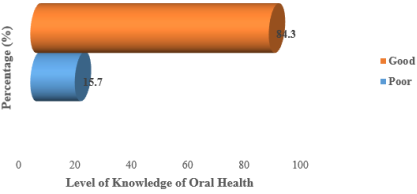
The figure presents the knowledge level (KL) of respondents regarding dental/oral health, showing that the majority of respondents demonstrated good knowledge. Specifically, 253 respondents (84.3%) had good knowledge, while only 47 respondents (15.7%) exhibited poor knowledge.
Figure 1. Knowledge Level of Oral Health by Respondents.
Association between Socio-Demographic Characteristics and Knowledge of Oral/Dental Health among Rural Residents of Ikwerre Local Government Area.
The table presents the association between selected socio-demographic characteristics and respondents’ knowledge of oral/dental health. Overall, most respondents demonstrated good knowledge; however, variations were observed across demographic groups. Chi-square analysis was used to assess the statistical significance of these associations.
With respect to age, respondents aged 33–47 years constituted the largest proportion of those with good knowledge (37.2%), followed by those aged 48–62 years (26.5%). Although respondents aged 18–32 years and 63–77 years had relatively higher proportions of poor knowledge compared to other age groups, the association between age and knowledge of oral/dental health was not statistically significant (χ² = 4.753, p = 0.189). Similarly, marital status showed no statistically significant association with oral health knowledge (χ² = 2.529, p = 0.141). While a higher proportion of respondents with good knowledge were married (60.1%), poor knowledge was also more common among married respondents (72.3%). In contrast, sex was significantly associated with knowledge of oral/dental health (χ² = 8.684, p = 0.003). Females constituted a higher proportion of respondents with poor knowledge (78.7%) compared to males (21.3%), whereas males were more likely to have good knowledge. Regarding educational level, respondents with secondary education accounted for the largest proportion of those with good knowledge (45.1%), followed by those with primary education (23.3%). Although respondents with tertiary education showed the lowest proportion of poor knowledge (2.1%), the association between level of education and oral health knowledge was not statistically significant (χ² = 4.591, p = 0.204).
Analysis of occupation revealed that farmers constituted the largest proportion of respondents in both the good and poor knowledge categories (34.0%). Artisans also represented a relatively higher proportion among those with poor knowledge (25.5%) compared to those with good knowledge (17.4%). However, the association between occupation and oral health knowledge was not statistically significant (χ² = 5.166, p = 0.272), indicating that occupational status did not significantly determine knowledge levels.
Conversely, monthly income showed a statistically significant association with knowledge of oral/dental health (χ² = 7.940, p = 0.045). Respondents earning ₦50,000–₦99,999 per month were more likely to have good knowledge, while those earning below ₦20,000 or between ₦20,000–₦49,999 constituted a higher proportion of respondents with poor knowledge.
In summary, the findings indicate that sex and monthly income were significant determinants of oral/dental health knowledge among rural residents of Ikwerre Local Government Area, while age, marital status, education, and occupation were not significantly associated. See Table 1 below.
Table 1. Knowledge of Oral/Dental Health based on Socio-Demographic Characteristics of Respondents.

Variables

Knowledge of Oral/dental health

<i></i>2

p-value

Good n (%)

Poor n (%)

Age (in years)

18-32

63 (24.9)

15 (31.9)

4.753

0.189

33-47

94 (37.2)

11 (23.4)

48-62

67 (26.5)

12 (25.5)

63-77

29 (11.5)

9 (19.1)

Marital Status

Not currently married

101 (39.9)

13 (27.7)

2.529

0.141

Married

152 (60.1)

34 (72.3)

Sex

Male

112 (44.3)

10 (21.3)

8.684

0.003*

Female

141 (55.7)

37 (78.7)

Level of Education

No formal education

49 (19.4)

10 (21.3)

4.591

0.204

Primary

59 (23.3)

14 (29.8)

Secondary

114 (45.1)

22 (46.8)

Tertiary

31 (12.3)

1 (2.1)

Occupation

Unemployed

25 (9.9)

7 (14.9)

5.166

0.272

Farmer

86 (34.0)

16 (34.0)

Business

66 (26.1)

10 (21.3)

Formal Employment

32 (12.6)

2 (4.3)

Artisans

44 (17.4)

12 (25.5)

Monthly Income

<₦20,000

83 (32.8)

14 (36.6)

7.940

0.045*

₦20,000–₦49,999

96 (37.9)

26 (45.5)

₦50,000–₦99,999

55 (21.8)

3 (6.4)

₦100,000 and above

19 (7.5)

4 (8.5)

*Statistical significant (p<0.05); <i></i>2=Chi-Square; α=Fishers Exact p
Attitude towards Dental Care Services among Respondents
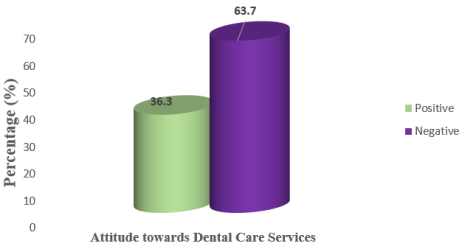
The figure above presents the distribution of respondents' attitudes toward the utilisation of dental care services. The findings showed that a majority of the respondents, 191 (63.7%), exhibited a negative attitude, while only 109 respondents (36.3%) demonstrated a positive attitude towards dental health care. See Figure 2 below.
Figure 2. Attitude towards Dental Care Services among Respondents.
Attitude of Respondents based on their Socio-demographic Characteristics
The table presents the association between respondents’ socio-demographic characteristics and their attitude towards the utilisation of dental care services. Chi-square (χ²) statistics were used to test for significant associations.
The age of respondents was not significantly associated with attitude towards dental care utilisation (χ² = 5.268; p = 0.154). Although respondents aged 33–47 years constituted the largest proportion of both those with positive attitudes (33.9%) and negative attitudes (35.6%). However, respondents aged 63–77 years had a relatively higher proportion of positive attitudes (18.4%) compared to negative attitudes (9.4%). Similarly, marital status showed no statistically significant association with attitude towards dental care utilisation (χ² = 0.153; p = 0.712). Married respondents constituted the majority of both those with positive (60.6%) and negative (62.8%) attitudes.
Regarding sex, no significant association was observed (χ² = 0.167; p = 0.715). Females accounted for a higher proportion of both positive (57.8%) and negative (60.2%) attitudes compared to males. In contrast, level of education was significantly associated with attitude towards dental care utilisation (χ² = 32.941; p < 0.001). Respondents with tertiary education were more likely to have a positive attitude (22.9%) compared with a very small proportion exhibiting negative attitudes (3.7%). Conversely, those with no formal education and primary education constituted a higher proportion of respondents with negative attitudes (24.0% and 28.3%, respectively).
Table 2. Attitude of Respondents based on their Socio-demographic Characteristics.

Variables

Attitude towards utilisation of dental care services

2

p-value

Positive n (%)

Negative n (%)

Age (in years)

18-32

27 (24.8)

51 (26.7)

5.268

0.154

33-47

37 (33.9)

68 (35.6)

48-62

25 (22.9)

54 (28.3)

63-77

20 (18.4)

18 (9.4)

Marital Status

Not currently married

43 (39.4)

71 (37.2)

0.153

0.712

Married

66 (60.6)

120 (62.8)

Sex

Male

46 (42.2)

76 (39.8)

0.167

0.715

Female

63 (57.8)

115 (60.2)

Level of Education

No formal education

13 (11.9)

46 (24.0)

32.941

<0.001

Primary

19 (17.4)

54 (28.3)

Secondary

52 (47.7)

84 (44.0)

Tertiary

25 (22.9)

7 (3.7)

Occupation

Unemployed

6 (5.5)

26 (13.6)

19.418

<0.001

Farmer

33 (30.3)

69 (36.1)

Business

27 (24.8)

49 (25.7)

Formal Employment

23 (21.1)

11 (5.8)

Artisans

20 (18.3)

36 (18.8)

Monthly Income

<₦20,000

27 (24.8)

70 (36.6)

24.436

<0.001

₦20,000–₦49,999

35 (32.1)

87 (45.5)

₦50,000–₦99,999

31 (28.4)

27 (14.1)

₦100,000 and above

16 (14.7)

7 (3.7)

*Statistical significant (p<0.05); <i></i>2=Chi-Square; α=Fishers Exact p
Occupation also showed a statistically significant association with attitude (χ² = 19.418; p < 0.001). Respondents in formal employment were more likely to exhibit positive attitudes (21.1%) compared to negative attitudes (5.8%). In contrast, unemployed respondents and farmers constituted a higher proportion of those with negative attitudes. Furthermore, monthly income was significantly associated with respondents’ attitudes towards dental care utilisation (χ² = 24.436; p < 0.001). Higher income earners (₦50,000–₦99,999 and ₦100,000 and above) were more likely to have positive attitudes compared to negative attitudes, while respondents earning less than ₦20,000 and those earning ₦20,000–₦49,999 formed a larger proportion of those with negative attitudes.
In summary, the findings indicate that education level, occupation, and monthly income are significant determinants of attitude towards dental care utilisation among respondents in Ikwerre Local Government Area. Conversely, age, marital status, and sex were not significantly associated with attitude.
Utilisation of Dental Health Care Service among Respondents in Ikwerre Local Government Area
Table 3 presents the level of awareness, utilisation pattern, reasons for dental visits, place of care, and satisfaction with dental health care services among the 300 respondents in Ikwerre Local Government Area.
The findings show that a large majority of respondents, 267 (89.0%), were aware of the existence of dental clinics, while only 33 (11.0%) reported no awareness. Only 47 respondents (15.7%) reported having a dental visit within the preceding year, whereas a substantial majority, 253 respondents (84.3%), had not utilised dental services during this period. Among those who had visited a dental clinic (n = 47), the frequency of dental visits further underscores a predominantly problem-oriented pattern of utilisation. Most respondents, 30 (63.8%), reported that they visited the dentist only when they had a dental problem. In contrast, preventive visits were uncommon, with only 7 respondents (14.9%) visiting once every six months and 10 respondents (21.3%) visiting once yearly.
Table 3. Utilisation of Dental Health Care Service among Respondents in Ikwerre Local Government Area.

Variables

Percentage (%)

Cumulative Percentage

Dental visit within the past 1 year

Frequency (n=300)

Yes

47

15.7

15.7

No

253

84.3

100

Frequency of Dental Visits

(n=47)

Only if I have a dental problem

30

63.8

63.8

Once every 6 months

7

14.9

78.7

Once every year

10

21.3

100

4. Discussion
This study assessed the knowledge, attitudes, and utilisation of professional dental care services among rural residents of Ikwerre Local Government Area, Rivers State, Nigeria. The high proportion of respondents with good knowledge may be attributed to increased exposure to health information through mass media, community health programmes, schools, and interactions with healthcare workers. This aligns with findings from previous studies conducted in other parts of Nigeria, which have reported moderate to high levels of oral health knowledge even among rural populations .
The study found no significant association between age and knowledge of oral/dental health. This aligns with findings from , who reported that age was not a determinant of oral health knowledge among internally displaced persons in northeastern Nigeria. Both studies suggest that age alone may not influence awareness of oral health information in communities where health promotion efforts are generally weak. However, the finding contrasts with and in Nigeria, which showed significantly higher oral health knowledge among younger adults compared with older groups, possibly reflecting differences in educational exposure or generational access to health information.
Marital status also showed no significant association with oral health knowledge in this study, a result similar to that reported by among adults of the Japanese population. Both studies suggest that being married does not necessarily improve exposure to oral health information. In contrast, , a study in Rwanda, observed that married individuals had better oral health knowledge than unmarried peers, attributing this to shared health-seeking behaviours within households, an explanation that may not hold where oral health messaging is limited.
A statistically significant association between sex and oral health knowledge was observed in this study, with males demonstrating higher knowledge than females. This finding aligns with in a Nigerian university study, where males were more likely to demonstrate good dental health knowledge. These authors suggested that gender roles and sociocultural norms may limit women’s opportunity to access health information. However, several other studies report the opposite or no gender differences: reported higher oral health knowledge among females in an urban slum in Nigeria, arguing that women’s roles in family health may facilitate greater engagement with preventive messages . The inconsistent gender findings across studies indicate that the influence of sex on oral health knowledge may be context-specific and mediated by local cultural and educational factors.
In this study, educational level was not significantly associated with oral health knowledge, despite observable trends toward higher knowledge with increasing education. However, contradicts the findings of in an adult population in Spain; and in Nigeria, which consistently found that higher education was associated with better oral health knowledge. Differences in study populations, such as differences in literacy levels or quality of education, might explain these inconsistencies.
The association between occupation and oral health knowledge was not significant in this study. This aligns with the findings of in Ghana, who reported no occupational influence on oral health knowledge among rural dwellers in Nigeria. However, other studies found that professionals and formally employed individuals demonstrated significantly higher oral health knowledge compared with informal workers and farmers, likely due to workplace health programmes or greater socioeconomic resources that facilitate access to health information .
Finally, monthly income was significantly associated with oral health knowledge in the current study, showing that respondents in the middle-income category had better knowledge than those in the lower-income category. This corroborates , who reported that higher income was associated with increased awareness of oral health and preventive behaviours. It suggests that income may enable greater access to health information, more frequent interaction with professional services, and higher health literacy. Conversely, this contradicts , who found no association between income and oral health knowledge in a Nigerian community, possibly due to homogeneity in income levels that limited variability.
This finding aligns with previous studies in Nigeria and other developing countries, where dental care utilisation among rural populations remains low . However, findings from showed a higher prevalence of professional dental care utilisation compared with the present findings.
The study showed that a majority of respondents exhibited a negative attitude toward the utilisation of dental care services, with over half expressing reluctance or indifference to seeking professional dental care. This negative attitude was significantly associated with lower utilisation of dental services. This finding corroborates earlier studies that have highlighted poor attitudes toward oral health care among rural populations . The study by reported that many rural dwellers perceive dental visits as unnecessary unless pain is severe. Similar findings were reported in rural India, where dental care was often viewed as non-essential compared to other health needs .
In contrast, studies conducted in urban populations generally report more positive attitudes toward dental care, largely due to better access, higher education levels, and increased exposure to oral health promotion activities . The negative attitude observed in this study underscores the need for behavioral change communication and culturally sensitive oral health education programs targeted at rural communities.
5. Summary
This study assessed the knowledge, attitudes, and utilisation of professional dental care services among rural residents of Ikwerre Local Government Area, Rivers State, Nigeria. The findings revealed that a high proportion of respondents possessed good knowledge of oral and dental health. However, despite this relatively high level of knowledge, utilisation of professional dental care services remained low and was largely symptom-driven. Most respondents sought dental care only when experiencing pain or severe oral discomfort.
Attitudes toward dental care services were predominantly negative, with nearly two-thirds of respondents exhibiting unfavourable perceptions of professional dental care. Socio-demographic analysis showed that sex and monthly income were significantly associated with knowledge of oral/dental health, while attitudes toward dental care utilisation were significantly influenced by level of education, occupation, and income. Age, marital status, and sex were not significantly associated with attitude. These findings highlight a clear disconnect between knowledge and attitude, which contributes to poor utilisation of dental services in rural communities.
6. Conclusion
The study concludes that although rural residents of Ikwerre Local Government Area generally demonstrate good knowledge of oral and dental health, negative attitudes toward professional dental care services persist and significantly hinder utilisation. Socioeconomic factors, particularly education, occupation, and income, play a crucial role in shaping attitudes and access to dental care. The coexistence of good knowledge with poor attitudes and low utilisation underscores the complexity of oral health behaviour in rural settings. Addressing attitudinal and structural barriers is therefore essential for improving dental care utilisation and oral health outcomes among rural populations.
7. Recommendations
Based on the findings of this study, it is recommended that oral health promotion efforts in rural communities be strengthened through comprehensive, community-based education programmes. These programmes should not only focus on improving knowledge of oral and dental health but should also deliberately address prevailing misconceptions, fears, and negative attitudes toward professional dental care. By targeting attitudinal barriers, such interventions can help reshape perceptions and encourage more positive oral health–seeking behaviours.
In addition, public health initiatives should place greater emphasis on the importance of preventive dental care. Awareness campaigns should promote routine dental check-ups and early consultation as essential components of general health, rather than reinforcing the common practice of seeking dental care only in response to pain or advanced disease. This shift toward prevention is crucial for reducing the burden of avoidable oral health conditions.
Improving access to professional dental care services in rural areas is also essential. Government and relevant health authorities should expand dental care infrastructure by integrating basic oral health services into primary healthcare centres and deploying mobile dental clinics to underserved communities. Such measures would reduce geographical and structural barriers that limit utilisation of dental services among rural residents.
Furthermore, efforts should be made to reduce the financial burden associated with dental care. Strengthening policies that subsidize dental services, including the effective inclusion of oral health care within health insurance schemes, would improve affordability and encourage utilisation, particularly among low-income rural populations.
Finally, oral health interventions should be specifically tailored to socioeconomically disadvantaged groups. Targeted strategies that consider the unique needs of individuals with low income, limited education, and informal occupations are necessary to address inequalities in attitudes toward dental care and to promote equitable access to professional dental services.
Limitations of the Study
Despite its strengths, this study has some limitations. First, the cross-sectional design limits the ability to establish causal relationships between socio-demographic factors, attitudes, knowledge, and utilisation of dental care services. Second, data were self-reported and may be subject to recall bias or social desirability bias. Third, the study was conducted in selected rural communities within Ikwerre Local Government Area, which may limit the generalisability of the findings to other rural settings in Nigeria. Finally, the study did not include clinical oral examinations, which could have provided objective measures of oral health status to complement self-reported data.
Abbreviations

LGA

Local Government Area

KL

Knowledge Level

WHO

World Health Organisation

Author Contributions
Oluchi Mildred Ndudim: Conceptualization, Data Curation, Software, Formal Analysis, Methodology, Writing – original draft, Writing – review & editing
Queen Desmond Atuzie: Conceptualization, Validation
Amaka Azubuike Ogba: Resources, Supervision
Nnenna Ali Emordi: Resources
Anthony Ike Wegbom: Conceptualization, Validation, Methodology, Writing – original draft, Writing – review & editing, Supervision
Conflicts of Interest
The authors have no conflicts of interest to declare for this study.
References
[1] Abodunrin, O. R., Adebayo, E. T., Adewole, I. E., Olagunju, M. T., Ekeh, C., Samuel, I. O., Zamba, E., Gbaja-Biamila, T., Akinsolu, F. T., Eleje, G. U., Tantawi, M. E., Ezechi, O. C., Foláyan, M. O. Factors associated with the dental service utilisation by enrollees on the Lagos State health insurance scheme, Nigeria. BMC Health Services Research. 2025, 25(1), 14.
[2] Akinboboye, B. O., Malomo, B. I., Gbiri, C. A., Ogunyemi, A. O., Arikawe, A. P., Obashoro-John, O. A. Oral health literacy: effectiveness of a homegrown intervention among community-dwelling older Nigerians. BMC oral health. 2025, 25(1), 1119.
[3] Akwiwu, U. N., & Orbunde, A. K. (2025). Determinants of food consumption patterns in rural households of Ikwerre Local Government Area, Rivers State, Nigeria. Journal of Food Stability, 8(3), 17-31.
[4] Alshammari, R. M., Aljelaly, H. W., Almutair, T. J., Alarfaj, N. A., Alhamami, A. A., Alsomali, E. A., & Alzahrani, J. S. Integrating preventive care strategies in routine dental practice. International Journal of Community Med Public Health. 2024, 11, 4119-4122.
[5] Amedari, M. I., Ogunbodede, E. O., Owotade, F. J., Afolabi, T. O., Amedari, I. K., & Mudasiru, T. O. (2024). A mixed-methods study of the oral health knowledge and practice of community health practitioners. Niger Journal of Health Sciences, 23(2), 7-15.
[6] Asiri, A., Nazir, M. A., Alsharief, M., Shahin, S., Al-Ansari, A., & Al-Khalifa, K. S. (2024). Effect of psychological distress on oral health: a cross-sectional study. BMC oral health, 24(1), 1508.
[7] Balcoș, C., Bamboi, I., Toader, A., Rapis, A., Nicolau, A., Cămăruță, R., & Armencia, A. O. (2025). FACTORS INFLUENCING THE PERCEPTION OF THE NEED FOR DENTAL TREATMENT AMONG THE ADULT POPULATION IN NORTHEASTERN ROMANIA. Romanian Journal of Medical and Dental Education, 14(3).
[8] Chauca-Bajaña, L., Pérez-Jardón, A., Carpio-Cevallos, C., Ordoñez Balladares, A., Proaño-Yela, P., Velásquez Ron, B., Siguencia Suarez, L. J., Romo Olvera, C. V., Orellana Guerrero, D., & Pérez-Sayáns, M. (2025). Factors associated with dental anxiety in patients treated at an integrated dental clinic: a cross-sectional study. Frontiers in oral health, 6, 1689805.
[9] Chen, X., Cheng, L., Chen, Y., & Xie, Y. (2026). Oral Healthcare Knowledge, Attitudes, Confidence, and Learning Experiences among Chinese Nursing Students: A Mixed-Methods Study. International dental journal, 76(1), 103994.
[10] Chikuni, W., Amalimeh, B. E., & Agholor, C. N. (2023). Utilisation of oral health services and associated factors in a suburban population in Western Uganda. International Journal of Medical Sciences and Pharma Research, 9(2), 1-12.
[11] Denis, F., & Clement, C. (2025). Oral Health: A Major Global Public Health Concern. Journal of Clinical Medicine, 14(12), 4101.
[12] Do, L. H. M., Dimitropoulos, Y., Biles, J., Christian, B., & Sohn, W. (2025). Employment experiences of the oral health workforce in rural New South Wales: a qualitative study. BMC Health Services Research, 25(1), 922.
[13] Echeverria, M. S., Borges, R. D. C., Karam, S. A., Haubert, G., Cademartori, M. G., Agostini, B. A., & Demarco, F. F. (2025). Oral Health Outcomes and Their Sociodemographic and Service Utilisation Determinants in a Rural Population. Community Dentistry and Oral Epidemiology.
[14] Folayan, M. O., Bernard, O. T., Titus, O. S., Alade, O., Aliyu, T. K., Bhayat, A., Ndembi, N., Fasiku, G., & El Tantawi, M. (2025). Cultural practices, oral health service utilisation and oral health policy and guidelines development in Africa. Frontiers in oral health, 6, 1539827.
[15] Folorunsho, S., Ajayi, V., Sanmori, M., Suleiman, M., Abdullateef, R., & Abdulganiyu, A. (2025). Access to and Utilisation of Dental Care Services by Older Adults in Nigeria: Barriers and Facilitators. Special Care in Dentistry, 45(3), e70040.
[16] Ghoneim, A., Ebnahmady, A., D'Souza, V., Parbhakar, K. K., He, H., Gerbig, M., Singhal, S., & Quiñonez, C. (2022). The impact of dental care programs on healthcare system and societal outcomes: a scoping review. BMC Health Services Research, 22(1), 1574.
[17] Hannan, C. J., Ricks, T. L., Espinoza, L., & Weintraub, J. A. (2021). Addressing Oral Health Inequities, Access to Care, Knowledge, and Behaviors. Preventing chronic disease, 18, E27.
[18] IKPEFAN, D. O., ERHABOR, P., & AZODO, C. C. (2020). Oral Health Awareness and Care Seeking Behaviours among Public and Private Dental Clinics Attendees: Oral Health Awareness and Care Seeking Behaviours among Dental Clinics Attendees. Nigerian Journal of Dental Sciences, 3(1), 9-15.
[19] Inoue, Y., Zaitsu, T., Oshiro, A., Ishimaru, M., Taira, K., Takahashi, H., Aida, J., & Tamiya, N. (2022). Association of marital status and access to dental care among the Japanese population: a cross-sectional study. BMC oral health, 22(1), 278.
[20] Joseph, C. C., & Akaji, E. A. (2022). Utilisation of Dental Services by Rural dwellers: Case of two Communities hosting a tertiary health facility. International Journal of Dentistry Research, 7(1), 19-27.
[21] Kaguru, G., Ayah, R., Mutave, R., & Mugambi, C. (2022). Integrating Oral Health into Primary Health Care: A Systematic Review of Oral Health Training in Sub-Saharan Africa. Journal of multidisciplinary healthcare, 15, 1361–1367.
[22] Mariam, R., Rafique, M. H., Soomro, A. H., Abu Kariem, A., Jarbou, R., Ibrar, A., & Obied, B. (2025). Effect of Dental Fear on Delay in Seeking Dental Treatment among Adults in a South Asian Setting. Cureus, 17(7), e87540-e87540.
[23] Márquez-Arrico, C. F., Almerich-Silla, J. M., & Montiel-Company, J. M. (2019). Oral health knowledge in relation to educational level in an adult population in Spain. Journal of clinical and experimental dentistry, 11(12), e1143–e1150.
[24] Musa, A., Mala, A. K., Adetoye, J., Uchenna, K., Abba, U., & Abdullahi, I. S. (2024). Determinants of Oral Health Knowledge and Practice among Internally Displaced Persons in Maiduguri, Borno State, Nigeria. African Journal of Health and Social Sciences, 1(2), 69-77.
[25] Nigeria Population Commission. (2006). Nigeria demographic and health survey 2006. NPC, ICF.
[26] Northridge, M. E., Kumar, A., Kaur, R. Disparities in Access to Oral Health Care. Annual review of public health. 2020, 41, 513–535.
[27] Nota, A., Caruso, S., Cantile, T., Gatto, R., Ingenito, A., Tecco, S., Ferrazzano, G. F. Socioeconomic Factors and Oral Health-Related Behaviours Associated with Dental Caries in Preschool Children from Central Italy (Province of Ascoli Piceno). Biomedical research international. 2019, 7981687.
[28] Nzabonimana, E., Malele-Kolisa, Y., Hlongwa, P. Oral health knowledge, attitude and oral hygiene practices among adults in Rwanda. PAMJ Clinical Medicine. 2024, 14(4).
[29] Okoroafor, C. C., Okobi, O. E., Owodeha-Ashaka, M., Okobi, E., Oluseye, B., Ekpang, O. B., Aya, L. E., Owolabi, O. J., Oru-Betem, T. E., Nwafor, J. N. Dental Health Knowledge, Attitude, and Practice among University of Calabar Students. Cureus. 2023, 15(6), e40055.
[30] Olatosi, O. O., Oyapero, A., Ashaolu, J. F., Abe, A., & Boyede, G. O. (2022). Dental caries and oral health: an ignored health barrier to learning in Nigerian slums: a cross-sectional survey. PAMJ-One Health, 7(13).
[31] Opoku, P., Salu, S., Azornu, C. K., & Komesuor, J. (2024). Oral health knowledge, practice, and associated factors among Junior High School students of Koforidua, Ghana: a cross-sectional study. BMC Oral Health, 24(1), 449.
[32] Osadolor, O. O., Akaji, E. A., Otakhoigbogie, U., Amuta, H. C., Obi, D. I., & Osadolor, A. J. Dental service utilisation of a rural population in Nigeria. International Journal Dentistry Research. 2019, 4(2), 62-5.
[33] Osuh, M. E., Oke, G. A., Lilford, R. J., Osuh, J. I., Lawal, F. B., Gbadebo, S. O., Harris, B. Oral health in an urban slum, Nigeria: residents’ perceptions, practices and care-seeking experiences. BMC oral health. 2023, 23(1), 657.
[34] Panditi, M., K A., Palle, E., & Kodali, P. B. (2025). Availability and utilisation of oral healthcare services at rural community health centers in South India: a mixed methods study. BMC oral health, 25(1), 977.
[35] Parmar, D., Sailo, J. L., Sakhamuri, S., Dalapati, C., Dutta, S. D., Arya, S., & Dixit, H. (2025). Assessment of Oral Health Disparities and Barriers to Care among Underserved Populations in Urban and Rural Settings. Journal of pharmacy & bioallied sciences, 17(Suppl 1), S445–S447.
[36] Peres, M. A., Macpherson, L. M. D., Weyant, R. J., Daly, B., Venturelli, R., Mathur, M. R., Listl, S., Celeste, R. K., Guarnizo-Herreño, C. C., Kearns, C., Benzian, H., Allison, P., & Watt, R. G. (2019). Oral diseases: a global public health challenge. Lancet (London, England), 394(10194), 249–260.
[37] Samuel, D., Eyenghe, T., & Brown, I. (2025). Socioeconomic Effects on Household Access to Primary Healthcare Facilities in Selected Riverine Communities, Rivers State, Nigeria. International Journal of Social Science and Human Research, 4(5) 967-979.
[38] Sharmin, F., Matsuyama, Y., Kino, S., Kiuchi, S., Kondo, K., & Aida, J. (2025). Gender differences in roles of health behavior between marital status and oral health. Geriatrics & gerontology international, 25(10), 1397–1403.
[39] Shomuyiwa, D. O., & Bridge, G. (2023). Oral health of adolescents in West Africa: prioritizing its social determinants. Global health research and policy, 8(1), 28.
[40] Shrestha, A., Bhagat, T., Agrawal, S. K., Gautam, U., & Joshi, N. P. (2025). Practice of self-medication to manage oral health issues in a community setting in Nepal. BMC oral health, 25(1), 32.
[41] Stephen, O. O., Kelvin, O. O., Udogadi, N. S. (2022). Oral health knowledge, attitude, practices, and utilisation of dental services amongst automobile technicians in Benin City. Biomedical Journal of Scientific & Technical Research. 2022, 44(3), 35524-35530.
[42] Wali, E., Phil-Eze, P. O., Wizor, C. H., Abdullahi, M., Afolabi, O. O., Eze, I. C., & Bosco-Abiahu, L. C. (2021). Flood vulnerability assessment on selected communities in local Government Area of Rivers State, Nigeria, using remote sensing and GIS techniques. J. Geogr. Environ. Earth Sci. Int, 25, 46-57.
[43] Wang, L., Gao, H., Chen, J., Shi, Y., Ma, D., Fan, J., & Xia, X. (2025). Knowledge, attitude, and practice towards oral health in parents and teachers of kindergarten students: a cross-sectional survey. BMJ open, 15(6), e089404.
[44] Wert, M. (2020). Remembering Restoration Losers: Oguri Tadamasa, Ii Naosuke, and Tokugawa Supporters. BRILL.
[45] World Health Organisation (WHO). (2022). Global oral health status report: Towards universal health coverage for oral health by 2030. Geneva: WHO.
[46] Yadav, P., Arya, A., & Yadav, P. (2022). Prevalence of tobacco use and awareness about its ill-effects amongst adult rural population of district Rewari. International Journal of Community. Medicine. Public Health, 11(9), 4190.
Cite This Article
  • APA Style

    Ndudim, O. M., Atuzie, Q. D., Ogba, A. A., Emordi, N. A., Wegbom, A. I. (2026). Assessment of Knowledge, Attitudes and Utilisation of Professional Dental Care Services Among Rural Residents of Ikwerre Local Government Area, Rivers State, Nigeria. American Journal of Health Research, 14(2), 65-76. https://doi.org/10.11648/j.ajhr.20261402.11

    Copy | Download

    ACS Style

    Ndudim, O. M.; Atuzie, Q. D.; Ogba, A. A.; Emordi, N. A.; Wegbom, A. I. Assessment of Knowledge, Attitudes and Utilisation of Professional Dental Care Services Among Rural Residents of Ikwerre Local Government Area, Rivers State, Nigeria. Am. J. Health Res. 2026, 14(2), 65-76. doi: 10.11648/j.ajhr.20261402.11

    Copy | Download

    AMA Style

    Ndudim OM, Atuzie QD, Ogba AA, Emordi NA, Wegbom AI. Assessment of Knowledge, Attitudes and Utilisation of Professional Dental Care Services Among Rural Residents of Ikwerre Local Government Area, Rivers State, Nigeria. Am J Health Res. 2026;14(2):65-76. doi: 10.11648/j.ajhr.20261402.11

    Copy | Download

  • @article{10.11648/j.ajhr.20261402.11,
      author = {Oluchi Mildred Ndudim and Queen Desmond Atuzie and Amaka Azubuike Ogba and Nnenna Ali Emordi and Anthony Ike Wegbom},
      title = {Assessment of Knowledge, Attitudes and Utilisation of Professional Dental Care Services Among Rural Residents of Ikwerre Local Government Area, Rivers State, Nigeria},
      journal = {American Journal of Health Research},
      volume = {14},
      number = {2},
      pages = {65-76},
      doi = {10.11648/j.ajhr.20261402.11},
      url = {https://doi.org/10.11648/j.ajhr.20261402.11},
      eprint = {https://article.sciencepublishinggroup.com/pdf/10.11648.j.ajhr.20261402.11},
      abstract = {Oral health is an essential component of overall health and quality of life; however, utilisation of professional dental care services remains low in many rural communities in Nigeria. Knowledge and attitudes toward dental care are key determinants of service utilisation, particularly in underserved populations. This study assessed the knowledge, attitudes, and utilisation of professional dental care services among rural residents of Ikwerre Local Government Area, Rivers State, Nigeria. Method: A community-based cross-sectional study was conducted among 300 rural residents selected using multistage sampling. Data were collected using a structured interviewer-administered questionnaire. Descriptive statistics were used to summarize respondents’ knowledge, attitudes, and utilisation of dental care services, while Chi-square tests were used to examine associations between socio-demographic characteristics and knowledge and attitudes. Statistical significance was set at p < 0.05. Result: Most respondents demonstrated good knowledge of oral/dental health (84.3%). Despite this, attitudes toward dental care utilisation were largely negative, with 63.7% of respondents exhibiting unfavourable attitudes. Utilisation of professional dental care services was generally low and largely symptom-driven. Sex and monthly income were significantly associated with knowledge of oral/dental health (p < 0.05). Attitude toward dental care utilisation was significantly associated with level of education, occupation, and monthly income (p < 0.001), while age, marital status, and sex showed no significant association. Conclusion: Although knowledge of oral health was relatively high among rural residents of Ikwerre Local Government Area, negative attitudes toward dental care and low utilisation of professional services persist. Socioeconomic factors play a significant role in shaping attitudes and knowledge, underscoring the need for targeted oral health education, attitude-focused interventions, and improved accessibility and affordability of dental services in rural communities.},
     year = {2026}
    }
    

    Copy | Download

  • TY  - JOUR
    T1  - Assessment of Knowledge, Attitudes and Utilisation of Professional Dental Care Services Among Rural Residents of Ikwerre Local Government Area, Rivers State, Nigeria
    AU  - Oluchi Mildred Ndudim
    AU  - Queen Desmond Atuzie
    AU  - Amaka Azubuike Ogba
    AU  - Nnenna Ali Emordi
    AU  - Anthony Ike Wegbom
    Y1  - 2026/03/04
    PY  - 2026
    N1  - https://doi.org/10.11648/j.ajhr.20261402.11
    DO  - 10.11648/j.ajhr.20261402.11
    T2  - American Journal of Health Research
    JF  - American Journal of Health Research
    JO  - American Journal of Health Research
    SP  - 65
    EP  - 76
    PB  - Science Publishing Group
    SN  - 2330-8796
    UR  - https://doi.org/10.11648/j.ajhr.20261402.11
    AB  - Oral health is an essential component of overall health and quality of life; however, utilisation of professional dental care services remains low in many rural communities in Nigeria. Knowledge and attitudes toward dental care are key determinants of service utilisation, particularly in underserved populations. This study assessed the knowledge, attitudes, and utilisation of professional dental care services among rural residents of Ikwerre Local Government Area, Rivers State, Nigeria. Method: A community-based cross-sectional study was conducted among 300 rural residents selected using multistage sampling. Data were collected using a structured interviewer-administered questionnaire. Descriptive statistics were used to summarize respondents’ knowledge, attitudes, and utilisation of dental care services, while Chi-square tests were used to examine associations between socio-demographic characteristics and knowledge and attitudes. Statistical significance was set at p < 0.05. Result: Most respondents demonstrated good knowledge of oral/dental health (84.3%). Despite this, attitudes toward dental care utilisation were largely negative, with 63.7% of respondents exhibiting unfavourable attitudes. Utilisation of professional dental care services was generally low and largely symptom-driven. Sex and monthly income were significantly associated with knowledge of oral/dental health (p < 0.05). Attitude toward dental care utilisation was significantly associated with level of education, occupation, and monthly income (p < 0.001), while age, marital status, and sex showed no significant association. Conclusion: Although knowledge of oral health was relatively high among rural residents of Ikwerre Local Government Area, negative attitudes toward dental care and low utilisation of professional services persist. Socioeconomic factors play a significant role in shaping attitudes and knowledge, underscoring the need for targeted oral health education, attitude-focused interventions, and improved accessibility and affordability of dental services in rural communities.
    VL  - 14
    IS  - 2
    ER  - 

    Copy | Download

Author Information
  • Abstract
  • Keywords
  • Document Sections

    1. 1. Introduction
    2. 2. Materials & Methods
    3. 3. Results
    4. 4. Discussion
    5. 5. Summary
    6. 6. Conclusion
    7. 7. Recommendations
    Show Full Outline
  • Abbreviations
  • Author Contributions
  • Conflicts of Interest
  • References
  • Cite This Article
  • Author Information