Research Article | | Peer-Reviewed

Dengue Fever Outbreak in North AL Batinah Governorate (Oman), January 2023 –December 2023

Received: 13 February 2026     Accepted: 2 March 2026     Published: 23 March 2026
Views:       Downloads:
Abstract

In the North Batinah Governorate, Sultanate of Oman, a local transmission dengue fever outbreak was examined based on surveillance data from January 1 to December 31, 2023, and containment measures were implemented. This study aimed to determine the sources and factors associated with this outbreak and to recommend countermeasures to prevent future outbreaks. A descriptive analysis was conducted on 194 confirmed cases, followed by an unmatched case-control study involving 194 laboratory-confirmed cases and 194 controls. Data were collected using the standardized dengue fever questionnaire developed by the Oman Ministry of Health, the electronic surveillance system (ALSHIFA+), and phone interviews. Multivariate analysis was performed to examine associations between variables and dengue fever. Among the 194 confirmed cases, males aged 30–59 years (98, 50.5%) were the most affected, with fever (100%), headache (55.2%), and myalgia (49%) being the most common clinical presentations. The case fatality rate was 0.5%. Living in Sohar, particularly in Tareef, Humbar, and Waqaiba, was associated with higher susceptibility to dengue fever (OR = 5.40; 95% CI: 2.17–13.44) due to high vector density, and a history of travel was also identified as a significant risk factor (OR = 3.53; 95% CI: 1.60–7.75). The 2023 dengue fever outbreak was the largest recorded, highlighting the importance of proper removal of breeding sites, community health education, continued implementation of vector control strategies, and maintaining updated vector-borne disease surveillance.

Published in American Journal of Medical Science and Technology (Volume 2, Issue 2)
DOI 10.11648/j.ajmst.20260202.14
Page(s) 57-69
Creative Commons

This is an Open Access article, distributed under the terms of the Creative Commons Attribution 4.0 International License (http://creativecommons.org/licenses/by/4.0/), which permits unrestricted use, distribution and reproduction in any medium or format, provided the original work is properly cited.

Copyright

Copyright © The Author(s), 2026. Published by Science Publishing Group

Keywords

Dengue Fever Outbreak, Oman, Unmatched Cases Controls Study

1. Introduction
Dengue is a viral disease spread by mosquitoes that has expanded globally, occurring in both endemic and epidemic cycles. Tropical and subtropical regions around the world are severely affected by acute dengue fever.
Each of the four dengue virus serotypes, DENV-1 to DENV-4, consists of three structural proteins and seven non-structural proteins, and each has distinct genotypes. When an infected female Aedes aegypti mosquito bites a human, the virus replicates in the body over an incubation period of three to fourteen days, during which the person may become ill. The dengue virus can potentially be transmitted through blood products and needle stick injuries. It has been suggested that dengue may be transmitted vertically through breastfeeding. There is no person-to-person transmission. Dengue can present as a mild febrile illness or as a severe condition, such as dengue hemorrhagic fever or dengue shock syndrome. Common symptoms such as fever, headache, myalgia, and vomiting are associated with dengue fever. Dengue fever manifests in three distinct phases: the viremic febrile phase (0–7 days), the non-viremic critical phase (1–2 days), and the non-viremic recovery phase (3–5 days). Recovery provides lifelong protection against that specific serotype; however, cross-immunity to other serotypes is only temporary and partial. The live attenuated vaccine, Dengvaxia, has been licensed in several Latin American and Southeast Asian countries and is registered in 20 countries. It is typically indicated for people aged 9 to 45 years and is administered in three doses (at 0, 6, and 12 months). The vaccine is only given to individuals who have previously contracted the dengue virus or have laboratory evidence of prior infection. In December 2017, the World Health Organization (WHO) reported that the vaccine protects against severe dengue in individuals who are seropositive for dengue at the time of their first vaccination.
Numerous variables can increase the risk, including immunological status, sex, age, and genetic makeup.
Worldwide, the World Health Organization (WHO) reports that dengue is currently prevalent in more than 100 countries. Up to 3.6 billion people, or 40% of the global population, live in areas where dengue is endemic. According to estimates, the dengue virus infects 400 million people annually, causes illness in 100 million of them, and is responsible for 21,000 deaths.
The Kingdom of Saudi Arabia was once thought to be dengue-free. The first instance of viral isolation occurred in 1994 during a disease outbreak in Jeddah, where 289 confirmed cases were reported. Subsequent outbreaks occurred in several cities in the western and southwestern regions of Saudi Arabia, including Jeddah, Aseer, and Jizan.
Rapid notification and early, community-wide, intensive vector control efforts were found to be effective in containing autochthonous dengue fever outbreaks in Pakistan and Oman, according to several case-control studies conducted during outbreak investigations.
1.1. Dengue Fever Situation in the Sultanate of Oman
The Sultanate of Oman is the second-largest country in the Gulf region, with a total area of 309,501 km² and a population of 4,527,446 (Omani and non-Omani), according to the estimated census of December 2022.
In November 2018, 32 cases of dengue fever were detected in Oman. As all of the cases were linked to travel, they were classified as imported. There were no prior reports of vector presence in Oman, and there was no evidence of local transmission of the disease. The first confirmed case unrelated to travel occurred in December 2018, and the Governorate of Muscat experienced its first outbreak, with 63 confirmed cases resulting from local transmission.
1.2. Background of the Dengue Fever Outbreaks in North Batinah Governorate
North Batinah Governorate (NBG) is a tropical area with temperatures ranging between 24 and 39°C, which provides an ideal environment for the breeding of vectors such as Aedes aegypti and Aedes albopictus. The population of NBG is estimated to be nearly 872,014 according to the December 2022 census, with a high migration rate. Additionally, there is a high population density along the seaside region of the Dubai-Muscat Highway.
All dengue fever (DF) cases in NBG before 2021 were travel-related, occurring within the maximum incubation period. (Table 1) Due to the frequent travel of expatriates from dengue-endemic areas such as India and Pakistan to Oman during seasonal outbreaks, there is a corresponding rise in the number of cases in the Governorate.
The total number of dengue fever (DF) cases (Table 1) from 2018 to the end of 2023 was 241, of which 182 cases (75.5%) were Omani and 59 cases (24.5%) were expatriates. Additionally, 56 cases (23.2%) were travel-related.
The first local cases were reported in November 2021 from Sohar (Tareef), where a vector control campaign was conducted in December 2021 by the Ministry of Health (MOH), the Municipality, and Beah (the municipal waste management company). However, in 2022, there were a total of 29 cases, of which 17 were locally acquired and 12 were travel-related.
The surveillance analysis showed a marked increase in dengue fever cases in 2023, totaling 194 cases, of which 156 (80.40%) were Omani and 38 (19.60%) were non-Omani. Additionally, 28 cases (14.40%) were travel-related.
Table 1. Distribution of dengue fever cases in North AL Batinah Governorate (Oman) by year, number of cases, nationality, and travel history.

Year

No. of cases

Omani

Non- Omani

Travel Associated

2018

2

0

2

2 (100%)

2019

8

2

6

8 (100%)

2020

2

2

0

2 (100%)

2021

6

2

4

4 (66.70%)

2022

29

20

9

12 (41.40%)

2023

194

156

38

28 (14.40%)

We applied the following definition, which is used by the Ministry of Health in Oman: A dengue outbreak is defined as the occurrence of two or more dengue cases within a 200-meter radius of the index case, reported within 14 days of the index case’s notification date. The start date of a dengue outbreak is considered to be the notification date of the second case.
This report discusses the outbreak from January to December 2023, based on the analysis of surveillance data for the year 2023.
1.3. Description of Outbreak Settings
North Batinah Governorate is one of the eleven governorates of Oman and comprises six wilayates (Sohar, Shinas, Liwa, Saham, Khabourah, and Suwaiq). It has one of the highest Omani populations among the governorates, with expatriates constituting around one‑third of its total population. Each wilayat has health centers and one polyclinic, with each health center covering a specific catchment area. The center of the governorate is the wilayat of Sohar, where Sohar Hospital serves as the regional hospital. There is a Department of Disease Surveillance and Prevention in the governorate. The highest number of cases in 2023 were reported from Sohar, which has a high number of expatriates, some of whom traveled to dengue-endemic areas such as India and Bangladesh, potentially transmitting the disease locally.
1.4. Outbreak Response
Following the declaration of the outbreak, various control and preventive measures were implemented by the Directorate of Disease Surveillance and Control in the governorate. The following measures were taken:
1.4.1. Alert on Dengue Fever Surveillance
An alert was sent on 28 March 2023 by the Department of Disease Surveillance and Prevention in the governorate to all Ministry of Health (MOH) and private healthcare (HC) institutions to enhance passive surveillance for dengue fever:
Subject: Positive Cases of Dengue Fever in Liwa/Ghadafan – Alert (NBG)
Two confirmed cases of dengue fever were reported in Liwa/Ghadafan one week ago.
1.4.2. Establishment of a Rapid Response Team (RRT) Consisting of the Following Sectors
A multipronged strategic approach has been adopted to control the outbreak immediately. The strategy to control and prevent the outbreak involves the Department of Disease Surveillance and Prevention, Department of Private Institutions in the Governorate, Ministry of Agriculture and Fisheries, Animal Husbandry, Municipality, Health Education, and related field staff.
The objectives of this team are to:
1) Attend the epidemiological response team meeting held on 18th April 2023.
2) Identify vector breeding areas using GIS.
3) Determine the type of insecticide and the machines used for spraying (ULV) according to MOH guidelines.
4) Conduct public health education through media before environmental modifications.
5) Develop and implement an environmental modification strategy.
6) Carry out anti-larval and anti-adult measures immediately by the Ministry of Health, following MOH guidelines and supervision.
7) Obtain permissions from the Ministry of Agriculture and Fisheries for farm access.
8) Establish collaboration with the team on 7th May 2023.
1.4.3. Entomological Survey to Identify and Eliminate Mosquito Breeding Sites
The survey action plan was developed by the Municipality and the Ministry of Health (MOH).
Villages in each wilayat were classified into risk zones according to MOH guidelines.
The vector control campaign will be implemented based on the risk zone classification of each area:
1) High-risk zones will require:
a) Placing at least three mosquito traps per house.
b) Spraying inside the institute every 2 days.
c) Spraying outside the institute every 2 days.
d) Eliminating breeding sites where possible and spraying those sites using ULV.
2) Medium-risk zones will require:
a) Spraying inside the institute every 6 days.
b) Spraying outside the institute every 2 days.
c) Eliminating breeding sites where possible and spraying those sites using ULV.
1.4.4. Health Education
Health education was provided to farm residents and patients’ relatives at the hospital, focusing on protection from mosquito bites, cleaning and covering water containers, weekly cleaning and drying of water storage containers, and the disposal of used tires, cans, and plant pots where stagnant water may accumulate.
All health institute focal points (MOIC, NIC, IPC, and health educators) were informed to activate health education campaigns and conduct CMEs for healthcare workers and the community, which were implemented by most institutes. Additionally, vector control and prevention messages were shared with the public via social media platforms at both national and central levels.
1.5. Goals
1) To prevent similar outbreaks in the governorate in the future.
2) To reduce the incidence of dengue fever cases in the governorate.
3) To develop policies and strategies for the containment of such outbreaks.
1.6. Objectives
1) To investigate and control the outbreak in the governorate.
2) To identify possible risk factors related to the outbreak and provide recommendations for policymakers to help prevent future community outbreaks.
2. Methodology
2.1. Verification of the Diagnosis
The team reviewed the patient’s medical history, clinical signs and symptoms, and laboratory data to confirm the diagnosis of dengue fever.
2.2. Establishment of the Outbreak
To confirm the outbreak in the North Batinah Governorate, we applied the following WHO definition:
“A dengue outbreak is defined as the occurrence of two or more dengue cases within a 200-meter radius of the index case within 14 days of the index case notification date.”
The dengue outbreak was considered to have started on the notification date of the second case.
2.3. Identification and Case Finding
Study Population
The investigation began with the definition of the outbreak population. Cases appeared in different wilayats within the North Batinah Governorate, placing the entire population of the governorate at risk of exposure to the infection. Therefore, the study population was defined as all dengue fever cases who were exposed to the outbreak source.
2.4. Case Definition
A case presenting with:
1) An acute febrile illness (temperature above 38°C) lasting 2–7 days
AND
2) Two or more of the following manifestations: headache, retro-orbital pain, myalgia, arthralgia, rash, or hemorrhagic manifestations.
All cases meeting the above criteria should be considered suspected dengue fever and subjected to a complete blood count (CBC). If the platelet count is below 100,000/mm³, the case should be classified as probable dengue fever (DF), and a specimen should be collected for laboratory confirmation.
Note: All cases presenting with hemorrhagic manifestations must be referred for hospital admission immediately, without waiting for laboratory confirmation of dengue fever.
2.5. Data Collections Tools
Data were collected using the standardized dengue fever questionnaire provided by the Oman Ministry of Health (MOH), the electronic system ALSHIFA+ , and phone interviews. The questionnaire consists of two parts: the first part includes information such as name, telephone number, age, sex, nationality, wilayat, village, occupation, date of onset, clinical presentation, and travel history; the second part contains entomological survey details. If any information was missing, cases were contacted by phone for clarification. A list of dengue-negative cases from Tarassud+ was used as the control group, and their demographic data were collected through phone calls.
2.6. Descriptive Epidemiology
This section describes how cases were distributed by pattern (time, place, and person) and frequency (number, percentage, or proportion). Cases were characterized based on demographic features and clinical presentations. The distribution of cases across villages within each wilayat served as an indicator of clustering and vector density. Controls were also described by demographic characteristics. Age was categorized into the following groups: 1–14 years, 15–29 years, 30–59 years, and >60 years. The median and interquartile range (IQR) were calculated.
To describe the place, the overall attack rate and case fatality rate of the outbreak in North Batinah Governorate were calculated, along with the attack rate for each wilayat within the governorate. The cases were then plotted on a map to show their distribution across villages in each wilayat. To describe the time, an epidemic curve was constructed, illustrating the transmission pattern, outbreak peaks, and frequency of cases over time.
2.7. Hypothesis Generation
This step was essential for identifying potential risk factors contributing to the flare-up of the outbreak.
2.8. Analytic Epidemiology
To test the hypothesized risk factors, a case-control study design was used, as the outbreak occurred in a community where the population at risk was not well-defined.
2.8.1. Inclusion Criteria
1) Cases:
Any patient from North Batinah Governorate confirmed to have dengue fever in 2023 by laboratory testing (RNA-PCR, NS1 antigen, or IgG antibodies) during the outbreak period. (Note: If IgM is positive and IgG is negative, the IgG test should be repeated after 2 weeks. A four-fold increase in IgG confirms the case; if still negative, the case is discarded.)
2) Controls:
Any individual from North Batinah Governorate who had potential exposure to the outbreak source during the same period but tested negative for dengue fever through laboratory investigation.
2.8.2. Exclusion Criteria
1) Cases:
Suspected cases without laboratory confirmation.
2) Controls:
Individuals who later tested positive for dengue fever.
2.8.3. Sample Size
All 194 cases meeting the inclusion criteria were included in the study. An equal number of controls (194) were selected, resulting in a 1:1 case-control ratio.
2.9. Data Analysis Plan
An unmatched case-control study design was used due to the undefined nature of the at-risk population. Data were cleaned, coded, and analyzed using Excel and SPSS. Descriptive analyses were conducted to summarize variables related to person, time, and place. Graphs, charts, and tables were generated. The case-control data were checked for completeness and accuracy before being analyzed in SPSS.
All categorical variables were cross-tabulated with the outcome variable (case vs. control) and reported as frequencies and proportions. Chi-square tests were used to examine associations between categorical variables. Variables with a p-value < 0.25 were included in a multivariable logistic regression model using the backward elimination method to identify independent risk factors. Adjusted odds ratios (AORs) and corresponding confidence intervals (CIs) were calculated to assess the strength of associations at a significance level of p < 0.05.
2.10. Variables
Independent Variables: Age group (1–14, 15–29, 30–59, >60 years), gender (male or female), nationality group (Omani or Non-Omani), travel history (yes or no), and area (wilayat).
Dependent Variable: Case vs. Control.
3. Ethical Considerations
As this investigation was conducted in response to an outbreak emergency, IRB approval was not sought. Patient privacy and confidentiality were strictly maintained throughout the study.
4. Results
4.1. Distribution of Cases and Controls by Person
A total of 194 confirmed cases were reported during the outbreak, comprising 123 (63.40%) males and 71 (36.60%) females. The ages of the cases ranged from 1 to 91 years, with a median of 42 years and an interquartile range (IQR) of 29 years, as presented in Tables 2 and 3. The majority of cases were aged 30–59 years, accounting for 98 (50.50%), followed by 50 (25.80%) aged 60 years and above, 38 (19.60%) aged 15–29 years, and 8 (4.10%) aged 1–14 years, as shown in Table 2.
Table 2. Demographic characteristics of cases and controls during the dengue fever outbreak in North AL Batinah Governorate (Oman), 2023.

Variable

Cases (n,%)

Controls (n,%)

Gender

Male

123(63.40%)

140(72.20%)

Female

71(36.60%)

54(27.80%)

Age

Age (Median=42 years)

(IQR=29 years)

Age (Median=33.5 years)

(IQR=21 years)

1-14

8(4.10%)

11(5.70%)

15-29

38(19.60%)

61(31.40%)

30-59

98(50.50%)

87(44.80%)

>60 years

50(25.80%)

35(18.00%)

Nationality

Omani

156(80.40%)

149(76.80%)

Non Omani

38(19.60%)

45(23.20%)

H/O travel

Yes

28(14.40%)

11(5.70%)

No

166(85.60%)

183(94.30%)

Table 3. Descriptive Statistics of Age of Dengue fever cases in North AL Batinah Governorate (Oman) outbreak 2023.

Mean

44.75

Median

42

Standard Deviation

19.855

Minimum

1

Maximum

91

IQR

29

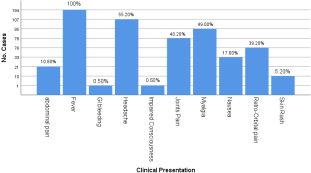
Clinically, all 194 (100%) patients presented with fever. Other reported symptoms included headache in 107 (55.20%), myalgia in 95 (49.00%), joint pain in 78 (40.20%), retro-orbital pain in 76 (39.20%), nausea in 33 (17.00%), abdominal pain in 21 (10.80%), skin rash in 10 (5.20%), impaired consciousness in 1 (0.50%), and gastrointestinal bleeding in 1 (0.50%), as illustrated in Figure 1.
Figure 1. Distribution of dengue fever (DF) cases by clinical features during the 2023 outbreak in North Al Batinah Governorate (Oman).
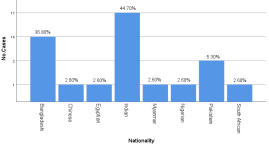
Of the total cases, 156 (80.40%) were Omani, while 38 (19.60%) were non-Omani, as detailed in Table 2. Among the non-Omani cases, 17 (44.70%) were Indian, 14 (36.80%) Bangladeshi, 2 (5.30%) Pakistani, and 1 (2.60%) each from China, Myanmar, Nigeria, South Africa, and Egypt, as shown in Figure 2.
Figure 2. Nationalities among non-Omani dengue fever (DF) cases during the 2023 outbreak in North Al Batinah Governorate (Oman).
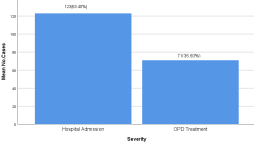
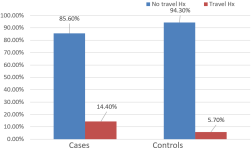
The majority of patients, 166 (85.60%), had no history of travel, whereas 28 (14.40%) reported recent travel, as indicated in Table 2. Regarding severity, 123 (63.40%) patients were admitted for inpatient care, while 71 (36.60%) were managed as outpatients, as shown in Figure 3.
Figure 3. Distribution of DF cases during the 2023 outbreak in North Al Batinah Governorate (Oman) by severity.
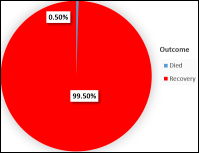
In terms of outcome, 193 (99.50%) patients recovered, and 1 (0.50%) patient died, resulting in a case fatality rate (CFR) of 0.50%, as illustrated in Figure 4.
Figure 4. Distribution of DF cases by clinical outcome during the 2023 outbreak in North Al Batinah Governorate (Oman).
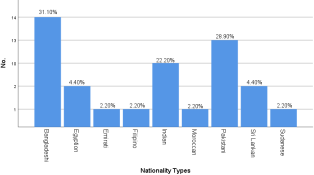
Among the control group, 140 (72.20%) were male and 54 (27.80%) were female. The age of the controls ranged from 6 to 84 years, with a median of 33.50 years and an interquartile range (IQR) of 21 years, as shown in Table 2. The majority of controls were aged 30–59 years, accounting for 87 (44.80%), followed by 61 (31.40%) aged 15–29 years, 35 (18.00%) aged over 60 years, and 11 (5.70%) aged 1–14 years, as shown in Table 2. In terms of nationality, 149 (76.80%) of the controls were Omani, while 45 (23.20%) were non-Omani, as presented in Table 2. Among the non-Omani controls, 14 (31.10%) were Bangladeshi, 13 (28.90%) Pakistani, 10 (22.20%) Indian, 2 (4.40%) Egyptian, 2 (4.40%) Sri Lankan, and 1 (2.20%) each from Morocco, the Philippines, Sudan, and the United Arab Emirates, as illustrated in Figure 5.
Figure 5. Nationalities among non-Omani individuals in the control group.
Regarding travel history, 183 (94.30%) had no history of travel, while 11 (5.70%) had a history of travel, as shown in Table 2.
4.2. Distribution of Cases by Time
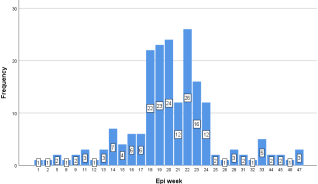
Figure 6. Epidemic curve of DF cases by week during the 2023 outbreak in North Al Batinah Governorate (Oman).
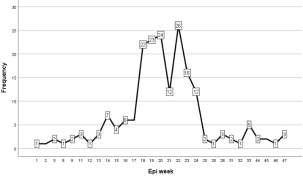
The first two cases were reported on the 7th and 18th of January, followed by scattered cases that gradually increased between the 17th and 19th epi weeks. The number of cases peaked in the 20th epi week, followed by a sudden drop in the 21st epi week. The epi curve showed another peak in the 22nd epi week, then gradually declined between the 23rd and 24th epi weeks, followed by scattered cases continuing until the 47th epi week, as illustrated in Figures 6, 7, 8, and 9. The epi curve demonstrated a propagated pattern of transmission.
Figure 7. Line graph showing the epidemic curve of DF cases by week during the 2023 outbreak in North Al Batinah Governorate (Oman).
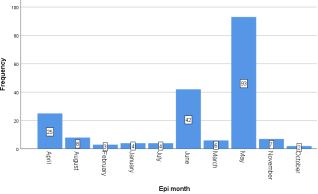
Figure 8. Epidemic curve of DF cases by month during the 2023 outbreak in North Al Batinah Governorate (Oman).
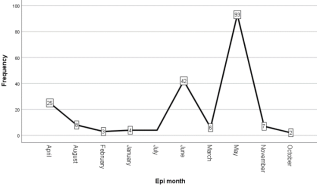
Figure 9. Line graph showing the epidemic curve of DF cases by month during the 2023 outbreak in North Al Batinah Governorate (Oman).
4.3. Distribution of Cases and Controls by Place
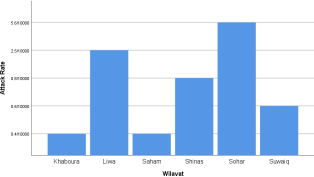
The overall attack rate in North Batinah Governorate was 2.2 per 10,000 population, while the area-specific attack rates were 0.8, 2.5, 5.6, 0.4, 0.4, and 0.6 per 10,000 population in the wilayats of Shinas, Liwa, Sohar, Saham, Khaboura, and Suwaiq, respectively, as illustrated in Figure 10.
Figure 10. Distribution of DF attack rate by wilayat during the 2023 outbreak in North AL Batinah Governorate (Oman).
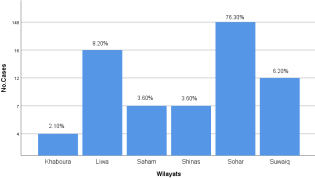
The results showed that 148 (76.30% of the total) cases were reported in Sohar wilayat, followed by 16 (8.20%) in Liwa. In Suwaiq, there were 12 (6.20%) cases, followed by 7 (3.60%) cases reported in each of Saham and Shinas. Khaboura reported 4 (2.10%) cases, as illustrated in Figure 11.
Figure 11. Distribution of DF cases by wilayat during the 2023 outbreak in North AL Batinah Governorate outbreak (Oman).
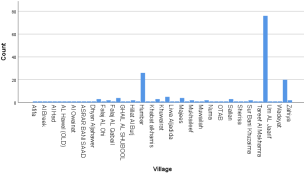
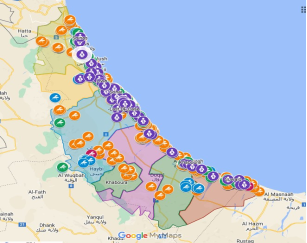
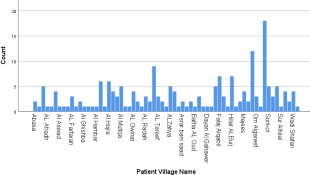
Within Sohar wilayat, the distribution of cases showed the highest concentration in Tareef village with 76 (39.20%), followed by 26 (13.40%) in Humbar and 20 (10.30%) in Waqaiba, as illustrated in Figures 12 and 13.
Figure 12. Distribution of DF cases by village during the 2023 outbreak in North AL Batinah Governorate (Oman).
Figure 13. Map showing the distribution of DF Cases and Vectors during the 2023 outbreak in North AL Batinah Governorate (Oman).
Regarding the control group, the majority were reported in Sohar wilayat with 101 (52.10%), followed by 23 (11.90%) in Shinas, 21 (10.80%) in Suwaiq, 20 (10.30%) in Saham, 14 (7.20%) in Liwa, and 12 (6.20%) in Khaboura; 3 controls had missing location data. The distribution of controls within Sohar wilayat showed the highest numbers in Salan with 18 (9.30%), followed by Muwaylah with 12 (6.20%) and Al Suwaihra with 9 (4.60%), as shown in Figure 14.
Figure 14. Distribution of DF controls by village during the 2023 outbreak in North AL Batinah Governorate (Oman).
4.4. Laboratory Investigation
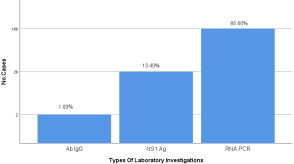
During the outbreak, dengue fever IgG antibodies were reported positive in 2 (1.00%) cases. A total of 26 (13.40%) cases tested positive for dengue NS1 antigen, and 166 (85.60%) cases were positive by RNA PCR for dengue fever, as shown in Figure 15.
Figure 15. Distribution of cases of DF by type of laboratory investigation during the 2023 outbreak in North AL Batinah Governorate (Oman).
4.5. Analytic Investigation
A case-control study was conducted using a 1:1 ratio, with 194 confirmed cases that met the inclusion criteria and 194 matched controls.
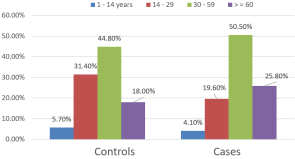
Univariate analysis using the Chi-square test showed that age, wilayat, and travel history were significantly associated with dengue fever among the study sample. Older age was significantly associated with dengue fever, as the age groups 30–59 and ≥60 years were more prevalent among cases than controls (p = 0.028). Figure 16 compares the age distribution between cases and controls.
Figure 16. Distribution of age categories among DF cases and controls.
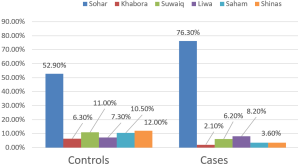
With regard to wilayat, Sohar and Liwa were more prevalent among cases than controls, as shown in Figure 17. Specifically, Sohar accounted for 76.30% of cases compared to 52.90% of controls, with a statistically significant p-value of < 0.001.
Figure 17. Distribution of Wilayates among DF cases and controls.
Additionally, travel history was significantly associated with dengue fever, with 14.40% of cases reporting travel compared to 5.70% of controls (p = 0.004), as shown in Figure 18.
Figure 18. Distribution of DF cases and controls based on history of travel.
Although females were more prevalent among cases (36.60%) than controls (27.80%), this difference was not statistically significant (p = 0.065). Similarly, Omanis were more prevalent among cases (80.40%) than controls (76.80%), but the difference was not significant (p = 0.386). Table 4 presents the univariate analysis of various factors associated with dengue fever.
Table 4. Univariate analysis of various factors associated with dengue fever among the study sample.

Factor (n 388)

Subgroup

% (n) among cases

% (n) among controls

P-value

Gender (n 388)

Male

63.40% (123)

72.20% (140)

0.065

Female

36.60% (71)

27.80% (54)

Age categories (n 388)

1 - 14

4.10% (8)

5.70% (11)

.028*

15 - 29

19.60% (38)

31.40% (61)

30 - 59

50.50% (98)

44.80% (87)

≥ 60

25.80% (50)

18.00% (35)

Wilayat (n 385)

Sohar

76.30% (148)

52.90% (101)

< 0.001*

Khaboura

2.10% (4)

6.30% (12)

Suwaiq

6.20% (12)

11.00% (21)

Liwa

8.20% (16)

7.30% (14)

Saham

3.60% (7)

10.50% (20)

Shinas

3.60% (7)

12.00% (23)

Nationality (n 388)

Omani

80.40% (156)

76.80% (149)

0.386

Non-Omani

19.60% (38)

23.20% (45)

Travel history (n 388)

Yes

14.40% (28)

5.70% (11)

0.004*

No

85.60% (166)

94.30% (183)

Regarding the multivariate adjusted analysis, wilayat and travel history remained independent factors associated with dengue fever. As shown in Table 5, participants living in Sohar were 5.400 times more likely to have dengue fever compared to those living in Shinas, which was used as the reference category (95% CI: 2.169–13.444). Additionally, participants who reported a history of travel were 3.526 times more likely to have dengue fever compared to those with no travel history (95% CI: 1.604–7.750). Gender and age were not significantly associated with dengue fever.
Table 5. Multivariate analysis of factors associated with dengue fever among the study sample.

Factors (n 388)

OR

Lower limit of 95% CI of OR

Upper limit of 95% CI of OR

P value

Gender (reference group: Male)

0.053

Female

1.568

.993

2.476

Age (reference group: ≤ 14 year

0.143

15 - 29

.953

.327

2.774

0.929

30 - 59

1.552

.558

4.317

0.400

≥ 60

1.904

.645

5.621

0.244

Wilayat (reference group: Shinas)

< 0.001*

Sohar

5.400

2.169

13.444

0.000

Khaboura

1.223

.289

5.166

0.784

Suwaiq

1.743

.559

5.433

0.338

Liwa

4.032

1.290

12.602

0.017

Saham

1.369

.398

4.703

0.618

Travel history (reference group: No)

0.002*

Yes

3.526

1.604

7.750

5. Discussion
This outbreak investigation assesses the factors associated with the outbreak and provides recommendations to prevent future occurrences. During this outbreak, many people were susceptible to dengue fever due to residing in specific areas. This is the third local transmission outbreak of dengue fever in the governorate, and the vector was found in almost all wilayates. The vector was active and present in sufficient density to sustain transmission within the governorate.
The investigation showed that the outbreak affected a wide age range, from 1 to 91 years old. Most of the cases were adult males aged 30–59 years, which was similarly observed in outbreak investigations in India 2021 and Pakistan. This can be explained by the fact that adults are more likely to be exposed both at home and in the workplace, and they tend to spend more time outside the home for activities such as shopping and recreation. Greater exposure increases the risk of being bitten by the vector, and thus the risk of becoming infected.
Traveling to endemic areas increases the risk of infection, as similarly reported in some studies. Fever, headache, and myalgia were the most common presenting clinical manifestations in patients, which was also observed in several other studies. . The highest number of cases in 2023 were reported from Sohar, as this wilayat has a high number of expatriates, some of whom had recently traveled to endemic areas such as India and Bangladesh potentially contributing to local transmission of the disease. Additionally, Sohar has high-risk areas such as Al Tareef, Humbar, and Wagaiba, which have a large number of expatriates and farms. These factors contribute to an increased density of vectors and breeding sites. According to several studies, stagnant water was likely a key factor in the spread of the dengue outbreak. Most of the cases were Omani, which can likely be explained by local transmission. The source was most likely an expatriate who introduced the disease to Omanis in the presence of a high-density vector. There was one death: a 77-year-old Omani male patient with comorbidities.
6. Conclusion
Dengue fever is a major public health problem in Oman. The majority of patients were male and belonged to the adult age group. Prompt notification and early, widespread, community-wide vector control measures successfully contained the spread of dengue fever. Moreover, continuous efforts from various government sectors, including the Ministry of Health and the Ministry of Municipalities, are essential to reduce the incidence of cases in the affected regions.
7. Recommendations
1) Conduct an entomological survey in the surrounding areas of the index house based on a defined protocol.
2) Implement immediate vector control measures.
3) Identify at-risk populations and environmental risk factors for targeted interventions.
4) Engage community leaders and other stakeholders to promote public awareness through health committees.
5) Deliver awareness lectures to health staff at various locations.
6) Organize community awareness lectures.
7) Develop and distribute educational materials.
8. Limitations
Difficulty accessing certain sensitive institutions that require special permissions (e.g., military facilities).
Presence of recall bias as a potential limitation.
Abbreviations

MOH

Ministry of Health

RNA

Ribonucleic Acid

WHO

World Health Organization

IgM

Immunoglobulin M

IgG

Immunoglobulin G

RT-PCR

Real-time/Reverse transcription Polymerase Chain Reaction

NS1

Nonstructural Protein 1 Antigen

P

Value

CI

Confidence Interval

OR

Odd Ratio

IQR

Interquartile Range

AOR

Adjusted Odd Ratio

CFR

Case Fatality Rate

SPSS

Statistical Package for the Social Science

AR

Attack Rate

NBG

North Batinah Governorate

DF

Dengue Fever

Author Contributions
Malik Aljabri: Conceptualization, Data curation, Formal Analysis
Eman Elsayed Abd-Ellatif: Supervision, Writing – review & editing
Fatma Al Hashmi: Project Administration
Khalid Al Saadi: Investigation
Abir Al Moqbali: Resources
Conflicts of Interest
The authors declare no conflicts of interest.
References
[1] Chan HBY, How CH, Ng CWM. Definitive tests for dengue fever: when and which should I use? Singapore Med J 2017; 58: 632–635.
[2] Mesfin Z, Ali A, Abagero A, et al. Dengue Fever Outbreak Investigation in Werder Town, Dollo Zone, Somali Region, Ethiopia. Infect Drug Resist 2022; 15: 7207–7217.
[3] Wu D, Zhang X, Deng A, et al. Dengue Fever Outbreaks Caused by Varied Serotype Dengue Virus — Guangdong Province, China, 2019. China CDC Wkly 2020; 2: 740–743.
[4] Wiwanitkit V. Unusual mode of transmission of dengue. J Infect Dev Ctries 2009; 4: 51–54.
[5] Al-Tawfiq JA, Memish ZA. Dengue Hemorrhagic Fever Virus in Saudi Arabia: A Review. Vector Borne Zoonotic Dis 2018; 18: 75–81.
[6] Wiemer D, Frickmann H, Krüger A. Dengue fever: Symptoms, epidemiology, entomology, pathogen diagnosis and prevention. Hautarzt 2017; 68: 1011–1020.
[7] Teoid A, Chia PY, Ramireddi GK, et al. Clinical and prognostic relevance of sST2 in adults with dengue-associated cardiac impairment and severe dengue. PLoS Negl Trop Dis 2022; 16: 1–13.
[8] Wilder-Smith A. Dengue vaccine development: status and future. Bundesgesundheitsblatt - Gesundheitsforsch - Gesundheitsschutz 2020; 63: 40–44.
[9] Norshidah H, Vignesh R, Lai NS. Updates on dengue vaccine and antiviral. Molecules 2021; 26: 1–18.
[10] Shim E. Optimal dengue vaccination strategies of seropositive individuals. Math Biosci Eng 2019; 16: 1171–1189.
[11] Raza FA, Rehman SU, Khalid R, et al. Demographic and clinico-epidemiological features of dengue fever in Faisalabad, Pakistan. PLoS One 2014; 9: 5–11.
[12] Sridhar S, Luedtke A, Langevin E, et al. Effect of Dengue Serostatus on Dengue Vaccine Safety and Efficacy. N Engl J Med 2018; 379: 327–340.
[13] Melebari S, Bakri R, Hafiz A, et al. The epidemiology and incidence of dengue in Makkah, Saudi Arabia, during 2017-2019. Saudi Med J 2021; 42: 1173–1179.
[14] Mehmood A, Khalid Khan F, Chaudhry A, et al. Risk Factors Associated with a Dengue Fever Outbreak in Islamabad, Pakistan: Case-Control Study. JMIR public Heal Surveill 2021; 7: e27266.
[15] National Center for Statistics and Information (NCSI) O. National Center for Statistics and Information,
[16] Al Balushi L, Al Kalbani M, Al Manji A, et al. A second local dengue fever outbreak: A field experience from Muscat Governorate in Oman, 2022. IJID Reg 2023; 7: 237–241.
[17] Al-Abri SS, Kurup PJ, Al Manji A, et al. Control of the 2018–2019 dengue fever outbreak in Oman: A country previously without local transmission. Int J Infect Dis 2020; 90: 97–103.
[18] de Almeida PS, Carneiro JPM, Lima-Camara TN, et al. Aedes Aegypti AND Aedes Albopictus (DIPTERA: CULICIDAE) IN ARTIFICIAL BREEDING SITES IN RURAL SETTLEMENTS AND INDIGENOUS VILLAGES. J Trop Pathol 2024; 53: 333–343.
[19] (NCSI), National Centre for Statistics & Information O. Population of Al Batinah North Governorate, Oman – 2022,
[20] Manna S, Satapathy P, Bora I, et al. Dengue outbreaks in South Asia amid Covid-19: Epidemiology, transmission, and mitigation strategies. Front Public Heal; 10. Epub ahead of print 2022.
[21] Oman G of. Al-Shifa Central Initiative,
[22] Report of Infectious Diseases – Tarassud System. Gov.om – Sultanate of Oman,
[23] Singh N, Singh AK, Kumar A. Dengue outbreak update in India: 2022. Indian J Public Health 2023; 67: 181–183.
[24] Liu W, Hu W, Dong Z, et al. Travel-related infection in Guangzhou, China, 2009-2019. Travel Med Infect Dis 2021; 43: 102106.
[25] Islam MA, Hasan MN, Tiwari A, et al. Correlation of Dengue and Meteorological Factors in Bangladesh: A Public Health Concern. Int J Environ Res Public Health; 20. Epub ahead of print 2023.
Cite This Article
  • APA Style

    Aljabri, M., Abd-Ellatif, E. E., Hashmi, F. A., Saadi, K. A., Moqbali, A. A. (2026). Dengue Fever Outbreak in North AL Batinah Governorate (Oman), January 2023 –December 2023. American Journal of Medical Science and Technology, 2(2), 57-69. https://doi.org/10.11648/j.ajmst.20260202.14

    Copy | Download

    ACS Style

    Aljabri, M.; Abd-Ellatif, E. E.; Hashmi, F. A.; Saadi, K. A.; Moqbali, A. A. Dengue Fever Outbreak in North AL Batinah Governorate (Oman), January 2023 –December 2023. Am. J. Med. Sci. Technol. 2026, 2(2), 57-69. doi: 10.11648/j.ajmst.20260202.14

    Copy | Download

    AMA Style

    Aljabri M, Abd-Ellatif EE, Hashmi FA, Saadi KA, Moqbali AA. Dengue Fever Outbreak in North AL Batinah Governorate (Oman), January 2023 –December 2023. Am J Med Sci Technol. 2026;2(2):57-69. doi: 10.11648/j.ajmst.20260202.14

    Copy | Download

  • @article{10.11648/j.ajmst.20260202.14,
      author = {Malik Aljabri and Eman Elsayed Abd-Ellatif and Fatma Al Hashmi and Khalid Al Saadi and Abir Al Moqbali},
      title = {Dengue Fever Outbreak in North AL Batinah Governorate (Oman), January 2023 –December 2023},
      journal = {American Journal of Medical Science and Technology},
      volume = {2},
      number = {2},
      pages = {57-69},
      doi = {10.11648/j.ajmst.20260202.14},
      url = {https://doi.org/10.11648/j.ajmst.20260202.14},
      eprint = {https://article.sciencepublishinggroup.com/pdf/10.11648.j.ajmst.20260202.14},
      abstract = {In the North Batinah Governorate, Sultanate of Oman, a local transmission dengue fever outbreak was examined based on surveillance data from January 1 to December 31, 2023, and containment measures were implemented. This study aimed to determine the sources and factors associated with this outbreak and to recommend countermeasures to prevent future outbreaks. A descriptive analysis was conducted on 194 confirmed cases, followed by an unmatched case-control study involving 194 laboratory-confirmed cases and 194 controls. Data were collected using the standardized dengue fever questionnaire developed by the Oman Ministry of Health, the electronic surveillance system (ALSHIFA+), and phone interviews. Multivariate analysis was performed to examine associations between variables and dengue fever. Among the 194 confirmed cases, males aged 30–59 years (98, 50.5%) were the most affected, with fever (100%), headache (55.2%), and myalgia (49%) being the most common clinical presentations. The case fatality rate was 0.5%. Living in Sohar, particularly in Tareef, Humbar, and Waqaiba, was associated with higher susceptibility to dengue fever (OR = 5.40; 95% CI: 2.17–13.44) due to high vector density, and a history of travel was also identified as a significant risk factor (OR = 3.53; 95% CI: 1.60–7.75). The 2023 dengue fever outbreak was the largest recorded, highlighting the importance of proper removal of breeding sites, community health education, continued implementation of vector control strategies, and maintaining updated vector-borne disease surveillance.},
     year = {2026}
    }
    

    Copy | Download

  • TY  - JOUR
    T1  - Dengue Fever Outbreak in North AL Batinah Governorate (Oman), January 2023 –December 2023
    AU  - Malik Aljabri
    AU  - Eman Elsayed Abd-Ellatif
    AU  - Fatma Al Hashmi
    AU  - Khalid Al Saadi
    AU  - Abir Al Moqbali
    Y1  - 2026/03/23
    PY  - 2026
    N1  - https://doi.org/10.11648/j.ajmst.20260202.14
    DO  - 10.11648/j.ajmst.20260202.14
    T2  - American Journal of Medical Science and Technology
    JF  - American Journal of Medical Science and Technology
    JO  - American Journal of Medical Science and Technology
    SP  - 57
    EP  - 69
    PB  - Science Publishing Group
    UR  - https://doi.org/10.11648/j.ajmst.20260202.14
    AB  - In the North Batinah Governorate, Sultanate of Oman, a local transmission dengue fever outbreak was examined based on surveillance data from January 1 to December 31, 2023, and containment measures were implemented. This study aimed to determine the sources and factors associated with this outbreak and to recommend countermeasures to prevent future outbreaks. A descriptive analysis was conducted on 194 confirmed cases, followed by an unmatched case-control study involving 194 laboratory-confirmed cases and 194 controls. Data were collected using the standardized dengue fever questionnaire developed by the Oman Ministry of Health, the electronic surveillance system (ALSHIFA+), and phone interviews. Multivariate analysis was performed to examine associations between variables and dengue fever. Among the 194 confirmed cases, males aged 30–59 years (98, 50.5%) were the most affected, with fever (100%), headache (55.2%), and myalgia (49%) being the most common clinical presentations. The case fatality rate was 0.5%. Living in Sohar, particularly in Tareef, Humbar, and Waqaiba, was associated with higher susceptibility to dengue fever (OR = 5.40; 95% CI: 2.17–13.44) due to high vector density, and a history of travel was also identified as a significant risk factor (OR = 3.53; 95% CI: 1.60–7.75). The 2023 dengue fever outbreak was the largest recorded, highlighting the importance of proper removal of breeding sites, community health education, continued implementation of vector control strategies, and maintaining updated vector-borne disease surveillance.
    VL  - 2
    IS  - 2
    ER  - 

    Copy | Download

Author Information
  • Department of Disease Surveillance and Prevention, Ministry of Health, Sohar, Oman

  • Department of Public Health and Community Medicine, Mansoura University, Mansoura, Egypt
  • Department of Disease Surveillance and Prevention, Ministry of Health, Sohar, Oman

  • Department of Disease Surveillance and Prevention, Ministry of Health, Sohar, Oman

  • Department of Disease Surveillance and Prevention, Ministry of Health, Sohar, Oman

  • Abstract
  • Keywords
  • Document Sections

    1. 1. Introduction
    2. 2. Methodology
    3. 3. Ethical Considerations
    4. 4. Results
    5. 5. Discussion
    6. 6. Conclusion
    7. 7. Recommendations
    8. 8. Limitations
    Show Full Outline
  • Abbreviations
  • Author Contributions
  • Conflicts of Interest
  • References
  • Cite This Article
  • Author Information