Abstract
Background: Sudan’s persistent conflict has triggered a humanitarian emergency, breakdown a fragile healthcare system and severely limited orthopedic services. Hospitals withholding over capacity numbers of orthopedics injuries especially high-energy injuries from blasts and gunshots while battling with shortages of surgical supplies, electricity, and specialized staff. Fractures form a major proportion of orthopedic admissions, frequently requiring operative management, prolonged inpatient care, and dedicated rehabilitation. Understanding injury patterns and initial management in this context is essential to guide equally resource distribution and improve overall outcomes. Objective: The study aims to recognize the patterns and management of orthopedics injuries during the conflict among patients managed at Kosti Teaching Hospital, Kosti- Sudan during period (August 2023–December 2025). Method: The study design is descriptive retrospective cross-sectional hospital-based study. sample size included 527 patients. Have been selected by simple random sampling technique from orthopedics and traumatology department at Kosti teaching hospital. Result: Study results showed from the 527 patients, closed fractures were most common pattern representing 67.7%of cases, while open fractures accounted for 18.1%. Soft-tissue injuries were present in 11.7%, infections in 1.8%, and dislocations in 0.7%. Regarding site of trauma, lower-limb injuries were the most frequent affecting 59.2%, followed by upper-limb injuries at 35.5%. Spinal injuries accounted for 4.2%, while pelvic fractures were least common at 1.1%. More than half of the patients 52.7% were scheduled for elective surgical procedures, while 16.3% underwent emergency-room debridement and irrigation. Conservative splinting was used in 15.2%. Definitive management mainly involved internal fixation 78.6%, followed by external fixation 13.1% and debridement 3.8% and conservative 1.7%. Most prevalent Age group was the young adults (25-44) with 27.5%, middle age (45-59) 19.4%, Children (0-14) 15.6%, Elderly (60-74) 14.8%, youth (15-24) 14.6& and the least Senior (more than 75) 8.2%. Male is predominance with 65.8%, while female constitute 34.2%. Conclusion: Our study focused on the pattern of orthopedic trauma presenting during the current conflict in Sudan, with closed fractures and lower limb injuries caused by high energy mechanisms such as fall from height, Road traffic accidents, gunshots and blasts which forming the majority of cases treated at Kosti Teaching Hospital. The accumulation of injuries among young males further estimate the social and economic effect of prolonged conflict. These findings stress the urgent need to strengthen trauma centers capacity, ensure adequate accessibility to surgical supplies, and develop standardized management protocols to enhance outcomes.
Keywords
Orthopedics Injuries, Conflict, Management, Kosti, Sudan
1. Introduction
1.1. Background
Trauma is one of the main causes of disability, low quality of life and mortality, with musculoskeletal injuries representing a main cause of burden, particularly in low- and middle-income countries
. Fractures represent a proportion of trauma hospital admissions and often require surgical intervention, prolonged hospitalization, and rehabilitation
. In conflict areas the load of trauma management is intensified as mechanisms of injury such as gunshot wounds, blasts, and high-energy blunt trauma noticeable increase fracture incidence
| [3] | Coupland RM: The effects of weapons: defining superfluous injury and unnecessary suffering. Med Glob Surviv. 1996, 3: 163-168. |
[3]
.
Armed conflicts apply unique challenges to healthcare systems, including lack of medical supplies, instable of supply chains, damage of infrastructure, and workforce shortage, while hospitals remain the primary referral centers for trauma care
| [4] | Giannou C, Baldan M: War Surgery: Working with Limited Resources in Armed Conflict and Other Situations of Violence. Geneva: International Committee of the. Red Cross. 2010, |
[4]
. Data from Iraq, Afghanistan, and Syria exhibit that fractures are among the most common injuries in combat, with long bones such as the femur, tibia, and humerus mostly affected
| [5] | Belmont PJ, Owens BD, Schoenfeld AJ, et al.: Musculoskeletal Injuries in Iraq and Afghanistan, Epidemiology and Outcomes Following a Decade of War. Journal of the American Academy of Orthopaedic Surgeons. 2016, 24: 341-8.
https://doi.org/10.5435/JAAOS-D-15-00123 |
| [6] | Uruc V, Ozden R, DUMAN İG, et al.: Major musculoskeletal injuries and applied treatments in the current conflicts in Syria. wounds. 20141, 11: 13. |
[5, 6]
.
Sudan’s persistent conflict has triggered a humanitarian emergency, breakdown a unstable healthcare system and limited orthopedic services. Hospitals receiving high capacity numbers of high-energy injuries from blasts and gunshots while handling with critical deficient of surgical supplies, electricity issues, and defect in highly specialized staff due to migration move. This effect reflects the realities of other conflict zones: such as orthopedic department at Al-Aqsa Martyrs’ Hospital in Gaza rapidly restructured workflows, unplanned operating spaces, and creating innovative methods such as Dressing Under General Anesthesia (DUGA) to manage mass casualties
| [7] | Alamrain AA, Halimy M, Toman H, el al: Navigating ortho care amidst war crisis: insights from Al-Aqsa Martyrs’ Hospital’s orthopedic department at Gaza Strip. Frontiers in Public Health. 2025, 2: 1595477.
https://doi.org/10.3389/fpubh.2025.1595477 |
[7]
. Moreover, experiences from the Libyan Civil War focused on complex management of musculoskeletal injuries, where high infection rates need external fixation, intramedullary nailing, and amputations, usually requiring multidisciplinary team
| [8] | Biçen Ç, Akdemir M, Ekin A: Management of orthopaedic injuries in Libyan civil war: experiences of a distant hospital. International orthopaedics. 2020, 44: 1639-46.
https://doi.org/10.1007/s00264-020-04657-5 |
| [9] | Ng C, Mifsud M, Borg JN, Mizzi C: The Libyan civil conflict: selected case series of orthopaedic trauma managed in Malta in 2014. Scandinavian journal of trauma, resuscitation and emergency medicine. 201520, 23: 103.
https://doi.org/10.1186/s13049-015-0183-2 |
[8, 9]
. These two examples show the international role of Damage Control Orthopedics (DCO) in stabilizing patients in such harsh conditions
| [10] | Alexander Lerner, Ruta Jakusonoka, Andris Jumtins, David Rothem (ed): Temporary bridging trans-hip external fixation in damage control orthopaedics treatment after severe combat trauma: A clinical case series.
https://doi.org/10.1016/j.injury.2023.01.007 |
[10]
.
Most injuries from conflict setting involved open wounds accompanies to damage to bone, also vascular and neural components. Existence of such complicated cases, maintenance of bone alignment is a cornerstone step to proceed the extensive work of debridement and reconstruction of the missing or damaged tissues, which might become a major challenge for plastic and orthopedic surgeons. Furthermore, when vascular damage exists, restoring limb perfusion is the top priority step in reconstruction. Long-term follow-up is crucial for early detection of complications and to support rehabilitation teams in achieving the best possible outcome
| [11] | Yassin AM, Mohamed M, Dirar M, Karar I, Ali M, Ahmed M, Salah M: The portrayal of injuries to the extremities and their reconstruction in times of conflict (Khartoum, Sudan): a cross-sectional. Annals of Medicine and Surgery. 20251, 87: 1181-9. https://doi.org/10.1097/MS9.0000000000002844 |
[11]
.
1.2. Problem Statement
Armed conflicts are associated with a significant increase in traumatic injuries, which represent a major burden on healthcare systems in affected regions. Sudan has been experiencing recurrent armed conflict, leading to a rise in civilian and combat-related injuries. Kosti Teaching Hospital, being one of the main referral centers, receives a large proportion of these trauma cases. However, there is limited documented evidence regarding the patterns, types, and distribution of orthopedics injuries and its initial management during the current conflict (August 2023–August 2025). This lack of data hampers proper planning, allocation of resources, and development of effective management strategies for trauma care. Without a clear understanding of orthopedics injuries patterns, orthopedic and emergency services may struggle to provide timely and appropriate interventions, ultimately affecting patient outcomes.
1.3. Justification
Studying the patterns of orthopedics injuries during conflict is essential for several reasons. First, as it provides critical data that can guide healthcare providers in anticipating the most common orthopedics injuries types and planning operative and non-operative interventions. Second, such research supports policymakers and hospital administrators in strengthening trauma systems, ensuring adequate supply of orthopedic implants, surgical equipment, and trained staff. Third, documenting the impact of conflict on trauma care contributes to the global body of knowledge on conflict-related injuries, offering lessons applicable in similar crisis settings. Finally, the findings will serve as baseline data for future research and may help improve preparedness for both current and post-conflict healthcare delivery in Sudan.
1.4. Research Objectives
1.4.1. General Objective
To identify and recognize the patterns orthopedics injuries and their management during the conflict among patients managed at Kosti Teaching Hospital, Sudan during (August 2023–December 2025).
1.4.2. Specific Objectives
1) To classify the most common anatomical sites orthopedics injury.
2) To discover the most common types of orthopedics injury fractures encountered.
3) To identify the mechanisms of injury leading to orthopedics injury.
4) To define initial intervention and definitive management provided for these injuries at Kosti Teaching Hospital.
2. Literature Review
In Khartoum in 2024, they found Among 200 patients, most patients experienced damage to multiple tissue components, and reconstruction primarily involved fasciocutaneous flaps (73%) and muscle flaps (27%), 60% of complicated cases suffered complication due to infection
| [11] | Yassin AM, Mohamed M, Dirar M, Karar I, Ali M, Ahmed M, Salah M: The portrayal of injuries to the extremities and their reconstruction in times of conflict (Khartoum, Sudan): a cross-sectional. Annals of Medicine and Surgery. 20251, 87: 1181-9. https://doi.org/10.1097/MS9.0000000000002844 |
[11]
. Moreover, Combat-related injuries in Iraq, Afghanistan, and Syria between 2001 - 2023, they found among 25,458 orthopedic injuries Majority of injuries affected the extremities, particularly the lower limbs, with blast mechanisms being the predominant cause, 82% of them were major amputations
| [12] | Benavides JM, Benavides LC, Pumiglia L, Stern CA, Stallings JD, Gurney J: Breaking point: Musculoskeletal combat injuries in Iraq, Afghanistan, and Syria—Epidemiology and future directions of care on the battlefield after over two decades of war. Journal of Trauma and Acute Care Surgery. 2025199, 27: 31.
https://doi.org/10.1097/TA.0000000000004705 |
[12]
. While in Sana’a, Yemen, between 2015 to 2020, there results reflect the leading mechanisms of injury were gunshot wounds, blasts, and landmine explosions. Many required multiple surgical procedures and implants, with high complication and mortality rates, most frequent complications were infection, nonunion, malunion, and amputation, while sepsis was the main cause of death
. On the other hand, in Middle East from 2001 to 2021, they screened 1,226 studies in a literature review exploring orthopedic surgeons’ experiences during the Global War on Terror, their thematic analysis revealed five main domains that include the presence of new mechanisms of injury due to modern weaponry, variation in surgical management distinctions between combat and civilian trauma, the continuing humanitarian role of orthopedic surgeons, their statistical analysis also revelated that explosive injuries were the most frequent, necessitating procedures such as debridement, external fixation, and amputation
. During the Libyan civil war from 172 patient, Explosives accounted for most injuries (56 patients), followed by missiles (8 patients) and other mechanisms (55 patients), Tibial fractures were the most frequent, followed by femur and humerus fractures. Surgical interventions included plate-screw fixation (82 cases), intramedullary nailing (42), external fixation (41), and K-wire fixation (27). Soft tissue procedures were performed in 78 cases
| [8] | Biçen Ç, Akdemir M, Ekin A: Management of orthopaedic injuries in Libyan civil war: experiences of a distant hospital. International orthopaedics. 2020, 44: 1639-46.
https://doi.org/10.1007/s00264-020-04657-5 |
[8]
. On conclusion, Saraswat et al during a period of low-intensity conflict 418 male patients have been studied, they found that single lower limb injuries accounted for 27% and upper limb injuries for 17.9% Gunshot wounds were the most frequent mechanism (41.4%), followed by splinter injuries from improvised explosive devices (39.2%) and road traffic accidents (19.4%). Extremity injuries constituted 44.9% of all cases, with nearly half requiring immediate surgical intervention
.
In Sudan, Kosti Teaching Hospital serves as a major trauma referral center in the White Nile region, receiving a significant proportion of trauma cases during the ongoing conflict due to its prepared hospital with continues drug supply, 24 hours emergency cover and emergency operations with 300 bed, moreover to its structured and comprehensive other departments to reach the best multidisciplinary team management specially after the improvement and expansion of hospital infrastructure from beds capacity, increased staff, operative equipment's. The closest prepared hospital to received such as overwhelming numbers of patients at Alobaid located approximate Km at 300 which make it the closest trauma referral center for the surrounding five surrounding states.
There is limited published data exist on the epidemiological patterns of orthopedics injuries in this context, creating challenges in resource allocation, surgical preparedness, and patient management. This study therefore aims to analyze the patterns of orthopedics injuries and identify management at Kosti Teaching Hospital during the conflict, providing essential evidence for healthcare planning and contributing to the broader understanding of conflict-related orthopedic injuries.
3. Materials and Methods
3.1. Study Design and Setting
The study design was descriptive retrospective cross-sectional hospital-based study during August 2023 – December 2025. This study was conducted at Kosti Teaching Hospital, located in Kosti City in the White Nile State of southern Sudan, approximately 300 km south of Khartoum. Kosti is the largest city in the state and lies on the western bank of the White Nile River. Kosti Teaching Hospital is major referral central hospitals in the White Nile region, receiving a significant proportion of trauma cases during the ongoing conflict from five different states and considered as trauma center for the state.
3.2. Study Population
The study population is all orthopedics injured patients who are admitted or came to orthopedics department during the time of study (August 2023- December 2025) N=1411.
3.3. Inclusion and Exclusion Criteria
Inclusion: Orthopedics injured patient present and admitted to hospital data during time of study, all patients no matter of their area of residence, inside or outside the state, sufficient medical data representing at least type of fracture, date of presentation, and basic demographics.
Exclusion: Patient with isolated abdominal, Head or thorax injury, Insufficient medical records or missing documents.
3.4. Sampling Technique and Sample Size
Simple random sampling technique, (manual lottery technique; drawing lots) using the record number as reference, sample size was calculated with Single Proportion Formula (Cochran’s Formula) Then apply Finite Population Correction (FPC) Formula.
The minimum required sample size was calculated using Single Proportion Formula (Cochran’s Formula) with 95 percent confidence, a 5 percent margin of error, and an assumed proportion of 0.5, resulted in an initial estimate of 384 records. And then we applied the Finite Population Correction (FPC) for N=1411 reduced the required sample to approximately 302. To enhance precision, increase statistical power, we increased the sample size to 527.
3.5. Study Variables
The variables are patient demographics (age, gender, residence), injury details (Date of trauma, mood of trauma, site of trauma, date of hospital admission, type of orthopedics injury, initial management, definitive management, date of operation, status at discharge, Follow up status).
3.6. Data Collection and Measurement
The data was collected by Form with checkboxes.
3.7. Data Analysis
The collected data entered manually in excel sheet then analyzed using SPSS Program Edition (27.1). The Results be displayed in tables and figures constructed using Microsoft Excel 2016.
3.8. Ethical Considerations
Ethical permission obtained from a council from Kosti Teaching hospital to access medical records while keeping patients’ identity and personal information protected.
4. Results
In this study, 527 patients have been included. Most prevalent Age group was the young adults (25-44) with 27.5% (145), middle age (45-59) 19.4% (102), Children (0-14) 15.6% (82), Elderly (60-74) 14.8 (78), youth (15-24) 14.6 (77) and the least Senior (more than 75) 8.2% (43) (
Table 1).
Table 1. Distribution of patients according to their age.
Age |
| Frequency | Percent |
0-14 (children) | 82 | 15.6% |
15-24 (youth) | 77 | 14.6% |
25-44 (young adults) | 145 | 27.5% |
45-59 (middle age) | 102 | 19.4% |
60-74 (Elderly) | 78 | 14.8% |
more than 74 (Senior) | 43 | 8.2% |
Total | 527 | 100.0% |
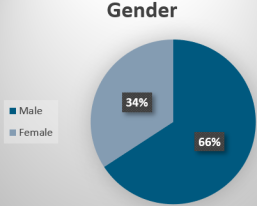
Gender frequency revealed that male is predominate with 65.8% (347), while female constitute 34.2% (180), The male-to-female ratio was 1.92: 1 (
Figure 1).
Figure 1. Distribution of patients according to their gender.
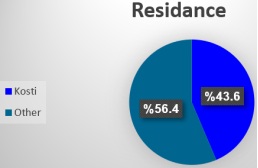
Most of the study population residence was from outside Kosti 56.4% (296) and from Kosti 43.6% (230) (
Figure 2).
Figure 2. Distribution of patients according to their residence.
As the results showed that the most common extremity was the lower limb 59.2% (312), followed by the upper limb 35.5% (187), then spine 4.2% (22), and least frequent was pelvis fracture with 1.1% (6) (
Table 2).
Table 2. Distribution of patients according to their anatomical site of trauma.
Anatomical Site of trauma |
| Frequency | Percent |
Upper limb | 187 | 35.5% |
Lower Limb | 312 | 59.2% |
Spine | 22 | 4.2%% |
Pelvis | 6 | 1.1 |
Total | 527 | 100.0% |
The most common orthopedics injury was closed fracture with 67.7% (404), followed by open fracture 18.1% (108), Soft tissue frequency reached 11.7% (70), and the least two where infection 1.8% (11), and dislocations 0.7% (4) (
Table 3).
Table 3. Distribution of patients according to their orthopedic injury.
Orthopedic Injury | Frequency | Percent |
Type of orthopedics injury | Closed fracture | 404 | 67.7% |
Open fracture | 108 | 18.1% |
Soft tissue | 70 | 11.7% |
Dislocation | 4 | 0.7% |
Infection | 11 | 1.8% |
| Total | 597 | 100.0% |
The total here is 597 due to patients having combination of injuries
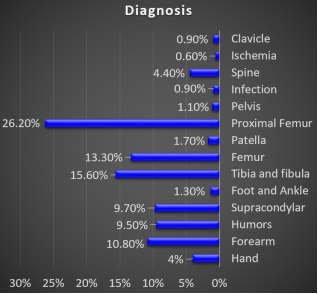
The most prevalent diagnosis was proximal femur fracture in lower limbs as 26.2% (128) and least diagnosis was ischemia 0.6% (3) (
Figure 3).
Figure 3. Distribution of patients according to their diagnosis.
Results revealed that regarding mechanism of trauma, fall down constituted the highest rate with 58.1% (306), RTAs 18.6% (98), gunshots 13.7% (72), explosion 2.3% (12) and the least was direct / blunt trauma 7.4% (42) (
Table 4).
Table 4. Distribution of patients according to their mechanism of trauma.
Mood of trauma | Frequency | Percent |
fall down | 306 | 58.1% |
RTA | 98 | 18.6% |
gunshot | 72 | 13.7% |
explosion | 12 | 2.3% |
Direct / blunt trauma | 39 | 7.4% |
total | 527 | 100.0% |
Multiple modalities have been used as initial intervention; in some of them might be used for the same patient, results shows that admission and booking for surgery was the most common initial intervention, followed by Debridement / irrigation 16.3% (112), Slabs constitute 15.2% (105), admission for close follow up 9% (62) and the least initial intervention was manual reduction with 6.8% (47) (
Table 5).
Table 5. Distribution of patients according to their Initial intervention.
Initial intervention | Frequencies | Percent |
Booking for surgery | 363 | 52.7% |
Manual Reduction | 47 | 6.8% |
Debridement/irrigation | 112 | 16.3% |
Short stay with close follow up | 62 | 9.0% |
Slab | 105 | 15.2% |
Where the Definitive management results reveled: Internal fixation 78.6% (414), external fixation 13.1% (69), debridement 3.8% (20), and patients who received conservative management 1.7% (9) (
Table 6).
Table 6. Distribution of patients according to their definitive management.
Definitive management Frequencies |
| Frequency | Percent |
Definitive management | external fixation | 69 | 13.1% |
internal fixation | 414 | 78.6% |
Amputation | 15 | 2.8% |
Debridement | 20 | 3.8% |
Conservative | 9 | 1.7% |
Total | 527 | 100.0% |
Furthermore, result emphasize that 58.2% (178) of male exposed to fall down as mechanism of injury where female represent 41.8% (128), Road traffic accidents male represent 67.3% (66) where's female 32.7% (32), Gunshots where male remarkably constitute from 86.1% (62) and female 13.9% (10), explosion male had 66.7% (8) while female 33.7% (4), and direct/blunt trauma in males 82.1% (32) and female 17.9% (7) (
Table 7).
Table 7. Relation between mode of trauma and gender.
Relation between mode of trauma and gender |
| Sex | Total |
| Male | Female |
fall down | Frequency | 178 | 128 | 306 |
Percent | 58.2% | 41.8% | |
RTA | Frequency | 66 | 32 | 98 |
Percent | 67.3% | 32.7% | |
gunshot | Frequency | 62 | 10 | 72 |
Percent | 86.1% | 13.9% | |
explosion | Frequency | 8 | 4 | 12 |
Percent | 66.7% | 33.3% | |
Direct / blunt trauma | Frequency | 32 | 7 | 39 |
Percent | 82.1% | 17.9% | |
Total | Frequency | 346 | 181 | 527 |
5. Discussion
Conflict settings can dramatically increase the burden of orthopedic injuries due to high energy mechanisms such as gunshot wounds, blasts, and high-energy blunt trauma, resulting in complex fracture patterns and associated soft-tissue injuries
| [3] | Coupland RM: The effects of weapons: defining superfluous injury and unnecessary suffering. Med Glob Surviv. 1996, 3: 163-168. |
[3]
. In Sudan, the current conflicts have created a humanitarian crisis, increasing the load on falling healthcare system. Hospitals face overwhelming numbers of high-energy trauma cases while managing acute shortages of surgical supplies, electricity, and specialized staff. This retrospective descriptive study aimed to evaluate patterns of orthopedic injuries and their management at Kosti Teaching Hospital.
From the 527 patient, closed fractures were more common, representing 67.7% of cases, while open fractures accounted for 18.1%. Soft-tissue injuries were present in 11.7%. infections in 1.8%, and dislocations in 0.7%. These proportions differ from those reported in other conflict environments, such as Hutaif et al.’s study from Yemen, as we presumed that because our study conducted in civilian hospital, while Hutaif’s et al. study at military hospital where open fractures occurred in 76% of cases and soft-tissue involvement reached 88%
. Similarly, Benavides et al. demonstrated high rates of open fractures (63.97%) across conflict zones in Iraq, Afghanistan, and Syria
| [12] | Benavides JM, Benavides LC, Pumiglia L, Stern CA, Stallings JD, Gurney J: Breaking point: Musculoskeletal combat injuries in Iraq, Afghanistan, and Syria—Epidemiology and future directions of care on the battlefield after over two decades of war. Journal of Trauma and Acute Care Surgery. 2025199, 27: 31.
https://doi.org/10.1097/TA.0000000000004705 |
[12]
.
In our study Lower-limb injuries were the most frequent, affecting 59.2% with proximal femur (26.2%) and tibiofibular fracture (15.6%) as the most frequently fractured long bones in it., followed by upper-limb injuries 35.5% with forearm fracture constitute the majority of it with 10.8%, followed by supracondylar fracture 9.7%. Spinal injuries accounted for 4.2%, while pelvic fractures were least common at 1.1%. These trends are consistent with findings from Yassin et al., who reported lower-limb involvement in 56% with tibial fracture (34.8%) as predominant patterns of conflict-related injuries in Khartoum, followed by upper limbs (40%) with metacarpals fracture (9.8%) is the commonest pattern of fracture
| [11] | Yassin AM, Mohamed M, Dirar M, Karar I, Ali M, Ahmed M, Salah M: The portrayal of injuries to the extremities and their reconstruction in times of conflict (Khartoum, Sudan): a cross-sectional. Annals of Medicine and Surgery. 20251, 87: 1181-9. https://doi.org/10.1097/MS9.0000000000002844 |
[11]
. This pattern aligns with the well-recognized vulnerability of weight-bearing bones and extremities in conflict settings.
Falling down represented the leading mechanism of trauma (58.1%), followed by road traffic accidents (18.6%), gunshot wounds (13.7%), explosions (2.3%), and direct trauma (7.4%). This contrasts sharply with Saraswat et al., who found gunshot wounds (41.4%) and blast injuries (39.2%) to be the main causes in low-intensity conflict zones, with RTAs constituting 19.4%
. The predominance of fall-related injuries in our study may reflect the primarily civilian population affected.
Furthermore, the present results reflect a clear gender variation in mechanisms of injury. Males represents majority of fall down injuries 58.2% compared with females 41.8%. A similar pattern was seen in road traffic accidents, where males constituted 67.3% of cases, while females represented 32.7%. Gunshot injuries showed a marked male predominance, with males forming 86.1% of cases on the other hand, 13.9% were females. Injuries related to explosions were also more prevalent in males 66.7% compared with females 33.3%, as were direct or blunt trauma injuries, where males accounted for 82.1% and females 17.9%. All These findings suggest that males are predominantly exposed to traumatic injuries, which may be referred to their societal and economic roles within the community, particularly in conflict-affected settings. As primary income providers, males are more likely to engage in outdoor activities, travel, and high-risk occupations, thereby increasing their exposure to hazardous environments and war-related events. In contrast, females tend to have comparatively lower exposure to such risks due to more limited involvement in external activities and greater presence in relatively safer environments, reflecting prevailing sociocultural norms within the community.
The Frequency of orthopedic injury types Exhibited variability according to the mechanism of trauma. Fall down were mostly associated with closed fractures, representing the majority of such injuries (n = 288), with fewer open fractures and dislocations, reflecting the lower-energy nature of most fall-related trauma. Road traffic accidents represent a more uneven injury pattern, with a considerable number of closed fractures (n = 74) alongside proportion of open fractures (n = 22) and soft tissue injuries, showing that the exposure was moderate- to high-energy forces. However, gunshot injuries were mostly associated with open fractures (n = 64), with less closed fractures and soft tissue injuries, which alongside with the penetrating, high-velocity mechanism and extensive tissue disruption characteristic of firearm-related trauma. Explosion-related injuries, although fewer in frequency, showed a similar tendency toward open fractures (n = 9), reflecting the severe energy transfer and blast effects typical of explosive mechanisms. Direct or blunt trauma most commonly resulted in closed fractures (n = 33), with limited occurrence of open fractures and infections. Overall, these findings Stress a clear relationship between the mechanism of injury and the resulting orthopedic injury pattern, with high-energy mechanisms such as gunshots and explosions leading to more severe and open injuries, whereas low-energy mechanisms, particularly fall down, were more frequently associated with closed fractures. This pattern is important for planning trauma care, managing surgical workload, and using resources efficiently in healthcare settings affected by conflict.
booking for Surgical intervention was the primary initial intervention strategy. More than half of the patients (52.7%) were scheduled for elective surgical procedures, while 16.3% underwent emergency-room debridement and irrigation. Conservative splinting was used in 15.2%. Definitive management mainly involved internal fixation (80.7%), followed by external fixation (13.7%) and debridement alone (4.7%). These proportions differ from those observed by Hutaif et al., who reported higher reliance on external fixation (36%) and debridement/irrigation (28%), with internal fixation performed in only 16% of cases
. Biçen et al. similarly documented operative treatment strategies involving plate-screw fixation, intramedullary nailing, external fixation, K-wire fixation, foreign-body removal, arthrodesis, arthroplasty, and various soft-tissue procedures in conflict-related injuries
| [8] | Biçen Ç, Akdemir M, Ekin A: Management of orthopaedic injuries in Libyan civil war: experiences of a distant hospital. International orthopaedics. 2020, 44: 1639-46.
https://doi.org/10.1007/s00264-020-04657-5 |
[8]
.
Most were young adults, with (25-44) with 27.5%, followed by those middle age (45-59) 19.4%. Children represented (0-14) 15.6%. Elderly (60-74) 14.8 (78), youth (15-24) 14.6 (77) and the least Senior (more than 75) 8.2% (43).
Males constituted 65.8% of the sample, giving a male-to-female ratio of 1.92: 1. Most Population present from outside Kosti constitute 56.4% while patients originated from Kosti itself represents 43.6%
In conclusion, this study points out that lower-limb fractures, specially of the femur and tibia, with surgical booking and internal fixation are the most common initial intervention and definitive management are the dominate conflict related orthopedic injury and management in Kosti teaching hospital, Sudan. These findings highlights the need for strengthening early orthopedic intervention as the long bone are necessary for mobilization and surviving in such conflict condition, improving prehospital care for better outcome, and ensuring timely access to surgical services in conflict zones.
6. Conclusions
Our study focused on the pattern of orthopedic trauma presenting during the current conflict in Sudan, with closed fractures and lower limb injuries caused by mechanisms such as fall from height, Road traffic accidents, gunshots and blasts those all forming the majority of cases treated at Kosti Teaching Hospital. The accumulation of injuries among young males further estimates the social and economic effect of prolonged conflict. These findings stress the urgent need to strengthen trauma centers capacity, ensure adequate accessibility to surgical supplies, and develop standardized management protocols to enhance outcomes.
7. Recommendations
1) Generating a multi-centric study to estimate the true effect of conflict on Sudanese population.
2) Expanding orthopedic surgical capacity and hospital infrastructure to tolerate conflict settings.
3) Empower prehospital settings care system to prevent delay medical attention in conflict area.
Abbreviations
DUGA | Dressing Under General Anesthesia |
DCO | Damage Control Orthopedics |
MOT | Mood of Trauma |
RTA | Road Traffic Accident |
SPSS | Statistical Package for the Social Sciences |
Acknowledgments
We wish to express our profound gratitude and appreciation to state ministry of health White Nile state and Kosti teaching hospital forgiving us such an opportunity to conduct this research which without this support won't be possible. Hoping it would help to contribute improving health care system and services.
Author Contributions
Mohanad Elhadi Ibrahim Abugarga: Methodology, Project administration, Supervision, Writing – review & editing
Eltaf Mohamed Ali Ismail: Formal Analysis, Project administration, Software, Writing – original draft, Writing – review & editing
Moaz Noureldin Easa Eltayeb: Data curation, Methodology, Writing – review & editing
Najwa Yousif Ishag Mohammed: Data curation, Writing – review & editing
Wadah Abdalla Elsheikh Abdalla: Data curation, Software, Writing – review & editing
Ahmed Falo Mohamed Ahmed: Data curation, Writing – review & editing
Ali Hamza Mohammed Mohammed Ahmed: Data curation
Ahmed Hassan Ahmed Adam: Data curation
Angi Motasim Alradie Mohamed: Data curation, Formal Analysis, Software
Funding
This research recive no funding.
Data Availability Statement
Data available on request from the corresponding author.
Conflicts of Interest
All authors declare no conflict of interest.
References
| [1] |
World Health Organization. Global status report on road safety. (20182018).
https://iris.who.int/handle/10665/276462
|
| [2] |
Court-Brown CM, Caesar B: Epidemiology of adult fractures: A review. Injury. 2006, 37: 691-697.
https://doi.org/10.1016/j.injury.2006.04.130
|
| [3] |
Coupland RM: The effects of weapons: defining superfluous injury and unnecessary suffering. Med Glob Surviv. 1996, 3: 163-168.
|
| [4] |
Giannou C, Baldan M: War Surgery: Working with Limited Resources in Armed Conflict and Other Situations of Violence. Geneva: International Committee of the. Red Cross. 2010,
|
| [5] |
Belmont PJ, Owens BD, Schoenfeld AJ, et al.: Musculoskeletal Injuries in Iraq and Afghanistan, Epidemiology and Outcomes Following a Decade of War. Journal of the American Academy of Orthopaedic Surgeons. 2016, 24: 341-8.
https://doi.org/10.5435/JAAOS-D-15-00123
|
| [6] |
Uruc V, Ozden R, DUMAN İG, et al.: Major musculoskeletal injuries and applied treatments in the current conflicts in Syria. wounds. 20141, 11: 13.
|
| [7] |
Alamrain AA, Halimy M, Toman H, el al: Navigating ortho care amidst war crisis: insights from Al-Aqsa Martyrs’ Hospital’s orthopedic department at Gaza Strip. Frontiers in Public Health. 2025, 2: 1595477.
https://doi.org/10.3389/fpubh.2025.1595477
|
| [8] |
Biçen Ç, Akdemir M, Ekin A: Management of orthopaedic injuries in Libyan civil war: experiences of a distant hospital. International orthopaedics. 2020, 44: 1639-46.
https://doi.org/10.1007/s00264-020-04657-5
|
| [9] |
Ng C, Mifsud M, Borg JN, Mizzi C: The Libyan civil conflict: selected case series of orthopaedic trauma managed in Malta in 2014. Scandinavian journal of trauma, resuscitation and emergency medicine. 201520, 23: 103.
https://doi.org/10.1186/s13049-015-0183-2
|
| [10] |
Alexander Lerner, Ruta Jakusonoka, Andris Jumtins, David Rothem (ed): Temporary bridging trans-hip external fixation in damage control orthopaedics treatment after severe combat trauma: A clinical case series.
https://doi.org/10.1016/j.injury.2023.01.007
|
| [11] |
Yassin AM, Mohamed M, Dirar M, Karar I, Ali M, Ahmed M, Salah M: The portrayal of injuries to the extremities and their reconstruction in times of conflict (Khartoum, Sudan): a cross-sectional. Annals of Medicine and Surgery. 20251, 87: 1181-9.
https://doi.org/10.1097/MS9.0000000000002844
|
| [12] |
Benavides JM, Benavides LC, Pumiglia L, Stern CA, Stallings JD, Gurney J: Breaking point: Musculoskeletal combat injuries in Iraq, Afghanistan, and Syria—Epidemiology and future directions of care on the battlefield after over two decades of war. Journal of Trauma and Acute Care Surgery. 2025199, 27: 31.
https://doi.org/10.1097/TA.0000000000004705
|
| [13] |
Hutaif M, Al Moaish A, Soliman MAR, Al-fadliy A: The hidden toll of war: a comprehensive study of orthopedic injuries in Yemen. Confl Health. 2023, 30: 17.
https://doi.org/10.1186/s13031-023-00551-8
|
| [14] |
Holm E, Cook J, Porter K, et al.: A Quantitative and Qualitative Literature Analysis of the Orthopedic Surgeons’. 202022, 21:
https://doi.org/10.1093/milmed/usac219
|
| [15] |
Saraswat V, Dy PMO (A), HQ Western Air Command, et al.: Injury Patterns in Low Intensity Conflict. Indian J Anaesth [Internet. 20092025, 27:
https://doi.org/10.4103/0019-5049.60174
|
Cite This Article
-
APA Style
Abugarga, M. E. I., Ismail, E. M. A., Eltayeb, M. N. E., Mohammed, N. Y. I., Abdalla, W. A. E., et al. (2026). Patterns of Orthopaedics Injuries and Their Management During the Conflict at Kosti Teaching Hospital, Sudan (August 2023–December 2025). American Journal of Orthopaedics and Traumatology, 1(1), 27-35. https://doi.org/10.11648/j.ajot.20260101.15
 Copy
|
Copy
|
 Download
ACS Style
Abugarga, M. E. I.; Ismail, E. M. A.; Eltayeb, M. N. E.; Mohammed, N. Y. I.; Abdalla, W. A. E., et al. Patterns of Orthopaedics Injuries and Their Management During the Conflict at Kosti Teaching Hospital, Sudan (August 2023–December 2025). Am. J. Orthop. Traumatol. 2026, 1(1), 27-35. doi: 10.11648/j.ajot.20260101.15
Copy
|
Download
AMA Style
Abugarga MEI, Ismail EMA, Eltayeb MNE, Mohammed NYI, Abdalla WAE, et al. Patterns of Orthopaedics Injuries and Their Management During the Conflict at Kosti Teaching Hospital, Sudan (August 2023–December 2025). Am J Orthop Traumatol. 2026;1(1):27-35. doi: 10.11648/j.ajot.20260101.15
Copy
|
Download
-
@article{10.11648/j.ajot.20260101.15,
  author = {Mohanad Elhadi Ibrahim Abugarga and Eltaf Mohamed Ali Ismail and Moaz Noureldin Easa Eltayeb and Najwa Yousif Ishag Mohammed and Wadah Abdalla Elsheikh Abdalla and Ahmed Falo Mohamed Ahmed and Ali Hamza Mohammed Mohammed Ahmed and Ahmed Hassan Ahmed Adam and Angi Motasim Alradie Mohamed},
  title = {Patterns of Orthopaedics Injuries and Their Management During the Conflict at Kosti Teaching Hospital, Sudan (August 2023–December 2025)},
  journal = {American Journal of Orthopaedics and Traumatology},
  volume = {1},
  number = {1},
  pages = {27-35},
  doi = {10.11648/j.ajot.20260101.15},
  url = {https://doi.org/10.11648/j.ajot.20260101.15},
  eprint = {https://article.sciencepublishinggroup.com/pdf/10.11648.j.ajot.20260101.15},
  abstract = {Background: Sudan’s persistent conflict has triggered a humanitarian emergency, breakdown a fragile healthcare system and severely limited orthopedic services. Hospitals withholding over capacity numbers of orthopedics injuries especially high-energy injuries from blasts and gunshots while battling with shortages of surgical supplies, electricity, and specialized staff. Fractures form a major proportion of orthopedic admissions, frequently requiring operative management, prolonged inpatient care, and dedicated rehabilitation. Understanding injury patterns and initial management in this context is essential to guide equally resource distribution and improve overall outcomes. Objective: The study aims to recognize the patterns and management of orthopedics injuries during the conflict among patients managed at Kosti Teaching Hospital, Kosti- Sudan during period (August 2023–December 2025). Method: The study design is descriptive retrospective cross-sectional hospital-based study. sample size included 527 patients. Have been selected by simple random sampling technique from orthopedics and traumatology department at Kosti teaching hospital. Result: Study results showed from the 527 patients, closed fractures were most common pattern representing 67.7%of cases, while open fractures accounted for 18.1%. Soft-tissue injuries were present in 11.7%, infections in 1.8%, and dislocations in 0.7%. Regarding site of trauma, lower-limb injuries were the most frequent affecting 59.2%, followed by upper-limb injuries at 35.5%. Spinal injuries accounted for 4.2%, while pelvic fractures were least common at 1.1%. More than half of the patients 52.7% were scheduled for elective surgical procedures, while 16.3% underwent emergency-room debridement and irrigation. Conservative splinting was used in 15.2%. Definitive management mainly involved internal fixation 78.6%, followed by external fixation 13.1% and debridement 3.8% and conservative 1.7%. Most prevalent Age group was the young adults (25-44) with 27.5%, middle age (45-59) 19.4%, Children (0-14) 15.6%, Elderly (60-74) 14.8%, youth (15-24) 14.6& and the least Senior (more than 75) 8.2%. Male is predominance with 65.8%, while female constitute 34.2%. Conclusion: Our study focused on the pattern of orthopedic trauma presenting during the current conflict in Sudan, with closed fractures and lower limb injuries caused by high energy mechanisms such as fall from height, Road traffic accidents, gunshots and blasts which forming the majority of cases treated at Kosti Teaching Hospital. The accumulation of injuries among young males further estimate the social and economic effect of prolonged conflict. These findings stress the urgent need to strengthen trauma centers capacity, ensure adequate accessibility to surgical supplies, and develop standardized management protocols to enhance outcomes.},
 year = {2026}
}
Copy
|
Download
-
TY  - JOUR
T1  - Patterns of Orthopaedics Injuries and Their Management During the Conflict at Kosti Teaching Hospital, Sudan (August 2023–December 2025)
AU  - Mohanad Elhadi Ibrahim Abugarga
AU  - Eltaf Mohamed Ali Ismail
AU  - Moaz Noureldin Easa Eltayeb
AU  - Najwa Yousif Ishag Mohammed
AU  - Wadah Abdalla Elsheikh Abdalla
AU  - Ahmed Falo Mohamed Ahmed
AU  - Ali Hamza Mohammed Mohammed Ahmed
AU  - Ahmed Hassan Ahmed Adam
AU  - Angi Motasim Alradie Mohamed
Y1  - 2026/04/21
PY  - 2026
N1  - https://doi.org/10.11648/j.ajot.20260101.15
DO  - 10.11648/j.ajot.20260101.15
T2  - American Journal of Orthopaedics and Traumatology
JF  - American Journal of Orthopaedics and Traumatology
JO  - American Journal of Orthopaedics and Traumatology
SP  - 27
EP  - 35
PB  - Science Publishing Group
UR  - https://doi.org/10.11648/j.ajot.20260101.15
AB  - Background: Sudan’s persistent conflict has triggered a humanitarian emergency, breakdown a fragile healthcare system and severely limited orthopedic services. Hospitals withholding over capacity numbers of orthopedics injuries especially high-energy injuries from blasts and gunshots while battling with shortages of surgical supplies, electricity, and specialized staff. Fractures form a major proportion of orthopedic admissions, frequently requiring operative management, prolonged inpatient care, and dedicated rehabilitation. Understanding injury patterns and initial management in this context is essential to guide equally resource distribution and improve overall outcomes. Objective: The study aims to recognize the patterns and management of orthopedics injuries during the conflict among patients managed at Kosti Teaching Hospital, Kosti- Sudan during period (August 2023–December 2025). Method: The study design is descriptive retrospective cross-sectional hospital-based study. sample size included 527 patients. Have been selected by simple random sampling technique from orthopedics and traumatology department at Kosti teaching hospital. Result: Study results showed from the 527 patients, closed fractures were most common pattern representing 67.7%of cases, while open fractures accounted for 18.1%. Soft-tissue injuries were present in 11.7%, infections in 1.8%, and dislocations in 0.7%. Regarding site of trauma, lower-limb injuries were the most frequent affecting 59.2%, followed by upper-limb injuries at 35.5%. Spinal injuries accounted for 4.2%, while pelvic fractures were least common at 1.1%. More than half of the patients 52.7% were scheduled for elective surgical procedures, while 16.3% underwent emergency-room debridement and irrigation. Conservative splinting was used in 15.2%. Definitive management mainly involved internal fixation 78.6%, followed by external fixation 13.1% and debridement 3.8% and conservative 1.7%. Most prevalent Age group was the young adults (25-44) with 27.5%, middle age (45-59) 19.4%, Children (0-14) 15.6%, Elderly (60-74) 14.8%, youth (15-24) 14.6& and the least Senior (more than 75) 8.2%. Male is predominance with 65.8%, while female constitute 34.2%. Conclusion: Our study focused on the pattern of orthopedic trauma presenting during the current conflict in Sudan, with closed fractures and lower limb injuries caused by high energy mechanisms such as fall from height, Road traffic accidents, gunshots and blasts which forming the majority of cases treated at Kosti Teaching Hospital. The accumulation of injuries among young males further estimate the social and economic effect of prolonged conflict. These findings stress the urgent need to strengthen trauma centers capacity, ensure adequate accessibility to surgical supplies, and develop standardized management protocols to enhance outcomes.
VL  - 1
IS  - 1
ER  -
Copy
|
Download

 ,
Eltaf Mohamed Ali Ismail
,
Eltaf Mohamed Ali Ismail


 Share This Article
 Twitter
 Linked In
 Facebook