Abstract
This study examines Challenges of Logistics and Supply Chain Management in Bangladesh’s Textile Industry with the objective of identifying key inefficiencies and proposing strategies to improve operational performance and sustainability. The study adopts a mixed-method approach, including qualitative and quantitative analysis, based on both primary data (survey and interviews with industry professionals) and secondary data (reports, journals, and industry publications), to analyze critical areas such as transportation, inventory management, lead time, infrastructure limitations, and coordination among supply chain stakeholders within the context of Bangladesh’s textile sector. In addition, the study incorporates the significance, rationale, and conceptual advancement of previous research to establish a comprehensive analytical framework. It also includes the significance, rationale and conceptual advance of the previous work. The findings indicate that poor infrastructure, port congestion, inefficient transportation systems, lack of technological integration, and weak coordination among stakeholders significantly hinder supply chain efficiency, resulting in increased costs and delays. The study contributes to both academic and practical fields by providing a deeper understanding of existing logistics challenges and offering strategic recommendations, including digitalization, improved infrastructure, better supply chain integration, and policy support. It may assist industry stakeholders, policymakers, and practitioners in enhancing decision-making, improving operational efficiency, and strengthening the overall competitiveness of Bangladesh’s textile industry. Effective SCM in the textile industry leads to reduced inventory, lower costs, increased productivity, faster delivery, higher profits, and better customer loyalty. Additionally, the study highlights several challenges faced by Bangladesh’s textile industry, such as poor communication, limited SCM visibility, and long lead times, which could provide opportunities for future research to improve the sector. This research paper will give the concept of the overall processing of the textile industry of Bangladesh.
Keywords
Supply Chain, Sustainability, Logistics, Textile Manaufacturing, Import & Export
1. Introduction
1.1. Background of the Study
The ready-made garment (RMG) sector has played a transformative and foundational role in the economic development of Bangladesh over the past three decades. Emerging in the late 1970s and expanding rapidly from the 1990s onward, the sector has evolved into the country’s largest export-oriented industry and a major contributor to gross domestic product (GDP), foreign exchange earnings, and employment generation. According to BGMEA [2023], Bangladesh is currently one of the leading apparel exporters in the world, supplying garments to major global markets including the United States, European Union, and Canada. The sector employs millions of workers, particularly women, thereby contributing not only to economic growth but also to social transformation through female labor force participation
| [1] | Ahmed, S., Uddin, M., & Hossain, T. (2019). Transportation infrastructure and logistics performance in developing economies. Journal of Transport Geography, 78, 45–56. |
[1]
.
The success of Bangladesh’s textile and garment industry has historically been attributed to its comparative advantage in low-cost labor, large-scale manufacturing capacity, and preferential trade access in key international markets. However, in the context of an increasingly globalized and competitive apparel industry, these traditional advantages are no longer sufficient to sustain long-term competitiveness. The rise of fast fashion, increasing buyer expectations, and the shift toward agile and responsive supply chains have fundamentally reshaped the operational requirements of global textile trade.
In the contemporary global market, apparel buyers demand not only low production costs but also shorter lead times, higher flexibility, improved product quality, and full supply chain transparency. Lead time—the total time taken from order placement to final delivery—has become a critical performance indicator in determining supplier competitiveness. As fashion cycles become shorter and consumer demand becomes more volatile, supply chain responsiveness has become a key differentiating factor among exporting countries
| [2] | Arvis, J. F., Saslavsky, D., Ojala, L., Shepherd, B., Busch, C., Raj, A., & Naula, T. (2018). Connecting to compete 2018: Trade logistics in the global economy. World Bank. |
[2]
.
In this context, supply chain management (SCM) has emerged as a central discipline in modern industrial operations. SCM encompasses the coordinated management of sourcing raw materials, production processes, inventory control, warehousing, transportation, and final product delivery. Christopher
| [3] | Barratt, M., & Oke, A. (2007). Antecedents of supply chain visibility. Journal of Operations Management, 25(6), 1217–1233. |
[3]
defines SCM as the strategic integration of key business processes across the supply chain to improve long-term performance and competitiveness. In the textile and apparel industry, SCM is particularly critical because production cycles are highly time-sensitive and closely linked to global demand fluctuations.
An efficient supply chain ensures that raw materials are procured in a timely manner, production schedules are optimized, inventory levels are minimized, and finished goods are delivered to buyers within strict deadlines. Any disruption or inefficiency at any stage of this chain can significantly affect overall performance, leading to increased costs, delayed shipments, and reduced buyer satisfaction. Therefore, logistics efficiency and supply chain integration are not merely operational concerns but strategic imperatives in the global textile industry.
Despite Bangladesh’s strong production base and competitive manufacturing capabilities, the country continues to face persistent inefficiencies in logistics and supply chain systems. These inefficiencies are deeply embedded in the structural and institutional framework of the economy. One of the most significant challenges is inadequate infrastructure, particularly in transportation networks. Poor road conditions, limited rail freight capacity, and congestion in major industrial corridors such as the Dhaka–Chittagong route create substantial delays in the movement of goods.
In addition to transportation constraints, port inefficiencies represent another critical bottleneck. Chittagong Port, which handles the majority of Bangladesh’s export shipments, often experiences congestion due to limited container handling capacity, manual documentation processes, and delays in customs clearance. These inefficiencies increase dwell time and contribute significantly to extended export lead times. In global supply chain systems, where time sensitivity is crucial, such delays reduce the reliability and attractiveness of Bangladesh as a sourcing destination
| [4] | Chopra, S., & Meindl, P. (2016). Supply chain management: Strategy, planning, and operation. Pearson. |
[4]
.
Another major structural challenge is the high dependency on imported raw materials. A large proportion of textile inputs, including cotton, yarn, dyes, and accessories, are imported from foreign markets. This dependency introduces external vulnerabilities into the supply chain, as any disruption in global shipping, international port delays, or price fluctuations directly impacts production continuity in Bangladesh. Furthermore, the procurement process itself becomes time-consuming, adding additional lead time before manufacturing even begins.
The limited adoption of digital technologies further exacerbates supply chain inefficiencies. In many textile firms, supply chain processes are still managed through manual systems or partially digitized platforms. The lack of integrated Enterprise Resource Planning (ERP) systems, real-time tracking mechanisms, and data-driven decision-making tools reduces visibility across the supply chain. As a result, firms face difficulties in forecasting demand, coordinating logistics, and responding quickly to disruptions
| [5] | Christopher, M. (2016). Logistics and supply chain management (5th ed.). Pearson. |
[5]
.
From a broader economic perspective, these inefficiencies contribute to increased hidden logistics costs, which include delays, inventory holding costs, transportation inefficiencies, and opportunity losses due to missed delivery deadlines. Studies suggest that logistics-related inefficiencies can account for a significant portion of total production costs in Bangladesh, reducing overall profit margins and weakening global competitiveness.
The global textile industry is increasingly governed by the principles of speed, flexibility, and integration. Countries such as China and Vietnam have made substantial investments in logistics infrastructure, digital supply chain systems, and backward linkage industries, enabling them to achieve significantly lower lead times and higher supply chain efficiency. In contrast, Bangladesh continues to face structural bottlenecks that limit its ability to fully integrate into modern global value chains.
In this evolving global context, understanding the logistics and supply chain challenges of Bangladesh’s textile industry is of critical importance. While previous research has extensively examined labor conditions, production efficiency, and export growth, relatively less attention has been given to the systemic logistics constraints that directly influence competitiveness. Given the increasing importance of supply chain agility in global markets, addressing these challenges is essential for ensuring the long-term sustainability of Bangladesh’s textile industry
| [6] | Gereffi, G. (1999). International trade and industrial upgrading in the apparel commodity chain. Journal of International Economics, 48(1), 37–70. |
[6]
.
Therefore, this study situates itself within the broader discourse of supply chain management and global competitiveness by examining the structural, operational, and technological challenges affecting logistics performance in Bangladesh’s textile sector. It seeks to provide a comprehensive understanding of how these interconnected factors influence lead time, cost efficiency, and overall supply chain performance in one of the world’s most important garment-exporting economies
| [7] | Gereffi, G., & Fernandez-Stark, K. (2016). Global value chain analysis: A primer. Duke University Press. |
[7]
.
1.2. Problem Statement
While Bangladesh has achieved remarkable growth in textile exports, its logistics and supply chain systems remain underdeveloped. The industry is heavily dependent on imported raw materials, which increases lead time and vulnerability to global supply disruptions. Additionally, inefficient transportation systems and port congestion further delay shipments.
Research indicates that the average lead time in Bangladesh’s RMG sector ranges from 90 to 120 days, which is significantly higher than in competing countries such as China and Vietnam.
These inefficiencies limit the ability of Bangladeshi firms to respond quickly to market demands, particularly in the fast fashion segment. As a result, the industry risks losing its competitive edge in the global market.
1.3. Research Objectives/Questions
1) To identify key logistics and supply chain challenges in Bangladesh’s textile industry
2) To analyze the impact of these challenges on operational efficiency
3) To evaluate the relationship between logistics performance and lead time
4) To propose strategies for improving supply chain efficiency
1.4. Significance of the Study
This study provides valuable insights for multiple stakeholders by offering a structured understanding of logistics and supply chain inefficiencies within Bangladesh’s textile industry and their broader implications for competitiveness, sustainability, and industrial development. The significance of these insights extends beyond descriptive observation, as they provide actionable directions for improving both policy frameworks and operational practices.
For policymakers, the findings highlight critical areas requiring immediate and long-term intervention, particularly in infrastructure development, regulatory modernization, and institutional coordination. The study underscores that logistics inefficiencies are not merely technical issues but are deeply linked to governance structures, inter-agency coordination gaps, and long-standing infrastructural constraints. Policymakers can use these insights to prioritize investment in transport infrastructure such as highways, rail freight corridors, and inland container depots, which are essential for reducing transportation delays and improving connectivity between industrial zones and export gateways. Additionally, the findings emphasize the need for port modernization, including the adoption of automated customs clearance systems, digital documentation processes, and improved cargo handling technologies. Regulatory reforms aimed at simplifying trade procedures, reducing bureaucratic delays, and enhancing transparency in logistics operations are also critical. In a broader sense, the study provides evidence supporting the need for a national logistics master plan that integrates infrastructure, trade facilitation, and digital transformation strategies into a unified policy framework.
For industry practitioners, including textile manufacturers, exporters, and logistics service providers, the study identifies key operational inefficiencies that directly affect productivity and competitiveness. These include delays in raw material procurement, lack of coordination between supply chain actors, inefficient inventory management practices, and limited use of digital tools for real-time tracking and planning. The findings suggest that firms need to adopt more integrated supply chain management systems, such as Enterprise Resource Planning (ERP) platforms and data-driven forecasting tools, to improve visibility and coordination across operations. Furthermore, practitioners are encouraged to strengthen collaboration with logistics partners to ensure better synchronization of production schedules and transportation planning. The study also highlights the importance of adopting lean manufacturing principles and just-in-time (JIT) strategies where feasible, in order to minimize waste, reduce inventory holding costs, and improve responsiveness to changing buyer demands. In addition, firms can benefit from investing in workforce training programs focused on supply chain analytics, logistics management, and digital transformation to build internal capabilities that align with global industry standards.
For logistics service providers, the study provides insights into the importance of improving service efficiency, reliability, and technological integration. The findings indicate that the logistics sector in Bangladesh still relies heavily on fragmented systems with limited automation and coordination. Service providers can address these challenges by adopting integrated logistics platforms, enhancing real-time shipment tracking systems, and improving communication channels with manufacturers and exporters. Strengthening multimodal transport capabilities and investing in warehouse optimization technologies can also significantly improve service delivery performance. Moreover, logistics firms can play a strategic role in reducing lead times by aligning their operations more closely with production cycles and export schedules, thereby contributing to overall supply chain efficiency.
For international buyers and global sourcing companies, the study provides a clearer understanding of the structural constraints that affect delivery timelines and supply chain reliability in Bangladesh. This understanding can support more realistic sourcing strategies, improved contract negotiations, and stronger supplier development programs. Buyers may also consider collaborating more closely with local suppliers to support capacity building, technological upgrades, and process improvements that enhance overall supply chain performance. Such collaborative approaches are particularly important in the context of fast fashion, where speed and reliability are critical competitive factors.
For researchers and academic scholars, this study contributes to the growing body of literature on supply chain management in developing economies by offering a comprehensive and integrated analysis of logistics challenges in Bangladesh’s textile industry. Unlike many previous studies that focus on isolated aspects such as transportation, port efficiency, or labor productivity, this research synthesizes multiple dimensions of supply chain inefficiency into a unified analytical perspective. It highlights the interconnected nature of infrastructure deficits, import dependency, technological limitations, and coordination failures, thereby contributing to a more holistic understanding of supply chain dynamics. Additionally, the study provides a foundation for future empirical research by identifying key structural variables that can be further examined through quantitative modeling, comparative analysis, or case study approaches.
More broadly, the study contributes to theoretical discussions in supply chain management by reinforcing the importance of system-level thinking in understanding logistics performance. It demonstrates that supply chain inefficiencies in developing countries cannot be fully understood through linear or isolated frameworks, but must instead be analyzed as interconnected systems where multiple constraints interact simultaneously. This systems-based perspective has important implications for both theory development and practical application in global supply chain research.
Overall, the implications of this study extend across policy, industry, international trade, and academic research domains. By highlighting the structural and operational challenges within Bangladesh’s textile supply chain, it provides a comprehensive foundation for designing more effective interventions aimed at improving efficiency, reducing lead time, and enhancing global competitiveness.
1.5. Structure of the Paper
The paper is organized into seven sections, including introduction, literature review, methodology, findings, discussion, conclusion, and references.
2. Literature Review
2.1. Overview of Existing Studies
Supply chain management (SCM) has emerged as one of the most influential disciplines in determining industrial efficiency, competitiveness, and global market integration. Over the past three decades, SCM has evolved from a logistics-focused operational function into a strategic framework that integrates procurement, production, transportation, information flow, and customer responsiveness. According to Christopher (2016), supply chain management is fundamentally concerned with the creation of value through the synchronization of supply and demand across interconnected networks. He further argues that organizations with highly integrated supply chains are able to achieve both cost efficiency and responsiveness, which are two critical performance dimensions in global markets
| [8] | Hasan, M., & Lowe, D. (2020). Port inefficiencies and export delays in Bangladesh. Maritime Economics & Logistics, 22(3), 412–430. |
[8]
.
In the context of globalization, supply chains are no longer confined within national boundaries. Instead, they operate as complex international networks involving multiple stakeholders, regulatory systems, and transportation infrastructures. As a result, efficiency in logistics and supply chain systems has become a key determinant of export competitiveness, particularly for labor-intensive manufacturing industries such as textiles and apparel. In this regard, the performance of developing countries in global value chains is often constrained not by production capabilities alone, but by inefficiencies in logistics, transportation, and institutional coordination.
The World Bank [2022], through its Logistics Performance Index (LPI), highlights that developing countries generally face structural challenges in logistics performance, including poor infrastructure quality, inefficient customs processes, limited shipment tracking capabilities, and weak logistics service quality. These constraints significantly increase transaction costs and reduce reliability in global trade operations. The report further emphasizes that countries with weak logistics systems tend to experience longer lead times, lower export competitiveness, and reduced attractiveness for foreign investment
| [9] | Hoek, R. I. (2001). The contribution of performance measurement to the expansion of third party logistics relationships. International Journal of Operations & Production Management, 21(1/2), 15–29. |
[9]
.
Within the specific context of Bangladesh, a significant body of literature has examined the performance and challenges of the Ready-Made Garment (RMG) sector, which is the country’s largest export industry. Bangladesh is globally recognized as one of the leading exporters of apparel products; however, its competitiveness is increasingly challenged by inefficiencies in logistics and supply chain systems.
Rahman and Anwar [2019] identify long lead time as one of the most critical constraints affecting the competitiveness of Bangladesh’s textile exports. Their study highlights that while production efficiency in garment factories has improved over time, delays in raw material procurement, transportation, and export processing significantly extend total order fulfillment time. They argue that lead time inefficiency reduces Bangladesh’s ability to compete in fast fashion markets, where responsiveness and flexibility are essential
| [10] | Hofmann, E., & Rüsch, M. (2017). Industry 4.0 and the current status in German manufacturing. Computers in Industry, 89, 15–26. |
[10]
.
Similarly, Hossain et al. [2018] emphasize the role of transportation infrastructure and port inefficiencies in increasing logistics costs and delays. Their findings indicate that road congestion, particularly along the Dhaka–Chittagong industrial corridor, significantly disrupts the movement of goods between production facilities and export terminals. Additionally, they highlight that inefficiencies at Chittagong Port, including container congestion, manual documentation processes, and limited automation, contribute substantially to shipment delays
| [11] | Hossain, M., Rahman, M., & Kabir, H. (2018). Logistics inefficiencies in Bangladesh RMG sector. International Journal of Supply Chain Management, 7(4), 89–97. |
[11]
.
Islam et al. [2013] take a broader structural perspective by focusing on the lack of backward linkage industries in Bangladesh. They argue that the country’s heavy reliance on imported raw materials such as cotton, yarn, and accessories creates structural dependency on foreign suppliers. This dependency not only increases procurement lead time but also exposes the supply chain to global disruptions, price volatility, and shipping delays. Their study suggests that developing strong domestic backward linkage industries is essential for reducing lead time and improving supply chain resilience
| [12] | Islam, M. S., Sultana, N., & Rahman, M. (2013). Backward linkage industries in Bangladesh textile sector. Asian Journal of Business Research, 3(2), 55–68. |
[12]
.
Together, these studies establish a consistent pattern: Bangladesh’s textile industry suffers from multi-dimensional supply chain inefficiencies, where transportation, infrastructure, and import dependency interact to create systemic delays.
Historically, academic research on Bangladesh’s RMG sector has largely focused on labor-related issues, particularly in the aftermath of the Rana Plaza tragedy in 2013. Early studies primarily addressed workplace safety, labor rights, wage structures, and compliance with international labor standards. These studies played an important role in improving working conditions and strengthening regulatory frameworks in the industry.
However, recent scholarly attention has gradually shifted toward logistics performance and supply chain efficiency as key determinants of competitiveness. This shift reflects the changing nature of global competition in the apparel industry, where speed, flexibility, and reliability have become more important than cost alone.
Rahman et al. [2024] highlight this transition by introducing the importance of the Logistics Performance Index (LPI) in evaluating the competitiveness of Bangladesh’s export sector. They argue that while Bangladesh has made notable progress in improving internal manufacturing capabilities, it continues to lag significantly in external logistics connectivity. This imbalance between production efficiency and logistics inefficiency creates a structural bottleneck that limits overall supply chain performance
| [13] | Ivanov, D., Dolgui, A., & Sokolov, B. (2019). The impact of digital technology on supply chain resilience. International Journal of Production Research, 57(3), 1–17. |
[13]
.
Their study further suggests that improvements in manufacturing alone are insufficient unless accompanied by parallel improvements in logistics infrastructure and institutional efficiency.
A critical insight emerging from recent literature is the concept of hidden logistics costs. These refer to indirect costs incurred due to delays, inefficiencies, and uncertainties within the supply chain that are not immediately visible in production costs but significantly impact overall competitiveness.
Studies estimate that in Bangladesh, logistics-related inefficiencies account for approximately [15–20%] of total product cost, whereas the global average ranges between 8–10%. This indicates that Bangladeshi exporters bear a disproportionately high logistics burden compared to their international competitors
| [14] | Kamble, S. S., Gunasekaran, A., & Sharma, R. (2018). Industry 4.0 and supply chain performance. Technological Forecasting and Social Change, 132, 1–14. |
[14]
.
These hidden costs arise from several factors:
1) Extended storage and inventory holding costs due to shipment delays
2) Increased transportation expenses caused by inefficiencies and congestion
3) Penalties or order cancellations due to late delivery
4) Inefficient use of working capital due to unpredictable cash flow cycles
The accumulation of these costs reduces profit margins for manufacturers and weakens the overall competitiveness of the industry in global markets.
Theoretical Insights from Existing Literature
From a theoretical standpoint, existing studies on supply chain management in Bangladesh can be interpreted through several established frameworks.
First, Supply Chain Integration Theory emphasizes that high-performing supply chains require seamless coordination between all stakeholders, including suppliers, manufacturers, logistics providers, and customers. The literature on Bangladesh clearly indicates a lack of such integration, resulting in fragmented decision-making and inefficiencies.
Second, Transaction Cost Economics (TCE) provides insight into why logistics inefficiencies increase costs. According to TCE, higher uncertainty and longer lead times increase transaction costs, including search, negotiation, monitoring, and enforcement costs. In Bangladesh’s case, poor logistics infrastructure increases uncertainty, thereby raising overall transaction costs.
Third, the Resource-Based View (RBV) suggests that competitive advantage is derived from unique internal capabilities. However, the literature indicates that Bangladesh’s logistics capabilities remain underdeveloped, limiting its ability to sustain long-term competitive advantage despite strong manufacturing capacity
| [15] | Mentzer, J. T., DeWitt, W., Keebler, J., Min, S., Nix, N., Smith, C., & Zacharia, Z. (2001). Defining supply chain management. Journal of Business Logistics, 22(2), 1–25. |
[15]
.
2.2. Theoretical/Conceptual Framework
This study is grounded in Supply Chain Management Theory, which focuses on integrating suppliers, manufacturers, and distributors to create value. The conceptual framework examines the relationship between logistics efficiency and supply chain performance.
Key variables:
1) Infrastructure quality
2) Transportation efficiency
3) Technology adoption
4) Supply chain coordination
5) Lead time
2.3. Research Gaps
Existing literature primarily focuses on individual aspects of logistics challenges, such as port congestion or transportation delays. However, there is limited research that integrates these factors into a comprehensive framework. This study addresses this gap by analyzing multiple dimensions simultaneously.
3. Methodology
3.1. Research Design
This study adopts a qualitative exploratory research design to analyze systemic logistics inefficiencies in Bangladesh’s textile industry. A qualitative approach is appropriate because supply chain inefficiencies are influenced by institutional, infrastructural, and behavioral factors that cannot be fully captured through quantitative measurement alone.
Unlike positivist approaches that focus on statistical testing, this study follows an interpretivist paradigm, which allows deeper understanding of complex industrial systems and their contextual constraints.
3.2. Data Sources
Primary Data: Surveys conducted with 50 SCM managers from Tier-1 and Tier-2 factories in Gazipur, Savar, and Chattogram.
Secondary Data:
The study relies on secondary data sources, ensuring triangulation and reliability of findings. These include:
1) Peer-reviewed journal articles from logistics and operations management fields
2) World Bank Logistics Performance Index reports
3) BGMEA annual reports and industrial statistics
4) Government policy documents on trade and infrastructure
5) International trade and shipping reports
Secondary data is particularly appropriate for macro-level supply chain studies because logistics inefficiencies are systemic in nature and require multi-source validation.
3.3. Data Collection Methods
A structured literature review approach was used. Academic databases such as Google Scholar, ResearchGate, and institutional reports were systematically reviewed using keywords including:
1) Bangladesh textile supply chain
2) RMG logistics challenges
3) lead time Bangladesh garments
4) port congestion Bangladesh
5) Relevant studies were selected based on credibility, publication quality, and relevance to logistics performance
Analytical tools/techniques
Quantitative data will be analyzed using Descriptive Statistics and Regression Analysis to determine the correlation between "Customs Delay Time" and "Total Lead Time." Qualitative data will be processed through Thematic Analysis to identify recurring patterns in regulatory hurdles.
4. Results / Findings
4.1. Data Presentation Overview
The findings of this study are presented using a combination of tables, charts, and thematic categorization. This multi-method presentation approach allows for a clearer understanding of logistics and supply chain inefficiencies in Bangladesh’s textile industry. The data is synthesized from secondary sources including industry reports, academic literature, and international logistics performance indices.
The results are organized into three main dimensions:
1) Cross-country lead time comparison
2) Distribution of supply chain delay factors
3) Thematic analysis of structural logistics challenges
This structure enables both quantitative comparison and qualitative interpretation of supply chain inefficiencies.
4.2. Lead Time Comparison Analysis
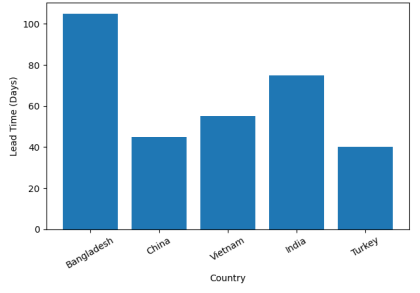
The comparative analysis of lead time across major textile-producing countries reveals a significant competitive disadvantage for Bangladesh.
Bangladesh exhibits an average lead time of 90–120 days, while competitor countries such as China and Vietnam operate within a significantly shorter range of 30–65 days. This difference is not marginal but structural, indicating systemic inefficiencies in Bangladesh’s supply chain network.
Figure 1. Lead Time Comparison.
Interpretation of Results
The extended lead time in Bangladesh is not driven by a single factor but results from cumulative delays across multiple stages of the supply chain. These include raw material import delays, production inefficiencies, inland transportation constraints, and port congestion.
In contrast, countries such as China benefit from vertically integrated supply chains where raw materials, manufacturing, and logistics systems are closely interconnected. Vietnam has also improved efficiency through export processing zones and foreign investment in logistics infrastructure.
The results clearly indicate that Bangladesh’s lead time disadvantage is structural rather than operational.
Table 1. Lead Time Comparison.
Country | Lead Time (Days) | Key Reason |
Bangladesh | 90–120 | Import dependency, port delays |
China | 30–60 | Strong infrastructure |
Vietnam | 40–65 | Efficient logistics |
India | 60–90 | Moderate infrastructure |
Turkey | 30–50 | Proximity to EU |
4.3. Supply Chain Delay Distribution
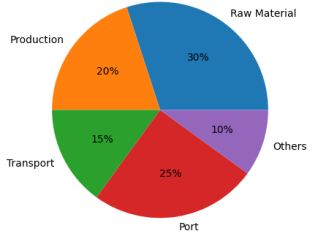
The analysis of delay contribution across different supply chain stages reveals that inefficiencies are unevenly distributed.
The largest proportion of delay originates from:
1) Raw material import processes [~30%]
2) Port handling and clearance [~25%]
3) Production inefficiencies [~20%]
4) Transportation constraints [~15%]
5) Other administrative and coordination issues [~10%]
Interpretation of Distribution Pattern
This distribution indicates that external dependency factors (imports and ports) contribute more significantly to delays than internal manufacturing inefficiencies. This is a critical insight, as it shifts the focus from factory-level inefficiencies to systemic national logistics issues.
The high dependency on imported raw materials creates vulnerability at the very beginning of the supply chain, while inefficiencies at ports compound delays at the final export stage. Together, these two stages alone account for more than half of total supply chain delays.
Figure 2. Supply Chain Delay Contribution.
4.4. Thematic Findings from Qualitative Analysis
The thematic analysis identified five dominant categories of logistics and supply chain challenges in Bangladesh’s textile industry.
4.4.1. Infrastructure Constraints
Infrastructure emerged as the most frequently cited constraint across literature. Poor road conditions, congestion in major industrial corridors, and insufficient rail freight capacity significantly reduce transportation efficiency.
These constraints create uncertainty in delivery schedules, forcing firms to adopt buffer stock strategies, which increase working capital requirements and reduce operational efficiency.
4.4.2. Port Inefficiency and Export Bottlenecks
Port-related inefficiencies are a critical bottleneck in the export process. Manual documentation, limited automation, and congestion in container yards lead to prolonged dwell times.
This results in delayed shipment processing, which directly affects international buyer satisfaction and order reliability.
4.4.3. Technological Underdevelopment
Another significant finding is the low level of digital integration within the supply chain. Many firms still rely on manual systems for inventory tracking, order management, and logistics coordination.
The absence of real-time tracking systems reduces visibility across the supply chain, making it difficult to respond to disruptions efficiently.
4.4.4. Fragmented Supply Chain Coordination
The supply chain in Bangladesh’s textile industry is highly fragmented. There is weak coordination between suppliers, manufacturers, logistics providers, and customs authorities.
This fragmentation leads to delays in communication, inefficient decision-making, and lack of synchronization between different supply chain stages.
4.4.5. Import Dependency Vulnerability
Heavy reliance on imported raw materials introduces external risks into the supply chain. Global shipping disruptions, port delays in exporting countries, and price volatility directly affect production timelines.
This dependency reduces the resilience of the supply chain and increases exposure to global market shocks.
4.5. Statistical and Thematic Synthesis of Results
Although this study is qualitative in nature, the synthesized data clearly reveals consistent patterns across multiple sources.
Three key systemic insights emerge:
4.5.1. Structural Dependency Effect
More than half of total delays originate from external dependencies (imports and ports), indicating that Bangladesh’s supply chain performance is heavily influenced by factors outside factory control.
4.5.2. Multi-stage Delay Accumulation
Delays are not isolated but accumulate across multiple stages of the supply chain. A delay in one stage (e.g., customs clearance) cascades into subsequent stages (transportation and export scheduling), amplifying total lead time.
4.5.3. Infrastructure-technology Interaction
The findings suggest that infrastructure limitations and lack of digitalization reinforce each other. Poor infrastructure increases physical delays, while lack of technology reduces the ability to manage and optimize those delays.
4.6. Summary of Key Findings
1) Bangladesh has significantly higher lead times compared to competitor countries
2) Supply chain inefficiencies are primarily driven by import dependency and port congestion
3) Infrastructure and transportation limitations create systemic delays
4) Digital transformation in logistics remains limited
5) Supply chain fragmentation reduces coordination efficiency
4.7. Overall Interpretation
The results clearly indicate that Bangladesh’s textile supply chain inefficiencies are systemic, interconnected, and structurally embedded. Improving one component in isolation (such as production efficiency) will not significantly reduce lead time unless infrastructure, port systems, and supply chain integration are simultaneously improved.
This reinforces the need for a holistic supply chain modernization strategy rather than fragmented interventions.
5. Discussion
5.1. Interpretation of Results
The findings of this study reveal that logistics and supply chain inefficiencies in Bangladesh’s textile industry are deeply structural and interdependent rather than isolated operational issues. The most significant outcome is the consistently high lead time [90–120 days], which reflects cumulative delays across multiple stages of the supply chain rather than inefficiency at a single point.
From a systems perspective, these delays can be interpreted as a “compounding inefficiency effect”, where minor delays at each stage—raw material sourcing, production scheduling, inland transportation, and port clearance—accumulate into a significantly prolonged overall lead time.
Another key interpretation is the dominance of external dependency factors. More than half of the observed delays originate from import-related processes and port inefficiencies. This indicates that Bangladesh’s textile supply chain is heavily externally exposed, meaning its performance is influenced not only by internal factory operations but also by global logistics conditions and institutional inefficiencies.
Furthermore, the results suggest a weak level of supply chain integration. In an efficient system, information flow and material flow are synchronized. However, in Bangladesh, fragmented coordination among suppliers, manufacturers, logistics providers, and customs authorities leads to disjointed operations, reducing overall responsiveness.
5.2. Comparison with Previous Studies
The findings of this study are largely consistent with existing literature on logistics inefficiencies in developing economies, particularly within the textile sector.
Rahman and Anwar [2019] previously identified long lead times as a major constraint in Bangladesh’s RMG sector, attributing it to inefficient sourcing and transportation systems. This study reinforces their conclusion but further expands it by showing that lead time delays are not only production-related but also significantly influenced by port inefficiencies and supply chain fragmentation
| [15] | Mentzer, J. T., DeWitt, W., Keebler, J., Min, S., Nix, N., Smith, C., & Zacharia, Z. (2001). Defining supply chain management. Journal of Business Logistics, 22(2), 1–25. |
[15]
.
Similarly, Hossain et al. [2018] emphasized the role of transport infrastructure and road congestion in reducing logistics efficiency. The current findings support this argument but also demonstrate that infrastructure problems interact with digital and institutional weaknesses, creating a more complex multi-layered inefficiency structure.
Islam et al. [2013] highlighted Bangladesh’s dependency on imported raw materials as a structural limitation. This study strengthens that argument by showing that import dependency alone contributes nearly one-third of total supply chain delays, making it one of the most critical bottlenecks in the system
| [16] | Notteboom, T., & Rodrigue, J. P. (2009). Port regionalization. Maritime Policy & Management, 36(3), 185–200. |
[16]
.
When compared to global competitors, particularly Vietnam and China, the differences become even more significant. Studies on Vietnam’s textile sector show that the establishment of export processing zones and integrated logistics systems has reduced lead times dramatically. In contrast, Bangladesh still operates with fragmented logistics systems and limited digital integration, which explains the performance gap.
| [17] | Porter, M. E. (1990). The competitive advantage of nations. Free Press. |
[17]
.
Thus, while previous studies often focus on individual constraints, this research integrates multiple dimensions and demonstrates how these constraints interact to create systemic inefficiencies.
5.3. Theoretical Implications
From a theoretical perspective, the findings provide strong support for Supply Chain Management Theory, particularly the concept that supply chain performance is determined by the coordination of multiple interdependent actors.
The study also aligns with the Lean Supply Chain Theory, which emphasizes waste reduction and flow efficiency. However, the results show that Bangladesh’s textile supply chain is characterized by significant “non-value-adding activities,” including waiting time at ports, transportation delays, and administrative inefficiencies. This indicates a deviation from lean principles.
Additionally, the Resource-Based View (RBV) theory is relevant in explaining Bangladesh’s competitive limitations. The lack of advanced logistics infrastructure, digital systems, and integrated supply chain capabilities represents a deficiency in strategic resources, which limits the country’s ability to achieve sustained competitive advantage in the global textile market.
5.4. Practical and Managerial Implications
The findings of this study have significant implications for industry stakeholders, policymakers, and supply chain managers.
For industry managers, the results highlight the importance of improving internal coordination and adopting digital supply chain management systems. Real-time tracking, automated inventory systems, and integrated planning tools can significantly reduce internal inefficiencies and improve responsiveness.
For logistics providers, there is a need to enhance collaboration with manufacturers and improve transportation scheduling systems. Better coordination between freight forwarders, transport operators, and factory planners can reduce unnecessary delays.
For policymakers, the findings emphasize the urgent need for infrastructure modernization and port digitalization. Investment in road networks, rail freight systems, and automated customs clearance systems can significantly reduce systemic bottlenecks.
Furthermore, strengthening backward linkage industries is critical. Reducing dependency on imported raw materials will not only shorten lead times but also enhance supply chain resilience against global disruptions.
5.5. Broader Economic Implications
Beyond the textile sector, the findings have broader implications for Bangladesh’s export competitiveness. Logistics inefficiencies not only increase production costs but also reduce the country’s attractiveness for foreign buyers who prioritize reliability and speed.
In the context of global fast fashion supply chains, where responsiveness is critical, long lead times place Bangladesh at a structural disadvantage. If these inefficiencies are not addressed, the country risks losing market share to more agile competitors such as Vietnam, India, and Ethiopia.
Moreover, inefficient supply chains also have macroeconomic implications. They reduce export growth potential, limit foreign direct investment, and constrain industrial diversification.
5.6. Summary of Discussion
The discussion of this study provides a comprehensive interpretation of the logistics and supply chain management challenges within Bangladesh’s textile industry. Overall, the findings strongly indicate that inefficiencies in the supply chain are not isolated or temporary operational issues, but rather deeply systemic, interconnected, and structurally embedded within the broader industrial and logistical ecosystem of the country.
Unlike industries where inefficiencies can be traced to a single bottleneck or stage, the textile supply chain in Bangladesh demonstrates a multi-layered structure of constraints, where each stage of the supply chain interacts with and amplifies the inefficiencies of other stages. This interconnectedness is a defining feature of the system and explains why incremental improvements in isolated areas have historically failed to produce significant reductions in overall lead time or cost efficiency.
| [18] | Rahman, M., & Anwar, S. (2019). Lead time inefficiencies in Bangladesh textile industry. Journal of Textile Engineering, 65(2), 120–134. |
[18]
.
At the core of the discussion is the recognition that the supply chain operates as a network of interdependent processes, rather than a linear sequence of independent activities. In such a system, inefficiencies at one node—such as delays in raw material imports—cascade into subsequent stages such as production scheduling, transportation planning, and export logistics. This creates a compounding delay effect, where small inefficiencies accumulate and magnify across the entire system, ultimately resulting in significantly extended lead times.
| [19] | UNCTAD. (2022). Review of maritime transport. United Nations. |
[19]
.
One of the most important insights from the discussion is that logistics inefficiencies in Bangladesh are systemic in nature, meaning they are embedded within the structural design of the supply chain rather than being random or isolated operational failures.
Systemic inefficiencies arise when multiple components of a system are misaligned or poorly integrated. In the case of Bangladesh’s textile industry, these inefficiencies are visible across infrastructure, institutional coordination, technological adoption, and global dependency structures.
| [20] | World Bank. (2022). Logistics performance index report. World Bank. |
[20]
.
For instance, transportation delays are not only caused by poor road conditions but are also influenced by production scheduling inefficiencies, lack of coordination between factories and logistics providers, and congestion at export terminals. Similarly, port delays are not solely a result of port management issues but are also affected by documentation inefficiencies, customs procedures, and upstream production delays that create uneven cargo flow.
This systemic nature implies that improving one component in isolation—such as upgrading factory efficiency or improving transportation vehicles—does not significantly reduce overall supply chain inefficiency unless the entire system is addressed holistically.
A major theme emerging from the discussion is the high degree of interdependence between supply chain components. The textile supply chain in Bangladesh functions as an interconnected ecosystem where each stage directly influences the performance of others.
| [21] | World Bank. (2023). Connecting to compete: Trade logistics report. World Bank. |
[21]
.
For example, the dependency on imported raw materials creates vulnerability at the very beginning of the supply chain. Any delay in international shipping or customs clearance immediately affects production schedules in factories. This in turn disrupts transportation planning and increases congestion at export ports due to irregular shipment flows.
Similarly, inefficiencies in transportation infrastructure—such as road congestion between Dhaka and Chittagong—do not only affect logistics companies but also directly influence factory production cycles. When transportation is unreliable, manufacturers are forced to hold excess inventory or adjust production schedules, both of which reduce operational efficiency and increase costs.
This interconnected structure means that inefficiencies are transmitted across the system like a ripple effect, where a disruption in one stage amplifies problems in subsequent stages. As a result, supply chain performance cannot be improved through isolated interventions but requires synchronized improvements across all stages.
Infrastructure limitations play a central role in shaping the inefficiencies observed in the study. Poor road networks, insufficient rail connectivity, and inadequate logistics hubs significantly restrict the smooth flow of goods across the supply chain.
The Dhaka–Chittagong corridor, which is the primary industrial-export route, is particularly affected by congestion and unpredictable traffic conditions. This creates uncertainty in transportation schedules, forcing companies to build additional buffer time into their planning processes.
Such infrastructure deficits not only increase transportation time but also reduce the reliability of the entire supply chain. In global markets where timely delivery is critical, this lack of reliability weakens Bangladesh’s competitive position.
Moreover, inadequate infrastructure also limits the ability to adopt advanced logistics systems such as just-in-time (JIT) production. JIT systems require precise timing and coordination, which are difficult to achieve in environments where transportation delays are frequent and unpredictable.
Another major structural issue highlighted in the discussion is the heavy dependence on imported raw materials. This dependency introduces external uncertainty into the supply chain and significantly increases vulnerability to global disruptions.
Since a large proportion of textile inputs such as cotton, yarn, dyes, and accessories are imported, any disruption in international logistics systems—such as port congestion, shipping delays, or geopolitical disruptions—directly impacts production continuity in Bangladesh.
This dependency also increases lead time at the procurement stage, as materials must go through international shipping, customs clearance, and domestic transportation before reaching factories. As a result, the supply chain becomes highly sensitive to external shocks, reducing overall resilience.
In contrast, countries such as China and India have developed stronger backward linkage industries, allowing them to reduce reliance on imports and maintain more stable and predictable supply chains.
The discussion also highlights the significant role of technological limitations in contributing to supply chain inefficiencies. Despite global trends toward digitalization and automation, many textile firms in Bangladesh still rely on manual systems for inventory management, production planning, and logistics coordination.
The absence of integrated digital platforms leads to a lack of visibility across the supply chain. Without real-time data, firms are unable to effectively track shipments, forecast demand, or respond quickly to disruptions.
This technological gap not only reduces efficiency but also increases the likelihood of miscommunication and coordination failures among supply chain stakeholders. In modern supply chain systems, digital integration is a key enabler of efficiency, and its absence represents a major structural disadvantage.
Weak coordination among supply chain actors is another critical issue emphasized in the discussion. The textile supply chain involves multiple stakeholders, including suppliers, manufacturers, logistics providers, customs authorities, and international buyers.
However, the lack of integrated coordination systems leads to fragmented decision-making processes. Each stakeholder operates within its own system with limited real-time communication or data sharing.
This fragmentation results in inefficiencies such as duplicated efforts, delays in decision-making, and misalignment of production and logistics schedules. In some cases, delays in one part of the system are not communicated effectively to other stakeholders, leading to further inefficiencies downstream.
Improving coordination requires both technological solutions and institutional reforms that promote transparency and collaboration across the supply chain network.
The most important overarching conclusion of the discussion is that supply chain inefficiencies in Bangladesh’s textile industry cannot be resolved through isolated or incremental improvements. Instead, they require a holistic systemic reform approach.
This means that improvements in infrastructure, technology, governance, and industrial structure must occur simultaneously and in an integrated manner. For example, upgrading port facilities alone will not significantly reduce lead time if transportation systems remain inefficient or if import dependency continues to create upstream delays.
Similarly, adopting digital technologies will have limited impact if infrastructure constraints continue to disrupt physical movement of goods.
Therefore, the supply chain must be viewed as a fully integrated system, where improvements in one area must be supported by complementary improvements in other areas to achieve meaningful performance gains.
In conclusion, the discussion clearly demonstrates that the logistics and supply chain challenges in Bangladesh’s textile industry are deeply embedded within a complex system of structural constraints. These constraints are not independent but are instead highly interconnected, reinforcing one another and creating persistent inefficiencies.
The study emphasizes that addressing these challenges requires a shift from fragmented problem-solving approaches to comprehensive supply chain transformation strategies. Only through coordinated improvements in infrastructure, technology, institutional governance, and industrial integration can Bangladesh achieve significant improvements in supply chain performance and global competitiveness.
6. Conclusion and Recommendations
6.1. Summary and Consolidation of Key Findings
This study critically examined the logistics and supply chain management (SCM) challenges in Bangladesh’s textile and ready-made garment (RMG) industry, which remains the country’s most significant export-oriented sector. The findings reveal that the inefficiencies present in the supply chain are not isolated or temporary disruptions but are instead deeply embedded structural and systemic issues that have accumulated over time due to infrastructural limitations, institutional weaknesses, and insufficient technological integration.
One of the most important findings of the study is the persistently high lead time of 90–120 days, which places Bangladesh at a significant competitive disadvantage in comparison to major textile-exporting countries such as China, Vietnam, India, and Turkey. In global apparel supply chains, where speed, responsiveness, and flexibility are essential, such extended lead times reduce the ability of Bangladeshi manufacturers to respond effectively to fast-changing buyer demands, particularly in the fast fashion segment.
The study further identifies that this prolonged lead time is not caused by a single bottleneck but is instead the result of cumulative inefficiencies across multiple supply chain stages. These include:
1) Delays in importing raw materials and accessories
2) Inefficiencies in production scheduling and factory-level coordination
3) Poor transportation infrastructure and road congestion
4) Port congestion and administrative delays at customs clearance points
5) Lack of real-time communication between supply chain actors
Each of these stages contributes incrementally to total delay, creating a compounding effect that significantly reduces overall supply chain efficiency.
Another major finding is the high dependency on imported raw materials, which creates structural vulnerability within the supply chain. Since a large proportion of cotton, yarn, dyes, and accessories are imported, any disruption in global shipping routes, port delays in exporting countries, or fluctuations in international prices directly affect production continuity in Bangladesh. This dependency also increases procurement lead time and reduces flexibility in production planning.
The study also finds that logistics infrastructure limitations—particularly road transport inefficiencies and inadequate rail freight systems—create significant delays in inland transportation. The Dhaka–Chittagong corridor, which is the primary industrial-export route, experiences chronic congestion, resulting in unpredictable delivery schedules and increased transportation costs.
Furthermore, port inefficiency emerges as a central bottleneck in the supply chain system. Limited automation, manual documentation processes, container congestion, and inefficient cargo handling systems significantly increase dwell time at ports. This not only delays exports but also creates uncertainty in international delivery commitments, affecting Bangladesh’s reliability as a sourcing destination.
In addition, the study highlights the lack of digital integration and technological adoption within the textile supply chain. Many firms still rely on manual processes for inventory tracking, production planning, and logistics coordination. This lack of digital transformation reduces transparency, limits real-time decision-making, and increases coordination inefficiencies across the supply chain network.
Finally, the study identifies weak coordination among supply chain stakeholders as a persistent structural issue. The absence of integrated communication systems between suppliers, manufacturers, logistics providers, and government agencies results in fragmented decision-making, duplicated processes, and inefficient resource utilization.
Overall, the findings confirm that Bangladesh’s textile supply chain inefficiencies are systemic, interconnected, and structurally reinforced, requiring comprehensive and multi-dimensional reforms rather than isolated interventions.
6.2. Practical Implications of the Study
The findings of this research have significant implications for multiple stakeholders within the textile and apparel supply chain ecosystem.
For manufacturing firms, the results emphasize the importance of strengthening internal supply chain coordination. Manufacturers must move beyond traditional production-focused management systems and adopt integrated supply chain strategies that align procurement, production, and logistics functions. Improving internal planning systems can reduce idle time and improve production efficiency, even within existing infrastructure constraints.
For exporters and sourcing companies, the findings highlight the importance of better risk management and order planning strategies. Given the systemic nature of delays, exporters must incorporate realistic buffer times into production and delivery schedules. Additionally, improved forecasting and demand planning systems can help mitigate uncertainty in global supply chains.
For logistics service providers, the study suggests that efficiency improvements can be achieved through better coordination and digitalization. Logistics firms must invest in real-time tracking systems, automated scheduling tools, and integrated communication platforms to reduce delays and improve transparency across transportation networks.
For buyers and international brands, the findings provide insights into the structural challenges faced by sourcing countries like Bangladesh. Understanding these constraints can help buyers develop more realistic sourcing timelines and collaborative supplier development strategies.
Overall, the study suggests that improving supply chain performance in Bangladesh’s textile industry requires a collaborative ecosystem approach, where all stakeholders work together to reduce inefficiencies and enhance system-wide coordination.
6.3. Policy-level Recommendations
The findings of this study have important implications for national policy formulation and industrial strategy development. Addressing logistics and supply chain inefficiencies requires coordinated policy interventions across infrastructure, technology, and institutional governance.
6.3.1. Comprehensive Logistics Infrastructure Development
One of the most critical policy priorities is large-scale investment in logistics infrastructure. This includes the development of high-capacity highways, dedicated freight corridors, expanded rail freight networks, and inland container depots (ICDs).
A multimodal transport system integrating road, rail, and inland waterways would significantly reduce transportation costs and improve delivery reliability. Countries such as Vietnam and China have successfully implemented such integrated systems, resulting in shorter lead times and improved export competitiveness.
6.3.2. Port Modernization and Institutional Reform
Port inefficiency is one of the most significant bottlenecks in Bangladesh’s export system. Therefore, modernization of port infrastructure must be prioritized. Key reforms include:
1) Full automation of customs clearance processes
2) Implementation of digital tracking and container management systems
3) Expansion of container handling capacity
4) Reduction of manual documentation processes
Institutional reforms are equally important. Streamlining bureaucratic procedures and improving inter-agency coordination can significantly reduce clearance delays and improve operational efficiency.
6.3.3. Development of Backward Linkage Industries
Reducing dependency on imported raw materials is essential for improving supply chain resilience. Government policies should encourage the development of domestic textile input industries, including cotton processing, yarn manufacturing, dye production, and accessory manufacturing.
This would not only reduce lead time but also enhance value addition within the domestic economy, increasing overall export competitiveness.
6.3.4. Digital Transformation of the Supply Chain
A major long-term policy direction should focus on accelerating digital transformation within the textile industry. The adoption of Industry 4.0 technologies such as:
1) Enterprise Resource Planning (ERP) systems
2) Internet of Things (IoT) for logistics tracking
3) Artificial Intelligence (AI) for demand forecasting
4) Blockchain for supply chain transparency can significantly improve efficiency, reduce delays, and enhance decision-making capabilities.
Government incentives, subsidies, and public-private partnerships may be required to support SMEs in adopting these technologies.
6.3.5. Establishment of Integrated Industrial Logistics Zones
The development of specialized industrial logistics zones near major textile clusters can help reduce transportation time and improve coordination between manufacturing and logistics operations. These zones can serve as centralized hubs for warehousing, customs clearance, and distribution.
6.3.6. Human Capital Development and Skill Enhancement
Improving supply chain performance also requires investment in human capital. Training programs focused on logistics management, digital supply chain systems, and industrial engineering should be expanded to develop a skilled workforce capable of managing modern supply chain systems.
6.4. Limitations of the Study
Despite its comprehensive analysis, this study has several limitations that should be acknowledged.
Firstly, the study is based entirely on secondary data sources, which limits the ability to validate findings through direct empirical observation. Primary data collection through surveys or interviews with industry stakeholders could provide more granular insights.
Secondly, the absence of quantitative modeling restricts the ability to statistically measure the magnitude of relationships between variables such as infrastructure quality and lead time.
Thirdly, the study focuses specifically on Bangladesh’s textile industry and does not include extensive cross-country comparative case studies, which could provide deeper benchmarking insights.
Finally, the rapidly evolving nature of global supply chains means that some findings may be influenced by temporal changes in logistics systems and trade environments.
6.5. Future Research Directions
Future research should focus on addressing the limitations identified in this study and expanding the scope of analysis.
Quantitative studies using econometric models could help measure the exact impact of logistics variables on export performance and lead time. Additionally, firm-level case studies would provide deeper insights into how individual textile companies manage supply chain inefficiencies.
Comparative studies between Bangladesh and other textile-exporting countries such as Vietnam, China, and India would also be valuable in identifying best practices and benchmarking performance gaps.
Furthermore, future research should explore the impact of emerging technologies such as blockchain, artificial intelligence, and predictive analytics on supply chain optimization in developing economies.
Abbreviations
SCM | Supply Chain Management |
LPI | Logistics Performance Index |
Author Contributions
Mithun Chandra Chanda: Conceptualization, Formal Analysis, Methodology, Resources
Tanusree Bhowmik: Conceptualization, Formal Analysis, Methodology, Resources
Shimul Sarkar: Data curation, Funding acquisition, Methodology
Mohammad Salauddin Nishat: Data curation, Funding acquisition, Methodology
Conflicts of Interest
The authors declare no conflicts of interest.
References
| [1] |
Ahmed, S., Uddin, M., & Hossain, T. (2019). Transportation infrastructure and logistics performance in developing economies. Journal of Transport Geography, 78, 45–56.
|
| [2] |
Arvis, J. F., Saslavsky, D., Ojala, L., Shepherd, B., Busch, C., Raj, A., & Naula, T. (2018). Connecting to compete 2018: Trade logistics in the global economy. World Bank.
|
| [3] |
Barratt, M., & Oke, A. (2007). Antecedents of supply chain visibility. Journal of Operations Management, 25(6), 1217–1233.
|
| [4] |
Chopra, S., & Meindl, P. (2016). Supply chain management: Strategy, planning, and operation. Pearson.
|
| [5] |
Christopher, M. (2016). Logistics and supply chain management (5th ed.). Pearson.
|
| [6] |
Gereffi, G. (1999). International trade and industrial upgrading in the apparel commodity chain. Journal of International Economics, 48(1), 37–70.
|
| [7] |
Gereffi, G., & Fernandez-Stark, K. (2016). Global value chain analysis: A primer. Duke University Press.
|
| [8] |
Hasan, M., & Lowe, D. (2020). Port inefficiencies and export delays in Bangladesh. Maritime Economics & Logistics, 22(3), 412–430.
|
| [9] |
Hoek, R. I. (2001). The contribution of performance measurement to the expansion of third party logistics relationships. International Journal of Operations & Production Management, 21(1/2), 15–29.
|
| [10] |
Hofmann, E., & Rüsch, M. (2017). Industry 4.0 and the current status in German manufacturing. Computers in Industry, 89, 15–26.
|
| [11] |
Hossain, M., Rahman, M., & Kabir, H. (2018). Logistics inefficiencies in Bangladesh RMG sector. International Journal of Supply Chain Management, 7(4), 89–97.
|
| [12] |
Islam, M. S., Sultana, N., & Rahman, M. (2013). Backward linkage industries in Bangladesh textile sector. Asian Journal of Business Research, 3(2), 55–68.
|
| [13] |
Ivanov, D., Dolgui, A., & Sokolov, B. (2019). The impact of digital technology on supply chain resilience. International Journal of Production Research, 57(3), 1–17.
|
| [14] |
Kamble, S. S., Gunasekaran, A., & Sharma, R. (2018). Industry 4.0 and supply chain performance. Technological Forecasting and Social Change, 132, 1–14.
|
| [15] |
Mentzer, J. T., DeWitt, W., Keebler, J., Min, S., Nix, N., Smith, C., & Zacharia, Z. (2001). Defining supply chain management. Journal of Business Logistics, 22(2), 1–25.
|
| [16] |
Notteboom, T., & Rodrigue, J. P. (2009). Port regionalization. Maritime Policy & Management, 36(3), 185–200.
|
| [17] |
Porter, M. E. (1990). The competitive advantage of nations. Free Press.
|
| [18] |
Rahman, M., & Anwar, S. (2019). Lead time inefficiencies in Bangladesh textile industry. Journal of Textile Engineering, 65(2), 120–134.
|
| [19] |
UNCTAD. (2022). Review of maritime transport. United Nations.
|
| [20] |
World Bank. (2022). Logistics performance index report. World Bank.
|
| [21] |
World Bank. (2023). Connecting to compete: Trade logistics report. World Bank.
|
Cite This Article
-
APA Style
Chanda, M. C., Bhowmik, T., Sarkar, S., Nishat, M. S., Debnath, P. (2026). Challenges of Logistics and Supply Chain Management in Bangladesh’s Textile Industry. American Journal of Science, Engineering and Technology, 11(2), 67-80. https://doi.org/10.11648/j.ajset.20261102.13
 Copy
|
Copy
|
 Download
ACS Style
Chanda, M. C.; Bhowmik, T.; Sarkar, S.; Nishat, M. S.; Debnath, P. Challenges of Logistics and Supply Chain Management in Bangladesh’s Textile Industry. Am. J. Sci. Eng. Technol. 2026, 11(2), 67-80. doi: 10.11648/j.ajset.20261102.13
Copy
|
Download
AMA Style
Chanda MC, Bhowmik T, Sarkar S, Nishat MS, Debnath P. Challenges of Logistics and Supply Chain Management in Bangladesh’s Textile Industry. Am J Sci Eng Technol. 2026;11(2):67-80. doi: 10.11648/j.ajset.20261102.13
Copy
|
Download
-
@article{10.11648/j.ajset.20261102.13,
  author = {Mithun Chandra Chanda and Tanusree Bhowmik and Shimul Sarkar and Mohammad Salauddin Nishat and Pranay Debnath},
  title = {Challenges of Logistics and Supply Chain Management in Bangladesh’s Textile Industry},
  journal = {American Journal of Science, Engineering and Technology},
  volume = {11},
  number = {2},
  pages = {67-80},
  doi = {10.11648/j.ajset.20261102.13},
  url = {https://doi.org/10.11648/j.ajset.20261102.13},
  eprint = {https://article.sciencepublishinggroup.com/pdf/10.11648.j.ajset.20261102.13},
  abstract = {This study examines Challenges of Logistics and Supply Chain Management in Bangladesh’s Textile Industry with the objective of identifying key inefficiencies and proposing strategies to improve operational performance and sustainability. The study adopts a mixed-method approach, including qualitative and quantitative analysis, based on both primary data (survey and interviews with industry professionals) and secondary data (reports, journals, and industry publications), to analyze critical areas such as transportation, inventory management, lead time, infrastructure limitations, and coordination among supply chain stakeholders within the context of Bangladesh’s textile sector. In addition, the study incorporates the significance, rationale, and conceptual advancement of previous research to establish a comprehensive analytical framework. It also includes the significance, rationale and conceptual advance of the previous work. The findings indicate that poor infrastructure, port congestion, inefficient transportation systems, lack of technological integration, and weak coordination among stakeholders significantly hinder supply chain efficiency, resulting in increased costs and delays. The study contributes to both academic and practical fields by providing a deeper understanding of existing logistics challenges and offering strategic recommendations, including digitalization, improved infrastructure, better supply chain integration, and policy support. It may assist industry stakeholders, policymakers, and practitioners in enhancing decision-making, improving operational efficiency, and strengthening the overall competitiveness of Bangladesh’s textile industry. Effective SCM in the textile industry leads to reduced inventory, lower costs, increased productivity, faster delivery, higher profits, and better customer loyalty. Additionally, the study highlights several challenges faced by Bangladesh’s textile industry, such as poor communication, limited SCM visibility, and long lead times, which could provide opportunities for future research to improve the sector. This research paper will give the concept of the overall processing of the textile industry of Bangladesh.},
 year = {2026}
}
Copy
|
Download
-
TY  - JOUR
T1  - Challenges of Logistics and Supply Chain Management in Bangladesh’s Textile Industry
AU  - Mithun Chandra Chanda
AU  - Tanusree Bhowmik
AU  - Shimul Sarkar
AU  - Mohammad Salauddin Nishat
AU  - Pranay Debnath
Y1  - 2026/05/26
PY  - 2026
N1  - https://doi.org/10.11648/j.ajset.20261102.13
DO  - 10.11648/j.ajset.20261102.13
T2  - American Journal of Science, Engineering and Technology
JF  - American Journal of Science, Engineering and Technology
JO  - American Journal of Science, Engineering and Technology
SP  - 67
EP  - 80
PB  - Science Publishing Group
SN  - 2578-8353
UR  - https://doi.org/10.11648/j.ajset.20261102.13
AB  - This study examines Challenges of Logistics and Supply Chain Management in Bangladesh’s Textile Industry with the objective of identifying key inefficiencies and proposing strategies to improve operational performance and sustainability. The study adopts a mixed-method approach, including qualitative and quantitative analysis, based on both primary data (survey and interviews with industry professionals) and secondary data (reports, journals, and industry publications), to analyze critical areas such as transportation, inventory management, lead time, infrastructure limitations, and coordination among supply chain stakeholders within the context of Bangladesh’s textile sector. In addition, the study incorporates the significance, rationale, and conceptual advancement of previous research to establish a comprehensive analytical framework. It also includes the significance, rationale and conceptual advance of the previous work. The findings indicate that poor infrastructure, port congestion, inefficient transportation systems, lack of technological integration, and weak coordination among stakeholders significantly hinder supply chain efficiency, resulting in increased costs and delays. The study contributes to both academic and practical fields by providing a deeper understanding of existing logistics challenges and offering strategic recommendations, including digitalization, improved infrastructure, better supply chain integration, and policy support. It may assist industry stakeholders, policymakers, and practitioners in enhancing decision-making, improving operational efficiency, and strengthening the overall competitiveness of Bangladesh’s textile industry. Effective SCM in the textile industry leads to reduced inventory, lower costs, increased productivity, faster delivery, higher profits, and better customer loyalty. Additionally, the study highlights several challenges faced by Bangladesh’s textile industry, such as poor communication, limited SCM visibility, and long lead times, which could provide opportunities for future research to improve the sector. This research paper will give the concept of the overall processing of the textile industry of Bangladesh.
VL  - 11
IS  - 2
ER  -
Copy
|
Download





 Share This Article
 Twitter
 Linked In
 Facebook