
In this paper, Vibrio cholerae, the causative agent of cholera, is examined with focus on its genetic evolution, phage interactions, and modern gene-editing strategies for control. Cholera remains a pressing global health issue, especially in regions with inadequate sanitation. The bacterium’s virulence depends on acquiring the CTXφ bacteriophage, which integrates cholera toxin genes into its chromosome. Advances in CRISPR-Cas and recombineering now enable precise genetic manipulation to block CTXφ infection by targeting phage receptors like the toxin-coregulated pilus (TCP) or essential phage genes. The emergence of the O139 “Bengal” strain in the 1990s marked a major epidemiological event, illustrating how horizontal gene transfer and microevolution fuel epidemic potential. Genome plasticity, facilitated by SXT elements and chromosomal fusion, drives antimicrobial resistance and adaptability. Between 2015 and 2018, chromosome-fused V. cholerae strains in Dhaka highlighted ongoing recombination as an evolutionary force. Environmental isolates also serve as reservoirs for virulence genes such as ctxAB, tcpA, toxR, and toxT, showing that aquatic habitats sustain genetic exchange and the emergence of new variants. The stringent-response gene relA further links nutritional stress to virulence regulation and phage immunity. Horizontal gene transfer through the conjugative SXT element enables dissemination of resistance and virulence determinants across bacterial species. Emerging CRISPR-Cas and BREX/DISARM systems enhance phage resistance and genome stability. Together, these insights underscore how gene editing, synthetic biology, and genomic surveillance could revolutionize cholera prevention by designing phage-resistant, low-virulence, and ecologically stable V. cholerae strains for sustainable disease control.
| Published in | Biomedical Sciences (Volume 12, Issue 1) |
| DOI | 10.11648/j.bs.20261201.11 |
| Page(s) | 1-9 |
| Creative Commons |
This is an Open Access article, distributed under the terms of the Creative Commons Attribution 4.0 International License (http://creativecommons.org/licenses/by/4.0/), which permits unrestricted use, distribution and reproduction in any medium or format, provided the original work is properly cited. |
| Copyright |
Copyright © The Author(s), 2026. Published by Science Publishing Group |
Vibrio cholerae, CTXφ Bacteriophage, CRISPR-Cas Systems, Gene Editing, Phage Resistance

Year of isolation | Country of isolation | No. of strains analyzed | No. of strains belonging to different ribotypes, % | |||||
|---|---|---|---|---|---|---|---|---|
B-I | B-II | B-III | B-IV | B-V | B-VI | |||
1992 | India | 5 | 5 | |||||
1993 | India | 20 | 13 | 5 | 1 | 1 | ||
1994 | India | 20 | 5 | 14 | 1 | |||
1995 | India | 6 | 2 | 3 | 1 | |||
1996 | India | 7 | 7 | |||||
1997 | India | 24 | 6 | 17 | ||||
1998 | India | 6 | 6 | |||||
1993 | Bangladesh | 11 | 3 | 8 | ||||
1995 | Bangladesh | 5 | 2 | 3 | ||||
1996 | Bangladesh | 9 | 9 | |||||
1997 | Bangladesh | 24 | 4 | 20 | ||||
1998 | Bangladesh | 9 | 6 | 1 | 2 | |||
2002 | Bangladesh | 63 | 63 | |||||
1992-2002 | Total | 209 | 36 | 145 | 21 | 2 | 3 | 1 |
WHO | World Health Organization |
TCP | Toxin Coregulated Pilus |
CRISPR | Clustered Regularly Interspaced Short Palindromic Repeats |
BREX | Bacteriophage Restriction by Exclusion |
DISARM | Defense Island System Associated with Restriction Modification |
CT | Cholera Toxin |
PCR | Polymerase Chain Reaction |
DNA | Deoxyribose Nucleic Acid |
| [1] | McLeod, S. M., Kimsey, H. H., Davis, B. M., & Waldor, M. K. (2005). CTXφ and Vibrio cholerae: exploring a newly recognized type of phage–host cell relationship. Molecular microbiology, 57(2), 347-356. |
| [2] | S. M. Faruque, D. A. Sack, R. B. Sack, R. R. Colwell, Y. Takeda, & G. B. Nair, Emergence and evolution of Vibrio cholerae O139 (2003), Proc. Natl. Acad. Sci. U.S.A. 100(3) 1304-1309, |
| [3] | Cuénod, A., Chac, D., Khan, A. I. et al. Prevalent chromosome fusion in Vibrio cholerae O1. Nat Commun 16, 5830(2025). |
| [4] |
Singh DV, Matte MH, Matte GR, Jiang S, Sabeena F, Shukla BN, Sanyal SC, Huq A, Colwell RR. 2001. Molecular Analysis of Vibrio cholerae O1, O139, non-O1, and non-O139 Strains: Clonal Relationships between Clinical and Environmental Isolates. Appl Environ Microbiol67
https://journals.asm.org/doi/pdf/10.1128/aem.67.2.910-921.2001 |
| [5] |
Hochhut, B., Marrero, J., & Waldor, M. K. (2000). Mobilization of plasmids and chromosomal DNA mediated by the SXT element, a constin found in Vibrio cholerae O139. Journal of Bacteriology, 182(7), 2043-2047.
https://journals.asm.org/doi/pdf/10.1128/jb.182.7.2043-2047.2000 |
| [6] | Baddam, R., Sarker, N., Ahmed, D., Mazumder, R., Abdullah, A., Morshed, R., Hussain, A., Begum, S., Shahrin, L., Khan, A. I. and Islam, M. S., (2020). Genome dynamics of Vibrio cholerae isolates linked to seasonal outbreaks of cholera in Dhaka, Bangladesh. mBio 11: e03339-19 |
| [7] | Haralalka, S., Nandi, S. and Bhadra, R. K., (2003). Mutation in the relA gene of Vibrio cholerae affects in vitro and in vivo expression of virulence factors. Journal of bacteriology, 185(16), pp. 4672-4682. |
| [8] |
Chakraborty, S., Mukhopadhyay, A. K., Bhadra, R. K., Ghosh, A. N., Mitra, R., Shimada, T., Yamasaki, S., Faruque, S. M., Takeda, Y., Colwell, R. R. and Nair, G. B., 2000. Virulence genes in environmental strains of Vibrio cholerae. Applied and environmental microbiology, 66(9), pp. 4022-4028.
https://journals.asm.org/doi/pdf/10.1128/aem.66.9.4022-4028.2000 |
| [9] | Schild, S., Tamayo, R., Nelson, E. J., Qadri, F., Calderwood, S. B., & Camilli, A. (2007). Genes induced late in infection increase fitness of Vibrio cholerae after release into the environment. Cell host & microbe, 2(4), 264-277. |
| [10] | Adams, D. W., Jaskólska, M., Lemopoulos, A., Stutzmann, S., Righi, L., Bader, L., & Blokesch, M. (2025). West African–South American pandemic Vibrio cholerae encodes multiple distinct phage defence systems. Nature Microbiology, 1-14. |
| [11] | Box, A. M., McGuffie, M. J., O'Hara, B. J., & Seed, K. D. (2016). Functional analysis of bacteriophage immunity through a type IE CRISPR-Cas system in Vibrio cholerae and its application in bacteriophage genome engineering. Journal of bacteriology, 198(3), 578-590. |
| [12] | Oshiro, R. T., Dunham, D. T. and Seed, K. D., (2024). The vibriophage-encoded inhibitor OrbA abrogates BREX-mediated defense through the ATPase BrxC. Journal of Bacteriology, 206(11), pp. e00206-24. |
| [13] | Blokesch, M. and Seed, K. D., (2025). Lineage-specific defence systems of pandemic Vibrio cholerae. Philosophical Transactions B, 380(1934), p. 20240076. |
| [14] | Madi, N., Cato, E. T., Abu Sayeed, M., Creasy-Marrazzo, A., Cuénod, A., Islam, K., Khabir, M. I. U., Bhuiyan, M. T. R., Begum, Y. A., Freeman, E. and Vustepalli, A., (2024). Phage predation, disease severity, and pathogen genetic diversity in cholera patients. Science, 384(6693), p. eadj3166. |
| [15] | Li, R., Li, A., Zhang, Y. and Fu, J., (2023). The emerging role of recombineering in microbiology. Engineering Microbiology, 3(3), p. 100097. |
| [16] | Hatoum-Aslan, A., (2018). Phage genetic engineering using CRISPR–Cas systems. Viruses, 10(6), p. 335. Viruses 2018, 10, 335; |
| [17] | LeGault, K. N., Hays, S. G., Angermeyer, A., McKitterick, A. C., Johura, F. T., Sultana, M., Ahmed, T., Alam, M. and Seed, K. D., (2021). Temporal shifts in antibiotic resistance elements govern phage-pathogen conflicts. Science, 373(6554), p. eabg2166. |
| [18] | O’Hara, B. J., Alam, M. and Ng, W. L., (2022). The Vibrio cholerae Seventh Pandemic Islands act in tandem to defend against a circulating phage. PLoS genetics, 18(8), p. e1010250. |
| [19] | Borges, F. T., Papavasiliou, G. and Teymour, F., 2020. Characterizing the molecular architecture of hydrogels and crosslinked polymer networks beyond Flory–Rehner—I. Theory. Biomacromolecules, 21(12), pp. 5104-5118. |
| [20] | Antonova, E. S. and Hammer, B. K., 2015. Genetics of natural competence in Vibrio cholerae and other vibrios. Microbiology spectrum, 3(3), pp. 10-1128. |
| [21] | Woldetsadik, Y. A., Lazinski, D. W. and Camilli, A., (2024). A Vibrio cholerae anti-phage system depletes nicotinamide adenine dinucleotide to restrict virulent bacteriophages. mBio, 15(11), pp. e02457-24. |
| [22] | Li, W., Huang, C. and Chen, J., (2022). The application of CRISPR/Cas mediated gene editing in synthetic biology: Challenges and optimizations. Frontiers in Bioengineering and Biotechnology, 10, p. 890155. |
| [23] | Le Roux, F., 2025. The ecology and evolution of microbial immune systems: a look on the wild vibrio side. Philosophical Transactions B, 380(1934), p. 20240078. |
| [24] | Patel, K. M. and Seed, K. D., (2024). Sporadic phage defense in epidemic Vibrio cholerae mediated by the toxin-antitoxin system DarTG is countered by a phage-encoded antitoxin mimic. MBio, 15(10), pp. e00111-24. |
| [25] | World Health Organization (2024). Data show marked increase in annual cholera deaths. WHO News Release. |
| [26] | Anderer, S. (2024). WHO: Cholera Cases Increased in 2023. JAMA, 332(17), pp. 1418-1418. |
| [27] | 30, Chaguza, C., Chibwe, I., Chaima, D., Musicha, P., Ndeketa, L., Kasambara, W., Mhango, C., Mseka, U. L., Bitilinyu-Bangoh, J., Mvula, B. and Kipandula, W., (2024). Genomic insights into the 2022–2023 Vibrio cholerae outbreak in Malawi. Nature Communications, 15(1), p. 6291. |
| [28] | Oshiro, R. T., Dunham, D. T. and Seed, K. D., (2024). The vibriophage-encoded inhibitor OrbA abrogates BREX-mediated Pant, A., Das, B. and Bhadra, R. K., (2020). CTX phage of Vibrio cholerae: genomics and applications. Vaccine, 38, pp. A7-A12. |
APA Style
Lyimo, E. C. (2026). A Review on Engineering Phage Resistance in Vibrio cholerae: A Gene Editing Perspective. Biomedical Sciences, 12(1), 1-9. https://doi.org/10.11648/j.bs.20261201.11
ACS Style
Lyimo, E. C. A Review on Engineering Phage Resistance in Vibrio cholerae: A Gene Editing Perspective. Biomed. Sci. 2026, 12(1), 1-9. doi: 10.11648/j.bs.20261201.11
@article{10.11648/j.bs.20261201.11,
  author = {Elihaika Charles Lyimo},
  title = {A Review on Engineering Phage Resistance in Vibrio cholerae: A Gene Editing Perspective},
  journal = {Biomedical Sciences},
  volume = {12},
  number = {1},
  pages = {1-9},
  doi = {10.11648/j.bs.20261201.11},
  url = {https://doi.org/10.11648/j.bs.20261201.11},
  eprint = {https://article.sciencepublishinggroup.com/pdf/10.11648.j.bs.20261201.11},
  abstract = {In this paper, Vibrio cholerae, the causative agent of cholera, is examined with focus on its genetic evolution, phage interactions, and modern gene-editing strategies for control. Cholera remains a pressing global health issue, especially in regions with inadequate sanitation. The bacterium’s virulence depends on acquiring the CTXφ bacteriophage, which integrates cholera toxin genes into its chromosome. Advances in CRISPR-Cas and recombineering now enable precise genetic manipulation to block CTXφ infection by targeting phage receptors like the toxin-coregulated pilus (TCP) or essential phage genes. The emergence of the O139 “Bengal” strain in the 1990s marked a major epidemiological event, illustrating how horizontal gene transfer and microevolution fuel epidemic potential. Genome plasticity, facilitated by SXT elements and chromosomal fusion, drives antimicrobial resistance and adaptability. Between 2015 and 2018, chromosome-fused V. cholerae strains in Dhaka highlighted ongoing recombination as an evolutionary force. Environmental isolates also serve as reservoirs for virulence genes such as ctxAB, tcpA, toxR, and toxT, showing that aquatic habitats sustain genetic exchange and the emergence of new variants. The stringent-response gene relA further links nutritional stress to virulence regulation and phage immunity. Horizontal gene transfer through the conjugative SXT element enables dissemination of resistance and virulence determinants across bacterial species. Emerging CRISPR-Cas and BREX/DISARM systems enhance phage resistance and genome stability. Together, these insights underscore how gene editing, synthetic biology, and genomic surveillance could revolutionize cholera prevention by designing phage-resistant, low-virulence, and ecologically stable V. cholerae strains for sustainable disease control.},
 year = {2026}
}
TY  - JOUR
T1  - A Review on Engineering Phage Resistance in Vibrio cholerae: A Gene Editing Perspective
AU  - Elihaika Charles Lyimo
Y1  - 2026/01/23
PY  - 2026
N1  - https://doi.org/10.11648/j.bs.20261201.11
DO  - 10.11648/j.bs.20261201.11
T2  - Biomedical Sciences
JF  - Biomedical Sciences
JO  - Biomedical Sciences
SP  - 1
EP  - 9
PB  - Science Publishing Group
SN  - 2575-3932
UR  - https://doi.org/10.11648/j.bs.20261201.11
AB  - In this paper, Vibrio cholerae, the causative agent of cholera, is examined with focus on its genetic evolution, phage interactions, and modern gene-editing strategies for control. Cholera remains a pressing global health issue, especially in regions with inadequate sanitation. The bacterium’s virulence depends on acquiring the CTXφ bacteriophage, which integrates cholera toxin genes into its chromosome. Advances in CRISPR-Cas and recombineering now enable precise genetic manipulation to block CTXφ infection by targeting phage receptors like the toxin-coregulated pilus (TCP) or essential phage genes. The emergence of the O139 “Bengal” strain in the 1990s marked a major epidemiological event, illustrating how horizontal gene transfer and microevolution fuel epidemic potential. Genome plasticity, facilitated by SXT elements and chromosomal fusion, drives antimicrobial resistance and adaptability. Between 2015 and 2018, chromosome-fused V. cholerae strains in Dhaka highlighted ongoing recombination as an evolutionary force. Environmental isolates also serve as reservoirs for virulence genes such as ctxAB, tcpA, toxR, and toxT, showing that aquatic habitats sustain genetic exchange and the emergence of new variants. The stringent-response gene relA further links nutritional stress to virulence regulation and phage immunity. Horizontal gene transfer through the conjugative SXT element enables dissemination of resistance and virulence determinants across bacterial species. Emerging CRISPR-Cas and BREX/DISARM systems enhance phage resistance and genome stability. Together, these insights underscore how gene editing, synthetic biology, and genomic surveillance could revolutionize cholera prevention by designing phage-resistant, low-virulence, and ecologically stable V. cholerae strains for sustainable disease control.
VL  - 12
IS  - 1
ER  -
College of Natural and Mathematical Sciences (CNMS), University of Dodoma (UDOM), Dodoma, Tanzania
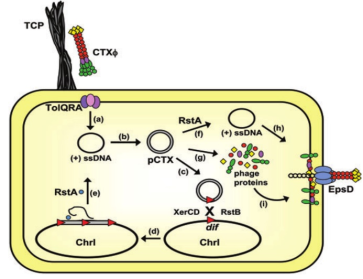
Figure 1. Schematic Representation of the CTXf Life Cycle in V. Cholerae.
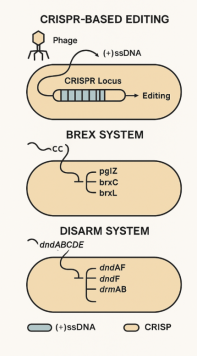
Figure 2. Schematic representation of bacterial anti-phage defense systems in Vibrio cholerae.
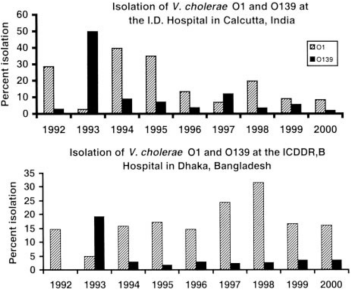
Figure 3. Isolation of V. cholerae O1 and O139 from patients admitted to Infectios Diseases Hospital in Calcuta India (upper) and from those admitted to ICDDR, B Hospital in Dhaka Bangladesh (lower) between 1992 and 2000.
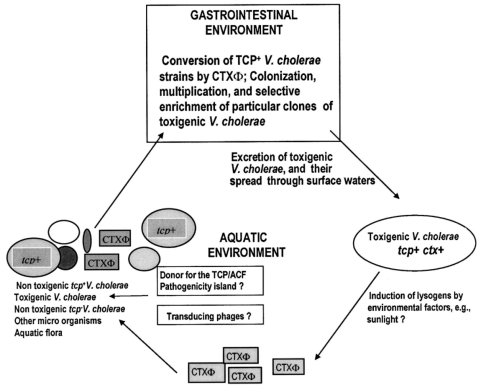
Figure 4. Model of the origination of the new pathogenic strain of V. cholerae from the progenitor strains from the environment.
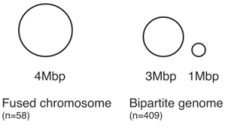
Figure 5. A schematic diagram showing the chromosomal fusion of the larger and smaller chromosome in V. cholerae.
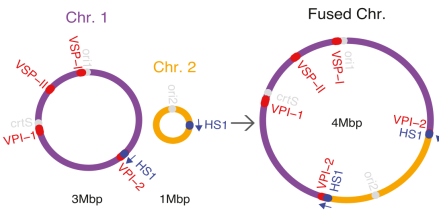
Figure 6. A schematic representation of chromosome fusion with the location of HS1, crtS, the origins of replications and pathogenicity islands indicated, Chr2 in rare cases carries the additional copy of VSP1.

Information



 Share This Article
 Twitter
 Linked In
 Facebook
 Copy
Copy Download