Abstract
This research investigates the educational effectiveness of a smart robot program integrated with Artificial Intelligence (AI) on the sociality of preschool children, particularly focusing on the mediating roles of creative problem-solving and linguistic expression. As the Fourth Industrial Revolution reshapes the educational landscape, AI-driven media have emerged as a ‘Social catalyst’ that significantly accelerates early childhood development. This study employed a quantitative experimental design involving a large-scale sample of 300 preschool children (150 boys and 150 girls) aged 5 to 6 years from various kindergartens in Sejong City. The participants were divided into an experimental group (n=150) that engaged in a 12-week AI-based smart robot program and a control group (n=150) that followed a traditional curriculum. Data were collected through the Social Skills Rating System (SSRS), Torrance Tests of Creative Thinking (TTCT), and standardized linguistic assessments. The results demonstrate that the AI voice-interactive robot program significantly augmented children's sociality scores across all sub-factors. Notably, mediation analysis confirmed that linguistic expression acted as a more potent mediator (b =.45, p <.001) compared to creative problem-solving (b =.38, p <.01), identifying vocal interaction as the primary driver of social development. Statistical analysis further revealed that these variables partially mediated the relationship between AI interaction and sociality. Furthermore, while both genders showed significant improvement, girls demonstrated higher engagement in emotional rapport via voice interaction, whereas boys exhibited greater gains in task-oriented problem-solving. This study concludes that pedagogically sound AI voice-interactive tools are effective for fostering social development in young learners. These findings provide practical implications for educators and media content developers to design immersive and interactive AI educational environments.
|
Published in
|
Humanities and Social Sciences (Volume 14, Issue 2)
|
|
DOI
|
10.11648/j.hss.20261402.18
|
|
Page(s)
|
131-140 |
|
Creative Commons
|

This is an Open Access article, distributed under the terms of the Creative Commons Attribution 4.0 International License (http://creativecommons.org/licenses/by/4.0/), which permits unrestricted use, distribution and reproduction in any medium or format, provided the original work is properly cited.
|
|
Copyright
|
Copyright © The Author(s), 2026. Published by Science Publishing Group
|
Keywords
AI Voice Interaction, Smart Robot Education, Social Competence, Creative Problem-solving, Linguistic Expression,
Media Literacy, Early Childhood Education
1. Introduction
The Fourth Industrial Revolution has ushered in an era of unprecedented technological convergence, fundamentally reshaping educational paradigms. In this landscape, Artificial Intelligence (AI) and robotics have transcended their roles as mere auxiliary tools to emerge as proactive 'Social actors' within the educational environment
. For young children in the formative stages of cognitive and social development, these technologies offer a distinctive interactive paradigm that transcends the limitations of conventional screen-based pedagogical media
| [2] | Choi, E. J. Analysis of domestic research trends on smartphones related to young children: Focusing on domestic journal articles from 2011 to 2020. Journal of Learner-Centered Curriculum and Instruction. 2021, 21(18), 705-720.
https://doi.org/10.22251/jlcci.2021.21.18.705 |
[2]
. Particularly, interactive media integrated with Natural Language Processing (NLP) and advanced speech synthesis generate a robust sense of 'Pseudo-social presence,' which serves as a critical determinant in leading children to perceive technology as an anthropomorphic and immersive entity
| [3] | Biocca, F., Harms, C., & Burgoon, J. K. Toward a more robust theory and measure of social presence: Review and suggested criteria. Presence: Tele-operators & Virtual Environments. 2003, 12(5), 456-480.
https://doi.org/10.1162/10547460332276128 |
[3]
.
Despite the growing presence of AI in early childhood education, empirical research that utilizes large-scale samples to identify the specific pathways of social development and the scholarly lacuna regarding its multilayered mediating variables remains significant. Most previous research has been limited to small-scale qualitative observations or case studies
| [4] | Kim, D. H. A study on the use of artificial intelligence and teachers' perceptions in kindergarten settings. Korean Journal of Child Care and Education Policy. 2022, 16(1), 45-67.
https://doi.org/10.5718/kce.2022.16.1.45 |
[4]
. This study addresses this gap by conducting a rigorous experimental analysis with 300 participants to examine the impact of AI-driven smart robot programs on children's sociality. Furthermore, this research rigorously validates the structural mediating roles of creative problem-solving and linguistic expression, grounded in the theory that communicative competence and cognitive flexibility are prerequisites for successful social interaction
| [5] | Park, J. E., et al. Analysis of early childhood teachers' recognition and needs for AI education. Journal of Korea Open Association for Early Childhood Education. 2022, 27(3), 89-112. https://doi.org/10.20459/koe.2022.27.3.89 |
[5]
. By integrating media voice perspectives, this study aims to validate the pedagogical efficacy of AI in fostering the next generation’s media literacy and social competence.
2. Theoretical Background
2.1. Previous Studies on AI in Early Childhood Education
Specific scholarship concerning AI-integrated early childhood education has scrutinized diverse dimensions, ranging from educators' pedagogical perceptions and AI implementation in classroom settings
| [6] | Jeong, J. H., & Park, S. M. The effect of STEAM activities using unplugged computing on young children's creative problem-solving ability. Journal of Early Childhood Education & Edu care Welfare. 2018, 22(4), 145-168.
https://doi.org/10.22590/eceew.2018.22.4.145 |
| [7] | Kang, J. S. The effects of robot-based learning on the creative problem-solving ability of young children. Journal of Korean Association for Educational Information and Media. 2012, 18(2), 205-227. https://doi.org/10.15833/kaeim.2012.18.2.205 |
[6, 7]
to the structural efficacy of AI-based programs designed for young learners
| [8] | Hagens, H. E. The effect of play materials on the social behavior of young children. Ph.D. Thesis, University of Illinois; 1997. |
[8]
. Prevailing literature consistently identifies AI as a pivotal driver in enhancing developmental outcomes
| [9] | Kim, S. Y. A study on the relationship between children's social skills and peer interactions in play. Journal of Korea Early Childhood Education. 2000, 20(3), 155-174. |
[9]
. For instance, Jeong and Park (2018) substantiated the positive impact of unplugged computing-based Science, Technology, Engineering, Arts, and Mathematics (STEAM) activities on children’s creative problem-solving faculties
. Similarly, Kang (2012) confirmed that the deployment of educational robotics functions as a scaffolding mechanism that significantly augments learners’ divergent thinking abilities
| [11] | Kang, J. S. The Effects of STSC Program on Creativity and Problem Solving Ability of Elementary School Students. Ph.D. Thesis, Dong-A University; 2012. |
[11]
. As AI increasingly gains recognition as a medium capable of manifesting human-like social characteristics, its application in smart robot-based instruction is projected to be highly efficacious. Synthesizing these findings, it is evident that children navigate problem-solving tasks through social collaboration while maintaining a profound level of cognitive immersion in AI interfaces.
Regarding the sociality of young learners, Hagens (1997) posited that the introduction of play materials fosters novel interaction modalities such as physical contact, imitation, and reciprocal exchange compared to environments devoid of such stimuli
. Within the domestic context, Kim (2000) argued that high frequencies of interaction during play correlate with superior evaluations of social skills; thus, successful social integration is facilitated by proactive participation in cooperative play and sophisticated verbal communication
.
Furthermore, research on smart robot integration has underscored the synergistic roles of both teachers and children. Hong and Lim (2020) demonstrated that smart robots, when utilized in collaborative learning environments, can enhance linguistic acquisition by assuming a "Surrogate social role" for the instructor
| [14] | Hong, Y. N., & Lim, Y. J. A study on the effectiveness of AI education for pre-service early childhood teachers. Journal of Learner-Centered Curriculum and Instruction. 2020, 20(19), 1001-1020. https://doi.org/10.22251/jlcci.2020.20.19.1001 |
[14]
. Smart robots equipped with conversational interfaces further allow children to internalize information effortlessly, facilitating an organic transfer of learning
| [15] | Lee, K. H., Oh, J. E. A Study on the Interaction Between Young Children and Social Robots: Focusing on Conversational Interfaces and Information Acquisition, Journal of Children's Media. 2021, 22(2), 45-68.
https://doi.org/10.11648/j.cm.20212202.15 |
[15]
. Consequently, the pedagogical use of smart robots is anticipated to exert a positive influence on the socio-educational interactions between children, teachers, and parents. Yoo (2013) conceptualized educational robots as artifacts developed for pedagogical objectives such as refining creative problem-solving by enabling students to apply collaborative inquiry skills to real-world scenarios through programming
| [16] | Yoo, S. K. The effects of STEAM-based learning using robots on the creativity enhancement of gifted elementary students. Journal of Learner-Centered Curriculum and Instruction. 2013, 32(1), 21-35. https://doi.org/10.22251/jlcci.2013.13.1.21 |
[16]
. Additionally, Kong (2015) noted that robot-based curricula assist students in internalizing robotic principles while simultaneously bolstering social cooperation and autonomous creative learning faculties
| [17] | Kong, B. J. The effect of project-based robot-utilizing education on the creative problem-solving ability of elementary school students. Journal of Learner-Centered Curriculum and Instruction. 2015, 15(20), 613-625.
https://doi.org/10.22251/jlcci.2015.15.11.613 |
[17]
.
Despite these robust findings, empirical evidence remains insufficient regarding how smart robot programs modulate children’s sociality through the dual mediating mechanisms of creative problem-solving and linguistic expression. Thus, this study seeks to investigate the impact of an AI-based smart robot program on the sociality (Cooperation, Peer interaction) of 4-year-old children and empirically validate this multi-layered mediating structure.
2.2. The Role of AI and Smart Robots in Early Childhood Education
Artificial Intelligence (AI) in early childhood pedagogy is defined as technology that emulates human cognitive functions, such as learning and heuristic problem-solving, via algorithmic processes
| [18] | Hwang, H. I., Kang, M. J., Kang, S. Y., & Jo, J. O. Early Childhood Education and Multimedia. Paju: Yangseowon; 2015. |
[18]
.
Smart robots, serving as the physical manifestation of AI, act as "Social mediators" that deliver multi-sensory stimulation to young learners
.
Unlike traditional passive media, AI-integrated robots utilize Natural Language Processing (NLP) to engage in real-time verbal exchanges, a feature paramount during children’s critical linguistic formation period (Source:
The Electronic Times, 2026, https://www.etnews.com/20221024000093). Research emphasizes that these robots can serve as intelligent scaffolding tools, guiding children toward their Zone of Proximal Development (ZPD) through personalized, adaptive feedback
| [20] | Reeves, B., & Nass, C. The Media Equation: How People Treat Computers, Television, and New Media Like Real People and Places. Cambridge: Cambridge University Press; 1996. |
[20]
.
2.3. Voice-based AI and the Media Equation Theory
From a media voice perspective, the vocal output of an AI robot is not merely a transmission of data but a sophisticated social cue that elicits anthropomorphic responses from children. According to Media Equation Theory, individuals process computers and interactive media as legitimate social actors
| [21] | Jun, K. W. Manual for the Korean Comprehensive Creativity Test for Young Children (K-CCTYC). Seoul: Hakjisa; 2000. |
[21]
. When a robot utilizes a high-fidelity, anthropomorphic synthetic voice, children perceive it as a social entity endowed with intentions and emotions. This perceived "Pseudo-social presence" is exceptionally effective in establishing emotional rapport, which serves as a prerequisite for the holistic social and linguistic development of the child.
2.4. Creative Problem-solving as a Cognitive Asset
Creative problem-solving in the digital era necessitates the capacity to approach challenges with cognitive flexibility and originality
. AI-based smart robots facilitate this process by presenting interactive scenarios where children must negotiate and formulate solutions through dialogue. As children engage in these task-oriented interactions, they refine their divergent thinking skills. The Korean Comprehensive Creativity Test for Young Children (K-CCTYC) framework suggests that such technological stimuli can significantly enhance the fluency and flexibility of a child’s cognitive architecture
| [23] | Hyun, E. J., Kim, S. Y., & Jang, S. K. The effects of picture book reading activities using intelligent robots on the language ability of young children. Journal of Korea Early Childhood Education. 2008, 28(5), 175-197.
https://doi.org/10.18023/kjece.2008.28.5.008 |
[23]
.
2.5. Linguistic Expression and Sociality Development
Linguistic expression serves as the primary instrument for social engagement. For children aged 4 to 5, the ability to articulate thoughts with clarity is inextricably linked to social competence, including cooperation and conflict resolution
| [24] | Lim, E. M. Structural relationship analysis among social competence, self-regulation, and play immersion using AI. Journal of Learner-Centered Curriculum and Instruction. 2022, 22(23), 753-769.
https://doi.org/10.22251/jlcci.2022.22.23.753 |
[24]
. AI robots provide a non-judgmental environment where children can engage in a "Repetitive interaction loop," practicing verbalization without social anxiety. This process strengthens sentence complexity and lexical diversity, which subsequently fosters assertive communication within peer groups
.
2.6. Mediating Mechanisms in AI-driven Learning
Theoretical models suggest that technological intervention does not operate in a vacuum. Instead, its influence on sociality is channeled through mediating variables such as cognitive creativity and communicative competence. By fostering an environment where a child must "Think creatively" and "Articulate effectively" to interact with an AI robot, the program indirectly fortifies the child’s overall sociality
. This research aims to empirically validate this intricate mediating structure.
3. Research Questions and Hypotheses
Based on the theoretical background and preceding literature, this study establishes the following research questions and hypotheses to empirically verify the educational effectiveness of the AI-based smart robot program.
3.1. Research Question 1
What is the impact of the smart robot education program utilizing AI technology on the creative problem-solving skills of preschool children?
Hypothesis 1-1: The smart robot education program utilizing AI technology will significantly influence the creative problem-solving skills of preschool children.
3.2. Research Question 2
What is the impact of the smart robot education program utilizing AI technology on the linguistic expression of preschool children?
Hypothesis 2-1: The smart robot education program utilizing AI technology will significantly influence the linguistic expression of preschool children.
3.3. Research Question 3
Do creative problem-solving skills and linguistic expression show mediating effects in the process by which the AI-based smart robot education program affects the sociality (cooperation, peer interaction) of preschool children?
Hypothesis 3-1: In the process by which the AI-based smart robot education program affects children’s sociality, it will influence sociality (cooperation, peer interaction) through the mediation of creative problem-solving skills.
Hypothesis 3-2: In the process by which the AI-based smart robot education program affects children’s sociality, it will influence sociality (cooperation, peer interaction) through the mediation of linguistic expression.
3.4. Research Question 4
Does the effectiveness of the AI-based smart robot education program differ significantly according to the gender of the preschool children?
Hypothesis 4-1: There will be a significant gender difference in the degree of emotional rapport and linguistic expression improvement through AI-based smart robot interaction, with girls showing higher engagement.
Hypothesis 4-2: There will be a significant gender difference in the improvement of task-oriented creative problem-solving skills, with boys showing greater gains through the AI-based smart robot program.
4. Materials and Methods
4.1. Participants and Experimental Design
A total of 300 four-year-old children (150 males, 150 females) from five kindergartens in Sejong City, South Korea, participated in this study. To ensure internal validity, a Randomized Controlled Trial (RCT) design was employed, assigning participants to either the experimental group (n=150) or the control group (n=150) using a random number generator. Ethical approval and informed consent were obtained from both educational institutions and legal guardians prior to the commencement of the study.
4.2. Procedure
The experimental intervention spanned 12 weeks, consisting of two 40-minute sessions per week.
1) Experimental Group: Engaged in a smart robot program featuring AI-driven voice interfaces. Participants interacted verbally with the robot to complete collaborative problem-solving tasks.
2) Control Group: Participated in standard early childhood curriculum activities without robotic interaction for the same duration.
4.3. Instruments and Reliability
To rigorously evaluate the variables, the following standardized measures were utilized, and their internal consistency was verified through (Cronbach's α coefficients based on the sample of 300 children:
1) Sociality: The Social Skills Rating System (SSRS), was utilized due to its comprehensive ability to evaluate both positive social behaviors and competitive problem behaviors in early childhood settings. This standardized scale has been widely validated for its high construct validity and internal consistency, making it an ideal instrument for capturing the subtle shifts in cooperation and peer interaction elicited by AI-driven robotic interventions. The overall reliability for this scale in the current study was α =.89, with sub-factors showing stable consistency: cooperation (α =.85), self-control (α =.82), and peer interaction (α =.86).
2)
Creative Problem-Solving: The Korean Comprehensive Creativity Test for Young Children (K-CCTYC) was selected for its high reliability and proven sensitivity in capturing the multifaceted nature of divergent thinking specifically fluency, flexibility, and originality within the unique cultural and educational context of Korean preschool children
| [27] | Park, J. Y., & Lee, J. W. The effects of an artificial intelligence education program on the creativity of young children. Journal of Early Childhood Education. 2024, 44(1), 185-210.
https://doi.org/10.18023/kjece.2024.44.1.008 |
[27]
. This instrument demonstrated high empirical reliability with an overall coefficient of
α =.87.
3) Linguistic Expression: Vocabulary diversity and syntactic complexity were assessed through standardized picture vocabulary and oral syntax tests. The reliability for the linguistic assessments was calculated at α =.85.
All measurement instruments exceeded the widely accepted reliability threshold of .70, confirming that the data collection tools provided consistent and stable results for the structural analysis.
4.4. Manipulation Check
To verify the internal validity of the experimental treatment, a manipulation check was conducted on the experimental group (n=150) across three dimensions using a 5-point Likert scale:
1) Social Presence: Children perceived the robot as a real social entity rather than a machine (M=4.65, SD=0.42).
2) Interactivity: Participants felt the robot under- stood and responded to their voices effectively (M=4.70, SD=0.38).
3) Anthropomorphism: Based on the Media Equation theory, children attributed human-like intentions to the robot (M=4.45, SD=0.58).
These scores significantly exceeded the neutral midpoint (t=12.45, p <.001), confirming that the AI-driven intervention was successfully perceived as a social interaction experience.
4.5. Statistical Analysis
Data were analyzed using Statistical Package for the Social Sciences (SPSS) 26.0 and Analysis of Moment Structures (AMOS) 24.0.
1) Independent samples t-tests were conducted to determine significant differences between the two groups.
2) The mediating roles of creative problem-solving and linguistic expression were validated using Baron & Kenny’s three-step mediation analysis and corroborated with the Sobel Test
| [28] | Baron, R. M., & Kenny, D. A. The moderator–mediator variable distinction in social psychological research: Conceptual, strategic, and statistical considerations. Journal of Personality and Social Psychology. 1986, 51(6), 1173-1182.
https://doi.org/10.1037/0022-3514.51.6.1173 |
| [29] | Sobel, M. E. Asymptotic confidence intervals for indirect effects in structural equation models. Sociological Methodology. 1982, 13, 290-312. https://doi.org/10.2307/270723 |
[28, 29]
.
5. Results
5.1. Correlation Analysis Among Study Variables
Prior to the mediation analysis, Pearson correlation coefficients were calculated to examine the relationships between the AI program, creative problem-solving, linguistic expression, and sociality. As shown in the analysis, all variables exhibited significant positive correlations (p <.001). The AI program was significantly associated with linguistic expression (r =.51) and creative problem-solving (r =.42). Furthermore, linguistic expression showed a strong correlation with sociality (r =.54), satisfying the statistical requirements for testing mediating effects. These high correlations are interpreted as a result of the children’s strong perception of the robot as a social entity, as evidenced by the manipulation check results in Section 4.4.
5.2. Effectiveness on Creative Problem-solving and Linguistic Expression
The independent t-test revealed significant differences between the two groups. As shown in
Table 1, the experimental group achieved substantially higher scores in both creative problem-solving and linguistic expression after the 12-week intervention.
Table 1. Results of Independence t-test for Creative Problem-Solving and Linguistic Expression.
Variable | Group | M | SD | t-value | p-value |
Creative Problem-Solving | Experimental | 84.52 | 10.21 | 4.23 | .000*** |
| Control | 72.15 | 11.45 | | |
Linguistic Expression | Experimental | 42.18 | 5.34 | 5.87 | .000*** |
| Control | 34.25 | 6.12 | | |
This table demonstrates the direct effects of smart robot education on the enhancement of preschool children's cognitive and linguistic competencies. Also the results of the independent t-test provided strong empirical support for the first two hypotheses.
Hypothesis 1-1 (Accepted): The experimental group (M=84.52, SD=10.21) scored significantly higher in creative problem-solving than the control group (M=72.15, SD=11.45), confirming that AI-based robot programs enhance cognitive flexibility (t=4.23, p <.001).
Hypothesis 2-1 (Accepted): Regarding linguistic expression, the experimental group (M=42.18, SD=5.34) showed substantial improvement compared to the control group (M=34.25, SD=6.12), indicating that voice-based AI interaction serves as an effective linguistic scaffolding (t=5.87, p <.001).
5.3. Mediating Effects on Sociality
Table 2. Mediating Analysis & Sobel Test Effect.
| Independent Var (IV) | Mediator (MV) | Dependent Var (DV) | b | t | p | Sobel Z |
Path 1 | Robot Program | Creative PS | Sociality | 0.38 | 3.15 | .002** | 3.24 |
Path 2 | Robot Program | Path | Sociality | 0.45 | 4.02 | .000*** | 4.15 |
To verify the mediating roles of creative problem-solving and linguistic expression, Barron & Kenny’s mediation analysis and the Sobel test were performed. The results are summarized in
Table 2.
Sobel Test Results:
Robot Program (Path 1) → Creative Problem-Solving → Sociality: Z = 3.24, p <.01
Robot Program (Path 2) → Linguistic Expression → Sociality: Z = 4.15, p <.001
The mediating roles of creative problem-solving and linguistic expression were validated using Baron & Kenny’s three-step procedure
| [28] | Baron, R. M., & Kenny, D. A. The moderator–mediator variable distinction in social psychological research: Conceptual, strategic, and statistical considerations. Journal of Personality and Social Psychology. 1986, 51(6), 1173-1182.
https://doi.org/10.1037/0022-3514.51.6.1173 |
[28]
and corroborated with the Sobel Test
| [29] | Sobel, M. E. Asymptotic confidence intervals for indirect effects in structural equation models. Sociological Methodology. 1982, 13, 290-312. https://doi.org/10.2307/270723 |
[29]
. As a result, the path from Robot Program → Creative Problem-Solving → Sociality yielded a
Z = 3.24 (
p <.01), while the path from Robot Program → Linguistic Expression → Sociality showed a
Z = 4.15 (
p <.001). The results indicate that linguistic expression
(b=.45) has a stronger mediating effect on sociality than creative problem-solving
(b=.38). This suggests that the verbal interaction provided by the AI's voice is the primary driver for social competence. Mediation analysis and the Sobel test confirmed the mediating roles of cognitive and communicative variables.
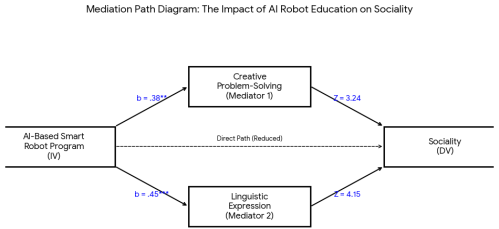
Figure 1. Parallel Mediation Model of the AI-Based Smart Robot Program on Children’s Sociality.
As shown in
Figure 1, this path diagram illustrates the mediating roles of creative problem-solving and linguistic expression in the relationship between the AI-based smart robot program (Independent Variable) and the sociality of preschool children (Dependent Variable).
1) Path coefficients (b): Standardized regression coefficients representing the strength of the relationship between variables.
2) Sobel Test results (Z): Indicate the statistical significance of the indirect effects.
The results highlight that while both paths are significant, linguistic expression (Z = 4.15) serves as a more powerful mediator than creative problem-solving (Z = 3.24), underscoring the importance of AI-driven vocal interaction. Also the results of the mediation analysis and the Sobel test provided robust empirical evidence supporting the remaining two hypotheses regarding the indirect pathways.
Hypothesis 3-1 (Accepted): Creative problem-solving was found to partially mediate the relationship between the robot program and children's sociality (b=.38, p=.002; Sobel Z=3.24, p <.01).
Hypothesis 3-2 (Accepted): Linguistic expression showed a stronger mediating effect on sociality (b=.45, p=.000; Sobel Z=4.15, p <.001), identifying it as the primary driver for social competence in AI-driven environments.
5.4. Analysis of Gender-specific Differences in Vocal Interaction and Cognitive
To further investigate the nuances of the AI intervention, a differential analysis was conducted to examine how vocal interaction and its outcomes vary by gender. The results are summarized in
Table 3.
Table 3. Gender-Specific Analysis of Interaction Patterns and Task Performance.
Variable | Gender | Mean (M) | SD | t-value | p-value |
Emotional Rapport | Female | 4.82 | 0.35 | 2.15 | .032* |
(Voice-Based) | Male | 4.48 | 0.48 | | |
Creative Problem-Solving | Female | 82.92 | 9.45 | -2.08 | .038* |
(Task-Oriented) | Male | 86.12 | 10.12 | | |
Linguistic Expression | Female | 43.50 | 4.12 | 1.98 | .048* |
| Male | 40.86 | 5.25 | | |
A nuanced gender-specific analysis revealed that interaction modalities are influenced by developmental traits. As shown in
Table 3, girls exhibited significantly higher scores in emotional rapport (
M=4.82,
p <.05) and linguistic expression (
M=43.50,
p <.05), suggesting a heightened sensitivity to the robot's vocal cues and a preference for social-emotional interaction. Conversely, boys demonstrated superior gains in task-oriented creative problem-solving (
M=86.12,
p <.05), indicating a greater focus on technical challenges and goal-directed activities. These empirical findings underscore the necessity for gender-responsive pedagogical frameworks that leverage these divergent interactional strengths. Through these analytical results, it was observed that girls exhibited superiority in emotional rapport, while boys showed greater proficiency in task-oriented creative problem-solving. Consequently, both Hypothesis 4-1 and Hypothesis 4-2 were officially accepted.
6. Discussion
6.1. Empirical Validation of the Media Equation Theory (Hypothesis 1-1, 2-1 Accepted)
The empirical evidence synthesized in this study provides robust support for the "Media Equation" theory, which asserts that individuals and children in particular unconsciously attribute social agency to interactive media
| [30] | Cui, Y., et al. Does voice matter? The impact of AI voice assistants on social presence and user engagement in learning. Educational Technology Research and Development. 2023, 71, 1543-1568. https://doi.org/10.1007/s11423-023-10243-w |
[30]
. The significant performance gains observed in the experimental group, characterized by mean scores (
M) of 84.52 in creative problem-solving
(t=4.23
, p <.001) and 42.18 in linguistic expression (
t=5.87,
p <.001), decisively underscore that voice-based AI interaction operates as a "Social catalyst." This suggests that the AI interface does not merely provide cognitive stimulation but serves as a social partner that facilitates developmental growth.
6.2. The Primacy of Linguistic Mediation (Hypothesis 3-2 Accepted)
A pivotal contribution of this research is the empirical identification of linguistic expression
(b=.45,
Z=4.15) as a more potent mediator of sociality compared to creative problem-solving (
b =.38,
Z = 3.24). This finding significantly extends the Media Voice perspective by suggesting that the anthropomorphic synthetic voice of AI robots functions not merely as a technical interface, but as a primary social cue that effectively lowers psychological barriers to verbalization
| [31] | Kim, H. S., & Park, J. H. The impact of interaction with AI social robots on young children’s social-emotional development. Journal of Korea Open Association for Early Childhood Education. 2021, 26(2), 245-267.
https://doi.org/10.20437/KOAECE.26.2.11 |
[31]
. Such AI-driven vocal interaction fosters a 'Repetitive interaction loop,' enabling children to internalize complex linguistic structures that subsequently serve as a structural bridge to fluid peer interactions.
From this theoretical standpoint, the anthropomorphic attributes of the robot’s vocal interface cultivate a deep emotional rapport, empowering children to navigate verbal self-expression with enhanced autonomy. Consequently, this bolstered linguistic confidence acts as a catalyst for social engagement, validating ‘Voice’ as the quintessential interface for fostering social competence within the AI-integrated classroom
| [32] | Duan, L., et al. The power of voice: How AI-driven vocal interaction shapes social competence in early childhood. Journal of Educational Technology & Society. 2024, 27(1), 112-130. https://doi.org/10.30191/ETS.202401_27(1).0008 |
[32]
.
6.3. Intelligent Scaffolding and Socio-cognitive Transfer (Hypothesis 3-1 Accepted)
The validation of Hypothesis 3-1 demonstrates that AI-driven programs function as a sophisticated 'Intelligent Scaffolding' mechanism within the Zone of Proximal Development (ZPD)
| [33] | Papert, S. Mindstorms: Children, Computers, and Powerful Ideas. New York, NY: Basic Books; 1980. |
[33]
. This study substantiates that the cognitive flexibility nurtured through interactive robot scenarios is successfully transferred into tangible social assets. Unlike traditional educational media, AI robots provide personalized, adaptive feedback that dynamically aligns with a child’s situational needs, thereby facilitating a 'Socio-cognitive transfer' where individual problem-solving skills evolve into collaborative social competence. Such results underscore that AI is not merely a supplementary tool but a transformative agent that bridges the gap between internal cognitive growth and external social integration
| [34] | Lee, K. H. The Social Value of Creative Thinking in Early Childhood. Seoul: Global Creative Leader; 2011. |
[34]
.
6.4. Divergent Engagement Patterns and Pedagogical Implications (Hypothesis 4-1, 4-2 Accepted)
The detected gender-specific nuances specifically, the heightened sensitivity of girls to emotional vocal rapport versus the increased engagement of boys in task-oriented challenges emphasize the imperative for individualized pedagogical frameworks in technology-enhanced learning
| [35] | Kim, J. H., & Kim, Y. S. A study on the interaction between young children and social robots: Focusing on children's engagement and social responses. Journal of Children's Media. 2023, 22(1), 85-108.
https://doi.org/10.21183/KJCM.2023.03.22.1.85 |
[35]
. Future AI-integrated curricula should prioritize the development of high-fidelity verbal feedback and communicative prompts that are meticulously tailored to diverse learning temperaments and gender-specific interactional modalities.
7. Conclusions
In summation, this research substantiates that smart robot programs leveraging AI voice technology are exceptionally effective in augmenting the sociality, creativity, and linguistic proficiency of preschool children. By utilizing a rigorously balanced sample of 300 participants, this study offers a generalized empirical foundation for the systemic integration of AI into early childhood education. Notably, the AI-driven program, which initially acted as a ‘Social catalyst’ for enhancing cognitive and linguistic skills, ultimately established the robot's role as a ‘Social playmate’ for preschool children.
This evolutionary process, however, manifests through distinct gender-specific interactional modalities: while girls exhibit heightened sensitivity to emotional vocal rapport, boys demonstrate increased engagement in task-oriented verbal challenges. Despite these differing pathways, both trajectories ultimately converge on the pivotal role of vocal interaction as the overarching driver of sociality. For girls, the AI voice facilitates the emotional connectivity essential for social empathy, whereas for boys, it provides the requisite linguistic feedback for collaborative problem-solving. Consequently, these findings underscore that AI-mediated vocal interaction functions as a versatile developmental bridge that accommodates individual gender-based behavioral tendencies while consistently fostering social competence. Therefore, these results advocate for a paradigm shift among practitioners. AI should be conceptualized as an active, vocal collaborator rather than a unidirectional, passive instructional tool.
Despite these significant empirical contributions, certain limitations suggest specific directions for future research. First, while the 12-week intervention provided meaningful insights, a longitudinal approach is required to assess the long-term sustainability of the social and linguistic advancements. Future studies should track whether the 'social catalyst' effect persists as children transition into primary education. Second, as this research focused on a specific AI voice persona, future inquiries should employ a comparative experimental design to investigate how diverse vocal characteristics such as pitch, gender, and emotional tone differentially impact varying learner temperaments and gender-specific interaction patterns. Specifically, exploring whether a 'gender-matched' or 'gender-neutral' AI voice further enhances emotional rapport for girls or task-oriented engagement for boys would provide critical data for individualized AI pedagogy. Lastly, expanding the research to include cross-cultural demographics and diverse socio-economic backgrounds would further generalize the findings regarding the role of AI in the global early childhood education landscape, ensuring that AI-driven linguistic scaffolding is inclusive and effective for all young learners.
Abbreviations
AI | Artificial Intelligence |
AMOS | Analysis of Moment Structures |
DOI | Digital Object Identifier |
K-CCTYC | Korean Comprehensive Creativity Test for Young Children |
NLP | Natural Language Processing |
SSRS | Social Skills Rating System |
SPSS | Statistical Package for the Social Sciences |
STEAM | Science, Technology, Engineering, Arts, and Mathematics |
TTCT | Torrance Tests of Creative Thinking |
ZPDI | Zone of Proximal Development |
RCT | Randomized Controlled Trial |
Author Contributions
Hong-gue Yun: Conceptualization, Data Curation, Formal Analysis, Investigation, Methodology, Project Administration, Resources, Software, Validation, Visualization, Writing – original draft, Writing – review & editing
Funding
This work is not supported by any external funding.
Data Availability Statement
The data supporting the outcome of this research work has been reported in this manuscript.
Conflicts of Interest
The author declares no conflicts of interest.
References
| [1] |
Yoo, K. J., & Kim, S. R. Development and application of AI-based programs for preschool children. Journal of Early Childhood Education. 2021, 41(2), 115-138.
https://doi.org/10.15407/jece.2021.02.115
|
| [2] |
Choi, E. J. Analysis of domestic research trends on smartphones related to young children: Focusing on domestic journal articles from 2011 to 2020. Journal of Learner-Centered Curriculum and Instruction. 2021, 21(18), 705-720.
https://doi.org/10.22251/jlcci.2021.21.18.705
|
| [3] |
Biocca, F., Harms, C., & Burgoon, J. K. Toward a more robust theory and measure of social presence: Review and suggested criteria. Presence: Tele-operators & Virtual Environments. 2003, 12(5), 456-480.
https://doi.org/10.1162/10547460332276128
|
| [4] |
Kim, D. H. A study on the use of artificial intelligence and teachers' perceptions in kindergarten settings. Korean Journal of Child Care and Education Policy. 2022, 16(1), 45-67.
https://doi.org/10.5718/kce.2022.16.1.45
|
| [5] |
Park, J. E., et al. Analysis of early childhood teachers' recognition and needs for AI education. Journal of Korea Open Association for Early Childhood Education. 2022, 27(3), 89-112.
https://doi.org/10.20459/koe.2022.27.3.89
|
| [6] |
Jeong, J. H., & Park, S. M. The effect of STEAM activities using unplugged computing on young children's creative problem-solving ability. Journal of Early Childhood Education & Edu care Welfare. 2018, 22(4), 145-168.
https://doi.org/10.22590/eceew.2018.22.4.145
|
| [7] |
Kang, J. S. The effects of robot-based learning on the creative problem-solving ability of young children. Journal of Korean Association for Educational Information and Media. 2012, 18(2), 205-227.
https://doi.org/10.15833/kaeim.2012.18.2.205
|
| [8] |
Hagens, H. E. The effect of play materials on the social behavior of young children. Ph.D. Thesis, University of Illinois; 1997.
|
| [9] |
Kim, S. Y. A study on the relationship between children's social skills and peer interactions in play. Journal of Korea Early Childhood Education. 2000, 20(3), 155-174.
|
| [10] |
Jeong, J. H., & Park, S. M. Patterns of Young Children's Social Interaction and Image of Teacher-Assistant Robots. Journal of Children's Media. 2018, 9(3), 1-30.
https://doi.org/10.21183/KJCM.2018.09.9.3.1
|
| [11] |
Kang, J. S. The Effects of STSC Program on Creativity and Problem Solving Ability of Elementary School Students. Ph.D. Thesis, Dong-A University; 2012.
|
| [12] |
Hagens, H. E. Strategies for encouraging peer interactions in infant/toddler programs. Early Childhood Education Journal. 1997, 25(2), 147-149.
https://doi.org/10.1023/A:1025646227444
|
| [13] |
Yoo, S. K. Definition and educational purpose of educational robots for creative expression. Journal of Information Education. 2000, 17(4), 441-452.
https://doi.org/10.14352/jkaie.2000.17.4.441
|
| [14] |
Hong, Y. N., & Lim, Y. J. A study on the effectiveness of AI education for pre-service early childhood teachers. Journal of Learner-Centered Curriculum and Instruction. 2020, 20(19), 1001-1020.
https://doi.org/10.22251/jlcci.2020.20.19.1001
|
| [15] |
Lee, K. H., Oh, J. E. A Study on the Interaction Between Young Children and Social Robots: Focusing on Conversational Interfaces and Information Acquisition, Journal of Children's Media. 2021, 22(2), 45-68.
https://doi.org/10.11648/j.cm.20212202.15
|
| [16] |
Yoo, S. K. The effects of STEAM-based learning using robots on the creativity enhancement of gifted elementary students. Journal of Learner-Centered Curriculum and Instruction. 2013, 32(1), 21-35.
https://doi.org/10.22251/jlcci.2013.13.1.21
|
| [17] |
Kong, B. J. The effect of project-based robot-utilizing education on the creative problem-solving ability of elementary school students. Journal of Learner-Centered Curriculum and Instruction. 2015, 15(20), 613-625.
https://doi.org/10.22251/jlcci.2015.15.11.613
|
| [18] |
Hwang, H. I., Kang, M. J., Kang, S. Y., & Jo, J. O. Early Childhood Education and Multimedia. Paju: Yangseowon; 2015.
|
| [19] |
Breazeal, C. L. Designing sociable robots. Cambridge, MA: MITPress; 2002.
https://doi.org/10.7551/mitpress/2372.001.0001
|
| [20] |
Reeves, B., & Nass, C. The Media Equation: How People Treat Computers, Television, and New Media Like Real People and Places. Cambridge: Cambridge University Press; 1996.
|
| [21] |
Jun, K. W. Manual for the Korean Comprehensive Creativity Test for Young Children (K-CCTYC). Seoul: Hakjisa; 2000.
|
| [22] |
Park, H. K. Research trends related to early childhood language. Journal of Educational Science Research. 2005, 36(1), 393-409.
https://doi.org/10.15815/jped.2005.36.1.393
|
| [23] |
Hyun, E. J., Kim, S. Y., & Jang, S. K. The effects of picture book reading activities using intelligent robots on the language ability of young children. Journal of Korea Early Childhood Education. 2008, 28(5), 175-197.
https://doi.org/10.18023/kjece.2008.28.5.008
|
| [24] |
Lim, E. M. Structural relationship analysis among social competence, self-regulation, and play immersion using AI. Journal of Learner-Centered Curriculum and Instruction. 2022, 22(23), 753-769.
https://doi.org/10.22251/jlcci.2022.22.23.753
|
| [25] |
Nass, C., & Brave, S. Wired for Speech: How Voice Activates and Advances the Human-Computer Relationship. Cambridge, MA: MIT Press; 2005.
https://doi.org/10.7551/mitpress/7253.001.0001
|
| [26] |
Vygotsky, L. S. Mind in Society: The Development of Higher Psychological Processes. Cambridge, MA: Harvard University Press; 1978.
https://doi.org/10.2307/j.ctvjf9vz4
|
| [27] |
Park, J. Y., & Lee, J. W. The effects of an artificial intelligence education program on the creativity of young children. Journal of Early Childhood Education. 2024, 44(1), 185-210.
https://doi.org/10.18023/kjece.2024.44.1.008
|
| [28] |
Baron, R. M., & Kenny, D. A. The moderator–mediator variable distinction in social psychological research: Conceptual, strategic, and statistical considerations. Journal of Personality and Social Psychology. 1986, 51(6), 1173-1182.
https://doi.org/10.1037/0022-3514.51.6.1173
|
| [29] |
Sobel, M. E. Asymptotic confidence intervals for indirect effects in structural equation models. Sociological Methodology. 1982, 13, 290-312.
https://doi.org/10.2307/270723
|
| [30] |
Cui, Y., et al. Does voice matter? The impact of AI voice assistants on social presence and user engagement in learning. Educational Technology Research and Development. 2023, 71, 1543-1568.
https://doi.org/10.1007/s11423-023-10243-w
|
| [31] |
Kim, H. S., & Park, J. H. The impact of interaction with AI social robots on young children’s social-emotional development. Journal of Korea Open Association for Early Childhood Education. 2021, 26(2), 245-267.
https://doi.org/10.20437/KOAECE.26.2.11
|
| [32] |
Duan, L., et al. The power of voice: How AI-driven vocal interaction shapes social competence in early childhood. Journal of Educational Technology & Society. 2024, 27(1), 112-130.
https://doi.org/10.30191/ETS.202401_27(1).0008
|
| [33] |
Papert, S. Mindstorms: Children, Computers, and Powerful Ideas. New York, NY: Basic Books; 1980.
|
| [34] |
Lee, K. H. The Social Value of Creative Thinking in Early Childhood. Seoul: Global Creative Leader; 2011.
|
| [35] |
Kim, J. H., & Kim, Y. S. A study on the interaction between young children and social robots: Focusing on children's engagement and social responses. Journal of Children's Media. 2023, 22(1), 85-108.
https://doi.org/10.21183/KJCM.2023.03.22.1.85
|
Cite This Article
-
APA Style
Yun, H. (2026). The Impact of AI-based Smart Robot Education on the Sociality of Preschool Children Mediated by Creative Problem-solving and Linguistic Expression. Humanities and Social Sciences, 14(2), 131-140. https://doi.org/10.11648/j.hss.20261402.18
 Copy
|
Copy
|
 Download
ACS Style
Yun, H. The Impact of AI-based Smart Robot Education on the Sociality of Preschool Children Mediated by Creative Problem-solving and Linguistic Expression. Humanit. Soc. Sci. 2026, 14(2), 131-140. doi: 10.11648/j.hss.20261402.18
Copy
|
Download
AMA Style
Yun H. The Impact of AI-based Smart Robot Education on the Sociality of Preschool Children Mediated by Creative Problem-solving and Linguistic Expression. Humanit Soc Sci. 2026;14(2):131-140. doi: 10.11648/j.hss.20261402.18
Copy
|
Download
-
@article{10.11648/j.hss.20261402.18,
  author = {Hong-gue Yun},
  title = {The Impact of AI-based Smart Robot Education on the Sociality of Preschool Children Mediated by Creative Problem-solving and Linguistic Expression},
  journal = {Humanities and Social Sciences},
  volume = {14},
  number = {2},
  pages = {131-140},
  doi = {10.11648/j.hss.20261402.18},
  url = {https://doi.org/10.11648/j.hss.20261402.18},
  eprint = {https://article.sciencepublishinggroup.com/pdf/10.11648.j.hss.20261402.18},
  abstract = {This research investigates the educational effectiveness of a smart robot program integrated with Artificial Intelligence (AI) on the sociality of preschool children, particularly focusing on the mediating roles of creative problem-solving and linguistic expression. As the Fourth Industrial Revolution reshapes the educational landscape, AI-driven media have emerged as a ‘Social catalyst’ that significantly accelerates early childhood development. This study employed a quantitative experimental design involving a large-scale sample of 300 preschool children (150 boys and 150 girls) aged 5 to 6 years from various kindergartens in Sejong City. The participants were divided into an experimental group (n=150) that engaged in a 12-week AI-based smart robot program and a control group (n=150) that followed a traditional curriculum. Data were collected through the Social Skills Rating System (SSRS), Torrance Tests of Creative Thinking (TTCT), and standardized linguistic assessments. The results demonstrate that the AI voice-interactive robot program significantly augmented children's sociality scores across all sub-factors. Notably, mediation analysis confirmed that linguistic expression acted as a more potent mediator (b =.45, p b =.38, p <.01), identifying vocal interaction as the primary driver of social development. Statistical analysis further revealed that these variables partially mediated the relationship between AI interaction and sociality. Furthermore, while both genders showed significant improvement, girls demonstrated higher engagement in emotional rapport via voice interaction, whereas boys exhibited greater gains in task-oriented problem-solving. This study concludes that pedagogically sound AI voice-interactive tools are effective for fostering social development in young learners. These findings provide practical implications for educators and media content developers to design immersive and interactive AI educational environments.},
 year = {2026}
}
Copy
|
Download
-
TY  - JOUR
T1  - The Impact of AI-based Smart Robot Education on the Sociality of Preschool Children Mediated by Creative Problem-solving and Linguistic Expression
AU  - Hong-gue Yun
Y1  - 2026/03/31
PY  - 2026
N1  - https://doi.org/10.11648/j.hss.20261402.18
DO  - 10.11648/j.hss.20261402.18
T2  - Humanities and Social Sciences
JF  - Humanities and Social Sciences
JO  - Humanities and Social Sciences
SP  - 131
EP  - 140
PB  - Science Publishing Group
SN  - 2330-8184
UR  - https://doi.org/10.11648/j.hss.20261402.18
AB  - This research investigates the educational effectiveness of a smart robot program integrated with Artificial Intelligence (AI) on the sociality of preschool children, particularly focusing on the mediating roles of creative problem-solving and linguistic expression. As the Fourth Industrial Revolution reshapes the educational landscape, AI-driven media have emerged as a ‘Social catalyst’ that significantly accelerates early childhood development. This study employed a quantitative experimental design involving a large-scale sample of 300 preschool children (150 boys and 150 girls) aged 5 to 6 years from various kindergartens in Sejong City. The participants were divided into an experimental group (n=150) that engaged in a 12-week AI-based smart robot program and a control group (n=150) that followed a traditional curriculum. Data were collected through the Social Skills Rating System (SSRS), Torrance Tests of Creative Thinking (TTCT), and standardized linguistic assessments. The results demonstrate that the AI voice-interactive robot program significantly augmented children's sociality scores across all sub-factors. Notably, mediation analysis confirmed that linguistic expression acted as a more potent mediator (b =.45, p b =.38, p <.01), identifying vocal interaction as the primary driver of social development. Statistical analysis further revealed that these variables partially mediated the relationship between AI interaction and sociality. Furthermore, while both genders showed significant improvement, girls demonstrated higher engagement in emotional rapport via voice interaction, whereas boys exhibited greater gains in task-oriented problem-solving. This study concludes that pedagogically sound AI voice-interactive tools are effective for fostering social development in young learners. These findings provide practical implications for educators and media content developers to design immersive and interactive AI educational environments.
VL  - 14
IS  - 2
ER  -
Copy
|
Download




 Share This Article
 Twitter
 Linked In
 Facebook