Research Article | | Peer-Reviewed

Evaluation of Green Building Performance Using Greenship and Edge: A Case Study of Block A, Faculty of Mathematics and Natural Sciences, Universitas Syiah Kuala, Aceh

Received: 25 November 2025     Accepted: 26 December 2025     Published: 30 January 2026
Views:       Downloads:
Abstract

Improving the efficiency of educational buildings is essential to meeting campus sustainability targets. This study evaluates the green-building performance of Block A, Faculty of Mathematics and Natural Sciences, Syiah Kuala University, by integrating Greenship Existing Building (EB) v1.1 and EDGE v3.0 to assess energy, water, and material efficiency in a humid-tropical academic facility. A mixed-methods approach combined field observations, interviews, and technical/operational document review. Greenship scoring reached 71 of 117 points: Appropriate Site Development 12/16, Energy Efficiency and Conservation 28/36 (including 8 bonus points), Water Conservation 11/20 (including 1 bonus point), Material Resources and Cycle 7/12, Indoor Health and Comfort 8/20, and Building Environmental Management 5/13. Performance is generally good, but indoor comfort and environmental management require improvement. EDGE confirms the result, indicating savings of 31.75% in energy, 21.48% in water, and 24.10% in materials, all above the 20% threshold. Simulation of upgrades recommends a simple rainwater-harvesting system, installation of water sub-meters, reactivation of solar panels, and energy-focused operation and maintenance policies supported by integrated IoT monitoring. Overall, the combined Greenship–EDGE framework effectively pinpoints enhancement opportunities and offers a replicable model for green-campus development in Indonesia.

Published in International Journal of Architecture, Arts and Applications (Volume 12, Issue 1)
DOI 10.11648/j.ijaaa.20261201.12
Page(s) 17-29
Creative Commons

This is an Open Access article, distributed under the terms of the Creative Commons Attribution 4.0 International License (http://creativecommons.org/licenses/by/4.0/), which permits unrestricted use, distribution and reproduction in any medium or format, provided the original work is properly cited.

Copyright

Copyright © The Author(s), 2026. Published by Science Publishing Group

Keywords

Green Building, Greenship Existing Building, EDGE, Energy Efficiency, Water Efficiency, Sustainable Materials

1. Introduction
Improving the environmental efficiency of educational buildings has become a strategic priority for universities as campuses face increasing resource demand and sustainability targets. The global buildings and construction sector remains a major driver of climate impacts, accounting for roughly one-third of final energy use and energy-related CO₂ emissions, which underscores the need to enhance building performance, particularly during operation . In humid tropical regions, these challenges are amplified by persistent heat and moisture loads that elevate cooling, ventilation, and water-use requirements, making post-occupancy assessment of existing academic facilities essential for green-campus advancement .
In Indonesia, green-building evaluations on campus facilities are growing; however, most existing-building studies still apply a single assessment tool. Such a one-tool approach typically captures either operational/managerial compliance (qualitative) or model-based resource savings (quantitative), but not both, limiting the ability to diagnose real performance gaps and set measurable retrofit priorities . Therefore, evidence remains limited on the added value of integrating an operational rating system with a quantitative efficiency simulation for existing tropical educational buildings .
To address this gap, this study evaluates the green-building performance of Block A, Faculty of Mathematics and Natural Sciences, Syiah Kuala University (Aceh, Indonesia), by integrating Greenship Existing Building v1.1 and EDGE v3.0 to assess energy, water, and material efficiency. Greenship EB structures the appraisal of operational readiness and management practices across sustainability categories , while EDGE provides a quantitative baseline comparison and requires at least 20% predicted savings in energy, water, and embodied energy in materials . By combining both frameworks, the study aims to deliver a holistic and replicable evaluation model for guiding green-campus retrofit strategies in Indonesia .
This study identifies a clear research gap: no previous study has integrated Greenship EB v1.1 and EDGE 3.0 to evaluate an existing educational building in Aceh or Indonesia more broadly, despite the combined framework offering a more rigorous and holistic assessment of policy compliance, operational practices, and measurable efficiency potential. This dual-system evaluation is not only methodologically stronger, but also contextually significant for advancing sustainable development in tropical educational facilities where environmental challenges and usage patterns differ from conventional commercial settings.
2. Literature Review
Recent scholarship increasingly positions educational buildings as priority targets for green retrofitting because their long operational lifetimes, high occupancy density, and continuous energy–water demand make them pivotal to campus decarbonization efforts . The buildings and construction sector still represents a major share of global final energy use and CO₂ emissions, with operational performance of existing buildings viewed as the critical bottleneck for achieving near-term climate targets . Consequently, research has shifted from design-only perspectives toward evidence-based evaluation of in-use performance, emphasizing measurable resource efficiency and continuous improvement in institutional facilities .
Green buildings are now widely treated in the literature as life-cycle systems whose sustainability must be assessed across environmental, economic, and social dimensions rather than through isolated technical measures . Life-cycle sustainability assessment (LCSA) studies argue that robust green-building evaluation requires integrating operational resource efficiency with broader impacts such as embodied energy, end-of-life outcomes, and occupant well-being . This framing aligns green-building research with the Sustainable Development Goals by linking reductions in energy, water, and materials to health, productivity, and institutional resilience, which are especially relevant in learning environments .
Within this systemic view, foundational design theories highlight both ecological responsibility and performance verification. Vale and Vale emphasize minimizing embodied energy and pollution through climate-responsive design, appropriate material selection, and user-aware operation . Complementary high-performance building (HPB) perspectives stress that superior outcomes depend on commissioning, monitoring, and adaptive management to bridge the common gap between design intent and real operation . In humid tropical settings, this gap is often amplified by heat-moisture loads and mixed-mode ventilation, making the coupling between energy efficiency and indoor environmental quality (IEQ) a central research concern. Hence, recent studies advocate performance frameworks for tropical campuses that jointly evaluate resource savings and comfort/health indicators under actual occupancy patterns .
On a definitional level, major institutions also contribute to contemporary green building discourse. The World Green Building Council defines green buildings as facilities using environmentally responsible and resource-efficient processes throughout their life cycle . Further expands this definition by highlighting the goal of reducing carbon footprints and safeguarding environmental quality through efficient use of energy, water, and materials while ensuring occupant well-being. The Green Building Council Indonesia similarly defines green buildings as sustainability-oriented structures that integrate energy efficiency, water conservation, material optimization, and indoor comfort into the full cycle of building development and operation. Growing research trends also emphasize indoor environmental quality (IEQ), data-driven analytics, and sensor-based monitoring as emerging components in green building studies , 24].
Within the Indonesian context, the Greenship rating system developed by GBCI serves as a national framework for assessing environmental performance. Greenship Existing Building (EB) Version 1.1 evaluates six dimensions: Appropriate Site Development, Energy Efficiency and Conservation, Water Conservation, Material Resource and Cycle, Indoor Health and Comfort, and Building Environment Management . Greenship EB emphasizes qualitative and policy-driven criteria such as environmental documentation, operational policies, water and energy monitoring, waste management, and indoor comfort procedures. Its modular nature and adaptability make Greenship particularly suitable for evaluating existing buildings in dynamic institutional environments such as university campuses.
Meanwhile, the EDGE (Excellence in Design for Greater Efficiencies) tool developed by the International Finance Corporation provides a quantitative, simulation-based approach to evaluating reductions in energy, water, and embodied material consumption, requiring a minimum savings threshold of 20% compared to conventional baseline buildings . EDGE’s strengths lie in its digital cloud-based modeling, cost-efficiency, and its suitability for small-to-medium-scale projects in developing regions. EDGE complements Greenship by offering measurable, data-driven performance outcomes that reflect real operational conditions.
Although both systems share the objective of improving environmental performance, their methodologies differ significantly. Greenship focuses on operational practices, managerial structures, policy implementation, and qualitative environmental performance, while EDGE emphasizes measurable efficiency improvements through simulation. For this reason, integrating Greenship EB and EDGE provides a more holistic evaluation, capturing both qualitative operational readiness and quantitative efficiency potential. Such integration is particularly relevant in tropical educational buildings where climatic demands, building occupancy patterns, and resource constraints differ substantially from urban commercial environments .
A review of prior studies in Indonesia reveals that most research employs only a single assessment tool. used only Greenship EB to evaluate the Faculty of Forestry at UGM, achieving a Platinum score without EDGE validation. Similarly, assessed an academic building using only Greenship, leaving gaps in the quantification of energy, water, and material efficiency. National guidelines such as the Penilaian Kinerja Bangunan Hijau issued by the Ministry of Public Works and Housing emphasize compliance for new buildings rather than operational assessment of existing facilities. Consequently, these approaches cannot fully capture real building performance, especially in existing educational structures requiring retrofit-oriented strategies.
3. Methods
The methodology of this study was designed to ensure a systematic, rigorous, and verifiable evaluation of the environmental performance of Block A, Faculty of Mathematics and Natural Sciences, Universitas Syiah Kuala. The methodological structure aligns with the dual assessment frameworks adopted Greenship Existing Building Version 1.1 and EDGE Version 3.0 and integrates both qualitative and quantitative approaches consistent with a mixed-methods paradigm. This approach allows the researcher to obtain a comprehensive understanding of both operational practices and measurable resource efficiencies within the building.
3.1. Study Location and Duration
The research was conducted at Block A FMIPA, located within the main campus of Universitas Syiah Kuala, Gampong Kopelma Darussalam, Kecamatan Syiah Kuala, Banda Aceh. The building lies in a strategic academic zone with clear spatial boundaries: to the north it borders FMIPA Building E, to the south Jalan Meureubo, to the east FMIPA lecture and laboratory complexes, and to the west Jalan Tgk. Syech Abdul Rauf. The study was carried out from June to December 2025, encompassing all stages of data collection, analysis, verification, and formulation of recommendations.
3.2. Research Design and Approach
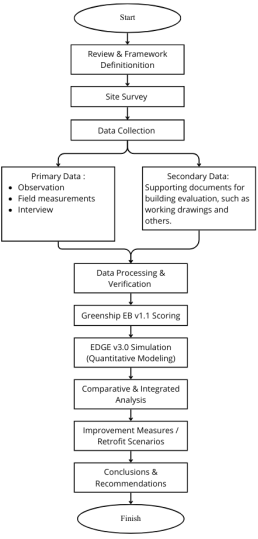
Figure 1. Research Flowchart.
A mixed methods design was adopted, integrating qualitative and quantitative components to strengthen analytical robustness. Qualitative data were used to interpret policy compliance, management practices, and operational characteristics based on Greenship Existing Building requirements, while quantitative data were employed for assessing energy, water, and material efficiency through EDGE 3.0 simulations. This mixed approach ensures that both operational realities and measurable performance metrics are captured holistically.
To clarify the overall research workflow and the integration between qualitative and quantitative assessment tools, the research methodology is summarized in a flowchart as presented in Figure 1.
3.3. Research Variable
Variables were derived directly from both assessment systems. from Greenship EB v1.1 and EDGE 3.0 the variables include, such as research variable can be seen in Table 1:
Table 1. Research Variable.

Greenship EB v1.1

EDGE 3.0

Appropriate Site Development (ASD)

Energy Efficiency Measures (EEM)

Energy Efficiency & Conservation (EEC)

Water Conservation (WAC)

Water Efficiency Measures (WEM)

Material Resources and Cycle (MRC)

Indoor Health and Comfort (IHC)

Material Efficiency Measures (MEM)

Building Environment Management (BEM)

3.4. Data Collection Methods
Data collection followed a structured multi-method approach. Field observations were performed to document building conditions, material composition, ventilation systems, lighting systems, site characteristics, and operational practices, all of which are required for Greenship assessment. Interviews with building managers and technical personnel were conducted to gather information on maintenance routines, energy use policies, water management mechanisms, and historical system changes. Secondary data, particularly as-built drawings and utility records, were crucial for modeling the building performance in EDGE simulations.
3.5. Data Analysis Methods
3.5.1. Greenship EB 1.1 Scoring
The analysis began by mapping all collected evidence against the six Greenship Existing Building (EB) v1.1 categories Appropriate Site Development (ASD), Energy Efficiency and Conservation (EEC), Water Conservation (WAC), Material Resources and Cycle (MRC), Indoor Health and Comfort (IHC), and Building Environmental Management (BEM). For each category, observed existing conditions and documented practices were checked against the corresponding prerequisite and credit requirements in the official GBCI guideline, after which indicators were classified as fulfilled, partially fulfilled, or unfulfilled to determine the awarded points and any eligible bonus credits .
Quantitative verification was performed per category as follows: ASD used site and campus data such as green open-space proportion (RTH), accessibility to public transport and pedestrian networks, and surface run-off/landscape conditions, verified through site measurements, drawings, and policy documents. EEC relied on monthly electricity-meter (kWh) records, inventory of lighting types and power densities, number and specifications of air-conditioning units, daylight availability observations, and photovoltaic (PV) operational evidence to justify both main and bonus credits. WAC used measured plumbing flow/flush rates (L/min or L/flush) for faucets and water closets and compared them to Greenship benchmarks, supported by utility bills and fixture specifications. MRC was assessed from as-built drawings/specifications, procurement records, and evidence of waste segregation/recycling and hazardous-waste handling. IHC combined field measurements of illuminance (lux meter) and acoustic levels (sound-level meter/Decibel-based app) with applicable Indonesian standards (SNI) and Greenship criteria to translate compliance into points. BEM was validated through a document checklist covering O&M manuals, SOPs, periodic audits, staff training records, maintenance logs, and environmental management policies .
3.5.2. EDGE 3.0 Simulation Analysis
EDGE analysis was conducted by modeling Block A in the EDGE App using a local baseline building defined within the platform, then comparing the proposed/existing specification set to that baseline to estimate resource savings. Inputs were entered from geometric surveys, operational profiles, and verified technical documents, ensuring that the model reflected the building’s current condition before any improvement scenario was tested. EDGE therefore provided projected percentage reductions for energy, water, and embodied material impacts relative to the default local benchmark .
Key EDGE inputs (entered as measured/specification values) included: window-to-wall ratio (WWR) and glazing type; roof and wall envelope properties (e.g., construction layers/insulation assumptions); lighting system type and installed power; HVAC system type, capacity, and efficiency; plumbing fixture flow/flush rates; and primary structural/finish materials for walls, roof, and floors. After these parameters were uploaded, the software automatically calculated predicted savings and checked compliance with the EDGE standard of at least 20% savings in each of the three categories. These outputs were then used as the quantitative basis for comparing EDGE performance with Greenship findings and for testing retrofit/improvement options .
3.5.3. Comparative Analysis
A comparative analysis was conducted to interpret convergence and divergence between Greenship and EDGE outcomes. This stage examined how each system assesses efficiency differently, allowing the researcher to identify consistent strengths, overlapping gaps, and improvement potentials from both operational and technical viewpoints.
3.5.4. Data Validation and Ethical Considerations
Validation procedures ensured accuracy and reliability by triangulating observation data, interview responses, and technical documents. Ethical considerations included obtaining permission to access restricted building areas and ensuring truthful reporting of findings in alignment with academic integrity guidelines.
4. Results
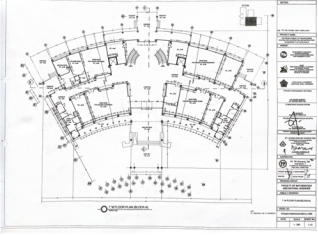
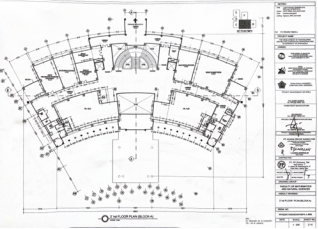
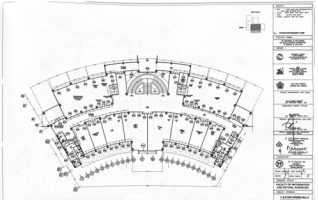
Block A of FMIPA Universitas Syiah Kuala, located on Jalan Syech Abdurrauf No. 3, Darussalam, Banda Aceh, functions as a central academic node supporting teaching, research, and administrative activities. The building comprises three floors with a total area of ±5,309.61 m², each level occupying approximately 1,769.87 m².
Figure 2. 1st Floor Plan of Block A.
Figure 3. 2nd Floor Plan of Block A.
Figure 4. 3rd Floor Plan of Block A.
The first floor houses administrative offices, meeting rooms, lecturer rooms, and public service areas, Figure 2. The second floor accommodates faculty leadership offices, classrooms, and circulation areas, Figure 3, while the third floor contains laboratories, seminar rooms, academic storage spaces, and departmental administration rooms, Figure 4.
The building’s central location within FMIPA enables integrated academic workflows, efficient mobility, and optimized utilization of shared facilities.
4.1. Greenship Existing Building v1.1 Assessment
The Greenship forensic evaluation was conducted across six categories: ASD, EEC, WAC, MRC, IHC, and BEM, using a structured checklist, on-site audit, interview based verification, and document analysis.
4.1.1. Appropriate Site Development (ASD)
The assessment begins with the category Appropriate Site Development (ASD), in which Block A demonstrates substantial compliance with the required criteria. The building meets the site management prerequisite (ASD P1), as evidenced by interviews with the Project Implementation Unit and the availability of supporting documents related to environmental responsibilities. The building is positioned strategically within the building complex, providing ease of access to pedestrian routes, public transportation nodes, bicycle facilities, and interconnected academic spaces. The surrounding landscape offers adequate vegetated areas and controlled stormwater flow, helping the building satisfy a significant portion of the ASD requirements. Although these strengths support solid performance, several landscape enhancement components and ecological optimization elements are not fully met, resulting in a final ASD score of 12 out of 16 points.
4.1.2. Energy Efficiency and Conservation (EEC)
In the category Energy Efficiency and Conservation (EEC), Block A achieves the highest score among all Greenship categories, obtaining 28 out of 36 points, strengthened by 8 bonus points derived from renewable energy strategies and the installation of sub-metering systems. Field inspection shows that the building already uses LED lighting almost entirely across its floors. Daylighting potential is strong due to the presence of large window openings that reduce dependence on artificial lighting during daytime hours. Air-conditioning units installed within the building operate with moderate efficiency, supported by verifiable energy monitoring through the presence of kWh meters that record electrical consumption. Nonetheless, several EEC criteria remain unmet because the building lacks comprehensive HVAC zoning and does not employ façade shading devices or high-performance envelope materials. These missing components prevent the building from obtaining several additional credits, even though the overall performance in this category remains the strongest across the evaluation.
4.1.3. Water Conservation (WAC)
The results for Water Conservation (WAC) indicate a more moderate level of achievement, with the building obtaining 11 of 20 points. The water efficiency fixtures observed during site visits, such as low-flow faucets, dual-flush toilets, and standard urinals, verify compliance with basic Greenship criteria. However, higher-level water management indicators were not satisfied due to the absence of a rainwater harvesting system and the lack of a sub-metering strategy that allows detailed tracking of water consumption. Additionally, Block A does not yet incorporate greywater recycling or water reuse systems, which are required for achieving maximum performance in this category. As a result, WAC scoring reflects functional compliance with foundational aspects while highlighting clear opportunities for improvement in advanced water management.
4.1.4. Material Resources and Cycle (MRC)
The assessment of Material Resources and Cycle (MRC) shows that Block A achieves 7 out of 12 points, reflecting partial fulfillment of material efficiency requirements. Document reviews confirm the availability of material specifications, including details on wall assemblies, flooring types, and architectural finishes. Waste-handling procedures are implemented at a basic operational level, although not fully structured as a formal material reuse policy. The EDGE material input analysis, which includes components such as wall material composition, roofing structure, and glazing systems, supports the finding that the building has potential to improve material efficiency by reducing embodied energy. Limitations in material reuse, recycling tracking, and sustainable procurement documentation ultimately reduce the overall scoring for this category.
4.1.5. Indoor Health and Comfort (IHC)
In the category Indoor Health and Comfort (IHC), Block A receives 8 out of 20 points, indicating that indoor environmental quality remains one of the building’s weaker aspects. Field measurements conducted using Light Meter and Decibel X applications, followed by validation through SNI 7231: 2009, show that lighting levels in perimeter rooms meet minimum standards and noise conditions remain within acceptable ranges. However, several zones within the building, particularly laboratory spaces, exhibit inadequate ventilation performance. The absence of comprehensive monitoring for indoor air quality parameters, such as CO₂ and CO levels, further limits performance. Although some comfort elements are met, the lack of systematic indoor health programs reduces the overall capability of this category to contribute a stronger score.
4.1.6. Building Environmental Management (BEM)
The final category, Building Environmental Management (BEM), records the lowest performance with 5 out of 13 points. The analysis of operational documents shows that the building does not yet implement structured operation and maintenance (O&M) training programs for facility staff, nor does it maintain complete sets of Standard Operating Procedures (SOPs) for energy, water, material, and HSES (Health, Safety, Environmental, and Security) management. Evidence of routine audits, environmental reporting, and sustainability monitoring is also limited. Although some aspects of environmental management are practiced informally, they do not meet the documentation and verification standards required by Greenship. Consequently, BEM emerges as the category with the highest potential for improvement and the strongest need for systematic operational restructuring.
The conclusion of the Greenship Existing Building v1.1 Assessment can be seen in Table 2:
Table 2. Greenship EB v1.1 Scoring Summary.

No

Category

Points Achieved

Max Points

1

ASD

12

16

2

EEC

28

36 (+8 bonus)

3

WAC

11

20 (+2 bonus)

4

MRC

7

12

5

IHC

8

20

6

BEM

5

13

Total

71

117

4.2. EDGE Performance Assessment
The evaluation of green building performance using EDGE Version 3.0 for Block A FMIPA Universitas Syiah Kuala provides a quantitative measurement of the building’s efficiency in three principal domains: energy, water, and materials. The assessment is based on actual design inputs, physical observations, itemized utilities, and architectural specifications of the building. The simulation results show that the building successfully exceeds the EDGE baseline thresholds of 20% across all categories, confirming its potential qualification for EDGE Certification.
4.2.1. Energy Efficiency Measures (EEM)
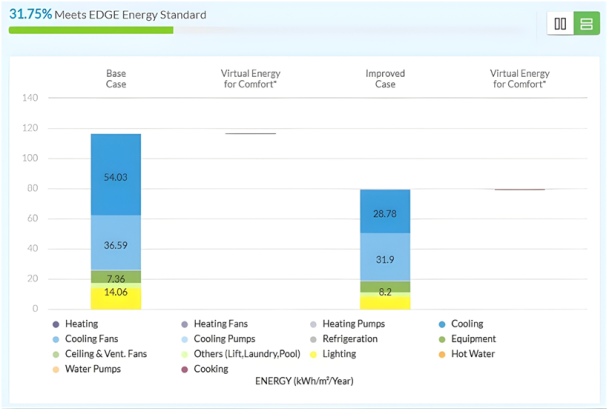
The simulation results indicate that Block A achieves an overall energy saving of 31.75%, surpassing the 20% minimum requirement for EDGE certification, Figure 5. This outcome is strongly influenced by the building’s facade composition, lighting systems, roof reflectance, and partial renewable energy utilization. The energy model begins with the analysis of the Window-to-Wall Ratio (WWR), obtained from measured façade data. The building’s relatively moderate WWR reduces heat gain, enabling lower cooling loads. The roof assembly, composed of reinforced concrete with waterproof membrane, demonstrates an average Solar Reflectance Index that supports reduced heat absorption. EDGE inputs for EEM02 and EEM03 (reflective exterior wall paint) further contribute to thermal performance.
Figure 5. Diagram of Energy Efficiency Results of Block A.
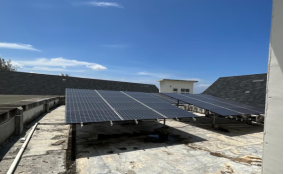
Significant improvements are observed in lighting efficiency. The building predominantly uses LED luminaires, both tube type and bulb type, and the EDGE inputs for EEM06*. This measure contributes substantially to the overall savings, given that lighting constitutes one of the main operational energy loads for educational facilities. The presence of automatic controls for exterior lighting, under EEM09, also lowers nighttime energy consumption through programmed operating hours and daylight sensors. Meanwhile, the reactivation-ready but currently inactive rooftop solar photovoltaic system provides partial credit under EEM22, aligning with renewable energy adoption criteria, Figure 6.
Figure 6. Solar Panel Placement.
4.2.2. Water Efficiency Measures (WEM)
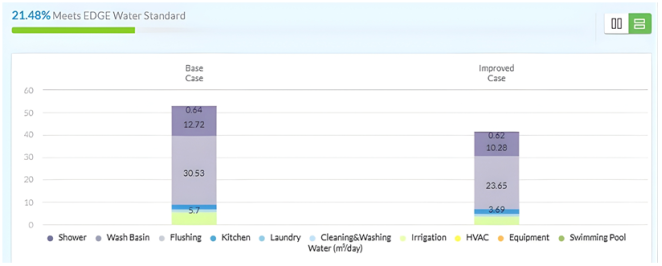
The EDGE assessment reveals that Block A FMIPA attains 21.48% water savings, meeting the EDGE minimum requirement and confirming consistent implementation of efficiency oriented fixtures.
Figure 7. Diagram of Water Efficiency Results of Block A.
Measured discharge rates of water fixtures indicate that low-flow faucets are installed throughout the building, with flow rates validated through field measurement WEM02*. Additionally, the building employs dual flush toilets with lower-than-baseline flush volumes WEM04*, significantly reducing potable water use relative to conventional installations. Urinals in the male restrooms also fall within the “water efficient” classification, as recorded in WEM07 These features form the primary contributors to the building’s quantified water savings.
However, the absence of rainwater harvesting (RWH) systems and the lack of sub-metering for water distribution prevent the building from reaching higher efficiency levels. Despite this limitation, the simulation shows that the aggregated performance of the installed fixtures already achieves the 21.48% saving threshold. Thus, while fixture-based efficiency is strong, systemic water management improvement such as irrigation optimization and greywater reuse remain opportunities for future enhancement.
Cooling loads are addressed through the use of split-type AC units with moderate efficiency ratings. Although these units are not high-performance inverter systems, their operation is supported by manageable room sizes and window configurations, enhancing EEM performance. Overall, the combination of efficient lighting, reflective envelope properties, controlled exterior lighting, and renewable energy potential results in the building’s 31.75% total energy efficiency improvement, Figure 7.
4.2.3. Material Efficiency Measures (MEM)
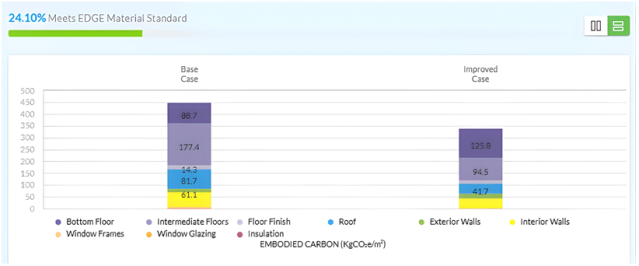
Material efficiency evaluation through EDGE indicates a 24.10% reduction in embodied energy, surpassing the minimum EDGE threshold and highlighting the low-impact material profile of the building.
Figure 8. Diagram of Material Efficiency Results of Block A.
The building envelope is composed of medium-density reinforced concrete roofing MEM03* and plastered brick masonry walls MEM04*, both of which exhibit lower embodied energy levels than the baseline EDGE reference. Interior partitions primarily use GRC/gypsum board partitions on metal studs, classified under MEM05*. This lightweight interior partition system significantly reduces material-related embodied energy compared to heavier alternatives.
Floor systems include reinforced concrete slabs with ceramic or homogeneous tile finishes MEM06*, MEM09*. These materials contribute moderate embodied carbon but still fall below the EDGE baseline due to their durability and favorable replacement cycles.
The window systems single clear glass with metal frames are categorized under MEM07*. Although not high-performance glazing systems, their embodied energy contribution remains relatively low, enhancing the overall MEM score. Collectively, the dominance of durable, long life, and non high embodied-energy materials supports the building’s 24.10% total material efficiency, Figure 8.
Table 3. EDGE v3.0 Scoring Summary.

EEM (%)

WEM (%)

MEM (%)

Standard

Result

Standard

Result

Standard

Result

≥ 20

31.75

≥ 20

21.48

≥ 20

24.10

Achieved

Achieved

Achieved

The EDGE assessment demonstrates that Block A FMIPA USK exceeds the minimum 20% efficiency threshold across all categories, achieving 31.75% in energy, 21.48% in water, and 24.10% in material efficiency, Table 3. With energy emerging as the strongest domain due to effective passive active design strategies, including controlled window-to-wall ratios, tinted single glazing, UPVC frames, and rooftop photovoltaic systems. By contrast, water and material efficiencies, although above the minimum standard, remain comparatively modest because of the absence of rainwater harvesting, sub-metering, recycled-water systems, and the continued reliance on reinforced concrete with high embodied carbon. These patterns are consistent with literature indicating that tropical educational buildings commonly achieve greater gains in operational energy reduction than in water or material conservation, which depend more heavily on integrated management systems and long-term policy support. Field observations further reveal that incomplete documentation, limited monitoring instruments, and the lack of formalized environmental management structures constrained the scoring process, underscoring that improvements in green building performance require not only technical interventions but also strengthened governance and systematic operational control.
4.3. Improvement Measures for Enhancing Building Efficiency
Based on the analysis of Greenship Existing Building v1.1 and EDGE 3.0, several improvement measures were identified to enhance the environmental performance of Block A FMIPA Universitas Syiah Kuala. The evaluation indicates that key inefficiencies are concentrated in water management, indoor environmental quality, material cycle documentation, and building operation systems. Therefore, the improvement strategy focuses on practical interventions that directly address these measured shortcomings.
The first priority is improving water efficiency, as the building lacks both rainwater harvesting and sub-metering systems. Installing smart water sub-meters would enable precise tracking of water use across different zones, while the addition of a simple rainwater harvesting (RWH) unit could reduce groundwater reliance and support higher WAC scoring.
In terms of energy performance, reactivating the building’s rooftop solar photovoltaic panels, which are currently non-operational, represents a high-impact improvement. Combined with enhanced IoT-based monitoring for lighting and AC systems, these measures would significantly strengthen operational control and contribute to both Greenship EEC and EDGE energy efficiency indicators. Material efficiency improvements focus on strengthening waste management practices. Current procedures meet minimum requirements but lack structured recycling, segregation, and procurement policies. Introducing clear waste-stream segregation, improving signage, and formalizing sustainable material purchasing would enhance MRC compliance and support lower embodied energy material choices, consistent with the EDGE MEM recommendations.
Indoor environmental quality requires targeted upgrades, particularly in laboratory ventilation and pollutant monitoring. The installation of NDIR-based CO/CO₂ sensors, would allow continuous indoor air quality monitoring and reduce the risk of pollutant accumulation. These improvements would elevate performance in the IHC category and ensure healthier conditions for building occupants.
Lastly, the evaluation reveals deficiencies in environmental management, especially in SOP completeness, staff training, and preventive maintenance documentation. Establishing a dedicated Green O&M Unit, supported by standardized HSES-guided SOPs, would address these management gaps and strengthen long-term sustainability performance.
Overall, the proposed improvement measures show that enhancing efficiency in Block A requires a combined approach of technical upgrades and operational reforms. When fully implemented, these interventions have the potential to substantially increase both Greenship and EDGE performance outcomes, reinforcing the building’s role as a more sustainable academic facility.
5. Discussion
The integrated assessment using Greenship Existing Building v1.1 and EDGE v3.0 indicates that Block A FMIPA USK has adopted green building principles at a “moderately good” level, yet with clear imbalance across performance domains. Greenship results reach 71 out of 117 points (60.7%), led by strong achievement in Energy Efficiency and Conservation (EEC), while lower scores occur in Indoor Health and Comfort (IHC) and, most critically, Building Environmental Management (BEM). This pattern, consistent with the study findings, suggests that technical efficiency measures are more advanced than operational governance, monitoring, and documentation, which remain insufficient to fully support a high-performing existing green campus building.
EDGE simulations corroborate the resource-efficiency strengths observed in Greenship, showing savings above the 20% threshold for all three pillars: 31.75% energy, 21.48% water, and 24.10% materials. The convergence between the two tools on energy performance validates that lighting upgrades, favorable daylighting conditions, and relatively low energy intensity are effective drivers under the building’s current tropical-wet operational context. However, the more modest water and material savings align with the study conclusion that these areas depend not only on installed fixtures or material choices, but also on long-term management systems and lifecycle-oriented practices.
The main weaknesses in IHC and BEM highlight a typical challenge for educational buildings in humid tropical climates: indoor environmental quality and sustainability management often lag behind energy retrofits. Limited air-quality monitoring, uneven ventilation performance in certain rooms (notably laboratories), and the absence of robust operation–maintenance protocols reduce both comfort-related credits and institutional readiness. Importantly, the study emphasizes that without structured green operational teams, periodic audits, and standardized SOPs, technical gains will not translate into sustained green performance.
Practically, the cross-reading of study and journal results implies that future improvements should prioritize management-led interventions with high technical leverage, such as simple rainwater harvesting and sub-metering to raise water credits, reactivation and optimization of photovoltaic systems, routine indoor air-quality checks, and formalization of green O&M governance. Scientifically, the dual-certification approach proves valuable: EDGE quantifies existing efficiency in a straightforward manner, while Greenship reveals the managerial and comfort gaps that determine long-term sustainability. This integration therefore offers a more holistic evaluation model for tropical campus buildings and provides a clear roadmap for targeted retrofits and future comparative studies.
6. Conclusions
This study applied an integrated assessment of Greenship Existing Building (EB) v1.1 and EDGE v3.0 to evaluate the environmental performance of Block A, Faculty of Mathematics and Natural Sciences, Syiah Kuala University. The Greenship EB evaluation produced 71 out of 117 points, consisting of Appropriate Site Development (ASD) 12/16, Energy Efficiency and Conservation (EEC) 28/36 including 8 bonus points, Water Conservation (WAC) 11/20 including 2 bonus point, Material Resources and Cycle (MRC) 7/12, Indoor Health and Comfort (IHC) 8/20, and Building Environmental Management (BEM) 5/13. These results indicate that green-building principles have been reasonably adopted in site management, energy practices, water use, and material handling, while the lowest achievements occur in indoor comfort and environmental management, marking them as the main improvement priorities.
The EDGE simulation corroborates these findings quantitatively, showing energy savings of 31.75%, water savings of 21.48%, and material savings of 24.10%, all exceeding the EDGE minimum threshold of 20% for certification. Improvement scenarios therefore focus on closing the gaps identified by both tools, including implementing a simple rainwater-harvesting system and installing water sub-meters to strengthen WAC monitoring and control, reactivating photovoltaic panels and optimizing lighting–HVAC operations to raise EEC performance, and adopting energy-focused operation and maintenance policies supported by integrated IoT monitoring to improve BEM and indirectly support IHC through better control of indoor environmental quality. Overall, the combined Greenship–EDGE framework proves effective for diagnosing operational readiness and measurable efficiency potential simultaneously, and it offers a replicable model for guiding retrofit-oriented green campus development in humid-tropical educational buildings in Indonesia.
Abbreviations

ASHRAE

American Society of Heating, Refrigerating and Air-Conditioning Engineers

ASD

Appropriate Site Development

BEM

Building Environmental Management

CO

Carbon Monoxide

CO₂

Carbon Dioxide

DOE

U.S. Department of Energy

EB

Existing Building (Greenship Existing Building)

EEC

Energy Efficiency and Conservation

EEM

Energy Efficiency Measures (EDGE)

EDGE

Excellence in Design for Greater Efficiencies

FMIPA

Faculty of Mathematics and Natural Sciences

GBCI

Green Building Council Indonesia

GRC

Glassfiber Reinforced Cement

HSES

Health, Safety, Environmental, and Security

HPB

High-Performance Building

HVAC

Heating, Ventilation, and Air Conditioning

IEA

International Energy Agency

IEQ

Indoor Environmental Quality

IFC

International Finance Corporation

IHC

Indoor Health and Comfort

IoT

Internet of Things

kWh

kilowatt-Hour

LED

Light-Emitting Diode

MEM

Material Efficiency Measures (EDGE)

MRC

Material Resources and Cycle

NDIR

Non-Dispersive Infrared

O&M

Operation and Maintenance

PUPR

Ministry of Public Works and Housing (Indonesia)

PV

Photovoltaic

RWH

Rainwater Harvesting

SNI

Indonesian National Standard (Standar Nasional Indonesia)

SOP

Standard Operating Procedure

UGM

Universitas Gadjah Mada

UNEP

United Nations Environment Programme

UPVC

Unplasticized Polyvinyl Chloride

USK

Universitas Syiah Kuala

WAC

Water Conservation

WEM

Water Efficiency Measures (EDGE)

WWR

Window-to-Wall Ratio

Acknowledgments
The authors would like to express their sincere gratitude to the Faculty of Mathematics and Natural Sciences (FMIPA), Universitas Syiah Kuala, for granting access to Block A as the study object and for supporting the research process. Appreciation is also extended to the building management team, facility staff, and the Project Implementation Unit for their assistance during field observations, provision of operational and technical documents, and participation in interviews. The authors gratefully acknowledge all respondents who contributed valuable information and insights that strengthened the evaluation.
Author Contributions
Muhammad Safrul Alfajri: Conceptualization, Data curation, Formal Analysis, Funding acquisition, Investigation, Methodology, Project administration, Resources, Software, Supervision, Visualization, Writing – original draft, Writing – review & editing
Mirza Fuady: Conceptualization, Data curation, Formal Analysis, Methodology, Resources, Supervision, Validation, Writing – review & editing
Irin Caisarina: Conceptualization, Data curation, Formal Analysis, Methodology, Resources, Supervision, Validation, Writing – review & editing
Conflicts of Interest
The authors declare no conflicts of interest.
References
[1] International Energy Agency (IEA). Buildings. Available:
[2] EDGE Buildings. EDGE Certification Process. Available:
[3] United Nations Environment Programme (UNEP) and Global Alliance for Buildings and Construction (GlobalABC). Global Status Report for Buildings and Construction 2024/2025: Not Just Another Brick in the Wall. Mar. 2025. Available:
[4] Cabeza, L. F., et al. “Buildings.” In Climate Change 2022: Mitigation of Climate Change (IPCC AR6 WGIII Contribution). Cambridge University Press, 2023, pp. 953-1048.
[5] Green Building Council Indonesia (GBCI). Summary GREENSHIP Existing Building V1.1. Jun. 2016. Available:
[6] Kusuma, Y., Nuzir, F. A., and Munawaroh, A. S. “Green Building Performance Assessment with EDGE Building App on Clinic Design Implementing Passive Design Strategy from Climate Consultant.” Jurnal Arsitektur, vol. 12, no. 1, pp. 67-86, 2022.
[7] Buyang, C. G., and Sangadji, F. “Penilaian Kriteria Green Building pada Fakultas Teknik Universitas Pattimura.” Jurnal Simetrik, vol. 13, no. 1, pp. 677-682, 2023.
[8] Hidayatulloh, A., and Nurwidyaningrum, D. “Optimization of Energy Efficiency with a Green Building Approach in the Mahata Serpong Apartment.” Applied Research on Civil Engineering and Environment (ARCEE), vol. 5, no. 2, pp. 72-78, 2024.
[9] UNEP and GlobalABC. Buildings Global Status Report (Buildings-GSR). Available:
[10] Wirayuda, R. P., Rochyani, S., and Legowo, M. “Evaluation of Green Building in Integrated Academic Building Based on Greenship Existing Building Version 1.1.” 2024.
[11] Wirayuda, R. P. Evaluasi Penerapan Green Building Pada Gedung Integrated Academic Building Universitas Jenderal Soedirman Berdasarkan Perangkat Penilaian Greenship Existing Building Version 1.1. Undergraduate Thesis, Universitas Jenderal Soedirman, 2023. Available:
[12] Menteri Pekerjaan Umum dan Perumahan Rakyat Republik Indonesia. Peraturan Menteri PUPR No. 21 Tahun 2021 tentang Penilaian Kinerja Bangunan Gedung Hijau. 2021. Available:
[13] UNEP and GlobalABC. Global Status Report for Buildings and Construction: Beyond Foundations. 2024.
[14] UNEP. “Emissions from Building Sector Stopped Rising for the First Time Since 2020, UN Finds.” Mar. 17, 2025. Available:
[15] Tokede, O., Roetzel, A., and Ruge, G. “A Holistic Life Cycle Sustainability Evaluation of a Building Project.” Sustainable Cities and Society, vol. 73, p. 103107, 2021.
[16] Poderytė, J., Jasiukėnaitė, J., and Butkus, S. “What Are the Motives and Barriers for Green Building?” Renewable and Sustainable Energy Reviews, vol. 161, p. 112719, 2022.
[17] Olabi, A. G., et al. “The Role of Green Buildings in Achieving the Sustainable Development Goals.” International Journal of Thermofluids, vol. 25, p. 101002, 2025.
[18] Vale, B., and Vale, R. Green Architecture: Design for a Sustainable Future. London: Thames & Hudson, 1996.
[19] Verma, A., et al. “Tropical Climates and the Interplay Between IEQ and Energy Consumption in Buildings: A Review.” Building and Environment, vol. 242, p. 110551, 2023.
[20] World Green Building Council. WorldGBC Strategy 2025-2027. Apr. 2025. Available:
[21] UNEP. Sustainable Buildings. Available:
[22] Green Building Council Indonesia (GBCI). Green Building Council Indonesia. Available:
[23] Sharma, P., et al. “Green Building Paradigms: Comprehensive Insights into Sustainability, Occupant Well-Being, and Future Technological Transformations.” In Advances in Green Energy Technologies, Lecture Notes in Electrical Engineering, vol. 1314, Springer, 2025, pp. 85-105.
[24] Niza, A., et al. “Indoor Environmental Quality (IEQ) and Sustainable Development Goals (SDGs): A Pathway Toward Sustainable Built Environments.” Urban Science, vol. 7, no. 3, p. 96, 2023.
[25] International Finance Corporation (IFC). Building Green: Sustainable Construction in Emerging Markets. Available:
[26] International Finance Corporation (IFC). Green Buildings. Available:
Cite This Article
  • APA Style

    Alfajri, M. S., Fuady, M., Caisarina, I. (2026). Evaluation of Green Building Performance Using Greenship and Edge: A Case Study of Block A, Faculty of Mathematics and Natural Sciences, Universitas Syiah Kuala, Aceh. International Journal of Architecture, Arts and Applications, 12(1), 17-29. https://doi.org/10.11648/j.ijaaa.20261201.12

    Copy | Download

    ACS Style

    Alfajri, M. S.; Fuady, M.; Caisarina, I. Evaluation of Green Building Performance Using Greenship and Edge: A Case Study of Block A, Faculty of Mathematics and Natural Sciences, Universitas Syiah Kuala, Aceh. Int. J. Archit. Arts Appl. 2026, 12(1), 17-29. doi: 10.11648/j.ijaaa.20261201.12

    Copy | Download

    AMA Style

    Alfajri MS, Fuady M, Caisarina I. Evaluation of Green Building Performance Using Greenship and Edge: A Case Study of Block A, Faculty of Mathematics and Natural Sciences, Universitas Syiah Kuala, Aceh. Int J Archit Arts Appl. 2026;12(1):17-29. doi: 10.11648/j.ijaaa.20261201.12

    Copy | Download

  • @article{10.11648/j.ijaaa.20261201.12,
      author = {Muhammad Safrul Alfajri and Mirza Fuady and Irin Caisarina},
      title = {Evaluation of Green Building Performance Using Greenship and Edge: A Case Study of Block A, Faculty of Mathematics and Natural Sciences, Universitas Syiah Kuala, Aceh},
      journal = {International Journal of Architecture, Arts and Applications},
      volume = {12},
      number = {1},
      pages = {17-29},
      doi = {10.11648/j.ijaaa.20261201.12},
      url = {https://doi.org/10.11648/j.ijaaa.20261201.12},
      eprint = {https://article.sciencepublishinggroup.com/pdf/10.11648.j.ijaaa.20261201.12},
      abstract = {Improving the efficiency of educational buildings is essential to meeting campus sustainability targets. This study evaluates the green-building performance of Block A, Faculty of Mathematics and Natural Sciences, Syiah Kuala University, by integrating Greenship Existing Building (EB) v1.1 and EDGE v3.0 to assess energy, water, and material efficiency in a humid-tropical academic facility. A mixed-methods approach combined field observations, interviews, and technical/operational document review. Greenship scoring reached 71 of 117 points: Appropriate Site Development 12/16, Energy Efficiency and Conservation 28/36 (including 8 bonus points), Water Conservation 11/20 (including 1 bonus point), Material Resources and Cycle 7/12, Indoor Health and Comfort 8/20, and Building Environmental Management 5/13. Performance is generally good, but indoor comfort and environmental management require improvement. EDGE confirms the result, indicating savings of 31.75% in energy, 21.48% in water, and 24.10% in materials, all above the 20% threshold. Simulation of upgrades recommends a simple rainwater-harvesting system, installation of water sub-meters, reactivation of solar panels, and energy-focused operation and maintenance policies supported by integrated IoT monitoring. Overall, the combined Greenship–EDGE framework effectively pinpoints enhancement opportunities and offers a replicable model for green-campus development in Indonesia.},
     year = {2026}
    }
    

    Copy | Download

  • TY  - JOUR
    T1  - Evaluation of Green Building Performance Using Greenship and Edge: A Case Study of Block A, Faculty of Mathematics and Natural Sciences, Universitas Syiah Kuala, Aceh
    AU  - Muhammad Safrul Alfajri
    AU  - Mirza Fuady
    AU  - Irin Caisarina
    Y1  - 2026/01/30
    PY  - 2026
    N1  - https://doi.org/10.11648/j.ijaaa.20261201.12
    DO  - 10.11648/j.ijaaa.20261201.12
    T2  - International Journal of Architecture, Arts and Applications
    JF  - International Journal of Architecture, Arts and Applications
    JO  - International Journal of Architecture, Arts and Applications
    SP  - 17
    EP  - 29
    PB  - Science Publishing Group
    SN  - 2472-1131
    UR  - https://doi.org/10.11648/j.ijaaa.20261201.12
    AB  - Improving the efficiency of educational buildings is essential to meeting campus sustainability targets. This study evaluates the green-building performance of Block A, Faculty of Mathematics and Natural Sciences, Syiah Kuala University, by integrating Greenship Existing Building (EB) v1.1 and EDGE v3.0 to assess energy, water, and material efficiency in a humid-tropical academic facility. A mixed-methods approach combined field observations, interviews, and technical/operational document review. Greenship scoring reached 71 of 117 points: Appropriate Site Development 12/16, Energy Efficiency and Conservation 28/36 (including 8 bonus points), Water Conservation 11/20 (including 1 bonus point), Material Resources and Cycle 7/12, Indoor Health and Comfort 8/20, and Building Environmental Management 5/13. Performance is generally good, but indoor comfort and environmental management require improvement. EDGE confirms the result, indicating savings of 31.75% in energy, 21.48% in water, and 24.10% in materials, all above the 20% threshold. Simulation of upgrades recommends a simple rainwater-harvesting system, installation of water sub-meters, reactivation of solar panels, and energy-focused operation and maintenance policies supported by integrated IoT monitoring. Overall, the combined Greenship–EDGE framework effectively pinpoints enhancement opportunities and offers a replicable model for green-campus development in Indonesia.
    VL  - 12
    IS  - 1
    ER  - 

    Copy | Download

Author Information
  • Department of Architecture and Urban Planning, University Syiah Kuala, Banda Aceh, Indonesia

    Biography: Muhammad Safrul Alfajri is a master’s student in Architecture at Syiah Kuala University, Indonesia, with a strong academic and professional background in architectural design. He earned his bachelor’s degree in Architecture from Syiah Kuala University, graduating with Cum Laude honors. His research interests include green building design, sustainability, and energy efficiency.

    Research Fields: Architectural design, sustainability, green buildings, and efficiency.

  • Department of Architecture and Urban Planning, University Syiah Kuala, Banda Aceh, Indonesia

    Research Fields: urban morphology and townscape theory, public space and civic architecture.
  • Department of Architecture and Urban Planning, University Syiah Kuala, Banda Aceh, Indonesia

    Research Fields: urban morphology and townscape theory, public space and civic architecture.

  • Abstract
  • Keywords
  • Document Sections

    1. 1. Introduction
    2. 2. Literature Review
    3. 3. Methods
    4. 4. Results
    5. 5. Discussion
    6. 6. Conclusions
    Show Full Outline
  • Abbreviations
  • Acknowledgments
  • Author Contributions
  • Conflicts of Interest
  • References
  • Cite This Article
  • Author Information