
Organic crop production is a potential sustainable solution to food insecurity in Sub-Saharan Africa, including Nigeria; however, the rising cost of poultry manure, commonly used in organic crop production to boost soil fertility in depleted soil, poses a challenge to its economic viability and sustainability. Thus, a field experiment was conducted in 2024 at the Teaching and Research Farm of the Department of Horticultural Technology, Enugu State Polytechnic, Iwollo, Southeast Nigeria, to evaluate the economic viability of using different application rates of poultry manure for Amaranthus hybridus production under organic conditions towards optimizing its use and profitability. The experiment was laid out in a Randomized Complete Block Design (RCBD) with three replications. The treatments comprised five poultry manure rates: 0, 5, 10, 15, and 20 tons per hectare. Data on shoot weight per plant and derived yield per hectare were collected, and analyses of variance at the 5% significance level were conducted. The treatment means with significant differences were separated using Fisher’'s least significant difference at the 5% probability level. Economic analysis, such as gross margin as well as return on investment (RoI), was performed to assess the profitability of different poultry manure application rates. The results showed that poultry manure significantly (p<0.05) improved Amaranthus hybridus shoot yield, with optimum yield obtained at 20 tons per hectare. The highest gross margin was obtained at 20 tons, but the highest return on investment was at 10 tons per hectare. A graph of RoI against poultry manure rates showed a steady increase in RoI from 0 tons to 10 tons beyond which it began to diminish. Poultry manure application at a rate of 10 tons per hectare was the most profitable rate and, therefore, the most economically viable rate; it could be recommended for organic Amaranthus hybridus production in the study area and similar agro-environments for enhanced food security.
| Published in | International Journal of Applied Agricultural Sciences (Volume 12, Issue 2) |
| DOI | 10.11648/j.ijaas.20261202.12 |
| Page(s) | 28-35 |
| Creative Commons |
This is an Open Access article, distributed under the terms of the Creative Commons Attribution 4.0 International License (http://creativecommons.org/licenses/by/4.0/), which permits unrestricted use, distribution and reproduction in any medium or format, provided the original work is properly cited. |
| Copyright |
Copyright © The Author(s), 2026. Published by Science Publishing Group |
Economic Viability, Food Security, Optimization, Organic Farming, Sustainability
 (1)
(1)  (2)
(2) Properties | Values |
|---|---|
Clay (%) | 15 |
Silt (%) | 5 |
Fine sand (%) | 13 |
Coarse sand (%) | 67 |
Textural class | Sandy Loam |
pH value (KCl) | 5.7 |
pH value (H2O) | 6.8 |
Organic Matters (%) | 0.811 |
Organic Carbon (%) | 0.442 |
N (%) | 0.080 |
Na+ (me/100g) | 0.02 |
K+ (me/100g) | 0.06 |
Ca2+ (me/100g) | 0.70 |
Mg2+ (me/100g) | 1.40 |
Al3+ (me/100g) | 0.22 |
Base Sat. (%) | 36.92 |
CEC (me/100g) | 5.80 |
AP (ppm) | 7.10 |
H+ (me/100g) | 1.90 |
Poultry manure rates (tons per hectare) | Fresh shoot weight per plant (kg) | Derived fresh shoot yield per hectare (tons) |
|---|---|---|
0 | 0.29 | 11.47 |
5 | 0.39 | 15.60 |
10 | 0.51 | 20.53 |
15 | 0.57 | 22.67 |
20 | 0.68 | 26.93 |
Grand mean | 0.49 | 19.44 |
LSD0.05 | 0.13 | 5.36 |
SE | 0.07 | 2.85 |
CV | 14.71 | 14.64 |
Variables | Quantity | Unit cost (N) | Amount per hectare for the poultry manure treatments (N) | ||||
|---|---|---|---|---|---|---|---|
0 t ha-1 | 5 t ha-1 | 10 t ha-1 | 15 t ha-1 | 20 t ha-1 | |||
Variable cost | |||||||
Amaranthus seeds | 3kg | 7,000/kg | 21,000 | 21,000 | 21,000 | 21,000 | 21,000 |
Poultry manure for the production | Varied according to the treatments | 30,000/ton | 0.00 | 150,000 | 300,000 | 450,000 | 600,000 |
Poultry manure for the nursery | 200kg | 30/kg | 6,000 | 6,000 | 6,000 | 6,000 | 6,000 |
Transport of poultry manure (200m distance) | Varied according to the treatments | 2000/ton | 0.00 | 10,000 | 20,000 | 30,000 | 40,000 |
Preparation of neem extract | 120 litres | 200 | 24,000 | 24,000 | 24,000 | 24,000 | 24,000 |
Nursery operation | 10 MD | 5,000 | 50,000 | 50,000 | 50,000 | 50,000 | 50,000 |
Land preparation | 40 MD | 5,000 | 200,000 | 200,000 | 200,000 | 200,000 | 200,000 |
Poultry manure application | 1MD /ton | 5,000 | 0.00 | 25,000 | 50,000 | 75,000 | 100,000 |
Transplanting | 15 MD | 5,000 | 75,000 | 75,000 | 75,000 | 75,000 | 75,000 |
Weeding | 45 MD | 5,000 | 225,000 | 225,000 | 225,000 | 225,000 | 225,000 |
Spraying of neem extract | 9 MD | 5,000 | 45,000 | 45,000 | 45,000 | 45,000 | 45,000 |
Harvesting | 4MD /ton | 5,000 | 130,600 | 202,600 | 256,000 | 280,000 | 381,400 |
Twine | 10 rolls/ton | 150 | 9,795 | 15,195 | 19,200 | 21,000 | 28,605 |
Total variable cost (TVC) | 786,395 | 1,048,795 | 1,291,200 | 1,502,000 | 1,796,005 | ||
Yield (tons ha-1) | 11.47 | 15.60 | 20.53 | 22.67 | 26.93 | ||
Total Revenue (TR) | 200/kg | 2,294,000 | 3,120,000 | 4,106,000 | 4,534,000 | 5,386,000 | |
Gross margin (GM) = TR – TVC | 1,507,605 | 2,071,205 | 2,814,800 | 3,032,000 | 3,589,995 | ||
Return on investment (RoI) = (GM/TVC) | 1.92 | 1.97 | 2.18 | 2.02 | 2.00 | ||
RCBD | Randomized Complete Block Design |
RoI | Return on Investment |
Kg | Kilogram |
Ha | Hectare |
ANOVA | Analysis of Variance |
TVC | Total Variable Cost |
TR | Total Revenue |
GM | Gross Margin |
| [1] | FAO (2020). The State of Food Security and Nutrition in the World. Transforming food systems to deliver affordable healthy diets for all. Available from: |
| [2] | FAO (2013). The state of food insecurity in the World. Available from: |
| [3] | Beyene, S. D. (2023). The impact of food insecurity on health outcomes: empirical evidence from sub-Saharan African countries. BMC Public Health 23, 338. |
| [4] | FAO, IFAD, UNICEF, WFP and WHO. 2021. In Brief to The State of Food Security and Nutrition in the World 2021. Transforming food systems for food security, improved nutrition and affordable healthy diets for all. Rome, FAO. |
| [5] | Akpoghelie, E. O., Chiadika, E. O., Edo, G. I., Al?Baitai, A. Y., Zainulabdeen K., Keremah, S. C., Ainyanbhor, I. E, Akpoghelie, P. O., Owheruo, J. O., Onyibe, P. N., Dinzei, M. M., Ekokotu, H. A., Ugbune, U., Oghroro, E. E. A., and Ekpekpo, L. D.(2024). Malnutrition and food insecurity in northern Nigeria: an insight into the United Nations World Food Program (WFP) in Nigeria. Discov Food 4, 165 |
| [6] | Asogwa, V. C. (2024). A review of organic farming practices to promote sustainable agricultural production, reduce hunger and poverty in Nigeria. International Journal of Agricultural Education & Research, 2(2): 174-192. |
| [7] | Yuvaraj, M., Mahendran, p., &Hussien, E. (2020). Role of Organic Farming in Agriculture. Organic Agriculture, |
| [8] | Adekiya, A. O., Ejue, W. S., Olayanju, A. et al. (2020). Different organic manure sources and NPK fertilizer on soil chemical properties, growth, yield and quality of okra. Sci Rep 10, 16083 |
| [9] | Mohamed, A. M., Sekar, S. and Muthukrishnan, P. (2010). Prospects and potential of poultry manure. Asian J. Plant Sci. 9: 172–182. |
| [10] | Agbede, T. M., &Adekiya,. A. O. (2023). Effects of Poultry Manure on Soil Fertility, Growth and Yield of White Yam and Yellow Yam. University of Khartoum Journal of Agricultural Sciences, 20(3). |
| [11] | Olajide, K. Ndubuaku, U. M. and Baiyeri, P. K. (2023). Effect of poultry manure application rates on growth and yield of Saba (Saba senegalensis) in Southeastern Nigeria. Sci. Res. Essays, 18(1): 1-14. |
| [12] | Tang, T., Zhou, H., Yang, Z., Zeng, P., Gu, J.-F., Mu, Y.-S., Liu, C.-F., and Han, Z.-Y. (2024). Meta-Analysis of the Impacts of Applying Livestock and Poultry Manure on Cadmium Accumulation in Soil and Crops. Agronomy, 14(12), 2942. |
| [13] | Ewulo, B. S. (2005). Effect of poultry dung and cattle manure on chemical properties of clay and sandy clay soil. J. Anim. Vet. Adv., 4: 839-841. |
| [14] | Ibeawuchi, I. I., Opara, F. A., Tom, C. T. and Obiefuna, J. C. (2007). Graded replacement of inorganic with organic manure for sustainable maize production in Owerri Imo State, Nigeria. Life Science Journal, 4(2): 82-87. |
| [15] | Enujeke, E. C. (2013). Effects of poultry manure on growth and yield of improved maize in Asaba area of Delta State, Nigeria. Journal of Agriculture and Veterinary Science, 4(5): 24-30. |
| [16] | Akubugwo, I. E., Obasi, N. A., Chinyere, G. C. and Ugbogu, A. E. (2007). Nutritional and chemical value of Amaranthushybridus L. leaves from Afikpo, Nigeria. Afric. J. Biotech., 6: 2833-2839. |
| [17] | Biswas G. C. (2013). Comparative effectiveness of neem extract and synthetic organic insecticide against mustard aphid. Bangladesh Journal of Agricultural Research, 38(2): 181-187. |
| [18] | Umekwe, P. N., Eneruvie, B. E., Okpani, F. M. (2020). Effect of Organic Manure on the Growth and Yield of Fluted Pumpkin (Telfairia occidentalis Hook. F.) in Unwana. World Journal of Innovative Research (WJIR), 9(5): 14-17. |
| [19] | Yashvantkumar, K. H., Laxman, A. P., Arunkumar, B., Suvarna, PatilShantappa T. and Imamsaheb, S. J. (2021). Effects of different organic manures on yield and economics of Amaranthus. IJCS, 9(2): 802-804. |
| [20] | Adeyemi, F. O, Kehinde-Fadare, A. F. and Olajide, O. O. (2021). Germination, Growth and Yield Responses of Leaf Amaranth (Amaranthushybridus) to Rates and Times of Poultry Manure Application. Sustainable Agriculture Research, 10(4): 4050. |
| [21] | Mansouri, H., Ait Said, H., Noukrati, H., Oukarroum, A., Ben youcef, H., and Perreault, F. (2023). Advances in Controlled Release Fertilizers: Cost-Effective Coating Techniques and Smart Stimuli-Responsive Hydrogels. Advanced Sustainable Systems, 7(9), 2300149. |
| [22] | Lakesh, K. S., Ahmed, Z. and Sukhwinder, B. (2022). Growing potatoes. In: Alyokhin, A., Rondon, S. I and Gao, Y. Insect Pests of Potato (Second Edition), Academic Press, pp 7-14. |
| [23] | Agbede, T. M. 16501 (2025). Poultry manure improves soil properties and grain mineral composition, maize productivity and economic profitability. Sci Rep 15. |
APA Style
Okenna, A. J., Gabriella, N. O., Amaechi, I. J., Ogochukwu, A. V. (2026). Economic Optimization of Poultry Manure in Organic African Spinach (Amaranthus hybridus) Production. International Journal of Applied Agricultural Sciences, 12(2), 28-35. https://doi.org/10.11648/j.ijaas.20261202.12
ACS Style
Okenna, A. J.; Gabriella, N. O.; Amaechi, I. J.; Ogochukwu, A. V. Economic Optimization of Poultry Manure in Organic African Spinach (Amaranthus hybridus) Production. Int. J. Appl. Agric. Sci. 2026, 12(2), 28-35. doi: 10.11648/j.ijaas.20261202.12
@article{10.11648/j.ijaas.20261202.12,
  author = {Adinde Jonathan Okenna and Nwankwo Ogechi Gabriella and Igwe James Amaechi and Agu Valentine Ogochukwu},
  title = {Economic Optimization of Poultry Manure in Organic African Spinach (Amaranthus hybridus) Production},
  journal = {International Journal of Applied Agricultural Sciences},
  volume = {12},
  number = {2},
  pages = {28-35},
  doi = {10.11648/j.ijaas.20261202.12},
  url = {https://doi.org/10.11648/j.ijaas.20261202.12},
  eprint = {https://article.sciencepublishinggroup.com/pdf/10.11648.j.ijaas.20261202.12},
  abstract = {Organic crop production is a potential sustainable solution to food insecurity in Sub-Saharan Africa, including Nigeria; however, the rising cost of poultry manure, commonly used in organic crop production to boost soil fertility in depleted soil, poses a challenge to its economic viability and sustainability. Thus, a field experiment was conducted in 2024 at the Teaching and Research Farm of the Department of Horticultural Technology, Enugu State Polytechnic, Iwollo, Southeast Nigeria, to evaluate the economic viability of using different application rates of poultry manure for Amaranthus hybridus production under organic conditions towards optimizing its use and profitability. The experiment was laid out in a Randomized Complete Block Design (RCBD) with three replications. The treatments comprised five poultry manure rates: 0, 5, 10, 15, and 20 tons per hectare. Data on shoot weight per plant and derived yield per hectare were collected, and analyses of variance at the 5% significance level were conducted. The treatment means with significant differences were separated using Fisher’'s least significant difference at the 5% probability level. Economic analysis, such as gross margin as well as return on investment (RoI), was performed to assess the profitability of different poultry manure application rates. The results showed that poultry manure significantly (pAmaranthus hybridus production in the study area and similar agro-environments for enhanced food security.},
 year = {2026}
}
TY  - JOUR
T1  - Economic Optimization of Poultry Manure in Organic African Spinach (Amaranthus hybridus) Production
AU  - Adinde Jonathan Okenna
AU  - Nwankwo Ogechi Gabriella
AU  - Igwe James Amaechi
AU  - Agu Valentine Ogochukwu
Y1  - 2026/03/23
PY  - 2026
N1  - https://doi.org/10.11648/j.ijaas.20261202.12
DO  - 10.11648/j.ijaas.20261202.12
T2  - International Journal of Applied Agricultural Sciences
JF  - International Journal of Applied Agricultural Sciences
JO  - International Journal of Applied Agricultural Sciences
SP  - 28
EP  - 35
PB  - Science Publishing Group
SN  - 2469-7885
UR  - https://doi.org/10.11648/j.ijaas.20261202.12
AB  - Organic crop production is a potential sustainable solution to food insecurity in Sub-Saharan Africa, including Nigeria; however, the rising cost of poultry manure, commonly used in organic crop production to boost soil fertility in depleted soil, poses a challenge to its economic viability and sustainability. Thus, a field experiment was conducted in 2024 at the Teaching and Research Farm of the Department of Horticultural Technology, Enugu State Polytechnic, Iwollo, Southeast Nigeria, to evaluate the economic viability of using different application rates of poultry manure for Amaranthus hybridus production under organic conditions towards optimizing its use and profitability. The experiment was laid out in a Randomized Complete Block Design (RCBD) with three replications. The treatments comprised five poultry manure rates: 0, 5, 10, 15, and 20 tons per hectare. Data on shoot weight per plant and derived yield per hectare were collected, and analyses of variance at the 5% significance level were conducted. The treatment means with significant differences were separated using Fisher’'s least significant difference at the 5% probability level. Economic analysis, such as gross margin as well as return on investment (RoI), was performed to assess the profitability of different poultry manure application rates. The results showed that poultry manure significantly (pAmaranthus hybridus production in the study area and similar agro-environments for enhanced food security.
VL  - 12
IS  - 2
ER  -
Department of Horticultural Technology, Enugu State Polytechnic, Iwollo, Nigeria
Department of Science Laboratory Technology, Enugu State Polytechnic, Iwollo, Nigeria
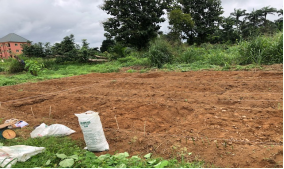
Figure 1. Field preparation in progress.
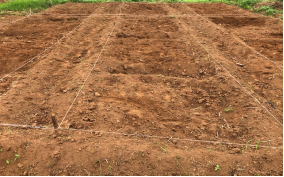
Figure 2. Field layout showing the treatments in Randomized Complete Block Design (RCBD) with three replications.
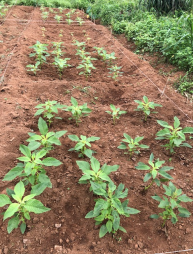
Figure 3. Performance of Amarathus hybridus in different treatments in Block 3 before first cutting.
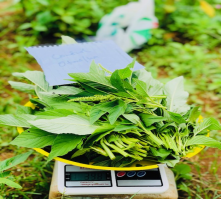
Figure 4. Yield data collection on harvested Amarathus hybridus shoots per treatments per replicates using electronic weighing machine.
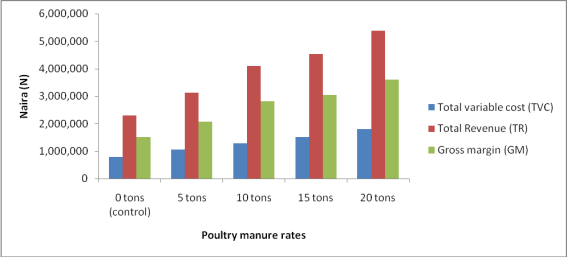
Figure 5. Total Variable cost (TVC), Total Revenue (TR) and Gross Margin (GM) from the use of different poultry manure rates.
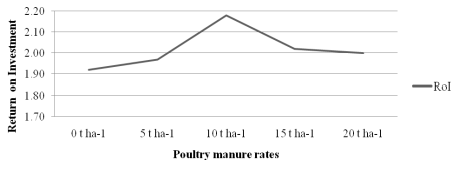
Figure 6. Graph of the Return on Investment from the use of different poultry manure rates.

Information



 Share This Article
 Twitter
 Linked In
 Facebook
 Copy
Copy Download