
The article examines the current state of pipeline transportation in the oil and gas industry of the Russian Federation. It is shown that, despite the high share of the oil and gas sector in the country's GDP and the significant length of pipeline systems (250–285 thousand km), corrosion remains a key problem, causing up to 85% of failures and up to 40 thousand accidents annually. One of the most promising areas for combating corrosion is the introduction of polymer-reinforced pipes (PRP), whose production and operation volumes, according to SIBUR LLC, will double by 2030. The design features of PRP (liner, reinforcing layer, outer sheath), their advantages over steel pipes (corrosion and erosion resistance, lower weight, reduced hydraulic resistance and deposits) and technological applications (oil gathering pipelines, reservoir pressure maintenance systems, flow lines) are analyzed. Examples of domestic manufacturers and the geography of PRP implementation are provided, as well as foreign case studies (Indonesia, Tanzania, Libya, West Africa). It is noted that the existing regulatory framework (GOST R 59834-2021, GOST R 70623-2023, company standards) is of a framework nature, contains errors, and does not regulate methods for diagnosing and assessing the residual life of PRP during operation. The necessity of developing a methodology for technical diagnostics of polymer-reinforced pipelines is substantiated. It is indicated that ongoing research, including the testing of acoustic emission and vibroacoustic methods, creates the basis for the preparation of a state standard in the field of PRP diagnostics.
| Published in | International Journal of Materials Science and Applications (Volume 15, Issue 5) |
| DOI | 10.11648/j.ijmsa.20261505.12 |
| Page(s) | 175-180 |
| Creative Commons |
This is an Open Access article, distributed under the terms of the Creative Commons Attribution 4.0 International License (http://creativecommons.org/licenses/by/4.0/), which permits unrestricted use, distribution and reproduction in any medium or format, provided the original work is properly cited. |
| Copyright |
Copyright © The Author(s), 2026. Published by Science Publishing Group |
Flexible Polymer-reinforced Pipes, Rigid Polymer-reinforced Pipes, Field Pipelines, Oil and Gas Industry, Resource Assessment, Corrosion Processes
FEC | Fuel and Energy Complex |
GDP | Gross Domestic Product |
PRP | Polymer-reinforced Pipes |
C&I | Construction and Installation Work |
RPM | Formation Pressure Maintenance Systems |
RPRP | Rigid Polymer-reinforced Pipes |
FPRP | Flexible Polymer-reinforced Pipes |
PT | Polyethylene Terephthalate |
| [1] | Aleksandrova A. I., Zakrevskaya A. V., Sokolitsyn A. S. Analysis of the oil and gas sector economy in the Russian Federation. Scientific Journal of ITMO University. Series “Economics and Environmental Management”. 2019, 2, 3-14. |
| [2] | Shaykhutdinov F. F., Guzeeva S. A. Safety of technological processes and industries in the extraction, transport and processing of hydrocarbon raw materials. New Science: Problems and Prospects. 2025, 7, 50-69. |
| [3] | Gulin D. A., Karpova K. E., Glazkov A. S., Nasibullin T. R. On the use of polymer pipes for field pipelines. Oil and Gas Business. 2020, 18(6), 107-115. |
| [4] | Zaripova L. Kh., Khafizov I. F., Spynu E. A., Khafizov F. Sh., Permyakov A. V., Ivanova Yu. S. Study of the influence of sulfate-reducing bacteria on the corrosion properties of main pipelines. Oil and Gas Business. 2022, 4, 46-68. |
| [5] | Okyere, M. S. (2019). Corrosion Protection for the Oil and Gas Industry: Pipelines, Subsea Equipment, and Structures (1st ed.). CRC Press. |
| [6] | Tyusenkov, A. S., & Nasibullina, O. A. Inhibitor anticorrosive protection of oilfield equipment. IOP Conference Series: Materials Science and Engineering. 2019, 687(6), 066021. |
| [7] | Yudin P. E., Lozhkomoev A. S. Mechanisms of failure in anti-corrosion polymer coatings on metallic surfaces of oilfield pipelines: Review. Powder Metallurgy аnd Functional Coatings (Izvestiya Vuzov. Poroshkovaya Metallurgiya i Funktsional'nye Pokrytiya). 2025; 19(6): 65-82. |
| [8] |
Polymer solutions for field pipelines // SIBUR to Customers: corporate magazine. – 2025. – March 26. – URL:
https://magazine.sibur.ru/publication/direct/infrastructure/polimernye-resheniya-dlya-promyslovykh-truboprovodov/ (accessed: 06.05.2026). |
| [9] | Berdnik M. M., Blaginina M. E., Pivnov V. P., Korobkin V. G. Research on the effectiveness of using polymer pipelines for transporting hydrocarbons using the rating assessment method. The Eurasian Scientific Journal. 2025; 17(1): |
| [10] | Fedotova A. V., Salnikov A. F., Bogatov M. V., Gorshkov V. O. Evaluating the applicability of the vibroacoustic method to the determination of the residual life of pipes made of polymer reinforced materials. Diagnostics, Resource and Mechanics of materials and structures. 2026, 1, 79-95. |
| [11] | Gabbasov A. I., Romanchuk A. S., Vinogradov P. V., Burkutbaev A. B., Gundorova I. G., Valiakhmetov R. I. Improving approaches to strength calculations of flexible polymer-reinforced pipes with non-metallic reinforcement. Exposition Oil Gas. 2024, 8, 122-126. |
| [12] | Maksimov G. L., Promakhov V. A., Fedotova A. V., Perov K. A. Application of pipelines made of alternative materials at the fields of INK LLC. Results of application, analysis, development prospects. Engineering Practice. 2022, 3, 46-57. |
| [13] | Aliev M. I. Design selection features of flexible polymer-reinforced pipes with unbonded layers as part of field pipelines . Oil Industry. 2025, 3, 116-120. |
| [14] | Nurmakova Zh. I., Nevgod R. G., Nevgod V. V. Analysis of the use of non-metallic fiberglass pipes in Western Siberia fields. Oil and Gas Technologies and Environmental Safety. 2025, 2, 65-70. |
| [15] | Yatsenko V. V., Kimlyk A. A., Kovyrshin R. V., Silin S. A., Erofeeva N. S., Ivanov V. Yu. On the prospects of using flexible polymer-reinforced pipes in gathering systems of oil fields. Oil Industry. 2025, 10, 99-101. |
| [16] | Fedotova A. V., Perov K. A., Bogatov M. V. Laboratory simulation of failure mechanisms in pipes made of flexible and rigid polymer-reinforced materials and used in the oil and gas industry. Diagnostics, Resource and Mechanics of materials and structures. 2024, 6, 47-61. |
| [17] | Zelenin A. A. Experience in the use of pipelines made of innovative and alternative materials at LUKOIL PJSC. Engineering Practice. 2020, 5-6. |
| [18] | Dmitriev D. V. Ways of reusing polymer-reinforced pipelines. Engineering Practice. 2023, 7-8. |
| [19] | Kaleni A., Magagula S. I., Motloung M. T., Mochane M. J., Mokhena T. C. Preparation and characterization of coal fly ash reinforced polymer composites: An overview. Express Polymer Letters. 2022, 16(7), 735-759. |
| [20] | Saha A., Ramazanova A. V., Saitova A., Singha Deb A. K., Ali S. M., Banerjee T. Prospects of composite materials for the development of low-carbon energy: a review of recent advances and challenges. Journal of Materials Science: Composites. 2026, 7(1). |
| [21] | Masoumi, M., Cardoso, J. L., de Carvalho Paes Loureiro, R. et al. Comparative analysis of microstructural influences on cracking in pearlitic reinforced rods steels with spheroidized vs. lamellar cementite configurations in harsh environments. Journal of Materials Science. 2025, 60, 21436-21456. |
APA Style
Bogatov, M. V., Alekseevich, P. K. (2026). Development Trends in the Market of Pipe Made from Alternative Materials in the Oil and Gas Industry. International Journal of Materials Science and Applications, 15(5), 175-180. https://doi.org/10.11648/j.ijmsa.20261505.12
ACS Style
Bogatov, M. V.; Alekseevich, P. K. Development Trends in the Market of Pipe Made from Alternative Materials in the Oil and Gas Industry. Int. J. Mater. Sci. Appl. 2026, 15(5), 175-180. doi: 10.11648/j.ijmsa.20261505.12
AMA Style
Bogatov MV, Alekseevich PK. Development Trends in the Market of Pipe Made from Alternative Materials in the Oil and Gas Industry. Int J Mater Sci Appl. 2026;15(5):175-180. doi: 10.11648/j.ijmsa.20261505.12
@article{10.11648/j.ijmsa.20261505.12,
  author = {Maxim Valeryevich Bogatov and Perov Kirill Alekseevich},
  title = {Development Trends in the Market of Pipe Made from Alternative Materials in the Oil and Gas Industry},
  journal = {International Journal of Materials Science and Applications},
  volume = {15},
  number = {5},
  pages = {175-180},
  doi = {10.11648/j.ijmsa.20261505.12},
  url = {https://doi.org/10.11648/j.ijmsa.20261505.12},
  eprint = {https://article.sciencepublishinggroup.com/pdf/10.11648.j.ijmsa.20261505.12},
  abstract = {The article examines the current state of pipeline transportation in the oil and gas industry of the Russian Federation. It is shown that, despite the high share of the oil and gas sector in the country's GDP and the significant length of pipeline systems (250–285 thousand km), corrosion remains a key problem, causing up to 85% of failures and up to 40 thousand accidents annually. One of the most promising areas for combating corrosion is the introduction of polymer-reinforced pipes (PRP), whose production and operation volumes, according to SIBUR LLC, will double by 2030. The design features of PRP (liner, reinforcing layer, outer sheath), their advantages over steel pipes (corrosion and erosion resistance, lower weight, reduced hydraulic resistance and deposits) and technological applications (oil gathering pipelines, reservoir pressure maintenance systems, flow lines) are analyzed. Examples of domestic manufacturers and the geography of PRP implementation are provided, as well as foreign case studies (Indonesia, Tanzania, Libya, West Africa). It is noted that the existing regulatory framework (GOST R 59834-2021, GOST R 70623-2023, company standards) is of a framework nature, contains errors, and does not regulate methods for diagnosing and assessing the residual life of PRP during operation. The necessity of developing a methodology for technical diagnostics of polymer-reinforced pipelines is substantiated. It is indicated that ongoing research, including the testing of acoustic emission and vibroacoustic methods, creates the basis for the preparation of a state standard in the field of PRP diagnostics.},
 year = {2026}
}
TY  - JOUR
T1  - Development Trends in the Market of Pipe Made from Alternative Materials in the Oil and Gas Industry
AU  - Maxim Valeryevich Bogatov
AU  - Perov Kirill Alekseevich
Y1  - 2026/11/26
PY  - 2026
N1  - https://doi.org/10.11648/j.ijmsa.20261505.12
DO  - 10.11648/j.ijmsa.20261505.12
T2  - International Journal of Materials Science and Applications
JF  - International Journal of Materials Science and Applications
JO  - International Journal of Materials Science and Applications
SP  - 175
EP  - 180
PB  - Science Publishing Group
SN  - 2327-2643
UR  - https://doi.org/10.11648/j.ijmsa.20261505.12
AB  - The article examines the current state of pipeline transportation in the oil and gas industry of the Russian Federation. It is shown that, despite the high share of the oil and gas sector in the country's GDP and the significant length of pipeline systems (250–285 thousand km), corrosion remains a key problem, causing up to 85% of failures and up to 40 thousand accidents annually. One of the most promising areas for combating corrosion is the introduction of polymer-reinforced pipes (PRP), whose production and operation volumes, according to SIBUR LLC, will double by 2030. The design features of PRP (liner, reinforcing layer, outer sheath), their advantages over steel pipes (corrosion and erosion resistance, lower weight, reduced hydraulic resistance and deposits) and technological applications (oil gathering pipelines, reservoir pressure maintenance systems, flow lines) are analyzed. Examples of domestic manufacturers and the geography of PRP implementation are provided, as well as foreign case studies (Indonesia, Tanzania, Libya, West Africa). It is noted that the existing regulatory framework (GOST R 59834-2021, GOST R 70623-2023, company standards) is of a framework nature, contains errors, and does not regulate methods for diagnosing and assessing the residual life of PRP during operation. The necessity of developing a methodology for technical diagnostics of polymer-reinforced pipelines is substantiated. It is indicated that ongoing research, including the testing of acoustic emission and vibroacoustic methods, creates the basis for the preparation of a state standard in the field of PRP diagnostics.
VL  - 15
IS  - 5
ER  -
Limited Liability Company, Research Center 'Nemetall', Samara, Russia;Department of Metal Science, Powder Metallurgy, and Nanomaterials, Samara State Technical University, Samara, Russia
Biography: Maxim Valeryevich Bogatov, Research Center NEMETALL LLC (Samara, 443036, Naberezhnaya Reki Samary St., Building 1, Floor 1, Office 33, Head of the Testing, Diagnostics and Monitoring Department, Candidate of Technical Sciences, specialist in the field of research and diagnostics of polymer-reinforced pipes, Samara State Technical University, (Samara, 443100, Molodogvardeyskaya St., 244, Main Building), Associate Professor of the Department of Metal Science, Powder Metallurgy, Nanomaterials, specialist in the field of research of internal and external protective coatings used in the oil and gas industry.

Limited Liability Company, Research Center 'Nemetall', Samara, Russia
Biography: Perov Kirill Alekseevich, Research Center NEMETALL LLC (Samara, 443036, Naberezhnaya Reki Samary St., Building 1, Floor 1, Office 33), Deputy Manager for Research, specialist in polymer-reinforced pipe research, in particular, deals with issues of gas permeability of various PAT structures.

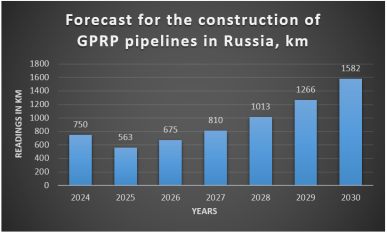
Figure 1. Growth of production and operation according to SIBUR LLC [8].
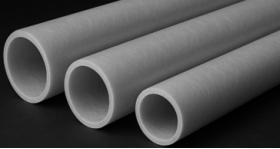
Figure 2. Fiberglass pipes.
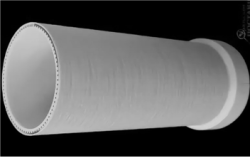
Figure 3. RPRP of a connected structure, reinforced with metal.
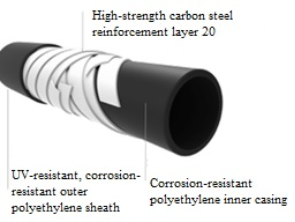
Figure 4. Flexible polymer-reinforced pipes GPRP reinforced with metal.
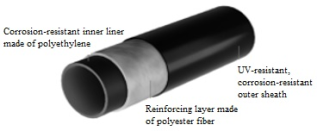
Figure 5. Flexible polymer-reinforced pipes GPRP reinforced with fiberglass.

Information



 Share This Article
 Twitter
 Linked In
 Facebook

 Copy
 Download