Research Article | | Peer-Reviewed

Study of Four Lateritic Soils from Benin and Recycled Lime to Produce Compressed Earth Bricks (CEB): X-ray Diffraction Analysis and Rietveld Refinement

Received: 29 May 2026     Accepted: 11 June 2026     Published: 29 June 2026
Views:       Downloads:
Abstract

Compressed earth bricks (CEBs) stabilized with lime represent a sustainable alternative to conventional construction materials in West Africa. However, the effective stabilization of lateritic soils depends strongly on their mineralogical composition, which remains insufficiently documented for Beninese soils. This study aims to provide the first quantitative mineralogical characterization of four lateritic soils collected from Dassa-Zoumé, Glazoué, N'Dali, and Zogbodomey in Benin, together with a recycled lime derived from oxy-acetylene welding residues, in order to assess their suitability for the production of stabilized compressed earth bricks. The investigation was conducted using X-ray diffraction (XRD) coupled with Rietveld refinement. Diffractograms were recorded over a 2θ range of 5-70° using a Rigaku diffractometer, and mineral phases were identified using the PDF-4 Minerals 2026 database. Quantitative phase analysis and crystallite size determination were performed through Rietveld refinement and the Scherrer equation, respectively. The results revealed that all four soils are dominated by a quartz-feldspar mineralogy, with quartz contents ranging from 40% to 56%. Significant mineralogical differences were observed among the soils. The N'Dali soil was distinguished by the exclusive presence of kaolinite-1A (26 ± 4%), indicating a high pozzolanic reactivity and strong potential for lime stabilization. In contrast, the Dassa-Zoumé and Zogbodomey soils exhibited predominantly quartz-rich compositions with limited reactive clay content, while the Glazoué soil showed elevated goethite content (12%) and evidence of a poorly crystalline or amorphous fraction. The recycled lime was characterized by a high portlandite content (85.4 ± 1.8%), confirming its suitability as a stabilization binder. The study demonstrates that mineralogical composition is a key factor governing the stabilization potential of Beninese lateritic soils. Among the investigated materials, the N'Dali soil appears to be the most suitable for lime-stabilized CEB production. These findings provide valuable scientific data for the development of sustainable, locally sourced construction materials in Benin and West Africa.

Published in Journal of Civil, Construction and Environmental Engineering (Volume 11, Issue 4)
DOI 10.11648/j.jccee.20261104.11
Page(s) 146-161
Creative Commons

This is an Open Access article, distributed under the terms of the Creative Commons Attribution 4.0 International License (http://creativecommons.org/licenses/by/4.0/), which permits unrestricted use, distribution and reproduction in any medium or format, provided the original work is properly cited.

Copyright

Copyright © The Author(s), 2026. Published by Science Publishing Group

Keywords

X-ray Diffraction, Rietveld, Lateritic Soils, Kaolinite, Compressed Earth Bricks, Lime Stabilization, Benin

1. Introduction
This study presents the first quantitative mineralogical characterization, using X-ray diffraction (XRD) and Rietveld refinement, of four lateritic soils from Benin (Dassa-Zoumé, Glazoué, N'Dali, and Zogbodomey) and a recycled lime derived from oxy-acetylene welding residues, with a view to their use in the manufacture of stabilized compressed earth bricks (CEBs). The analyses were performed using a Rigaku diffractometer over the 2θ range of 5-70°, with phase identification based on the PDF-4 Minerals 2026 database. The four soils exhibit a predominantly quartz-feldspar mineralogy, with quartz contents ranging from 40% to 56%. The N'Dali soil is distinguished by the exclusive presence of kaolinite-1A (26 ± 4%), conferring superior pozzolanic potential for lime stabilization. Goethite contents (0.12-12%) reflect varying degrees of ferritization depending on the locality. The analyzed lime is of high quality (portlandite: 85.4 ± 1.8%), with grossular as a minor impurity (10.3%). Based on these results, the N'Dali soil ranks first in terms of suitability for lime stabilization. These findings constitute an original contribution to the understanding of local construction materials in West Africa.
The water resistance of stabilized CEBs is significantly improved through lime stabilization. In the specific context of this study, the analyzed lime originates from oxy-acetylene welding residues, giving it an innovative character within a circular economy approach. This valorization of local industrial by-products for the manufacture of sustainable construction materials aligns with the orientations of the African Environmental Strategy and the objectives of Agenda 2063 .
Despite the abundance of studies on CEBs in West Africa, a persistent gap remains regarding the systematic and quantitative mineralogical characterization of Beninese lateritic soils. Most studies are limited to geotechnical tests (Atterberg limits and particle size distribution) without precise identification of the mineral phases present. However, only X-ray diffraction (XRD), coupled with Rietveld refinement, allows accurate determination of the weight fractions of each crystalline phase and the deduction of the expected physicochemical behavior in CEB formulations .
Rietveld refinement, initially developed by Hugo Rietveld (1969) for the analysis of neutron diffraction data and subsequently adapted to XRD, is now recognized as the reference method for the quantitative mineralogical characterization of multiphase materials . This method not only enables identification of the phases present, but also quantification of their weight fractions, with uncertainties generally below 2-5%, provided that rigorous treatment of preferred orientation and micro absorption correction is applied. Applied to geo-sourced construction materials, it has enabled significant advances in understanding soil-lime stabilization mechanisms and optimizing CEB formulations . In West Africa, few studies have applied this method to lateritic soils from a CEB formulation perspective; this is precisely the gap that the present study aims to address.
This study aims to fill this gap by characterizing, through XRD analysis, four lateritic soils collected from four localities in Benin (Dassa-Zoumé, Glazoué, N'Dali, and Zogbodomey), as well as a recycled lime derived from oxy-acetylene welding residues used as a binder. The specific objectives are: (i) to identify and quantify mineral phases using Rietveld refinement; (ii) to calculate crystallite size using the Scherrer equation; and (iii) to evaluate the suitability of each soil for lime stabilization. The research question addressed in this study is: how does the mineralogical composition of lateritic soils, determined by XRD and Rietveld refinement, influence their suitability for stabilization with recycled lime to produce high-performance and durable compressed earth bricks (CEBs)?
2. Materials and Methods
The characterization of constituent materials used in compressed earth bricks (CEBs) requires a rigorous experimental approach capable of identifying their mineralogical composition and evaluating their reactivity potential. In this study, X-ray diffraction (XRD), coupled with Rietveld refinement, was employed to analyze lateritic soils as well as alternative materials, including recycled lime derived from an industrial process. This section describes the investigated materials, the data acquisition procedures, and the analytical methods used.
From a methodological perspective, the adopted strategy follows a multi-scale characterization approach, ranging from overall mineralogical identification by XRD to precise phase quantification through Rietveld refinement, along with crystallite size estimation using the Scherrer equation. This integrated methodology is consistent with current recommendations for the characterization of geo-sourced civil engineering materials . The limitations inherent to the XRD method, particularly its inability to detect amorphous phases, are discussed in Section 4.5.
2.1. Description of Samples
Five samples were analyzed in this study in relation to the formulation of stabilized compressed earth bricks (CEBs). The first four samples consist of lateritic soils collected from different localities in Benin: Dassa-Zoumé, Glazoué, N'Dali, and Zogbodomey. These sites were selected to represent the geological and pedological diversity of soils commonly exploited for construction purposes. Sampling was conducted from surface horizons (0-50 cm), corresponding to the layers typically used for CEB production. The soils were air-dried and manually disaggregated to preserve their mineral structure. They were subsequently ground and sieved to 75 µm to obtain a homogeneous powder suitable for X-ray diffraction analysis.
From a geological perspective, Benin is characterized by two major geological domains: (i) a Precambrian crystalline basement outcropping in the northern and north-central regions of the country, mainly composed of granites, gneisses, and migmatites; and (ii) a southern coastal sedimentary basin composed of Tertiary and Quaternary clayey-sandy formations. The four sampling sites cover these two domains: Dassa-Zoumé and Glazoué belong to the southern crystalline basement domain (Collines region), N'Dali belongs to the northern crystalline basement domain (Borgou region), and Zogbodomey is located within the transition zone between the crystalline basement and the coastal basin (Zou region). This geological diversity explains the mineralogical variability observed among the four soils .
Sample 5 corresponds to recycled lime derived from oxy-acetylene welding residues. This material originates from solid deposits generated during welding operations using combustible gases (oxy-acetylene type). These residues, rich in calcium compounds, are recovered and subsequently valorized as a potential binder in CEB formulations. Unlike conventional commercial lime, this recycled lime is of particular interest within a sustainable construction approach, as it supports a circular economy strategy through the valorization of industrial by-products.
From a chemical standpoint, this recycled lime is composed of calcium hydroxide (portlandite), resulting from the transformation of calcium compounds present in combustion and welding residues. It may also contain secondary phases originating from impurities such as silica and alumina, giving the material a potentially reactive character toward clayey soils. From a regulatory perspective, hydrated lime used as a soil stabilization binder is defined by standard NF EN 459-1 (2015), which classifies lime according to its active CaO + MgO content. The CL 90 class, corresponding to a minimum content of 90% (CaO + MgO) on a dry mass basis, is recommended for soil stabilization in construction applications . The mineralogical characterization by XRD of the recycled lime investigated in this study makes it possible to verify whether it meets equivalent quality criteria, thereby justifying its use as a substitute for commercial lime.
Tables 1 and 2 present, respectively, a summary of the five analyzed materials and the geotechnical characteristics of the clayey soils used in this study.
Table 1. Summary of the Five Analyzed Materials.

Sample

Material

Locality / Origin

Administrative Region

1

Lateritic soil

Dassa-Zoumé

Collines (Central Benin)

2

Lateritic soil

Glazoué

Collines (Central Benin)

3

Lateritic soil

N'Dali

Borgou (Northern Benin)

4

Lateritic soil

Zogbodomey

Zou (Southern Benin)

5

Recycled lime

Local Beninese supplier

Table 2. Geotechnical Characteristics of the Clayey Soils Used.

Parameter

Zogbodomey

Dassa

Glazoué

N'Dali

Bulk density (g/cm3)

1.75

1.96

1.777

1.495

True density (g/cm3)

2.21

2.36

2.648

2.650

Absorption (%)

14.59

8.83

33.00

44.00

Porosity (%)

19.6

18.6

32.89

43.58

Compaction (%)

80.4

81.4

67.11

56.42

Void ratio

0.244

0.229

0.490

0.772

Liquid limit (%)

55

33

78

91

Plastic limit (%)

28.36

19.52

37.00

48.00

Plasticity index (%)

26.64

13.48

41.00

43.00

The analysis of the geotechnical characteristics presented in Table 2 reveals significant variability among the four soils. The high plasticity indices of Glazoué (PI = 41%) and N'Dali (PI = 43%) indicate a substantial content of swelling clay minerals, consistent with the presence of kaolinite in N'Dali and a reactive amorphous fraction in Glazoué. These PI values exceed the 20% threshold recommended for unstabilized soils intended for CEB production, thereby justifying the need for lime stabilization. In contrast, the Dassa-Zoumé soil exhibits a low plasticity index (13.48%), indicating lower clay reactivity and better natural dimensional stability .
2.2. XRD Data Acquisition
X-ray diffraction (XRD) is a structural analysis technique used to identify the crystalline phases present in a material. It is based on the interaction between a monochromatic X-ray beam and the atomic planes within a crystal structure. When X-rays strike a crystalline material, they are diffracted at specific angles that satisfy Bragg’s law: nλ=2dsinθ.
Since each crystalline phase is characterized by a unique set of interplanar spacings, it produces a specific diffraction pattern. Analysis of the diffractogram, therefore, enables identification of the present minerals. In lateritic soils, this technique makes it possible to distinguish major phases such as quartz and feldspars, clay minerals such as kaolinite, and iron oxides such as goethite, all of which are essential for understanding the behavior of CEBs.
X-ray diffraction analyses were conducted using a Rigaku diffractometer equipped with a copper anticathode (λCu Kα = 1.5406 Å). The scanned angular range extended from 5° to 70° (2θ), with a step size of 0.01° and a counting time of 1 s per step. The data were processed using crystallographic analysis software integrated with the PDF-4 Minerals 2026 database, enabling phase identification through comparison of diffraction peak positions and intensities with reference patterns.
2.3. Rietveld Refinement
The Rietveld refinement method, initially proposed for the analysis of neutron diffraction data , is now considered the international reference method for the mineralogical quantification of multiphase materials by X-ray diffraction. Unlike methods that rely solely on the integrated intensities of isolated peaks, Rietveld refinement exploits the entire diffraction profile, offering a significant advantage for the analysis of complex mineral mixtures such as the lateritic soils investigated in this study.
Quantification of mineral phases was performed using the Rietveld refinement method , which consists of fitting a calculated diffraction profile derived from known crystallographic structures to the experimental diffractogram by minimizing the sum of squared residuals between calculated and observed profiles. The refined parameters include lattice parameters, peak profile parameters (pseudo-Voigt functions), weight fractions, and thermal vibration parameters. The quality of the refinement is evaluated using the Rwp and Rp reliability factors, as well as the goodness-of-fit parameter (GoF = Rwp/Rexp). The reliability of phase identification is assessed using the Figure of Merit (FOM), for which values below 1.0 indicate excellent agreement with the reference phase.
2.4. Crystallite Size Calculation
Crystallite size (D) was calculated using the Scherrer equation: D = \frac{K\lambda} {\beta \cos\theta}
where K = 0.94 is the Scherrer shape factor, λ = 1.5406 Å is the wavelength of CuKα radiation, β is the full width at half maximum (FWHM) of the diffraction peak expressed in radians, and θ is the Bragg angle corresponding to the considered peak. The calculation was applied to the main quartz peak (101 reflection) for each of the four lateritic soils.
3. Results
3.1. Lateritic Soils
X-ray diffraction analysis, coupled with Rietveld refinement, enabled the precise identification and quantification of the mineral phases present in the four lateritic soils, as well as in the recycled lime derived from oxy-acetylene welding residues. The results highlight significant mineralogical variability among the soils, with direct implications for their behavior in compressed earth brick (CEB) formulations.
3.1.1. Dassa-Zoumé Soil (Sample 1)
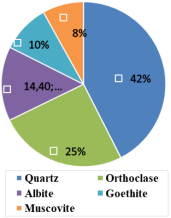
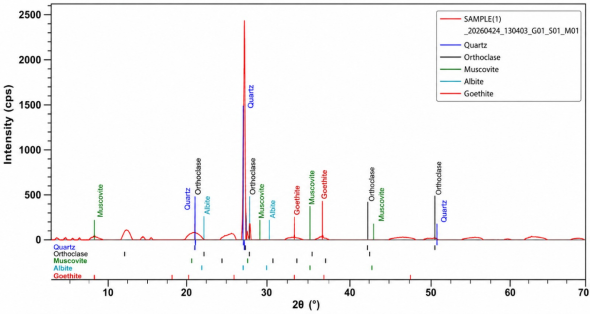
The diffractogram of Sample 1 (Dassa-Zoumé soil) reveals a mineralogical profile characteristic of a quartz-feldspar-dominated lateritic soil. The most intense peak is centered at 2θ = 27.012° (d = 3.298 Å), corresponding to the (101) reflection of quartz (SiO2). The full width at half maximum (FWHM) of 0.187° and the crystallite size of 456 Å (Scherrer equation) indicate well-crystallized quartz. Five phases were identified: quartz (42%), orthoclase (25%), albite (14.4%), goethite (9.4%), and muscovite (8%).
The presence of orthoclase (25%) and albite (14.4%) indicates an early stage of weathering: the feldspars are undergoing hydrolysis but have not yet been completely transformed into clay minerals. This phenomenon is consistent with the geological conditions of the Dassa-Zoumé region, which corresponds to a partially lateralized Precambrian crystalline basement. Goethite (FeOOH, 9.4%) reflects moderate lateralization with enrichment in hydrated iron oxides; it acts as a secondary binder between particles, improving cohesion and water resistance.
This composition reflects a mineralogy dominated by primary phases derived from the crystalline basement.
Figure 1. XRD diffractogram of the Dassa-Zoumé soil (Sample 1) - 2θ range = 5-70°, with indexing of the main peaks.
The dominance of quartz gives the soil the role of a granular skeleton, ensuring good mechanical strength in the dry state and high volumetric stability. However, since quartz is chemically inert, it does not participate in lime stabilization reactions. The significant presence of feldspars (orthoclase and albite) indicates a moderate degree of weathering. Although these minerals are stable, they may gradually release silica and alumina ions under alkaline conditions, contributing to slow pozzolanic reactions. Goethite (9.4%) plays a key role as a natural binder. It promotes intergranular cohesion and improves the water resistance of compacted materials. Its presence reflects an already advanced lateralization process. The absence of kaolinite constitutes a determining factor, as it strongly limits the chemical reactivity of the soil with recycled lime. Consequently, CEBs produced from this soil will depend more on compaction and the contribution of the external binder than on internal pozzolanic reactions. These observations are consistent with the work of Meukam in 2004 on stabilized lateritic soils in Central Africa, which showed that quartz-feldspar-dominated soils with low contents of reactive clay minerals require higher lime contents (8-12%) to achieve compressive strengths meeting structural requirements (fc > 2 MPa at 28 days according to NF EN 772-1 standard). The limited reactivity of this soil suggests the relevance of a blending approach with the N'Dali soil to optimize the CEB formulation.
Table 3. Quantitative Mineralogical Composition of the Dassa-Zoumé Soil (Sample 1) — Rietveld Refinement.

Mineral phase

Formula

Content (%)

Structural role

Quartz

SiO2

42 ± 4

Resistant granular skeleton

Orthoclase

KAlSi3O8

25 ± 2

Potassic feldspar (slow weathering)

Albite

NaAlSi3O8

14,4 ± 1,4

Sodic feldspar (moderate weathering)

Goethite

FeOOH

9,4 ± 0,9

Natural ferruginous binder

Muscovite

KAl2(AlSi3O10)(OH)2

8 ± 9

Mica (provides flexibility)

Figure 2. Quantitative mineralogical composition of the Dassa-Zoumé lateritic soil (Rietveld analysis, XRD 2026).
The dominance of quartz (42%) confers on a resistant granular skeleton to this soil. The simultaneous presence of orthoclase (25%) and albite (14.4%) indicates an early stage of geochemical weathering, consistent with the geological conditions of the Precambrian crystalline basement in the region. Goethite (9.4%) reflects moderate lateralization. The absence of detectable kaolinite is the most distinguishing feature: without reactive crystalline clay, pozzolanic reactions with lime will be limited. This soil presents:
1) Good potential mechanical strength due to quartz,
2) Low chemical reactivity,
3) High dimensional stability.
It is therefore suitable for lightly stabilized CEBs but will require an optimized lime addition to improve cohesion.
3.1.2. Glazoué Soil (Sample 2)
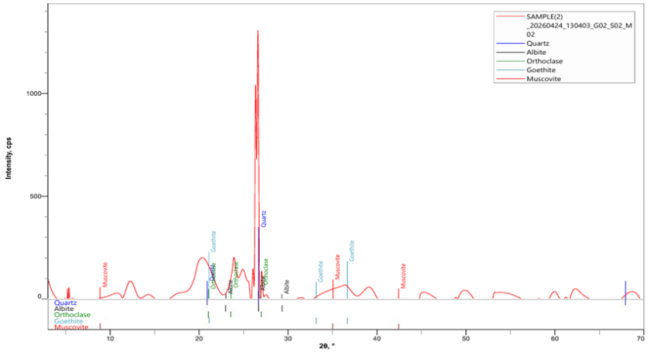
The diffractogram of Sample 2 (Glazoué soil) shows two main peaks: a broad and diffuse peak centered at 2θ = 20.3° (d = 4.38 Å, FWHM = 2.6°) and an intense peak at 2θ = 26.612° (d = 3.347 Å, FWHM = 0.32°). The first peak of low intensity (137 cups) and large width suggests the presence of a poor crystalline or partially amorphous phase. The associated crystallite size (32 Å) is extremely small, characteristic of a poorly crystallized clay phase or a residual amorphous alteration fraction. This peak could be attributed to a clay phase such as halloysite or degraded smectite, whose basal reflections occur precisely in this angular range.
Figure 3. XRD diffractogram of the Glazoué soil (Sample 2) showing a broad peak at 2θ ≈ 20.3° and a quartz peak at 26.6°.
The second peak at 2θ = 26.612° (d = 3.347 Å) corresponds to the (101) reflection of quartz, with a crystallite size of 266 Å, slightly lower than that of Dassa-Zoumé quartz, indicating a slightly less well-ordered crystallization state. Five phases were identified: quartz (SiO2, FOM = 0.907), albite (NaAlSi3O8, FOM = 0.918), orthoclase (KAlSi3O8, FOM = 1.257), goethite (Fe2O3·H2O, FOM = 1.017), and muscovite (H2KAl3(SiO4)3, FOM = 0.880). FOM values close to or below 1 indicate good reliability of phase identification.
The diffractogram of Sample 2 shows two notable features: a broad and diffuse peak centered at 2θ = 20.3° (d = 4.38 Å, FWHM = 2.6°, crystallite size = 32 Å), indicating a poorly crystalline or partially amorphous phase, and an intense quartz peak at 2θ = 26.612° (d = 3.347 Å, crystallite size = 266 Å).
Table 4. Quantitative Mineralogical Composition of the Glazoué Soil (Sample 2) Rietveld Refinement.

Mineral phase

Formula

Content (%)

Structural role

Quartz

SiO2

46 ± 3

Dominant granular skeleton

Albite

NaAlSi3O8

29 ± 3

Major sodic feldspar

Orthoclase

KAlSi3O8

11,2 ± 1,1

Potassic feldspar

Goethite

FeOOH

12,0 ± 1,5

Ferruginous binder — high content

Muscovite

KAl2(AlSi3O10)(OH)2

1,79 ± 0,12

Accessory mica

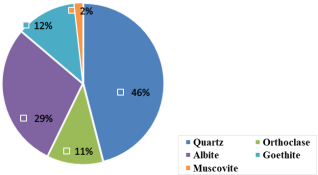
Figure 4. Quantitative mineralogical composition of the Glazoué lateritic soil (Rietveld analysis, XRD 2026).
It constitutes intermediate material, of interest but requiring optimized formulation.
The Glazoué soil is distinguished by an albite content (29%) significantly higher than that observed in Dassa-Zoumé (14.4%), indicating a parent material rich in sodic plagioclase feldspars. Goethite reaches 12%, the highest value in the series, characteristic of an advanced stage of lateralization. The muscovite content is exceptionally low (1.79%), suggesting deeper alteration of mica minerals. The small crystallite size of the peak at 20.3° (32 Å) is characteristic of a poorly crystallized clay phase or a residual amorphous fraction.
The high albite content distinguishes this soil from the others. This sodic feldspar is more susceptible to chemical weathering, giving the soil a higher reactivity potential in an alkaline environment. The elevated goethite content (12%) is the highest in the series. It confers on the material a natural cohesion and improves its behavior with respect to water. The diffuse peak observed suggests the presence of an amorphous fraction or poorly crystallized clays, which may play a non-negligible role in physic-chemical interactions. The amorphous or poor crystalline fraction detected at 2θ ≈ 20.3° in the Glazoué soil warrants particular attention. Amorphous silicate phases, although not detectable by conventional XRD, can be highly reactive in alkaline media and actively participate in pozzolanic reactions with lime . Complementary analyses by TGA (thermogravimetric analysis) and selective dissolution using dilute hydrofluoric acid would allow quantification of this amorphous fraction and assessment of its actual reactivity potential. This non-crystalline fraction may partly explain the favorable mechanical properties of CEBs made from this soil, which cannot be fully attributed solely to the crystalline phases identified by XRD.
Implications for CEBs
This soil presents:
1) Good natural cohesion,
2) Moderate reactivity with recycled lime,
3) Potential water sensitivity related to the amorphous fraction.
3.1.3. N'Dali Soil (Sample 3)
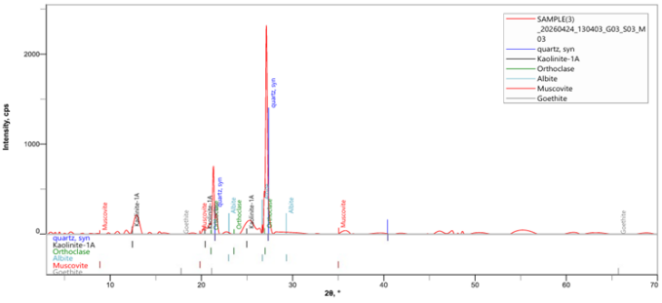
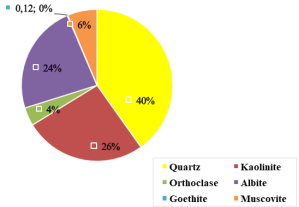
The N'Dali diffractogram is the richest and most complex among the four soils. Four main peaks were indexed. The peak at 2θ = 12.88° (d = 6.87 Å) is characteristic of the basal reflection of kaolinite-1A, a key clay mineral for lime stabilization. The dominant peak at 2θ = 27.089° (d = 3.289 Å, crystallite size = 555 Å) corresponds to quartz. Six phases were identified: quartz (40%), kaolinite-1A (26%), albite (23.3%), muscovite (6.3%), orthoclase (3.9%), and goethite (0.12%).
Figure 5. XRD diffractogram of the N'Dali soil (Sample 3) showing identification of the kaolinite-1A peak at 2θ = 12.88°.
Table 5. Quantitative Mineralogical Composition of the N'Dali Soil (Sample 3) — Riet.

Mineral phase

Formula

Content (%)

Structural role

Quartz (syn)

SiO2

40 ± 3

Granular skeleton

Kaolinite-1A

Al2Si2O5(OH)4

26 ± 4

Reactive clay (key phase)

Albite

NaAlSi3O8

23,3 ± 1,4

Sodic feldspar

Muscovite

KAl2(AlSi3O10)(OH)2

6,3 ± 0,4

Mica (matrix flexibility)

Orthoclase

KAlSi3O8

3,9 ± 0,8

Potassic feldspar (minor)

Goethite

FeOOH

0,12 ± 0,04

Trace (weak ferralitization)

Figure 6. Composition minéralogique quantitative du sol latéritique de N’dali (Analyse Rietveld, DRX).
The confirmed presence of kaolinite-1A (26%) is the most significant result of the series. This 1:1 dioctahedral phyllosilicate (Al2Si2O5(OH)4) constitutes the most reactive clay phase for lime stabilization due to its cation exchange capacity (5-15 meq/100 g) and its reactivity in alkaline media. The near absence of goethite (0.12%) contrasts with the other three soils and indicates a low degree of ferritization, typical of the Sudanian zone of northern Benin.
The presence of 26% kaolinite constitutes the most determining element of the study. This clay mineral is particularly reactive in alkaline media and represents the key phase for lime stabilization. In the presence of recycled lime (rich in portlandite), kaolinite undergoes partial dissolution, releasing silica and aluminum ions that participate in the formation of cementitious phases (C-S-H and C-A-H). The low goethite content indicates a low degree of lateralization, but this is compensated by the high clay reactivity. The reaction mechanisms involved in the stabilization of the N'Dali soil with lime can be described in three successive stages :
1) Immediate modification (0-24 h): the dissolution of Ca(OH)2 in pore water generates a pH > 12, inducing rapid Ca2+/Na+ and K+ cation exchange on the surface sites of kaolinite, resulting in flocculation of clay particles and reduction of plasticity.
2) Short-term pozzolanic reactions (7-28 days): in an alkaline medium, kaolinite undergoes partial dissolution of its SiO4 tetrahedra and AlO6 octahedra, releasing Si4+ and Al3+ ions that react with Ca2+ to form hydrated calcium silicates (C-S-H, tobermorite-type) and hydrated calcium aluminates (C-A-H, katoite-type) according to the equation:
Al2Si2O5(OH)4+ Ca(OH)2+ H2O → C-S-H + C-A-H
3) Long-term secondary reactions (28 days-1 year): in soil-lime-alumina systems, secondary phases such as C-A-S-H, ettringite, and zeolites may form, contributing to the progressive consolidation of the matrix. The albite content (23.3%) of this soil provides an additional source of silica and alumina capable of sustaining these long-term secondary reactions.
This soil presents:
1) Excellent chemical reactivity,
2) High potential for stabilization with recycled lime,
3) Significant expected improvement in mechanical properties.
It constitutes the best candidate to produce stabilized CEBs.
3.1.4. Zogbodomey Soil (Sample 4)
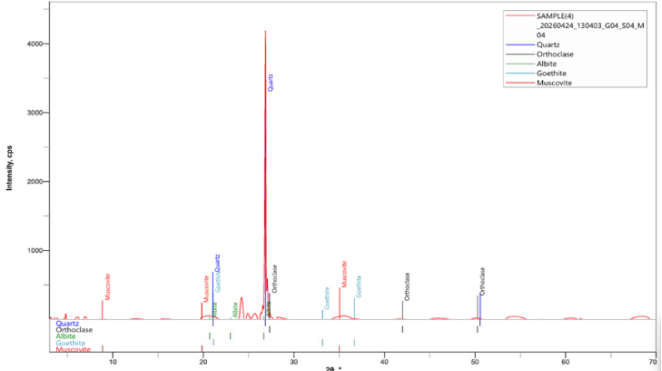
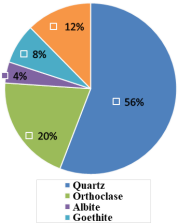
The Zogbodomey diffractogram is remarkable for the exceptionally high intensity of its main peak at 2θ = 26.829° (d = 3.320 Å, height = 3581 cps, FWHM = 0.101°, crystallite size = 845 Å). These represent the highest intensity and crystallite size values of the entire series, indicating a very pure and well-crystallized quartz of granitic origin. Five phases were identified: quartz (56%), orthoclase (20.3%), muscovite (12.4%), goethite (7.6%), and albite (4%).
With 56% quartz, Zogbodomey is the most quartz-rich soil. This composition provides an exceptionally rigid granular skeleton with low shrink-swell susceptibility. Muscovite (12.4%) is the highest in the series; its lamellar structure introduces potential planes of delamination within the microstructure. The absence of kaolinite and the low albite content (4%) limit direct pozzolanic reactivity, but the goethite content (7.6%) ensures appreciable intergranular cohesion.
Figure 7. XRD diffractogram of the Zogbodomey soil (Sample 4) showing a very intense quartz peak at 2θ = 26.83°.
Table 6. Quantitative Mineralogical Composition of the Zogbodomey Soil (Sample 4).

Mineral phase

Formula

Content (%)

Structural role

Quartz

SiO2

56 ± 2

Highly dominant granular skeleton

Orthoclase

KAlSi3O8

20,3 ± 0,8

Potassic feldspar

Muscovite

KAl2(AlSi3O10)(OH)2

12,4 ± 0,5

Mica — high proportion

Goethite

FeOOH

7,6 ± 0,3

Natural ferruginous binder

Albite

NaAlSi3O8

4 ± 3

Sodic feldspar — minor phase

Figure 8. Quantitative mineralogical composition of the Zogbodomey lateritic soil (Rietveld analysis, XRD 2026).
With 56% quartz and crystallites of 845 Å, Zogbodomey is the most quartz-rich and most crystalline soil in the series. Muscovite (12.4%) is the highest content observed among the four soils. The absence of kaolinite and the low proportion of albite (4%) strongly limit direct pozzolanic reactivity.
This soil is the richest in quartz, which gives it a very rigid granular skeleton. However, the absence of kaolinite and the low albite content strongly limit its chemical reactivity. Muscovite, although non-reactive, may influence mechanical behavior by introducing planes of weakness. The muscovite content of 12.4% deserves particular attention. This mica, with a lamellar structure (2: 1 phyllosilicate), is known to reduce the compressive strength of CEBs by creating preferential cleavage planes within the compacted matrix . Muscovite contents above 10% are considered unfavorable to produce unstabilized CEBs.
A blending strategy with the N'Dali soil (rich in kaolinite and poor in muscovite) therefore represents a promising approach to dilute the muscovite content while providing the clay reactivity required for lime stabilization.
This soil presents:
1) Extremely high potential mechanical strength,
2) Low natural cohesion,
3) Extremely limited chemical reactivity.
It requires stronger stabilization or blending with clay-rich soil (such as N'Dali).
3.2. Comparative Synthesis of Lateritic Soils
Table 7. Comparative synthesis of quantitative mineralogical compositions of the four lateritic soils (% by mass).

Mineral phase

Dassa-Zoumé

Glazoué

N'Dali

Zogbodomey

Quartz (SiO2)

42 ± 4%

46 ± 3%

40 ± 3%

56 ± 2%

Kaolinite-1A

Absent

Absent

26 ± 4%

Absent

Orthoclase

25 ± 2%

11,2 ± 1,1%

3,9 ± 0,8%

20,3 ± 0,8%

Albite

14,4 ± 1,4%

29 ± 3%

23,3 ± 1,4%

4 ± 3%

Goethite

9,4 ± 0,9%

12,0 ± 1,5%

0,12 ± 0,04%

7,6 ± 0,3%

Muscovite

8 ± 9%

1,79 ± 0,12%

6,3 ± 0,4%

12,4 ± 0,5%

Quartz crystallite size

456 Å

266 Å

555 Å

845 Å

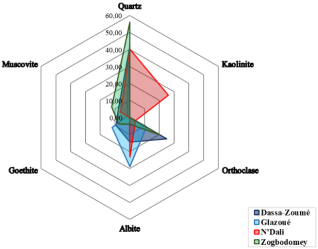
Figure 9. Comparative mineralogical profiles of the four lateritic soils — radar chart (% by mass, Rietveld).
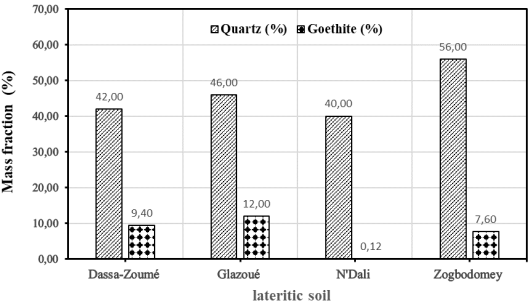
The four soils share a common quartz-feldspar mineralogy, reflecting their belonging to the broad family of laterites derived from the Precambrian crystalline basement of West Africa. The fundamental distinction lies in the exclusive presence of kaolinite in the N'Dali soil (26%), which is absent in the other three soils. The variability in goethite content (0.12-12%) reflects strongly different intensities of ferritization depending on geographic areas: Glazoué and the central plateau undergo more intense lateralization than N'Dali in the Sudanian zone.
The comparative synthesis highlights three distinct mineralogical profiles corresponding to three expected behaviors in CEB formulations: (1) a “pure quartz-feldspar profile” (Dassa-Zoumé, Zogbodomey) with high intrinsic mechanical strength but low chemical reactivity, requiring high lime contents; (2) a “goethite-dominant profile” (Glazoué) with strong natural cohesion and moderate reactive potential through the amorphous fraction; and (3) a “kaolinite-feldspar profile” (N'Dali) with high pozzolanic reactivity and excellent lime stabilization potential. These three profiles correspond to the three major families of tropical lateritic soils described by Gidigasu in 1976 and Ola in 1983 , confirming the representativeness of the sampling conducted in Benin.
For CEB production, a binary soil blending approach (N'Dali + Zogbodomey in proportions of 60/40 to 70/30) could optimize both chemical reactivity and granular skeleton mechanical strength .
3.3. Recycled Lime (Sample 5)
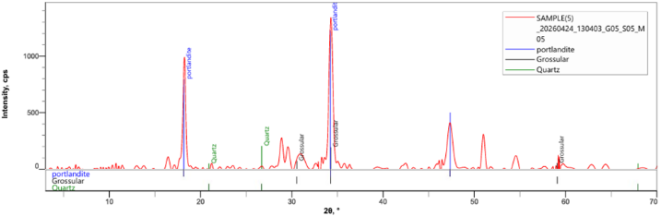
The diffractogram of Sample 5 (lime) shows seven well-defined peaks. The most intense peak is centered at 2θ = 34.23° (d = 2.618 Å, height = 1041 cps, FWHM = 0.40°, crystallite size = 220 Å), attributed to combined reflections of portlandite [Ca(OH)2] and grossular [Ca3Al2(SiO4)3]. The second most intense peak at 2θ = 18.21° (d = 4.868 Å, crystallite size = 255 Å) corresponds to the (001) reflection of portlandite, which is highly characteristic of this mineral. The other peaks are assigned to portlandite and grossular. Three phases were identified: portlandite [Ca(OH)2, space group P-3m1, FOM = 0.585], grossular [Ca3Al2(SiO4)3, space group Ia-3d, FOM = 1.385], and residual quartz [SiO2, FOM = 2.850]. The low FOM value for portlandite confirms an excellent diffractometric match with reference PDF-4 data.
Figure 10. XRD diffractogram of the commercial lime (Sample 5) showing identification of portlandite and grossular peaks.
Table 8. Quantitative Mineralogical Composition of the Commercial Lime (Sample 5) — Rietveld Refinement Results.

Phase mineral

Formula

Teneur (%)

Signification

Portlandite

Ca(OH)2

85,4 ± 1,8

Main active phase (direct binder)

Grossular

Ca3Al2(SiO4)3

10,3 ± 1,8

Calcium garnet (inert impurity)

Quartz

SiO2

4,3 ± 0,2

Siliceous residue (filler role)

Portlandite represents 85.4% of the analyzed lime, making it a high-quality binder. The low FOM value (0.585) confirms excellent diffractometric agreement. The small crystallite size of portlandite (220-255 Å) is favorable to reactivity, as a high specific surface area enhances access to aluminosilicate reactive sites. The presence of grossular (10.3%) indicates a slightly clayey limestone origin; this calcium garnet is inert at ambient temperature but reflects an aluminum-rich composition that may be beneficial.
The portlandite content of 85.4% corresponds, in terms of active CaO content (after stoichiometric conversion: 85.4% Ca(OH)2 × (56/74) = 64.7% CaO), to a CL 70 class lime according to NF EN 459-1: 2015. Although slightly below the CL 90 threshold required for the most demanding applications, this portlandite content exceeds the minimum recommended 60% active CaO suggested by Little (1995) for clay soil stabilization in construction applications .
The presence of grossular (Ca3Al2(SiO4)3, 10.3%) is interesting from a reactivity standpoint: although inert at ambient temperature, this alumino-calcium garnet may contribute to long-term partial dissolution reactions in highly alkaline environments (pH > 12), releasing Al3+ ions that can participate in the formation of C-A-H phases . These results validate the use of this recycled lime as a sufficiently high-quality binder for the stabilization of Beninese lateritic soils, with a beneficial circular economy advantage compared to conventional commercial lime. The results section should provide an accurate and concise description of the experimental findings, and the resulting conclusions that can be inferred from the experiments. Meanwhile, the results should be presented in a transparent and truthful manner, avoiding any fabrication or improper manipulation of data. Where applicable, results of statistical analysis should be included in the text or as tables and Figures.
4. Discussion
4.1. Significance of Kaolinite in the N'Dali Soil
The presence of kaolinite-1A at a level of 26% in the N'Dali soil constitutes the most discriminating result of this study for CEB application. Kaolinite is a 1: 1 dioctahedral phyllosilicate with the formula Al2Si2O5(OH)4, whose reactivity in alkaline media (pH > 12) has been well documented in the works of Croft (1967) and Bell (1996) . In contact with portlandite Ca(OH)2, it releases Si4+ and Al3+ ions that participate in the formation of hydrated calcium silicates (C-S-H) and hydrated calcium aluminates (C-A-H). These newly formed mineral phases fill intergranular pores and create rigid bonds between particles, significantly increasing the mechanical strength of CEBs.
This pozzolanic reactivity places the N'Dali soil in a clearly favorable position compared to the other three soils. Its kaolinite content (26%) falls within the optimal range reported in the literature for lime stabilization . The kaolinite-albite-portlandite association in this soil may also generate, over the long term, secondary geopolymer and zeolitic phases beneficial to the durability of CEBs. The muscovite present (6.3%), although less reactive, contributes to stress distribution within the matrix.
4.2. Role of Quartz and Crystallites in the Granular Skeleton
The quartz content of the studied soils ranges from 40% (N'Dali) to 56% (Zogbodomey), confirming the dominant quartz-feldspar nature of laterites derived from the crystalline basement. Quartz, a chemically stable mineral at ambient temperature, constitutes the load-bearing granular skeleton of CEBs.
Its proportion directly influences:
1) compressive strength,
2) material stiffness,
3) dimensional stability (low shrinkage/swelling).
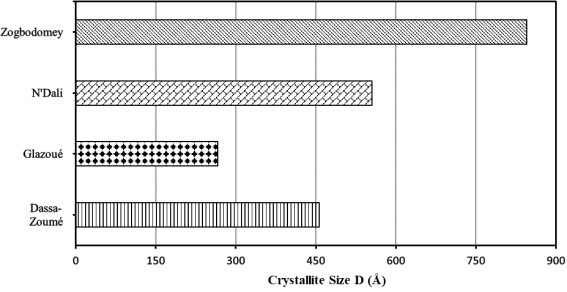
Analysis of crystallite size, estimated using the Scherrer equation, reveals values ranging from 266 Å (Glazoué) to 845 Å (Zogbodomey). Large crystallite sizes indicate high crystallinity and well-developed grains, often associated with higher mechanical strength and greater abrasion resistance due to a more efficient granular interlocking.
The Zogbodomey soil, characterized by the largest crystallite sizes and the highest quartz content, thus presents the most efficient granular skeleton. However, this intrinsic mechanical performance is counterbalanced by low intergranular cohesion, due to the absence of reactive clay, which limits its behavior in the unstabilized state.
Figure 11. Comparative contents of quartz and goethite in the four lateritic soils.
Figure 12. Quartz crystallite size in the four lateritic soils (Scherrer equation).
From a construction materials engineering perspective, the optimal quartz content for CEBs lies between 45 and 65% . Contents below 40% lead to a matrix that is too clay-rich, prone to drying shrinkage and freeze-thaw cycles, whereas contents above 65% produce a material that is too sandy, with low cohesion and insufficient compressive strength. All studied soils fall within this range or at its upper limit (Zogbodomey: 56%), confirming their basic suitability for CEB production. The correlation between quartz crystallite size and CEB compressive strength has been reported by Meukam (2004) : large crystallites (> 600 Å) are associated with compressive strengths above 3 MPa for CEBs compacted at optimal pressure.
4.3. Influence of Iron Oxides on Natural Cohesion
Goethite (FeOOH) is present in all soils at highly variable concentrations (0.12-12%). It acts as a secondary binding agent by creating chemical bridges between particles and promoting the aggregation of quartz and feldspar grains. According to the work of Gidigasu (1976), iron oxide content above 5% improves drained cohesion and unconfined compressive strength of compacted lateritic soils . Glazoué (12%) thus benefits from higher natural cohesion. The near absence of goethite in N'Dali (0.12%) is partly compensated by the presence of kaolinite for interparticle cohesion.
The role of goethite in CEBs extends beyond simple mechanical cohesion. As a hydrated iron oxide, goethite exhibits a strong affinity for surface hydroxyl groups, enabling it to form stable hydrogen bonds with surrounding clay phases and feldspars . This property gives high-goethite CEBs improved resistance to moisture and to wetting-drying cycles, a critical parameter for durability in tropical climates. Recent studies have also shown that goethite contributes to the adhesion between the soil-lime matrix and plant fibers (palm kernel cake, sisal), acting as an interfacial layer between organic and mineral phases. This observation further supports the interest of the Glazoué soil for fiber-reinforced CEB formulations.
4.4. Lime Quality and Expected Reactivity
The analyzed lime, derived from autogenous welding residues, exhibits a high portlandite content (85.4%), equivalent to a CL 90 type lime according to NF EN 459-1. This high calcium hydroxide content ensures strong alkaline activation capacity of soils. The small portlandite crystallite size (220-255 Å) is favorable to reactivity due to the increased specific surface area available for reactions with aluminosilicate phases.
The presence of grossular (10.3%), a calcium garnet resulting from aluminosilicate impurities, reflects the recycled industrial origin of the material. Although this phase is inert at ambient temperature, it indicates an aluminum-rich composition that may, under certain conditions, contribute to secondary reactions with clays. Previous work by Seco et al. (2011) suggests that limes containing aluminous impurities may exhibit broader reactivity .
Thus, the studied recycled lime is not only a conventional binder but a potentially multifunctional material, combining alkaline activation and secondary reactive contributions. From a circular economy perspective, its use provides a dual benefit: (i) valorization of a potentially polluting industrial waste, and (ii) a reduction in CEB production cost of approximately 15-25% compared to commercial CL 90 lime (estimate based on 2025 Beninese market prices).
4.5. Limitations of XRD for Material Characterization
XRD does not detect amorphous phases, which may represent a significant fraction of highly weathered lateritic soils (amorphous silica, amorphous alumina, amorphous iron oxides). These phases can be highly reactive with lime, meaning their non-detection leads to an underestimation of pozzolanic potential, particularly for the Glazoué soil, whose broad peak at 20.3° suggests a significant amorphous fraction. Complementary selective dissolution analyses would allow quantification of these phases.
Rietveld quantification of phyllosilicates is also affected by crystallographic preferred orientation, particularly pronounced for muscovite and kaolinite. The high uncertainty in muscovite content for Dassa-Zoumé (8 ± 9%) illustrates this limitation. Finally, for treated materials, FTIR, TGA, and SEM analyses are required to complete the characterization initiated by XRD.
5. Conclusion
This study presents the first quantitative mineralogical characterization by XRD and Rietveld refinement of six materials intended for CEB production in Benin. The four lateritic soils share a common quartz-feldspar mineralogy inherited from the Precambrian crystalline basement but differ by key features relevant to their application. The most significant result is the exclusive presence of kaolinite-1A (26%) in the N'Dali soil, providing unmatched pozzolanic potential within the dataset. Based on XRD data, the ranking of soils according to their suitability for lime-stabilized CEB production is as follows:
Table 9. Ranking of lateritic soils according to their suitability for lime stabilization for CEBs.

Rank

Soil

Mineralogical strengths

Weaknesses

CEB suitability

1

N'Dali

Kaolinite 26%, albite 23%

Near absence of goethite

Excellent

2

Glazoué

Goethite 12%, albite 29%

Absence of kaolinite

Good

3

Dassa-Zoumé

Balanced quartz-feldspar system, goethite 9.4%

Absence of kaolinite

Moderate

4

Zogbodomey

Quartz 56%, rigid granular skeleton

Excessively quartz-rich (low cohesion)

Requires adjustment

The analyzed lime (85.4% portlandite) is validated as a high-quality binder for stabilization purposes. The most promising CEB formulation combines the N'Dali soil with 8 to 10% of this lime.
These results open several research perspectives: (i) the execution of comparative mechanical tests (compressive strength, flexural strength, water absorption) on CEBs produced with each of the four soils stabilized with varying contents of recycled lime (4-12%), in order to experimentally validate the established mineralogical ranking; (ii) the evaluation of the effect of incorporating palm kernel cake fibers at contents of 0.5-2% by mass on the mechanical and thermal properties of CEBs; (iii) post-stabilization XRD analyses to identify newly formed phases (C-S-H, C-A-H) and confirm the progress of pozzolanic reactions at 7, 28, and 90 days of curing; and (iv) a life cycle assessment (LCA) comparing CEBs produced from these soils and this recycled lime with conventional construction materials (cement blocks, fired bricks), in order to quantify the environmental benefits of the local CEB production chain.
From a socio-economic perspective, the valorization of Beninese lateritic soils and recycled lime for CEB production represents a significant opportunity for the development of sustainable construction supply chains in West Africa. The structuring of this sector, supported by rigorous mineralogical data such as those produced in this study, directly contributes to the United Nations Sustainable Development Goals, particularly SDG 11 (Sustainable Cities and Communities) and SDG 13 (Climate Action).
Abbreviations

CEBs

Compressed Earth Bricks

XRD

X-ray Diffraction

FOM

Figure of Merit

GoF

Goodness-of-fit

PI

Plasticity Indices

FWHM

Full Width at Half Maximum

TGA

Thermogravimetric Analysis

LCA

Life Cycle Assessment

SDG

Sustainable Development Goals

Author Contributions
Ernesto Cabral Houehanou: Conceptualization, Writing – original draft
Finagnon Crepin Alexis Togbe: Visualization
Guevara Nonviho: Formal Analysis
Mansourou Bissilimou Orounla: Data curation, Investigation
Frederic Hubert Gbaguidi: Visualization
Mohamed Gibigaye: Supervision
Conflicts of Interest
There is no conflict of interest with other units, business-es, affiliates, and other authors in the work of this study.
References
[1] DARAMOLA, S. O., HINGSTON, E. D. C., et DEMLIE, M. A review of lateritic soils and their use as landfill liners. Environmental Earth Sciences, 2024, vol. 83, no 3, p. 118.
[2] OKEWALE, Ismail Adeniyi, GROBLER, Hendrik, et MULABA-BAFUBIANDI, Antoine F. Assessment of carbonate rocks for engineering applications considering mineralogical, geochemical and geotechnical attributes. Innovative Infrastructure Solutions, 2024, vol. 9, no 10, p. 382.
[3] BERNARD, Ellina, JENNI, Andreas, FISCH, Martin, et al. Micro-X-ray diffraction and chemical mapping of aged interfaces between cement pastes and Opalinus Clay. Applied Geochemistry, 2020, vol. 115, p. 104538.
[4] GARADE, A. C., BIRADAR, N. S., JOSHI, S. M., et al. Liquid phase oxidation of p-vanillyl alcohol over synthetic Co-saponite catalyst. Applied clay science, 2011, vol. 53, no 2, p. 157-163.
[5] BELL, FG1996. Lime stabilization of clay minerals and soils. Engineering geology, 1996, vol. 42, no 4, p. 223-237.
[6] PUPPALA, Anand J. Advances in ground modification with chemical additives: From theory to practice. Transportation Geotechnics, 2016, vol. 9, p. 123-138.
[7] GARTNER, Ellis, MARUYAMA, Ippei, et CHEN, Jeffrey. A new model for the CSH phase formed during the hydration of Portland cements. Cement and Concrete Research, 2017, vol. 97, p. 95-106.
[8] MACPHEE, D. E. et FOLLI, Andrea. Photocatalytic concretes—The interface between photocatalysis and cement chemistry. Cement and Concrete Research, 2016, vol. 85, p. 48-54.
[9] UNION, African. Regional Policy Coherence for The Great Green Wall Initiative: Exploring Alignment of the AU Great Green Wall Initiative Strategy with the AU Biodiversity Strategy and Action Plan and the AU Green Recovery Action Plan. 2025.
[10] HAGBE NTOD, Marcel Bertrand, MBOG, Michel Bertrand, BITOM-MAMDEM, Lionelle, et al. The Physico-Mechanical, Mineralogical, and Thermal Characterization of Geopolymeric Laterite Bricks Containing Polyethylene Terephthalate Bottle Powder. Journal of Composites Science, 2025, vol. 9, no 7, p. 320.
[11] RUNCEVSKI, Tomce et BROWN, Craig M. The Rietveld refinement method: Half of a century anniversary. Crystal Growth & Design, 2021, vol. 21, no 9, p. 4821-4822.
[12] VOGEL, Sven C. gsaslanguage: a GSAS script language for automated Rietveld refinements of diffraction data. Applied Crystallography, 2011, vol. 44, no 4, p. 873-877.
[13] KHEMISSA, Mohamed et MAHAMEDI, Abdelkrim. Cement and lime mixture stabilization of an expansive overconsolidated clay. Applied Clay Science, 2014, vol. 95, p. 104-110.
[14] CHU, Zhujie, LI, Qianqian, ZHOU, An, et al. Strategy formulation path towards zero-waste of municipal solid waste: A case study from Shanghai. Journal of Cleaner Production, 2023, vol. 418, p. 138091.
[15] Morel, J. C., et al. (2021). An overview of the remaining challenges of the RILEM TC 274-TCE, testing and characterization of earth-based building materials and elements. The authors provide a synthesis of methodological challenges related to the characterization of earth-based materials, emphasizing the recommendations of the RILEM committee.
[16] REDDY, BV Venkatarama, MOREL, Jean-Claude, FARIA, Paulina, et al. Codes and standards on earth construction. In: Testing and Characterisation of Earth-based Building Materials and Elements: State-of-the-Art Report of the RILEM TC 274-TCE. Cham: Springer International Publishing, 2021. p. 243-259.
[17] AL-GHARBAWI, Ahmed SA, NAJEMALDEN, Ahmed M., et FATTAH, Mohammed Y. Expansive soil stabilization with lime, cement, and silica fume. Applied Sciences, 2022, vol. 13, no 1, p. 436.
[18] Danso, H., Martinson, D. B., Ali, M., & Williams, J. B. (2015). Physical, mechanical and durability properties of soil building blocks reinforced with natural fibres. Construction and Building Materials, 101(1), 797-809.
[19] Ferreira, S. R., de Andrade Silva, F., Lima, P. R. L., & Toledo Filho, R. D. (2020). Effect of sisal fiber hornification on the fiber-matrix bonding characteristics and bending behavior of cement-based composites. Construction and Building Materials, 245, 118405.
Cite This Article
  • APA Style

    Houehanou, E. C., Togbe, F. C. A., Nonviho, G., Orounla, M. B., Gbaguidi, F. H., et al. (2026). Study of Four Lateritic Soils from Benin and Recycled Lime to Produce Compressed Earth Bricks (CEB): X-ray Diffraction Analysis and Rietveld Refinement. Journal of Civil, Construction and Environmental Engineering, 11(4), 146-161. https://doi.org/10.11648/j.jccee.20261104.11

    Copy | Download

    ACS Style

    Houehanou, E. C.; Togbe, F. C. A.; Nonviho, G.; Orounla, M. B.; Gbaguidi, F. H., et al. Study of Four Lateritic Soils from Benin and Recycled Lime to Produce Compressed Earth Bricks (CEB): X-ray Diffraction Analysis and Rietveld Refinement. J. Civ. Constr. Environ. Eng. 2026, 11(4), 146-161. doi: 10.11648/j.jccee.20261104.11

    Copy | Download

    AMA Style

    Houehanou EC, Togbe FCA, Nonviho G, Orounla MB, Gbaguidi FH, et al. Study of Four Lateritic Soils from Benin and Recycled Lime to Produce Compressed Earth Bricks (CEB): X-ray Diffraction Analysis and Rietveld Refinement. J Civ Constr Environ Eng. 2026;11(4):146-161. doi: 10.11648/j.jccee.20261104.11

    Copy | Download

  • @article{10.11648/j.jccee.20261104.11,
      author = {Ernesto Cabral Houehanou and Finagnon Crepin Alexis Togbe and Guevara Nonviho and Mansourou Bissilimou Orounla and Frederic Hubert Gbaguidi and Mohamed Gibigaye},
      title = {Study of Four Lateritic Soils from Benin and Recycled Lime to Produce Compressed Earth Bricks (CEB): X-ray Diffraction Analysis and Rietveld Refinement},
      journal = {Journal of Civil, Construction and Environmental Engineering},
      volume = {11},
      number = {4},
      pages = {146-161},
      doi = {10.11648/j.jccee.20261104.11},
      url = {https://doi.org/10.11648/j.jccee.20261104.11},
      eprint = {https://article.sciencepublishinggroup.com/pdf/10.11648.j.jccee.20261104.11},
      abstract = {Compressed earth bricks (CEBs) stabilized with lime represent a sustainable alternative to conventional construction materials in West Africa. However, the effective stabilization of lateritic soils depends strongly on their mineralogical composition, which remains insufficiently documented for Beninese soils. This study aims to provide the first quantitative mineralogical characterization of four lateritic soils collected from Dassa-Zoumé, Glazoué, N'Dali, and Zogbodomey in Benin, together with a recycled lime derived from oxy-acetylene welding residues, in order to assess their suitability for the production of stabilized compressed earth bricks. The investigation was conducted using X-ray diffraction (XRD) coupled with Rietveld refinement. Diffractograms were recorded over a 2θ range of 5-70° using a Rigaku diffractometer, and mineral phases were identified using the PDF-4 Minerals 2026 database. Quantitative phase analysis and crystallite size determination were performed through Rietveld refinement and the Scherrer equation, respectively. The results revealed that all four soils are dominated by a quartz-feldspar mineralogy, with quartz contents ranging from 40% to 56%. Significant mineralogical differences were observed among the soils. The N'Dali soil was distinguished by the exclusive presence of kaolinite-1A (26 ± 4%), indicating a high pozzolanic reactivity and strong potential for lime stabilization. In contrast, the Dassa-Zoumé and Zogbodomey soils exhibited predominantly quartz-rich compositions with limited reactive clay content, while the Glazoué soil showed elevated goethite content (12%) and evidence of a poorly crystalline or amorphous fraction. The recycled lime was characterized by a high portlandite content (85.4 ± 1.8%), confirming its suitability as a stabilization binder. The study demonstrates that mineralogical composition is a key factor governing the stabilization potential of Beninese lateritic soils. Among the investigated materials, the N'Dali soil appears to be the most suitable for lime-stabilized CEB production. These findings provide valuable scientific data for the development of sustainable, locally sourced construction materials in Benin and West Africa.},
     year = {2026}
    }
    

    Copy | Download

  • TY  - JOUR
    T1  - Study of Four Lateritic Soils from Benin and Recycled Lime to Produce Compressed Earth Bricks (CEB): X-ray Diffraction Analysis and Rietveld Refinement
    AU  - Ernesto Cabral Houehanou
    AU  - Finagnon Crepin Alexis Togbe
    AU  - Guevara Nonviho
    AU  - Mansourou Bissilimou Orounla
    AU  - Frederic Hubert Gbaguidi
    AU  - Mohamed Gibigaye
    Y1  - 2026/06/29
    PY  - 2026
    N1  - https://doi.org/10.11648/j.jccee.20261104.11
    DO  - 10.11648/j.jccee.20261104.11
    T2  - Journal of Civil, Construction and Environmental Engineering
    JF  - Journal of Civil, Construction and Environmental Engineering
    JO  - Journal of Civil, Construction and Environmental Engineering
    SP  - 146
    EP  - 161
    PB  - Science Publishing Group
    SN  - 2637-3890
    UR  - https://doi.org/10.11648/j.jccee.20261104.11
    AB  - Compressed earth bricks (CEBs) stabilized with lime represent a sustainable alternative to conventional construction materials in West Africa. However, the effective stabilization of lateritic soils depends strongly on their mineralogical composition, which remains insufficiently documented for Beninese soils. This study aims to provide the first quantitative mineralogical characterization of four lateritic soils collected from Dassa-Zoumé, Glazoué, N'Dali, and Zogbodomey in Benin, together with a recycled lime derived from oxy-acetylene welding residues, in order to assess their suitability for the production of stabilized compressed earth bricks. The investigation was conducted using X-ray diffraction (XRD) coupled with Rietveld refinement. Diffractograms were recorded over a 2θ range of 5-70° using a Rigaku diffractometer, and mineral phases were identified using the PDF-4 Minerals 2026 database. Quantitative phase analysis and crystallite size determination were performed through Rietveld refinement and the Scherrer equation, respectively. The results revealed that all four soils are dominated by a quartz-feldspar mineralogy, with quartz contents ranging from 40% to 56%. Significant mineralogical differences were observed among the soils. The N'Dali soil was distinguished by the exclusive presence of kaolinite-1A (26 ± 4%), indicating a high pozzolanic reactivity and strong potential for lime stabilization. In contrast, the Dassa-Zoumé and Zogbodomey soils exhibited predominantly quartz-rich compositions with limited reactive clay content, while the Glazoué soil showed elevated goethite content (12%) and evidence of a poorly crystalline or amorphous fraction. The recycled lime was characterized by a high portlandite content (85.4 ± 1.8%), confirming its suitability as a stabilization binder. The study demonstrates that mineralogical composition is a key factor governing the stabilization potential of Beninese lateritic soils. Among the investigated materials, the N'Dali soil appears to be the most suitable for lime-stabilized CEB production. These findings provide valuable scientific data for the development of sustainable, locally sourced construction materials in Benin and West Africa.
    VL  - 11
    IS  - 4
    ER  - 

    Copy | Download

Author Information
  • National Higher Institute of Industrial Technology, National University of Sciences Technologies Engineering and Mathematics, Lokossa, Benin

  • National Higher School of Civil Engineering, National University of Sciences Technologies Engineering and Mathematics, Abomey, Benin
  • Higher Normal School for Technical Education, National University of Sciences Technologies Engineering and Mathematics, Lokossa, Benin

  • National Higher Institute of Industrial Technology, National University of Sciences Technologies Engineering and Mathematics, Lokossa, Benin

  • National Higher School of Civil Engineering, National University of Sciences Technologies Engineering and Mathematics, Abomey, Benin

  • Abomey-Calavi Polytechnic School, University of Abomey-Calavi, Abomey-Calavi, Benin

  • Abstract
  • Keywords
  • Document Sections

    1. 1. Introduction
    2. 2. Materials and Methods
    3. 3. Results
    4. 4. Discussion
    5. 5. Conclusion
    Show Full Outline
  • Abbreviations
  • Author Contributions
  • Conflicts of Interest
  • References
  • Cite This Article
  • Author Information