Research Article | | Peer-Reviewed

Inhalation Bioaccessibility of Polycyclic Aromatic Hydrocarbons in Fly Ash Generated From Petroluem Products and Waste Tyres

Received: 19 March 2026     Accepted: 31 July 2026     Published: 2 September 2026
Views:       Downloads:
Abstract

The inhalation of fine particulate matter (PM) containing polycyclic aromatic hydrocarbons (PAHs) poses significant health and environmental risks due to the potential bioaccessibility of these toxic compounds in the human respiratory system. This study investigates the inhalation bioaccessibility of PAHs associated with fly ash produced from the combustion of petroleum-derived fuels (local diesel, pure diesel, kerosene, asphalt, and crude oil) and waste tyres. Fly ash samples were collected from the different sample materials and analyzed for 16 priority PAHs using gas chromatography-mass spectrometry (GC-MS). The extent to which a substance becomes available for absorption in the body was assessed using artificial lysosomal fluid (ALF) to simulate human lung conditions over exposure periods from 48 hours up to 96 hours. The results revealed that high-molecular-weight PAHs such as benzo [a] pyrene (BaP), fluoranthene, and pyrene were the most bioaccessible, particularly in fly ash from pure diesel and tyre combustion. the degree to which polycyclic aromatic hydrocarbons (PAHs) in fly ash from different petroleum products and waste tyres are available for absorption in the body, varied significantly across fuel types, with waste tyre and diesel fly ash exhibiting the highest values. The findings underscore the importance of considering inhalation bioaccessibility when assessing the health risks of airborne PAHs from combustion sources. This study provides critical insights for air quality management and emphasizes the need for stricter controls on emissions from petroleum product use and waste tyre incineration.

Published in Journal of Health and Environmental Research (Volume 12, Issue 3)
DOI 10.11648/j.jher.20261203.12
Page(s) 60-70
Creative Commons

This is an Open Access article, distributed under the terms of the Creative Commons Attribution 4.0 International License (http://creativecommons.org/licenses/by/4.0/), which permits unrestricted use, distribution and reproduction in any medium or format, provided the original work is properly cited.

Copyright

Copyright © The Author(s), 2026. Published by Science Publishing Group

Keywords

Particulate Matter, Polycyclic Aromatic Hydrocarbons, Bioaccessibility

1. Introduction
Polycyclic aromatic hydrocarbons (PAHs) are persistent organic pollutants (POPs) commonly found in the environment due to the incomplete combustion of organic materials, particularly fossil fuels and synthetic waste such as tyres. These compounds, many of which are known carcinogens, can become airborne through fly ash particles during combustion processes. When these particles are inhaled, the associated PAHs may become bioaccessible in the lungs, posing significant health risks. This study investigates the inhalation bioaccessibility of PAHs in fly ash derived from the combustion of various petroleum products (e.g., diesel, kerosene, crude oil) and waste tyres.
Polycyclic aromatic hydrocarbons (PAHs) are a class of persistent organic pollutants (POPs) composed of two or more fused aromatic rings. They are produced primarily during the incomplete combustion of organic matter, including fossil fuels and synthetic materials such as waste tyres. Due to their mutagenic, carcinogenic, and endocrine-disrupting potential, PAHs have garnered increasing attention in environmental and public health research . Fly ash, a by-product of combustion processes, often contains a complex mixture of PAHs adsorbed onto fine particulate matter (PM), posing inhalation hazards especially in urban and industrial settings.
The bioaccessibility of PAHs is defined as the fraction of a compound that is solubilized in lung fluids and thus available for absorption in the human body is a critical factor in risk assessment but remains underexplored. Traditional risk assessments often rely on total PAH concentrations, which can significantly overestimate actual health risks if bioaccessibility is not accounted for . In vitro methods using simulated lung fluids such as artificial lysosomal fluid (ALF) and Gamble’s solution have been developed to assess the inhalation bioaccessibility of metals and organic compounds from airborne particulates . These methods help in understanding how much of the contaminant load is potentially available for systemic absorption after inhalation exposure.
Several studies have examined the PAH profiles of emissions from petroleum fuels and tyre combustion. For instance, reported elevated concentrations of high molecular weight PAHs, including benzo [a] pyrene (BaP), in the fly ash from diesel and tyre combustion. Tyre-derived fly ash has been shown to have a complex chemical composition due to the presence of synthetic rubber, fillers, and additives, which can lead to the formation of more toxic PAH species upon combustion . Similarly, the combustion of petroleum-based fuels such as diesel and kerosene can yield substantial amounts of PAHs, with emission profiles influenced by fuel composition, combustion temperature, and engine conditions . The interaction between PAHs and fine PM in fly ash significantly enhances their atmospheric persistence and inhalation potential .
Despite these findings, limited research exists on the inhalation bioaccessibility of PAHs specifically from fly ash produced by petroleum products and waste tyres. Most existing studies focus on emission factors and environmental concentrations, while few address how much of the inhaled PAHs are bioaccessible in human lungs. Recent studies, such as those by , have emphasized the need for bioaccessibility-based exposure assessments, especially given the increasing reliance on waste-to-energy practices and fossil fuel combustion in developing nations. These studies collectively indicate that incorporating bioaccessibility into PAH risk assessments provides a more realistic appraisal of inhalation exposure and associate`d health outcomes.
2. Materials and Methods
2.1. Research Location
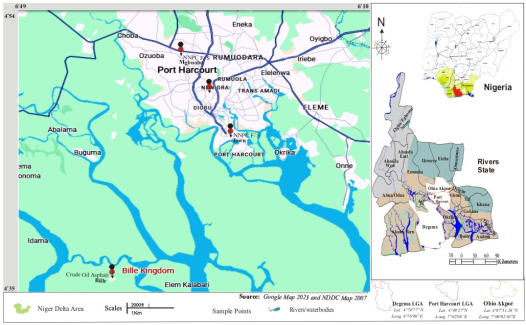
Tires, locally produced fuel, refined diesel kerosene, crude oil, and crude oil asphalt were sourced. The artisanal refinery site in Degema Local Government Area, Borokiri regions, Rivers State, provided the crude oil and crude asphalt, which were sourced from an exclusive area of Bille town. We purchased the locally produced kerosene and fuel from a Borokiri town manufacturing facility. The trash tires were gathered from Mr. Ade's vulcanizer shop on Peter Odili Road in the Port-Harcourt Local Government Area of Rivers State. (Figure 1)
Figure 1. Locational map of sources of materials in Rivers State.
2.2. Collection of Sample, Burning and Preparation of Sample
Each of the materials—crude oil, crude oil asphalt, locally made diesel, refined diesel, tyre, and kerosene—was collected in clearly labeled 4-litre containers, with two containers used for each sample. These were then transported to the Chemistry Research Laboratory at Rivers State University in Port Harcourt, Nigeria, where they were stored. The waste tyres were cut into small pieces using a sharp knife to make them easier to burn, and they were stored alongside the other samples before incineration.
During the experiment, about 75 ml of each liquid sample and 1 kg of the tyre pieces were placed into an aluminium pot inside the combustion chamber and ignited using a lighter. As the materials burned, fly ash particles were carried along with the flue gases toward the chimney. Some of these particles settled on white tiles in the ash tray, while others escaped into the surrounding environment. The remaining ash, known as bottom ash, collected in the aluminium pot.
2.3. Fly Ash Sampling
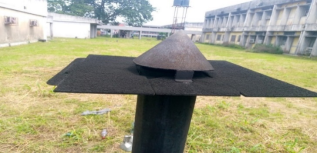
To obtain representative samples and produce enough fly ash for laboratory analysis, each material was burned continuously for four days, with samples collected immediately after combustion each day. After each burning process, fly ash settled on the white tiles in the ash tray (Figure 2), as well as on the inner surfaces of the chimney, furnace, and hood of the incinerator.
The fly ash that collected on the white tiles was carefully swept with a brush into clean 250 ml Pyrex conical flasks, then transferred into amber bottles and tightly sealed. These samples were later taken to the Postgraduate Chemistry Laboratory at Rivers State University, Port Harcourt, Nigeria, where they were stored in a cool, dry place at room temperature.
Figure 2. Deposition of Fly Ash on Tray during Sample Incineration.
2.4. Extraction Procedure
2.4.1. Extraction and Clean-up of PAHs in Fly Ash (Simplified Version)
An ultrasonic extraction method was used in this study. About 0.3 g of fly ash was placed into a clean, labeled beaker, and 20 ml of solvent was added. The mixture was then subjected to ultrasonic agitation using a sonicator (Bransonic Ultrasonic Cleaner 2200) for 15 minutes over a total period of 1 hour, after which it was allowed to settle for 10 minutes. This extraction process was carried out three times for each sample to ensure accuracy. The resulting extracts were carefully poured into clean, labeled beakers, combined, and then spiked with an internal standard solution (O-terphenyl). Each sample was further concentrated to 1 ml under nitrogen in a fume cupboard.
For the clean-up stage, cartridges were prepared by packing them with glass wool, 10 g of activated silica gel, and 5 g of activated anhydrous sodium sulphate (Na2SO4) to remove any moisture from the extracts. A slurry was made using dichloromethane (DCM) for PAH analysis. The 1 ml concentrated extracts were then loaded onto the prepared cartridges and eluted using DCM for PAHs and n-hexane for total petroleum hydrocarbons (TPH). The collected eluates were left to concentrate naturally to 1 ml in a fume cupboard. After this, anhydrous sodium sulphate was added to remove any remaining water, and the samples were transferred into vials and stored in a refrigerator at 4°C until analysis.
2.4.2. Inhalation Bioacessibility Extraction
A measured 0.3 g of fly ash was placed into three separate, properly labeled 50 mL screw-cap Sarstedt tubes for each sample (in triplicate). Then, 20 mL of simulated epithelial fluid was added to each tube, and the mixture was manually shaken to ensure proper mixing. The tubes were tightly capped and placed on an end-over-end shaker set at a temperature of 37 ± 2°C for exposure periods of 24, 72, and 96 hours.
After the shaking process, the pH of each fly ash suspension was checked to ensure it fell within the required range of 1.2–1.7. The samples were then centrifuged at 3000 rpm for 5–10 minutes. The clear supernatant (liquid portion) was carefully collected, treated with 0.1 mL of nitric acid (HNO₃), and stored at temperatures below 4°C until further analysis.
2.4.3. Instrumentation and Analysis (Simplified Version)
To determine the total concentration of PAHs in the fly ash after the simulated in vitro respiratory test, gas chromatography–mass spectrometry (GC-MS) was used. The analysis followed the Unified BARGE Method (UBM), which typically uses an ion trap system; however, a quadrupole system was also considered, as it offers greater robustness but lower sensitivity.
The GC-MS instrument used was an Agilent Technologies 7890A gas chromatograph fitted with a splitless injector and an HP-5MS UI capillary column (30 m length, 250 μm internal diameter, and 0.25 μm film thickness). This was coupled to an Agilent 5975C VL mass spectrometer with a triple-axis detector, along with an Agilent Technologies 7693 autosampler for sample injection. Quantification of PAHs was carried out using a five-point calibration curve. Each sample (1 μL) was injected in splitless mode, with the inlet temperature set at 250°C. The oven temperature started at 100°C and was increased to a final temperature of 320°C. Helium was used as the carrier gas at a flow rate of 1.5 mL/min, and electron ionization at 70 eV was applied for mass detection.
PAHs were identified by comparing their retention times and ion abundance with those of known standards. Quantification of individual PAH compounds was performed using selective ion monitoring (SIM) mode. Chromatographic data were collected and processed using GC-MS ChemStation software. The detection limits for the 16 priority PAHs ranged from 0.001 to 0.01 mg/L.
3. Results
3.1. Total PAHs Concentrations in Fly Ash
The results showed significant variation in PAH bioaccessibility across fuel types. For instance, fly ash from pure diesel and waste tyre combustion exhibited higher levels of bioaccessible PAHs, particularly benzo [a] pyrene (BaP), fluoranthene, and pyrene. These high-molecular-weight PAHs are of concern due to their known carcinogenic potential. Bioaccessibility percentages for BaP reached over 16% in some samples, indicating potential for significant lung uptake. Conversely, light PAHs such as naphthalene and acenaphthylene were either absent or present in negligible quantities across most matrices, likely due to their higher volatility and reduced particle affinity during combustion.
3.2. Total Concentrations of Individual PAHs in Fly Ash Samples (Simplified Version)
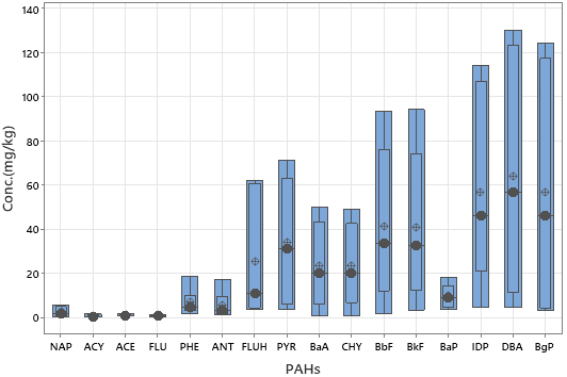
Figure 3 shows the concentrations of individual PAHs found in the fly ash samples. The high molecular weight PAHs, which have five to six rings—such as DBA, IDP, BgP, BKF, and BbF—were found in relatively high amounts, except for BaP, which was lower.
In contrast, low molecular weight PAHs with two to three rings, including NAP, ACY, ACE, PHE, and ANT, were present in very small amounts. PAHs with moderate molecular weight (four rings), such as FLUH, PYR, BaA, and CHY, also showed high concentrations, but their levels were lower than those of the five- and six-ring PAHs.
Figure 3. Boxplot of individual PAH concentrations in Fly Ash.
3.3. Percentage Bioaccessibility of PAH at 48 h
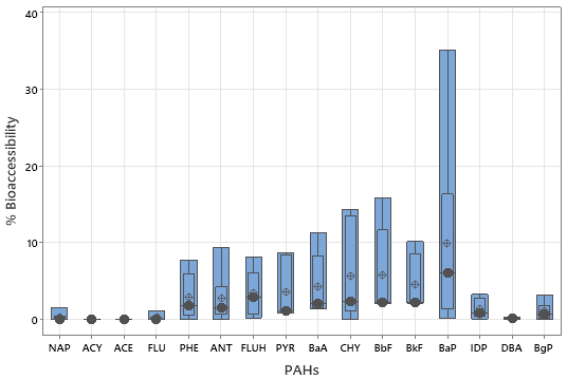
The percentage bioaccessibility of individual PAH at 48 h as shown in Figure 4, the% bioaccessibility of PAH showed that BaP had the highest% bioaccessibility at 48 h while ACY had lowest% bioaccessibility.
Figure 4. Boxplot of% bioccessibility of PAH at 48 h.
3.4. Percentage Bioaccessibility of PAH at 72 h
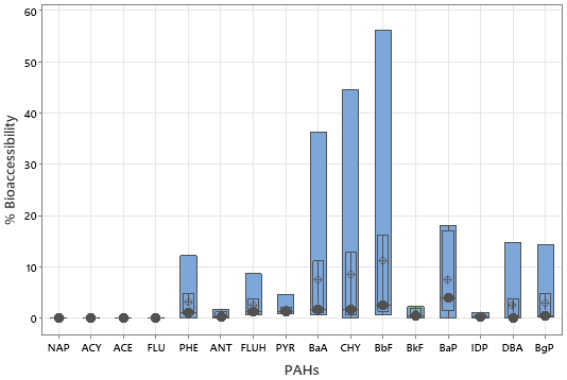
The percentage bioaccessibility of individual PAH at 72 h as shown Figure 5 the% bioaccessibility of PAH showed that BbF had the highest% bioaccessibility at 72 h while NAP, ACY, ACE and FLU had lowest% bioaccessibility.
Figure 5. Boxplot of % bioccessibility of PAH at 72 h.
3.5. Percentage Bioaccessibility of PAH at 96 h
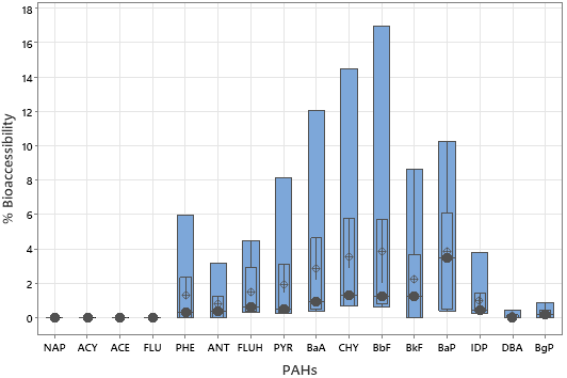
The percentage bioaccessibility of individual PAH at 96 h as shown in Figure 6. The % bioaccessibility of PAH showed that BbF had the highest% bioaccessibility at 96 h while NAP, ACY, ACE and FLU had lowest% bioaccessibility.
Figure 6. Boxplot of % bioccessibility of PAH at 96 h.
4. Discussion
The inhalation bioaccessibility of PAHs is influenced by several factors, including fuel type, combustion temperature, and the physicochemical properties of individual PAHs. Higher temperatures associated with pure diesel and tyre combustion tend to favor the formation of higher-molecular-weight PAHs, which are more likely to bind to fine fly ash particles. These particles, due to their respirable size (PM2.5 or smaller), can penetrate deep into the alveolar regions of the lungs where bioaccessibility becomes a critical factor for toxicological risk. Studies by corroborate these findings, indicating that particles generated from tyre combustion possess high concentrations of carcinogenic PAHs, especially BaP.
The use of artificial lung fluids such as ALF has been supported by recent studies as an effective in vitro proxy for estimating human exposure to inhalable toxicants. Bioaccessibility estimates allow for better risk assessments compared to total concentration metrics, as only the fraction solubilized in lung fluids is available for systemic absorption. Thus, PAH bioaccessibility profiles provide insight into real-world exposure scenarios from occupational or environmental combustion sources.
4.1. Percentage Bioaccessibility at 48h
The 48 h, the degree to which polycyclic aromatic hydrocarbons (PAHs) in fly ash from different petroleum products and waste tyres are available for absorption in the body, shows significant variation across fuel types, whereby Local Diesel (LDF) presented the highest overall bioaccessibility, with Benzo [a] pyrene (BaP) reaching 35.13%, Chrysene (CHY) at 14.32%, and Benzo [a] anthracene (BaA) at 11.37%. These compounds are known carcinogens, and their elevated bioaccessibility indicates a high potential for respiratory health impacts upon inhalation . Pyrene (PYR) and Fluoranthene (FLUH) also showed substantial solubility in simulated lung fluid. Similar trends were observed for Pure Diesel Fuel (PDF) and Crude Oil Fuel (COF), with moderate percentages for BaP and other mid-weight PAHs, supporting the assertion that combustion of petroleum-derived fuels releases respirable particles with significant toxic potential .
Conversely, Crude Asphalt Fuel (CAF) and Kerosene Oil Fuel (KOF) exhibited relatively low PAH bioaccessibility, often below 3% for most compounds, suggesting a lower immediate inhalation risk. Waste Tyre Fuel (WTF), although showing generally modest PAH bioaccessibility, recorded notable levels for Anthracene (ANT, 9.44%) and BaP (7.66%), consistent with previous findings highlighting the complex and toxic composition of tyre combustion residues .
4.2. Percentage Bioaccessibility at 72 h
The 72 h percentage bioaccessibility data for polycyclic aromatic hydrocarbons (PAHs) in fly ash reveal marked variations depending on the fuel source. Local Diesel Fuel (LDF) exhibited the highest bioaccessibility among all matrices, with particularly elevated values for heavy PAHs such as Benzo [b] fluoranthene (BbF) at 56.14%, Chrysene (CHY) at 44.58%, and Benzo [a] anthracene (BaA) at 36.14%. These PAHs are associated with high carcinogenic potential, and their increased bioaccessibility indicates a significant health risk through inhalation exposure . LDF also recorded considerable values for Benzo [a] pyrene (BaP) at 17.96% and Dibenz [a, h] anthracene (DBA) at 14.65%, both classified as Group 1 carcinogens by IARC. Such findings support concerns about the high bioavailability of toxic combustion byproducts from diesel emissions in urban environments.
On the other hand, fuels like Local Diesel (LDF), Crude Asphalt Fuel (CAF), and Crude Oil Fuel (COF) showed comparatively lower PAH bioaccessibility, often below 3% for most compounds. Waste Tyre Fuel (WTF) presented intermediate values, notably with BaP (16.77%) and Fluoranthene (FLUH) (8.63%), suggesting moderate potential for toxicological concern (Wang et al., 2021). Kerosene Oil Fuel (KOF) had significantly high bioaccessibility of Phenanthrene (PHE) at 12.19% indicating the prominence of lighter PAHs in its combustion residue .
4.3. Percentage Bioaccessibility at 96 h
The 96 h percentage, the degree to which polycyclic aromatic hydrocarbons (PAHs) in fly ash from different petroleum products and waste tyres are available for absorption in the body, highlights a generally low trend across most matrices, with notable exceptions. Local Diesel Fuel (LDF) showed the highest bioaccessible concentrations, particularly for heavier and more toxic PAHs such as Benzo [b] fluoranthene (BbF) at 16.96%, Chrysene (CHY) at 14.46%, and Benzo [a] anthracene (BaA) at 12.05%. These values, though reduced compared to earlier time points (e.g., 72 h), still indicate persistent bioaccessibility of certain carcinogenic PAHs over time. Such prolonged availability suggests potential health risks through inhalation, especially in occupational or urban settings where diesel combustion residues are prevalent .
Crude Oil Fuel (COF) and Pure Diesel Fuel (PDF) also demonstrated moderate PAH bioaccessibility at 96 h, with COF exhibiting relatively high values for compounds like Pyrene (PYR) at 8.16% and BaP at 10.27%. Waste Tyre Fuel (WTF), though generally showing low percentages, maintained higher values for Fluoranthene (FLUH) at 2.43% and Benzo [k] fluoranthene (BkF) at 1.16%, suggesting continued leaching potential of these compounds. The complete absence of bioaccessibility for lighter PAHs such as Naphthalene (NAP), Acenaphthene (ACE), and Fluorene (FLU) across all matrices may be due to their higher volatility or complete degradation during combustion .
5. Conclusion
This study highlights the significant inhalation bioaccessibility of PAHs in fly ash generated from petroleum products and waste tyres. Among the fuels tested, pure diesel and waste tyre combustion produced fly ash with the highest bioaccessible concentrations of carcinogenic PAHs such as BaP and fluoranthene. The results underline the importance of incorporating bioaccessibility measurements into air quality and health risk assessments. The analysis of the percentage bioaccessibility of polycyclic aromatic hydrocarbons (PAHs) at 48, 72, and 96 h in fly ash derived from petroleum products and waste tyres reveals significant temporal and fuel-type variations. At 48 h, fly ash from crude oil (COF) and pure diesel (PDF) showed relatively higher PAH bioaccessibility, particularly for high molecular weight compounds like Benzo [a] pyrene (BaP) and Chrysene (CHY), suggesting early-phase release potential. By 72 h, there was a notable increase in bioaccessibility for some PAHs in Local Diesel Fuel (LDF) and Waste Tyre Fuel (WTF), indicating delayed leaching and prolonged exposure risk.
At 96 h, while overall PAH bioaccessibility declined, persistent levels of toxic PAHs such as BaP, BbF, and CHY remained detectable, especially in LDF and COF matrices. This persistence suggests that even after extended exposure, these combustion residues retain their potential to release hazardous compounds in the lung environment. The consistently low or zero bioaccessibility of lighter PAHs (e.g., Naphthalene, Acenaphthene) across all time points indicates that heavier PAHs pose a more sustained inhalation risk. These findings emphasize the need for stricter regulation and monitoring of combustion-derived fly ash, particularly from diesel and tyre sources, due to their long-term health implications through inhalation exposure.
Abbreviations

B (a) P

Benzo (a) Pyrene

CHY

Chrysene

LDF

Local Diesel Fuel

WTF

Waste Tyre fuel

B (b) F

Benzo (b) Fluoranthrene

COF

Crude Oil Fuel

PM

Particulate Matter

ALF

Artificial Lysosomal Fluid

POPs

Persistent Organic Pollutants

PAHs

Polycyclic Aromatic Hydrocarbons

LDF

Local Diesel Fuel

PDF

Pure Diesel Fuel

WTF

Waste Tyre Fuel

KOF

Kerosene Fuel

COF

Crude Oil Fuel

CAF

Crude Asphalt Fuel

Na2SO4

Anhydrous Sodium Sulphate

HNO3

Nitirc Acid

DCM

Dichloromethane

UBM

Unified Bioaccessibility Method

GC-MS

Gas Chromatography-Mass Spectrophotometer

TPH

Total Petroleum Hydrcarbons

SIM

Selective Ion Monitoring

NAP

Naphthalene

ACY

Acenaphthylene

ACE

Acenaphthene

PHE

Phenynthrene

ANT

Antracene

FLUH

Fluoranthrene

PYR

Pyrene

FLU

Fluorene

DBA

Dibenz (a, h) Anthracene

BaA

Benz (a) Anthracene

BkF

Benzo [k] Fluoranthene

Acknowledgments
I wish to use this medium to thank Dr Falodum Tosin Olarewaju for the technical assistance given during the field and lab work of this research.
Author Contributions
Nwafor Uloma Hanachor: Investigation
Boisa Ndokiari: Conceptualization, Writing – original draft
Konne Joshua Lelesi: Supervision
Patrick Mordeciah Amaibi: Writing – review & editing
Conflicts of Interest
The authors declare no conflicts of interest.
Appendix
Table A1. Total concentration (mg/kg) of polycyclic aromatic hydrocarbons in fly ash generated from waste tyres, petroleum and its products (Mean ±SD, n= 3).

CPDS

CAF

COF

KOF

LDF

PDF

WTF

NAP

2.4

4.73

5.38

0.64

0.7

0.12

ACY

0.51

1.69

0.43

0.27

0.26

0.92

ACE

0.85

1.69

1.79

0.7

1.01

0.85

FLU

0.28

1.46

0.79

0.38

0.92

1.38

PHE

18.62

4.38

3.69

1.64

7.31

4.82

ANT

17.33

3.39

2.52

1.12

6.71

1.8

FLUH

62.11

60.13

16.22

5.39

4.42

3.71

PYR

71.22

60.36

15.32

6.69

3.42

47.05

BaA

50.05

40.99

16.62

7.69±

0.83

23.87

CHY

48.73

40.49

15.38

8.62

0.83

24.93

BbF

93.39

69.94

32.52

15.45

1.71

34.46

BkF

94.06

67.23

31.8

15.22

3.37

33.62

BaP

18.22

12.19

5.65

12.83

3.62

4.83

IDP

104.69

113.87

47.21

26.25

4.46

44.42

DBA

120.99

129.92

59.77

13.68

4.37

53.16

BgP

124.14

114.89

54.58

3.18

4.69

37.25

Table A2. Percentage (%) bioaccessibility of polycyclic aromatic hydrocarbons in fly ash generated from waste tyres, petroleum and its products at 48 h.

CPDS

CAF%

COF%

KOF%

LDF%

PDF%

WTF%

NAP

0

0

0

1.56

0

0

ACY

0

0

0

0

0

0

ACE

0

0

0

0

0

0

FLU

1.14

0

0

0

0

0

PHE

7.79

2.28

5.42

1.22

0

0.83

ANT

1.33

0.89

2.57

1.79

0

9.44

FLUH

8.11

0.85

4.62

1.29

0.23

5.39

PYR

8.71

1.01

8.36

1.19

1.17

0.79

BaA

11.37

1.63

2.23

1.82

7.23

1.34

CHY

14.32

0.05

2.93

1.86

13.25

1.56

BbF

10.29

2.09

2.03

2.39

15.79

2.09

BkF

10.18

2.16

2.14

2.43

8.01

2.14

BaP

35.13

0.16

10.09

1.79

4.42

7.66

IDP

3.27

0.63

0.51

1.14

2.69

0.09

DBA

0.29

0.07

0.05

0.22

0

0.13

BgP

0.17

0.79

0.73

0

3.19

1.39

Table A3. Percentage (%) bioaccessibility of polycyclic aromatic hydrocarbons in fly ash generated from waste tyres, petroleum and its products at 72h.

CPDS

CAF

COF

KOF

LDF

PDF

WTF

NAP

0

0

0

0

0

0

ACY

0

0

0

0

0

0

ACE

0

0

0

0

0

0

FLU

0

0

0

0

0

0

PHE

1.18

1.14

1.08

12.19

0

2.28

ANT

0.29

0.29

0.39

1.79

0

1.11

FLUH

1.30

0.65

0.74

1.11

2.04

8.63

PYR

1.39

0.79

1.37

1.05

4.68

0.87

BaA

1.79

1.32

0.66

1.69

36.14

2.76

CHY

2.38

1.65

0.78

1.74

44.58

0.04

BbF

2.96

1.60

0.58

2.20

56.14

2.96

BkF

0.01

1.67

0.59

2.23

0.29

0.03

BaP

5.22

0.08

2.83

1.95

17.96

16.77

IDP

0.11

0.48

0.13

1.14

0.45

0.05

DBA

0.07

0.05

0.02

0.15

14.65

0.13

BgP

0.51

0.59

0.16

0.31

14.29

1.61

Table A4. Percentage (%) bioaccessibility of polycyclic aromatic hydrocarbons in fly ash generated from waste tyres, petroleum and its products at 96 h.

CPDS

CAF

COF

KOF

LDF

PDF

WTF

NAP

0

0

0

0

0

0

ACY

0

0

0

0

0

0

ACE

0

0

0

0

0

0

FLU

0

0

0

0

0

0

PHE

1.16

0.46

5.96

0

0

0.21

ANT

0.23

0.59

3.17

0

0

0.56

FLUH

0.52

0.29

4.50

0.37

0.68

2.43

PYR

0.59

0.36

8.16

0.45

1.46

0.26

BaA

1.36

0.56

2.17

0.39

12.05

0.54

CHY

1.72

0.69

2.86

0.69

14.46

0.84

BbF

1.35

0.63

1.99

0.84

16.96

1.13

BkF

1.31

0.02

2.04

0

8.61

1.16

BaP

4.28

2.71

10.27

0.55

4.69

0.39

IDP

0.41

0.26

0.64

0.42

3.81

0.38

DBA

0.04

0.02

0.03

0.07

0.46

0.02

BgP

0

0.30

0.89

0.31

0

0.03

References
[1] ATSDR (2022). Toxicological Profile for Polycyclic Aromatic Hydrocarbons (PAHs). U. S. Department of Health and Human Services, Agency for Toxic Substances and Disease Registry.
[2] Aurelie, P., Mark, R. C., Joanna, W & Francis, D (2017). In Vitro Investigations of Human Bioaccessibility from Reference Materials Using Simulated Lung Fluids. International Journal of Environmental Research on Public Health, 14(2): 112.
[3] Domingues, R. F., Dallarosa, J. B., & Alves, S. H. (2021). Characterization of polycyclic aromatic hydrocarbons in particulate matter from waste tire combustion. Environmental Science and Pollution Research, 28(7), 8395–8403.
[4] Fang, G.-C., Chang, C.-N., Wu, Y.-S., Fu, P.-P., & Chen, M.-H. (2015). Risk assessment of atmospheric PAHs in particulate matter in central Taiwan. Environmental Geochemistry and Health, 37(2), 277–288.
[5] Farraj, A. K., Walsh, L., Haykal-Coates, N., Malik, F., Winsett, D. W., & Kodavanti, U. P. (2019). Inhalation exposure to combustion-source particles increases lung oxidative stress and inflammation. Toxicology and Applied Pharmacology, 382, 114746.
[6] Gong, X., Zhang, L., Zhao, L., Zhu, Y., & Li, X. (2020). In vitro assessment of inhalation bioaccessibility of heavy metals in PM2.5 and associated health risks. Environmental Pollution, 257, 113476.
[7] Huang, Y., Ho, S. S. H., Ho, K. F., Lee, S. C., Gao, Y., Cheng, Y., & Ip, H. S. S. (2015). Characterization and health risk assessment of PAHs in PM2.5 in the atmosphere of an urban roadside environment. Environmental Science and Pollution Research, 22(13), 10068–10078.
[8] IARC (International Agency for Research on Cancer) (2012). IARC Monographs on the Evaluation of Carcinogenic Risks to Humans. Volume 100F. A Review of Human Carcinogens: Chemical Agents and Related Occupations. Lyon: World Health Organization.
[9] Li, Y., Bai, Z., Zhang, L., Liu, Y., & Wang, X. (2018). Polycyclic aromatic hydrocarbons in atmospheric particulate matter and gaseous phase during the combustion of different solid fuels. Atmospheric Environment, 177, 70–79.
[10] Li, J., Zhang, G., Liu, X., Liu, B., & Song, J. (2018). In vitro bioaccessibility and risk assessment of PAHs in urban dust and its relationship to physicochemical properties. Science of The Total Environment, 610–611, 1268–1276.
[11] Manoli, E., & Samara, C. (1999). Polycyclic aromatic hydrocarbons in natural waters: sources, occurrence and analysis. TrAC Trends in Analytical Chemistry, 18(6), 417–428.
[12] Manoli, E., Voutsa, D., & Samara, C. (2016). Polycyclic aromatic hydrocarbons (PAHs) in airborne particulate matter in urban environments: Sources and potential health risk. Environmental Pollution, 151(3), 472–482.
[13] Menichini, E., Abate, V., Attias, L., De Luca, S., Di Domenico, A., Fochi, I.,... & Viviano, G. (2011). Artificial weathering of rubber granulates from recycled tyres: Evaluation of organic pollutants release. Chemosphere, 83(4), 519–526.
[14] Shi, Y., Liu, X., Yuan, M., Li, Y., & Chen, Y. (2020). Bioaccessibility of PAHs in urban road dust and associated inhalation health risk. Environmental Geochemistry and Health, 42, 1959–1973.
[15] Wang, Y., Zhao, X., Zhang, X., & Jiang, H. (2021). Source profiles and health risk assessment of PAHs from waste tyre combustion. Environmental Pollution, 268, 115865.
[16] Wiseman, C. L. S., & Zereini, F. (2014). Characterizing metal (loid) solubility in airborne PM using simulated lung fluids: A critical review. Environmental Pollution, 184, 640–651.
[17] Wiseman, C. L. S., & Zereini, F. (2014). Characterizing metal (loid) solubility in airborne PM10, PM2.5 and PM1 in Frankfurt am Main, Germany using simulated lung fluids. Science of The Total Environment, 493, 487–500.
[18] Zhang, Y., Tao, S., Shen, H., & Ma, J. (2020). Inhalation exposure to polycyclic aromatic hydrocarbons and associated health risks in urban China. Science of the Total Environment, 586, 161–168.
[19] Zhang, Z., Xu, X., & Li, T. (2021). Bioaccessibility of PAHs in airborne particles using artificial respiratory fluids: Implications for human health risk assessment. Environmental Research, 201, 111592.
Cite This Article
  • APA Style

    Hanachor, N. U., Ndokiari, B., Lelesi, K. J., Amaibi, P. M. (2026). Inhalation Bioaccessibility of Polycyclic Aromatic Hydrocarbons in Fly Ash Generated From Petroluem Products and Waste Tyres. Journal of Health and Environmental Research, 12(3), 60-70. https://doi.org/10.11648/j.jher.20261203.12

    Copy | Download

    ACS Style

    Hanachor, N. U.; Ndokiari, B.; Lelesi, K. J.; Amaibi, P. M. Inhalation Bioaccessibility of Polycyclic Aromatic Hydrocarbons in Fly Ash Generated From Petroluem Products and Waste Tyres. J. Health Environ. Res. 2026, 12(3), 60-70. doi: 10.11648/j.jher.20261203.12

    Copy | Download

    AMA Style

    Hanachor NU, Ndokiari B, Lelesi KJ, Amaibi PM. Inhalation Bioaccessibility of Polycyclic Aromatic Hydrocarbons in Fly Ash Generated From Petroluem Products and Waste Tyres. J Health Environ Res. 2026;12(3):60-70. doi: 10.11648/j.jher.20261203.12

    Copy | Download

  • @article{10.11648/j.jher.20261203.12,
      author = {Nwafor Uloma Hanachor and Boisa Ndokiari and Konne Joshua Lelesi and Patrick Mordeciah Amaibi},
      title = {Inhalation Bioaccessibility of Polycyclic Aromatic Hydrocarbons in Fly Ash Generated From Petroluem Products and Waste Tyres},
      journal = {Journal of Health and Environmental Research},
      volume = {12},
      number = {3},
      pages = {60-70},
      doi = {10.11648/j.jher.20261203.12},
      url = {https://doi.org/10.11648/j.jher.20261203.12},
      eprint = {https://article.sciencepublishinggroup.com/pdf/10.11648.j.jher.20261203.12},
      abstract = {The inhalation of fine particulate matter (PM) containing polycyclic aromatic hydrocarbons (PAHs) poses significant health and environmental risks due to the potential bioaccessibility of these toxic compounds in the human respiratory system. This study investigates the inhalation bioaccessibility of PAHs associated with fly ash produced from the combustion of petroleum-derived fuels (local diesel, pure diesel, kerosene, asphalt, and crude oil) and waste tyres. Fly ash samples were collected from the different sample materials and analyzed for 16 priority PAHs using gas chromatography-mass spectrometry (GC-MS). The extent to which a substance becomes available for absorption in the body was assessed using artificial lysosomal fluid (ALF) to simulate human lung conditions over exposure periods from 48 hours up to 96 hours. The results revealed that high-molecular-weight PAHs such as benzo [a] pyrene (BaP), fluoranthene, and pyrene were the most bioaccessible, particularly in fly ash from pure diesel and tyre combustion. the degree to which polycyclic aromatic hydrocarbons (PAHs) in fly ash from different petroleum products and waste tyres are available for absorption in the body, varied significantly across fuel types, with waste tyre and diesel fly ash exhibiting the highest values. The findings underscore the importance of considering inhalation bioaccessibility when assessing the health risks of airborne PAHs from combustion sources. This study provides critical insights for air quality management and emphasizes the need for stricter controls on emissions from petroleum product use and waste tyre incineration.},
     year = {2026}
    }
    

    Copy | Download

  • TY  - JOUR
    T1  - Inhalation Bioaccessibility of Polycyclic Aromatic Hydrocarbons in Fly Ash Generated From Petroluem Products and Waste Tyres
    AU  - Nwafor Uloma Hanachor
    AU  - Boisa Ndokiari
    AU  - Konne Joshua Lelesi
    AU  - Patrick Mordeciah Amaibi
    Y1  - 2026/09/02
    PY  - 2026
    N1  - https://doi.org/10.11648/j.jher.20261203.12
    DO  - 10.11648/j.jher.20261203.12
    T2  - Journal of Health and Environmental Research
    JF  - Journal of Health and Environmental Research
    JO  - Journal of Health and Environmental Research
    SP  - 60
    EP  - 70
    PB  - Science Publishing Group
    SN  - 2472-3592
    UR  - https://doi.org/10.11648/j.jher.20261203.12
    AB  - The inhalation of fine particulate matter (PM) containing polycyclic aromatic hydrocarbons (PAHs) poses significant health and environmental risks due to the potential bioaccessibility of these toxic compounds in the human respiratory system. This study investigates the inhalation bioaccessibility of PAHs associated with fly ash produced from the combustion of petroleum-derived fuels (local diesel, pure diesel, kerosene, asphalt, and crude oil) and waste tyres. Fly ash samples were collected from the different sample materials and analyzed for 16 priority PAHs using gas chromatography-mass spectrometry (GC-MS). The extent to which a substance becomes available for absorption in the body was assessed using artificial lysosomal fluid (ALF) to simulate human lung conditions over exposure periods from 48 hours up to 96 hours. The results revealed that high-molecular-weight PAHs such as benzo [a] pyrene (BaP), fluoranthene, and pyrene were the most bioaccessible, particularly in fly ash from pure diesel and tyre combustion. the degree to which polycyclic aromatic hydrocarbons (PAHs) in fly ash from different petroleum products and waste tyres are available for absorption in the body, varied significantly across fuel types, with waste tyre and diesel fly ash exhibiting the highest values. The findings underscore the importance of considering inhalation bioaccessibility when assessing the health risks of airborne PAHs from combustion sources. This study provides critical insights for air quality management and emphasizes the need for stricter controls on emissions from petroleum product use and waste tyre incineration.
    VL  - 12
    IS  - 3
    ER  - 

    Copy | Download

Author Information
  • Department of Chemistry, Rivers State University, Port-Harcourt, Nigeria

    Biography: Nwafor Uloma Hanachor is a Nigerian Chemist an emerging researcher with a strong academic focus on environmental science and public health, particularly in the area of airborne contaminants and their human health implications. Her research centers on the inhalation bioaccessibility of toxic substances such as polycyclic aromatic hydrocarbons (PAHs) and heavy metals present in fly ash generated from petroleum products and waste tyres. Nwafor Uloma Hanachor is recognized for her analytical approach to data interpretation, her commitment to advancing environmental health research, and her contributions toward sustainable solutions for pollution control and risk assessment.

    Research Fields: Environmental Chemistry

  • Department of Chemistry, Rivers State University, Port-Harcourt, Nigeria

    Biography: Boisa Ndokiari is a Nigerian Chemist, academic and researcher recognized for his contribution to environmental pollution studies, analytical chemistry and toxicological assessments. His work focuses on the detection, fate and health implications of emerging contaminants, including persistent organic pollutants and per- and polyfluoroalkyl substances (PFAS). Through research, teaching mentorship, he has played an important role in advancing environmental health sciences and strengthening laboratory and research capacity in Nigeria.

    Research Fields: Environmental Analytical Chemistry

  • Department of Chemistry, Rivers State University, Port-Harcourt, Nigeria

    Biography: Konne Joshua Lelesi hails from Uegwere Boue in the Khana LGA of Rivers State, educated at the Community Primary School 1 Uegwere Boue (FSLC-1987), Community Secondary School Uegwere Boue (SSCE-1994), Rivers State University of Science and Technology now Rivers State University PH. (BSc- 2000 & M. Sc-2007), and University of Bristol, UK (PhD, Materials Chemistry-2013), respectively. He has been a Professor of Materials Chemistry since July, 2023 in the Department of Chemistry having grown through the ranks from Graduate Assistantship in Nov. 2005. His research areas cover Nanotechnology, Solid Mineral Development, Environmental Treatment/Clean up and Energy Materials. He has published over 70 research papers in reputable journals with visibilities on Google Scholar, Researchgate, Elsevier, Clarivate and Scopus. He has supervised 63 undergraduates, 36 MScs and 15 PhDs.

    Research Fields: Materials Chemistry

  • Department of Chemistry, Rivers State University, Port-Harcourt, Nigeria

    Biography: Patrick Mordeciah Amaibi is a distinguished academic and researcher currently serving as a Lecturer at Rivers State University in Nigeria. Holding a Doctor of Philosophy degree, his expertise lies at the intersection of environmental science and chemistry. His professional journey also includes an affiliation with PAMO University of Medical Sciences and a past position as a Research Assistant at Northumbria University in the United Kingdom. His research portfolio is substantial, focusing on critical environmental issues such as pollution, water quality, soil science, and the bioaccessibility of heavy metals. Through impactful publications and collaborations with researchers globally, Dr. Amaibi has contributed significantly to the understanding of environmental contaminants and their potential impact on human health. His research impact, as measured by bibliometric indices, indicates a growing influence within his field.

    Research Fields: Analytical/Environmental Chemistry

  • Abstract
  • Keywords
  • Document Sections

    1. 1. Introduction
    2. 2. Materials and Methods
    3. 3. Results
    4. 4. Discussion
    5. 5. Conclusion
    Show Full Outline
  • Abbreviations
  • Acknowledgments
  • Author Contributions
  • Conflicts of Interest
  • Appendix
  • References
  • Cite This Article
  • Author Information