Abstract
Innovative leadership (IL) is widely recognized as a critical antecedent driving team innovation(TI). However, its underlying mechanism remains insufficiently explored, leaving a critical research gap in leadership and innovation management. To address this gap, this study extends the literature by developing a moderated mediation model grounded in leader-member exchange differentiation (LMXD) and relational transparency (RT). LMXD refers to the variation in leader-member exchange (LMX) quality, while RT reflects team communication openness; both link IL to team innovation, with LMXD as a mediator and RT as a moderator. Based on social exchange theory and organizational justice theory, we argue that IL positively influences TI via LMXD: IL shapes LMX quality, and these differentiated exchanges facilitate TI. In particular, high team RT strengthens the LMXD–TI relationship by mitigating conflicts arising from differentiated exchanges. Data were collected from a sample of 364 employees nested within 96 teams across multiple provinces and cities in China, with coverage spanning the manufacturing, technology, and service sectors. Multi-wave, multi-source results provide strong empirical support for the model. Overall, this research contributes by offering an integrated perspective on "differentiated" mechanisms, bridging the IL-TI gap via LMXD and RT, and extending LMX literature by focusing on differentiation. It also provides theoretical implications for leadership research and actionable recommendations for practitioners to manage diverse teams and enhance innovation.
|
Published in
|
Journal of Human Resource Management (Volume 14, Issue 2)
|
|
DOI
|
10.11648/j.jhrm.20261402.14
|
|
Page(s)
|
134-143 |
|
Creative Commons
|

This is an Open Access article, distributed under the terms of the Creative Commons Attribution 4.0 International License (http://creativecommons.org/licenses/by/4.0/), which permits unrestricted use, distribution and reproduction in any medium or format, provided the original work is properly cited.
|
|
Copyright
|
Copyright © The Author(s), 2026. Published by Science Publishing Group
|
Keywords
Innovative Leadership, Leader-member Exchange Differentiation, Relational Transparency, Team Innovation,
Moderated Mediation Model
1. Introduction
Teams, as the core units for organizational innovation, directly impact competitiveness
| [11] | Gonzalez, R. V. D. (2022). Innovative performance of project teams: the role of organizational structure and knowledge-based dynamic capability. Journal of Knowledge Management, 26(5), 1164-1186.
https://doi.org/10.1108/JKM-03-2021-0259 |
[11]
. The process of team innovation, involving knowledge integration and creation, is a key focus for research and practice
. Leadership is a critical input that shapes innovation by influencing team processes
| [30] | Weiss, M., Baer, M., & Hoegl, M. (2022). The human side of innovation management: Bridging the divide between the fields of innovation management and organizational behavior. Journal of Product Innovation Management, 39(3), 283-291.
https://doi.org/10.1111/jpim.12624 |
[30]
. While transformational and authentic leadership have been widely studied, innovative leadership (IL) remains underexplored
| [7] | Costa, J., Pádua, M., & Moreira, A. C. (2023). Leadership styles and innovation management: What is the role of human capital? Administrative Sciences, 13(2), 47.
https://doi.org/10.3390/admsci13020047 |
| [33] | Zhang, M. J., Zhang, Y., & Law, K. S. (2022). Paradoxical leadership and innovation in work teams: The multilevel mediating role of ambidexterity and leader vision as a boundary condition. Academy of Management Journal, 65(5), 1652-1679.
https://doi.org/10.5465/amj.2017.1265 |
[7, 33]
. Although linked to positive outcomes, its mechanisms and boundary conditions are unclear. In diverse teams, especially, effectively managing differences to spur team innovation is an unresolved "black box"
| [1] | Aman-Ullah, A., Mehmood, W., Amin, S., & Abbas, Y. A. (2022). Human capital and organizational performance: A moderation study through innovative leadership. Journal of Innovation & Knowledge, 7(4), 100261.
https://doi.org/10.1016/j.jik.2022.100261 |
| [20] | Liu, S., Lai, J., Luo, B. N., & Moran, P. (2023). Will goal clarity lower team innovation? A moderated mediation model of inter-team trust. Journal of Knowledge Management, 27(4), 975-992. https://doi.org/10.1108/JKM-10-2021-0787 |
[1, 20]
.
This study defines Leader-Member Exchange Differentiation (LMXD) as the degree of variation in the quality of leader-member exchange (LMX) relationships, which is often viewed as a "double-edged sword": while it may undermine team cohesion, it can also enable targeted motivation through differentiated support
| [25] | Park, H., Park, H., & Liden, R. C. (2022). Leader-member exchange differentiation and employee performance: A political perspective. Journal of Organizational Behavior, 43(6), 1121-1135. https://doi.org/10.1002/job.2611 |
[25]
. By integrating social exchange and justice theories, the research develops a moderated mediation model. It aims to systematically examine the mechanisms and boundary conditions through which IL influences team innovation (TI), offering both theoretical insights and practical guidance for implementing innovative leadership in diverse teams.
2. Theoretical and Hypotheses Development
2.1. IL and TI
IL is the leadership style most closely associated with innovation practice
. It drives TI by motivating members' innovative "reciprocation" through various forms of "giving." Based on social exchange theory, interactions between leaders and members follow the "giving-receiving" norm of reciprocity
.
IL convey trust by granting autonomy, recognizing contributions, tolerating failure, and providing support. Members perceive these actions as encouragement for their innovative roles and, driven by an obligation to reciprocate, respond with greater innovative input and behavior
| [31] | Whitney, J. M., Henry, S. E., & Bradley, B. H. (2022). Maybe it is who you know: Social networks and leader-member exchange differentiation. Group & Organization Management, 47(2), 300-341. https://doi.org/10.1177/10596011221086327 |
[31]
. Leveraging their coordination and professional expertise, leaders identify individual characteristics of members and offer differentiated incentives and guidance
| [5] | Chemers, M. M., Watson, C. B., & May, S. T. (2000). Dispositional affect and leadership effectiveness: A comparison of self-esteem, optimism, and efficacy. Personality and Social Psychology Bulletin, 26(3), 267-277.
https://doi.org/10.1177/0146167200265001 |
[5]
. To maintain balance in the exchange relationship, members reciprocate with stronger innovative motivation and actions. Furthermore, leaders' own innovative thinking and behavior provide an observable and imitable model
| [23] | Mayer, D. M., Aquino, K., Greenbaum, R. L., & Kuenzi, M. (2012). Who displays ethical leadership, and why does it matter? An examination of antecedents and consequences of ethical leadership. Academy of management journal, 55(1), 151-171. https://doi.org/10.5465/amj.2008.0276 |
[23]
. Through social learning, members reinforce their innovative behaviors, indirectly enhancing the team’s innovative climate and capability, thereby contributing to the team’s innovation goals
| [28] | Teng, L. I., Qin, L. I. N., & Jie, S. O. N. G. (2023). Entrepreneurial leadership, challenging stress, and employee innovation behavior: The moderating role of team identification. Journal of East China Normal University (Philosophy and Social Sciences), 55(3), 143.
https://link.cnki.net/doi/10.16382/j.cnki.1000-5579.2023.03.014 |
[28]
. Therefore, we propose:
H1: IL positively influences TI.
2.2. IL and LMXD
Team internal relationships constitute an ongoing social exchange process between leaders and members, aimed at guiding members to collaboratively achieve team objectives
. Leaders play the role of key resource allocators
| [5] | Chemers, M. M., Watson, C. B., & May, S. T. (2000). Dispositional affect and leadership effectiveness: A comparison of self-esteem, optimism, and efficacy. Personality and Social Psychology Bulletin, 26(3), 267-277.
https://doi.org/10.1177/0146167200265001 |
[5]
. To maximize return on investment, they establish exchange relationships of varying quality with members based on their "reciprocation potential." With members demonstrating high reciprocation potential (e.g., exceptional innovation outcomes), leaders build high-quality, close exchange relationships, while maintaining basic exchange relationships with other members
| [27] | Stewart, M. M., & Johnson, O. E. (2009). Leader-member exchange as a moderator of the relationship between work group diversity and team performance. Group & Organization Management, 34(5), 507-535.
https://doi.org/10.1177/1059601108331220 |
[27]
. Accordingly, IL establish high LMX with members possessing high innovation potential by granting greater autonomy, critical information, and innovation support, while maintaining routine working relationships with other members to ensure foundational team operations. This innovation-oriented strategic investment behavior directly shapes and elevates the level of LMXD within the team. Existing research indicates that leaders with high cognitive ability and insight are more inclined to proactively adopt such differentiation strategies
| [22] | Matta, F. K., Frank, E. L., Farh, C. I., & Lee, S. M. (2024). Do intelligent leaders differentiate exchange relationships intelligently? A functional leadership approach to leader-member exchange differentiation. Journal of Applied Psychology, 109(4), 490. https://doi.org/10.1037/apl0001164 |
[22]
. Therefore, we propose:
H2: IL positively influences LMXD.
2.3. LMXD and Team Innovation
Through a differentiated "investment-reciprocation" cycle, LMXD establishes two parallel yet complementary social exchange pathways that jointly promote team innovation. High-LMX members, perceiving significant investment from their leader, develop a strong sense of reciprocal obligation and motivation
| [19] | Liden, R. C., Erdogan, B., Wayne, S. J., & Sparrowe, R. T. (2006). Leader-member exchange, differentiation, and task interdependence: Implications for individual and group performance. Journal of Organizational Behavior, 27(6), 723-746. https://doi.org/10.1002/job.409 |
[19]
. As a result, they are more inclined to exert effort, take on challenging tasks, and proactively engage in innovative behaviors to sustain and enhance the value of the exchange relationship
. This creates a direct innovation pathway marked by strong incentives and high reciprocation, serving as a core driver of team innovation.
For low-LMX members, the clearly differentiated structure defines their roles, responsibilities, and contribution boundaries. This "explicit exchange contract" reduces uncertainty, enabling members to act on basic norms of reciprocity and the long-term expectation of improving their relational status within this transparent framework
| [17] | Kim, M. S., Phillips, J. M., Park, W. W., & Gully, S. M. (2023). When leader-member exchange leads to knowledge sharing: The roles of general self-efficacy, team leader modeling, and LMX differentiation. The International Journal of Human Resource Management, 34(7), 1442-1469.
https://doi.org/10.1080/09585192.2021.1886150 |
[17]
. At the same time, the recognition accorded to high-LMX members motivates low-LMX members to improve their own performance and innovative contributions in pursuit of higher-quality exchange relationships in the future
| [21] | Liao, R., Li, R., Zhu, X., Liu, W., & Shang, Z. (2025). Exploring the impact of leader knowledge sharing on leader-rated employee performance: a curvilinear effect moderated by employee humility. International Journal of Knowledge Management Studies, 16(3), 263-288.
https://doi.org/10.1504/IJKMS.2025.149512 |
[21]
. Thus, we propose:
H3: LMXD positively influences TI.
2.4. The Moderating Role of Relational Transparency
Members' acceptance of LMXD hinges not only on distributive outcomes but also on their perceptions of procedural fairness in decision-making and the quality of interpersonal treatment during implementation
| [18] | Lind, E. A. (2001). Fairness heuristic theory: Justice judgments as pivotal cognitions in organizational relations. In J. Greenberg & R. Cropanzano (Eds.), Advances in organizational justice (pp. 56-88). Stanford University Press. |
[18]
. Relational transparency reflects the degree to which leaders openly share information, communicate candidly, and align their words with actions in interactions
| [15] | Jiang, H., & Shen, H. (2023). Toward a relational theory of employee engagement: Understanding authenticity, transparency, and employee behaviors. International Journal of Business Communication, 60(3), 948-975.
https://doi.org/10.1177/2329488420954236 |
[15]
. High relational transparency involves leaders clearly communicating the criteria, processes, and rationale behind resource allocation and relationship development. This renders the formation of LMXD more transparent and justifiable, allowing members to more readily attribute differentiation to fair assessments of contribution or capability. In such conditions, high-LMX members are likely to view their favorable status as a fair acknowledgment of their contributions, thereby experiencing heightened responsibility and innovative reciprocity. Low-LMX members, equipped with clearer information, are more inclined to see their standing as mutable through improved performance
| [3] | Baquero, A. (2023). Authentic leadership, employee work engagement, trust in the leader, and workplace well-being: A moderated mediation model. Psychology Research and Behavior Management, 16, 1403-1424.
https://doi.org/10.2147/PRBM.S407672 |
| [24] | Meng, J., Pan, P. L., Cacciatore, M. A., & Sanchez, K. R. (2024). The integrated role of adaptive leadership, sense of empathy and communication transparency: Trust building in corporate communication during the pandemic. Corporate Communications: An International Journal, 29(4), 503-515.
https://doi.org/10.1108/CCIJ-09-2023-0125 |
[3, 24]
. Thus, high relational transparency can amplify the positive effects of LMXD, fostering team innovation.
Conversely, when the LMXD formation process lacks transparency, members lack the information needed to assess procedural fairness. This raises the likelihood that they will attribute differentiation to leader favoritism or unfairness
| [4] | Burhan, Q. U. A., Khan, M. A., & Malik, M. F. (2023). Achieving transparency in business processes by developing and implementing ethical climate: An integrated model of ethical leadership and engagement. Business Process Management Journal, 29(3), 757-776.
https://doi.org/10.1108/BPMJ-08-2022-0384 |
[4]
. Such perceptions may not only evoke feelings of injustice and disengagement among low-LMX members but can also place social pressure on high-LMX members, who may be perceived as part of an "in-group." Therefore, we propose:
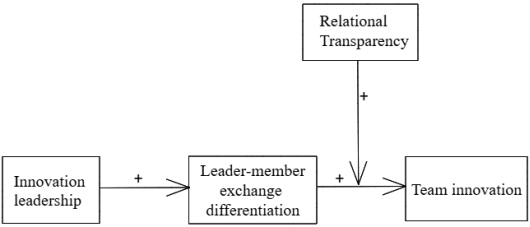
H4: RT positively moderates the relationship between LMXD and TI; specifically, the positive effect of LMXD on TI is stronger when RT is high.
Based on the above analysis, the following theoretical model is proposed (
Figure 1).
Figure 1. Theoretical framework.
3. Research Method
3.1. Sample and Procedure
This study employed a multi-wave survey design, drawing data from 20 enterprises in Beijing, Shanghai, Shenzhen, Hangzhou, Ningbo, and several cities in Fujian Province. The sample included 127 teams, with supplementary interviews conducted in 10 teams, and covered industries such as R&D, construction, design, education, and surveying.
Data were collected in three waves over four months. In Wave 1, team leaders received envelopes containing employee questionnaires and instructions. They recorded basic member information (surname, gender, age), assigned participant codes (5–16 per team), and reported department and team size. Team members rated their perceptions of innovative leadership and provided personal details, including the last four digits of their mobile phone numbers for matching. Questionnaires were sealed by members and returned collectively by leaders. This wave distributed 122 leader and 411 employee questionnaires, with 110 and 390 returned respectively.
Wave 2 was administered two months later to teams that responded in Wave 1. Leaders rated team innovation, and employees assessed leader-member exchange relationships. Both again provided department, surname, and the last four phone digits for matching, yielding 109 leader and 402 employee questionnaires.
In Wave 3 (four months after study initiation), employees rated team relational transparency and again provided identifying details. Ultimately, 102 teams returned questionnaires.
Data were cleaned by removing questionnaires with over half of items missing, those unmatched across waves, and teams with member response rates below one-third. The final matched sample comprised 96 leaders and 364 employees from 96 teams, which was used for subsequent analysis.
3.2. Measurement
All key variables were measured on a five-point Likert scale (1 = strongly disagree, 5 = strongly agree). English scale items were translated using the back-translation procedure
and subsequently reviewed and refined by experts in management, translation studies, and corporate practice to ensure clarity and precision.
Innovative Leadership: Based on grounded theory
| [26] | Strauss, A., & Corbin, J. M. (1990). Basics of qualitative research: Grounded theory procedures and techniques. Sage Publications, Inc. |
[26]
and following the research steps of Hao et al.
| [13] | Hao, X., Zhang, J., Lei, Z. & Liu, W. (2021). Platform-type leadership: Verification of multidimensional structure, measurement and its impact on innovative behavior. Management World, 37(01), 186-199+216+12.
https://doi.org/10.19744/j.cnki.11-1235/f.2021.0012 |
[13]
, a preliminary conceptual model of innovative leadership comprising five dimensions was developed through semi-structured interviews and coding analysis. After item generation, expert review (two rounds), and a pilot test (n = 364), exploratory factor analysis was conducted to remove items with low loadings or cross-loadings. The final scale consists of 18 items across four dimensions: inclusiveness (4 items), collaboration facilitation (4 items), leadership expertise (4 items), and employee creativity motivation (6 items). Confirmatory factor analysis showed a well-fitting second-order single-factor model (χ
2/df = 2.57, RMSEA =.066, CFI =.948, TLI =.938). A sample item is "My leader grants me a high degree of autonomy in my work.", cronbach’s α=.947
LMXD: LMX quality was measured using the LMX-7 scale developed by Graen & Uhl-Bien
| [10] | Graen, G. B., & Uhl-Bien, M. (1995). Relationship-based approach to leadership: Development of leader-member exchange (LMX) theory of leadership over 25 years: Applying a multi-level multi-domain perspective. The Leadership Quarterly, 6(2), 219-247.
https://doi.org/10.1016/1048-9843(95)90036-5 |
[10]
, assessed from team members. A sample item is "I know how satisfied my leader is with my work.", cronbach's α was .706.
Team-level differentiation was represented by the standard deviation of LMX scores within each team
| [9] | Eichenseer, V., Kauffeld, S., & Schermuly, C. C. (2020). Leaders—Watch out for LMX differentiation: A multilevel model of leader-related antecedences and consequences of LMX differentiation. German Journal of Human Resource Management, 34(4), 511-539. https://doi.org/10.1177/2397002220907389 |
| [14] | Harris, T. B., Li, N., & Kirkman, B. L. (2014). Leader-member exchange (LMX) in context: How LMX differentiation and LMX relational separation attenuate LMX’s influence on OCB and turnover intention. The Leadership Quarterly, 25(2), 314-328. https://doi.org/10.1016/j.leaqua.2013.09.001 |
[9, 14]
. This method can effectively and objectively reflect the degree of variability in the quality of leader-member exchange relationships within a team, which is consistent with the conceptual definition of LMXD.
RT: The 5-item scale developed by Walumbwa et al.
| [29] | Walumbwa, F. O., Avolio, B. J., Gardner, W. L., Wernsing, T. S., & Peterson, S. J. (2008). Authentic leadership: Development and validation of a theory-based measure. Journal of management, 34(1), 89-126.
https://doi.org/10.1177/0149206307308913 |
[29]
was used to measure members' perceptions of the extent to which their leader demonstrates openness, authenticity, and consistency between words and actions in interactions. A sample item is: "My leader practices what he/she preaches.", cronbach's α was .840.
TI: It was assessed using a 4-item scale adapted by De Dreu
| [8] | De Dreu, C. K., Nijstad, B. A., Bechtoldt, M. N., & Baas, M. (2011). Group creativity and innovation: A motivated information processing perspective. Psychology of aesthetics, creativity, and the arts, 5(1), 81.
https://doi.org/10.1037/a0017986 |
[8]
and rated by team leaders. A sample item is: "Team members frequently implement new ideas to improve the quality of our products and services.", cronbach's α was .913.
CV: The study controlled for team- and individual-level factors that could influence team innovation, including team size (number of members), the leader’s education level (1 = high school or below, 2 = associate degree, 3 = bachelor’s degree, 4 = master’s degree or above), member age (1 = under 21 years, 2 = 21–30 years, 3 = 31–40 years, 4 = 41–50 years, 5 = over 51 years), and member gender (1 = male, 2 = female).
4. Results
4.1. Confirmatory Factor Analysis
Individual-level responses for IL and RT were aggregated to the team level to represent shared team perceptions. To justify this aggregation, we computed rwg, ICC1, and ICC2. The results indicated strong aggregation justifications for both constructs: for innovative leadership, rwg =.953, ICC1 =.631, ICC2 =.867; for RT, rwg =.768, ICC1 =.487, ICC2 =.783. As all indices met conventional thresholds, the data were deemed suitable for aggregation into team-level variables for subsequent analysis.
4.2. Descriptive Statistics and Correlation Analysis
4.2.1. Reliability and Validity Analysis
Discriminant validity was assessed via confirmatory factor analysis (CFA) in Mplus 7 by comparing a series of nested models for the four constructs. The four-factor model demonstrated a good fit to the data (χ
2/df = 1.734, CFI =.932, TLI =.927, SRMR =.037). Its fit was then compared against three alternative models: a three-factor mode, a two-factor model, and a single-factor model. As shown in
Table 1, the fit indices for all alternative models were significantly worse, supporting the discriminant validity of the measures.
Table 1. Validation Factor Analysis.
Model | χ2 | df | χ2/df | CFI | TLI | SRMR |
Hypothetical model (four-factor model) | 903.476 | 521 | 1.734 | .932 | .927 | .037 |
Three-factor model | 951.054 | 524 | 1.815 | .924 | .919 | .038 |
Two-factor model | 1031.149 | 526 | 1.960 | 0.910 | 0.904 | 0.037 |
One-way model | 1075.636 | 527 | 2.041 | 0.903 | 0.896 | 0.027 |
Note: four-factor model = innovative leadership, team innovation, leader-member exchange differentiation, relational transparency; three-factor model = innovative leadership + relational transparency, team innovation, leader-member exchange differentiation; two-factor model= innovative leadership+leader-member exchange differentiation+relational transparency, team innovation; one-factor model=innovative leadership+team innovation+leader-member exchange differentiation+relational transparency. |
4.2.2. Descriptive Statistics
Descriptive statistical analysis results for the main variables are shown in the
Table 2.
Table 2. Descriptive Statistics and Correlation Coefficients of Variables.
Variance | Mean | SD | 1 | 2 | 3 | 4 | 5 | 6 | 7 | 8 |
1. Age | 2.55 | .79 | - | | | | | | | |
2. Gender | 1.60 | .63 | -.15** | - | | | | | | |
3. L_EDU | 3.67 | .72 | -.121 | -.205* | - | | | | | |
4. Team size | 11.16 | 12.97 | -.017 | .136 | -.350** | - | | | | |
5. IL | 3.85 | 1.05 | -.101 | -.085 | .000 | .075 | - | | | |
6. LMXD | .90 | .279 | -.079 | -.056 | -.106 | .068 | -.032 | - | | |
7. RT | 3.83 | 1.01 | -.092 | .056 | -.065 | .144 | .006 | .069** | - | |
8. TI | 3.92 | 2.28 | -.053 | .053 | .068 | -.013 | .109* | -.026 | .040 | - |
4.3. Hypothesis Testing
The study employed hierarchical regression analysis to test the hypotheses, with continuous variables being mean-centered prior to analysis. As shown in
Table 3, Model 2 regressed LMXD on IL, revealing a significant positive effect (β =.36, p <.01), thus supporting Hypothesis 2. Model 4 regressed TI on IL, showing a significant positive influence (β =.77, p <.01), which supports Hypothesis 1. Model 5 regressed TI on LMXD, indicating a significant positive effect (β =.94, p <.01), supporting Hypothesis 3. When both IL and LMXD were included in Model 7, comparing it with Model 4, the coefficient of IL on TI decreased from .77 to .58 (p <.01), while its positive effect remained significant. This suggests that LMXD mediates the relationship between IL and TI.
Table 3. Hypothesis testing on IL, TI, LMXD, and RT.
Variance | LMXD | TI |
| Model 1 | Model 2 | Model 3 | Model 4 | Model 5 | Model 6 | Model 7 | Model 8 |
Age | .01 | .01 | -.03 | -.03 | -.04 | -.04 | -.03 | -.03 |
Gender | .07 | .01 | .21 | .011 | .04 | .03 | .009 | .02 |
L_Education | .08** | -.02 | .28** | .06* | .20** | .02** | .07* | .08 |
L_AGE | .003 | -.003 | .03 | .02 | .03 | .03 | .02 | .02 |
IL | | .36** | | .77** | | | .58** | .56** |
LMXD | | | | | .94** | .89** | .54** | -.46* |
RT | | | | | | -.06** | | -.81** |
RT x LMXD | | | | | | .85* | | .77* |
R2 | .06 | .30 | .17 | .46 | .39 | .42 | .51 | .53 |
F | 4.7 | 24.88 | 14.87 | 49.62 | 38.05 | 31.53 | 52.72 | 43.83 |
According to the bootstrap method test for the mediating effect of LMXD (see
Table 4), Model 4 was selected with a bootstrap sample size of 5000. The results showed that, at the 95% confidence level, the bias-corrected confidence intervals did not include zero, indicating that LMXD plays a partial mediating role in the relationship between IL and TI.
Table 4. Bootstrap Mediation Effects Test.
| Direct effect | Indirect effect |
Variance | LLCI | ULCI | LLCI | ULCI |
IL → TI | .44 | .68 | .13 | .24 |
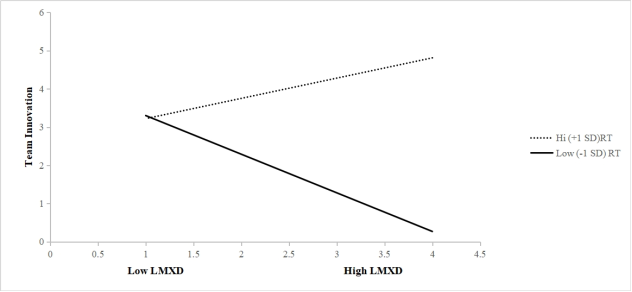
Figure 2. Interaction Effect Plot for Relational Transparency.
Model 6 was used to test the moderating effect. With TI as the dependent variable, LMXD and RT were included. The interaction term between the two had a positive effect on team innovation (β = .85, p < .05), supporting H4.
As shown in
Figure 2, the slope of LMXD on TI is positive for high RT but negative for low RT. This indicates that LMXD strengthens TI under high RT, whereas it weakens TI under low RT, highlighting the critical moderating role of RT.
5. Discussion and Conclusion
5.1. Discussion
Guided by social exchange theory, conservation of resources theory, and equity theory, the present study develops and tests a moderated mediation model to unpack the intricate mechanisms and boundary conditions underpinning the impact of innovative leadership on team innovation. Empirical results reveal a significant and positive direct effect of innovative leadership (IL) on team innovation (TI). Additionally, leader–member exchange differentiation (LMXD) is identified as a partial mediator in the IL–TI nexus. These findings suggest that IL not only directly fuels TI but also fosters innovation outcomes by optimizing the internal distribution of LMX quality within teams.
Critical to this study, relational transparency (RT) exerts a positive moderating effect on the relationship between LMXD and TI. Specifically, when RT is high, the facilitating impact of LMXD on TI becomes substantially amplified. This indicates that a high level of RT mitigates the potential dysfunctions associated with LMX differentiation—instead, it transforms such differentiation into a positive catalyst for innovation. Conversely, in contexts of low RT, LMXD exacerbates intragroup stratification and erodes collective trust, thereby suppressing TI.
5.2. Theoretical Contributions
This study demonstrates that LMXD is a key strategy enabling leaders to translate innovation intentions into team innovation outcomes. Moving beyond individual psychological explanations of leadership effects (e.g., psychological capital, achievement motivation), it adopts the lens of proactive "relational management." The findings confirm that innovative leaders, by differentially allocating resources and tailoring their approach, can effectively motivate core members, activate broader team contributions, and thus enhance team innovation. This enriches the theoretical understanding of innovative leadership and broadens the perspective on the leadership-innovation relationship.
Furthermore, the study clarifies a critical boundary condition for LMX differentiation's "double-edged sword" effect: relational transparency. The positive impact of differentiation on team innovation is shown to be contingent on the level of relational transparency within the team. When differentiation is implemented openly, candidly, and consistently, members are more likely to perceive it as a fair, contribution-based practice. This perception mitigates potential negative effects and strengthens the positive contribution to innovation, addressing the contingent nature of the LMXD effect and offering a fresh perspective to the ongoing debate in the literature.
Theoretically, the research constructs an integrated framework linking "resource allocation–fairness perception–innovation output." It builds on social exchange theory by incorporating Conservation of Resources Theory to explain leaders' strategic resource allocation, and Fairness Heuristic Theory to elucidate how relational transparency shapes fairness perceptions and legitimizes differential treatment. This multi-theoretical integration provides a robust analytical framework for examining leadership and innovation in diverse team settings.
5.3. Managerial Implications
For organizations, innovative leadership significantly enhances team innovation. Organizations can incorporate innovative leadership traits into leader selection and development criteria, consciously fostering leaders' innovative thinking, collaborative skills, and ability to motivate innovation through leadership development programs. This also increases top management's recognition and emphasis on the innovative leadership philosophy. Differentiated leader-member exchange relationships should not be viewed as negative managerial bias but as a strategic tool for effectively integrating heterogeneous teams. Organizations can provide training focused on interpersonal relationship development for both leaders and members, establish workflows conducive to open information exchange and knowledge sharing, and cultivate a fair and transparent social exchange climate to stimulate team creativity.
For leaders, the key is to learn to "differentiate transparently." Leaders should have the courage to express themselves authentically and allocate resources and share information in an open and honest manner. High relational transparency helps members understand differentiated treatment, perceive their roles as fair and potentially mutable, thereby maintaining positive work engagement and innovative participation. For high-quality LMX members, transparency makes them value the leader's trust and resource investment more, motivating them to redouble their efforts to contribute to the team. For low-quality LMX members, transparency allows them to maintain reasonable expectations for improving future exchange relationships. By legitimizing differentiation through transparency, management strategies can be maximally converted into team innovation performance.
5.4. Research Limitations and Future Directions
First, as innovative leadership, LMXD, and relational transparency were all measured from members' perceptions, common method bias cannot be ruled out entirely. Future research could employ multi-source, multi-wave designs, such as leader-member dyadic ratings or objective performance data, to mitigate this concern.
Second, although a longitudinal design was used, constructs like LMXD and relational transparency are likely dynamic. Future studies could use experience sampling or repeated measures to track these dynamics and strengthen causal inference.
Third, the sample was drawn from Chinese enterprises. While the results are valid within this context, cultural factors may limit generalizability. Cross-cultural comparisons in future work could help test the model's boundary conditions.
Fourth, while LMXD was identified as a mediator, other mechanisms may also link innovative leadership to team innovation. Future research could examine additional pathways, such as team reflexivity, knowledge integration, team creative efficacy, or innovation incentives. Furthermore, besides relational transparency, other contingency factors (e.g., team psychological safety, task interdependence, or diversity) could be explored to clarify when LMXD is most effective.
6. Conclusion
This study developed and tested a moderated mediation model, positioning LMXD as the mediator and RT as the moderator, to uncover the mechanism and boundary conditions through which IL influences team innovation. The results confirm that IL significantly enhances TI, with LMXD partially mediating this relationship. Moreover, RT strengthens the positive effect of LMXD on TI, thereby amplifying the indirect effect of IL on team innovation through LMXD.
By clarifying how IL fosters TI, and how RT lends procedural legitimacy and acceptability to differentiated resource allocation—thus enhancing LMXD’s positive impact while curbing potential adverse reactions—this study provides a clear mechanism and practical direction for understanding how IL translates innovation intentions and under what conditions LMXD functions most effectively.
Abbreviations
IL | Innovative Leadership |
LMXD | Leader-Member Exchange Differentiation |
RT | Relational Transparency |
LMX | Leader-Member Exchange |
TI | Team Innovation |
Author Contributions
Lin-Qin Xu: Conceptualization, Resources, Data curation, Writing – original draft, Writing – review & editing
Hsiow-Ling Hsieh: Methodology, Supervision
Appendix
Table 5. Summary of measurement items.
variant | | subject |
innovation leadership | Inclusiveness | Leaders give me a high degree of autonomy at work. |
Leaders allow me to make occasional mistakes in my work. |
Leaders don’t mind if I’m better than them at something. |
Leaders are not controllers, but to a greater extent facilitators in their teams. |
Synergy | Leaders reasonably arrange for us to undertake work in our respective areas of specialization. |
Leaders actively promote cooperation among members. |
Leaders allow anyone to present new ideas, even if they are in conflict. |
Leaders have the ability to calm arguments and provide appropriate solutions. |
Professional leadership ability | My leader is an expert in this field. |
Leaders understand that there are deficiencies in this area. |
My leader is a role model for me to follow. |
I am willing to follow my team leader. |
Incentive for creativity | My leader encourages me to make multiple program comparisons. |
Leaders take the initiative to guide me to find new breakthroughs. |
My leaders are supportive of my innovative behavior. |
Leaders guide me to think in multiple dimensions in my work. |
Leaders recognize my creative attitude. |
Leaders lead innovation. |
LMXD (mediation) | I understand how satisfied my leaders are with my work. |
Leaders understand the difficulties and needs of my job. |
Leaders can recognize my potential. |
Whether the leader has enough power or not, he can help me solve the difficulties at work. |
Whether or not the collar power is sufficient, he is able to protect me at all costs. |
If the leader is not present, I have the confidence to defend his decision. |
Maintain a good working relationship with the leadership. |
Relational transparency (moderation) | My leaders are consistent in word and deed. |
My leaders will admit mistakes. |
My leader shows emotions that are completely consistent with how I feel. |
My leader encourages everyone to speak freely. |
My leaders tell us what's really going on. |
Team Innovation | Team members frequently implement new ideas to improve the quality of our products and services. |
The team rarely considers new and alternative working methods and procedures (reverse). |
Team members frequently generate new ideas for services, methods, or procedures. |
This is an innovative team. |
Conflicts of Interest
The authors declare no conflicts of interest.
References
| [1] |
Aman-Ullah, A., Mehmood, W., Amin, S., & Abbas, Y. A. (2022). Human capital and organizational performance: A moderation study through innovative leadership. Journal of Innovation & Knowledge, 7(4), 100261.
https://doi.org/10.1016/j.jik.2022.100261
|
| [2] |
Brislin, R. W. (1970). Back-translation for cross-cultural research. Journal of Cross-Cultural Psychology, 1(3), 185-216.
https://doi.org/10.1177/135910457000100301
|
| [3] |
Baquero, A. (2023). Authentic leadership, employee work engagement, trust in the leader, and workplace well-being: A moderated mediation model. Psychology Research and Behavior Management, 16, 1403-1424.
https://doi.org/10.2147/PRBM.S407672
|
| [4] |
Burhan, Q. U. A., Khan, M. A., & Malik, M. F. (2023). Achieving transparency in business processes by developing and implementing ethical climate: An integrated model of ethical leadership and engagement. Business Process Management Journal, 29(3), 757-776.
https://doi.org/10.1108/BPMJ-08-2022-0384
|
| [5] |
Chemers, M. M., Watson, C. B., & May, S. T. (2000). Dispositional affect and leadership effectiveness: A comparison of self-esteem, optimism, and efficacy. Personality and Social Psychology Bulletin, 26(3), 267-277.
https://doi.org/10.1177/0146167200265001
|
| [6] |
Cropanzano, R., & Mitchell, M. S. (2005). Social exchange theory: An interdisciplinary review. Journal of Management, 31(6), 874-900.
https://doi.org/10.1177/0149206305279602
|
| [7] |
Costa, J., Pádua, M., & Moreira, A. C. (2023). Leadership styles and innovation management: What is the role of human capital? Administrative Sciences, 13(2), 47.
https://doi.org/10.3390/admsci13020047
|
| [8] |
De Dreu, C. K., Nijstad, B. A., Bechtoldt, M. N., & Baas, M. (2011). Group creativity and innovation: A motivated information processing perspective. Psychology of aesthetics, creativity, and the arts, 5(1), 81.
https://doi.org/10.1037/a0017986
|
| [9] |
Eichenseer, V., Kauffeld, S., & Schermuly, C. C. (2020). Leaders—Watch out for LMX differentiation: A multilevel model of leader-related antecedences and consequences of LMX differentiation. German Journal of Human Resource Management, 34(4), 511-539.
https://doi.org/10.1177/2397002220907389
|
| [10] |
Graen, G. B., & Uhl-Bien, M. (1995). Relationship-based approach to leadership: Development of leader-member exchange (LMX) theory of leadership over 25 years: Applying a multi-level multi-domain perspective. The Leadership Quarterly, 6(2), 219-247.
https://doi.org/10.1016/1048-9843(95)90036-5
|
| [11] |
Gonzalez, R. V. D. (2022). Innovative performance of project teams: the role of organizational structure and knowledge-based dynamic capability. Journal of Knowledge Management, 26(5), 1164-1186.
https://doi.org/10.1108/JKM-03-2021-0259
|
| [12] |
Han, G. (2010). Trust and career satisfaction: The role of LMX. Career Development International, 15(5), 437-458.
https://doi.org/10.1108/13620431011075321
|
| [13] |
Hao, X., Zhang, J., Lei, Z. & Liu, W. (2021). Platform-type leadership: Verification of multidimensional structure, measurement and its impact on innovative behavior. Management World, 37(01), 186-199+216+12.
https://doi.org/10.19744/j.cnki.11-1235/f.2021.0012
|
| [14] |
Harris, T. B., Li, N., & Kirkman, B. L. (2014). Leader-member exchange (LMX) in context: How LMX differentiation and LMX relational separation attenuate LMX’s influence on OCB and turnover intention. The Leadership Quarterly, 25(2), 314-328.
https://doi.org/10.1016/j.leaqua.2013.09.001
|
| [15] |
Jiang, H., & Shen, H. (2023). Toward a relational theory of employee engagement: Understanding authenticity, transparency, and employee behaviors. International Journal of Business Communication, 60(3), 948-975.
https://doi.org/10.1177/2329488420954236
|
| [16] |
Jing, B. (2024). Research progress and prospects of innovative leadership. Journal of Chongqing Technology and Business University (Social Science Edition), 41(02), 90-102.
https://doi.org/10.3969/j.issn.1672-0598.2024.02.007
|
| [17] |
Kim, M. S., Phillips, J. M., Park, W. W., & Gully, S. M. (2023). When leader-member exchange leads to knowledge sharing: The roles of general self-efficacy, team leader modeling, and LMX differentiation. The International Journal of Human Resource Management, 34(7), 1442-1469.
https://doi.org/10.1080/09585192.2021.1886150
|
| [18] |
Lind, E. A. (2001). Fairness heuristic theory: Justice judgments as pivotal cognitions in organizational relations. In J. Greenberg & R. Cropanzano (Eds.), Advances in organizational justice (pp. 56-88). Stanford University Press.
|
| [19] |
Liden, R. C., Erdogan, B., Wayne, S. J., & Sparrowe, R. T. (2006). Leader-member exchange, differentiation, and task interdependence: Implications for individual and group performance. Journal of Organizational Behavior, 27(6), 723-746.
https://doi.org/10.1002/job.409
|
| [20] |
Liu, S., Lai, J., Luo, B. N., & Moran, P. (2023). Will goal clarity lower team innovation? A moderated mediation model of inter-team trust. Journal of Knowledge Management, 27(4), 975-992.
https://doi.org/10.1108/JKM-10-2021-0787
|
| [21] |
Liao, R., Li, R., Zhu, X., Liu, W., & Shang, Z. (2025). Exploring the impact of leader knowledge sharing on leader-rated employee performance: a curvilinear effect moderated by employee humility. International Journal of Knowledge Management Studies, 16(3), 263-288.
https://doi.org/10.1504/IJKMS.2025.149512
|
| [22] |
Matta, F. K., Frank, E. L., Farh, C. I., & Lee, S. M. (2024). Do intelligent leaders differentiate exchange relationships intelligently? A functional leadership approach to leader-member exchange differentiation. Journal of Applied Psychology, 109(4), 490.
https://doi.org/10.1037/apl0001164
|
| [23] |
Mayer, D. M., Aquino, K., Greenbaum, R. L., & Kuenzi, M. (2012). Who displays ethical leadership, and why does it matter? An examination of antecedents and consequences of ethical leadership. Academy of management journal, 55(1), 151-171.
https://doi.org/10.5465/amj.2008.0276
|
| [24] |
Meng, J., Pan, P. L., Cacciatore, M. A., & Sanchez, K. R. (2024). The integrated role of adaptive leadership, sense of empathy and communication transparency: Trust building in corporate communication during the pandemic. Corporate Communications: An International Journal, 29(4), 503-515.
https://doi.org/10.1108/CCIJ-09-2023-0125
|
| [25] |
Park, H., Park, H., & Liden, R. C. (2022). Leader-member exchange differentiation and employee performance: A political perspective. Journal of Organizational Behavior, 43(6), 1121-1135.
https://doi.org/10.1002/job.2611
|
| [26] |
Strauss, A., & Corbin, J. M. (1990). Basics of qualitative research: Grounded theory procedures and techniques. Sage Publications, Inc.
|
| [27] |
Stewart, M. M., & Johnson, O. E. (2009). Leader-member exchange as a moderator of the relationship between work group diversity and team performance. Group & Organization Management, 34(5), 507-535.
https://doi.org/10.1177/1059601108331220
|
| [28] |
Teng, L. I., Qin, L. I. N., & Jie, S. O. N. G. (2023). Entrepreneurial leadership, challenging stress, and employee innovation behavior: The moderating role of team identification. Journal of East China Normal University (Philosophy and Social Sciences), 55(3), 143.
https://link.cnki.net/doi/10.16382/j.cnki.1000-5579.2023.03.014
|
| [29] |
Walumbwa, F. O., Avolio, B. J., Gardner, W. L., Wernsing, T. S., & Peterson, S. J. (2008). Authentic leadership: Development and validation of a theory-based measure. Journal of management, 34(1), 89-126.
https://doi.org/10.1177/0149206307308913
|
| [30] |
Weiss, M., Baer, M., & Hoegl, M. (2022). The human side of innovation management: Bridging the divide between the fields of innovation management and organizational behavior. Journal of Product Innovation Management, 39(3), 283-291.
https://doi.org/10.1111/jpim.12624
|
| [31] |
Whitney, J. M., Henry, S. E., & Bradley, B. H. (2022). Maybe it is who you know: Social networks and leader-member exchange differentiation. Group & Organization Management, 47(2), 300-341.
https://doi.org/10.1177/10596011221086327
|
| [32] |
Wolniak, R. (2023). Team innovations. Zeszyty Naukowe. Organizacja i Zarządzanie / Politechnika Śląska, 169, 743-757.
https://doi.org/10.29119/1641-3466.2023.169.44
|
| [33] |
Zhang, M. J., Zhang, Y., & Law, K. S. (2022). Paradoxical leadership and innovation in work teams: The multilevel mediating role of ambidexterity and leader vision as a boundary condition. Academy of Management Journal, 65(5), 1652-1679.
https://doi.org/10.5465/amj.2017.1265
|
| [34] |
Zhang, Y., Guo, Y., & Zheng, X. (2024). The effects of leader-member exchange differentiation: Beneficial or detrimental? Management Review, 36(3), 159-170.
https://doi.org/10.14120/j.cnki.cn11-5057/f.2024.03.004
|
Cite This Article
-
APA Style
Xu, L., Hsieh, H. (2026). Innovative Leadership: The Moderating Role of Relational Transparency in the Effect of LMXD on Innovation. Journal of Human Resource Management, 14(2), 134-143. https://doi.org/10.11648/j.jhrm.20261402.14
 Copy
|
Copy
|
 Download
ACS Style
Xu, L.; Hsieh, H. Innovative Leadership: The Moderating Role of Relational Transparency in the Effect of LMXD on Innovation. J. Hum. Resour. Manag. 2026, 14(2), 134-143. doi: 10.11648/j.jhrm.20261402.14
Copy
|
Download
AMA Style
Xu L, Hsieh H. Innovative Leadership: The Moderating Role of Relational Transparency in the Effect of LMXD on Innovation. J Hum Resour Manag. 2026;14(2):134-143. doi: 10.11648/j.jhrm.20261402.14
Copy
|
Download
-
@article{10.11648/j.jhrm.20261402.14,
  author = {Lin-Qin Xu and Hsiow-Ling Hsieh},
  title = {Innovative Leadership: The Moderating Role of Relational Transparency in the Effect of LMXD on Innovation},
  journal = {Journal of Human Resource Management},
  volume = {14},
  number = {2},
  pages = {134-143},
  doi = {10.11648/j.jhrm.20261402.14},
  url = {https://doi.org/10.11648/j.jhrm.20261402.14},
  eprint = {https://article.sciencepublishinggroup.com/pdf/10.11648.j.jhrm.20261402.14},
  abstract = {Innovative leadership (IL) is widely recognized as a critical antecedent driving team innovation(TI). However, its underlying mechanism remains insufficiently explored, leaving a critical research gap in leadership and innovation management. To address this gap, this study extends the literature by developing a moderated mediation model grounded in leader-member exchange differentiation (LMXD) and relational transparency (RT). LMXD refers to the variation in leader-member exchange (LMX) quality, while RT reflects team communication openness; both link IL to team innovation, with LMXD as a mediator and RT as a moderator. Based on social exchange theory and organizational justice theory, we argue that IL positively influences TI via LMXD: IL shapes LMX quality, and these differentiated exchanges facilitate TI. In particular, high team RT strengthens the LMXD–TI relationship by mitigating conflicts arising from differentiated exchanges. Data were collected from a sample of 364 employees nested within 96 teams across multiple provinces and cities in China, with coverage spanning the manufacturing, technology, and service sectors. Multi-wave, multi-source results provide strong empirical support for the model. Overall, this research contributes by offering an integrated perspective on "differentiated" mechanisms, bridging the IL-TI gap via LMXD and RT, and extending LMX literature by focusing on differentiation. It also provides theoretical implications for leadership research and actionable recommendations for practitioners to manage diverse teams and enhance innovation.},
 year = {2026}
}
Copy
|
Download
-
TY  - JOUR
T1  - Innovative Leadership: The Moderating Role of Relational Transparency in the Effect of LMXD on Innovation
AU  - Lin-Qin Xu
AU  - Hsiow-Ling Hsieh
Y1  - 2026/04/13
PY  - 2026
N1  - https://doi.org/10.11648/j.jhrm.20261402.14
DO  - 10.11648/j.jhrm.20261402.14
T2  - Journal of Human Resource Management
JF  - Journal of Human Resource Management
JO  - Journal of Human Resource Management
SP  - 134
EP  - 143
PB  - Science Publishing Group
SN  - 2331-0715
UR  - https://doi.org/10.11648/j.jhrm.20261402.14
AB  - Innovative leadership (IL) is widely recognized as a critical antecedent driving team innovation(TI). However, its underlying mechanism remains insufficiently explored, leaving a critical research gap in leadership and innovation management. To address this gap, this study extends the literature by developing a moderated mediation model grounded in leader-member exchange differentiation (LMXD) and relational transparency (RT). LMXD refers to the variation in leader-member exchange (LMX) quality, while RT reflects team communication openness; both link IL to team innovation, with LMXD as a mediator and RT as a moderator. Based on social exchange theory and organizational justice theory, we argue that IL positively influences TI via LMXD: IL shapes LMX quality, and these differentiated exchanges facilitate TI. In particular, high team RT strengthens the LMXD–TI relationship by mitigating conflicts arising from differentiated exchanges. Data were collected from a sample of 364 employees nested within 96 teams across multiple provinces and cities in China, with coverage spanning the manufacturing, technology, and service sectors. Multi-wave, multi-source results provide strong empirical support for the model. Overall, this research contributes by offering an integrated perspective on "differentiated" mechanisms, bridging the IL-TI gap via LMXD and RT, and extending LMX literature by focusing on differentiation. It also provides theoretical implications for leadership research and actionable recommendations for practitioners to manage diverse teams and enhance innovation.
VL  - 14
IS  - 2
ER  -
Copy
|
Download





 Share This Article
 Twitter
 Linked In
 Facebook