Abstract
The construction industry faces significant challenges such as poor supplier communication and delayed deliveries in supply chain management (SCM), leading to project delays and cost overruns. This study investigates the application of machine learning (ML) to enhance the effectiveness of construction supply chain management for improved project delivery in Nigeria. A comprehensive methodology was employed, beginning with a literature review to identify key SCM factors, followed by a structured survey of 150 construction professionals to gather data on practices and project outcomes. The collected data was analyzed using the Classification Learner app in MATLAB, where various algorithms, including Decision Trees, Support Vector Machines (SVM), and ensemble methods, were trained and validated. Results indicated that Decision Trees (30%) and SVM (26.7%) were the most utilized and effective models for analyzing SCM data. The trained ML model achieved prediction accuracies of up to 90.7% in categorizing factors affecting project delivery. Key influential factors identified include supplier integration, inventory management, and logistics coordination. The study concludes that ML classification techniques are powerful tools for diagnosing SCM inefficiencies and predicting project performance. The findings provide a data-driven framework for construction stakeholders to prioritize SCM strategies, thereby mitigating risks and fostering more effective project delivery.
|
Published in
|
Machine Learning Research (Volume 11, Issue 1)
|
|
DOI
|
10.11648/j.mlr.20261101.13
|
|
Page(s)
|
22-36 |
|
Creative Commons
|

This is an Open Access article, distributed under the terms of the Creative Commons Attribution 4.0 International License (http://creativecommons.org/licenses/by/4.0/), which permits unrestricted use, distribution and reproduction in any medium or format, provided the original work is properly cited.
|
|
Copyright
|
Copyright © The Author(s), 2026. Published by Science Publishing Group
|
Keywords
Construction Supply Chain, Machine Learning, Classification Learner, Project Delivery, Artificial Intelligence, Nigeria
1. Introduction
The construction industry's market is primarily local and highly variable. The construction "product's" lengthy endurance contributes to the volatility
| [4] | Saiprasad B. S.& Landage A. B. (2021). Analysis of Construction Supply Chain and Identification of Risks. International Research Journal of Engineering and Technology (IRJET). 8(6), 1742-1753. |
[4]
. Before the customer order arrives, the product specification process reveals various degrees of specifications: engineer to order, change to order, configure to order, and choose a variant
| [1] | Badi, S., and Murtagh, N. (2019). Green supply chain management in construction: A systematic literature review and future research agenda. Journal of cleaner production, 223, 312-322. |
[1]
. Only a small portion of a project is completed by a construction company's own workers and resources
| [4] | Saiprasad B. S.& Landage A. B. (2021). Analysis of Construction Supply Chain and Identification of Risks. International Research Journal of Engineering and Technology (IRJET). 8(6), 1742-1753. |
[4]
. This is a risk spreading and risk mitigation strategy designed to compensate for market volatility. The primary difference between building and manufacturing is that construction is project-based and discontinuous, whereas manufacturing involves continuous processes
| [2] | Dallasega, P., Rojas, R. A., Bruno, G., and Rauch, E. (2019). An agile scheduling and control approach in ETO construction supply chains. Computers in Industry, 112, 103122. |
[2]
.
The shift from theoretical computer science to practical applications in artificial intelligence (AI) and machine learning (ML) is a cornerstone of the fourth industrial revolution, also known as Industry 4.0. This revolution is characterized by the fusion of AI/ML with other cutting-edge technologies to innovate within various industries. Recognizing the profound impact of AI/ML, governments and businesses across the globe have initiated numerous projects to integrate these technologies into manufacturing and industrial operations. Such efforts include deploying AI/ML directly into production environments
| [6] | Wang C., Zhou X., Liu P., Lu G., Wang H., Oeser M. (2022). Study on pre-compaction of pavement graded gravels via imaging technologies, artificial intelligent and numerical simulations Construction and Building Materials. |
[6]
and combining advancements in information technology like the Internet of Things (IoT), big data, edge computing, and cybersecurity with current automated processes. These AI/ML implementations enable the use of extensive data generated by sensors and instruments in manufacturing to enhance efficiency, output, and eco-friendliness
| [6] | Wang C., Zhou X., Liu P., Lu G., Wang H., Oeser M. (2022). Study on pre-compaction of pavement graded gravels via imaging technologies, artificial intelligent and numerical simulations Construction and Building Materials. |
[6]
.
Effective supply chain management is crucial and complex within the manufacturing sector, as it often encompasses global networks. AI/ML technologies are increasingly employed to enhance and streamline supply chain operations by utilizing predictive analytics and real-time data processing for inventory control and production scheduling
| [6] | Wang C., Zhou X., Liu P., Lu G., Wang H., Oeser M. (2022). Study on pre-compaction of pavement graded gravels via imaging technologies, artificial intelligent and numerical simulations Construction and Building Materials. |
[6]
. These technologies can predict essential supply chain factors, such as the demand for industrial products and the lead times for vital components.
AI/ML can also improve worker and critical equipment safety within factories through intelligent access control systems (see
Figure 2). It can also be used to mitigate the cybersecurity risks introduced by the ever-increasing number of networked devices within a manufacturing plant. Computer vision based on deep learning can visually identify unsafe behaviors for employees and identify the presence of unauthorized personnel within a facility
| [5] | Toorajipour, R., Sohrabpour, V., Nazarpour, A., Oghazi, P., & Fischl, M. (2021). Artificial Intelligence in Supply Chain Management: A Systematic Literature Review. Journal of Business Research, 122, 502-517.
https://doi.org/10.1016/j.jbusres.2020.09.009 |
[5]
. The most prominent technique identified is the Decision Tree algorithm, selecting it as their preferred method.
In the past, optimization techniques were primarily used for individual manufacturing processes and broader operations like facility design and supply chain logistics
| [3] | Guerlain, C.; Renault, S.; Ferrero, F. (2019). Understanding Construction Logistics in Urban Areas and Lowering Its Environmental Impact: A Focus on Construction Consolidation Centres. Sustainability 11, 6118. |
[3]
. However, the growing complexity and variety in manufacturing activities and supply chains have led to an increase in variables and their interrelatedness. Traditional methods of optimization through trial and error are not only resource-heavy but also less effective as the complexity increases
| [5] | Toorajipour, R., Sohrabpour, V., Nazarpour, A., Oghazi, P., & Fischl, M. (2021). Artificial Intelligence in Supply Chain Management: A Systematic Literature Review. Journal of Business Research, 122, 502-517.
https://doi.org/10.1016/j.jbusres.2020.09.009 |
[5]
. In response, AI and ML have been developed as enhancements or even alternatives to these traditional optimization methods in manufacturing. For instance, Reinforcement Learning (RL) has been utilized for optimizing the design of hydrometallurgical separation processes, and a combination of support vector and evolutionary algorithms have been applied to carbon fiber production, cutting energy use by nearly half
| [5] | Toorajipour, R., Sohrabpour, V., Nazarpour, A., Oghazi, P., & Fischl, M. (2021). Artificial Intelligence in Supply Chain Management: A Systematic Literature Review. Journal of Business Research, 122, 502-517.
https://doi.org/10.1016/j.jbusres.2020.09.009 |
[5]
.
These include predictive maintenance for better real-time equipment monitoring to minimize unexpected breakdowns; quality control to spot defects and aid in error detection on production lines; energy prediction for enhanced sustainability and energy management; safety and security measures to counter cyber threats and quickly identify hazardous practices; innovative design for swift optimization in product development; and simulation to model standard and unusual behaviors without disruptive testing of manufacturing processes
| [7] | Gaikwad, M. P. P. (2024). Integration of Artificial Intelligence In Supply Chain Management: Challenges And Opportunities. Migration Letters, 21 (S4), 989–999. |
[7]
.
| [8] | García, J., Villavicencio, G., Altimiras, F., Crawford, B., Soto, R., Minatogawa, V., & Franco, M. (2022). Machine learning techniques applied to construction: A hybrid bibliometric analysis of advances and future directions. Automation in Construction, 142, Article 104532.
https://doi.org/10.1016/j.autcon.2022.104532 |
[8]
emphasized the importance of real-time tracking and supplier diversification in reducing supply chain vulnerabilities. Relevance for construction supply chains where delivery times, lead-time variability, and supplier reliability are stochastic
| [9] | Golmohammadi, Amirmohsen & Hassini, Elkafi. (2020). Review of supplier diversification and pricing strategies under random supply and demand. International Journal of Production Research. 58. 1-33.
https://doi.org/10.1080/00207543.2019.1705419 |
[9]
. This produced a broad, bibliometric and hybrid review of machine learning applications in construction (Automation in Construction).
| [10] | Nagar, K., & Chawla, M. P. S. (2023). A survey on various approaches for support vector machine based engineering applications. International Journal of Emerging Science and Engineering (IJESE), 11(11), 6-11.
https://doi.org/10.35940/ijese.K2555.1011112 |
[10]
provides a survey of SVM applications in engineering across many kernel variants and feature spaces.
| [11] | Latif, Muhammad. (2023). Analyzing the Key Factors Contributing to Project Delays in the Construction Industry: A Comprehensive Study. Journal of Development and Social Sciences. 4. https://doi.org/10.47205/jdss.2023(4-III)85 |
[11]
identified communication breakdowns and delivery delays as key factors affecting construction project efficiency.
| [12] | Lei, M., He, Y., Wang, D., He, D., Feng, Y., Cheng, L., & Qin, Z. (2022). Application of GSM-SVM for forecasting construction output: A case study of Hubei Province. Buildings, 13(1), Article 48. https://doi.org/10.3390/buildings13010048 |
[12]
exemplified how SVMs when properly tuned (grid search) and combined with input-selection can deliver strong generalization for construction-sector forecasting; this is directly transferable to classification tasks in CSCM (supplier status, delivery delay classification) where careful feature selection and hyper parameter tuning are critical. At this stage of SCM application, researchers in construction improvement tried to apply methods and techniques (inventory management, project planning, and control) to enhance the construction performances: material control, on-site transportation management, and project planning
| [13] | Moneke, U. U. and Echeme, I. I.(2021). Assessment of Supply Chain Management in Nigeria Construction Industry for Effective Project Delivery in Imo State, Nigeria uu -249- International Journal For Quality Research, Uk – 378. Short Scientific Paper 1, 193 – 206. |
[13]
. The literature on explainable machine learning emphasises the need to accompany high-accuracy models (such as SVMs or ensemble trees) with explanation frameworks such as SHAP (Shapley additive explanations) or LIME (local surrogate models) so that decision-makers can understand and validate the logic of automated predictions
| [14] | Rudin, C., Chen, C., Chen, Z., Huang, H., Semenova, L., & Zhong, C. (2021). Interpretable machine learning: Fundamental principles and 10 grand challenges. arXiv.
https://arxiv.org/abs/2103.11251 |
[14]
. With the manufacturing and production sectors reaping benefits from SCM principles, some construction firms are now adopting these principles to tackle adversarial relationships and improve inter-organizational collaboration in construction projects
| [15] | Saad, M., Jones, M. and James, P. (2022). A review of the progress towards the adoption of supply chain management relationships in construction. European Journal of Purchasing and Supply Management, 8, 173-183. |
[15]
.
2. Materials and Methods
2.1. Classification Learning Software
Classification Learning Software is an Artificial Intelligence in Matlab which refers to the process of training models to categorize data into predefined classes of group. It provides several tools and functions to implement classification algorithms. This can be implemented using statistics and machine learning toolbox, deep learning toolbox and so on. Procedures involved include;
1) Data collection
2) Data Preparation
3) Data Visualization
4) Data Splitting and training
5) Choosing of Classification Algorithm
6) Evaluation of Model
7) Model selection and Deployment
This section outlines the step-by-step procedures for achieving the stated objectives of the study:
2.2. Critical Analysis of Construction Supply Chain Management Using Classification Learner for Effective Project Delivery
2.2.1. Identifying the Key Factors Influencing the Effectiveness of SCM in the Construction Industry
To identify the critical factors influencing Supply Chain Management (SCM) effectiveness, a two-phased approach was adopted:
Step 1: Comprehensive Literature Review
Conducted an in-depth review of academic journals, industry reports, and conference papers on SCM in construction.
Extracted recurring themes and factors such as:
1) Procurement practices
2) Inventory management
3) Logistics and transportation
4) Communication and collaboration
5) Risk management
6) Technology adoption
Step 2: Design and Distribution of Online Survey
1) Developed a structured questionnaire incorporating Likert-scale, ranking, and open-ended questions.
2) Targeted respondents: project managers, procurement officers, suppliers, contractors, and consultants.
3) Captured both quantitative (e.g., cost, delay frequency) and qualitative (e.g., perceptions of risk or collaboration) metrics.
2.2.2. Analyzing Key Factors via a Robust Supply Chain Model
This section of the methodology is designed to fulfil, identify and analyze the key factors influencing the effectiveness of SCM in the construction industry by adopting a robust supply chain model.
Step 1: Data Collection and Preprocessing
Surveys were disseminated through professional forums, emails, and networks, targeting key construction stakeholders.
A stratified sampling method ensured proportional representation across large, medium, and small construction firms.
Step 2: Data Analysis Using Statistical Techniques
Descriptive statistics were employed to summarize trends in SCM practices.
Inferential techniques (regression and factor analysis) were used to:
a. Determine the relationship strength between SCM factors (e.g., procurement, inventory, supplier relations) and project performance.
b. Rank their relative influence on key performance indicators (KPIs) like cost, time, and quality.
2.2.3. Training and Validating the Model Using Classification Learner Algorithm
This section directly supports and utilize a classification learner algorithm to train and validate the model and also to analyze and categorize the factors that impact the effectiveness of project delivery.
Step 1: Data Preparation
The cleaned dataset was categorized into:
1) Input variables (features): Procurement scores, inventory policies, supplier integration levels, etc.
2) Target variable (label): Project delivery status (e.g., on-time, delayed, at-risk).
Step 2: Model Selection and Training
Several classification algorithms were tested:
1) Decision Tree
2) Random Forest
3) Support Vector Machine (SVM)
The best-performing model was selected based on accuracy and interpretability.
2.2.4. Quantifying the Impact of SCM Strategies on Project Performance
This methodology aligns:
1) to quantify outcomes of different SCM strategies, and
2) to evaluate the impact of SCM strategies on project performance.
Step 1: Strategy Identification
Based on results from Sections 2.2.2 and 2.2.3, the following SCM strategies were selected:
1) Supplier integration
2) Inventory optimization
3) Logistics/transport coordination
Step 2: Scenario and Sensitivity Analysis
Multiple scenarios were created to reflect combinations of strategies.
Sensitivity analysis was conducted by varying:
1) Lead time
2) Resource availability
3) External disruptions (e.g., price changes, market demand)
Step 3: Statistical Evaluation of Outcomes
ANOVA and regression analysis evaluated the statistical impact of strategies on KPIs such as:
1) Cost savings
2) On-time delivery
3) Quality control
4) Sustainability metrics
2.2.5. Classification Learning Procedure Used
Step 1 to 10 described the steps followed using the Matlab Classification Learner to train the obtained data.
Step 1: Open matlab from desktop
Step 2: Selection of the dropdown menu to open classification learning app
Step 3: Selection of the classification learning to open the program file
Step 4: Selection of new session
Step 5: Selection from file to load dataset
Step 6: Loaded dataset to Matlab
Step 7: Selection of Import Session for the supervised data which involves checking the name, type, range
Step 8: workspace variable checked, response and cross validation
Step 9: Selection of Start Session
Step 10: Selection of all and PCA data
Figure 1. Select ion of use parallel, all and train data.
This shows the accuracy on%, prediction speed and training time in the trained model tree.
Figure 2. Selection of the confusion matrix.
Figure 3. Selection of the ROC Curve.
Figure 4. Check for parallel coordinate.
3. Results and Discussions
3.1. Respondent Demographics and Involvement in Supply Chain Management
Table 1. Respondent Demographics and Involvement in Supply Chain Management.
Variable | Frequency | Percentage |
Years of Experience | | |
1-3 years | 30 | 20.0 |
4-6 years | 25 | 16.7 |
7-10 years | 5 | 3.3 |
Above 10 years | 90 | 60.0 |
Total | 150 | 100% |
Role | | |
Administration | 5 | 3.3 |
Database Manager/Drone Pilot | 5 | 3.3 |
Design Engineer | 5 | 3.3 |
Finance | 5 | 3.3 |
Managing Director | 5 | 3.3 |
Project Manager | 80 | 53.3 |
Quantity surveying | 5 | 3.3 |
Senior Planning Manager | 5 | 3.3 |
Site Engineer | 35 | 23.3 |
Toral | 150 | 100% |
Typical scale of projects | | |
Large (e.g., infrastructure projects) | 80 | 53.3 |
Medium (e.g., multi-building projects) | 55 | 36.7 |
Small (e.g., single building projects) | 15 | 10.0 |
Total | 150 | 100% |
Involvement of supply chain management within projects | | |
Fully involved | 75 | 50.0 |
Partially involved | 65 | 43.3 |
Not involved | 10 | 6.7 |
Total | 150 | 100% |
Familiarity with the principles of construction supply chain management | | |
Very familiar | 20 | 13.3 |
Familiar | 25 | 16.7 |
Neutral | 80 | 53.3 |
Unfamiliar | 15 | 10.0 |
Very unfamiliar | 10 | 6.7 |
Total | 150 | 100% |
Incorporation of Supply chain management | | |
Fully integrated | 85 | 56.7 |
Partially integrated | 60 | 40.0 |
Not integrated | 5 | 3.3 |
Total | 150 | 100% |
Table 1 provides a comprehensive overview of the demographic composition and supply chain involvement of the respondents, offering valuable insights into the professional context in which construction supply chain management (SCM) is practiced.
A substantial majority of respondents have over 10 years of experience, while an additional 36.7% have between 1–6 years. This indicates a highly experienced participant pool, which strengthens the credibility of the survey findings, as these professionals are more likely to provide informed opinions about SCM practices. Their insights are vital in identifying practical challenges and success factors in SCM, especially from long-term engagement in the construction sector.
The distribution of professional roles shows that Project Managers account for the majority, followed by Site Engineers. These two categories collectively represent over ¾ of the respondents and are typically central figures in construction supply chain decision-making. The lower representation from administrative and specialized roles suggests that the findings reflect predominantly operational perspectives, which are directly aligned with project execution and SCM effectiveness. This role-based distribution supports the objective of capturing real-time supply chain challenges encountered during project delivery.
A majority of respondents are involved in large infrastructure projects, followed by medium-sized projects, and only 10% working on small projects. This trend highlights that the practices and challenges discussed in the study are largely framed within the context of complex and resource-intensive projects where SCM is more critical. Larger projects typically require more intricate supply chain coordination, risk management, and procurement planning—issues that this research aims to investigate in detail.
Half of the respondents report being fully involved in supply chain processes, and another are partially involved. Only few claim no involvement. These findings indicate a high level of exposure and operational engagement with supply chain tasks among the surveyed professionals. This validates the dataset as being relevant for analyzing actual SCM practices and effectiveness, thus strengthening the findings related to the second objective.
Interestingly, more than half of respondents are neutral in their familiarity with SCM principles, and only ¼ identify as familiar or very familiar. This suggests a potential knowledge gap within the construction sector regarding supply chain best practices. Despite active involvement in supply chain activities, many professionals may lack formal training or theoretical grounding in SCM principles. This insight supports the need for strategic capacity building and could inform future recommendations to enhance SCM effectiveness through targeted training.
When asked about the level of SCM integration in their projects, more than half stated it was fully integrated, while 2/5 indicated partial integration. Only very few reported no integration. This result demonstrates an encouraging shift toward systemic incorporation of SCM practices across projects, especially large-scale ones. The finding aligns with global trends that recognize the value of integrated SCM in improving project performance metrics such as cost, time, and quality.
In total, 150 responses were recorded, encompassing a range of approaches that reflect the complexity of supply chain operations in project environments. The data demonstrates that while individual strategies such as real-time monitoring and buffer stock management remain foundational, there is a growing trend toward integrated and adaptive approaches that combine technology, supplier relationship management, legal frameworks, and financial prudence. This pattern suggests a mature understanding among project managers of the multi-dimensional nature of supply chain risks and the need for comprehensive, responsive mitigation tactics.
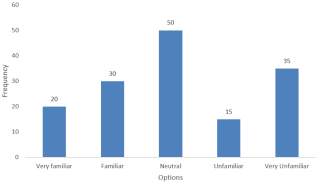
The survey data on familiarity with the Classification Learner tool in data analysis as shown in
Figure 5 reveals a diverse range of experiences among respondents. While a significant portion reported a neutral familiarity level, 1/5
th described themselves as familiar indicating a reasonable level of understanding and utilization of the tool. However, a notable expressed a lack of exposure or confidence in using the Classification Learner.
Figure 5. Familiarity with the Classification Learner tool in data analysis.
3.2. Classification Learner Analysis of Factors Affecting Project Delivery
3.2.1. Data Analysis Tools and Techniques in Supply Chain Management
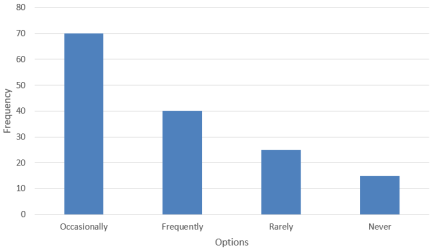
The data regarding familiarity with the Classification Learner tool in data analysis indicates varying levels of experience among respondents. A significant portion, 46.7%, reported using the tool occasionally, suggesting that while many are familiar with it, they may not use it regularly. Additionally, 26.7% of participants indicated they use it frequently, reflecting a solid understanding and application of the tool in their data analysis tasks. Conversely, 16.7% of respondents stated they use it rarely, and 10% reported they have never used the tool at all.
Table 2. Classification techniques applied in analyzing SCM data.
Variables | Freq | Perc. |
Any available app or tools | 5 | 3.3 |
Decision Trees | 45 | 30.0 |
Decision Trees; Naive Bayes | 5 | 3.3 |
Decision Trees; Support Vector Machines (SVM) | 5 | 3.3 |
Decision Trees; Support Vector Machines (SVM); K-Nearest Neighbors (KNN) | 15 | 10.0 |
K-Nearest Neighbors (KNN) | 5 | 3.3 |
Naive Bayes | 10 | 6.7 |
None. | 5 | 3.3 |
Primavera P6 schedule & Contract management | 5 | 3.3 |
Support Vector Machines (SVM) | 40 | 26.7 |
Support Vector Machines (SVM); K-Nearest Neighbors (KNN) | 5 | 3.3 |
Support Vector Machines (SVM); Supervise learning techniques | 5 | 3.3 |
Total | 150 | 100.0 |
Figure 6. Use of Data analytics tools.
Table 2 presents a comprehensive breakdown of the various classification techniques applied by respondents in analyzing supply chain management (SCM) data. The data reveals notable trends in the adoption of machine learning and analytical models, demonstrating varying levels of sophistication and preference among professionals in the SCM domain.
The most prominent technique identified is the Decision Tree algorithm, with 45 respondents selecting it as their preferred method. This high rate of adoption may be attributed to the intuitive, rule-based structure of decision trees, which makes them particularly valuable for segmenting complex supply chain data and making interpretable decisions. Decision trees are known for their transparency and ease of visualization, which can help supply chain managers understand key variables influencing performance, costs, or risks.
Following closely is Support Vector Machines (SVM), employed by 40 respondents. This reflects a strong inclination toward more advanced classification algorithms capable of handling large, multidimensional datasets typical of modern SCM environments. SVMs are known for their robustness in high-dimensional spaces and their effectiveness in classification tasks with clear margins of separation. Their popularity indicates a shift toward data-driven strategies for demand forecasting, inventory optimization, and supplier performance classification.
Beyond these two dominant techniques, the data also reflects usage of other classification models, albeit at lower frequencies. Naive Bayes, for instance, was utilized by 10 participants, a method valued for its simplicity and efficiency, especially in cases where probabilistic modeling of categorical data is relevant. Despite its assumptions of feature independence, Naive Bayes can be quite effective in predictive modeling scenarios, such as demand classification or logistics anomaly detection.
K-Nearest Neighbors (KNN), a non-parametric, instance-based learning algorithm, was used by 5 respondents. Though not as widely adopted, KNN’s simplicity and applicability to pattern recognition tasks make it suitable for clustering supplier behaviors or customer order profiles.
A distinctive feature of the data is the use of hybrid or combined approaches, indicating a growing trend toward ensemble and multifaceted learning strategies. For instance, 15 respondents reported using a combination of Decision Trees, SVM, and KNN, reflecting an effort to leverage the strengths of multiple algorithms to enhance accuracy and adaptability in analysis. Additionally, combinations such as Decision Trees with SVM and Decision Trees with Naive Bayes show a deliberate blending of tree-based logic with probabilistic or margin-based classifiers to handle the diverse nature of SCM data.
Interestingly, 5 respondents indicated the use of “any available apps or tools”, a category that may encompass off-the-shelf or proprietary software with built-in classification functions. This implies a segment of users who may prioritize convenience or lack deep technical expertise but still recognize the importance of automated analytics in supply chain processes.
Another noted reliance on Primavera P6 schedule and contract management tools, indicating a more project management-centered perspective that, while not strictly classification-focused, suggests integration of SCM data into broader project planning platforms.
A small group admitted to not using any classification techniques, which may reflect either a lack of access to analytical tools or a gap in technical capacity within certain project environments. This underscores the need for capacity building and training to promote the adoption of data-driven decision-making in supply chain management.
Lastly, another 3.3% of participants reported using SVM with supervised learning techniques, suggesting an awareness of broader machine learning paradigms beyond traditional classifiers. This could include regression, ensemble methods, or neural networks, though these were not specified in detail.
In summary, the findings reveal a balanced mix of traditional, advanced, and hybrid classification methods, reflecting varying levels of data analytics maturity among SCM professionals. The high adoption of Decision Trees and SVM highlights a preference for models that offer both interpretability and performance, while the use of combined techniques signals a growing appreciation for more nuanced, layered approaches to supply chain data analysis. However, the presence of non-users and general-purpose tool reliance points to areas where further support, training, and resource investment could enhance analytical capability across the field.
Table 3. Classification techniques applied in analyzing SCM data.
Techniques | Freq. | Perc. |
Inventory management systems | 20 | 13.3 |
Project management systems | 45 | 30.0 |
Project management systems; Inventory management systems | 15 | 10.0 |
Project management systems; Inventory management systems; Real-time sensor data (IoT) | 5 | 3.3 |
Real-time sensor data (IoT) | 10 | 6.7 |
Supplier databases | 15 | 10.0 |
Supplier databases; Inventory management systems | 5 | 3.3 |
Supplier databases; Project management systems | 5 | 3.3 |
Supplier databases; Project management systems; Inventory management systems | 10 | 6.7 |
Supplier databases; Project management systems; Inventory management systems; Real-time sensor data (IoT) | 15 | 10.0 |
Supplier databases; Project management systems; Real-time sensor data (IoT) | 5 | 3.3 |
Total | 150 | 100.0 |
Table 3 presents a detailed overview of the various classification techniques and digital tools employed by respondents for analyzing supply chain management (SCM) data. The responses reflect a significant shift toward technology-driven strategies in SCM, with a clear preference for integrated systems that enhance data visibility, process efficiency, and real-time decision-making.
The most frequently used technique identified is the Project Management System (PMS), adopted by 45 respondents, accounting for 30.0% of the total. This indicates a widespread reliance on project-based digital platforms such as Primavera P6, Microsoft Project, or similar tools that offer task scheduling, cost tracking, resource allocation, and progress monitoring. The popularity of PMS suggests that many organizations view effective project oversight as central to managing supply chain flows, especially in complex, timeline-sensitive environments such as construction, engineering, and infrastructure development.
Following this, Inventory Management Systems (IMS) were cited by 20 respondents (13.3%). These systems, including solutions like SAP, Oracle Inventory, or warehouse management software, are essential for real-time tracking of stock levels, reorder points, procurement, and distribution. Their usage reflects the critical role of inventory visibility in preventing shortages, overstocking, or disruptions in material availability.
Interestingly, a notable portion of the participants (15 respondents or 10.0%) reported using a combination of Project Management Systems and Inventory Management Systems, indicating a growing trend toward system integration. By synchronizing these tools, organizations can align operational planning with resource availability, ensuring smoother project execution and supply chain synchronization.
Another important development is the incorporation of Real-time Sensor Data (IoT), either independently or in combination with other systems. Used alone by 10 respondents (6.7%), IoT technologies such as RFID, GPS, and environmental sensors enable real-time monitoring of goods in transit, warehouse conditions, or equipment status. This level of visibility is invaluable for proactive decision-making, predictive maintenance, and responsiveness to delays or deviations in supply routes.
More advanced integrative approaches were also evident in the data. For example, 5 participants (3.3%) reported using a triad of Project Management Systems, Inventory Management Systems, and Real-time Sensor Data, showcasing a holistic approach that spans planning, execution, and live data feedback. An additional 15 respondents (10.0%) incorporated Supplier Databases alongside these three systems, which represents a fully integrated digital supply chain network. Such combinations facilitate not just internal control but also external supplier coordination, contract tracking, and performance assessment.
Supplier Databases alone were utilized by 15 respondents (10.0%), highlighting their value in maintaining comprehensive records of vendor capabilities, delivery histories, compliance levels, and risk ratings. These databases form the backbone for supplier segmentation, benchmarking, and risk mitigation.
Other hybrid configurations included:
1) Supplier Databases and Inventory Management Systems (5 respondents, 3.3%),
2) Supplier Databases and Project Management Systems (5 respondents, 3.3%),
3) and Supplier Databases combined with Project Management Systems and Inventory Management Systems (10 respondents, 6.7%).
These combinations underscore the increasing need for cross-functional data sharing and interdepartmental collaboration in SCM operations.
Furthermore, 5 respondents (3.3%) employed a fully integrated framework combining Supplier Databases, Project Management Systems, and Real-time Sensor Data, demonstrating a strategic commitment to end-to-end supply chain visibility and performance optimization.
In total, the dataset comprises 150 responses, capturing a wide spectrum of classification tools and system usage across organizations. The data reveals that while standalone systems such as project or inventory management platforms remain prevalent, there is a noticeable shift toward integrated digital ecosystems. These allow for greater efficiency, real-time responsiveness, and informed decision-making. The inclusion of IoT technologies and supplier databases in these combinations also points to a future-oriented approach to SCM analytics—one that embraces connectivity, automation, and transparency.
This diverse adoption of classification techniques suggests varying levels of technological maturity across industries. While some rely on basic or singular systems, others have already embraced full-scale integration, pointing to a digital transformation trend in SCM analytics that aligns with global movements toward Industry 4.0 and smart supply chains.
3.2.2. Model Analysis
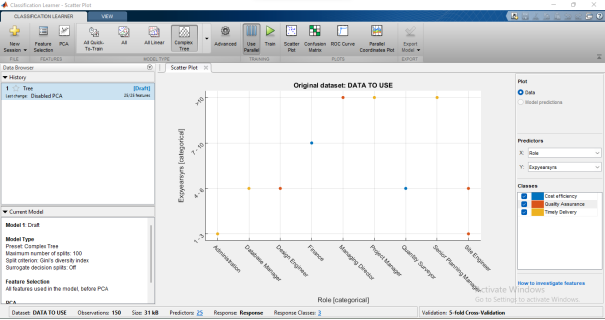
The data used in the model analysis was extracted from the present study on Supply Chain Management. The dataset obtained consisted of 26 columns and 150 rows respectfully. The rows were determined by the frequency of the demographic composition involved in supply chain management.
3.3. Classification Learner App
The dataset was trained with a cross validation option, yielding the following results:
Figure 7. Dataset on Classification Learner App before training.
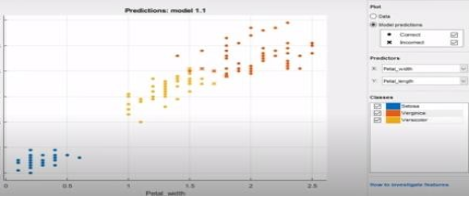
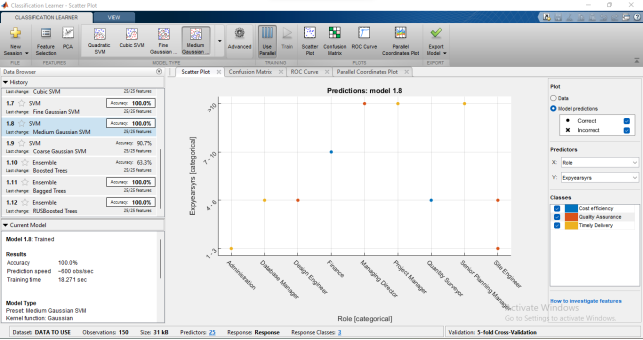
Figure 8. Scatter plot of trained model.
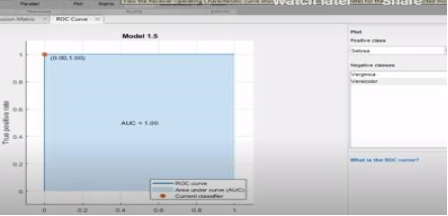
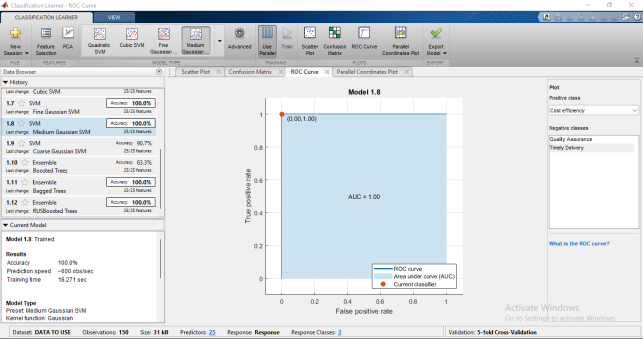
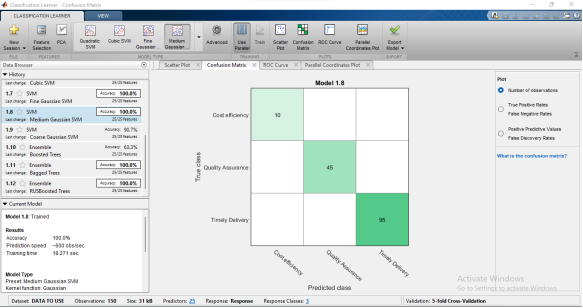
The lowest value obtained was 63.3% and 90.7% in accuracy. All other elements yielded 100%.
Figure 9. Area under curve for SVM.
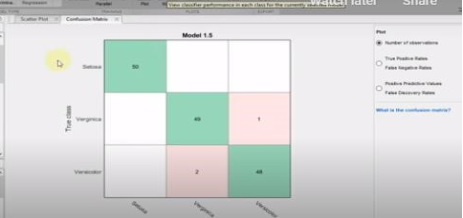
Figure 10. Confusion Matrix.
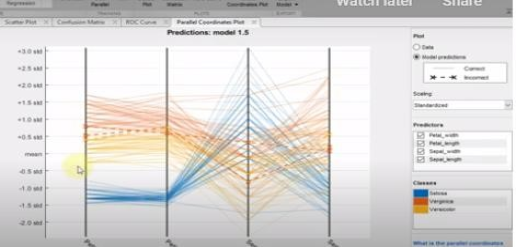
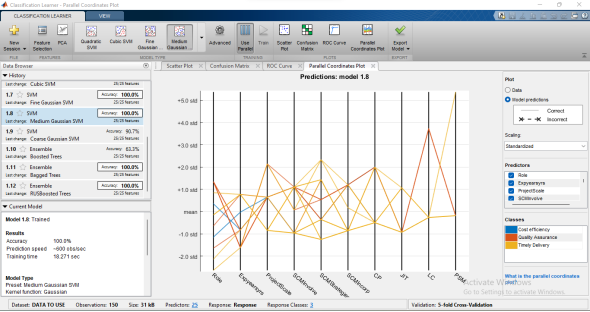
Figure 11. Parallel coordinate plot.
From the figures above, the trained model checks all parameters.
4. Conclusion
The analysis of classification techniques shows a strong preference for Decision Trees (30%) and Support Vector Machines (26.7%), with smaller adoption rates for Naïve Bayes (6.7%) and K-Nearest Neighbors (3.3%). This preference aligns with findings from a review on machine learning techniques in SCM, which identified Decision Trees and Support Vector Machines as highly effective for predictive analytics and decision-making in supply chains. The use of combinations of techniques, such as Decision Trees with SVM, reflects a multifaceted approach to data analysis, consistent with studies emphasizing the integration of multiple methods to address complex supply chain challenges. Additionally, the integration of real-time sensor data (6.7%) highlights the growing importance of Internet of Things (IoT) technologies in SCM, as noted in research on leveraging machine learning and IoT for supply chain optimization. These findings underscore the increasing reliance on advanced data analysis techniques to enhance supply chain efficiency and resilience, while also pointing to the need for further innovation and training to maximize their potential.
Abbreviations
SCM | Supply Chain Model |
ML | Machine Learning |
IoT | Internet of Things |
Acknowledgments
All praises to God the Almighty for making this study a successful one. I also acknowledged the entire staff of Civil Engineering Department, Edo State University Iyamho and all authors cited.
Author Contributions
Arinloye Grace Oshioname: Data curation, Formal Analysis, Methodology
John Wasiu: Conceptualization, Resources
Ibrahim Abdulrazaq Olayinka: Formal Analysis, Writing – review & editing
Conflicts of Interest
The authors declare no conflicts of interest.
Appendix: Critical Analysis of Construction Supply Chain Management
I am a M.Eng. Student of the Department of Civil Engineering, Faculty of Engineering, Edo State university, Uzairue., Nigeria, researching on “Critical Analysis of Construction Supply Chain Management using Classification Learner for Effective Project Delivery.” This is in partial fulfillment of the master’s degree program and I request your assistance as a participant in this study.
Please take a moment to complete a short 5- 10 minutes survey for a study on the Critical Analysis of Construction Supply Chain Management using Classification Learner for Effective Project Delivery. This research seeks to explore the impact of classification learner and supply chain management for effective Project Delivery. I appreciate your time and participation.
Thank you.
1. How many years have you worked in the construction industry?
(a) Less than one year (b) 1 to 3 years (c) 4 to 7 years (d) 8 to 10 years (e) more than 10 years
2. What is your primary role in construction projects?
(a) Project Manager (b) Site Engineer (c) Supply chain Manager (d) Procurement Officer (e) other:
3. What is the typical scale of projects you work on?
(a) Small (e.g., single building project) (b) Medium (e.g., multi-building projects) (c) Large (e.g., Infrastructure projects)
4. To what extent are you involved in supply chain management within your projects?
(a) Fully involved (b) Partially involved (c) Not involved
5. How familiar are you with the principles of construction supply chain management?
(a) Very Familiar (b) Somehow Familiar (C) Neutral (d) Somewhat Familiar (e) Very Unfamiliar
6. To what extent is supply chain management effectively incorporated into your construction projects?
(a) Fully integrated (b) Partially integrated (c) Not integrated
7. Which of the following SCM practices do you actively apply in your projects?
(a) Just-in-Time (JIT) Delivery (b) Vendor-Managed Inventory (VMI) (c) Lean Construction (d) Collaborative Planning (e) other: _________
8. What is the primary objective of SCM in your construction projects?
(a) Cost reduction (b) Timely delivery (c) Quality assurance (d) Risk management (e) Other: _________
9. What are the most common challenges you face in construction supply chain management?
(a) Delayed deliveries (b) Poor supplier communication (c) Resource shortages (d) Quality issues (e) Other: _________
10. How significantly do SCM challenges impact your project delivery?
(a) Very Significantly (b) Significantly (c) Moderately (d) Slightly (e) Not at all
11. How often do you encounter supply chain risks such as supplier failures or logistical issues?
(a) Frequently (b) Occasionally (c) Rarely (d) Never
12. What strategies do you use to mitigate supply chain risks in your projects? (Select all that apply)
(a) Diversifying suppliers (b) Building buffer stocks (c) Contractual safeguards (d) Real-time monitoring (e) Other: _________
13. Are you familiar with the Classification Learner tool in data analysis?
(a) Very Familiar (b) Somewhat Familiar (c) Neutral (d) Somewhat Unfamiliar (e) Very Unfamiliar
14. How often do you use data analytics tools, including Classification Learner, to improve supply chain management?
(a) Frequently (b) Occasionally (c) Rarely (d) Never
15. Which classification techniques have you applied in analyzing SCM data?
(a) Decision Tree (b) Support Vector (SVM) (c) K-Nearest Neighbors (KNN) (d) Naïve Bayes (e) Other: _________
16. What sources of data do you primarily use for SCM analysis?
(a) Supplier databases (b) Project management systems (c) Inventory management systems (d) Real-time sensor data (IoT) (e) Other: _________
17. How would you rate the impact of effective SCM on overall project delivery?
(a) Very high (b) High (c) Moderate (d) Low (e) Very low
18. How effectively does your SCM strategy help in controlling project costs?
(a) Very Effective (b) Effective (c) Neutral (d) Ineffective (e) Very Ineffective
19. How often does effective SCM contribute to on-time project delivery?
(a) Always (b) Often (c) Sometimes (d) Rarely (e) Never
20. How does your SCM approach influence the quality of the final construction output?
(a) Very Positively (b) Positively (c) Neutral (d) Negatively (e) Very Negatively
21. How flexible is your SCM system in adapting to changes during the project lifecycle?
(a) Very Flexible (b) Somewhat Flexible (c) Neutral (d) Somewhat Rigid (e) Very Rigid
22. What are the most important criteria when selecting suppliers for your construction projects?
(a) Cost (b) Quality (c) Delivery Time (d) Reputation (e) Innovation (f) Other_________
23. How closely do you collaborate with suppliers to ensure effective SCM?
(a) Very Closely (b) Closely (c) Neutral (d) Not Closely (e) Not at all
24. How effective is your communication with suppliers throughout the project lifecycle?
(a) Very effective (b) Effective (c) Neutral (d) ineffective (e) Very ineffective
25. How frequently do you monitor supplier performance during a project?
(a) Continuously (b) Regularly (c) Occasionally (d) Rarely (e) Never
26. How often do supplier performance issues arise, affecting project delivery?
(a) Frequently (b) Occasionally (c) Rarely (e) Never
27. What technologies have you adopted to improve SCM in your construction projects?
(a) ERP systems (b) IoT devices (c) Blockchain for tracking (d) AI/ML for forecasting (e) Other:
28. How would you rate the impact of technology adoption on improving SCM efficiency?
(a) Very High (b) High (c) Moderate (d) Low (e) Very low
29. How far along is your organization in the digital transformation of its SCM processes?
(a) Fully transformed (b) Partially transformed (c) Just Starting (d) Not started
30. What are the main barriers to adopting new technologies in your SCM processes?
(a) Cost (b) Lack of skilled personnel (c) Resistance to change (d) Data security concern (e) Other_________
31. What metrics do you us to measure the performance of your SCM?
(a) Cost variance (b) Delivery time variance (c) Supplier defect rate (d) Inventory turnover (e) Other: _________
32. How frequently do you review and improve your SCM processes?
(a) Continuously (b) Regularly (c) Occasionally (d) Rarely (e) Never
33. Do you benchmark your SCM performance against industry standards?
(a) Yes (b) regularly (c) Occasionally (d) No
34. How often do you incorporate feedback from stakeholders (e.g., suppliers, clients) into your SCM practices?
(a) Frequently (b) Occasionally (c) Rarely (d) Never
35. How important is training in improving SCM practices in your organization?
(a) Very Important (b) Important (c) Neutral (d) Unimportant (e) Very Unimportant
36. What emerging trends do you think will have the most significant impact on construction SCM in the next 5 years?
(a) Automation (b) Sustainable practices (c) Data-driven decision-making (d) Collaborative platforms (e) Other: _________
37. How important is sustainability in your SCM decision-making process?
(a) Very important (b) Important (c) neutral (d) Unimportant (e) Very Unimportant
38. What do you foresee as the biggest challenges in construction SCM in the coming years? (Open-ended)
______________________________________________________________
39. What improvements would you suggest for enhancing SCM in your construction projects? (Open-ended)
_______________________________________________________________
40. Please provide any additional comments or insights on the use of SCM and data analytics in construction project delivery. (Open-ended)
_____________________________________________________________
References
| [1] |
Badi, S., and Murtagh, N. (2019). Green supply chain management in construction: A systematic literature review and future research agenda. Journal of cleaner production, 223, 312-322.
|
| [2] |
Dallasega, P., Rojas, R. A., Bruno, G., and Rauch, E. (2019). An agile scheduling and control approach in ETO construction supply chains. Computers in Industry, 112, 103122.
|
| [3] |
Guerlain, C.; Renault, S.; Ferrero, F. (2019). Understanding Construction Logistics in Urban Areas and Lowering Its Environmental Impact: A Focus on Construction Consolidation Centres. Sustainability 11, 6118.
|
| [4] |
Saiprasad B. S.& Landage A. B. (2021). Analysis of Construction Supply Chain and Identification of Risks. International Research Journal of Engineering and Technology (IRJET). 8(6), 1742-1753.
|
| [5] |
Toorajipour, R., Sohrabpour, V., Nazarpour, A., Oghazi, P., & Fischl, M. (2021). Artificial Intelligence in Supply Chain Management: A Systematic Literature Review. Journal of Business Research, 122, 502-517.
https://doi.org/10.1016/j.jbusres.2020.09.009
|
| [6] |
Wang C., Zhou X., Liu P., Lu G., Wang H., Oeser M. (2022). Study on pre-compaction of pavement graded gravels via imaging technologies, artificial intelligent and numerical simulations Construction and Building Materials.
|
| [7] |
Gaikwad, M. P. P. (2024). Integration of Artificial Intelligence In Supply Chain Management: Challenges And Opportunities. Migration Letters, 21 (S4), 989–999.
|
| [8] |
García, J., Villavicencio, G., Altimiras, F., Crawford, B., Soto, R., Minatogawa, V., & Franco, M. (2022). Machine learning techniques applied to construction: A hybrid bibliometric analysis of advances and future directions. Automation in Construction, 142, Article 104532.
https://doi.org/10.1016/j.autcon.2022.104532
|
| [9] |
Golmohammadi, Amirmohsen & Hassini, Elkafi. (2020). Review of supplier diversification and pricing strategies under random supply and demand. International Journal of Production Research. 58. 1-33.
https://doi.org/10.1080/00207543.2019.1705419
|
| [10] |
Nagar, K., & Chawla, M. P. S. (2023). A survey on various approaches for support vector machine based engineering applications. International Journal of Emerging Science and Engineering (IJESE), 11(11), 6-11.
https://doi.org/10.35940/ijese.K2555.1011112
|
| [11] |
Latif, Muhammad. (2023). Analyzing the Key Factors Contributing to Project Delays in the Construction Industry: A Comprehensive Study. Journal of Development and Social Sciences. 4.
https://doi.org/10.47205/jdss.2023(4-III)85
|
| [12] |
Lei, M., He, Y., Wang, D., He, D., Feng, Y., Cheng, L., & Qin, Z. (2022). Application of GSM-SVM for forecasting construction output: A case study of Hubei Province. Buildings, 13(1), Article 48.
https://doi.org/10.3390/buildings13010048
|
| [13] |
Moneke, U. U. and Echeme, I. I.(2021). Assessment of Supply Chain Management in Nigeria Construction Industry for Effective Project Delivery in Imo State, Nigeria uu -249- International Journal For Quality Research, Uk – 378. Short Scientific Paper 1, 193 – 206.
|
| [14] |
Rudin, C., Chen, C., Chen, Z., Huang, H., Semenova, L., & Zhong, C. (2021). Interpretable machine learning: Fundamental principles and 10 grand challenges. arXiv.
https://arxiv.org/abs/2103.11251
|
| [15] |
Saad, M., Jones, M. and James, P. (2022). A review of the progress towards the adoption of supply chain management relationships in construction. European Journal of Purchasing and Supply Management, 8, 173-183.
|
Cite This Article
-
APA Style
Oshioname, A. G., Wasiu, J., Olayinka, I. A. (2026). Machine Learning Applications in Construction Supply Chain Management for Effective Project Delivery. Machine Learning Research, 11(1), 22-36. https://doi.org/10.11648/j.mlr.20261101.13
 Copy
|
Copy
|
 Download
ACS Style
Oshioname, A. G.; Wasiu, J.; Olayinka, I. A. Machine Learning Applications in Construction Supply Chain Management for Effective Project Delivery. Mach. Learn. Res. 2026, 11(1), 22-36. doi: 10.11648/j.mlr.20261101.13
Copy
|
Download
AMA Style
Oshioname AG, Wasiu J, Olayinka IA. Machine Learning Applications in Construction Supply Chain Management for Effective Project Delivery. Mach Learn Res. 2026;11(1):22-36. doi: 10.11648/j.mlr.20261101.13
Copy
|
Download
-
@article{10.11648/j.mlr.20261101.13,
  author = {Arinloye Grace Oshioname and John Wasiu and Ibrahim Abdulrazaq Olayinka},
  title = {Machine Learning Applications in Construction Supply Chain Management for Effective Project Delivery},
  journal = {Machine Learning Research},
  volume = {11},
  number = {1},
  pages = {22-36},
  doi = {10.11648/j.mlr.20261101.13},
  url = {https://doi.org/10.11648/j.mlr.20261101.13},
  eprint = {https://article.sciencepublishinggroup.com/pdf/10.11648.j.mlr.20261101.13},
  abstract = {The construction industry faces significant challenges such as poor supplier communication and delayed deliveries in supply chain management (SCM), leading to project delays and cost overruns. This study investigates the application of machine learning (ML) to enhance the effectiveness of construction supply chain management for improved project delivery in Nigeria. A comprehensive methodology was employed, beginning with a literature review to identify key SCM factors, followed by a structured survey of 150 construction professionals to gather data on practices and project outcomes. The collected data was analyzed using the Classification Learner app in MATLAB, where various algorithms, including Decision Trees, Support Vector Machines (SVM), and ensemble methods, were trained and validated. Results indicated that Decision Trees (30%) and SVM (26.7%) were the most utilized and effective models for analyzing SCM data. The trained ML model achieved prediction accuracies of up to 90.7% in categorizing factors affecting project delivery. Key influential factors identified include supplier integration, inventory management, and logistics coordination. The study concludes that ML classification techniques are powerful tools for diagnosing SCM inefficiencies and predicting project performance. The findings provide a data-driven framework for construction stakeholders to prioritize SCM strategies, thereby mitigating risks and fostering more effective project delivery.},
 year = {2026}
}
Copy
|
Download
-
TY  - JOUR
T1  - Machine Learning Applications in Construction Supply Chain Management for Effective Project Delivery
AU  - Arinloye Grace Oshioname
AU  - John Wasiu
AU  - Ibrahim Abdulrazaq Olayinka
Y1  - 2026/04/13
PY  - 2026
N1  - https://doi.org/10.11648/j.mlr.20261101.13
DO  - 10.11648/j.mlr.20261101.13
T2  - Machine Learning Research
JF  - Machine Learning Research
JO  - Machine Learning Research
SP  - 22
EP  - 36
PB  - Science Publishing Group
SN  - 2637-5680
UR  - https://doi.org/10.11648/j.mlr.20261101.13
AB  - The construction industry faces significant challenges such as poor supplier communication and delayed deliveries in supply chain management (SCM), leading to project delays and cost overruns. This study investigates the application of machine learning (ML) to enhance the effectiveness of construction supply chain management for improved project delivery in Nigeria. A comprehensive methodology was employed, beginning with a literature review to identify key SCM factors, followed by a structured survey of 150 construction professionals to gather data on practices and project outcomes. The collected data was analyzed using the Classification Learner app in MATLAB, where various algorithms, including Decision Trees, Support Vector Machines (SVM), and ensemble methods, were trained and validated. Results indicated that Decision Trees (30%) and SVM (26.7%) were the most utilized and effective models for analyzing SCM data. The trained ML model achieved prediction accuracies of up to 90.7% in categorizing factors affecting project delivery. Key influential factors identified include supplier integration, inventory management, and logistics coordination. The study concludes that ML classification techniques are powerful tools for diagnosing SCM inefficiencies and predicting project performance. The findings provide a data-driven framework for construction stakeholders to prioritize SCM strategies, thereby mitigating risks and fostering more effective project delivery.
VL  - 11
IS  - 1
ER  -
Copy
|
Download





 Share This Article
 Twitter
 Linked In
 Facebook