Introduction: Biochemistry is a foundational yet challenging discipline in medical education. Traditional lecture-based teaching often promotes rote memorization over deep conceptual understanding. Case-Based Learning (CBL) addresses this by framing scientific concepts within clinical scenarios to enhance relevance. While CBL has anecdotal support, its efficacy requires rigorous local evaluation. This study assessed CBL within the integrated medical curriculum at al-Zaeim al-Azhari University, Sudan. Methods: This intervention-based case study involved first-year medical students (n=140) in a "Nutrition and Metabolism" course. Didactic lectures were followed by a directed CBL intervention. Students were divided into 13 small groups to analyze and present clinical cases. Data were collected via pre- and post-course student questionnaires and a facilitator feedback form. Quantitative data from these surveys were analyzed to determine the intervention's impact. The majority of students recognized the importance of biochemistry for basic sciences (79%) and clinical medicine (73.3%) even before the intervention. Post-CBL, a significant shift was observed, with 65.5% of students reporting an improved understanding of clinical relevance. Furthermore, (74.2%) agreed that CBL successfully integrated biochemical knowledge with clinical scenarios. While (60%) found metabolism challenging, over (70%) affirmed its necessity. Facilitators unanimously reported that CBL improved students' analytical skills, deep learning, and active participation, strongly endorsing its continued use. The integration of a directed Case-Based Learning model significantly enhanced medical students' appreciation of the clinical relevance of biochemistry and improved their understanding of complex metabolic topics. The method was positively received by both students and faculty, effectively bridging the gap between basic science and clinical application. It is recommended that CBL be further integrated into the medical biochemistry curriculum to promote a more engaging, student-centered, and effective learning environment.
This is an Open Access article, distributed under the terms of the Creative Commons Attribution 4.0 International License (http://creativecommons.org/licenses/by/4.0/), which permits unrestricted use, distribution and reproduction in any medium or format, provided the original work is properly cited.
A persistent challenge in science education is identifying effective methods to help undergraduate students achieve core learning outcomes. Beyond the acquisition of content knowledge, there is a recognized need to cultivate problem-solving, critical thinking, and communication skills
[1]
Klinak, V., & Genevieve, A. (2015). A guide to using case-based learning in biochemistry education. Biochemistry and Molecular Biology Education.
[1]
. In medical biochemistry, effective instruction should therefore employ a variety of tools, including tutorials, seminars, applied exercises, and case-based learning (CBL) sessions
[2]
Alexander, B., Se, S., et al. (2008). The use of multiple tools for teaching medical biochemistry. Advances in Physiology Education, 32, 38–48.
[2]
. Peer tutoring and closer interaction between students and faculty are also crucial for optimizing the learning process
[2]
Alexander, B., Se, S., et al. (2008). The use of multiple tools for teaching medical biochemistry. Advances in Physiology Education, 32, 38–48.
[2]
.
The pedagogical impact of problem-solving is linked to evidence-based inquiry, cognitive flexibility, the exploration of alternative strategies, and the fostering of creativity
[1]
Klinak, V., & Genevieve, A. (2015). A guide to using case-based learning in biochemistry education. Biochemistry and Molecular Biology Education.
[1]
. Evidence suggests that CBL more effectively promotes access to Bloom's higher-order cognitive skills—such as application, analysis, synthesis, and evaluation—than traditional lecturing alone. Biochemistry teaching, however, is often condensed and lecture-driven, with assessments focusing on fact recollection through multiple-choice tests. Consequently, students in such environments may rely predominantly on lower-order cognitive skills, adopting a surface-level learning approach.
There is a pressing need to develop pedagogical alternatives that accommodate diverse learning styles and make studying more engaging and enjoyable
[3]
Patil, V. P., et al. (2017). Case-based learning in biochemistry: Innovative criterion-based assessment module for effective learning among MBBS Phase 1 students in India. Indian Journal of Medical Biochemistry, 21(1), 62–68.
[3]
. For instance, Cornely
[4]
Cornely, K. (2003). The use of current events to teach content in a biochemistry course. Biochemistry and Molecular Biology Education, 31(3), 173–176.
[4]
reported that in lecture-based courses, while students could grasp individual metabolic pathways, they often struggled to integrate them, resorting to memorization for examinations. Students in introductory courses frequently lack well-developed critical thinking and personal responsibility skills. In response, a range of student-centered strategies for teaching biochemistry have been developed. When instruction is tailored to student needs and interests, learners are more likely to engage deeply with the material, leading to a more robust understanding of Biochemistry and Molecular Biology
[5]
Costa, M. J., & Magalhães, E. (2009). What should the student-centered teacher of biochemistry and molecular biology be aware of? Biochemistry and Molecular Biology Education, 37(5), 268–270.
[5]
. The role of the instructor thus shifts to guiding students in learning both biochemical content and the strategies needed to master it.
Strong indicators show that students enjoy CBL and perceive it as enhancing their learning, while teachers value its capacity for active student engagement
[1]
Klinak, V., & Genevieve, A. (2015). A guide to using case-based learning in biochemistry education. Biochemistry and Molecular Biology Education.
[1]
. However, many reported outcomes are based on anecdotal evidence or qualitative data. While valuable, these findings require corroboration through statistically sound research instruments, such as validated questionnaires for students and teachers.
Nonetheless, the potential benefits of CBL are substantial, with the method showing promise in fostering higher levels of student engagement and understanding
[1]
Klinak, V., & Genevieve, A. (2015). A guide to using case-based learning in biochemistry education. Biochemistry and Molecular Biology Education.
[3]
Patil, V. P., et al. (2017). Case-based learning in biochemistry: Innovative criterion-based assessment module for effective learning among MBBS Phase 1 students in India. Indian Journal of Medical Biochemistry, 21(1), 62–68.
[1, 3]
. These findings support the growing call for instructors to adopt CBL as a complement to traditional lectures. In this study, we implemented a CBL approach in the Nutrition and Metabolism course at Alzaeim al-Azhari University. This course is part of an integrated medical curriculum designed to connect foundational concepts by addressing specific learning issues and knowledge gaps.
The primary goal of integrating CBL was to bridge basic science with clinical application. When effectively designed, CBL can stimulate student interest, improve comprehension, encourage active participation, and promote self-directed learning, ultimately motivating students to become lifelong learners
[3]
Patil, V. P., et al. (2017). Case-based learning in biochemistry: Innovative criterion-based assessment module for effective learning among MBBS Phase 1 students in India. Indian Journal of Medical Biochemistry, 21(1), 62–68.
[3]
. Clinical correlations were introduced alongside lecture content to promote knowledge retention through active learning rather than passive memorization. We employed a "Directed Case Study" method, initially described by Cliff and Wright, which guides students through structured questions targeting key conceptual areas. This strategy has been successfully adapted in various scientific disciplines and was used here to reinforce key learning objectives within the medical curriculum.
2. Methodology
2.1. Study Design and Population
This study employed an intervention-based case study design. It was conducted at the Faculty of Medicine, al-Zaeim al-Azhari University (AAU), Sudan. The participants were first-year medical students (Batch 29) enrolled in the Semester 2 "Nutrition and Metabolism" course, which included CBL sessions. The inclusion criterion was enrollment in the course; students who did not attend the CBL sessions were excluded. The project was discussed with faculty members of the Biochemistry Department, who participated by preparing the case studies.
2.2. Intervention Protocol
The pedagogical intervention followed a three-phase structure:
1) Phase 1: Didactic Lecture. Clear learning objectives were established in structured interactive sessions. Core subject content was delivered, and a conceptual link to the subsequent clinical case was created.
2) Phase 2: Case Structuring. Cases were selected by subject experts (the lecturers) based on the lecture topics. Each case was structured around specific learning objectives. The experts and facilitators collaborated to develop model answers.
3) Phase 3: Case Discussions. The 140 students were divided into 13 small groups of 11 students each. Each group appointed a leader and received a case. The discussion sessions, lasting two hours, covered four cases, allowing approximately half an hour per case. Each group was supervised by an expert and a facilitator who guided the discussion toward the learning objectives. The sessions facilitated active group discussion among students and with staff. The biochemical basis of the clinical disorder was highlighted in relation to normal physiological processes, followed by a summary that clarified the disorder's biochemical basis, clinical features, and relevant abnormal laboratory findings.
2.3. Data Collection and Ethical Considerations
Data were collected using two types of questionnaires: a pre- and post-course student questionnaire and a post-session facilitator questionnaire. Formal consent was obtained from the Dean of the Faculty.
1) Questionnaire One (Pre-Questionnaire): Assessed students' baseline perceived knowledge and attitudes regarding the importance of biochemistry to basic science, clinical medicine, professional development, teamwork, and CBL as a teaching tool.
2) Questionnaire Two (Post-Questionnaire): All students completed a post-session survey. Facilitators provided feedback via a questionnaire containing open-ended questions.
3) Performance was assessed by analyzing the responses collected via Google Forms.
3. Results
All 140 enrolled students participated in the study. The data, derived from 16 statements, provide insight into student perceptions and experiences of learning biochemistry within medical education.
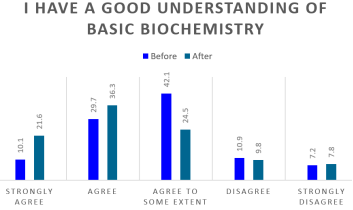
The findings reveal that while students' self-perceived understanding of basic biochemistry is largely positive, it is predominantly moderate. As shown in Figure 1, half of the students (50%) reported a moderate understanding, while (43.5%) rated their understanding as strong, and only (6.4%) considered it weak.
Figure 1. Facilitator perceptions on the importance of biochemistry for basic science.
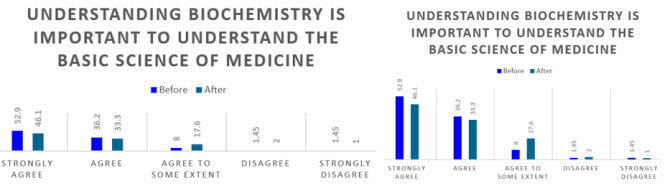
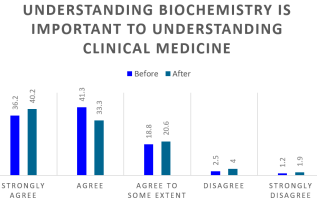
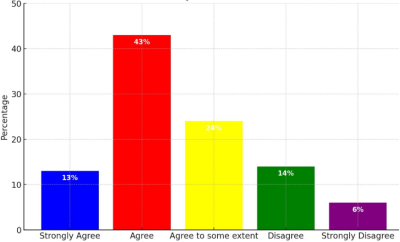
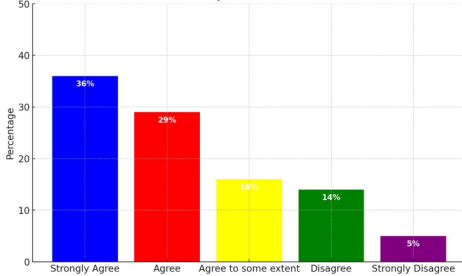
The results further indicate that a majority of students recognize the fundamental importance of biochemistry. Specifically, (79%) agreed that understanding biochemical processes is essential for comprehending basic medical sciences (Figure 2), and (73.3%) agreed for clinical medicine (Figure 3).
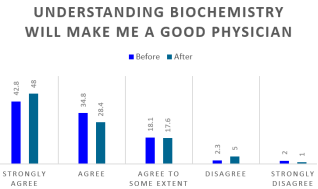
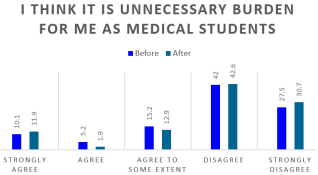
Furthermore, (76.4%) strongly agreed that studying biochemistry is necessary to become a competent physician (Figure 4), and approximately (70%) disagreed that the subject is an unnecessary burden (Figure 5).
Figure 5. Facilitator observations on student active participation in CBL sessions.
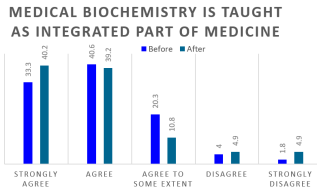
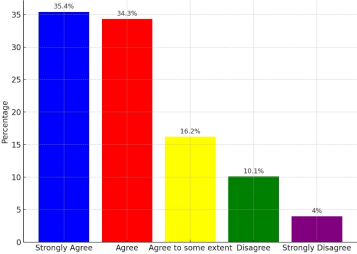
Regarding curriculum integration, nearly 80% of students (40.2% strongly agreeing, 39.2% agreeing) confirmed that biochemistry is taught as an integrated component of the medical curriculum (Figure 6). Students also acknowledged that learning biochemistry requires significant effort and memory retention, which can be challenging.
Figure 6. Facilitator agreement that CBL aids in long-term content retention.
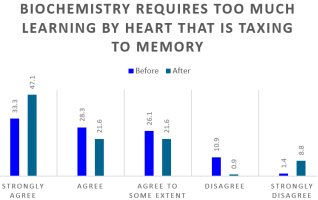
Student responses regarding the cognitive load of biochemistry were also gauged. A significant proportion of students found that learning biochemistry requires considerable memorization, which they perceived as demanding (Figure 7).
Figure 7. Facilitator assessment of how well the cases demonstrated the basic-clinical science relationship.
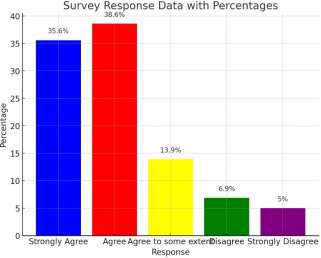
The post-course questionnaire included specific questions to evaluate the CBL sessions. The data indicate that the sessions enhanced students' knowledge of biochemical metabolism and its clinical relevance. A majority of students (74.2%) agreed that the cases successfully demonstrated the relationship between basic and clinical sciences (Figure 8) and helped them integrate biochemical knowledge with clinical scenarios (Figure 9).
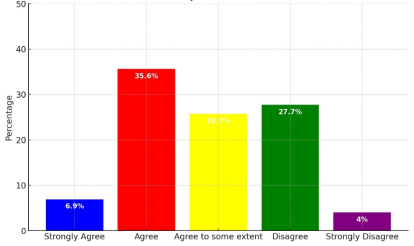
When asked if the cases were too clinically oriented for first-year students, opinions were divided, with 57% in agreement (Figure 10). Students also recognized the effectiveness of their peer group leaders, with a strong majority agreeing that their leader was both an effective teacher (Figure 11) and sufficiently knowledgeable to lead the discussions (Figure 12).
Figure 12. Student assessment of their group leader's knowledge.
Overall, (73%) of students strongly agreed or agreed that CBL sessions should be a permanent component of the course (Figure 13). Perceptions on the difficulty of studying metabolism at this stage were mixed: 60% found it to be a significant burden, while 36% found it easy to understand. Despite this, over 70% affirmed that studying metabolism at this stage is necessary for comprehensive learning (Figure 14).
Figure 13. Facilitator support for repeating CBL sessions in the next academic year.
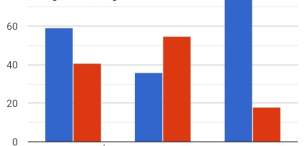
Blue: Agree
Red: Disagree
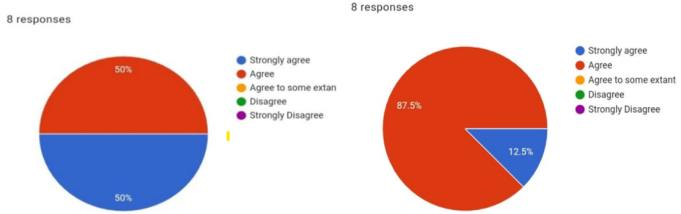
Eight facilitators participated in the feedback survey. The data show that facilitators strongly affirmed the importance of biochemistry, with 50% and 87.5% agreeing it is crucial for understanding basic science and clinical medicine, respectively (Facilitator Figures 14.)
Figure 14. Perceptions on the difficulty of studying metabolism.
All facilitators (100%) strongly agreed or agreed that CBL sessions improve analytical skills and promote deep learning (Facilitator Figure 3). They also reported that the sessions improved student communication skills (87.5%), attendance, and active participation (87.5%) (Facilitator Figures 4 & 5). Furthermore, 85% of facilitators agreed that CBL aids in content retention beyond rote memorization (Facilitator Figure 6).
All facilitators confirmed that the cases successfully demonstrated the relationship between basic sciences and clinical medicine (Facilitator Figure 7), and 74% indicated that the small group sessions effectively helped students connect biochemistry to clinical scenarios (Facilitator Figure 8). However, there was some disagreement (37%) on whether the sessions were too clinically oriented for first-year students (Facilitator Figure 9).
From a teaching perspective, 75% of facilitators agreed that leading these sessions improved their own teaching skills (Facilitator Figure 10) and enhanced their knowledge of metabolic biochemistry (Facilitator Figure 11). Finally, all facilitators (100%) recommended that the small group CBL sessions be repeated for next year's biochemistry class (Facilitator Figure 12).
4. Discussion
Biochemistry is a foundational discipline in medical education, crucial for establishing the scientific basis of clinical practice
[3]
Patil, V. P., et al. (2017). Case-based learning in biochemistry: Innovative criterion-based assessment module for effective learning among MBBS Phase 1 students in India. Indian Journal of Medical Biochemistry, 21(1), 62–68.
[3]
. Its effective instruction is therefore essential for preparing students for their future clinical roles
[2]
Alexander, B., Se, S., et al. (2008). The use of multiple tools for teaching medical biochemistry. Advances in Physiology Education, 32, 38–48.
[2]
. Traditional, teacher-centered curricula, however, often present biochemical knowledge—which spans factual, conceptual, and procedural domains—as a significant challenge for students
[6]
Anderson, L. W., et al. (2011). A taxonomy for learning, teaching and assessing: A revision of Bloom's taxonomy of educational objectives. Longman.
[6]
. This is particularly true for complex and abstract topics like metabolism, which require deep, analytical thinking to master.
Case-Based Learning (CBL) offers a pedagogical solution by framing foundational content within clinically relevant scenarios. This method enhances comprehension of complex material, increases student engagement, and fosters higher-order cognitive skills, including analysis, evaluation, and problem-solving
[6]
Anderson, L. W., et al. (2011). A taxonomy for learning, teaching and assessing: A revision of Bloom's taxonomy of educational objectives. Longman.
[7]
Sendhav, S., et al. (2022). Implementation of case-based learning method for teaching biochemistry for undergraduate medical students. National Journal of Physiology, Pharmacy and Pharmacology, 12(3).
[6, 7]
. When biochemistry is taught without clear clinical context, students may perceive it as abstract and resort to rote memorization
[3]
Patil, V. P., et al. (2017). Case-based learning in biochemistry: Innovative criterion-based assessment module for effective learning among MBBS Phase 1 students in India. Indian Journal of Medical Biochemistry, 21(1), 62–68.
[3]
. CBL directly addresses this by bridging the gap between basic science and clinical application, making learning more dynamic and purposeful.
This study implemented a directed CBL approach in the Nutrition and Metabolism course at al-Zaeim al-Azhari University. Out of 163 enrolled students, 140 (85.9%) attended the small-group discussions, with high response rates for the pre- (98.5%) and post-questionnaires (72.9%). These figures are comparable to similar studies, such as one by Alexander Gallan, which reported a 98% attendance rate and 66% post-session survey response rate
[8]
Gallan, A. J., Offner, G. D., & Symes, K. (2016). Vertical integration of biochemistry and clinical medicine using a near-peer learning model. Biochemistry and Molecular Biology Education, 44(6), 507–516.
[8]
.
Our pre-session findings revealed that students initially perceived biochemistry as more critical for understanding basic science (89.1%) than for clinical medicine (77.5%) or becoming a competent physician (77.9%). This aligns with prior research where students rated biochemistry's importance to basic sciences significantly higher than its clinical relevance
[8]
Gallan, A. J., Offner, G. D., & Symes, K. (2016). Vertical integration of biochemistry and clinical medicine using a near-peer learning model. Biochemistry and Molecular Biology Education, 44(6), 507–516.
[9]
Eissa, S., et al. (2020). Large-scale application of case-based learning for teaching medical biochemistry: A challenging experience with positive impacts. Innovations in Education.
. Post-intervention, a notable shift occurred: students began to perceive biochemistry as almost equally important for understanding clinical medicine (73.5%) as for basic sciences (79.4%). This trend mirrors findings by Alexander and Wikanta, where post-CBL ratings for clinical and basic science importance became nearly equivalent
[8]
Gallan, A. J., Offner, G. D., & Symes, K. (2016). Vertical integration of biochemistry and clinical medicine using a near-peer learning model. Biochemistry and Molecular Biology Education, 44(6), 507–516.
[9]
Eissa, S., et al. (2020). Large-scale application of case-based learning for teaching medical biochemistry: A challenging experience with positive impacts. Innovations in Education.
. Although the percentage of students emphasizing basic science importance slightly decreased post-session, it remained the highest, indicating a persistent—though diminished—bias.
Crucially, the CBL intervention enhanced students' perceived understanding of metabolism. In our study, 57% of students reported a better grasp of metabolism after the session, a substantial increase from the 39.9% in the pre-intervention course. This aligns with Alexander's study, which also demonstrated a significant improvement in understanding metabolic biochemistry post-CBL
[8]
Gallan, A. J., Offner, G. D., & Symes, K. (2016). Vertical integration of biochemistry and clinical medicine using a near-peer learning model. Biochemistry and Molecular Biology Education, 44(6), 507–516.
[8]
. These results collectively suggest that CBL effectively enhances both the appreciation of clinical relevance and the conceptual understanding of complex biochemical topics.
When compared directly with Alexander's study
[8]
Gallan, A. J., Offner, G. D., & Symes, K. (2016). Vertical integration of biochemistry and clinical medicine using a near-peer learning model. Biochemistry and Molecular Biology Education, 44(6), 507–516.
[8]
, our results showed a slightly greater improvement in knowledge of metabolism (67.7% vs. 64%) but a comparable effect on knowledge of clinical medicine. While a lower percentage of our students agreed that the cases successfully demonstrated the basic-clinical science relationship (74.2% vs. 91%), a strong majority (73%) supported repeating CBL sessions in the following year, a figure similar to the 70% reported elsewhere
[8]
Gallan, A. J., Offner, G. D., & Symes, K. (2016). Vertical integration of biochemistry and clinical medicine using a near-peer learning model. Biochemistry and Molecular Biology Education, 44(6), 507–516.
[8]
. A higher proportion of our students (19% vs. 8%) found the cases too clinically oriented, which may reflect the specific case design or the students' initial preparedness.
Faculty feedback was overwhelmingly positive. All facilitators agreed that CBL improved students' analytical skills, deep learning, communication, and participation, consistent with findings by Eissa et al. and Wikanta
[9]
Eissa, S., et al. (2020). Large-scale application of case-based learning for teaching medical biochemistry: A challenging experience with positive impacts. Innovations in Education.
Wikanta, W., & Susilo, H. (2022). Higher order thinking skills achievement for biology education students in case-based biochemistry learning. International Journal of Instruction, 15(4).
[9, 10]
. Facilitators also reported personal benefits, including enhanced teaching skills and subject knowledge. However, one challenge noted was the significant time and effort required for session preparation, a common constraint also identified by Eissa et al.
[9]
Eissa, S., et al. (2020). Large-scale application of case-based learning for teaching medical biochemistry: A challenging experience with positive impacts. Innovations in Education.
Qualitative feedback from staff highlighted that CBL helped students comprehend metabolic pathways, increased their interest in biochemistry, and encouraged strategic, application-based thinking
[11]
Sanghani, H., et al. (2024). Evaluation of effectiveness of case-based learning in clinical biochemistry teaching among Phase-I MBBS students. National Journal of Physiology, Pharmacy and Pharmacology, 14(4), 683–687.
[12]
Thistlethwaite JE, et al. The effectiveness of case-based learning in health professional education: A BEME systematic review. Medical Teacher. 2012; 34(6): e421–e444. Supports that CBL improves understanding, engagement, and application of knowledge.
[13]
Srinivasan M, Wilkes M, Stevenson F, Nguyen T, Slavin S. Comparing problem-based learning with case-based learning: Effects of a major curricular shift at two institutions. Academic Medicine. 2007; 82(1): 74–82. Shows that CBL enhances clinical reasoning and application of basic science concepts.
[11-13]
. The small-group, interactive nature of CBL was praised for fostering improved teacher-student and peer-to-peer interactions, allowing for closer monitoring of student performance
[14]
McLean SF. Case-based learning and its application in medical and health-care fields: A review of worldwide literature. Journal of Medical Education and Curricular Development. 2016; 3: 39–49. Discusses improved student engagement, interest, and deeper understanding through CBL.
[15]
Williams B. Case based learning – a review of the literature: Is there scope for this educational paradigm in prehospital education? Emergency Medicine Journal. 2005; 22(8): 577–581. Supports small-group interaction, discussion, and collaborative learning benefits.
[16]
Herreid CF. What makes a good case? Journal of College Science Teaching. 1997; 27(3): 163–165. Highlights how case discussions stimulate analytical and strategic thinking.
[14-16]
.
5. Conclusion
In conclusion, this study demonstrates that a structured Case-Based Learning model is an effective strategy for teaching biochemistry in a medical curriculum. The intervention successfully bridged the gap between basic science and clinical practice, leading to a significant shift in student perceptions. Participants showed an increased appreciation for the clinical relevance of biochemistry and reported a deeper understanding of challenging topics like metabolism. Both students and faculty endorsed the method, citing improvements in critical thinking, engagement, and collaborative skills.
Despite the challenges, including the resource-intensive nature of CBL and the need for careful case design for first-year students, the benefits are clear. We strongly recommend the continued and expanded integration of CBL into medical biochemistry courses to foster a more engaging, relevant, and effective learning environment that prepares students for the complexities of clinical practice.
Abbreviations
AAU
Alzaiem Alazhari University
CBL
Case-based Learning
Acknowledgments
We are grateful to the Faculty of Medicine at al-Zaeim al-Azhari University for granting permission to conduct this study. We also acknowledge the valuable assistance provided by the Department of Medical Biochemistry at the University for their collaboration in organizing and facilitating the sessions. Special thanks are extended to Dr. Omer Altayb, Neven Hassan, Esraa Izzeldin, Hibaalla Ismail, Ithar Yagob, Yousra Osman, and Mahmoud Alballa for their contributions.
Author Contributions
Aisha Ibrahim Ahmed Omer: Conceptualization, Data curation, Formal Analysis, Funding acquisition, Investigation, Methodology, Project administration, Writing – original draft, Writing – review & editing
Siham Mohammed Ahmed Bakhit: Conceptualization, Data curation, Formal Analysis, Funding acquisition, Investigation, Methodology, Project administration, Writing – original draft, Writing – review & editing
Hiba Salah Abdelgdir: Methodology, Project administration, Writing – original draft, Writing – review & editing
Data Availability Statement
The datasets used and/or analyzed during the current study are available from the corresponding author on reasonable request.
Conflicts of Interest
The authors declare no conflicts of interest.
References
[1]
Klinak, V., & Genevieve, A. (2015). A guide to using case-based learning in biochemistry education. Biochemistry and Molecular Biology Education.
[2]
Alexander, B., Se, S., et al. (2008). The use of multiple tools for teaching medical biochemistry. Advances in Physiology Education, 32, 38–48.
[3]
Patil, V. P., et al. (2017). Case-based learning in biochemistry: Innovative criterion-based assessment module for effective learning among MBBS Phase 1 students in India. Indian Journal of Medical Biochemistry, 21(1), 62–68.
[4]
Cornely, K. (2003). The use of current events to teach content in a biochemistry course. Biochemistry and Molecular Biology Education, 31(3), 173–176.
[5]
Costa, M. J., & Magalhães, E. (2009). What should the student-centered teacher of biochemistry and molecular biology be aware of? Biochemistry and Molecular Biology Education, 37(5), 268–270.
[6]
Anderson, L. W., et al. (2011). A taxonomy for learning, teaching and assessing: A revision of Bloom's taxonomy of educational objectives. Longman.
[7]
Sendhav, S., et al. (2022). Implementation of case-based learning method for teaching biochemistry for undergraduate medical students. National Journal of Physiology, Pharmacy and Pharmacology, 12(3).
[8]
Gallan, A. J., Offner, G. D., & Symes, K. (2016). Vertical integration of biochemistry and clinical medicine using a near-peer learning model. Biochemistry and Molecular Biology Education, 44(6), 507–516.
[9]
Eissa, S., et al. (2020). Large-scale application of case-based learning for teaching medical biochemistry: A challenging experience with positive impacts. Innovations in Education.
Wikanta, W., & Susilo, H. (2022). Higher order thinking skills achievement for biology education students in case-based biochemistry learning. International Journal of Instruction, 15(4).
[11]
Sanghani, H., et al. (2024). Evaluation of effectiveness of case-based learning in clinical biochemistry teaching among Phase-I MBBS students. National Journal of Physiology, Pharmacy and Pharmacology, 14(4), 683–687.
[12]
Thistlethwaite JE, et al. The effectiveness of case-based learning in health professional education: A BEME systematic review. Medical Teacher. 2012; 34(6): e421–e444. Supports that CBL improves understanding, engagement, and application of knowledge.
[13]
Srinivasan M, Wilkes M, Stevenson F, Nguyen T, Slavin S. Comparing problem-based learning with case-based learning: Effects of a major curricular shift at two institutions. Academic Medicine. 2007; 82(1): 74–82. Shows that CBL enhances clinical reasoning and application of basic science concepts.
[14]
McLean SF. Case-based learning and its application in medical and health-care fields: A review of worldwide literature. Journal of Medical Education and Curricular Development. 2016; 3: 39–49. Discusses improved student engagement, interest, and deeper understanding through CBL.
[15]
Williams B. Case based learning – a review of the literature: Is there scope for this educational paradigm in prehospital education? Emergency Medicine Journal. 2005; 22(8): 577–581. Supports small-group interaction, discussion, and collaborative learning benefits.
[16]
Herreid CF. What makes a good case? Journal of College Science Teaching. 1997; 27(3): 163–165. Highlights how case discussions stimulate analytical and strategic thinking.
Omer, A. I. A., Bakhit, S. M. A., Abdelgdir, H. S. (2026). Smart Teaching Tools: A Case-based Learning Model in Biochemistry at the Faculty of Medicine, Al-Zaeim Al-Azhari University, Sudan. Science Discovery Medicine, 1(1), 38-46. https://doi.org/10.11648/j.sdmed.20260101.16
Omer, A. I. A.; Bakhit, S. M. A.; Abdelgdir, H. S. Smart Teaching Tools: A Case-based Learning Model in Biochemistry at the Faculty of Medicine, Al-Zaeim Al-Azhari University, Sudan. Sci. Discov. Med.2026, 1(1), 38-46. doi: 10.11648/j.sdmed.20260101.16
Omer AIA, Bakhit SMA, Abdelgdir HS. Smart Teaching Tools: A Case-based Learning Model in Biochemistry at the Faculty of Medicine, Al-Zaeim Al-Azhari University, Sudan. Sci Discov Med. 2026;1(1):38-46. doi: 10.11648/j.sdmed.20260101.16
@article{10.11648/j.sdmed.20260101.16,
  author = {Aisha Ibrahim Ahmed Omer and Siham Mohammed Ahmed Bakhit and Hiba Salah Abdelgdir},
  title = {Smart Teaching Tools: A Case-based Learning Model in Biochemistry at the Faculty of Medicine, Al-Zaeim Al-Azhari University, Sudan},
  journal = {Science Discovery Medicine},
  volume = {1},
  number = {1},
  pages = {38-46},
  doi = {10.11648/j.sdmed.20260101.16},
  url = {https://doi.org/10.11648/j.sdmed.20260101.16},
  eprint = {https://article.sciencepublishinggroup.com/pdf/10.11648.j.sdmed.20260101.16},
  abstract = {Introduction: Biochemistry is a foundational yet challenging discipline in medical education. Traditional lecture-based teaching often promotes rote memorization over deep conceptual understanding. Case-Based Learning (CBL) addresses this by framing scientific concepts within clinical scenarios to enhance relevance. While CBL has anecdotal support, its efficacy requires rigorous local evaluation. This study assessed CBL within the integrated medical curriculum at al-Zaeim al-Azhari University, Sudan. Methods: This intervention-based case study involved first-year medical students (n=140) in a "Nutrition and Metabolism" course. Didactic lectures were followed by a directed CBL intervention. Students were divided into 13 small groups to analyze and present clinical cases. Data were collected via pre- and post-course student questionnaires and a facilitator feedback form. Quantitative data from these surveys were analyzed to determine the intervention's impact. The majority of students recognized the importance of biochemistry for basic sciences (79%) and clinical medicine (73.3%) even before the intervention. Post-CBL, a significant shift was observed, with 65.5% of students reporting an improved understanding of clinical relevance. Furthermore, (74.2%) agreed that CBL successfully integrated biochemical knowledge with clinical scenarios. While (60%) found metabolism challenging, over (70%) affirmed its necessity. Facilitators unanimously reported that CBL improved students' analytical skills, deep learning, and active participation, strongly endorsing its continued use. The integration of a directed Case-Based Learning model significantly enhanced medical students' appreciation of the clinical relevance of biochemistry and improved their understanding of complex metabolic topics. The method was positively received by both students and faculty, effectively bridging the gap between basic science and clinical application. It is recommended that CBL be further integrated into the medical biochemistry curriculum to promote a more engaging, student-centered, and effective learning environment.},
 year = {2026}
}
TY  - JOUR
T1  - Smart Teaching Tools: A Case-based Learning Model in Biochemistry at the Faculty of Medicine, Al-Zaeim Al-Azhari University, Sudan
AU  - Aisha Ibrahim Ahmed Omer
AU  - Siham Mohammed Ahmed Bakhit
AU  - Hiba Salah Abdelgdir
Y1  - 2026/03/23
PY  - 2026
N1  - https://doi.org/10.11648/j.sdmed.20260101.16
DO  - 10.11648/j.sdmed.20260101.16
T2  - Science Discovery Medicine
JF  - Science Discovery Medicine
JO  - Science Discovery Medicine
SP  - 38
EP  - 46
PB  - Science Publishing Group
UR  - https://doi.org/10.11648/j.sdmed.20260101.16
AB  - Introduction: Biochemistry is a foundational yet challenging discipline in medical education. Traditional lecture-based teaching often promotes rote memorization over deep conceptual understanding. Case-Based Learning (CBL) addresses this by framing scientific concepts within clinical scenarios to enhance relevance. While CBL has anecdotal support, its efficacy requires rigorous local evaluation. This study assessed CBL within the integrated medical curriculum at al-Zaeim al-Azhari University, Sudan. Methods: This intervention-based case study involved first-year medical students (n=140) in a "Nutrition and Metabolism" course. Didactic lectures were followed by a directed CBL intervention. Students were divided into 13 small groups to analyze and present clinical cases. Data were collected via pre- and post-course student questionnaires and a facilitator feedback form. Quantitative data from these surveys were analyzed to determine the intervention's impact. The majority of students recognized the importance of biochemistry for basic sciences (79%) and clinical medicine (73.3%) even before the intervention. Post-CBL, a significant shift was observed, with 65.5% of students reporting an improved understanding of clinical relevance. Furthermore, (74.2%) agreed that CBL successfully integrated biochemical knowledge with clinical scenarios. While (60%) found metabolism challenging, over (70%) affirmed its necessity. Facilitators unanimously reported that CBL improved students' analytical skills, deep learning, and active participation, strongly endorsing its continued use. The integration of a directed Case-Based Learning model significantly enhanced medical students' appreciation of the clinical relevance of biochemistry and improved their understanding of complex metabolic topics. The method was positively received by both students and faculty, effectively bridging the gap between basic science and clinical application. It is recommended that CBL be further integrated into the medical biochemistry curriculum to promote a more engaging, student-centered, and effective learning environment.
VL  - 1
IS  - 1
ER  -
Omer, A. I. A., Bakhit, S. M. A., Abdelgdir, H. S. (2026). Smart Teaching Tools: A Case-based Learning Model in Biochemistry at the Faculty of Medicine, Al-Zaeim Al-Azhari University, Sudan. Science Discovery Medicine, 1(1), 38-46. https://doi.org/10.11648/j.sdmed.20260101.16
Omer, A. I. A.; Bakhit, S. M. A.; Abdelgdir, H. S. Smart Teaching Tools: A Case-based Learning Model in Biochemistry at the Faculty of Medicine, Al-Zaeim Al-Azhari University, Sudan. Sci. Discov. Med.2026, 1(1), 38-46. doi: 10.11648/j.sdmed.20260101.16
Omer AIA, Bakhit SMA, Abdelgdir HS. Smart Teaching Tools: A Case-based Learning Model in Biochemistry at the Faculty of Medicine, Al-Zaeim Al-Azhari University, Sudan. Sci Discov Med. 2026;1(1):38-46. doi: 10.11648/j.sdmed.20260101.16
@article{10.11648/j.sdmed.20260101.16,
  author = {Aisha Ibrahim Ahmed Omer and Siham Mohammed Ahmed Bakhit and Hiba Salah Abdelgdir},
  title = {Smart Teaching Tools: A Case-based Learning Model in Biochemistry at the Faculty of Medicine, Al-Zaeim Al-Azhari University, Sudan},
  journal = {Science Discovery Medicine},
  volume = {1},
  number = {1},
  pages = {38-46},
  doi = {10.11648/j.sdmed.20260101.16},
  url = {https://doi.org/10.11648/j.sdmed.20260101.16},
  eprint = {https://article.sciencepublishinggroup.com/pdf/10.11648.j.sdmed.20260101.16},
  abstract = {Introduction: Biochemistry is a foundational yet challenging discipline in medical education. Traditional lecture-based teaching often promotes rote memorization over deep conceptual understanding. Case-Based Learning (CBL) addresses this by framing scientific concepts within clinical scenarios to enhance relevance. While CBL has anecdotal support, its efficacy requires rigorous local evaluation. This study assessed CBL within the integrated medical curriculum at al-Zaeim al-Azhari University, Sudan. Methods: This intervention-based case study involved first-year medical students (n=140) in a "Nutrition and Metabolism" course. Didactic lectures were followed by a directed CBL intervention. Students were divided into 13 small groups to analyze and present clinical cases. Data were collected via pre- and post-course student questionnaires and a facilitator feedback form. Quantitative data from these surveys were analyzed to determine the intervention's impact. The majority of students recognized the importance of biochemistry for basic sciences (79%) and clinical medicine (73.3%) even before the intervention. Post-CBL, a significant shift was observed, with 65.5% of students reporting an improved understanding of clinical relevance. Furthermore, (74.2%) agreed that CBL successfully integrated biochemical knowledge with clinical scenarios. While (60%) found metabolism challenging, over (70%) affirmed its necessity. Facilitators unanimously reported that CBL improved students' analytical skills, deep learning, and active participation, strongly endorsing its continued use. The integration of a directed Case-Based Learning model significantly enhanced medical students' appreciation of the clinical relevance of biochemistry and improved their understanding of complex metabolic topics. The method was positively received by both students and faculty, effectively bridging the gap between basic science and clinical application. It is recommended that CBL be further integrated into the medical biochemistry curriculum to promote a more engaging, student-centered, and effective learning environment.},
 year = {2026}
}
TY  - JOUR
T1  - Smart Teaching Tools: A Case-based Learning Model in Biochemistry at the Faculty of Medicine, Al-Zaeim Al-Azhari University, Sudan
AU  - Aisha Ibrahim Ahmed Omer
AU  - Siham Mohammed Ahmed Bakhit
AU  - Hiba Salah Abdelgdir
Y1  - 2026/03/23
PY  - 2026
N1  - https://doi.org/10.11648/j.sdmed.20260101.16
DO  - 10.11648/j.sdmed.20260101.16
T2  - Science Discovery Medicine
JF  - Science Discovery Medicine
JO  - Science Discovery Medicine
SP  - 38
EP  - 46
PB  - Science Publishing Group
UR  - https://doi.org/10.11648/j.sdmed.20260101.16
AB  - Introduction: Biochemistry is a foundational yet challenging discipline in medical education. Traditional lecture-based teaching often promotes rote memorization over deep conceptual understanding. Case-Based Learning (CBL) addresses this by framing scientific concepts within clinical scenarios to enhance relevance. While CBL has anecdotal support, its efficacy requires rigorous local evaluation. This study assessed CBL within the integrated medical curriculum at al-Zaeim al-Azhari University, Sudan. Methods: This intervention-based case study involved first-year medical students (n=140) in a "Nutrition and Metabolism" course. Didactic lectures were followed by a directed CBL intervention. Students were divided into 13 small groups to analyze and present clinical cases. Data were collected via pre- and post-course student questionnaires and a facilitator feedback form. Quantitative data from these surveys were analyzed to determine the intervention's impact. The majority of students recognized the importance of biochemistry for basic sciences (79%) and clinical medicine (73.3%) even before the intervention. Post-CBL, a significant shift was observed, with 65.5% of students reporting an improved understanding of clinical relevance. Furthermore, (74.2%) agreed that CBL successfully integrated biochemical knowledge with clinical scenarios. While (60%) found metabolism challenging, over (70%) affirmed its necessity. Facilitators unanimously reported that CBL improved students' analytical skills, deep learning, and active participation, strongly endorsing its continued use. The integration of a directed Case-Based Learning model significantly enhanced medical students' appreciation of the clinical relevance of biochemistry and improved their understanding of complex metabolic topics. The method was positively received by both students and faculty, effectively bridging the gap between basic science and clinical application. It is recommended that CBL be further integrated into the medical biochemistry curriculum to promote a more engaging, student-centered, and effective learning environment.
VL  - 1
IS  - 1
ER  -





 Share This Article
 Twitter
 Linked In
 Facebook
 Copy
Copy Download