Abstract
This study evaluated the quality of cakes produced from flour blends of wheat, carrot and orange-fleshed sweet potato (OFSP). Flour blends were prepared from the raw materials and blended in varying proportions to produce cake samples as follows; Sample A (100% WF: 0% CF: 0% OFSP), Sample B (60% WF: 20% CF: 20% OFSP), Sample C (50% WF: 20% CF: 30% OFSP), Sample D (40% WF: 40% CF: 20% OFSP) and Sample E (30% WF: 40% CF: 30% OFSP). The functional properties of the flour blends as well as the proximate composition, mineral content, vitamin content and sensory attributes of the cake samples were analyzed. The results revealed significant (P < 0.05) differences among the formulations. The proximate analysis showed that moisture content ranged from 11.36–12.81%, fat from 1.44–2.13%, ash content ranged from 1.34–4.05%, protein content ranged from 8.33–11.23% and fibre content from 2.62–8.04%. These values increased with higher substitution levels of carrot and OFSP flours. In contrast, carbohydrate content (63.19–73.45%) and energy values (316.53–340.08 Kcal) decreased as substitution levels increased. The mineral analysis indicated that calcium content ranged from 51.38–160.32 mg/100 g, potassium content ranged from 145.33–195.82 mg/100 g, magnesium content ranged from 20.37–33.21 mg/100 g, while zinc content ranged from 0.46–1.24 mg/100 g, demonstrating significant improvement in the composite flour cakes compared to the control. The vitamin analysis showed that vitamin A content ranged from 0.96–187.76 mg/100 g, while vitamin C content ranged from 1.53–16.27 mg/100 g with notable enhancement observed in blends containing higher proportions of carrot and OFSP flours. The sensory evaluation indicated that the cake samples were generally acceptable with slight variations in appearance and taste across formulations. The blend containing 30% wheat, 40% carrot and 30% OFSP yielded cakes that were nutritionally superior and well accepted by panelists. The study concludes that nutrient-dense and palatable cakes can be successfully produced using composite flours of wheat, carrot and orange-fleshed sweet potato. This approach provides a viable means of reducing dependence on wheat while enhancing the nutritional quality of cakes and other bakery products through the utilization of locally available crops.
|
Published in
|
Science Discovery Nutrition (Volume 1, Issue 2)
|
|
DOI
|
10.11648/j.sdnutr.20260102.11
|
|
Page(s)
|
77-84 |
|
Creative Commons
|

This is an Open Access article, distributed under the terms of the Creative Commons Attribution 4.0 International License (http://creativecommons.org/licenses/by/4.0/), which permits unrestricted use, distribution and reproduction in any medium or format, provided the original work is properly cited.
|
|
Copyright
|
Copyright © The Author(s), 2026. Published by Science Publishing Group
|
Keywords
Blend, Cake, Development, Evaluation, Flour, Nutritional
1. Introduction
The global food industry has witnessed significant transformations over the years, with increasing emphasis on the nutritional value and health benefits of food production
| [7] | Hasmadi, M., Noorfarahzilah, M., Noraidah, H., Zainol, M. K. and Jahurul, M. H. A. (2020) Composite flour functional properties and bakery applications. |
[7]
. Cake is a flour-based confectionery product typically prepared from flour, sugar, fat, eggs and other ingredients and is widely consumed due to its palatability, convenience and versatility
| [14] | Ndah, L. S., James, G. E., Udoh, I. E. and Thomas, I. A. (2026). Physicochemical and Nutritional Assessment of Cake from Wheat (Triticum aestivum) and Peanut (Arachis hypogaea) Flour Blends Using Date Powder (Phoenix dactylifera) as A natural Sweetener. Food Sci Nutr Res. 2026; 9(1): 1-4. |
[14]
. They are convenient food products that can be consumed both at home and in outdoor settings, especially during ceremonies and have become increasingly popular
| [14] | Ndah, L. S., James, G. E., Udoh, I. E. and Thomas, I. A. (2026). Physicochemical and Nutritional Assessment of Cake from Wheat (Triticum aestivum) and Peanut (Arachis hypogaea) Flour Blends Using Date Powder (Phoenix dactylifera) as A natural Sweetener. Food Sci Nutr Res. 2026; 9(1): 1-4. |
[14]
.
Cakes may be produced in small individual portions such as queen cakes or in larger sizes that are sliced and served at social functions or as part of meals. They are often decorated with frosting, fruits, nuts or other toppings making them suitable for both celebratory and everyday consumption. Flour remains a fundamental ingredient in cake production.
Wheat (
Triticum aestivum) flour is the most widely used flour in cake production due to its high gluten content, which is essential for dough formation, elasticity and gas retention during baking
| [22] | Ma, W., Yu, Z., She, M., Zhao, Y. and Islam, S. (2019). Wheat gluten protein and its impacts on wheat processing quality. Frontiers of Agricultural Science and Engineering, 6(3), 279–287. https://doi.org/10.15302/J-FASE-2019267 |
[22]
. Wheat also serves as a major source of carbohydrates and dietary fibre in many diets. However, in Nigeria, wheat is relatively expensive due to limited local production and heavy reliance on importation, largely influenced by unsuitable climatic and soil conditions
| [14] | Ndah, L. S., James, G. E., Udoh, I. E. and Thomas, I. A. (2026). Physicochemical and Nutritional Assessment of Cake from Wheat (Triticum aestivum) and Peanut (Arachis hypogaea) Flour Blends Using Date Powder (Phoenix dactylifera) as A natural Sweetener. Food Sci Nutr Res. 2026; 9(1): 1-4. |
[14]
. This situation has created economic pressure on bakers and food processors, thereby necessitating the exploration of alternative locally available raw materials
| [14] | Ndah, L. S., James, G. E., Udoh, I. E. and Thomas, I. A. (2026). Physicochemical and Nutritional Assessment of Cake from Wheat (Triticum aestivum) and Peanut (Arachis hypogaea) Flour Blends Using Date Powder (Phoenix dactylifera) as A natural Sweetener. Food Sci Nutr Res. 2026; 9(1): 1-4. |
[14]
.
Nutritionally, cakes produced solely from wheat flour may not provide sufficient protein required for growth, tissue repair and cellular development
| [21] | Tull, A. (1996). Food and nutrition (3rd ed.) Oxford University Press. |
[21]
. Additionally, the presence of gluten in wheat limits its consumption among individuals with celiac disease, which affects approximately 1% of the global population and requires strict adherence to a gluten-free diet
| [2] | Caio, G., Volta, U., Sapone, A., Leffler, D. A., De Giorgio, R., Catassi, C. and Fasano, A. (2019). Celiac disease: A comprehensive current review. BMC Medicine, 17(1), 142.
https://doi.org/10.1186/s12916-019-1380-z |
[2]
. These concerns have led to increased research into composite flour technology as a strategy for improving the nutritional quality of baked products while reducing dependence on wheat.
Recent studies have demonstrated that incorporating non-wheat ingredients such as fruits, vegetables and tubers into bakery products can significantly enhance their nutritional and functional properties
| [14] | Ndah, L. S., James, G. E., Udoh, I. E. and Thomas, I. A. (2026). Physicochemical and Nutritional Assessment of Cake from Wheat (Triticum aestivum) and Peanut (Arachis hypogaea) Flour Blends Using Date Powder (Phoenix dactylifera) as A natural Sweetener. Food Sci Nutr Res. 2026; 9(1): 1-4. |
[14]
. For instance, the inclusion of carrot and sweet potato flours in cake formulations has been shown to improve fibre, mineral, and antioxidant contents while maintaining acceptable sensory properties
| [3] | Chikpah, S. K. and Korese, J. K. (2023). Optimization of wheat–orange-fleshed sweet potato composite flour in bread production. Discover Food, 3, 2.
https://doi.org/10.1007/s44187-023-00041-z |
| [6] | Halim, M. A., Alharbi, S. A., Alarfaj, A. A., Almansour, M. I., Ansari, M. J., Nessa, M. J. and Kabir, F. N. A. (2024). Improvement and quality evaluation of gluten-free cake supplemented with sweet potato flour and carrot powder. Applied Food Research, 4(2), 100543.
https://doi.org/10.1016/j.afres.2024.100543 |
| [8] | Jenfa, M. D., Adelusi, O. A., Aderinoye, A., Coker, O. J., Martins, I. E. and Obadina, O. A. (2024). Physicochemical, functional and color properties of sorghum–orange-fleshed sweet potato composite flour. Food Science and Nutrition, 12(4), 2364–2378. https://doi.org/10.1002/fsn3.3922 |
| [23] | Zhang, L., Gao, Y., Deng, B., Ru, W., Tong, C. and Bao, J. (2022). Physicochemical, nutritional, and antioxidant properties of sweet potato flour. Frontiers in Nutrition, 9, 923257. https://doi.org/10.3389/fnut.2022.923257 |
[3, 6, 8, 23]
. Similarly, composite flours containing orange-fleshed sweet potato (OFSP) have been reported to improve the nutritional profile of food products, particularly through increased pro-vitamin A content and enhanced functional properties
| [8] | Jenfa, M. D., Adelusi, O. A., Aderinoye, A., Coker, O. J., Martins, I. E. and Obadina, O. A. (2024). Physicochemical, functional and color properties of sorghum–orange-fleshed sweet potato composite flour. Food Science and Nutrition, 12(4), 2364–2378. https://doi.org/10.1002/fsn3.3922 |
| [9] | Kewuyemi, Y. O. and Adebo, O. A. (2024). Nutritional and functional properties of fermented composite flours from legumes and root crops. Scientific Reports, 14, 1987.
https://doi.org/10.1038/s41598-024-52149-6 |
| [10] | Laurie, S. M., Faber, M. and Claasen, N. (2015). Incorporating orange-fleshed sweet potato into the food system as a strategy for improved nutrition. Food Research International, 76, 962–970. https://doi.org/10.1016/j.foodres.2015.06.012 |
| [11] | Low, J. W., Mwanga, R. O. M., Andrade, M., Carey, E. and Ball, A.-M. (2017). Tackling vitamin A deficiency with biofortified sweet potato in sub-Saharan Africa. Global Food Security, 14, 23–30.
https://doi.org/10.1016/j.gfs.2017.01.004 |
| [23] | Zhang, L., Gao, Y., Deng, B., Ru, W., Tong, C. and Bao, J. (2022). Physicochemical, nutritional, and antioxidant properties of sweet potato flour. Frontiers in Nutrition, 9, 923257. https://doi.org/10.3389/fnut.2022.923257 |
[8-11, 23]
. Research also indicates that sweet potato flours possess significant levels of phenolic compounds and antioxidants, which contribute to their health-promoting potential
| [4] | Grace, M. H., Yousef, G. G., Gustafson, S. J., Truong, V.-D., Yencho, G. C. and Lila, M. A. (2015). Phytochemical changes and antioxidant capacity of sweet potato (Ipomoea batatas) roots. Journal of Agricultural and Food Chemistry, 63(40), 8628–8634. |
| [18] | Tang, Y., Cai, W. and Xu, B. (2015). Profiles of phenolics, carotenoids, and antioxidant activities of sweet potato. Food Chemistry, 172, 90–99. |
| [19] | Truong, V.-D., McFeeters, R. F., Thompson, R. T., Dean, L. L. and Shofran, B. (2021). Phenolic acid content and antioxidant capacity of sweet potato flours. Food Chemistry, 340, 128–135. |
| [23] | Zhang, L., Gao, Y., Deng, B., Ru, W., Tong, C. and Bao, J. (2022). Physicochemical, nutritional, and antioxidant properties of sweet potato flour. Frontiers in Nutrition, 9, 923257. https://doi.org/10.3389/fnut.2022.923257 |
[4, 18, 19, 23]
.
Carrot (
Daucus carota) is an important root vegetable recognized for its high β-carotene content which serves as a precursor of vitamin A as well as its richness in other essential vitamins and bioactive compounds. It can be consumed raw, cooked or processed into juices and flour. Increased consumption of carrot-based products has been associated with their antioxidant and anticancer properties. Carrots are also a major source of lipophilic antioxidants such as lutein and lycopene
| [1] | Arscott, S. A. and Tanumihardjo, S. A. (2010). Carrots of many colors provide basic nutrition and bioavailable phytochemicals. Plant Foods for Human Nutrition, 65(2), 113–120.
https://doi.org/10.1007/s11130-010-0160-7 |
[1]
. In addition, they contain hydrophilic phenolic compounds known for their anti-inflammatory, antimicrobial, and anti-atherogenic effects
| [5] | Grassmann, J., Schnitzler, W. H. and Habegger, R. (2007). Evaluation of different coloured carrot cultivars on antioxidant capacity based on their carotenoid and phenolic contents. Food Chemistry, 101(2), 782–786. |
[5]
. Carrot flour, produced from dried and milled carrots has gained attention as a functional ingredient in baking due to its ability to improve colour, flavour and nutritional value
| [14] | Ndah, L. S., James, G. E., Udoh, I. E. and Thomas, I. A. (2026). Physicochemical and Nutritional Assessment of Cake from Wheat (Triticum aestivum) and Peanut (Arachis hypogaea) Flour Blends Using Date Powder (Phoenix dactylifera) as A natural Sweetener. Food Sci Nutr Res. 2026; 9(1): 1-4. |
[14]
.
Orange-fleshed sweet potato (OFSP) (
Ipomoea batatas) is valuable nutritional crop, predominantly rich in β-carotene, pro-vitamins A, B
6 and C, dietary fibre and phytochemicals. It plays a significant role in combating vitamin A deficiency, especially in developing countries. According to
| [20] | Tsou, S. C. S. and Hong, T. L. (1992). The nutrition and utilization of sweetpotato. In W. A. Hill, C. K. Bonsi, and P. A. Loretan (Eds.), Sweetpotato technology for the 21st century (pp. 359–366). Tuskegee University. |
[20]
, the consumption of 100–150 g of boiled OFSP can meet the daily requirement of vitamin A, thereby helping to prevent conditions such as night blindness. Additionally, its leaves are consumed as vegetables in some communities
| [13] | Masumba, G. O., Musambya, G. and Msuya, J. M. (2007). Nutrient composition of selected leafy vegetables consumed in the Iringa region of Tanzania. African Journal of Food, Agriculture, Nutrition and Development, 7(1), 168-174. |
[13]
and its high fibre, iron and phytochemical content contributes to improved health outcomes including potential benefits for reproductive health
.
Composite flour technology, which involves blending wheat flour with flours derived from other plant sources have been widely recognized as an effective strategy for improving the nutritional quality, functional properties, and economic viability of baked products
| [6] | Halim, M. A., Alharbi, S. A., Alarfaj, A. A., Almansour, M. I., Ansari, M. J., Nessa, M. J. and Kabir, F. N. A. (2024). Improvement and quality evaluation of gluten-free cake supplemented with sweet potato flour and carrot powder. Applied Food Research, 4(2), 100543.
https://doi.org/10.1016/j.afres.2024.100543 |
| [8] | Jenfa, M. D., Adelusi, O. A., Aderinoye, A., Coker, O. J., Martins, I. E. and Obadina, O. A. (2024). Physicochemical, functional and color properties of sorghum–orange-fleshed sweet potato composite flour. Food Science and Nutrition, 12(4), 2364–2378. https://doi.org/10.1002/fsn3.3922 |
| [15] | Olakanmi, S. J., Jayas, D. S. and Paliwal, J. (2022). Effect of composite flour blends on bread quality and nutritional composition. Foods, 11(20), 3287.
https://doi.org/10.3390/foods11203287 |
[6, 8, 15]
. Studies have shown that composite flours can enhance protein, fibre, mineral and vitamin contents while maintaining acceptable sensory attributes
| [9] | Kewuyemi, Y. O. and Adebo, O. A. (2024). Nutritional and functional properties of fermented composite flours from legumes and root crops. Scientific Reports, 14, 1987.
https://doi.org/10.1038/s41598-024-52149-6 |
| [23] | Zhang, L., Gao, Y., Deng, B., Ru, W., Tong, C. and Bao, J. (2022). Physicochemical, nutritional, and antioxidant properties of sweet potato flour. Frontiers in Nutrition, 9, 923257. https://doi.org/10.3389/fnut.2022.923257 |
[9, 23]
. Furthermore, they promote the utilization of locally available crops, reduce dependence on imported wheat and contribute to food security.
Despite these advancements, there remains a need for comprehensive studies that evaluate the combined use of wheat, carrot and orange-fleshed sweet potato flours in cake production, particularly with respect to their physicochemical, nutritional and sensory properties. Therefore, this study aims to develop and evaluate the quality of cakes produced from different proportions of composite flour blends of wheat, carrot and orange-fleshed sweet potato.
2. Statistical Analysis
The analyses were conducted in triplicate and the data obtained were analyzed using analysis of variance (ANOVA) with the Statistical Package for the Social Science (SPSS) version 22. Additionally, Duncan’s Multiple Range Tests (DMRTs) was used to compare the means at a significance level of 0.05 (p≤0.05).
3. Materials and Methods
3.1. Materials
Wheat (Triticum aestivum) and carrot (Daucus carota) used in this study were procured from Itam Market in Itu Local Government Area, Akwa Ibom State, Nigeria. Orange-fleshed sweet potatoes (Ipomoea batatas) were sourced from Benue State, Nigeria. Other ingredients required for cake production including sugar, eggs and milk, were also purchased from Itam Market in Itu Local Government Area, Akwa Ibom State, Nigeria. All chemicals used for the analyses were obtained from reputable scientific suppliers and were of analytical grade.
3.2. Methods of Preparation of Wheat, Carrot and Orange Sweet Potato Flours
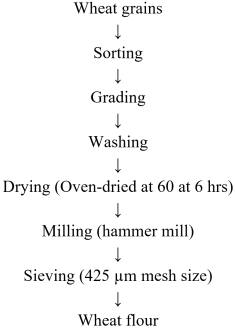
The preparation of wheat flour was carried out according to the modified method described by
| [14] | Ndah, L. S., James, G. E., Udoh, I. E. and Thomas, I. A. (2026). Physicochemical and Nutritional Assessment of Cake from Wheat (Triticum aestivum) and Peanut (Arachis hypogaea) Flour Blends Using Date Powder (Phoenix dactylifera) as A natural Sweetener. Food Sci Nutr Res. 2026; 9(1): 1-4. |
[14]
shown in
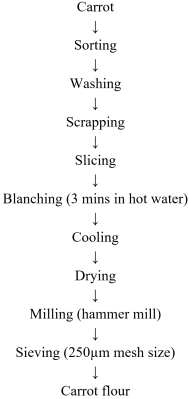
Figure 1 below. The whole wheat grains were manually sorted to remove impurities, graded washed thoroughly and oven-dried at 60°C for 6 hrs. The dried grains were then milled into flour using a grinding machine. The resulting flour was sieved through a 425μm mesh to obtain a uniform particle size, packaged in airtight zip-lock bags and stored under appropriate conditions until required for analysis. Carrot flour was prepared following the method of
| [12] | Marvin, C. (2009). Production of carrot powder for food applications: An overview. Food Research Journal, 42(3), 201-207. |
[12]
shown in
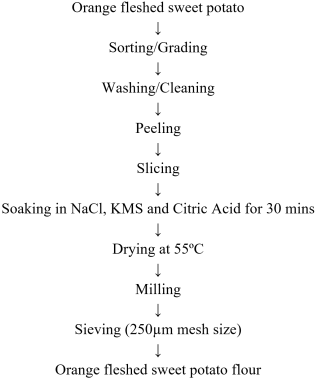
Figure 3 below with a slight modifications. Fresh carrot roots were washed thoroughly, peeled and sliced into 5–6 mm thickness. The slices were blanched in hot water containing sodium metabisulphite for 3 mins to prevent enzymatic browning. The blanched samples were cooled and dried in a cabinet dryer at 50°C for 12 hrs. The dried slices were milled into flour using a Philips Laboratory mill (Model HL 3294/C), sieved through a 0.150 mm mesh, and packaged in airtight polythene bags. Orange-fleshed sweet potato flour was prepared according to the modified method described by
| [16] | Singh, J., Kaur, L. and McCarthy, O. J. (2008). Factors influencing the physicochemical, morphological, thermal and rheological properties of some chemically modified starches for food applications - A review. Food Hydrocolloids, 22(3), 528-541. |
[16]
shown in
Figure 2 below with a slight modifications. Fresh orange-fleshed sweet potato tubers were manually peeled and sliced into thin pieces. The slices were then immersed in a 1% NaCl solution and subsequently treated in a solution containing 1% potassium metabisulphite and 0.5% citric acid for 30 mins to prevent enzymatic browning and enhance flour colour quality. Drying was carried out on perforated trays using a tray dryer (Ms. Balaji Enterprises, Saharanpur, India) at 55°C until a constant weight was achieved. The dried slices were milled into flour using a laboratory grinder (Ms. Sujata, New Delhi, India) and sieved through a 250 μm mesh sieve to obtain a uniform particle size. The flour was then packaged in airtight containers and stored under refrigeration until further use.
Figure 1. Flow chart for the preparation of wheat flour.
Figure 2. Flow chart for the preparation of Orange fleshed sweet potato flour.
Figure 3. Flow chart for the preparation of carrot flour.
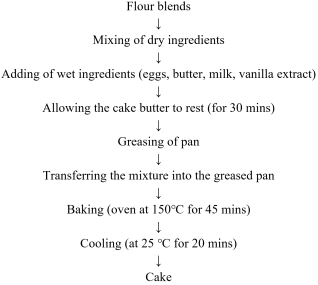
Figure 4. Flow chart for the production of cake.
3.3. Production of the Cake Produced from Flour Blends Using Wheat, Carrot and Orange Fleshed Sweet Potato (OFSP)
The flour blends were obtained from wheat, carrot and orange fleshed sweet potato, mixing of dry ingredients, adding of wet ingredients such as eggs, butter, milk and vanilla extract, proofing of the cake mixture, greasing the pan, transferring the mixture into the greased pan, baking and cooling according to the method described by
| [12] | Marvin, C. (2009). Production of carrot powder for food applications: An overview. Food Research Journal, 42(3), 201-207. |
[12]
shown in
Figure 4 above.
4. Results and Discussion
4.1. Functional Properties of Wheat, Carrot and Orange-Fleshed Sweet Potato Flour Blends
The functional properties of wheat, carrot and orange-fleshed sweet potato flour blends presented in the
Table 1 reveal important insights into their behaviour during processing and potential suitability for various food applications, particularly in the production of cake.
The bulk density values of the samples ranged from 0.81 to 0.85 g/ml, with no significant difference (
p > 0.05) observed among all formulations as indicated by the same superscript (a); and the range of values obtained in this result is higher than that reported by
| [14] | Ndah, L. S., James, G. E., Udoh, I. E. and Thomas, I. A. (2026). Physicochemical and Nutritional Assessment of Cake from Wheat (Triticum aestivum) and Peanut (Arachis hypogaea) Flour Blends Using Date Powder (Phoenix dactylifera) as A natural Sweetener. Food Sci Nutr Res. 2026; 9(1): 1-4. |
[14]
, whose findings showed that the bulk density of the flour blends ranged from 0.25 g/ml in Sample A (control sample) and C to 0.29 g/ml in Sample D.
This relative uniformity suggests that substitution with carrot and orange-fleshed sweet potato flours did not markedly alter the packing characteristics of the composite flours. Bulk density is a critical parameter in determining packaging requirements and material handling. The slight increase observed in sample E (0.85 g/ml) may be attributed to finer particle size or higher solid content from increased inclusion of non-wheat components. Higher bulk density is often advantageous for reducing packaging volume, although excessively high values may affect product lightness.
The foaming capacity showed a decreasing trend from sample A (12.40%) to sample E (10.15%), with significant differences (p ≤ 0.05) among all samples. This decline suggests that increasing substitution with carrot and orange-fleshed sweet potato flours reduces the ability of the flour blends to incorporate air. Foaming capacity is largely influenced by protein content and quality; since wheat flour typically contains gluten proteins that enhance foaming, dilution with non-gluten flours likely contributed to the reduction observed. Lower foaming capacity may limit the application of these blends in aerated food products but may not significantly affect dense snack products.
In contrast, the water absorption capacity (WAC) increased progressively from 1.66 ml/g in sample A to 2.04 ml/g in sample E, with significant differences (p ≤ 0.05). This trend indicates an enhanced ability of the composite flours to bind water as the proportion of carrot and orange-fleshed sweet potato increases. The higher WAC may be attributed to the presence of dietary fibre, pectins and starch components in these plant materials. High WAC is desirable in food formulations as it improves dough handling, enhances moisture retention, and contributes to better texture in finished products.
Similarly, the oil absorption capacity (OAC) increased from 2.02 ml/g in sample A to 2.22 ml/g in sample E, with significant differences across the samples. This suggests that the composite flours have an increasing ability to bind lipids with higher substitution levels. Oil absorption is important for flavor retention and mouthfeel in food products. The improved OAC may be due to the presence of non-polar side chains in proteins and other macromolecules present in carrot and sweet potato flours, which can bind oil effectively.
The gelatinization temperature decreased significantly from 81.00°C in sample A to 72.00°C in sample E. This reduction indicates that the composite flours require less thermal energy for starch gelatinization as the level of substitution increases. The lower gelatinization temperature may be attributed to differences in starch structure and composition between wheat and the substituted flours. This characteristic is beneficial in reducing energy requirements during processing and may also influence the texture and digestibility of the final product.
Overall, the results indicate that increasing the proportion of carrot and orange-fleshed sweet potato flour in the blends leads to improved water and oil absorption capacities, while reducing foaming capacity and gelatinization temperature. These functional modifications suggest that the composite flours are well-suited for applications where high moisture retention and flavor binding are required, such as in snack production, while their reduced foaming ability may limit their use in products that rely heavily on aeration.
Table 1. Functional properties of wheat, carrot and orange fleshed sweet potato flour blends.
Samples | Bulk Density (g/ml) | Foaming Capacity (%) | Water Absorption Capacity (ml/g) | Oil Absorption Capacity (ml/g) | Gelatinization Temperature (°C) |
A | 0.81a±0.02 | 12.40a±0.10 | 1.66e±0.04 | 2.02d±0.01 | 81.00a±0.01 |
B | 0.82a±0.05 | 11.61b±0.02 | 1.72d±0.05 | 2.07c±0.04 | 76.00b±0.02 |
C | 0.83a±0.02 | 10.73c±0.01 | 1.75c±0.02 | 2.11c±0.02 | 75.00c±0.00 |
D | 0.83a±0.01 | 10.59d±0.02 | 1.85b±0.03 | 2.17b±0.03 | 73.00d±0.02 |
E | 0.85a±0.03 | 10.15e±0.03 | 2.04a±0.02 | 2.22a±0.01 | 72.00e±0.01 |
Values are means ± standard deviation of parameters. Means with different superscripts across columns differ significantly at 95% confidence interval (P <0.05)
4.2. Proximate Composition and Energy Value of Cake
The proximate composition of cake produced from wheat, carrot and orange-fleshed sweet potato flour blends shows significant variations across the samples, reflecting the influence of increasing substitution levels on the nutritional quality and energy content of the products.
The moisture content of the cake samples ranged from 11.36% to 12.81%, with significant differences (p ≤ 0.05) observed among the samples. Sample A recorded the highest moisture content (12.81%), while sample E had the lowest (11.36%). The gradual decrease in moisture content with increased substitution of carrot and orange-fleshed sweet potato flour may be attributed to their higher solid content and water-binding components such as fiber. Lower moisture content is generally advantageous as it enhances shelf stability and reduces susceptibility to microbial spoilage.
The fat content increased significantly from 1.44% in sample A to 2.13% in sample E. This trend suggests that the incorporation of carrot and orange-fleshed sweet potato contributes to higher lipid content in the composite cakes. Although the fat content remains relatively low across all samples, the observed increase may improve mouthfeel, flavour retention and overall palatability of the cakes.
A similar increasing trend was observed in the ash content, which rose from 1.34% in sample A to 4.05% in sample E. Ash content is an indicator of total mineral composition; therefore, the increase suggests that substitution with carrot and orange-fleshed sweet potato enhances the mineral content of the cakes. This improvement is nutritionally beneficial as it contributes to increased intake of essential minerals.
The protein content also showed a progressive increase from 8.33% in sample A to 11.23% in sample E, with significant differences among samples. This increase may be linked to the combined contribution of wheat and plant-based proteins from carrot and sweet potato flours. The enhancement in protein content improves the nutritional quality of the cakes, making them more suitable for addressing protein-energy malnutrition.
The crude fibre content increased markedly from 2.62% in sample A to 8.04% in sample E. This substantial rise reflects the high dietary fibre content of carrot and orange-fleshed sweet potato. Increased fiber content is desirable due to its role in improving digestive health, promoting satiety and reducing the risk of chronic diseases such as cardiovascular conditions.
Conversely, the carbohydrate content decreased significantly from 73.45% in sample A to 63.19% in sample E. This reduction is expected as the increase in other components such as fiber, protein, fat, and ash proportionally reduces the carbohydrate fraction. Lower carbohydrate content may be beneficial for individuals seeking to manage blood glucose levels or reduce caloric intake.
The energy value of the cakes ranged from 316.53 to 340.08 kcal with samples A having the highest energy value and samples D and E having the lowest. The decrease in energy value with increased substitution can be attributed to the reduction in carbohydrate content, which is the primary contributor to caloric value. Although fat content increased slightly, it was not sufficient to offset the reduction in carbohydrates. The lower energy values in the composite cakes may be advantageous for consumers seeking lower-calorie food options.
Overall, the results demonstrate that the incorporation of carrot and orange-fleshed sweet potato flour into wheat-based cakes significantly improves the nutritional profile by increasing protein, fiber, and mineral contents while reducing carbohydrate and energy levels. These changes suggest that the composite cakes have enhanced health benefits and could serve as functional food products suitable for promoting better nutrition and dietary diversity.
Table 2. Proximate composition and energy value of cakes produced from wheat, carrot and orange fleshed sweet potatoes flour blends.
Samples | Moisture (%) | Fat (%) | Ash (%) | Protein (%) | Fibre (%) | Carbohydrate (%) | Energy value (Kcal) |
A | 12.81c±0.03 | 1.44e±0.02 | 1.34e±0.02 | 8.33e±0.09 | 2.62e± 0.02 | 73.45a±0.04 | 340.08a±0.02 |
B | 12.25a±0.05 | 1.67d±0.01 | 2.66d±0.01 | 10.13d±0.03 | 6.34d±0.02 | 66.94b±0.01 | 323.31b±0.05 |
C | 12.13b±0.02 | 1.96c±0.04 | 3.15c±0.02 | 10.54c±0.05 | 7.21c±0.03 | 65.00c±0.02 | 319.80c±0.03 |
D | 11.85d±0.12 | 2.05b±0.02 | 3.65b±0.04 | 10.87b±0.03 | 7.83b±0.02 | 63.65d±0.02 | 316.53e±0.02 |
E | 11.36e±0.06 | 2.13a±0.05 | 4.05a±0.06 | 11.23a±0.01 | 8.04a±0.04 | 63.19e±0.03 | 316.85d±0.01 |
Values are means ± standard deviation of parameters. Means with different superscripts across columns differ significantly at 95% confidence interval (P <0.05).
5. Conclusion
This study investigated the development and evaluation of cake produced from flour blends of wheat, carrot and orange-fleshed sweet potato. The results demonstrate that partial substitution of wheat flour with carrot and orange-fleshed sweet potato flours is both feasible and beneficial in improving the nutritional quality of cake without significantly compromising its technological and sensory properties.
The proximate and functional analyses revealed that incorporation of carrot and orange-fleshed sweet potato flours enhanced the dietary fibre, vitamin content, particularly pro-vitamin A carotenoids and overall micronutrient profile of the composite flours. These improvements are particularly relevant in addressing micronutrient deficiencies and promoting the development of functional bakery products. Additionally, the functional properties of the flour blends, including water absorption capacity and bulk density, were found to be suitable for cake production, although variations were observed depending on the substitution levels.
The physical evaluation of the cakes indicated that increasing levels of substitution influenced parameters such as volume, texture and crumb structure. While higher substitution levels tended to reduce loaf volume and increase firmness, moderate inclusion levels produced cakes with acceptable structural characteristics. Sensory evaluation further confirmed that cakes produced with optimal blend ratios were well accepted in terms of appearance, taste, aroma, texture and overall acceptability, demonstrating that nutrient enrichment can be achieved without adversely affecting consumer preference.
In conclusion, the study establishes that flour blends of wheat, carrot and orange-fleshed sweet potato can be successfully utilized in cake production to produce nutritionally enhanced products. The use of these locally available and nutrient-dense raw materials offers a promising approach to diversifying bakery products, reducing reliance on wheat and contributing to improved public health outcomes.
Abbreviations
ANOVA | Analysis of Variance |
CF | Carrot Flour |
DMARTs | Duncan’s Multiple Range Tests |
HRS | Hours |
MINS | Minutes |
µm | Micrometer |
OFSP | Orange Fleshed Sweet Potato |
OAC | Oil Absorption Capacity |
SPSS | Statistical Package for the Social Science |
WAC | Water Absorption Capacity |
WF | Wheat Flour |
Acknowledgments
I wish to express my sincere gratitude to Almighty God for His grace, wisdom and strength throughout the course of this work. I also extend my appreciation to my co-authors for their valuable contributions and collaboration. Furthermore, I respectfully acknowledge the enduring inspiration, sacrifices and unwavering support of my late parents, whose legacy has contributed significantly to the successful completion and publication of this research.
Author Contributions
Linus Sylvester Ndah: Conceptualization, Data curation, Formal Analysis, Methodology, Resources, Supervision, Writing – original draft, Writing – review & editing
Modupe Esther Shaibu: Formal Analysis, Investigation, Methodology, Supervision, Visualization, Writing – review & editing
Iniobong Enefiok Udoh: Data curation, Formal Analysis, Investigation, Methodology, Supervision, Visualization
Conflicts Interest
The authors declared that there is no conflicts interest.
References
| [1] |
Arscott, S. A. and Tanumihardjo, S. A. (2010). Carrots of many colors provide basic nutrition and bioavailable phytochemicals. Plant Foods for Human Nutrition, 65(2), 113–120.
https://doi.org/10.1007/s11130-010-0160-7
|
| [2] |
Caio, G., Volta, U., Sapone, A., Leffler, D. A., De Giorgio, R., Catassi, C. and Fasano, A. (2019). Celiac disease: A comprehensive current review. BMC Medicine, 17(1), 142.
https://doi.org/10.1186/s12916-019-1380-z
|
| [3] |
Chikpah, S. K. and Korese, J. K. (2023). Optimization of wheat–orange-fleshed sweet potato composite flour in bread production. Discover Food, 3, 2.
https://doi.org/10.1007/s44187-023-00041-z
|
| [4] |
Grace, M. H., Yousef, G. G., Gustafson, S. J., Truong, V.-D., Yencho, G. C. and Lila, M. A. (2015). Phytochemical changes and antioxidant capacity of sweet potato (Ipomoea batatas) roots. Journal of Agricultural and Food Chemistry, 63(40), 8628–8634.
|
| [5] |
Grassmann, J., Schnitzler, W. H. and Habegger, R. (2007). Evaluation of different coloured carrot cultivars on antioxidant capacity based on their carotenoid and phenolic contents. Food Chemistry, 101(2), 782–786.
|
| [6] |
Halim, M. A., Alharbi, S. A., Alarfaj, A. A., Almansour, M. I., Ansari, M. J., Nessa, M. J. and Kabir, F. N. A. (2024). Improvement and quality evaluation of gluten-free cake supplemented with sweet potato flour and carrot powder. Applied Food Research, 4(2), 100543.
https://doi.org/10.1016/j.afres.2024.100543
|
| [7] |
Hasmadi, M., Noorfarahzilah, M., Noraidah, H., Zainol, M. K. and Jahurul, M. H. A. (2020) Composite flour functional properties and bakery applications.
|
| [8] |
Jenfa, M. D., Adelusi, O. A., Aderinoye, A., Coker, O. J., Martins, I. E. and Obadina, O. A. (2024). Physicochemical, functional and color properties of sorghum–orange-fleshed sweet potato composite flour. Food Science and Nutrition, 12(4), 2364–2378.
https://doi.org/10.1002/fsn3.3922
|
| [9] |
Kewuyemi, Y. O. and Adebo, O. A. (2024). Nutritional and functional properties of fermented composite flours from legumes and root crops. Scientific Reports, 14, 1987.
https://doi.org/10.1038/s41598-024-52149-6
|
| [10] |
Laurie, S. M., Faber, M. and Claasen, N. (2015). Incorporating orange-fleshed sweet potato into the food system as a strategy for improved nutrition. Food Research International, 76, 962–970.
https://doi.org/10.1016/j.foodres.2015.06.012
|
| [11] |
Low, J. W., Mwanga, R. O. M., Andrade, M., Carey, E. and Ball, A.-M. (2017). Tackling vitamin A deficiency with biofortified sweet potato in sub-Saharan Africa. Global Food Security, 14, 23–30.
https://doi.org/10.1016/j.gfs.2017.01.004
|
| [12] |
Marvin, C. (2009). Production of carrot powder for food applications: An overview. Food Research Journal, 42(3), 201-207.
|
| [13] |
Masumba, G. O., Musambya, G. and Msuya, J. M. (2007). Nutrient composition of selected leafy vegetables consumed in the Iringa region of Tanzania. African Journal of Food, Agriculture, Nutrition and Development, 7(1), 168-174.
|
| [14] |
Ndah, L. S., James, G. E., Udoh, I. E. and Thomas, I. A. (2026). Physicochemical and Nutritional Assessment of Cake from Wheat (Triticum aestivum) and Peanut (Arachis hypogaea) Flour Blends Using Date Powder (Phoenix dactylifera) as A natural Sweetener. Food Sci Nutr Res. 2026; 9(1): 1-4.
|
| [15] |
Olakanmi, S. J., Jayas, D. S. and Paliwal, J. (2022). Effect of composite flour blends on bread quality and nutritional composition. Foods, 11(20), 3287.
https://doi.org/10.3390/foods11203287
|
| [16] |
Singh, J., Kaur, L. and McCarthy, O. J. (2008). Factors influencing the physicochemical, morphological, thermal and rheological properties of some chemically modified starches for food applications - A review. Food Hydrocolloids, 22(3), 528-541.
|
| [17] |
Slavin, J. L. and Lloyd, B. (2012). Health benefits of fruits and vegetables. Advances in Nutrition, 3(4), 506–516.
https://doi.org/10.3945/an.112.002154
|
| [18] |
Tang, Y., Cai, W. and Xu, B. (2015). Profiles of phenolics, carotenoids, and antioxidant activities of sweet potato. Food Chemistry, 172, 90–99.
|
| [19] |
Truong, V.-D., McFeeters, R. F., Thompson, R. T., Dean, L. L. and Shofran, B. (2021). Phenolic acid content and antioxidant capacity of sweet potato flours. Food Chemistry, 340, 128–135.
|
| [20] |
Tsou, S. C. S. and Hong, T. L. (1992). The nutrition and utilization of sweetpotato. In W. A. Hill, C. K. Bonsi, and P. A. Loretan (Eds.), Sweetpotato technology for the 21st century (pp. 359–366). Tuskegee University.
|
| [21] |
Tull, A. (1996). Food and nutrition (3rd ed.) Oxford University Press.
|
| [22] |
Ma, W., Yu, Z., She, M., Zhao, Y. and Islam, S. (2019). Wheat gluten protein and its impacts on wheat processing quality. Frontiers of Agricultural Science and Engineering, 6(3), 279–287.
https://doi.org/10.15302/J-FASE-2019267
|
| [23] |
Zhang, L., Gao, Y., Deng, B., Ru, W., Tong, C. and Bao, J. (2022). Physicochemical, nutritional, and antioxidant properties of sweet potato flour. Frontiers in Nutrition, 9, 923257.
https://doi.org/10.3389/fnut.2022.923257
|
Cite This Article
-
APA Style
Ndah, L. S., Shaibu, M. E., Udoh, I. E. (2026). Development and Evaluation of Cake from Wheat (Triticum aestivum), Carrot (Daucus carota) and Orange Fleshed Sweet Potato (Impomea batatas) Flour Blends. Science Discovery Nutrition, 1(2), 77-84. https://doi.org/10.11648/j.sdnutr.20260102.11
 Copy
|
 Download
ACS Style
Ndah, L. S.; Shaibu, M. E.; Udoh, I. E. Development and Evaluation of Cake from Wheat (Triticum aestivum), Carrot (Daucus carota) and Orange Fleshed Sweet Potato (Impomea batatas) Flour Blends. Sci. Discov. Nutr. 2026, 1(2), 77-84. doi: 10.11648/j.sdnutr.20260102.11
Copy
|
Download
AMA Style
Ndah LS, Shaibu ME, Udoh IE. Development and Evaluation of Cake from Wheat (Triticum aestivum), Carrot (Daucus carota) and Orange Fleshed Sweet Potato (Impomea batatas) Flour Blends. Sci Discov Nutr. 2026;1(2):77-84. doi: 10.11648/j.sdnutr.20260102.11
Copy
|
Download
-
@article{10.11648/j.sdnutr.20260102.11,
  author = {Linus Sylvester Ndah and Modupe Esther Shaibu and Iniobong Enefiok Udoh},
  title = {Development and Evaluation of Cake from Wheat (Triticum aestivum), Carrot (Daucus carota) and Orange Fleshed Sweet Potato (Impomea batatas) Flour Blends},
  journal = {Science Discovery Nutrition},
  volume = {1},
  number = {2},
  pages = {77-84},
  doi = {10.11648/j.sdnutr.20260102.11},
  url = {https://doi.org/10.11648/j.sdnutr.20260102.11},
  eprint = {https://article.sciencepublishinggroup.com/pdf/10.11648.j.sdnutr.20260102.11},
  abstract = {This study evaluated the quality of cakes produced from flour blends of wheat, carrot and orange-fleshed sweet potato (OFSP). Flour blends were prepared from the raw materials and blended in varying proportions to produce cake samples as follows; Sample A (100% WF: 0% CF: 0% OFSP), Sample B (60% WF: 20% CF: 20% OFSP), Sample C (50% WF: 20% CF: 30% OFSP), Sample D (40% WF: 40% CF: 20% OFSP) and Sample E (30% WF: 40% CF: 30% OFSP). The functional properties of the flour blends as well as the proximate composition, mineral content, vitamin content and sensory attributes of the cake samples were analyzed. The results revealed significant (P ) differences among the formulations. The proximate analysis showed that moisture content ranged from 11.36–12.81%, fat from 1.44–2.13%, ash content ranged from 1.34–4.05%, protein content ranged from 8.33–11.23% and fibre content from 2.62–8.04%. These values increased with higher substitution levels of carrot and OFSP flours. In contrast, carbohydrate content (63.19–73.45%) and energy values (316.53–340.08 Kcal) decreased as substitution levels increased. The mineral analysis indicated that calcium content ranged from 51.38–160.32 mg/100 g, potassium content ranged from 145.33–195.82 mg/100 g, magnesium content ranged from 20.37–33.21 mg/100 g, while zinc content ranged from 0.46–1.24 mg/100 g, demonstrating significant improvement in the composite flour cakes compared to the control. The vitamin analysis showed that vitamin A content ranged from 0.96–187.76 mg/100 g, while vitamin C content ranged from 1.53–16.27 mg/100 g with notable enhancement observed in blends containing higher proportions of carrot and OFSP flours. The sensory evaluation indicated that the cake samples were generally acceptable with slight variations in appearance and taste across formulations. The blend containing 30% wheat, 40% carrot and 30% OFSP yielded cakes that were nutritionally superior and well accepted by panelists. The study concludes that nutrient-dense and palatable cakes can be successfully produced using composite flours of wheat, carrot and orange-fleshed sweet potato. This approach provides a viable means of reducing dependence on wheat while enhancing the nutritional quality of cakes and other bakery products through the utilization of locally available crops.},
 year = {2026}
}
Copy
|
Download
-
TY  - JOUR
T1  - Development and Evaluation of Cake from Wheat (Triticum aestivum), Carrot (Daucus carota) and Orange Fleshed Sweet Potato (Impomea batatas) Flour Blends
AU  - Linus Sylvester Ndah
AU  - Modupe Esther Shaibu
AU  - Iniobong Enefiok Udoh
Y1  - 2026/11/06
PY  - 2026
N1  - https://doi.org/10.11648/j.sdnutr.20260102.11
DO  - 10.11648/j.sdnutr.20260102.11
T2  - Science Discovery Nutrition
JF  - Science Discovery Nutrition
JO  - Science Discovery Nutrition
SP  - 77
EP  - 84
PB  - Science Publishing Group
UR  - https://doi.org/10.11648/j.sdnutr.20260102.11
AB  - This study evaluated the quality of cakes produced from flour blends of wheat, carrot and orange-fleshed sweet potato (OFSP). Flour blends were prepared from the raw materials and blended in varying proportions to produce cake samples as follows; Sample A (100% WF: 0% CF: 0% OFSP), Sample B (60% WF: 20% CF: 20% OFSP), Sample C (50% WF: 20% CF: 30% OFSP), Sample D (40% WF: 40% CF: 20% OFSP) and Sample E (30% WF: 40% CF: 30% OFSP). The functional properties of the flour blends as well as the proximate composition, mineral content, vitamin content and sensory attributes of the cake samples were analyzed. The results revealed significant (P ) differences among the formulations. The proximate analysis showed that moisture content ranged from 11.36–12.81%, fat from 1.44–2.13%, ash content ranged from 1.34–4.05%, protein content ranged from 8.33–11.23% and fibre content from 2.62–8.04%. These values increased with higher substitution levels of carrot and OFSP flours. In contrast, carbohydrate content (63.19–73.45%) and energy values (316.53–340.08 Kcal) decreased as substitution levels increased. The mineral analysis indicated that calcium content ranged from 51.38–160.32 mg/100 g, potassium content ranged from 145.33–195.82 mg/100 g, magnesium content ranged from 20.37–33.21 mg/100 g, while zinc content ranged from 0.46–1.24 mg/100 g, demonstrating significant improvement in the composite flour cakes compared to the control. The vitamin analysis showed that vitamin A content ranged from 0.96–187.76 mg/100 g, while vitamin C content ranged from 1.53–16.27 mg/100 g with notable enhancement observed in blends containing higher proportions of carrot and OFSP flours. The sensory evaluation indicated that the cake samples were generally acceptable with slight variations in appearance and taste across formulations. The blend containing 30% wheat, 40% carrot and 30% OFSP yielded cakes that were nutritionally superior and well accepted by panelists. The study concludes that nutrient-dense and palatable cakes can be successfully produced using composite flours of wheat, carrot and orange-fleshed sweet potato. This approach provides a viable means of reducing dependence on wheat while enhancing the nutritional quality of cakes and other bakery products through the utilization of locally available crops.
VL  - 1
IS  - 2
ER  -
Copy
|
Download





 Share This Article
 Twitter
 Linked In
 Facebook