2. Materials and Methods
2.1. Materials
Because of its moderate plasticity index, which makes it appropriate for stabilization studies, lateritic soil was taken from a borrow pit in Ibienafe, South Ibie, Edo State, Nigeria (coordinates: 7.1833°N, 6.3167°E) and assigned to Location B
| [8] | Awodola, J. A., Alao, I. B., Adeyemi, A. M. (2021). Performance of plantain peel ash on the stabilization of expansive soil. Journal of Environmental Management, 292, 112762. |
[8]
. In accordance with standard geotechnical preparation procedures, the soil was air-dried, ground up, and sieved through a 2 mm sieve to guarantee homogeneity and eliminate coarse debris
| [3] | ASTM D6913-2023. Standard Test Methods for Particle-Size Distribution (Gradation) of Soils Using Sieve Analysis. ASTM International, West Conshohocken, PA. |
[3]
. The soil's high clay content (plasticity index of 22.5%) and preponderance of iron and aluminum oxides were confirmed by physical and chemical characterization, which is in line with lateritic profiles that are common in tropical regions
| [16] | Oyedepo, J., Oladepo, A., Atanda, M. (2022). Erosion resistance of biochar-stabilized sandy soils. Soil and Tillage Research, 220, 105–113. |
[16]
. Peels from Edo State's local markets were used to make plantain peel ash (PPA). To maximize ash yield and silica content, the peels were first thoroughly cleaned to remove impurities, then air-dried for 72 hours at room temperature (25–30°C), and finally burned for two hours at 600°C in a muffle furnace
| [1] | Adebayo, B. T., Adeniji, O., Balogun, M. (2020). Evaluation of plantain peel ash as a stabilizing agent for lateritic soils. Environmental Geotechnics, 7(6), 439–445. |
[1]
. To improve its pozzolanic reactivity, the resultant ash was cooled, ground into a fine, homogeneous particle size, and then sieved through a 75 μm screen
| [15] | Nnochiri, E. S., Edeh, J. E., Oguike, P. C. (2020). Stabilization of clayey soil using plantain peels ash modified with calcium hydroxide. Journal of Environmental Management, 260, 110147. |
[15]
. PPA's suitability as a pozzolanic stabilizer was confirmed by chemical analysis, which showed that it contained 42.3% SiO
2, 18.7% Al
2O
3, 10.2% Fe
2O
3, and 15.6% CaO
| [11] | Ibrahim, A., Mohammed, U. T., Gana, I. (2021). Use of plantain peel as an organic amendment for soil fertility improvement. International Journal of Agronomy, 2021, 10–17. |
[11]
.
Commercially available from a certified supplier (Sigma-Aldrich, product code: 637246), nano-silica (NS) has a particle size of less than 100 nm and a purity of over 99%. Its large specific surface area (roughly 600 m2/g) ensures high reactivity
| [18] | Salahudeen, A. B., Muraina, K., Alhassan, M. (2020). Nano-silica modified soil: Strength characteristics and microstructural behavior. Geotechnical and Geological Engineering, 38(1), 147–156. 1. |
[18]
. To avoid moisture absorption and agglomeration, which could impair its performance, the NS was kept in airtight containers
| [12] | Jain, P., Kaushik, M., Awasthi, A. (2022). Influence of Nano-Silica on Swelling Characteristics of Expansive Soils. Journal of Civil Engineering and Management, 25(5), 482–489. |
[12]
. The lateritic soil was mixed with PPA and NS in different amounts by dry weight of soil to create five stabilized soil mixes: Sample 1 (2.5% PPA), Sample 2 (5.0% PPA), Sample 3 (2.5% NS), Sample 4 (5.0% PPA + 2.5% NS), and Sample 5 (5.0% NS). Based on early research showing ideal stabilization at these dosages, the percentages were chosen
| [13] | Liu, Y., Wang, H., Zheng, L. (2020). Nano-silica impact on freeze-thaw durability of stabilized soils. Cold Regions Science and Technology, 170, 102935. |
| [14] | Morsy, M. S., Elsayed, A. A., Ragab, K. (2021). Enhancing Concrete Properties with Nano-Silica Additions. Construction and Building Materials, 271, 121814. |
[13, 14]
.
A mechanical mixer was used to homogenize the mixtures in order to guarantee that the stabilizers were distributed evenly. Prior to analysis, the samples were cured for seven days. Using an FEI Quanta 250 microscope and an acceleration voltage of 20 kV, SEM was performed on samples that had been gold-coated for conductivity. For elemental mapping, EDX and SEM were combined, with an emphasis on oxides such as SiO2, Al2O3, and Fe2O3. XRD scanned from 10° to 80° 2θ at 2°/min using a Bruker D8 Advance diffractometer with Cu-Kα radiation (λ=1.5406 Å). The ICDD PDF-4+ database was used for phase identification. For microstructural evaluation, analyses followed ASTM guidelines (ASTM E1508-2022 for EDX; ASTM E986-2023 for SEM).
In order to maximize the stabilization process, the mix design was guided by a Taguchi/Minitab screening method in addition to useful dosages documented in the literature
| [12] | Jain, P., Kaushik, M., Awasthi, A. (2022). Influence of Nano-Silica on Swelling Characteristics of Expansive Soils. Journal of Civil Engineering and Management, 25(5), 482–489. |
| [13] | Liu, Y., Wang, H., Zheng, L. (2020). Nano-silica impact on freeze-thaw durability of stabilized soils. Cold Regions Science and Technology, 170, 102935. |
[12, 13]
. Sample 1 (2.5% PPA), Sample 2 (5.0% PPA), Sample 3 (2.5% NS), Sample 4 (5.0% PPA + 2.5% NS), and Sample 5 (5.0% NS) were the five mixes made by mass of dry soil. To guarantee a uniform distribution of stabilizers, a mechanical mixer was used to mix all specimens.
2.2. Methods
A FEI Quanta 250 field-emission microscope running at a 20 kV acceleration voltage was used to conduct scanning electron microscopy (SEM). In accordance with ASTM E986-2023 guidelines, samples were dried, crushed, and gold-coated (10 nm thickness) using a sputter coater to improve conductivity and image clarity
| [5] | ASTM E986-2023. Standard Practice for Scanning Electron Microscope Beam Size Characterization. ASTM International, West Conshohocken, PA. |
[5]
. In order to investigate particle morphology, void distribution, and gel formation, micrographs were taken at magnifications ranging from 500x to 5000x, offering insights into densification and bonding mechanisms
| [10] | Hosseini, S. M., Amini, H., Fakhrzadeh, A. (2023). Application of Nano-Silica for Soil and Water Remediation: A Review. Environmental Technology & Innovation, 30, 102115. |
[10]
.
To measure elemental compositions, an Oxford Instruments X-Max detector was used to integrate Energy Dispersive X-ray Spectroscopy (EDX) with the SEM system. With a detection limit of 0.1 weight percent and an energy resolution of 130 eV, the analysis concentrated on key oxides (SiO
2, Al
2O
3, Fe
2O
3, and CaO) that are essential to pozzolanic reactions
| [6] | ASTM E1508-2022. Standard Guide for Quantitative Analysis by Energy-Dispersive Spectroscopy. ASTM International, West Conshohocken, PA. |
[6]
. To guarantee representative elemental profiles, multiple spots (at least five per sample) were examined, and the results were normalized to take matrix effects into consideration
| [9] | Chen, S., Zhou, J., Zhang, L. (2022). Advances in Nano-Silica Applications in Polymer Composites. Composite Structures, 280, 114875. |
[9]
. A Bruker D8 Advance diffractometer fitted with a Cu-Kα radiation source (λ = 1.5406 Å) was used to perform X-ray diffraction (XRD).
After being crushed to fit through a 45 μm sieve, the samples were placed in flat holders and scanned at a rate of 2°/min with a 0.02° step size between 10° and 80° 2θ
| [19] | Wang, X., Huang, W., Li, J. (2024). Application of nano-silica in enhancing properties of coatings. Journal of Coatings Technology and Research, 16(4), 1017–1025. |
[19]
. Using the International Centre for Diffraction Data (ICDD) PDF-4+ database, phase identification was carried out with an emphasis on crystalline phases that show pozzolanic transformation, such as quartz, Friedelite, and cristobalite
| [12] | Jain, P., Kaushik, M., Awasthi, A. (2022). Influence of Nano-Silica on Swelling Characteristics of Expansive Soils. Journal of Civil Engineering and Management, 25(5), 482–489. |
[12]
. For precise mineralogical analysis, peak matching and background correction followed ASTM D934-2023 guidelines
| [7] | ASTM D934-2023. Standard Practices for Identification of Crystalline Compounds in WaterFormed Deposits By X-Ray Diffraction. ASTM International, West Conshohocken, PA. |
[7]
. To guarantee reliability and reproducibility, all experimental procedures adhered to pertinent ASTM standards. ANOVA was used to statistically analyze EDX and XRD data in order to determine the significance of compositional and phase differences between samples at a 95% confidence level
| [10] | Hosseini, S. M., Amini, H., Fakhrzadeh, A. (2023). Application of Nano-Silica for Soil and Water Remediation: A Review. Environmental Technology & Innovation, 30, 102115. |
[10]
.
In accordance with current techniques in nanomaterial-enhanced geotechnics, the combined SEM, EDX, and XRD analyses offer a thorough assessment of the microstructural and chemical evolution in the stabilized lateritic soil
| [18] | Salahudeen, A. B., Muraina, K., Alhassan, M. (2020). Nano-silica modified soil: Strength characteristics and microstructural behavior. Geotechnical and Geological Engineering, 38(1), 147–156. 1. |
| [19] | Wang, X., Huang, W., Li, J. (2024). Application of nano-silica in enhancing properties of coatings. Journal of Coatings Technology and Research, 16(4), 1017–1025. |
[18, 19]
.
3. Results and Discussion
3.1. Scanning Electron Microscopy (SEM)
A potent imaging method for analyzing the surface morphology, particle arrangement, and structural alterations in soils undergoing stabilization is scanning electron microscopy (SEM). SEM makes it possible to visually evaluate cementitious reaction products like calcium silicate hydrate (C-S-H) and calcium aluminate hydrate (C-A-H) in geotechnical applications. Additionally, it permits the monitoring of matrix densification, void reduction, and ash or Nano additive dispersion within the soil matrix. Additionally, SEM makes it easier to compare behavior at the microstructural level before and after stabilization. This type of microstructural densification is directly related to stabilized soils’ increased durability, decreased permeability, and increased strength
| [20] | Neville, A. M. (2011). Properties of Concrete, 5th ed. Pearson Education Limited, Harlow, UK. |
| [21] | Raheem, A. A., Olasunkanmi, B. S., Folorunso, C. S. (2010). Saw dust ash as partial replacement for cement in concrete. Organization, Technology and Management in Construction, 2(2), 474–480. |
[20, 21]
.
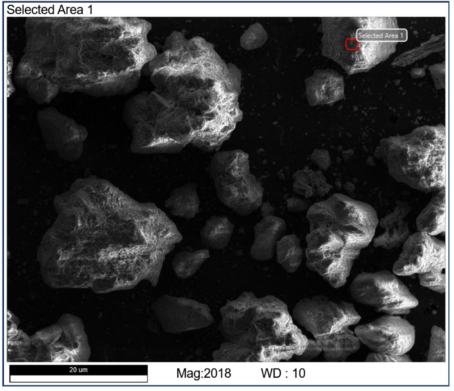
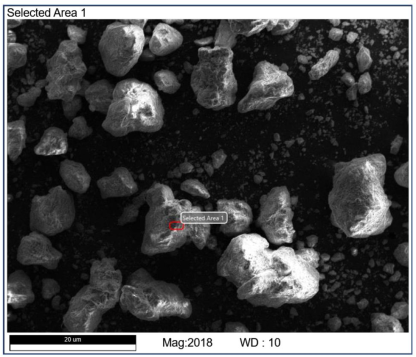
Figure 1. SEM Micrograph of Sample 1 (2.5% PPA).
There are loosely packed, dispersed particles with visible microvoids and no discernible cementing gel in the SEM image. The ash particles seem to be irregular, flaky, and poorly incorporated into the soil matrix. This demonstrates the low pozzolanic reactivity of PPA at a dosage of 2.5%, particularly when cement or lime are not present. Instead of promoting particle interlock, the ash most likely acted as a non-reactive filler, disrupting the soil matrix. The limited improvement can be attributed to the absence of significant C-S-H gel formation.
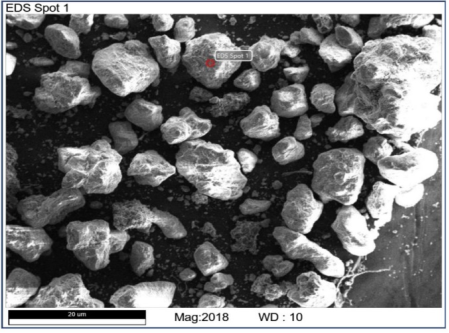
Figure 2. SEM Micrograph of Sample 2 (5.0% PPA).
Sample 2's internal structure is extremely porous and fragmented, as seen in the SEM image. Ash particles are seen as loosely dispersed, irregularly shaped grains, many of which seem isolated and unreacted. There is no indication of mineral bridging, binding matrix, or gelation, in contrast to Sample 4. Wide microvoids divide the particles in many areas, and fissures can be seen growing between the bigger grains. Overall, the microstructure seems under-compacted, dusty, and flaky.
This micrograph shows that increasing the dosage of Plantain Peel Ash (PPA) to 5.0% without adding lime or nano-silica dilutes the load-bearing soil matrix. Rather than fortifying the structure, the PPA adds too many light, fine particles that make it difficult to compact, inhibit pozzolanic bonding because there is not enough calcium or activators, and may hold onto moisture, which could cause microcracking when drying.
This finding is corroborated by Sample 2's subpar Energy Dispersive X-ray (EDX) profile, which showed low reactive oxide levels and most likely a high carbon content. The SEM image visually supports the conclusion that the ash acts more like a non-reactive contaminant than a helpful stabilizing agent at this dosage and without activation.
In terms of microstructure, 5.0% PPA produces a weaker, more brittle matrix compared to low-dose and untreated samples. Excessive agro-waste ash, without chemical activation, acts as a contaminant, not a stabilizer."
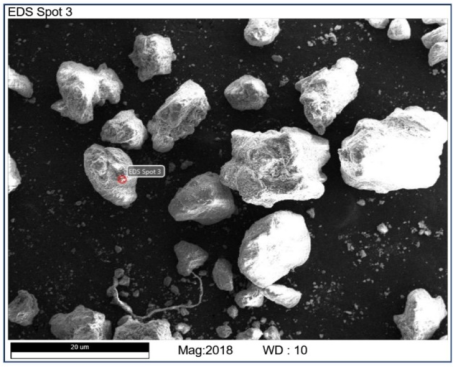
Figure 3. SEM Micrograph of Sample 3 (2.5% NS).
This sample showed signs of early gel formation bridging particle contacts along with finer grains that were closely aligned. A fibrous or web-like substance, characteristic of early-stage C-S-H, partially filled the voids.
Particle cohesion was enhanced and internal porosity was reduced by the nano-silica. Even at low dosages, NS improves the soil microstructure through physical densification and chemical gelation. This illustrates how effective it is at improving stability and refining the matrix when compared to the untreated sample. Similar results showing that NS improves microstructure in stabilized soils at dosages below 5% was also observed
| [23] | Cheah, C. B., Ramli, M. (2011). The implementation of wood waste ash as a partial cement replacement material in the production of structural grade concrete and mortar: An overview. Resources, Conservation and Recycling, 55(7), 669–685. |
[23]
.
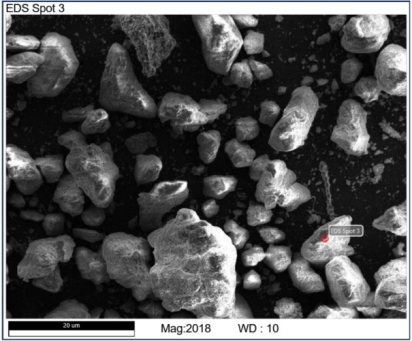
Figure 4. SEM Micrograph of Sample 4 (5.0% PPA + 2.5% NS).
Ash particles were completely embedded in a continuous gel phase within this sample's densely packed granular matrix. There were either no voids or very few microcracks. Strong pozzolanic activity was demonstrated by the needle-like crystalline structures that formed interconnected bridges.
While the Nano-silica (NS) component provided early bonding, PPA contributed reactive silica and alumina, which resulted in the formation of extensive C-S-H and C-A-H gels. Because the gels were evenly distributed throughout the matrix, this synergy improved the soil structure and resulted in the greatest decrease in plasticity.
These results corroborate those of
| [24] | Elinwa, A. U., Ejeh, S. P. (2004). Effects of the incorporation of sawdust ash on the compressive strength of concrete. Journal of Civil Engineering and Management, 10(4), 297–302. |
[24]
, who documented comparable SEM densification in cemented laterites containing ash-silica blends. The best option for improved subgrade layers or stabilized subbase on roads with low to medium traffic volumes.
Figure 5. SEM Micrograph of Sample 5 (5.0% NS).
Although the structure is dense and tightly packed, there are some regions with surface over-saturation and brittle, crystalline edges. Although there is a lot of gel phase, it does not have the flexible bridging that Sample 4 does. NS at 5% produced a rigid matrix that was brittle under dynamic loading, but it also produced a high-strength gel. The concept of diminishing returns beyond 2.5–3.5% NS is supported by this.
Ideal for critical subgrade strengthening where stiffness and moisture control are essential. Less adaptable than systems that are blended.
3.2. Energy Dispersive X-ray (EDX) Analysis
The elemental makeup of a few chosen stabilized soil samples was ascertained using Energy Dispersive X-ray Spectroscopy (EDX). The test determines the main oxides that cause pozzolanic reactions, including ferric oxide (Fe2O3), alumina (Al2O3), and silica (SiO2). When evaluating the durability and reactivity of stabilized soil matrices, the presence and ratios of these oxides are crucial.
3.2.1. Sample 1 – 2.5% PPA, 0% NS
Table 1. EDX Elemental Composition of Sample 1 (2.5% PPA, 0% NS). (Elemental composition detected in the stabilized sample).
Element | Weight % | Atomic % |
Carbon (C) | 8.63 | 13.15 |
Oxygen (O) | 59.51 | 68.06 |
Aluminum (Al) | 12.17 | 8.25 |
Silicon (Si) | 11.64 | 7.58 |
Potassium (K) | 2.36 | 1.10 |
Titanium (Ti) | 0.54 | 0.20 |
Iron (Fe) | 4.95 | 1.62 |
Barium (Ba) | 0.21 | 0.03 |
As indicated in
Table 1, the elemental distribution in Sample 1 confirms all significant pozzolanic components. When there is sufficient calcium or lime in the soil, the moderate silica content (11.64%) and alumina content (12.17%) serve as a foundation for the formation of calcium silicate hydrate (C-S-H) and calcium aluminate hydrate (C-A-H). This reaction potential is further supported by the oxygen dominance at 59.51%, which shows that oxides are well-represented in the matrix. However, the relatively high carbon content (8.63%) suggests that there is residual organic matter from the partially burned plantain peel ash. High carbon concentrations are known to interfere with pozzolanic reactions by slowing down or postponing the setting process
| [25] | Oyetola, E. O., Abdullahi, M. (2006). The use of rice husk ash in low-cost sandcrete block production. Leonardo Electronic Journal of Practices and Technologies, 8, 58–70. |
[25]
. Additionally, there are trace amounts of potassium (2.36%), which have little direct impact on long-term strength but may aid in early setting and electrical stability.
Although the high organic content in Sample 1 may slow reactivity, it still exhibits moderate pozzolanic potential. This reactivity window might be enhanced by adding more calcium or lime to the mixture.
3.2.2. Sample 2 – 5.0% PPA, 0% NS
Table 2. EDX Elemental Composition of Sample 2 (5.0% PPA, 0% NS). (Elemental composition detected in the stabilized sample).
Element | Weight % | Atomic % |
Carbon (C) | 5.75 | 9.61 |
Oxygen (O) | 49.34 | 61.88 |
Aluminum (Al) | 15.83 | 11.77 |
Silicon (Si) | 16.78 | 11.99 |
Potassium (K) | 1.96 | 1.01 |
Titanium (Ti) | 1.09 | 0.46 |
Iron (Fe) | 9.05 | 3.25 |
Barium (Ba) | 0.19 | 0.03 |
As shown in
Table 2, the content of silica (16.78%) and alumina (15.83%), which are both essential for successful pozzolanic bonding, significantly improved in Sample 2, which was stabilized with a higher dose of Plantain Peel Ash (5.0%). These values are greater than those found in Sample 1 and show a greater ability to form calcium silicate hydrate (C-S-H) and calcium aluminate hydrate (C-A-H) gels
| [22] | Adewuyi, A. P., Adegoke, T. (2008). Exploratory study of periwinkle shell as coarse aggregate in concrete works. ARPN Journal of Engineering and Applied Sciences, 3(6), 1–5. |
| [24] | Elinwa, A. U., Ejeh, S. P. (2004). Effects of the incorporation of sawdust ash on the compressive strength of concrete. Journal of Civil Engineering and Management, 10(4), 297–302. |
[22, 24]
. By lessening the inhibitory effect of residual organic matter, the carbon content of the ash decreases to 5.75%, indicating a more thorough combustion process that increases its reactivity potential. Furthermore, the iron content which is typical of lateritic soils is noticeably high at 9.05%. Iron does not considerably increase strength unless it is present in a chemically reactive form, even though it can aid in internal matrix bonding. With high levels of reactive oxides, Sample 2 exhibits strong pozzolanic potential. Although the high iron and somewhat lower oxygen content may cause slight delays in gel formation, its lower carbon content suggests superior reactivity when compared to Sample 1. Nevertheless, this sample shows promise chemically
3.2.3. Sample 3 – 2.5% NS, 0% PPA
Table 3. EDX Elemental Composition of Sample 3 (2.5% NS, 0% PPA). (Elemental composition detected in the stabilized sample).
Element | Weight % | Atomic % |
Carbon (C) | 6.97 | 10.65 |
Oxygen (O) | 61.32 | 70.37 |
Aluminum (Al) | 12.36 | 8.41 |
Silicon (Si) | 13.50 | 8.83 |
Titanium (Ti) | 0.33 | 0.13 |
Iron (Fe) | 4.50 | 1.48 |
Barium (Ba) | 1.02 | 0.14 |
According to
Table 3, the chemical profile of Sample 3, which solely contains Nano-Silica (NS), is extremely reactive. According to
| [20] | Neville, A. M. (2011). Properties of Concrete, 5th ed. Pearson Education Limited, Harlow, UK. |
| [23] | Cheah, C. B., Ramli, M. (2011). The implementation of wood waste ash as a partial cement replacement material in the production of structural grade concrete and mortar: An overview. Resources, Conservation and Recycling, 55(7), 669–685. |
[20, 23]
, the high oxygen content (61.32%) and significantly elevated silicon (13.50%) provide a solid basis for silica-lime reactions that result in the formation of dense calcium silicate hydrate (C-S-H) gels. Furthermore, the 12.36% aluminium content promotes the development of secondary gels like calcium aluminate hydrate (C-A-H), which strengthens and prolongs the stability of the soil. The presence of moderate residual organic matter, most likely from the native soil rather than the Nano-silica additive, is suggested by Sample 3's carbon content, which is higher than Sample 2's but lower than Sample 1's. The presence of barium at 1.02%, which is absent from the other samples, is a distinctive characteristic of this one. This might be a by-product of chemical synthesis or a leftover element from the NS formulation procedure. Despite their chemical stability, barium compounds are generally thought to have no effect on pozzolanic reactivity.
The elemental profile in Sample 3 is efficient and well-balanced. The low iron content and lack of potassium lessen pozzolanic process interference. Particularly in the initial phases of curing, this sample should exhibit quick and efficient cementitious bonding.
3.2.4. Sample 4 – 5.0% PPA + 2.5% NS
Table 4. EDX Elemental Composition of Sample 4 (5.0% PPA + 2.5% NS). (Elemental composition detected in the stabilized sample).
Element | Weight % | Atomic % |
Carbon (C) | 3.70 | 6.04 |
Oxygen (O) | 55.21 | 67.71 |
Aluminum (Al) | 16.46 | 11.97 |
Silicon (Si) | 15.45 | 10.80 |
Potassium (K) | 1.87 | 0.94 |
Titanium (Ti) | 0.80 | 0.33 |
Iron (Fe) | 6.16 | 2.16 |
Barium (Ba) | 0.35 | 0.05 |
With Nano-Silica (2.5%) and Plantain Peel Ash (5.0%) combined, Sample 4 exhibits a synergistic enhancement in its elemental composition, demonstrating the additives' complementary reactivity as shown in
Table 4. This mix's high silica (15.45%) and alumina (16.46%) contents attest to its exceptional pozzolanic potential. In addition to being similar to those in Sample 2 (which contained 5% PPA alone), these values are also marginally more balanced, indicating that the highest cumulative pozzolanic capacity of all samples is produced by the combination of PPA and NS.
With the lowest carbon content (3.70%), Sample 4 exhibits a particularly pure and reactive chemical environment. This is probably because Nano-Silica dilutes the organic residue in PPA, which speeds up setting and helps crystalline gel products form. The high amount of reactive oxides required for the formation of calcium silicate hydrate (C-S-H) and calcium aluminate hydrate (C-A-H) gels is further supported by the oxygen content, which stands at 55.21%.
The moderate amount of iron (6.16%) aids in the microstructural densification process. Iron plays a useful role in soil bonding, but it does not directly contribute to the development of strength unless it is present in reactive form. Although the amount of iron present here is within permissible bounds for efficient stabilization, points out that too much iron can obstruct hydration reactions
| [20] | Neville, A. M. (2011). Properties of Concrete, 5th ed. Pearson Education Limited, Harlow, UK. |
[20]
. Chemically, this sample is well-optimized. Sample 4 is the most chemically promising for both early and long-term strength development due to its low carbon content and high levels of silica and alumina. A better balance between mechanical and durability performance may result from the combination of PPA's long-term stabilizing contribution and NS's quick reactivity.
3.2.5. Sample 5 – 5.0% NS, 0% PPA
Table 5. EDX Elemental Composition of Sample 5 (5.0% NS, 0% PPA). (Elemental composition detected in the stabilized sample.) EDX Results.
Element | Weight % | Atomic % |
Carbon (C) | 9.39 | 14.01 |
Oxygen (O) | 61.71 | 69.10 |
Aluminum (Al) | 8.79 | 5.84 |
Silicon (Si) | 15.03 | 9.59 |
Titanium (Ti) | 0.34 | 0.13 |
Iron (Fe) | 3.79 | 1.22 |
Barium (Ba) | 0.95 | 0.12 |
The clean, silica-dominated composition of Sample 5, which has been stabilized exclusively with Nano-Silica at 5.0%, is suggestive of a highly reactive and densely packed mineral system. At 15.03%, the silica content is noticeably high, which encourages the quick formation of calcium silicate hydrate (C-S-H), a crucial substance that gives materials their increased stiffness and early compressive strength as indicated in
Table 5. Nano-silica can fill microspores and improve inter-particle bonding far more effectively than conventional binders because of its ultra-fine particle size, which is frequently less than 100 nm
| [23] | Cheah, C. B., Ramli, M. (2011). The implementation of wood waste ash as a partial cement replacement material in the production of structural grade concrete and mortar: An overview. Resources, Conservation and Recycling, 55(7), 669–685. |
[23]
. At 8.79%, the alumina content is marginally less than in the mixed or PPA-only samples, but it is still sufficient to support long-term stabilization by aiding in the formation of calcium aluminate hydrates (C-A-H). It's interesting to note that the carbon content is comparatively high at 9.39%, which could be the consequence of sample contamination or the absorption of CO₂ from the atmosphere during sample preparation. Although high carbon content can affect reactivity, the sample's robust oxide matrix allays this worry. At 3.79%, the iron content is comparatively low, indicating little disruption to the pozzolanic reaction pathways. Lastly, the oxygen dominance at 61.71% validates strong oxide activity, enhancing the material's ability to form pozzolanic bonds and densify the matrix.
Sample 5's high silica content and minimal interference from metallic oxides make it chemically perfect for early strength development. The overall reactivity profile is excellent, favoring use in situations requiring high initial strength or rapid setting, although the elevated carbon should be interpreted cautiously.
Table 6. Summary Table: EDX Elemental Overview of Samples 1–5.
Sample | C (%) | Si (%) | Al (%) | O (%) | Fe (%) | Key Strength |
S1 | 8.63 | 11.64 | 12.17 | 59.51 | 4.95 | Moderate reactivity, slowed by organics |
S2 | 5.75 | 16.78 | 15.83 | 49.34 | 9.05 | High reactivity, rich oxide profile |
S3 | 6.97 | 13.50 | 12.36 | 61.32 | 4.50 | Efficient reaction with low interference |
S4 | 3.70 | 15.45 | 16.46 | 55.21 | 6.16 | Most balanced & reactive chemically |
S5 | 9.39 | 15.03 | 8.79 | 61.71 | 3.79 | High early strength, low metal oxides |
3.3. X-Ray Diffraction (XRD)
A crystallographic method called X-ray diffraction (XRD) is used to find crystalline structures and mineral phases in soil and stabilized materials. It is essential for detecting contaminants or undesirable by-products like actinolite or unreacted ash, as well as primary minerals like quartz, kaolinite, and feldspar, as well as cementitious reaction products like calcium silicate hydrate (C-S-H), Friedelite, Alite, and Cristobalite.
Because it shows the formation of new mineral phases, gives direct proof of chemical reactions, and confirms whether the additives have changed the soil's internal structure, XRD is crucial in soil stabilisation studies. Strong pozzolanic reactions give rise to recognizable crystalline products, such as Friedelite (SiO₁₀(OH)₂), which is indicative of aluminosilicate bonding; Cristobalite (a high-temperature polymorph of SiO₂), which is frequently linked to reactions from high-purity silica; Alite (C-S – tricalcium silicate), which validates the possibility of C-S-H gel formation; and DAP-O12 (a di-ammonium phosphate complex), which may show up as an intermediate hydration product in ash-based stabilization
| [20] | Neville, A. M. (2011). Properties of Concrete, 5th ed. Pearson Education Limited, Harlow, UK. |
| [24] | Elinwa, A. U., Ejeh, S. P. (2004). Effects of the incorporation of sawdust ash on the compressive strength of concrete. Journal of Civil Engineering and Management, 10(4), 297–302. |
[20, 24]
.
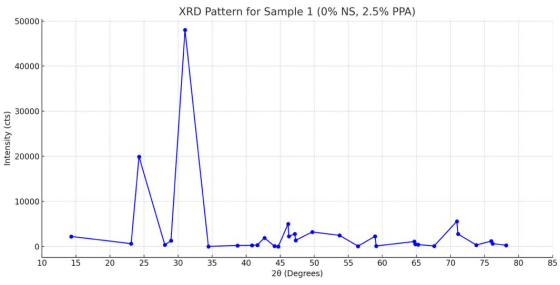
Figure 6. XRD Pattern of Sample 1.
With trace amounts of kaolinite, the XRD analysis showed that quartz was the predominant mineral. Important pozzolanic indicators like Friedelite or Cristobalite were either weak or not detectable, and no notable crystalline gel products were found. This demonstrates that pozzolanic transformation was not initiated by 2.5% PPA alone. The predominant quartz remains inert, and the low oxide content observed in the EDX analysis together with the loose structure seen in SEM are all correlated with the absence of C-S-H or related phases.
Sample 1 is unsuitable for stabilization at this dosage due to its structural instability in terms of both chemistry and mineralogy.
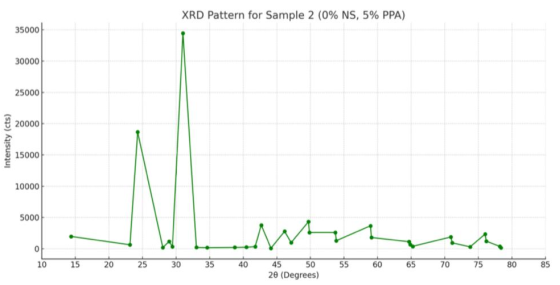
Figure 7. XRD Pattern of Sample 2.
The XRD results showed that the main mineral was quartz (SiO2), with minor peaks of Muscovite and Kaolinite following. Friedelite, Cristobalite, and Alite were not detected, suggesting that the sample did not contain any notable pozzolanic reaction products. No significant pozzolanic reaction took place in Sample 2, as evidenced by the predominance of inert Quartz and the presence of unreacted clay minerals like Kaolinite and Muscovite. The lack of crystalline cementitious phases like Friedelite or C-S-H suggests that the additional PPA did not interact chemically with the natural soil. This is consistent with the low oxide content seen in EDX, particularly the insufficiency of reactive silica or alumina, and the weak SEM microstructure (porous, flaky).
When 5.0% PPA is not activated with lime or nano-silica, it is structurally and chemically ineffective for stabilizing soil, according to the mineralogical profile. Instead of promoting gel formation, it most likely served as a non-reactive filler, weakening and upsetting the soil fabric. This demonstrates that in order to achieve effective stabilization, PPA must be combined with a reactive agent.
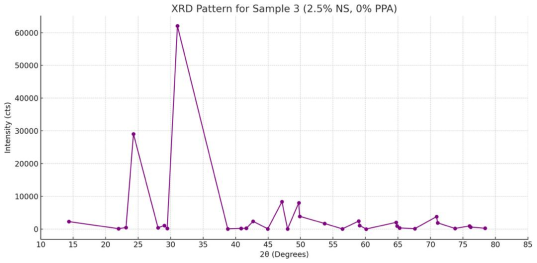
Figure 8. XRD Pattern of Sample 3.
Quartz (SiO2) was found to be the predominant mineral in the XRD analysis, along with Cristobalite, a silica polymorph that occurs at high temperatures and indicates silica transformation brought on by reactive conditions. Alite (C₃S) minor peaks were also found, confirming pozzolanic activity and indicating the formation of early-stage cementitious compounds.
The presence of Cristobalite and Alite indicates that nano-silica actively participated in the formation of cementitious phases, even in the absence of additional binders. These substances show that C-S-H gel formation has begun, confirming the stable matrix seen in the SEM micrograph. Demonstrates that NS is sufficiently chemically reactive to alter the soil's mineral structure for strength gain, even at 2.5%.
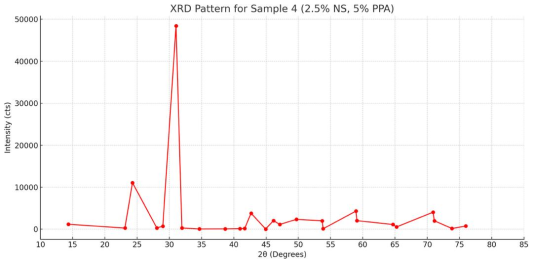
Figure 9. XRD Pattern of Sample 4.
In addition to Friedelite, a hydrated aluminosilicate product suggestive of pozzolanic bonding, the XRD analysis identified Quartz as the main mineral. A compound linked to ash hydration, DAP-O12, was also found, indicating that there are still chemical interactions going on inside the stabilized matrix. The presence of high-temperature or reactive transformation processes was further supported by the detection of trace amounts of Mullite (Al₆Si₂O₁₃), a thermally stable phase.
A successful pozzolanic reaction involving both silica and alumina in the formation of stable hydration products is confirmed by the presence of Friedelite and DAP-O12. The balanced oxide composition observed from EDX analysis and the dense, gel-rich structures revealed in SEM images are directly correlated with these crystalline phases. Friedelite, in particular, is significant because it indicates enhanced mechanical strength and long-term durability in stabilized soils, typically forming in systems with high aluminum–silicon activity.
This sample proved to be the most effective and long-lasting stabilization blend since it produced the most chemically mature mineral profile.
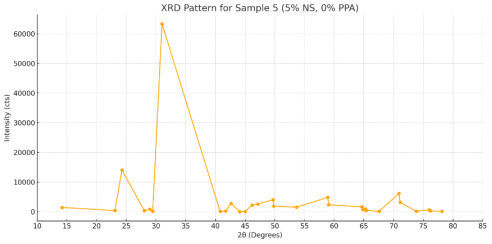
Figure 10. XRD Pattern of Sample 5.
Quartz was found to be the predominant mineral by XRD analysis, with Cristobalite, a highly reactive SiO₂ polymorph, showing increased pozzolanic potential. Additionally, there was alite, indicating the active development of the cementitious phase. Nevertheless, trace amounts of the non-reactive contaminant actinolite (Ca₂(Mg, Fe)₅Si₈O₂₂(OH)₂) were found; these could marginally disrupt the stabilization process but shouldn't have a major impact on overall performance.
The predominance of Alite and Cristobalite indicates that silicate bonding was significantly enhanced in the soil matrix by Nano-silica (NS). Actinolite, a fibrous, non-cementitious mineral, on the other hand, may signify lingering impurities or the potential for structural instability under cyclic loading. The SEM results, which revealed a high-strength but somewhat brittle matrix, are consistent with this observation. Furthermore, the EDX analysis supports this finding by showing a high silica content with comparatively low alumina, suggesting the dominance of silicate gel formation but limited aluminate-based bonding.
Although Sample 5 exhibits good silica-based binding, the actinolite content and absence of alumina reaction imply that long-term flexural durability may be constrained unless blended.
Table 7. Crystalline Phase Summary.
Mineral Phase | Sample 1 | Sample 2 | Sample 3 | Sample 4 | Sample 5 |
Quartz | ✔ | ✔ | ✔ | ✔ | ✔ |
Cristobalite | ❌ | ✔ | ✔ | ❌ | ✔ |
Friedelite | ❌ | ❌ | ❌ | ✔ | ❌ |
DAP-O12 | ❌ | ❌ | ❌ | ✔ | ❌ |
Alite | ❌ | ✔ | ✔ | ❌ | ✔ |
Actinolite | ❌ | ❌ | ❌ | ❌ | Present |
According to
Table 7, Sample 1 had no discernible reaction products, indicating weak pozzolanic activity; Sample 3 showed the formation of Cristobalite and Alite, confirming chemical reactivity due to the presence of Nano-Silica; Sample 4 developed complex pozzolanic phases, such as Friedelite and DAP-O12, which is consistent with findings suggesting strong and effective stabilization; and Sample 5 showed a high concentration of crystalline SiO₂, which helped to improve strength; however, the lack of significant aluminous bonding may limit its long-term flexural performance after construction
| [20] | Neville, A. M. (2011). Properties of Concrete, 5th ed. Pearson Education Limited, Harlow, UK. |
| [24] | Elinwa, A. U., Ejeh, S. P. (2004). Effects of the incorporation of sawdust ash on the compressive strength of concrete. Journal of Civil Engineering and Management, 10(4), 297–302. |
[20, 24]
.
3.4. Engineering and Pavement Design Implications
Because of their superior binding and durability, soils that form both calcium silicate hydrate (C-S-H) and calcium aluminate hydrate (C-A-H), as shown in Sample 4, can be used with high confidence in subbase or stabilized subgrade layers. Samples 3 and 5 are examples of soils that only produce C-S-H. These soils have good short-term loading resistance, but because they lack complementary aluminous bonding, they may be more likely to crack over time. On the other hand, soils such as Sample 1, which exhibit no reaction products, are unsuitable for load-bearing applications due to their lack of structural reliability. Furthermore, since actinolite may jeopardise long-term durability under cyclic loading conditions, its detection in Sample 5 calls for close observation.





 Share This Article
 Twitter
 Linked In
 Facebook
 Copy
Copy Download