Research Article | | Peer-Reviewed

AI-Enabled Interoperability in Nigeria’s Public Sector: Evaluating the Role of X-Road Digital Infrastructure

Received: 4 May 2026     Accepted: 22 May 2026     Published: 30 June 2026
Views:       Downloads:
Abstract

Despite the efforts being made towards digital transformation, the continued disintegration of digital systems within the public sector and the lack of interoperability frameworks are continuing to hinder effective governance, coordinated service delivery and evidence-informed policy-making in Nigeria. The study focuses on the use of the X-Road digital infrastructure model for enhancing public-sector governance in Nigeria by leveraging the artificial intelligence (AI) capabilities of the interoperability model. Specifically, the study attempts to answer four research questions: How do interoperability challenges impact governance outcomes in Nigeria? How can AI improve data exchange and decision-making? Is X-Road adaptable to Nigeria's governance environment? What institutional conditions are required for successful implementation? The study followed the qualitative document analysis and comparative desk-based research design, based on secondary data regarding Estonia's X-Road framework obtained from policy documents, institutional reports, academic literature and case materials. The results show that interoperability, powered by AI, can be highly beneficial for data integration, administrative automation, transparency, and efficient delivery of public services by enabling real-time information sharing among governments. The study also revealed that digital infrastructure, institutional coordination, technical capacity, legal frameworks and cyber security issues are still significant challenges to implementation in Nigeria. The study finds that technological innovation is not enough for achieving interoperability if institutions and policies are not strong. It therefore calls for gradual and locally tailored adoption of X-Road-like systems, adoption of a comprehensive data protection and information sharing law, investments in digital infrastructure and human capacity development, and a single coordinating body for the implementation of interoperability standards and implementation in public institutions.

Published in American Journal of Artificial Intelligence (Volume 10, Issue 2)
DOI 10.11648/j.ajai.20261002.11
Page(s) 179-188
Creative Commons

This is an Open Access article, distributed under the terms of the Creative Commons Attribution 4.0 International License (http://creativecommons.org/licenses/by/4.0/), which permits unrestricted use, distribution and reproduction in any medium or format, provided the original work is properly cited.

Copyright

Copyright © The Author(s), 2026. Published by Science Publishing Group

Keywords

Artificial Intelligence, Interoperability, Digital Governance, X-Road

1. Introduction
The rapid growth of digital governance in the world has changed the way institutions offer services, organize policies, and interact with the citizens. Digital governance is the process of integrating the information and communication technologies into the governmental operations that enhance efficiency, transparency, and accountability . Artificial Intelligence (AI) has further intensified this change in recent years, and has allowed foreseeing analytics, automated decision-making, and intelligent systems of service delivery . Meanwhile, interoperability, or the capability of various information systems to communicate, share information, and utilize the information to their advantage is now a main need of successful digital governance . The X-Road system created in Estonia is one of the most visible models of interoperability infrastructure and creates a secure and standardized data exchange layer between institutions of the public and private sector. This model has been popularly known to improve the efficiency of the administration and minimise duplication in government operations . Therefore, the combination of AI-driven tools with interoperability frameworks, including X-Road, is also considered an essential channel of attaining good governance.
Within the context of Nigeria, the situation is rather problematic as, even though digital technologies have been invested in significantly, the data systems of the public sector are highly fragmented and not well-coordinated. The government agencies tend to work in silos, which means that they end up duplicating their functions, data formats and information sharing is limited among the ministries, departments, and agencies . This disaggregation compromises the success of policy implementation and limits the use of evidence-based decision-making . In addition, institutional issues like poor governance, poor technical capacity and non-standardized data protocols have remained persistent impediments to interoperability projects in the digital ecosystem in Nigeria . Although the efforts to solve these problems have been made through initiatives like the National e-Government Master Plan, the attempts have been inconsistent and mostly hampered by deficiency of infrastructures and inconsistency in policies . The lack of an integrated data exchange framework that could be compared to X-Road only worsens inefficiencies, and government agencies could hardly rely on data-driven innovations like AI. Consequently, the digital governance environment in Nigeria is still limited due to institutionalized coordination failure and technological fragmentation .
This study attempts to assess the extent to which AI-enabled interoperability, in the form of adaptation of X-Road-like digital infrastructure, can enhance coordination and data integration in the public sector of Nigeria. The research will attempt to answer major research questions, such as the current impact of interoperability issues on the governance outcomes in Nigeria, the level to which AI can facilitate data exchange and decision-making, if X-road can word in Nigeria, and which institutional aspects must be present to make such implementation successful. The research adds to the larger discussion on the topic of digital transformation in developing nations as it addresses the intersection of AI and interoperability frameworks. The study fills this gap because it offers both empirical and conceptual information on how Nigeria can move towards more coherent digital systems to more integrated and intelligent governance architecture. Not only in enhancing the efficiency of the administration but also in enhancing transparency, service delivery, and trust the citizens place in the institutions of the state .
2. Literature Review and Theoretical Framework
The literature on the topic of interoperability in the public administration is characterized by its multidimensional and socio-technical nature, especially in the context of the digital governance systems. Interoperability is generally understood as the ability of heterogeneous systems, organizations and processes to communicate and share information across institutional boundaries . This conceptualization is not only limited to technical compatibility but also semantic and organizational levels that guarantee common meaning and coordinated action. On the technical level, interoperability deals with the infrastructure, standards, and protocols that facilitate data exchange, whereas the semantic dimension is concerned with the fact that the information exchanged between systems should be understood in a consistent manner, and the organizational dimension deals with the structure of governance, institutional arrangements, and collaborative processes . Researchers also believe that the concept of interoperability must be regarded as a dynamic capability inherent in socio-technical systems, in which technological, political, and administrative forces interplay to influence the results . This viewpoint emphasizes that the issues of interoperability within the public sector are usually less technology-related as compared to institutional fragmentation, inconsistencies in policy, and failure to coordinate, especially in developing nations when digital governance systems are not equally developed.
It is against this changing backdrop that X-Road has become one of the leading models of digital public infrastructure to facilitate secure and efficient interoperability among government systems . X-Road was originally created in Estonia and is an open-source distributed data exchange layer that enables institutions to exchange information without losing data sovereignty or system autonomy. Its structure allows encrypted information exchange, the standardization of interfaces, and decentralization of data storage which help to overcome the major issue of security, trust, and scalability in digital governance systems. X-Road is not only important in its technical design, but in its institutional implications as well since it represents a model of governance in which interoperability as a guiding principle of the public administration. Academics put that these infrastructures can support the smooth delivery of services, minimize information duplication, and streamline administration through real-time sharing of data by the agencies . Moreover, X-Road is an excellent example of how digital public infrastructure may implement interoperability through the integration of legal, organizational, and technological frameworks into a single system. This renders it especially applicable to countries such as Nigeria where the disjointed databases and administrative systems in silos remain a stumbling block in the provision of effective services to the people.
2.1. How AI Supports Interoperability
The application of artificial intelligence in governance also enhances interoperability by broadening its scope and complexity with the addition of new capabilities in automated systems, integration of data and decision-making. A growing number of people understand AI as a technological solution and a governance tool that transforms the administrative processes and coordination of the policies . Using machine learning algorithms and predictive analytics as well as intelligent automation, AI allows governments to scale data volumes, find patterns, and assist in making evidence-based decisions. Regarding interoperability, AI strives to increase the capability between systems to integrate heterogeneous data sources, enhance semantic alignment, and automate cross-agency workflows. Nevertheless, there are other issues like transparency, accountability, and ethical governance that are also a matter of concern in the application of AI in the public administration setting and especially in socio-technical settings where institutional capabilities differ . Researchers stress that AI-based governmental systems should be perceived as multi-layered socio-technical systems where the technological innovation interacts with the legal frameworks, organizational cultures, and social values . This reaffirms the fact that successful interoperability in the AI era should not only be technologically solved but that strong governance systems and institutional coordination are needed as well.
The theoretical background of the research is based on Government-as-a-Platform, Diffusion of Innovation, and Sociotechnical Systems theories to offer the complete explanation of AI-enabled interoperability in governmental administration. The state is conceptualized through GGIP as the ability to provide shared digital infrastructure to facilitate collaboration, innovation, and integration of services across both public and private actors, which makes it very similar to the goals of interoperability. Diffusion of Innovation theory describes the adoption and institutionalization of emerging technologies like AI and digital infrastructures in government systems with focus on the role of communication channels, time and social systems on how the innovation is adopted . This point of view is especially pertinent to explaining the unequal usage of digital innovations in developing conditions. Sociotechnical Systems theory, however, underscores the interrelation between technological systems and social structures, and, thus, that achieving success in introducing digital governance initiatives would involve finding the equilibrium in the abilities of technological systems and institutional arrangements . Regardless of the increasing literature on the topic of digital governance, there is a significant lack of unity in the incorporation of these views, especially when it comes to the joint effect of AI and interoperability in Nigerian context. The existing literature is inclined to focus on the issue of interoperability, AI, or digital governance separately, and little has been done to find out how these concepts interact in the new institutional contexts. This paper can thus fill this gap and offer a context-sensitive examination of AI-based interoperability in the Nigerian public sector.
Source: Author’s construction based on literature on AI and X-Road interoperability (2026)

Download: Download full-size image

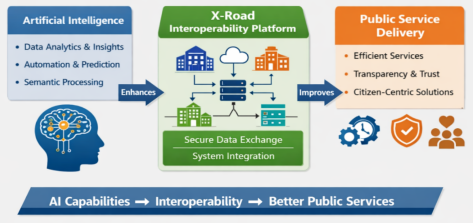
Figure 1. AI-Enabled Interoperability Framework for Public Service Delivery.
Figure 1 shows how artificial intelligence can promote interoperability with the help of X-Road that allows to exchange data more efficiently, and coordinate the work of institutions better, which eventually results in a more transparent, responsive, and citizen-centered delivery of public services in digital governance systems.
2.2. Method
The study was designed using a qualitative document analysis and comparative desk-based research design using secondary data sources. The documents analysed encompassed government policies, institutional reports, academic journal articles, conference papers and X-Road case materials from Estonia and Nigeria between 2002 and 2026. The information was collected from the Google Scholar, Scopus, JSTOR, ResearchGate, OECD Library, World Bank repositories, and official government websites. The words used in searches were: “AI-enabled interoperability”, “digital governance”, “X-Road infrastructure”, “e-government interoperability” and “AI in public administration”. Credible and relevant sources related to interoperability, artificial intelligence, cyber security and digital governance were selected for incorporation using purposive sampling, and sources that were not relevant or not peer-reviewed were excluded. Comparative analysis was conducted on governance structures, institutional coordination, interoperability frameworks in Nigeria and Estonia. Data were thematically coded into broad categories, triangulated across several data sources for correctness, and comparatively analyzed to minimize biases and enhance the trustworthiness of the results.
3. X-Road and AI-Based Interoperability Framework
The X-Road interoperability model is one of the most sophisticated models of the secure, decentralized data exchange in the modern digital governance systems. X-Road, which was first developed in Estonia, is a distributed data exchange layer that allows multiple databases in the public and the private sector to communicate with one another and preserve their autonomy and security . Instead of data centralization, X-Road links the fragmented information systems by using the uniform protocols that ensure that data is stored in the original databases but can be accessed when authorized . It is constructed on the basis of such essential elements as security servers, central server, and distributed registry system, which checks and logs all transactions . Such a structure increases transparency, accountability and traceability, since all data exchanges are encrypted and documented. X-Road has a functional ability to enable institutions to share data in real-time, minimize duplication, administrative delays, and bureaucratic fragmentation . The framework also is an inclusion of robust identity management and digital signature that is fundamental in ensuring trust on digital interactions. Essentially, X-Road is the foundation of interoperability as it makes sure that systems are not isolated silos but instead are integrated into a digital ecosystem.
The capacity of artificial intelligence can be used to a great extent to increase the operational capability of interoperability systems like X-Road by making the process of data exchange in these systems quicker, more precise, and intelligent. The use of AI technologies, such as machine learning and natural language processing, makes it possible to automatically classify, validate, and route data between interconnected systems . AI has a role in digital governance, where it can analyze massive amounts of administrative data to uncover the patterns, anomalies, and predict the service requirements, thus enhancing efficiency in decision-making . As an example, AI-based algorithms may be used to streamline the process of data exchange between ministries by giving precedence to information that is pertinent and minimizing redundancy . In addition, AI is also able to improve interoperability by facilitating semantic integration where systems not only share data but also make sense of the data being shared . This is especially significant in complicated governance settings in which various agencies adopt diverse data formats and criteria. AI is also capable of real-time analytics, and this enables governments to react faster to any new problem such as outbreaks of public health or economic disturbances . With these features, AI will change interoperability as a technical process into a dynamic and intelligent process that facilitates efficiency in governance.
The concept of artificial intelligence and interoperability can best be thought of analytically as a two-way process whereby AI is improving interoperability and better interoperability is providing the data infrastructure that can support AI implementation successfully. Interoperability will make data flows easily among systems to provide a rich data environment in which AI systems need to train and operate .
4. The Role of Artificial Intelligence
On the other hand, AI boosts the level of interoperability through data harmonization processes that are automated and do not require human intervention . This is especially applicable in the government sector where the inability to govern effectively is usually caused by the lack of cohesive data systems. Governments can attain greater levels of coordination and policy coherence by incorporating AI into interoperability systems such as X-Road . That connection can be viewed as a causal chain: AI technologies enhance efficiency and intelligence of the process of data exchange, which enhances the level of interoperability among institutions, which eventually results in higher-quality outcomes of the governance process. This analytical framework is also consistent with the wider theories of digital governance that highlight how technology could be used to improve the capacity of states and service provision . The interaction of AI with interoperability, therefore, is a key pathway in the process of modernizing the system of public administration.
The direct impact of the improved interoperability as a result of the AI-enabled systems, like X-Road, on the provision of the public services is the increased accessibility, responsiveness, and efficiency. In case the government agencies are connected, the citizens will be able to receive the services via common platforms without having to re-enter the same information numerous times, thus lessening the administrative load . AI also improves service delivery as it allows individualized and predictive services, where the governments are able to foresee the needs of citizens and provide them with specific interventions . As an example, the automated evaluation of the eligibility to social services may be supported by integrated data systems and shorten the processing time and errors . Besides, AI-based interoperability facilitates evidence-based policymaking through real-time updates of social and economic trends . This results in more flexible and responsive systems of governance which are able to respond better to complex issues in society. AI implementation into the interoperability models such as X-Road will help create a more people-centric model of governance, where the services are provided efficiently, transparently, and according to the needs of the user. The synergy of AI and interoperability, therefore, is the radical change in the design and provision of the public services in the digital era.
5. Nigeria’s Digital Governance System
The digital governance system in Nigeria has been developed in a wider context of the public sector reforms that seek to enhance the provision of services, transparency, and administrative efficiency by adopting the use of information and communication technologies. The current e-government system is largely motivated by the federal institutions like Federal Ministry of Communications, Innovation and Digital Economy, and the implementing agencies like the National Information Technology Development Agency which facilitate the national ICT policies and digital transformation plans.
Firstly, e-Nigeria project, National Rural Telephony Programme, and other digitally specific projects were launched to bridge the gap between government bodies and increase access to government services .
These programs are indicative of an e-governance model designed on government-to-government, government-to-citizen, and government-to-business engagement where digital platforms become service-providing, communicative, and administrative coordinating service. Nonetheless, Nigeria e-government system is still in its hybrid form that includes both conservative bureaucratic systems and the development of digital systems, which does not allow complete digitalization of ministries, departments and agencies . The continued existence of manual operations and digital platforms is a demonstration of the transition period of the digital governance system in Nigeria where modernization initiatives are being mirrored by institutional inertia and tradition-based administrative operations.
Another issue that faces the digital governance system in Nigeria is the disintegration of the ICT infrastructure and data systems in government institutions which greatly affects interoperability, as well as the coordination of services delivery. The numerous ministries, departments, and agencies do not have interconnected digital platforms, which means that data silos exist, and efforts are duplicated. This disintegration of systems prevents the exchange of information between agencies, which lowers efficiency and increases administrative bottlenecks . The issue of fragmentation also influences the implementation of policies where agencies create and implement ICT solutions without the standardized frameworks or common protocols that result in service delivery and governance inconsistencies. Also, the goal of having a single digital architecture is missing, which restricts the government to use data to make evidence-based decisions and coordinate policy actions. Research has revealed that the lack of interoperability between government systems is a very serious impediment to having a seamless digital governance since it cannot allow the integration of databases and limit real-time information flow among institutions. This institutional fragmentation mirrors more profound institutional constraints, such as ineffective coordination systems, absence of central control, and inadequate policy-practice fit between national ICT policies and practices of implementation .
Besides fragmentation, poor digital infrastructure is also a major limitation of e-government development and performance in Nigeria. The nation is still struggling with the problems of unreliable power supply, poor broadband penetration, and inappropriate facilities in ICT, especially in the rural regions ]. All these infrastructural gaps have a direct impact on the implementation and sustainability of digital governance systems because not all government institutions have the technological expertise to run and maintain effective system. According to studies, inadequate internet connectivity and unreliable electricity supply are some of the most important obstacles in the successful realization of e-government projects in Nigeria .
The lack of digital infrastructure in rural areas compared to urban areas is another factor that makes access to digital services unequal and thus restricts citizen participation and inclusivity in the process of governance. In addition, the expensive nature of the internet and infrastructure implementation will deter the scale of the implementation of digital technologies, both in governmental bodies and among the citizens, which will slow down the rate of digital transformation. These limitations in infrastructures reveal the structural vulnerabilities of the digital ecosystem in Nigeria and how they can affect the outcomes of governance.
The second issue that is important to note is the weak technical ability and digital literacy in the public sector that influences the successful adoption and use of the e-government system. The lack of skills to use the digital platforms by many public servants makes them under-utilize the existing technologies and become resistant to change due to old-fashioned administrative practices. Such a skills gap is especially intense at the subnational levels of the government, where the access to training and technological resources is less significant. Research has highlighted that the lack of ICT literacy and the lack of appropriate training of government staff are the main barriers to the implementation and success of digital governance projects .
Moreover, the issue of institutional resistance to change is not going away because the bureaucratic culture and the established practices tend to hinder the adoption of digital systems. The fears of job loss, the inability to know the advantages of the digital change, and the poor incentives within the organization can help to sustain this resistance and, therefore, reduce the rate of reform. The low digital literacy and institutional inertia combine to emphasize the human factor of the digital governance issues in Nigeria, which is as prominent as technological and infrastructural barriers.
This study contributes to say that Nigeria has an average degree of preparedness to interoperable digital governance systems due to constant policy changes and growing awareness of the need to transform public administration digitally. The launch of national policies on the digital economy, ICT regulatory frameworks, and continuous endeavors to establish digital governance laws are signs of an increased interest in the establishment of a more interconnected and efficient digital system of government. Nevertheless, preparedness is still limited by institutional challenges of poor institutional coordination, insufficient infrastructure and lack of interoperability systems. Absence of standard data sharing protocols and integrated digital architecture has continued to hamper the achievement of complete interoperable systems, whereas the digital divide and infrastructural disparities have constrained the inclusiveness of digital governance initiatives. However, current policy landscape and incremental growth of digital infrastructure give an opportunity to develop in the future, implying that the shift of Nigeria to the interoperable digital governance is possible but needs to be supported by the institutional, technological, and human capacity enhancement. The digital governance system of Nigeria is an excellent manifestation of the contradictory relationship between the progressive and structural issues, wherein interoperability preparedness is manifest, yet not entirely achieved in the existing governance model
6. Fragmented Structure of Nigeria’s E-Government System
Source: Developed by the researcher (2026)

Download: Download full-size image

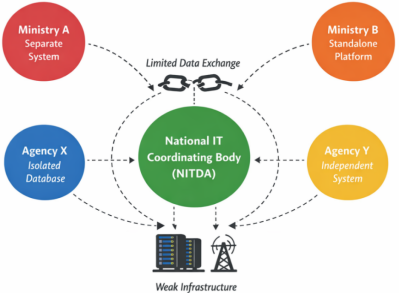
Figure 2. National IT Coordinating Body.
The above figure shows the disunified e-government system in Nigeria with the ministries and agencies having isolated or standalone digital platforms and limited sharing of data. The National IT Coordinating Body (NITDA) at the center tries to align such systems but the lack of good infrastructure such as poor servers and connectivity limits integration. The disjointed links are lack of interoperability between the agencies whereas the isolated nodes reflect data silos. Altogether, the visualization highlights the importance of structural fragmentation and technological constraints that hinder the effective service delivery, coordinated governance, and evidence-based decision-making throughout the public sector.
7. The Institutional, Legal and Security Issues
Cybersecurity and data protection have come to form the core elements of the national security system because of the growing amount of digital data and the acceleration of cyber-facilitated threats. Organizations in the public and private sector are facing an increasing number of cyberattacks, such as ransomware, data breach, and advanced persistent threats that endanger sensitive personal and institutional data . It is commonly accepted that effective cybersecurity governance involves integrated frameworks that help to harmonize technological protection with legal and administrative requirements, and most systems are still reactive and not proactive and disjointed . When institutional resilience is not equally applied across digital infrastructures, and sensitive data is at risk of unauthorized access, exploitation, and institutional compromise, the vulnerability of digital infrastructures is used to weaken institutional resilience . In addition, with the increase in the pace of digital transformation, the disconnect between the design and the real practice of cybersecurity policy erodes trust in digital ecosystems and dilutes protective systems and measures that are supposed to protect citizens and national assets .
Data protection laws and cybersecurity laws commonly have major policy and regulatory loopholes, and national laws tend to be outdated in comparison with technology. Studies on national cyber law reforms show that the national laws like cybercrimes acts often offer general prohibitions and punitive actions, but without the adequate clarity regarding the data protection criteria, privacy protection, or operational demands of cybersecurity governance. Such legal ambiguities are further compounded in jurisdictions where acts of data protection are either not complete, inconsistent or missing, creating gaps in interpretation which make it difficult to enforce and comply . This unbalanced nature of integrating the proactive risk-management provisions shows that the regulations are more focused on breach notification and compliance checklists as opposed to strategic risk reduction, which leaves the critical infrastructure and national security objective less than well-protected. In turn, the inexistence of harmonized standards of legal standards across jurisdictions and the inexistence of consistent frameworks of cross-border data flows also contribute to regulatory fragmentation, impeding the formation of coherent answers to transnational cyber threats and national security goals.
The issue of institutional coordination also makes the protection of data and cybersecurity more difficult “This is a call to fix cyberattack issues” . Research indicates that inter-agency redundancies, ambiguous jurisdictional mandates, and the lack of information sharing has been a regular undermining of cybersecurity governance wherein institutions charged with the responsibility of implementing digital safety do so in silos without a unified command structure or strategic goals . The result of this fragmentation is duplication of efforts, inefficient reaction to emerging threats and delays in enforcement activity, especially in situations where many bodies assert control over part of the cyber governance with no clear lines of accountability . The results of lack of coordination are not only administrative but also determine the effectiveness of a state in detecting, responding, and recovering after cyber incidents, in particular, when there is a need to exchange information in real time among security agencies, judicial actors, and partners in the private sector. The institutional competition and agency imbalance also provide an operational tension that disrupts the comprehensive cybersecurity planning and crisis management.
The overall impact of all these institutional, legal, and security challenges is a systemic weakness that compromises strategic cybersecurity goals. Although global frameworks and standards, including privacy-by-design and risk-based governance principles provide the models of a sound cybersecurity policy, their implementation is inconsistent and, often, fails to keep pace with the changing threat environment . Existing gaps are further increased by the fact that regulatory regimes have not yet been able to adapt to emerging technologies such as artificial intelligence and the Internet of Things, and thus critical systems remain vulnerable to new vulnerabilities unforeseen by existing laws and institutional frameworks . In order to create resilient cybersecurity ecosystems, academics contend that coordination between legal frameworks, policy tools and institutional capabilities should be enhanced by adaptative governance arrangements that connect regulatory fragmentation with strategic coordination across an array of governance levels. This encompasses more explicit statutory requirements, streamlined compliance benchmarks and formalized inter-agency cooperation to make certain that data protection and cybersecurity initiatives are uniform, enforceable and answer to national and global security demands .
8. Conclusion and Recommendations
The analysis of documents shows that data exchange systems such as X Road have a substantial positive impact on interoperability, data integrity, and transparency of operations in the institutions of the public sector. Survey of implementation reports, white papers and case studies of Estonia and other adopters have identified 3 common findings; (1) interoperable architectures decrease data collection redundancy and enhance the efficiency of service delivery; (2) sound authentication and encryption protocols inherent in the X Road counter risks related to unauthorized access and data breaches; and (3) successful uptake is strongly linked with political commitment, institutional coordination, and legal frameworks that facilitate data sharing and safeguard privacy. Another limiting factor in similar developing settings that is found in the analysis is capacity constraints, particularly in human capital and digital infrastructure. Also, the regulatory loopholes in data protection and cross agency management in Nigeria are major challenges that should be resolved before the large-scale adoption can be achieved. These results highlight the fact that only technological readiness cannot be considered a sufficient factor because institutional and policy coherence are equally important in the attainment of the desired results of secure interoperability platforms.
This paper contributes to the examination of the viability of X Road implementation in Nigeria, and it shows that there are prospects and limitations. Positively, the current trends of digital transformation in Nigeria, the development of a broadband network, and the creation of the National Digital Identity infrastructure provide an environment in which interoperable data exchange is possible. Nonetheless, small state capacity, unequal ICT infrastructure among states, and poor data governance structures have a real implementation problem. X Road can only work with local adaptation as opposed to direct transplantation of foreign models. Therefore, the policy recommendations involve the enactment of comprehensive data protection and information sharing legislation that conforms to the best practices on the international level, capacity building in the key ministries and agencies, and piloting the X Road framework in the selected sectors (e.g., tax administration, health information systems) to produce contextual evidence and improve deployment models. Additionally, the creation of a central coordinating organ that would handle standards, compliance and technical assistance will improve accountability and sustainability. Collectively, these actions can address policy, institutional, and technological gaps, which will place Nigeria to enjoy secure, efficient, and transparent data interoperability.
Abbreviations

AI

Artificial Intelligence

ICT

Information and Communication Technology

X-Road

Cross-Road Digital Data Exchange Infrastructure

OECD

Organisation for Economic Co-operation and Development

NITDA

National Information Technology

Author Contributions
Ololade Oluwatosin Adesuyi: Conceptualization, Formal Analysis, Data curation, Writing – review & editing, Resources, Writing – original draft
Funding
The project did not receive any financial support.
Conflicts of Interest
The author declares no conflicts of interest.
References
[1] Ajadi, Kayode O. (2016). E-government in Nigeria: Progress and prospects. International Journal of Advanced Research in Public Policy and Administration, 4(1), 45–58. (PDF) E-Government in Nigeria: Progress and Prospects.
[2] Awosanya, Olalekan A. (2019). E-government development in Nigeria: Policy, challenges and prospects. Journal of African Policy Studies, 7(2), 66–81.
[3] Ayo, Charles K., Oni, Adebayo A., Adewoye, John O. and Eweoya, Isaac O. (2016). E-government implementation in Nigeria: The prospects and challenges. Journal of Emerging Trends in Computing and Information Sciences.
[4] Bannister, F., & Connolly, R. (2012). Defining e-Governance. e-Service Journal, 8, 3-25.
[5] Berg, Chris. (2024). Interoperability. Internet Policy Review.
[6] Brynjolfsson, E., and McAfee, A. (2017). Machine, Platform, Crowd: Harnessing Our Digital Future. W. W. Norton. Machine, Platform, Crowd: Harnessing Our Digital Future - MIT Initiative on the Digital Economy.
[7] Charalabidis Y, Loukis E (2012) Open government data, transparency, and governance effectiveness: an empirical study. Information Systems Management 29(4): 258–268.
[8] Dada, Derek (2006). The failure of e-government in developing countries: A literature review. The Electronic Journal of Information Systems in Developing Countries. The Failure of E-Government in Developing Countries | iSCHANNEL.
[9] Davenport, T. H., & Ronanki, R. (2018, January 9). Artificial Intelligence for the Real World. Harvard Business Review (HBR).
[10] David, G. (2024). “Artificial Intelligence: Opportunities and Challenges for Public Administration.” Canadian Public Administration. 67: 388–406.
[11] Dupe Ayesha, A.., Ahlan, A. R.., Muhamad. Ibrahim, N.., & Ahmed, M. (2025). Impact and Challenges of E-Government Implementation in Nigeria: A Systematic Literature Review. International Journal on Perceptive and Cognitive Computing, 11(2), 42–57.
[12] Ekeh, Charles C. (2025). Digital communication strategies for democratic governance in Nigeria. Journal of African Media Studies, 17(1), 23–40.
[13] Engin, Zeynep, Crowcroft, Jon, Hand, David, & Treleaven, Philip. (2025). The Algorithmic State Architecture: An Integrated Framework for AI-Enabled Government.
[14] Etalong, Efe O., & Aduma, John O. (2021). E-governance implementation in the Nigerian public sector: Issues and challenges. Global Journal of Political Science and Administration, 9(4), 34–50.
[15] Eze, Samuel Chinedu, Chinedu-Eze, Vivian Chigozie and Bello, Adebayo Olatunji (2018). The utilisation of e-government services in Nigeria. Electronic Government, an International Journal.
[16] Geels, Frank W. (2002). Technological transitions as evolutionary reconfiguration processes. Research Policy.
[17] Heeks, Richard (2002). Information systems and developing countries: Failure, success, and local improvisations. The Information Society.
[18] Janowski, Tomasz (2015). Digital government evolution: From transformation to contextualization. Government Information Quarterly.
[19] Kalja, A., Kärner, T., and Rull, A. (2015). “Secure Data Exchange Layer X-Road.” Proceedings of the International Conference on Electronic Governance.
[20] Kalja, Ahto, Reitsma, Pieter and Saarepera, Märt (2005). e-Government interoperability: X-Road architecture. Proceedings of the International Conference on Electronic Government. eGovernment in Estonia: best practices | IEEE Conference Publication | IEEE Xplore.
[21] Khan, M. N. I. (2025). Cross-border data privacy and legal support: A systematic review of international compliance standards and cyber law practices. American Journal of Scholarly Research and Innovation, 04(01), 138–174.
[22] Kivimäki, Petteri. (2018). X-Road technical architecture and development.
[23] Krimmer, R. (2018). “Digital Government and Interoperability: The Estonian Case.” Government Information Quarterly.
[24] Kumar, D. (2024). AI-driven automation in administrative processes: Enhancing efficiency and accuracy. International Journal of Engineering Science and Humanities, 1(1), 256–265.
[25] Lawal, Q. (2025). Cybersecurity governance: Strengthening policy frameworks to address global cybercrime and data privacy challenges. International Journal of Science and Research Archive, 14(1), 1146–1163.
[26] Liu, C., & Babar, M. A. (2026). Corporate cybersecurity risk and data breaches: A systematic review of empirical research. Australian Journal of Management, 51(1), 62-92.
[27] Mayer-Schönberger, V., and Cukier, K. (2013). Big Data: A Revolution That Will Transform How We Live, Work, and Think. Houghton Mifflin Harcourt.
[28] Nkongolo, Mike Wa. (2026). Pluralism in AI governance: Toward sociotechnical alignment and normative coherence.
[29] Obioha?Val, O. A. (2025). Bridging gaps in cybersecurity governance: Leveraging collaborative digital solutions. Asian Journal of Research in Computer Science, 18(2), 82–100.
[30] Ogbodo, D. C., Awan, I.?U., Cullen, A., & Zahrah, F. (2025). From regulation to reality: A framework to bridge the gap in digital health data protection. Electronics, 14(13), 2629.
[31] Oghuvbu, Emmanuel P., Gberevbie, Daniel E., & Oni, Samuel O. (2022). E-governance in Nigeria: Challenges and prospects. Journal of Public Affairs and Development, 14(3), 55–72.
[32] Pardo, T. A., Nam, T., & Burke, G. B. (2012). E-Government Interoperability: Interaction of Policy, Management, and Technology Dimensions: Interaction of Policy, Management, and Technology Dimensions. Social Science Computer Review, 30(1), 7-23.
[33] Rikko, R. (2016). “How Estonia Became a Digital Society.” Journal of e-Governance. How Estonia became a digital society.
[34] Rogers, Everett M. (2003). Diffusion of Innovations (5th ed.). Free Press. Diffusion of innovations by Everett M. Rogers | Open Library.
[35] Russell, S., and Norvig, P. (2021). Artificial Intelligence: A Modern Approach. Pearson. Artificial Intelligence, Global Edition | Pearson eLibrary.
[36] Saba, C. S., Ngepah, N. & Odhiambo, N. M. (2024) Information and Communication Technology (ICT), Growth and Development in Developing Regions: Evidence from a Comparative Analysis and a New Approach. J Knowl Econ 15, 14700–14748 (2024).
[37] Shuaib, Abdulnabi M. (2024). Issues and challenges of implementing e-governance in developing countries. International Journal of Public Administration and Management Research, 9(1), 101–118.
[38] Straub, Vincent J., Morgan, Deborah, Bright, Jonathan, & Margetts, Helen. (2022). Artificial intelligence in government: Concepts, standards, and a unified framework.
[39] Tavares, José Antonio, & Bitencourt, Carlos. (2019). Interoperability in public sector systems.
[40] Van Dijk, J. (2020). The Digital Divide. Polity Press. The Digital Divide | Wiley.
[41] Wirtz, Bernd W., Weyerer, Jan C. and Geyer, Carolin (2019). Artificial intelligence and the public sector—Applications and challenges. International Journal of Public Administration.
Cite This Article
  • APA Style

    Adesuyi, O. O. (2026). AI-Enabled Interoperability in Nigeria’s Public Sector: Evaluating the Role of X-Road Digital Infrastructure. American Journal of Artificial Intelligence, 10(2), 179-188. https://doi.org/10.11648/j.ajai.20261002.11

    Copy | Download

    ACS Style

    Adesuyi, O. O. AI-Enabled Interoperability in Nigeria’s Public Sector: Evaluating the Role of X-Road Digital Infrastructure. Am. J. Artif. Intell. 2026, 10(2), 179-188. doi: 10.11648/j.ajai.20261002.11

    Copy | Download

    AMA Style

    Adesuyi OO. AI-Enabled Interoperability in Nigeria’s Public Sector: Evaluating the Role of X-Road Digital Infrastructure. Am J Artif Intell. 2026;10(2):179-188. doi: 10.11648/j.ajai.20261002.11

    Copy | Download

  • @article{10.11648/j.ajai.20261002.11,
      author = {Ololade Oluwatosin Adesuyi},
      title = {AI-Enabled Interoperability in Nigeria’s Public Sector: Evaluating the Role of X-Road Digital Infrastructure},
      journal = {American Journal of Artificial Intelligence},
      volume = {10},
      number = {2},
      pages = {179-188},
      doi = {10.11648/j.ajai.20261002.11},
      url = {https://doi.org/10.11648/j.ajai.20261002.11},
      eprint = {https://article.sciencepublishinggroup.com/pdf/10.11648.j.ajai.20261002.11},
      abstract = {Despite the efforts being made towards digital transformation, the continued disintegration of digital systems within the public sector and the lack of interoperability frameworks are continuing to hinder effective governance, coordinated service delivery and evidence-informed policy-making in Nigeria. The study focuses on the use of the X-Road digital infrastructure model for enhancing public-sector governance in Nigeria by leveraging the artificial intelligence (AI) capabilities of the interoperability model. Specifically, the study attempts to answer four research questions: How do interoperability challenges impact governance outcomes in Nigeria? How can AI improve data exchange and decision-making? Is X-Road adaptable to Nigeria's governance environment? What institutional conditions are required for successful implementation? The study followed the qualitative document analysis and comparative desk-based research design, based on secondary data regarding Estonia's X-Road framework obtained from policy documents, institutional reports, academic literature and case materials. The results show that interoperability, powered by AI, can be highly beneficial for data integration, administrative automation, transparency, and efficient delivery of public services by enabling real-time information sharing among governments. The study also revealed that digital infrastructure, institutional coordination, technical capacity, legal frameworks and cyber security issues are still significant challenges to implementation in Nigeria. The study finds that technological innovation is not enough for achieving interoperability if institutions and policies are not strong. It therefore calls for gradual and locally tailored adoption of X-Road-like systems, adoption of a comprehensive data protection and information sharing law, investments in digital infrastructure and human capacity development, and a single coordinating body for the implementation of interoperability standards and implementation in public institutions.},
     year = {2026}
    }
    

    Copy | Download

  • TY  - JOUR
    T1  - AI-Enabled Interoperability in Nigeria’s Public Sector: Evaluating the Role of X-Road Digital Infrastructure
    AU  - Ololade Oluwatosin Adesuyi
    Y1  - 2026/06/30
    PY  - 2026
    N1  - https://doi.org/10.11648/j.ajai.20261002.11
    DO  - 10.11648/j.ajai.20261002.11
    T2  - American Journal of Artificial Intelligence
    JF  - American Journal of Artificial Intelligence
    JO  - American Journal of Artificial Intelligence
    SP  - 179
    EP  - 188
    PB  - Science Publishing Group
    SN  - 2639-9733
    UR  - https://doi.org/10.11648/j.ajai.20261002.11
    AB  - Despite the efforts being made towards digital transformation, the continued disintegration of digital systems within the public sector and the lack of interoperability frameworks are continuing to hinder effective governance, coordinated service delivery and evidence-informed policy-making in Nigeria. The study focuses on the use of the X-Road digital infrastructure model for enhancing public-sector governance in Nigeria by leveraging the artificial intelligence (AI) capabilities of the interoperability model. Specifically, the study attempts to answer four research questions: How do interoperability challenges impact governance outcomes in Nigeria? How can AI improve data exchange and decision-making? Is X-Road adaptable to Nigeria's governance environment? What institutional conditions are required for successful implementation? The study followed the qualitative document analysis and comparative desk-based research design, based on secondary data regarding Estonia's X-Road framework obtained from policy documents, institutional reports, academic literature and case materials. The results show that interoperability, powered by AI, can be highly beneficial for data integration, administrative automation, transparency, and efficient delivery of public services by enabling real-time information sharing among governments. The study also revealed that digital infrastructure, institutional coordination, technical capacity, legal frameworks and cyber security issues are still significant challenges to implementation in Nigeria. The study finds that technological innovation is not enough for achieving interoperability if institutions and policies are not strong. It therefore calls for gradual and locally tailored adoption of X-Road-like systems, adoption of a comprehensive data protection and information sharing law, investments in digital infrastructure and human capacity development, and a single coordinating body for the implementation of interoperability standards and implementation in public institutions.
    VL  - 10
    IS  - 2
    ER  - 

    Copy | Download

Author Information
  • Political Science Department, University of Ibadan, Ibadan, Nigeria

    Biography: Ololade Oluwatosin Adesuyi is a Political Science scholar and software engineer with expertise in e-governance, international security, foreign policy, and international organizations. She holds an M.Sc. in Political Science from the University of Ibadan and a B.Sc. in Political Science from Adekunle Ajasin University. Alongside academia, Ololade is a Software Engineer, specializing in public sector digitization, scalable API development and software solutions. She has teaching and research experience at the University of Ibadan and Adekunle Ajasin University. Passionate about youth empowerment, innovation, e-governance, and technology’s role in political activism, she actively contributes to advocacy movements such as the Not Too Young to Run campaign.

    Research Fields: International Relations, Foreign Policy, E-governance, Cyber Security, Artificial Intelligence Conflict Studies