
Objective: To investigate the epidemiological characteristics of esophageal cancer in Kailu County, Inner Mongolia Autonomous Region, from 2009 to 2022, and to predict trends in the incidence of esophageal cancer in the county from 2023 to 2025. Methods: Based on data on esophageal cancer incidence, mortality, and registered population in Kailu County from 2009 to 2022, crude incidence (mortality) rates, incidence (mortality) rates standardized to the Chinese population, and incidence (mortality) rates standardized to the world population were calculated by stratifying data by sex and age; The Joinpoint regression model was used to calculate the annual percentage change (APC) in China-standardized rates, and the autoregressive integrated moving average (ARIMA) model was employed to forecast trends in esophageal cancer incidence for 2023–2025. Results: From 2009 to 2022, the crude incidence and crude mortality rates of esophageal cancer in Kailu County were 25.31 per 100,000 and 20.58 per 100,000, respectively; the China-standardized incidence (mortality) rates were 23.59/100,000 (19.25/100,000), and the world-standardized incidence (mortality) rates were 22.09/100,000 (17.50/100,000); For men, all three incidence and mortality indicators were significantly higher than those for women (P < 0.05); the China-standardized incidence rate of esophageal cancer in the county showed an upward trend from 2009 to 2013 (APC = 12.86%, P = 0.23) and a year-on-year decline from 2013 to 2022 (APC = −12.66%, P < 0.05); The China-population-standardized mortality rate showed an upward trend from 2009 to 2013 (APC = 39.81%, P < 0.05) and a downward trend from 2013 to 2022 (APC = −9.12%, P < 0.05); The ARIMA(0,1,0) model predicts that the age-standardized incidence rate of esophageal cancer in the county will continue to decline from 2023 to 2025, with an estimated rate of 6.40 per 100,000 by 2025. Conclusion: From 2009 to 2022, the epidemiological characteristics of esophageal cancer in Kailu County were characterized by an initial rise followed by a decline in both incidence and mortality rates, with significant differences observed by age and gender; Although the incidence of esophageal cancer in the county is projected to drop to a relatively low level by 2025, the disease burden remains severe. Continuous monitoring of esophageal cancer is necessary, along with strengthened prevention and control efforts—including public awareness campaigns and interventions targeting high-risk populations—to reduce the disease burden.
| Published in | American Journal of Clinical and Experimental Medicine (Volume 14, Issue 3) |
| DOI | 10.11648/j.ajcem.20261403.11 |
| Page(s) | 40-48 |
| Creative Commons |
This is an Open Access article, distributed under the terms of the Creative Commons Attribution 4.0 International License (http://creativecommons.org/licenses/by/4.0/), which permits unrestricted use, distribution and reproduction in any medium or format, provided the original work is properly cited. |
| Copyright |
Copyright © The Author(s), 2026. Published by Science Publishing Group |
Esophageal Cancer, Epidemiological Characteristics, Trends, Prediction
Years | ASIR (1/10⁵) | ASMR (1/10⁵) | ||||
|---|---|---|---|---|---|---|
Total | Male | Female | Total | Male | Female | |
2009 | 19.27 | 35.22 | 2.68 | 5.73 | 10.57 | 0.7 |
2010 | 39.04 | 74.41 | 2.17 | 23.72 | 44.41 | 2.14 |
2011 | 33.67 | 60.33 | 6.17 | 18.81 | 36.48 | 0.64 |
2012 | 32.01 | 55.62 | 7.85 | 24.53 | 41.43 | 7.29 |
2013 | 39.72 | 73.87 | 5.40 | 32.43 | 61.92 | 3.15 |
2014 | 30.13 | 55.59 | 4.02 | 30.69 | 56.28 | 4.61 |
2015 | 27.60 | 55.86 | 0.83 | 27.44 | 51.45 | 4.06 |
2016 | 27.62 | 47.37 | 7.63 | 20.00 | 36.85 | 2.98 |
2017 | 33.16 | 65.17 | 3.13 | 23.51 | 43.67 | 4.68 |
2018 | 22.52 | 43.12 | 2.79 | 14.92 | 28.47 | 1.97 |
2019 | 18.04 | 33.59 | 2.87 | 23.14 | 44.49 | 2.43 |
2020 | 12.95 | 25.33 | 1.00 | 16.78 | 32.06 | 1.85 |
2021 | 11.91 | 21.91 | 2.29 | 12.95 | 24.59 | 1.73 |
2022 | 12.93 | 24.23 | 2.18 | 11.53 | 21.67 | 1.72 |
Graph | Category | Time Period (Year) | APC(%) | 95%CI | t | P |
|---|---|---|---|---|---|---|
Incidence | Total | 2009-2013 | 12.86 | -9.16~40.22 | 1.26 | P=0.23 |
2013-2022 | -12.66 | -17.97~-7.02 | -4.89 | P<0.05 | ||
Male | 2009-2013 | 13.14 | -10.54~43.09 | 1.19 | P=0.26 | |
2013-2022 | -12.38 | -18.13~-6.24 | -4.14 | P<0.05 | ||
Female | 2009-2022 | -5.83 | -14.28~3.45 | -1.39 | P=0.19 | |
Mortality | Total | 2009-2013 | 59.81 | 3.45~146.87 | 2.44 | P<0.05 |
2013-2022 | -9.12 | -15.07~-2.75 | -3.19 | P<0.05 | ||
Male | 2009-2013 | 38.80 | 1.89~89.09 | 2.4 | P<0.05 | |
2013-2022 | -10.66 | -18.29~-2.32 | -2.86 | P<0.05 | ||
Female | 2009-2013 | 89.88 | 1.20~256.28 | 2.30 | P<0.05 | |
2013-2022 | -8.99 | -17.49~-0.37 | -2.18 | P<0.05 |
Year | Actual value | Predicted value | 95%CI | Percentage error (%) |
|---|---|---|---|---|
2010 | 39.04 | - | - | - |
2011 | 33.67 | 36.86 | 31.86~41.87 | 9.49 |
2012 | 32.01 | 31.49 | 26.49~36.50 | 1.61 |
2013 | 39.72 | 38.48 | 33.48~43.49 | 3.11 |
2014 | 30.13 | 28.89 | 23.89~33.90 | 4.10 |
2015 | 27.60 | 27.95 | 22.95~32.96 | 1.28 |
2016 | 27.62 | 25.42 | 20.42~30.43 | 7.95 |
2017 | 33.16 | 33.53 | 28.53~38.54 | 1.13 |
2018 | 22.52 | 22.89 | 17.89~27.90 | 1.66 |
2019 | 18.04 | 20.34 | 15.34~25.35 | 12.77 |
2020 | 12.95 | 15.86 | 10.86~20.87 | 22.50 |
2021 | 11.91 | 10.77 | 5.77~15.78 | 9.54 |
2022 | 12.93 | 9.73 | 4.73~14.74 | 24.72 |
2023 | - | 10.75 | 5.75~15.76 | - |
2024 | - | 8.58 | 1.50~15.66 | - |
2025 | - | 6.40 | -2.27~15.07 | - |
APC | Annual Percentage Change |
ARIMA | Autoregressive Integrated Moving Average |
IARC | International Agency for Research on Cancer |
ICD-10 | 10th Revision |
MV% | Percentage of Morphological Verification |
DCO% | Percentage of Death Certification Only |
M/I | Mortality-To-Incidence Ratio |
AAPC | Average Annual Percentage Change |
| [1] | Bray F, Laversanne M, Sung H, et al. Global cancer statistics 2022: GLOBOCAN estimates of incidence and mortality worldwide for 36 cancers in 185 countries. CA Cancer J Clin. 2024; 74(3): 229-263. |
| [2] | Cao W, Qin K, Li F, Chen W. Comparative study of cancer profiles between 2020 and 2022 using global cancer statistics (GLOBOCAN). J Natl Cancer Cent. 2024; 4(2): 128-134. Published 2024 May 7. |
| [3] | He F, Wang J, Liu L, et al. Esophageal cancer: trends in incidence and mortality in China from 2005 to 2015. Cancer Med. 2021; 10(5): 1839-1847. |
| [4] | Jingu K, Numasaki H, Toh Y, et al. Chemoradiotherapy and radiotherapy alone in patients with esophageal cancer aged 80 years or older based on the Comprehensive Registry of Esophageal Cancer in Japan. Esophagus. 2020; 17(3): 223-229. |
| [5] | Parkin DM, Bray F. Evaluation of data quality in the cancer registry: principles and methods Part II. Completeness. Eur J Cancer. 2009; 45(5): 756-764. |
| [6] | Bray F, Parkin DM. Evaluation of data quality in the cancer registry: principles and methods. Part I: comparability, validity and timeliness. Eur J Cancer. 2009; 45(5): 747-755. |
| [7] | Wang N, Zhuang W, Ran Z, Wan P, Fu J. Prediction of acute onset of chronic cor pulmonale: comparative analysis of Holt-Winters exponential smoothing and ARIMA model. BMC Med Res Methodol. 2024; 24(1): 204. Published 2024 Sep 13. |
| [8] | Han B, Zheng R, Zeng H, et al. Cancer incidence and mortality in China, 2022. J Natl Cancer Cent. 2024; 4(1): 47-53. Published 2024 Feb 2. |
| [9] | Chen W, Zheng R, Zhang S, et al. Cancer incidence and mortality in China, 2013. Cancer Lett. 2017; 401: 63-71. |
| [10] | Zhang S, Sun K, Zheng R, et al. Cancer incidence and mortality in China, 2015. J Natl Cancer Cent. 2020; 1(1): 2-11. Published 2020 Dec 17. |
| [11] | Fan J, Liu Z, Mao X, et al. Global trends in the incidence and mortality of esophageal cancer from 1990 to 2017. Cancer Med. 2020; 9(18): 6875-6887. |
| [12] | Prabhu A, Obi KO, Rubenstein JH. The synergistic effects of alcohol and tobacco consumption on the risk of esophageal squamous cell carcinoma: a meta-analysis. Am J Gastroenterol. 2014; 109(6): 822-827. |
| [13] | Islami F, Poustchi H, Pourshams A, et al. A prospective study of tea drinking temperature and risk of esophageal squamous cell carcinoma. Int J Cancer. 2020; 146(1): 18-25. |
| [14] | Islami F, Pourshams A, Nasrollahzadeh D, et al. Tea drinking habits and oesophageal cancer in a high risk area in northern Iran: population based case-control study. BMJ. 2009; 338: b929. Published 2009 Mar 26. |
| [15] | Petrick JL, Cook MB. Do Sex Hormones Underlie Sex Differences in Cancer Incidence? Testing the Intuitive in Esophageal Adenocarcinoma. Am J Gastroenterol. 2020; 115(2): 211-213. |
| [16] | Liu M, Zhang C, Cai H, et al. The Willingness to Change Risky Health Behaviors among Chinese Rural Residents: What We Learned from a Population-Based Esophageal Cancer Cohort Study. PLoS One. 2016; 11(8): e0161999. Published 2016 Aug 30. |
| [17] | Hamashima C, Narisawa R, Ogoshi K, Kato T, Fujita K. Optimal interval of endoscopic screening based on stage distributions of detected gastric cancers. BMC Cancer. 2017; 17(1): 740. Published 2017 Nov 9. |
| [18] | Chen R, Liu Y, Song G, et al. Effectiveness of one-time endoscopic screening programme in prevention of upper gastrointestinal cancer in China: a multicentre population-based cohort study. Gut. 2021; 70(2): 251-260. |
| [19] | Li H, Teng Y, Yan X, et al. Profiles and Findings of Population-Based Esophageal Cancer Screening With Endoscopy in China: Systematic Review and Meta-analysis. JMIR Public Health Surveill. 2023; 9: e45360. Published 2023 Jun 1. |
| [20] | Xia C, Basu P, Kramer BS, et al. Cancer screening in China: a steep road from eviden-ce to implementation. Lancet Public Health. 2023; 8(12): e996-e1005. |
APA Style
Xin-Yao, G., Hao, W., Xiao-Na, N., Zhi-Hui, L., Liang-Liang, G., et al. (2026). Analysis of Epidemiological Characteristics of Esophageal Cancer in Kailu County, Inner Mongolia, 2009–2022 and Prediction of Incidence Trends from 2023 to 2025. American Journal of Clinical and Experimental Medicine, 14(3), 40-48. https://doi.org/10.11648/j.ajcem.20261403.11
ACS Style
Xin-Yao, G.; Hao, W.; Xiao-Na, N.; Zhi-Hui, L.; Liang-Liang, G., et al. Analysis of Epidemiological Characteristics of Esophageal Cancer in Kailu County, Inner Mongolia, 2009–2022 and Prediction of Incidence Trends from 2023 to 2025. Am. J. Clin. Exp. Med. 2026, 14(3), 40-48. doi: 10.11648/j.ajcem.20261403.11
AMA Style
Xin-Yao G, Hao W, Xiao-Na N, Zhi-Hui L, Liang-Liang G, et al. Analysis of Epidemiological Characteristics of Esophageal Cancer in Kailu County, Inner Mongolia, 2009–2022 and Prediction of Incidence Trends from 2023 to 2025. Am J Clin Exp Med. 2026;14(3):40-48. doi: 10.11648/j.ajcem.20261403.11
@article{10.11648/j.ajcem.20261403.11,
  author = {Geng Xin-Yao and Wang Hao and Ni Xiao-Na and Li Zhi-Hui and Gong Liang-Liang and Buren Ba-Tu and Li Na},
  title = {Analysis of Epidemiological Characteristics of Esophageal Cancer in Kailu County, Inner Mongolia, 2009–2022 and Prediction of Incidence Trends from 2023 to 2025},
  journal = {American Journal of Clinical and Experimental Medicine},
  volume = {14},
  number = {3},
  pages = {40-48},
  doi = {10.11648/j.ajcem.20261403.11},
  url = {https://doi.org/10.11648/j.ajcem.20261403.11},
  eprint = {https://article.sciencepublishinggroup.com/pdf/10.11648.j.ajcem.20261403.11},
  abstract = {Objective: To investigate the epidemiological characteristics of esophageal cancer in Kailu County, Inner Mongolia Autonomous Region, from 2009 to 2022, and to predict trends in the incidence of esophageal cancer in the county from 2023 to 2025. Methods: Based on data on esophageal cancer incidence, mortality, and registered population in Kailu County from 2009 to 2022, crude incidence (mortality) rates, incidence (mortality) rates standardized to the Chinese population, and incidence (mortality) rates standardized to the world population were calculated by stratifying data by sex and age; The Joinpoint regression model was used to calculate the annual percentage change (APC) in China-standardized rates, and the autoregressive integrated moving average (ARIMA) model was employed to forecast trends in esophageal cancer incidence for 2023–2025. Results: From 2009 to 2022, the crude incidence and crude mortality rates of esophageal cancer in Kailu County were 25.31 per 100,000 and 20.58 per 100,000, respectively; the China-standardized incidence (mortality) rates were 23.59/100,000 (19.25/100,000), and the world-standardized incidence (mortality) rates were 22.09/100,000 (17.50/100,000); For men, all three incidence and mortality indicators were significantly higher than those for women (P P = 0.23) and a year-on-year decline from 2013 to 2022 (APC = −12.66%, P P P Conclusion: From 2009 to 2022, the epidemiological characteristics of esophageal cancer in Kailu County were characterized by an initial rise followed by a decline in both incidence and mortality rates, with significant differences observed by age and gender; Although the incidence of esophageal cancer in the county is projected to drop to a relatively low level by 2025, the disease burden remains severe. Continuous monitoring of esophageal cancer is necessary, along with strengthened prevention and control efforts—including public awareness campaigns and interventions targeting high-risk populations—to reduce the disease burden.},
 year = {2026}
}
TY  - JOUR
T1  - Analysis of Epidemiological Characteristics of Esophageal Cancer in Kailu County, Inner Mongolia, 2009–2022 and Prediction of Incidence Trends from 2023 to 2025
AU  - Geng Xin-Yao
AU  - Wang Hao
AU  - Ni Xiao-Na
AU  - Li Zhi-Hui
AU  - Gong Liang-Liang
AU  - Buren Ba-Tu
AU  - Li Na
Y1  - 2026/07/11
PY  - 2026
N1  - https://doi.org/10.11648/j.ajcem.20261403.11
DO  - 10.11648/j.ajcem.20261403.11
T2  - American Journal of Clinical and Experimental Medicine
JF  - American Journal of Clinical and Experimental Medicine
JO  - American Journal of Clinical and Experimental Medicine
SP  - 40
EP  - 48
PB  - Science Publishing Group
SN  - 2330-8133
UR  - https://doi.org/10.11648/j.ajcem.20261403.11
AB  - Objective: To investigate the epidemiological characteristics of esophageal cancer in Kailu County, Inner Mongolia Autonomous Region, from 2009 to 2022, and to predict trends in the incidence of esophageal cancer in the county from 2023 to 2025. Methods: Based on data on esophageal cancer incidence, mortality, and registered population in Kailu County from 2009 to 2022, crude incidence (mortality) rates, incidence (mortality) rates standardized to the Chinese population, and incidence (mortality) rates standardized to the world population were calculated by stratifying data by sex and age; The Joinpoint regression model was used to calculate the annual percentage change (APC) in China-standardized rates, and the autoregressive integrated moving average (ARIMA) model was employed to forecast trends in esophageal cancer incidence for 2023–2025. Results: From 2009 to 2022, the crude incidence and crude mortality rates of esophageal cancer in Kailu County were 25.31 per 100,000 and 20.58 per 100,000, respectively; the China-standardized incidence (mortality) rates were 23.59/100,000 (19.25/100,000), and the world-standardized incidence (mortality) rates were 22.09/100,000 (17.50/100,000); For men, all three incidence and mortality indicators were significantly higher than those for women (P P = 0.23) and a year-on-year decline from 2013 to 2022 (APC = −12.66%, P P P Conclusion: From 2009 to 2022, the epidemiological characteristics of esophageal cancer in Kailu County were characterized by an initial rise followed by a decline in both incidence and mortality rates, with significant differences observed by age and gender; Although the incidence of esophageal cancer in the county is projected to drop to a relatively low level by 2025, the disease burden remains severe. Continuous monitoring of esophageal cancer is necessary, along with strengthened prevention and control efforts—including public awareness campaigns and interventions targeting high-risk populations—to reduce the disease burden.
VL  - 14
IS  - 3
ER  -
1School of Public Health, Baotou Medical College, Baotou, China
1School of Public Health, Baotou Medical College, Baotou, China
Chronic Disease Prevention and Control Department, Tongliao Center for Disease Control and Prevention, Tongliao, China
Chronic Disease Prevention and Control Department, Tongliao Center for Disease Control and Prevention, Tongliao, China
Chronic Disease Prevention and Control Department, Tongliao Center for Disease Control and Prevention, Tongliao, China
Chronic Disease Prevention and Control Department, Tongliao Center for Disease Control and Prevention, Tongliao, China
Chronic Disease Prevention and Control Department, Tongliao Center for Disease Control and Prevention, Tongliao, China
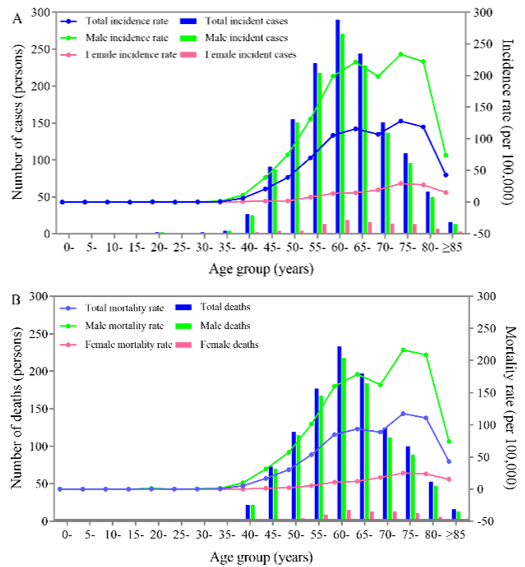
Figure 1. Age and Gender Differences in Incidence and Mortality of Esophageal Cancer, Kailu County, 2009–2022.
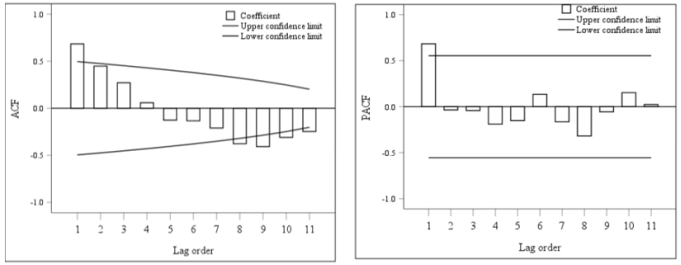
Figure 2. ACF and PACF plots of the original time series.
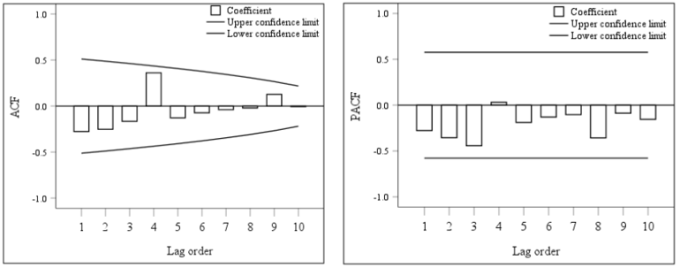
Figure 3. ACF and PACF plots of the differenced time series.
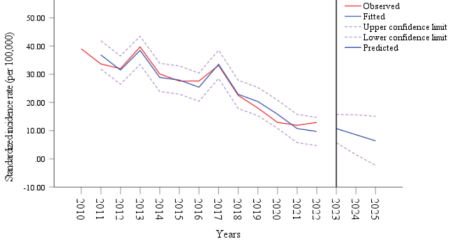
Figure 4. Comparison of actual and fitted values of esophageal cancer incidence with predictions in Kailu County, 2010–2022.

Information



 Share This Article
 Twitter
 Linked In
 Facebook
 Copy
Copy Download