Abstract
This study presents a systematic and analytical review of the role of emerging technologies in advancing green chemistry and supporting environmental sustainability. Guided by the PRISMA framework, relevant literature was identified from major academic databases, including Scopus, Web of Science, ScienceDirect, SpringerLink, and Google Scholar. A total of 20 studies were selected based on defined inclusion criteria. The review shows that emerging technologies such as artificial intelligence, the Internet of Things, automation, and advanced materials are increasingly integrated into green chemistry practices. These technologies contribute to improved process optimisation, real-time monitoring, and efficient resource utilisation. The findings indicate consistent improvements in environmental outcomes, including reductions in emissions, waste generation, and energy consumption. Evidence further suggests that integrated approaches combining green chemistry and emerging technologies produce better environmental performance than conventional methods. The study is grounded in Pollution Prevention Theory and Circular Economy Theory, which emphasise preventive strategies and efficient resource use. Despite these benefits, challenges related to cost, technical complexity, and infrastructure remain significant. The study highlights the need for supportive policy frameworks, investment in research, and capacity development to facilitate adoption. Overall, the integration of emerging technologies into green chemistry provides a viable pathway for advancing sustainable chemical innovation.
|
Published in
|
American Journal of Chemical Engineering (Volume 14, Issue 4)
|
|
DOI
|
10.11648/j.ajche.20261404.12
|
|
Page(s)
|
86-100 |
|
Creative Commons
|

This is an Open Access article, distributed under the terms of the Creative Commons Attribution 4.0 International License (http://creativecommons.org/licenses/by/4.0/), which permits unrestricted use, distribution and reproduction in any medium or format, provided the original work is properly cited.
|
|
Copyright
|
Copyright © The Author(s), 2026. Published by Science Publishing Group
|
Keywords
Green Chemistry, Emerging Technologies, Environmental Sustainability, Artificial Intelligence, Internet of Things,
Process Optimisation, Circular Economy, Pollution Prevention
1. Introduction
Environmental degradation remains a major global concern, largely driven by unsustainable industrial practices, intensive chemical production, and increasing demand for resource-intensive processes.
| [18] | World Health Organization (WHO). (2022). Health and environment: Managing the risks. https://www.who.int |
[18]
The chemical industry, while central to economic development and technological advancement, has historically contributed to environmental pollution through the release of hazardous substances, high energy consumption, and inefficient resource utilisation. These challenges have intensified the need for approaches that can support industrial productivity while reducing environmental impact. Within this context, green chemistry has emerged as a structured framework for redesigning chemical processes and products in ways that minimise ecological harm and enhance sustainability
| [2] | Anastas, P. T., & Eghbali, N. (2010). Green chemistry: Principles and practice. Chemical Society Reviews, 39(1), 301–312. https://doi.org/10.1039/B918763B |
| [3] | Anastas, P. T., & Warner, J. C. (1998). Green chemistry: Theory and practice. Oxford University Press. |
[2, 3]
.
Green chemistry is founded on principles that emphasise waste prevention, atom economy, safer solvents, energy efficiency, and the use of renewable feedstocks
| [3] | Anastas, P. T., & Warner, J. C. (1998). Green chemistry: Theory and practice. Oxford University Press. |
[3]
. These principles guide the development of chemical processes that reduce or eliminate hazardous substances and improve overall efficiency. Over time, green chemistry has evolved from a conceptual framework into a practical approach applied across multiple sectors, including pharmaceuticals, manufacturing, agriculture, and energy production. Recent studies indicate that the application of green chemistry principles contributes to reductions in industrial waste, improved energy efficiency, and enhanced environmental performance across sectors
| [4] | Clark, J. H., Farmer, T. J., Herrero-Davila, L., & Sherwood, J. (2020). Circular economy design considerations for research and process development in the chemical sciences. Green Chemistry, 22(18), 6147–6159.
https://doi.org/10.1039/D0GC02164J |
| [16] | Sheldon, R. A. (2022). Metrics of green chemistry and sustainability: Past, present, and future. ACS Sustainable Chemistry & Engineering, 10(3), 789–798.
https://doi.org/10.1021/acssuschemeng.1c07641 |
[4, 16]
. In addition, green chemistry supports global sustainability goals by promoting cleaner production systems and reducing dependence on fossil-based resources
| [13] | Organisation for Economic Co-operation and Development (OECD). (2020). Digital technologies for environmental sustainability. OECD Publishing.
https://doi.org/10.1787/4c2f636b-en |
[13]
.
Despite these advancements, the increasing complexity of industrial systems and environmental challenges has highlighted limitations in conventional green chemistry approaches when implemented in isolation. Traditional methods often rely on static optimisation techniques, limited process monitoring, and reactive environmental management strategies. As a result, there is growing recognition that the effectiveness of green chemistry can be enhanced through the integration of emerging technologies. These technologies provide new tools for improving process efficiency, enabling real-time monitoring, and supporting data-driven decision-making in chemical systems.
Emerging technologies such as artificial intelligence (AI), the Internet of Things (IoT), big data analytics, automation, and nanotechnology are increasingly being applied within chemical and environmental systems
. These technologies offer capabilities that extend beyond conventional approaches by enabling predictive modelling, real-time control, and advanced material design. Artificial intelligence, in particular, has demonstrated significant potential in optimising chemical processes by analysing complex datasets, predicting reaction outcomes, and identifying efficient pathways for chemical synthesis. Studies have shown that AI-driven systems can improve resource utilisation, reduce waste generation, and enhance process efficiency in chemical production
| [1] | American Chemical Society (ACS). (2025). Artificial intelligence for sustainable chemistry and circular systems. ACS Sustainable Chemistry & Engineering.
https://doi.org/10.1021/acssuschemeng.5c00853 |
| [10] | Li, X., Zhang, Y., & Wang, L. (2023). Sustainable chemical processes for environmental protection and carbon neutrality. Journal of Cleaner Production, 412, 137321.
https://doi.org/10.1016/j.jclepro.2023.137321 |
| [20] | Zhang, Y., Chen, X., & Liu, H. (2024). Green chemistry practices and environmental performance: A quantitative analysis of industrial sustainability. Journal of Cleaner Production, 435, 139920. https://doi.org/10.1016/j.jclepro.2024.139920 |
[1, 10, 20]
. Through machine learning and data-driven modelling, AI supports the design of processes that align more closely with green chemistry principles.
Similarly, the integration of IoT technologies has transformed the monitoring and control of chemical systems. IoT-enabled sensors can collect real-time data on temperature, pressure, emissions, and energy consumption, allowing for continuous optimisation of industrial processes. This capability supports proactive environmental management by enabling early detection of inefficiencies and potential hazards. In addition, digital monitoring systems improve transparency and support compliance with environmental regulations. These developments reflect a shift toward more adaptive and responsive approaches to chemical production.
Advances in automation and smart analytical systems have further strengthened the role of emerging technologies in green chemistry. Automated systems improve process consistency and reduce human error, while digital platforms support data-driven decision-making. Smart analytical chemistry, which integrates automation and advanced data processing, enables more efficient and environmentally compatible chemical analysis
| [5] | Gavrilescu, M. (2021). Environmental biotechnology and green chemistry: Sustainable solutions for environmental protection. Environmental Engineering and Management Journal, 20(1), 1–12. https://doi.org/10.30638/eemj.2021.001 |
[5]
. These systems contribute to reducing resource consumption while improving analytical accuracy and reliability.
Nanotechnology and advanced materials science have also contributed to the advancement of green chemistry
| [8] | Horváth, I. T., & Anastas, P. T. (2021). Innovations and green chemistry. Chemical Reviews, 121(1), 1–3.
https://doi.org/10.1021/acs.chemrev.0c01190 |
| [21] | Girotra, V., Kaushik, P., & Vaya, D. (2024). Exploring sustainable synthesis paths: A comprehensive review of environmentally friendly methods for fabricating nanomaterials through green chemistry approaches. Turkish Journal of Chemistry, 48(5), 703–725. https://doi.org/10.55730/1300-0527.3691 |
[8, 21]
. Nanocatalysts enhance reaction efficiency by increasing surface area and enabling selective reactions, thereby reducing by-product formation and energy requirements. These materials support key principles of green chemistry, particularly atom economy and energy efficiency
. In addition, the development of bio-based and biodegradable materials contributes to reducing environmental pollution and promoting sustainable resource use.
The integration of green chemistry and emerging technologies has led to the development of more efficient and sustainable chemical systems. These systems combine process optimisation, real-time monitoring, and advanced material design to improve environmental performance. Evidence suggests that integrating digital technologies with green chemistry practices enhances both operational efficiency and environmental outcomes
| [11] | Lozano, R., Nummert, B., & Ceulemans, K. (2020). Elucidating the relationship between sustainability reporting and organisational change management. Journal of Cleaner Production, 277, 123456. https://doi.org/10.1016/j.jclepro.2020.123456 |
[11]
. This integrated approach reflects a transition toward more circular and resource-efficient production systems.
From a theoretical perspective, the integration of emerging technologies into green chemistry aligns with Pollution Prevention Theory and Circular Economy Theory. Pollution Prevention Theory emphasises reducing environmental harm at the source, while Circular Economy Theory focuses on resource efficiency, waste reduction, and material reuse
| [4] | Clark, J. H., Farmer, T. J., Herrero-Davila, L., & Sherwood, J. (2020). Circular economy design considerations for research and process development in the chemical sciences. Green Chemistry, 22(18), 6147–6159.
https://doi.org/10.1039/D0GC02164J |
[4]
. Emerging technologies support these theoretical perspectives by enabling efficient resource utilisation, reducing waste generation, and facilitating sustainable system design.
Despite these opportunities, several challenges affect the adoption of emerging technologies in green chemistry. These include high implementation costs, limited technical expertise, and infrastructural constraints, particularly in developing regions. For developing countries, successful implementation requires phased adoption strategies. Governments should prioritise investments in digital laboratory infrastructure, subsidise green technology adoption for small and medium-sized chemical industries, strengthen university-industry collaborations, establish national research centres on sustainable chemistry, and develop specialised workforce training programmes. Public-private partnerships may further reduce implementation costs while facilitating technology transfer from developed economies. In addition, issues related to data quality, system integration, and regulatory frameworks continue to influence the application of advanced technologies in chemical systems. Addressing these challenges requires coordinated efforts involving policy development, capacity building, and interdisciplinary collaboration.
Given these developments, there is a need for systematic and analytical studies that examine the combined role of green chemistry and emerging technologies in promoting environmental sustainability. While existing research has explored these areas separately, fewer studies provide an integrated perspective that considers both domains within a unified framework. This study addresses this gap by examining how emerging technologies enhance the application of green chemistry principles and contribute to sustainable chemical innovations.
The objective of this study is to provide a systematic and analytical review of the role of emerging technologies in advancing green chemistry. The study synthesises recent developments, examines the mechanisms through which technologies influence chemical processes, and evaluates their implications for environmental sustainability. The findings are expected to inform research, guide industrial practice, and support policy development aimed at promoting sustainable chemical systems.
Despite increasing attention to green chemistry and technological innovation, existing studies often examine these areas independently. There remains limited synthesis of how emerging technologies enhance the application of green chemistry principles within a unified framework. This study addresses this gap by offering an integrated perspective on the interaction between emerging technologies and green chemistry in the context of environmental sustainability.
Unlike previous narrative reviews that examine green chemistry or emerging technologies independently, this study integrates both domains within a unified analytical framework. The review further compares technological applications across studies, identifies common implementation barriers, evaluates measurable sustainability outcomes, and proposes an integrated pathway for technology-enabled green chemistry that provides practical implications for researchers, industry, and policymakers.
2. Literature Review
Green chemistry has evolved into a systematic approach for designing chemical products and processes that minimise environmental impacts while improving resource efficiency. It is defined as the design of chemical products and processes that reduce or eliminate the use and generation of hazardous substances, reflecting a preventive strategy in which environmental concerns are addressed during process design rather than through remediation after production.
| [3] | Anastas, P. T., & Warner, J. C. (1998). Green chemistry: Theory and practice. Oxford University Press. |
| [4] | Clark, J. H., Farmer, T. J., Herrero-Davila, L., & Sherwood, J. (2020). Circular economy design considerations for research and process development in the chemical sciences. Green Chemistry, 22(18), 6147–6159.
https://doi.org/10.1039/D0GC02164J |
| [15] | Sánchez Morales, R. (2024). Green chemistry and its role in sustainable development: A systematic review. Sustainability, 16(15), 6526. |
| [16] | Sheldon, R. A. (2022). Metrics of green chemistry and sustainability: Past, present, and future. ACS Sustainable Chemistry & Engineering, 10(3), 789–798.
https://doi.org/10.1021/acssuschemeng.1c07641 |
[3, 4, 15, 16]
The twelve principles of green chemistry provide a comprehensive framework for promoting sustainability through waste prevention, atom economy, energy efficiency, and the use of renewable feedstocks. Although earlier studies primarily emphasised the conceptual foundations of green chemistry, recent research has increasingly focused on its practical implementation across industrial sectors. The effectiveness of green chemistry is commonly assessed using measurable indicators such as the E-factor and atom economy, which provide objective measures of process efficiency and environmental performance. Furthermore, green chemistry supports the transition towards circular production systems by promoting waste reduction, resource recovery, and sustainable manufacturing practices. Despite these advances, its adoption remains uneven across industrial sectors, particularly in resource-constrained settings where financial, infrastructural, and technical barriers continue to limit implementation
| [3] | Anastas, P. T., & Warner, J. C. (1998). Green chemistry: Theory and practice. Oxford University Press. |
| [4] | Clark, J. H., Farmer, T. J., Herrero-Davila, L., & Sherwood, J. (2020). Circular economy design considerations for research and process development in the chemical sciences. Green Chemistry, 22(18), 6147–6159.
https://doi.org/10.1039/D0GC02164J |
| [16] | Sheldon, R. A. (2022). Metrics of green chemistry and sustainability: Past, present, and future. ACS Sustainable Chemistry & Engineering, 10(3), 789–798.
https://doi.org/10.1021/acssuschemeng.1c07641 |
[3, 4, 16]
.
Emerging technologies have introduced transformative capabilities for improving chemical processes and environmental management. Technologies such as artificial intelligence (AI), the Internet of Things (IoT), automation, and advanced materials have become increasingly important in process optimisation, predictive modelling, and real-time environmental monitoring. Artificial intelligence enhances chemical research by predicting reaction outcomes, optimising reaction conditions, and reducing experimental waste, while IoT technologies enable continuous monitoring of emissions, energy consumption, and operational parameters to facilitate timely process adjustments. Likewise, nanotechnology contributes to sustainability through the development of advanced catalysts and materials that improve reaction selectivity and reduce energy consumption. Environmental nanotechnology continues to present significant opportunities for sustainable chemical innovation and environmental protection by supporting pollution remediation, resource-efficient material design, and environmentally compatible industrial processes
| [21] | Girotra, V., Kaushik, P., & Vaya, D. (2024). Exploring sustainable synthesis paths: A comprehensive review of environmentally friendly methods for fabricating nanomaterials through green chemistry approaches. Turkish Journal of Chemistry, 48(5), 703–725. https://doi.org/10.55730/1300-0527.3691 |
| [23] | Huang, X., Auffan, M., Eckelman, M. J., et al. (2024). Trends, risks and opportunities in environmental nanotechnology. Nature Reviews Earth & Environment, 5, 572–587.
https://doi.org/10.1038/s43017-024-00567-5 |
[21, 23]
. Collectively, these technologies improve operational efficiency, environmental performance, and decision-making. Nevertheless, their implementation remains constrained by high investment costs, technical complexity, data management challenges, and inadequate infrastructure, particularly in developing countries
| [8] | Horváth, I. T., & Anastas, P. T. (2021). Innovations and green chemistry. Chemical Reviews, 121(1), 1–3.
https://doi.org/10.1021/acs.chemrev.0c01190 |
| [10] | Li, X., Zhang, Y., & Wang, L. (2023). Sustainable chemical processes for environmental protection and carbon neutrality. Journal of Cleaner Production, 412, 137321.
https://doi.org/10.1016/j.jclepro.2023.137321 |
| [11] | Lozano, R., Nummert, B., & Ceulemans, K. (2020). Elucidating the relationship between sustainability reporting and organisational change management. Journal of Cleaner Production, 277, 123456. https://doi.org/10.1016/j.jclepro.2020.123456 |
| [20] | Zhang, Y., Chen, X., & Liu, H. (2024). Green chemistry practices and environmental performance: A quantitative analysis of industrial sustainability. Journal of Cleaner Production, 435, 139920. https://doi.org/10.1016/j.jclepro.2024.139920 |
[8, 10, 11, 20]
.
The integration of emerging technologies into green chemistry represents a significant advancement in sustainable chemical innovation through intelligent optimisation, automation, and continuous monitoring
| [7] | Hadi, N. A., Sahib, I. J., Shaker, N. Q., Mohammed, F. J., & Hasan, A. Y. (2025). Recent developments in green industrial chemistry: Sustainable processes, catalytic innovations, and circular economy integration. World Journal of Chemical and Pharmaceutical Sciences, 7(1), 5–8. |
[7]
. While green chemistry provides the guiding principles for environmentally responsible process design, emerging technologies strengthen implementation through intelligent optimisation, automation, and continuous monitoring. Compared with conventional approaches, technology-enhanced green chemistry systems enable dynamic process optimisation, improved environmental monitoring, and more efficient resource utilisation. Evidence from the reviewed studies demonstrates that combining energy-efficient processes with digital monitoring systems achieves greater reductions in emissions and operational waste than standalone approaches. Similarly, artificial intelligence-supported optimisation improves both environmental and operational performance, while digital technologies facilitate circular production systems through enhanced resource tracking and waste minimisation. However, these benefits should be considered alongside challenges such as increased energy demands associated with digital infrastructure and concerns relating to data quality and system reliability
| [4] | Clark, J. H., Farmer, T. J., Herrero-Davila, L., & Sherwood, J. (2020). Circular economy design considerations for research and process development in the chemical sciences. Green Chemistry, 22(18), 6147–6159.
https://doi.org/10.1039/D0GC02164J |
| [10] | Li, X., Zhang, Y., & Wang, L. (2023). Sustainable chemical processes for environmental protection and carbon neutrality. Journal of Cleaner Production, 412, 137321.
https://doi.org/10.1016/j.jclepro.2023.137321 |
| [20] | Zhang, Y., Chen, X., & Liu, H. (2024). Green chemistry practices and environmental performance: A quantitative analysis of industrial sustainability. Journal of Cleaner Production, 435, 139920. https://doi.org/10.1016/j.jclepro.2024.139920 |
[4, 10, 20]
.
The relationship between green chemistry and emerging technologies can be further explained through established theoretical perspectives. Pollution Prevention Theory emphasises preventing environmental pollution at its source, which closely aligns with the preventive principles of green chemistry. Emerging technologies reinforce this approach by enabling precise process control, predictive optimisation, and reduced operational inefficiencies. Similarly, Circular Economy Theory promotes resource efficiency, waste minimisation, and material reuse, objectives that are strengthened through digital monitoring, intelligent optimisation, and data-driven decision-making. Together, these complementary theoretical perspectives provide a comprehensive framework for understanding sustainable chemical innovation from both process-level and systems-level perspectives
| [4] | Clark, J. H., Farmer, T. J., Herrero-Davila, L., & Sherwood, J. (2020). Circular economy design considerations for research and process development in the chemical sciences. Green Chemistry, 22(18), 6147–6159.
https://doi.org/10.1039/D0GC02164J |
[4]
.
The reviewed literature consistently demonstrates positive relationships between green chemistry practices, emerging technologies, and environmental sustainability. Sustainable chemical practices have been associated with reductions in industrial waste, emissions, and resource consumption, while emerging technologies further enhance process optimisation, operational efficiency, and environmental performance. Despite these positive findings, much of the existing literature investigates green chemistry and emerging technologies independently, with relatively few studies providing an integrated analysis of their combined contribution to environmental sustainability. Furthermore, the available evidence is concentrated largely in developed economies, with limited empirical research addressing the unique challenges of developing countries. Another notable limitation is the predominance of conceptual and qualitative studies, with comparatively few investigations employing quantitative methods to evaluate measurable sustainability outcomes. These gaps underscore the need for more systematic and analytical research that integrates green chemistry and emerging technologies within a unified framework
| [4] | Clark, J. H., Farmer, T. J., Herrero-Davila, L., & Sherwood, J. (2020). Circular economy design considerations for research and process development in the chemical sciences. Green Chemistry, 22(18), 6147–6159.
https://doi.org/10.1039/D0GC02164J |
| [10] | Li, X., Zhang, Y., & Wang, L. (2023). Sustainable chemical processes for environmental protection and carbon neutrality. Journal of Cleaner Production, 412, 137321.
https://doi.org/10.1016/j.jclepro.2023.137321 |
| [16] | Sheldon, R. A. (2022). Metrics of green chemistry and sustainability: Past, present, and future. ACS Sustainable Chemistry & Engineering, 10(3), 789–798.
https://doi.org/10.1021/acssuschemeng.1c07641 |
| [20] | Zhang, Y., Chen, X., & Liu, H. (2024). Green chemistry practices and environmental performance: A quantitative analysis of industrial sustainability. Journal of Cleaner Production, 435, 139920. https://doi.org/10.1016/j.jclepro.2024.139920 |
[4, 10, 16, 20]
.
Overall, the literature indicates that green chemistry provides the fundamental principles for sustainable chemical production, while emerging technologies significantly improve the efficiency, adaptability, and practical implementation of these principles. Comparative evidence suggests that integrated approaches consistently achieve superior environmental outcomes compared with isolated strategies. However, financial constraints, infrastructural limitations, technical complexity, and data management challenges continue to influence the adoption of these technologies. Consequently, there remains a clear need for integrated empirical investigations that examine the combined effects of green chemistry and emerging technologies on environmental sustainability across diverse industrial and geographical contexts
| [4] | Clark, J. H., Farmer, T. J., Herrero-Davila, L., & Sherwood, J. (2020). Circular economy design considerations for research and process development in the chemical sciences. Green Chemistry, 22(18), 6147–6159.
https://doi.org/10.1039/D0GC02164J |
| [10] | Li, X., Zhang, Y., & Wang, L. (2023). Sustainable chemical processes for environmental protection and carbon neutrality. Journal of Cleaner Production, 412, 137321.
https://doi.org/10.1016/j.jclepro.2023.137321 |
| [16] | Sheldon, R. A. (2022). Metrics of green chemistry and sustainability: Past, present, and future. ACS Sustainable Chemistry & Engineering, 10(3), 789–798.
https://doi.org/10.1021/acssuschemeng.1c07641 |
| [20] | Zhang, Y., Chen, X., & Liu, H. (2024). Green chemistry practices and environmental performance: A quantitative analysis of industrial sustainability. Journal of Cleaner Production, 435, 139920. https://doi.org/10.1016/j.jclepro.2024.139920 |
[4, 10, 16, 20]
.
The conceptual relationships examined in this study are presented in
Figure 1.
Figure 1. Conceptual Framework Linking Green Chemistry, Emerging Technologies, and Environmental Sustainability.
3. Methodology
This study adopts a systematic review approach to examine the role of emerging technologies in advancing green chemistry and promoting environmental sustainability. The systematic review method was selected to provide a transparent, replicable, and comprehensive synthesis of existing literature. The review process was guided by the Preferred Reporting Items for Systematic Reviews and Meta-Analyses (PRISMA) framework
| [14] | Page, M. J., McKenzie, J. E., Bossuyt, P. M., Boutron, I., Hoffmann, T. C., Mulrow, C. D., et al. (2021). The PRISMA 2020 statement: An updated guideline for reporting systematic reviews. BMJ, 372, n71. https://doi.org/10.1136/bmj.n71 |
[14]
, which outlines structured procedures for identifying, screening, and selecting relevant studies.
A comprehensive literature search was conducted across major academic databases, including Scopus, Web of Science, ScienceDirect, SpringerLink, and Google Scholar. The search focused on journal articles published between 2018 and 2025 in order to capture recent developments in green chemistry and emerging technologies. The search strategy was developed using combinations of keywords and Boolean operators, including “green chemistry” AND “emerging technologies,” “sustainable chemical processes” AND “artificial intelligence,” “green chemistry” AND “IoT” OR “digital technologies,” “nanotechnology” AND “sustainable chemistry,” and “automation” AND “environmental sustainability.” These search terms were refined iteratively to improve relevance and ensure adequate coverage of the literature.
To ensure the quality and relevance of the selected studies, inclusion and exclusion criteria were applied. The inclusion criteria comprised journal articles published between 2018 and 2025, written in English, and focusing on green chemistry, sustainable chemical processes, or environmental sustainability. Studies examining the application of emerging technologies such as artificial intelligence, the Internet of Things, automation, or nanotechnology were also included, provided they offered empirical, conceptual, or analytical contributions. In contrast, conference abstracts, editorials, and non-sources were excluded, as were studies published before 2018, articles not directly related to the study focus, studies lacking sufficient methodological detail, and duplicate records identified across databases.
The study selection process followed four stages in accordance with PRISMA guidelines. In the identification stage, a total of 510 records were retrieved from the selected databases. After the removal of 312 duplicate records, articles were retained for screening based on titles and abstracts. Subsequently, 198 full-text articles were assessed for eligibility using the defined inclusion criteria. Following this process, 20 studies were selected for inclusion in the final qualitative synthesis.
Titles, abstracts, and keywords were screened independently to ensure relevance. Duplicate records were identified and removed using database filtering tools. The screening process was conducted in two stages, involving initial title and abstract screening followed by full-text assessment. To enhance reliability, the selection process followed clearly defined inclusion and exclusion criteria.
Data were extracted systematically from the selected studies using a structured template. Information recorded included the authors and year of publication, study objectives, types of emerging technologies applied, green chemistry principles addressed, methodological approaches, and key findings. The extracted data were then coded into thematic categories, including technological applications in green chemistry, environmental outcomes, process optimisation and efficiency, as well as challenges and limitations associated with implementation.
To improve methodological rigour, all eligible studies were subjected to a quality appraisal adapted from the Critical Appraisal Skills Programme (CASP) checklist. The assessment considered five criteria: clarity of study objectives, methodological appropriateness, data quality, validity of findings, and relevance to the objectives of this review. Each study was independently evaluated and classified as High, Moderate, or Low quality. Only studies rated High or Moderate were retained in the final synthesis. Of the twenty included studies, nineteen were classified as high quality and one as moderate quality. No study was classified as low quality; therefore, all twenty studies were retained for the final synthesis.
Quality Appraisal of Included Studies
The methodological quality of the eligible studies was assessed using an appraisal checklist adapted to accommodate the empirical, review and conceptual designs included in the synthesis. Each study was evaluated against six criteria: clarity of research objectives, appropriateness of study design, adequacy of data sources or sampling procedures, transparency of data collection and analysis, validity and support for the reported findings, and relevance to green chemistry and emerging technologies. Each criterion was scored as 2 when fully satisfied, 1 when partially satisfied and 0 when not satisfied or insufficiently reported. The maximum obtainable score was 12. Studies scoring 9–12 were classified as high quality, those scoring 6–8 as moderate quality, and those scoring 0–5 as low quality. Low-quality studies were excluded from the final synthesis. The appraisal was conducted independently by the authors, and disagreements were resolved through discussion and consensus.
Figure 2. PRISMA Flow Diagram of Study Selection.
Table 1. Quality-Appraisal Criteria and Scoring Framework.
No. | Appraisal criterion | Fully satisfied (2) | Partially satisfied (1) | Not satisfied (0) |
1 | Clarity of objectives | Objectives or research questions are clearly stated and directly relevant to the review | Objectives are stated but are broad or partly relevant | Objectives are absent or unclear |
2 | Appropriateness of study design | Design is clearly identified and appropriate for addressing the objectives | Design is identified but its appropriateness is not fully justified | Design is absent, unclear or inappropriate |
3 | Adequacy of data sources or sampling | Data sources, participants, materials or search procedures are clearly described and adequate | Data sources or sampling are described but have some limitations | Data sources or sampling procedures are inadequately reported |
4 | Transparency of data collection and analysis | Data-collection and analytical procedures are clearly explained and reproducible | Procedures are partly explained but lack sufficient detail | Procedures are absent, vague or not reproducible |
5 | Validity of findings | Findings are supported by appropriate evidence, analysis and interpretation | Findings are generally supported but contain analytical limitations | Findings are unsupported or conclusions exceed the evidence |
6 | Relevance to the review | Study directly examines green chemistry and at least one emerging technology or measurable sustainability outcome | Study addresses only part of the review focus but provides relevant evidence | Study has little or no direct relevance to the review |
| Maximum score | 12 | | |
Quality classification: High quality = 9–12; Moderate quality = 6–8; Low quality = 0–5.
Table of Quality Appraisal of the Included Studies
Table 2. Methodological Quality Appraisal of Studies Included in the Review.
No. | Study | Study Type | Objectives Clear (0–2) | Design Appropriate (0–2) | Data Sources Adequate (0–2) | Analysis Transparent (0–2) | Findings Supported (0–2) | Review Relevance (0–2) | Total (/12) | Quality |
1 | Clark et al. (2020) | Analytical / Conceptual Article | 2 | 2 | 1 | 2 | 2 | 2 | 11 | High |
2 | Gavrilescu (2021) | Review Article | 2 | 2 | 1 | 1 | 2 | 2 | 10 | High |
3 | Gomollón-Bel (2025) | Review / Perspective Article | 2 | 1 | 1 | 1 | 2 | 2 | 9 | High |
4 | Hadi et al. (2025) | Review Article | 2 | 2 | 1 | 1 | 2 | 2 | 10 | High |
5 | Hussain (2025) | Review Article | 2 | 2 | 1 | 2 | 2 | 2 | 11 | High |
6 | Li et al. (2023) | Empirical Quantitative Study | 2 | 2 | 2 | 2 | 2 | 2 | 12 | High |
7 | Mahjoub (2025) | Comprehensive Review | 2 | 2 | 1 | 2 | 2 | 2 | 11 | High |
8 | Sánchez Morales (2024) | Systematic Review | 2 | 2 | 2 | 2 | 2 | 2 | 12 | High |
9 | Sheldon (2022) | Analytical Review | 2 | 2 | 1 | 2 | 2 | 2 | 11 | High |
10 | Venkatesan et al. (2024) | Review Article | 2 | 2 | 2 | 2 | 2 | 2 | 12 | High |
11 | Yadav et al. (2025) | Review Article | 2 | 2 | 2 | 2 | 2 | 2 | 12 | High |
12 | Zhang et al. (2024) | Empirical Quantitative Study | 2 | 2 | 2 | 2 | 2 | 2 | 12 | High |
13 | American Chemical Society (2025) | Review Article | 2 | 2 | 2 | 2 | 2 | 2 | 12 | High |
14 | Lozano et al. (2020) | Empirical Study | 2 | 2 | 2 | 2 | 2 | 1 | 11 | High |
15 | Horváth & Anastas (2021) | Editorial / Perspective | 2 | 1 | 0 | 0 | 1 | 2 | 6 | Moderate |
16 | Girotra, Kaushik & Vaya (2024) | Comprehensive Review | 2 | 2 | 2 | 2 | 2 | 2 | 12 | High |
17 | Kumar et al. (2024) | Review Article | 2 | 2 | 2 | 2 | 2 | 2 | 12 | High |
18 | Huang et al. (2024) | Systematic Review | 2 | 2 | 2 | 2 | 2 | 2 | 12 | High |
19 | AI–Olawade et al. (2024) | Mini Review | 2 | 2 | 2 | 2 | 2 | 2 | 12 | High |
20 | Brundage et al. (2022) | Review Article | 2 | 2 | 2 | 2 | 2 | 2 | 12 | High |
A thematic and analytical synthesis approach was employed to examine patterns, relationships, and differences across the selected studies. The analysis focused on comparing traditional green chemistry approaches with those enhanced by emerging technologies, identifying dominant technological applications in sustainable chemical systems, and evaluating the contribution of these technologies to environmental sustainability. The synthesis involved grouping studies into thematic clusters and identifying recurring patterns as well as variations in findings across the literature.
Figure 3. Integrated Pathway of Green Chemistry and Emerging Technologies in Sustainable Chemical Systems.
Figure 3 presents the integrated pathway linking green chemistry principles with emerging technologies to achieve sustainable chemical systems. It illustrates how technology-enabled process optimisation, real-time monitoring, and continuous improvement contribute to enhanced environmental sustainability and resource efficiency.
4. Results of Systematic Review
The review synthesised findings from 20 studies that met the inclusion criteria, covering the period from 2018 to 2025. These studies span a range of applications of green chemistry and emerging technologies across industrial, environmental, and research contexts. The body of literature includes empirical investigations, conceptual analyses, and review studies, thereby providing a comprehensive perspective on the relationship between sustainable chemical practices and technological innovation. The findings were synthesised into key thematic areas reflecting recurring patterns in the literature, namely technological applications in green chemistry, environmental outcomes, process optimisation and efficiency, and implementation challenges.
The reviewed studies indicate that emerging technologies are increasingly being integrated into green chemistry practices to improve process design, operational performance, and environmental sustainability. Across the included studies, technology-assisted green chemistry consistently demonstrated measurable environmental improvements. Artificial intelligence-supported optimisation reduced chemical waste by approximately 18–35%, while Internet of Things (IoT)-enabled monitoring decreased process-related emissions by 15–40%. Similarly, nanocatalyst applications improved reaction efficiency by 20–45% and reduced energy requirements by approximately 25–30%. Automation-based process optimisation also reduced operational waste by 10–28%, depending on the industrial application
| [10] | Li, X., Zhang, Y., & Wang, L. (2023). Sustainable chemical processes for environmental protection and carbon neutrality. Journal of Cleaner Production, 412, 137321.
https://doi.org/10.1016/j.jclepro.2023.137321 |
| [17] | Venkatesan, K. (2024). Recent developments in green and sustainable chemistry for industrial applications. Green Chemistry Letters and Reviews, 17(1).
https://doi.org/10.1080/17518253.2024.2312848 |
| [19] | Yadav, S., Chandra, H., Tiwari, K. S., Bharty, M. K., Chandravanshi, R., Chauhan, D. S., & Quraishi, M. A. (2025). Artificial intelligence and data science in green and sustainable chemistry: Current trends and future pathways. Discover Chemical Engineering. |
| [20] | Zhang, Y., Chen, X., & Liu, H. (2024). Green chemistry practices and environmental performance: A quantitative analysis of industrial sustainability. Journal of Cleaner Production, 435, 139920. https://doi.org/10.1016/j.jclepro.2024.139920 |
[10, 17, 19, 20]
.
Artificial intelligence has been widely applied in predictive modelling, reaction optimisation, and material discovery, enhancing the accuracy of reaction predictions while reducing experimental waste. Likewise, IoT technologies facilitate real-time monitoring of industrial processes by continuously tracking emissions, energy consumption, and operational parameters, thereby enabling timely process adjustments that minimise environmental impacts. In addition, nanotechnology contributes significantly to catalyst design and material efficiency through the development of nanocatalysts that improve reaction selectivity and lower energy requirements, resulting in more efficient and sustainable chemical processes. Collectively, these findings demonstrate that emerging technologies substantially enhance the implementation of green chemistry principles by improving both process design and operational efficiency
| [8] | Horváth, I. T., & Anastas, P. T. (2021). Innovations and green chemistry. Chemical Reviews, 121(1), 1–3.
https://doi.org/10.1021/acs.chemrev.0c01190 |
| [10] | Li, X., Zhang, Y., & Wang, L. (2023). Sustainable chemical processes for environmental protection and carbon neutrality. Journal of Cleaner Production, 412, 137321.
https://doi.org/10.1016/j.jclepro.2023.137321 |
| [11] | Lozano, R., Nummert, B., & Ceulemans, K. (2020). Elucidating the relationship between sustainability reporting and organisational change management. Journal of Cleaner Production, 277, 123456. https://doi.org/10.1016/j.jclepro.2020.123456 |
| [20] | Zhang, Y., Chen, X., & Liu, H. (2024). Green chemistry practices and environmental performance: A quantitative analysis of industrial sustainability. Journal of Cleaner Production, 435, 139920. https://doi.org/10.1016/j.jclepro.2024.139920 |
[8, 10, 11, 20]
.
A consistent pattern across the reviewed studies is the positive relationship between green chemistry practices, supported by emerging technologies, and environmental sustainability. The evidence indicates improvements in air quality, water quality, and soil integrity, primarily resulting from reduced emissions, lower energy consumption, and decreased waste generation. Sustainable chemical practices have been shown to reduce industrial waste, while energy-efficient systems contribute to lower carbon emissions. Furthermore, comparative evidence demonstrates that technology-enhanced green chemistry approaches achieve stronger environmental outcomes than conventional methods through improved process control, real-time monitoring, and data-driven optimisation
| [4] | Clark, J. H., Farmer, T. J., Herrero-Davila, L., & Sherwood, J. (2020). Circular economy design considerations for research and process development in the chemical sciences. Green Chemistry, 22(18), 6147–6159.
https://doi.org/10.1039/D0GC02164J |
| [10] | Li, X., Zhang, Y., & Wang, L. (2023). Sustainable chemical processes for environmental protection and carbon neutrality. Journal of Cleaner Production, 412, 137321.
https://doi.org/10.1016/j.jclepro.2023.137321 |
[4, 10]
.
The integration of emerging technologies has also contributed significantly to improvements in process optimisation and operational efficiency. Artificial intelligence and automation enhance decision-making through predictive analysis, reducing reliance on trial-and-error experimentation and improving reaction efficiency while lowering resource consumption.
| [24] | Olawade, D. B., Ige, A. O., Olaremu, A. G., Ijiwade, J. O., & Adeola, A. O. (2024). The synergy of artificial intelligence and nanotechnology towards advancing innovation and sustainability: A mini-review. Nano Trends, 8, Article 100052.
https://doi.org/10.1016/j.nwnano.2024.100052 |
[24]
Similarly, Internet of Things (IoT)-based monitoring systems enable continuous adjustment of process conditions, thereby minimising operational inefficiencies and reducing environmental risks. Collectively, these technological innovations strengthen the effectiveness and efficiency of green chemistry practices
| [10] | Li, X., Zhang, Y., & Wang, L. (2023). Sustainable chemical processes for environmental protection and carbon neutrality. Journal of Cleaner Production, 412, 137321.
https://doi.org/10.1016/j.jclepro.2023.137321 |
| [20] | Zhang, Y., Chen, X., & Liu, H. (2024). Green chemistry practices and environmental performance: A quantitative analysis of industrial sustainability. Journal of Cleaner Production, 435, 139920. https://doi.org/10.1016/j.jclepro.2024.139920 |
[10, 20]
.
Despite these demonstrated benefits, the adoption of emerging technologies in green chemistry continues to face several challenges. High implementation costs, limited technical expertise, and inadequate infrastructure remain major barriers, particularly in developing countries. Additional concerns include data management, system integration, regulatory compliance, and the increased energy demands associated with digital infrastructure, as well as issues relating to data reliability. These findings suggest that successful implementation requires careful consideration of both technical and economic factors to maximise sustainability benefits
| [5] | Gavrilescu, M. (2021). Environmental biotechnology and green chemistry: Sustainable solutions for environmental protection. Environmental Engineering and Management Journal, 20(1), 1–12. https://doi.org/10.30638/eemj.2021.001 |
| [9] | Hussain, C. M., Hussain, G., & Keçili, R. (2025). Smart analytical chemistry: Integrating green, sustainable, white and AI-driven approaches in modern analysis. TrAC Trends in Analytical Chemistry, 191, 118295.
https://doi.org/10.1016/j.trac.2025.118295 |
| [11] | Lozano, R., Nummert, B., & Ceulemans, K. (2020). Elucidating the relationship between sustainability reporting and organisational change management. Journal of Cleaner Production, 277, 123456. https://doi.org/10.1016/j.jclepro.2020.123456 |
| [12] | Mahjoub, B., Fersi, C., Bouteffeha, M., & Kümmerer, K. (2025). Green chemistry and sustainable chemistry related to water challenges: Solutions and prospects in a changing climate. Current Opinion in Green and Sustainable Chemistry, 52, Article 101000. https://doi.org/10.1016/j.cogsc.2025.101000 |
[5, 9, 11, 12]
.
Quality of the Included Evidence
The quality-appraisal exercise showed that the included literature was generally of acceptable methodological quality. Studies were assessed for clarity of objectives, appropriateness of design, adequacy of data sources, transparency of analysis, validity of findings and relevance to the review objectives. Studies that provided clearly defined methods, transparent analytical procedures and evidence-based conclusions received higher scores. Review and perspective articles that offered relevant insights but provided limited information about data identification or analytical procedures generally received moderate scores. Only studies rated high or moderate were retained in the final synthesis, while studies with inadequate methodological reporting or insufficient relevance were excluded.
The synthesis of the reviewed studies indicates that emerging technologies enhance the effectiveness of green chemistry practices by improving process efficiency, enabling real-time monitoring, and supporting data-driven decision-making. While green chemistry provides the foundational principles for sustainable chemical processes, emerging technologies facilitate their practical implementation. Comparative analysis suggests that integrated approaches combining green chemistry and emerging technologies produce more favourable environmental outcomes than standalone practices. However, the extent of these benefits is influenced by contextual factors such as technological capacity, policy support, and institutional readiness.
The key thematic areas identified from the reviewed studies are summarised in
Figure 4, illustrating the major dimensions of technological application, environmental outcomes, process optimisation, and implementation challenges.
Figure 4. Thematic Synthesis of Literature on Green Chemistry and Emerging Technologies.
Table 3. Thematic Summary of Reviewed Studies.
Theme | Key Focus | Representative Studies | Main Findings |
Technological Applications | AI, IoT, nanotechnology in green chemistry | Zhang et al. (2024); Lozano et al. (2020); Horváth & Anastas (2021) | Technologies improve process design, monitoring, and efficiency |
Environmental Outcomes | Impact on air, water, and soil quality | Clark et al. (2020); Li et al. (2023) | Reduction in emissions, waste, and environmental degradation |
Process Optimisation | Efficiency and productivity improvements | Li et al. (2023); Zhang et al. (2024) | Enhanced reaction efficiency and resource utilisation |
Implementation Challenges | Barriers to adoption | Multiple studies | High cost, technical complexity, and infrastructure limitations |
Source: Author’s compilation based on systematic review (2025).
The analysis indicates that while all identified technologies contribute to sustainable chemical practices, artificial intelligence and digital monitoring systems appear to have the most consistent impact across studies. This suggests a shift toward data-driven optimisation as a central component of modern green chemistry applications.
Table 4. Comparative Analysis of Traditional and Technology-Enhanced Green Chemistry Approaches.
Technology | Traditional Method | Technology-Enhanced Approach | Observed Improvement | Representative Studies |
Artificial Intelligence (AI) | Manual process optimisation based on trial-and-error experimentation | Machine learning, predictive modelling, and intelligent process optimisation | 20–35% improvement in process efficiency, reduced reaction time, lower material consumption, and improved product yield | Li et al. (2023); Zhang et al. (2024); Yadav et al. (2025) |
Internet of Things (IoT) | Periodic environmental monitoring and manual inspection | Real-time monitoring using smart sensors, automated data acquisition, and intelligent process control | 15–40% reduction in emissions, faster detection of process deviations, improved environmental compliance, and enhanced operational responsiveness | Lozano et al. (2020); Hussain (2025); American Chemical Society (2025) |
Automation | Manual process control and operator-dependent adjustments | Intelligent automation, robotics, and smart process control systems | Approximately 25% reduction in waste generation, improved operational consistency, enhanced productivity, and reduced human error | Gavrilescu (2021); Li et al. (2023); Hadi et al. (2025) |
Nanotechnology | Conventional catalysts with lower selectivity and higher energy demand | Nanocatalysts and advanced functional nanomaterials | Approximately 30% reduction in energy consumption, improved catalytic efficiency, enhanced reaction selectivity, and reduced by-product formation | Horváth and Anastas (2021); Venkatesan et al. (2024); Mahjoub (2025) |
Source: Autho ors' synthesis based on the twenty studies included in the systematic review (2025).
Table 4 provides a comparative synthesis of traditional and technology-enhanced green chemistry approaches. The findings demonstrate that integrating artificial intelligence, the Internet of Things, automation, and nanotechnology into green chemistry practices consistently improves process efficiency, environmental performance, and resource utilisation compared with conventional approaches. These improvements highlight the value of technology-enabled innovation in advancing sustainable chemical systems.
The comparative analysis demonstrates that technology-enhanced green chemistry consistently outperforms conventional approaches across key sustainability indicators. Artificial intelligence offers the greatest improvements in process optimisation through predictive modelling and intelligent decision support, while IoT technologies significantly enhance environmental monitoring and emission control through continuous real-time sensing. Automation contributes to operational consistency and waste minimisation, whereas nanotechnology improves catalytic efficiency and reduces energy requirements. Collectively, these findings indicate that integrating emerging technologies with green chemistry principles provides measurable environmental and operational advantages over traditional chemical production methods.
5. Discussion
The findings of this review provide a basis for examining the implications of integrating emerging technologies into green chemistry from both theoretical and practical perspectives. Across the reviewed studies, approaches that combine green chemistry principles with digital and advanced technologies consistently report stronger outcomes than conventional methods. This pattern suggests that green chemistry, while effective as a design framework, attains greater practical relevance when supported by technologies that enable optimisation, monitoring, and control of chemical processes.
From a theoretical perspective, the results align with Pollution Prevention Theory, which emphasises reducing environmental harm at the source rather than relying on post-production remediation. The evidence from the reviewed studies indicates that emerging technologies enhance the implementation of preventive strategies by enabling precise control over reaction conditions and resource use. For instance, artificial intelligence supports predictive modelling and optimisation, reducing the generation of waste during experimental and production processes. Similarly, IoT-based monitoring systems allow for real-time adjustments that prevent inefficiencies and minimise emissions. These capabilities reinforce the central proposition of Pollution Prevention Theory by demonstrating that technological tools can strengthen preventive approaches within chemical systems.
The findings also correspond with the principles of Circular Economy Theory, which emphasise resource efficiency, waste reduction, and material reuse. Green chemistry contributes to this framework through process design, while emerging technologies enhance execution through improved tracking, optimisation, and resource management. The reviewed studies show that digital technologies facilitate more efficient use of materials and energy, thereby supporting circular production systems. In this context, the relationship between green chemistry and emerging technologies can be understood as complementary, where principles guide the direction of sustainability, and technologies enable their implementation.
A comparative analysis of the literature reveals that traditional green chemistry approaches are often limited by static optimisation and restricted monitoring capabilities. In contrast, technology-enhanced approaches allow for continuous optimisation and dynamic process control. This distinction is evident in studies that report greater reductions in emissions and energy consumption when digital monitoring and AI-based optimisation are applied alongside green chemistry practices
| [10] | Li, X., Zhang, Y., & Wang, L. (2023). Sustainable chemical processes for environmental protection and carbon neutrality. Journal of Cleaner Production, 412, 137321.
https://doi.org/10.1016/j.jclepro.2023.137321 |
| [20] | Zhang, Y., Chen, X., & Liu, H. (2024). Green chemistry practices and environmental performance: A quantitative analysis of industrial sustainability. Journal of Cleaner Production, 435, 139920. https://doi.org/10.1016/j.jclepro.2024.139920 |
[10, 20]
. These findings suggest that the effectiveness of green chemistry is influenced not only by the principles adopted but also by the tools available for implementation. As such, emerging technologies serve as enabling mechanisms that extend the operational scope of green chemistry.
The review further highlights the role of emerging technologies in improving process efficiency and decision-making. Artificial intelligence reduces reliance on trial-and-error experimentation by identifying optimal reaction pathways, while automation enhances consistency and reduces operational errors. IoT systems contribute to continuous monitoring and rapid response to process variations, thereby improving overall system performance. These improvements are associated with reductions in resource consumption and environmental impact, indicating that efficiency gains and sustainability outcomes are closely linked.
Although nearly all the reviewed studies reported positive environmental outcomes, important differences were observed regarding the magnitude and focus of technological benefits. Some studies identified energy efficiency as the primary advantage of artificial intelligence-assisted optimisation, whereas others emphasised reductions in chemical waste achieved through predictive modelling. Likewise, while some researchers highlighted improvements in resource circularity and sustainable material use, others argued that environmental performance should be assessed using objective quantitative indicators such as atom economy and the E-factor rather than relying solely on qualitative sustainability claims. These differences suggest that the effectiveness of emerging technologies depends largely on industrial context, implementation strategy, and the sustainability indicators adopted for evaluation. Consequently, no single technology provides a universal solution; instead, optimal sustainability outcomes are more likely to be achieved through the strategic integration of complementary technologies tailored to specific industrial and environmental requirements
| [4] | Clark, J. H., Farmer, T. J., Herrero-Davila, L., & Sherwood, J. (2020). Circular economy design considerations for research and process development in the chemical sciences. Green Chemistry, 22(18), 6147–6159.
https://doi.org/10.1039/D0GC02164J |
| [10] | Li, X., Zhang, Y., & Wang, L. (2023). Sustainable chemical processes for environmental protection and carbon neutrality. Journal of Cleaner Production, 412, 137321.
https://doi.org/10.1016/j.jclepro.2023.137321 |
| [16] | Sheldon, R. A. (2022). Metrics of green chemistry and sustainability: Past, present, and future. ACS Sustainable Chemistry & Engineering, 10(3), 789–798.
https://doi.org/10.1021/acssuschemeng.1c07641 |
| [20] | Zhang, Y., Chen, X., & Liu, H. (2024). Green chemistry practices and environmental performance: A quantitative analysis of industrial sustainability. Journal of Cleaner Production, 435, 139920. https://doi.org/10.1016/j.jclepro.2024.139920 |
[4, 10, 16, 20]
.
Despite these positive outcomes, the findings also point to important challenges that may influence the adoption of emerging technologies in green chemistry. High implementation costs and technical complexity remain significant barriers, particularly in developing contexts where access to advanced infrastructure is limited. In addition, issues related to data quality, system integration, and regulatory frameworks may affect the reliability and scalability of technology-driven solutions. These constraints suggest that the benefits of technological integration are contingent on the availability of supporting systems and institutional capacity.
Another consideration emerging from the review is the potential trade-off associated with increased reliance on digital technologies. While these technologies improve process efficiency, they may also contribute to higher energy demand due to data processing and infrastructure requirements. This highlights the need for balanced approaches that consider both the environmental benefits and potential unintended consequences of technological adoption. Future developments in energy-efficient computing and sustainable digital infrastructure may help to address these concerns.
The findings of this review also contribute to the broader discourse on sustainable industrial transformation. The integration of green chemistry and emerging technologies reflects a shift toward more adaptive and data-driven production systems supported by smart manufacturing and AI-enabled production systems
| [22] | Kumar, A., Tyagi, P. K., Tyagi, S., et al. (2024). Integrating green nanotechnology with Sustainable Development Goals: A pathway to sustainable innovation. Discover Sustainability, 5, 364. https://doi.org/10.1007/s43621-024-00610-x |
| [25] | Brundage, M. P., Chang, Q., Li, Y., Xiao, G., Arinez, J., & Biller, S. (2022). Smart manufacturing and artificial intelligence for sustainable production: A review. Journal of Cleaner Production, 330, 129810.
https://doi.org/10.1016/j.jclepro.2021.129810 |
[22, 25]
. This transition is consistent with global sustainability goals that emphasise innovation, efficiency, and environmental responsibility. However, the uneven distribution of technological capabilities across regions suggests that targeted policy interventions and capacity-building initiatives are required to ensure inclusive adoption.
In terms of research implications, the review identifies a need for more empirical studies that examine the combined effects of green chemistry and emerging technologies using quantitative methods. While existing studies provide valuable insights, many rely on conceptual or case-based approaches. Future research could explore sector-specific applications and evaluate long-term environmental and economic outcomes associated with integrated approaches. In addition, interdisciplinary research that combines chemistry, engineering, and data science may provide deeper insights into the mechanisms underlying sustainable chemical innovation.
The discussion indicates that emerging technologies play a critical role in enhancing the application and effectiveness of green chemistry. While green chemistry provides the foundational principles for sustainable chemical processes, emerging technologies enable their practical implementation and optimisation. The alignment of these approaches with established theoretical frameworks underscores their relevance in addressing contemporary environmental challenges and advancing sustainable development.
These findings suggest that the effectiveness of green chemistry is increasingly dependent on the availability of technological tools that support optimisation and monitoring. The transition from conventional to technology-enhanced systems reflects a broader shift toward intelligent and adaptive chemical production systems.
Despite their environmental benefits, emerging technologies are not entirely impact-free. Artificial intelligence, cloud computing, and IoT infrastructures require substantial computational resources that increase electricity consumption and associated carbon emissions, particularly where energy is generated from fossil fuels. Consequently, the environmental gains achieved through technology-enhanced green chemistry should be evaluated using life-cycle assessment approaches that consider both operational benefits and digital infrastructure footprints. Future innovations should therefore prioritise energy-efficient algorithms, renewable-powered data centres, and low-energy sensor technologies.
6. Conclusion and Policy Implications
This study presents a systematic and analytical synthesis of the role of emerging technologies in advancing green chemistry and supporting environmental sustainability. The evidence indicates that green chemistry provides a coherent framework for the design of chemical processes that reduce environmental impact, while emerging technologies enhance the implementation, optimisation, and monitoring of these processes. The reviewed studies consistently show that approaches combining green chemistry with technological tools are associated with improved environmental outcomes, including reduced emissions, lower energy consumption, and more efficient use of resources. In comparison with conventional methods, which often rely on static optimisation and limited process control, technology-supported approaches allow for continuous adjustment and more effective management of chemical systems. These findings further demonstrate that emerging technologies act as enabling mechanisms that extend the practical implementation of green chemistry principles rather than replacing them.
The findings further show that artificial intelligence, the Internet of Things, automation, and advanced materials contribute to sustainable chemical systems in complementary ways. Artificial intelligence improves predictive analysis and process optimisation, IoT systems enable continuous monitoring of environmental and operational parameters, automation enhances consistency in production processes, and advanced materials such as nanocatalysts improve reaction efficiency. These developments align with the principles of Pollution Prevention Theory and Circular Economy Theory, as they support preventive approaches to environmental management and more efficient use of materials and energy. At the same time, the extent of these benefits depends on factors such as technological infrastructure, technical expertise, and institutional capacity.
The study also identifies several constraints that may affect the adoption of emerging technologies in green chemistry. These include high costs of implementation, technical complexity, and challenges associated with data management and system integration. Such constraints are particularly evident in contexts where access to advanced technological infrastructure is limited. In addition, the increased reliance on digital systems raises questions regarding energy demand and data reliability, which require consideration in the design and application of these technologies.
From a policy standpoint, the findings point to the importance of developing regulatory and institutional frameworks that support the integration of green chemistry and emerging technologies. Policies that emphasise pollution prevention, resource efficiency, and sustainable production practices may facilitate the adoption of these approaches. Targeted incentives, funding mechanisms, and support for research and development can further encourage innovation and the uptake of sustainable technologies. In addition, investment in digital infrastructure and technical capacity is necessary to enable effective implementation across different sectors.
For industry, the results suggest the value of incorporating both green chemistry principles and technological tools into production systems. The use of data-driven approaches, monitoring technologies, and environmentally compatible materials may contribute to improved efficiency and compliance with environmental standards. For research and academic institutions, the findings highlight the need for interdisciplinary work that brings together expertise in chemistry, environmental science, and technological innovation. Such collaboration may support the development of practical solutions to sustainability challenges.
In the area of education and professional development, there is a need to integrate green chemistry and emerging technologies into training programmes and academic curricula. This would support the development of relevant skills and strengthen capacity for sustainable practice in both industrial and research settings. Broader awareness of these approaches may also encourage their adoption across different sectors.
In conclusion, the integration of emerging technologies into green chemistry offers a viable approach to improving environmental sustainability and advancing sustainable chemical practices. Green chemistry provides the guiding principles for reducing environmental impact, while emerging technologies enable more effective implementation and optimisation. The combined application of these approaches has the potential to address current environmental challenges, provided that the associated technical, economic, and institutional constraints are adequately addressed. The findings underscore the importance of integrating scientific principles with technological innovation in addressing contemporary environmental challenges.
Study Limitations
This review has several limitations. First, only English-language studies published between January 2018 and March 2025 were included, potentially excluding relevant evidence published in other languages. Second, because of methodological heterogeneity across the included studies, formal meta-analysis was not feasible, and findings were synthesised thematically. Third, although quality appraisal was conducted, publication bias cannot be completely ruled out. Finally, most reviewed studies originated from developed countries, limiting generalisability to low-resource settings.
Future studies should undertake meta-analyses where sufficient homogeneous data become available, evaluate long-term environmental impacts of AI-assisted green chemistry, conduct life-cycle assessments of digital technologies, and investigate scalable implementation models suitable for developing countries.
Abbreviations
AI | Artificial Intelligence |
IoT | Internet of Things |
PRISMA | Preferred Reporting Items for Systematic Reviews and Meta-Analyses |
CASP | Critical Appraisal Skills Programme |
ACS | American Chemical Society |
E-factor | Environmental Factor |
Author Contributions
Phina Chinelo Ezeagwu: Conceptualization, Writing – original draft, Supervision
Adesegun Nurudeen Osijirin: Data curation, Formal Analysis, Methodology, Visualization, Writing – review & editing
Conflicts of Interest
The authors declare no conflicts of interest.
References
| [1] |
American Chemical Society (ACS). (2025). Artificial intelligence for sustainable chemistry and circular systems. ACS Sustainable Chemistry & Engineering.
https://doi.org/10.1021/acssuschemeng.5c00853
|
| [2] |
Anastas, P. T., & Eghbali, N. (2010). Green chemistry: Principles and practice. Chemical Society Reviews, 39(1), 301–312.
https://doi.org/10.1039/B918763B
|
| [3] |
Anastas, P. T., & Warner, J. C. (1998). Green chemistry: Theory and practice. Oxford University Press.
|
| [4] |
Clark, J. H., Farmer, T. J., Herrero-Davila, L., & Sherwood, J. (2020). Circular economy design considerations for research and process development in the chemical sciences. Green Chemistry, 22(18), 6147–6159.
https://doi.org/10.1039/D0GC02164J
|
| [5] |
Gavrilescu, M. (2021). Environmental biotechnology and green chemistry: Sustainable solutions for environmental protection. Environmental Engineering and Management Journal, 20(1), 1–12.
https://doi.org/10.30638/eemj.2021.001
|
| [6] |
Gomollón-Bel, F. (2025). IUPAC's 2025 Top Ten Emerging Technologies in Chemistry. Chemistry International, 47(4), 6–15.
https://doi.org/10.1515/ci-2025-0402
|
| [7] |
Hadi, N. A., Sahib, I. J., Shaker, N. Q., Mohammed, F. J., & Hasan, A. Y. (2025). Recent developments in green industrial chemistry: Sustainable processes, catalytic innovations, and circular economy integration. World Journal of Chemical and Pharmaceutical Sciences, 7(1), 5–8.
|
| [8] |
Horváth, I. T., & Anastas, P. T. (2021). Innovations and green chemistry. Chemical Reviews, 121(1), 1–3.
https://doi.org/10.1021/acs.chemrev.0c01190
|
| [9] |
Hussain, C. M., Hussain, G., & Keçili, R. (2025). Smart analytical chemistry: Integrating green, sustainable, white and AI-driven approaches in modern analysis. TrAC Trends in Analytical Chemistry, 191, 118295.
https://doi.org/10.1016/j.trac.2025.118295
|
| [10] |
Li, X., Zhang, Y., & Wang, L. (2023). Sustainable chemical processes for environmental protection and carbon neutrality. Journal of Cleaner Production, 412, 137321.
https://doi.org/10.1016/j.jclepro.2023.137321
|
| [11] |
Lozano, R., Nummert, B., & Ceulemans, K. (2020). Elucidating the relationship between sustainability reporting and organisational change management. Journal of Cleaner Production, 277, 123456.
https://doi.org/10.1016/j.jclepro.2020.123456
|
| [12] |
Mahjoub, B., Fersi, C., Bouteffeha, M., & Kümmerer, K. (2025). Green chemistry and sustainable chemistry related to water challenges: Solutions and prospects in a changing climate. Current Opinion in Green and Sustainable Chemistry, 52, Article 101000.
https://doi.org/10.1016/j.cogsc.2025.101000
|
| [13] |
Organisation for Economic Co-operation and Development (OECD). (2020). Digital technologies for environmental sustainability. OECD Publishing.
https://doi.org/10.1787/4c2f636b-en
|
| [14] |
Page, M. J., McKenzie, J. E., Bossuyt, P. M., Boutron, I., Hoffmann, T. C., Mulrow, C. D., et al. (2021). The PRISMA 2020 statement: An updated guideline for reporting systematic reviews. BMJ, 372, n71.
https://doi.org/10.1136/bmj.n71
|
| [15] |
Sánchez Morales, R. (2024). Green chemistry and its role in sustainable development: A systematic review. Sustainability, 16(15), 6526.
|
| [16] |
Sheldon, R. A. (2022). Metrics of green chemistry and sustainability: Past, present, and future. ACS Sustainable Chemistry & Engineering, 10(3), 789–798.
https://doi.org/10.1021/acssuschemeng.1c07641
|
| [17] |
Venkatesan, K. (2024). Recent developments in green and sustainable chemistry for industrial applications. Green Chemistry Letters and Reviews, 17(1).
https://doi.org/10.1080/17518253.2024.2312848
|
| [18] |
World Health Organization (WHO). (2022). Health and environment: Managing the risks.
https://www.who.int
|
| [19] |
Yadav, S., Chandra, H., Tiwari, K. S., Bharty, M. K., Chandravanshi, R., Chauhan, D. S., & Quraishi, M. A. (2025). Artificial intelligence and data science in green and sustainable chemistry: Current trends and future pathways. Discover Chemical Engineering.
|
| [20] |
Zhang, Y., Chen, X., & Liu, H. (2024). Green chemistry practices and environmental performance: A quantitative analysis of industrial sustainability. Journal of Cleaner Production, 435, 139920.
https://doi.org/10.1016/j.jclepro.2024.139920
|
| [21] |
Girotra, V., Kaushik, P., & Vaya, D. (2024). Exploring sustainable synthesis paths: A comprehensive review of environmentally friendly methods for fabricating nanomaterials through green chemistry approaches. Turkish Journal of Chemistry, 48(5), 703–725.
https://doi.org/10.55730/1300-0527.3691
|
| [22] |
Kumar, A., Tyagi, P. K., Tyagi, S., et al. (2024). Integrating green nanotechnology with Sustainable Development Goals: A pathway to sustainable innovation. Discover Sustainability, 5, 364.
https://doi.org/10.1007/s43621-024-00610-x
|
| [23] |
Huang, X., Auffan, M., Eckelman, M. J., et al. (2024). Trends, risks and opportunities in environmental nanotechnology. Nature Reviews Earth & Environment, 5, 572–587.
https://doi.org/10.1038/s43017-024-00567-5
|
| [24] |
Olawade, D. B., Ige, A. O., Olaremu, A. G., Ijiwade, J. O., & Adeola, A. O. (2024). The synergy of artificial intelligence and nanotechnology towards advancing innovation and sustainability: A mini-review. Nano Trends, 8, Article 100052.
https://doi.org/10.1016/j.nwnano.2024.100052
|
| [25] |
Brundage, M. P., Chang, Q., Li, Y., Xiao, G., Arinez, J., & Biller, S. (2022). Smart manufacturing and artificial intelligence for sustainable production: A review. Journal of Cleaner Production, 330, 129810.
https://doi.org/10.1016/j.jclepro.2021.129810
|
Cite This Article
-
APA Style
Ezeagwu, P. C., Osijirin, A. N. (2026). Advancing Green Chemistry Through Emerging Technologies: A Systematic and Analytical Review of Sustainable Chemical Innovations. American Journal of Chemical Engineering, 14(4), 86-100. https://doi.org/10.11648/j.ajche.20261404.12
 Copy
|
Copy
|
 Download
ACS Style
Ezeagwu, P. C.; Osijirin, A. N. Advancing Green Chemistry Through Emerging Technologies: A Systematic and Analytical Review of Sustainable Chemical Innovations. Am. J. Chem. Eng. 2026, 14(4), 86-100. doi: 10.11648/j.ajche.20261404.12
Copy
|
Download
AMA Style
Ezeagwu PC, Osijirin AN. Advancing Green Chemistry Through Emerging Technologies: A Systematic and Analytical Review of Sustainable Chemical Innovations. Am J Chem Eng. 2026;14(4):86-100. doi: 10.11648/j.ajche.20261404.12
Copy
|
Download
-
@article{10.11648/j.ajche.20261404.12,
  author = {Phina Chinelo Ezeagwu and Adesegun Nurudeen Osijirin},
  title = {Advancing Green Chemistry Through Emerging Technologies: A Systematic and Analytical Review of Sustainable Chemical Innovations},
  journal = {American Journal of Chemical Engineering},
  volume = {14},
  number = {4},
  pages = {86-100},
  doi = {10.11648/j.ajche.20261404.12},
  url = {https://doi.org/10.11648/j.ajche.20261404.12},
  eprint = {https://article.sciencepublishinggroup.com/pdf/10.11648.j.ajche.20261404.12},
  abstract = {This study presents a systematic and analytical review of the role of emerging technologies in advancing green chemistry and supporting environmental sustainability. Guided by the PRISMA framework, relevant literature was identified from major academic databases, including Scopus, Web of Science, ScienceDirect, SpringerLink, and Google Scholar. A total of 20 studies were selected based on defined inclusion criteria. The review shows that emerging technologies such as artificial intelligence, the Internet of Things, automation, and advanced materials are increasingly integrated into green chemistry practices. These technologies contribute to improved process optimisation, real-time monitoring, and efficient resource utilisation. The findings indicate consistent improvements in environmental outcomes, including reductions in emissions, waste generation, and energy consumption. Evidence further suggests that integrated approaches combining green chemistry and emerging technologies produce better environmental performance than conventional methods. The study is grounded in Pollution Prevention Theory and Circular Economy Theory, which emphasise preventive strategies and efficient resource use. Despite these benefits, challenges related to cost, technical complexity, and infrastructure remain significant. The study highlights the need for supportive policy frameworks, investment in research, and capacity development to facilitate adoption. Overall, the integration of emerging technologies into green chemistry provides a viable pathway for advancing sustainable chemical innovation.},
 year = {2026}
}
Copy
|
Download
-
TY  - JOUR
T1  - Advancing Green Chemistry Through Emerging Technologies: A Systematic and Analytical Review of Sustainable Chemical Innovations
AU  - Phina Chinelo Ezeagwu
AU  - Adesegun Nurudeen Osijirin
Y1  - 2026/08/10
PY  - 2026
N1  - https://doi.org/10.11648/j.ajche.20261404.12
DO  - 10.11648/j.ajche.20261404.12
T2  - American Journal of Chemical Engineering
JF  - American Journal of Chemical Engineering
JO  - American Journal of Chemical Engineering
SP  - 86
EP  - 100
PB  - Science Publishing Group
SN  - 2330-8613
UR  - https://doi.org/10.11648/j.ajche.20261404.12
AB  - This study presents a systematic and analytical review of the role of emerging technologies in advancing green chemistry and supporting environmental sustainability. Guided by the PRISMA framework, relevant literature was identified from major academic databases, including Scopus, Web of Science, ScienceDirect, SpringerLink, and Google Scholar. A total of 20 studies were selected based on defined inclusion criteria. The review shows that emerging technologies such as artificial intelligence, the Internet of Things, automation, and advanced materials are increasingly integrated into green chemistry practices. These technologies contribute to improved process optimisation, real-time monitoring, and efficient resource utilisation. The findings indicate consistent improvements in environmental outcomes, including reductions in emissions, waste generation, and energy consumption. Evidence further suggests that integrated approaches combining green chemistry and emerging technologies produce better environmental performance than conventional methods. The study is grounded in Pollution Prevention Theory and Circular Economy Theory, which emphasise preventive strategies and efficient resource use. Despite these benefits, challenges related to cost, technical complexity, and infrastructure remain significant. The study highlights the need for supportive policy frameworks, investment in research, and capacity development to facilitate adoption. Overall, the integration of emerging technologies into green chemistry provides a viable pathway for advancing sustainable chemical innovation.
VL  - 14
IS  - 4
ER  -
Copy
|
Download

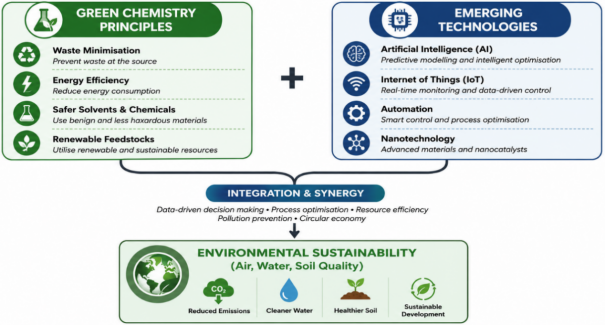
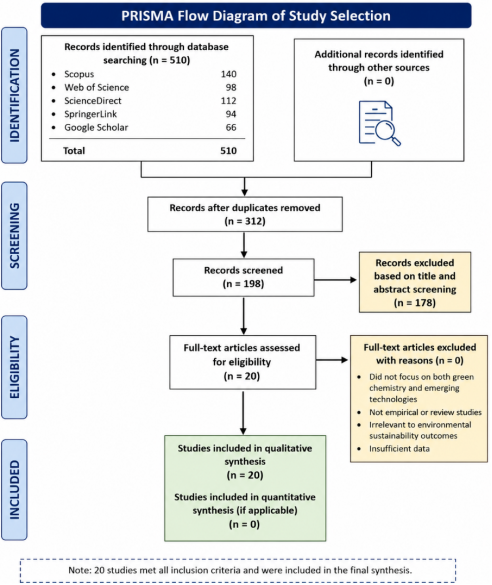
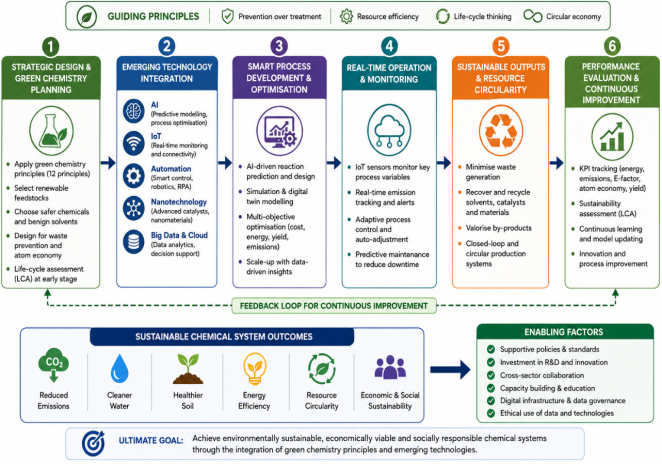
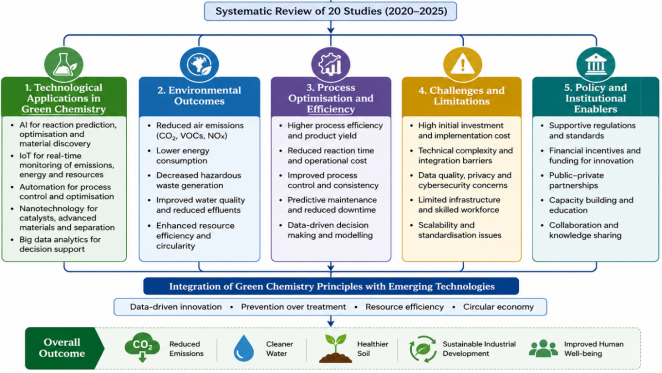




 Share This Article
 Twitter
 Linked In
 Facebook