Research Article | | Peer-Reviewed

Luminescence Properties of Single-Component Broadband White Light Phosphors Based on Eu2+-Doped Ba7F12Cl2 Host

Received: 12 July 2026     Accepted: 24 August 2026     Published: 4 September 2026
Views:       Downloads:
Abstract

With the continuous advancement of lighting technology, people’s pursuit of lighting quality has gradually shifted from simple power and brightness indicators to high-quality, healthy lighting and solar-like illumination. White light phosphors co-doped with multiple ions suffer from drawbacks including complicated ratio regulation, energy transfer loss, and thermally induced color drift, while single-component luminescent materials activated by a single rare-earth ion can effectively avoid the above deficiencies. In this work, a series of Ba7-xF12Cl2: xEu2+ fluorochloride phosphors were successfully synthesized via a high-temperature solid-state reaction method. Their crystal structures, fluorescence spectra, thermal stability, and CIE chromaticity coordinates were systematically characterized. X-ray diffraction (XRD) results confirm that all as-prepared samples are pure phases, and Eu2+ doping does not destroy the crystal structure of the host matrix. Under excitation by near-ultraviolet light, the samples exhibit broad-band white light emission centered at 430 nm with a full width at half maximum (FWHM) of approximately 90 nm, which originates from the characteristic 4f65d1 → 4f7 transition of Eu2+. Thermal stability measurements reveal that the luminescence intensity of the samples remains above 95% of the room-temperature value at 85°C. The obtained results demonstrate that Ba7F12Cl2: Eu2+ phosphors are promising single-component white light-emitting materials excited by near-ultraviolet light.

Published in American Journal of Chemical Engineering (Volume 14, Issue 5)
DOI 10.11648/j.ajche.20261405.11
Page(s) 156-162
Creative Commons

This is an Open Access article, distributed under the terms of the Creative Commons Attribution 4.0 International License (http://creativecommons.org/licenses/by/4.0/), which permits unrestricted use, distribution and reproduction in any medium or format, provided the original work is properly cited.

Copyright

Copyright © The Author(s), 2026. Published by Science Publishing Group

Keywords

Ba7F12Cl2:Eu2+, Rare Earth Luminescent Materials, High-Temperature Solid-State Reaction Method, White Light-Emitting Diodes (WLEDs)

1. Introduction
With the rapid development of the lighting industry, people’s demands for lighting products are no longer limited to basic brightness. High-quality light sources featuring healthy illumination, a high color rendering index, and simulated natural sunlight have become the mainstream trend in industrial development . Commercial white light-emitting diodes (WLEDs) usually achieve white light output by mixing multiple phosphors or co-doping multiple rare-earth ions. Nevertheless, such systems possess obvious inherent disadvantages: it is hard to precisely control the proportion of different luminescent ions, energy transfer between ions will cause luminous loss, and severe color drift tends to occur under high-temperature working conditions, which severely limits the long-term operational stability of devices . In comparison, realizing white light emission in a single host with only one type of activator ion can fundamentally simplify the composition of phosphors and eliminate the inherent defects of multi-ion systems. Accordingly, broadband white luminescent materials activated by a single rare-earth ion have become an important research direction in the field of luminescent materials .
As a classic activator with broadband emission, Eu2+ has 5d–4f transitions that are extremely sensitive to the external crystal field environment. Fluorochloride mixed halide hosts contain coordination fields of both F and Cl anions, which can form various inequivalent cation lattice sites in the crystal lattice and induce Eu2+ to generate superimposed multi-band broadband emission. Therefore, fluorochlorides are ideal host materials for constructing single-ion white light phosphors. Barium-based fluorochlorides have low phonon energy, simple synthesis routes, and remarkable compatibility with near-ultraviolet excitation light sources . To date, few studies have reported rare-earth-doped luminescence based on the Ba7F12Cl2 fluorochloride host. The lattice site occupation behavior of Eu2+, the regulation rule of broadband white luminescence and thermal stability in this system remain to be systematically investigated .
In view of the above reasons, Eu2+-doped Ba7F12Cl2 phosphor is prepared by the high-temperature solid-state reaction method in this paper. Multiple characterization techniques including X-ray diffraction (XRD), steady-state photoluminescence spectroscopy, temperature-dependent luminescence tests and CIE chromaticity coordinates are utilized to systematically explore the effects of Eu2+ doping on phase structure, broadband white emission and thermal stability, and the luminescence mechanism of single-center Eu2+ broadband white light under near-ultraviolet excitation is further analyzed. This work expands the family of barium fluorochloride luminescent hosts and offers a new strategy for the design and fabrication of single-component healthy white phosphors excited by near-ultraviolet light.
2. Experimental Section
2.1. Materials and Methods
A single-component broadband white-emitting Ba7F12Cl2: 0.009Eu2+ phosphor was successfully synthesized via a conventional high-temperature solid-state reaction method. Barium carbonate BaCO3(A.R.), ammonium chloride NH4Cl(A.R.), ammonium fluoride NH4F(A.R.) and europium oxide Eu2O3(99.99%) were selected as raw materials and accurately weighed according to the designed stoichiometric ratio. The well-weighed mixtures were fully ground in an agate mortar for 30 min to achieve uniform component mixing. The homogeneous powders were transferred into an alumina ceramic crucible and calcined in a muffle furnace under a carbon powder reducing atmosphere with a two-stage sintering procedure: the samples were firstly pre-sintered at 360°C for 0.5 h, and then heated up to 800°C and held for 2 h. After the completion of chemical reaction, the crucible was cooled naturally to room temperature inside the furnace to avoid lattice defects caused by rapid quenching. The cooled bulk samples were reground for another 30 min to form fine homogeneous powders. Ba7F12Cl2: 0.009Eu2+ phosphor was ultimately obtained.
2.2. Characterization Techniques
The crystal phase of all phosphor samples was identified by an X-ray diffractometer (XRD, SmartLab 3 kW, Rigaku) with Cu Kα radiation (λ = 0.1541 nm). The instrument parameters were set as: operating voltage of 40 kV, operating current of 40 mA, scanning range of 10°-90° and scanning rate of 0.02°/s. A phosphor excitation spectrum and thermal quenching analysis system (EX1000, Everfine) was utilized to measure the temperature-dependent luminescence spectra, CIE chromaticity coordinates, correlated color temperature and color purity of the samples. The photoluminescence excitation and emission spectra were recorded via a steady-state and transient fluorescence spectrometer (FLS980, Edinburgh Instrument). The absolute photoluminescence quantum yield was measured by an absolute quantum efficiency measurement system (Quantaurus-QY, Hamamatsu). Ultimately, the synthesized Ba7F12Cl2: 0.009Eu2+ phosphor was mixed with commercial red-emitting (Ca, Sr)AlSiN3: Eu2+ phosphor and packaged on a commercial 365 nm near-ultraviolet LED chip to fabricate WLED devices, and the comprehensive optoelectronic performances of the assembled WLEDs were further characterized.
3. Results and Discussion
3.1. Phase Analysis
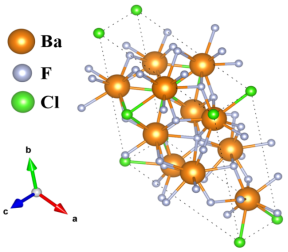
Figure 1 shows that Ba7F12Cl2 compound belongs to the hexagonal crystal system and crystallizes in the non-centrosymmetric hexagonal space group P-6 at room temperature. Its unit cell parameters are determined as a = b = 10.6589(2) Å and c = 4.1752(6) Å, which are slightly smaller than those of the standard hexagonal Ba7F12Cl2 phase (a = b = 10.6844 Å, c = 4.1829 Å). This phenomenon can be attributed to the smaller ionic radius of Eu2+ (0.109 nm) compared with Ba2+ (0.135 nm). According to the substitution principle of similar ionic radii, it can be preliminarily concluded that Eu2+ ions replace Ba2+ cation sites and incorporate into the Ba7F12Cl2 crystal lattice. Moreover, low-concentration Eu2+ doping does not change the crystal structure of the host matrix .
Figure 1. Crystal structure of Ba7F12Cl2.
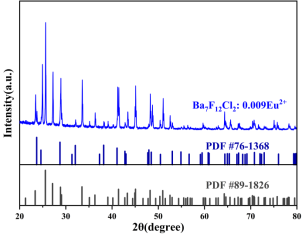
Figure 2. Ba7F12Cl2: 0.009Eu2+ XRD pattern of phosphor.
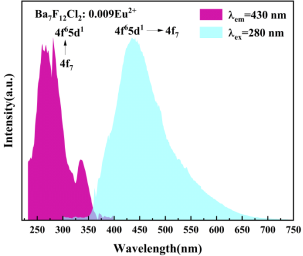
Figure 2 displays the X-ray diffraction pattern of Ba7F12Cl2: 0.009Eu2+ phosphor. By comparison with the standard card of Ba7F12Cl2 (PDF#89-1826) and BaFCl (PDF#76-1368), nearly all diffraction peaks of the as-synthesized sample are well matched with the standard Ba7F12Cl2 phase, while only a weak set of diffraction peaks correspond to the impurity BaFCl phase. The results confirm that the obtained sample is dominated by the pure Ba7F12Cl2 main phase with a tiny amount of BaFCl impurity. It demonstrates that Eu2+ ions successfully substitute for Ba2+ ions in the host lattice at low doping content, and the crystal framework of Ba7F12Cl2 host remains basically unchanged.
3.2. Fluorescent Spectra
Two spectra of Ba7F12Cl2: 0.009Eu2+ phosphor were measured in the range of 225-750 nm, as shown in Figure 3, which are the excitation spectrum (magenta curve) at a monitoring wavelength of 430 nm and the emission spectrum (light cyan curve) at an excitation wavelength of 280 nm. The broad excitation band ranging from 240 to 360 nm originates from the electronic transition of Eu2+ from the ground 4f7 state to the excited 4f65d1 state . This absorption band covers deep-ultraviolet and near-ultraviolet regions (250–360 nm), confirming that the phosphor can be efficiently pumped by commercial near-UV LED chips. Multiple split sub-peaks are observed in the excitation spectrum profile, which arise from inequivalent Ba2+ crystallographic sites in the host lattice. Diverse crystal field environments split the 5d energy levels of Eu2+, generating several discrete absorption bands .
Figure 3. Excitation and emission spectra of Ba7F12Cl2: 0.009Eu2+ phosphor.
Upon excitation at 280 nm, a broad visible emission band peaking at 430 nm is detected, extending across 350–550 nm. This broadband emission is assigned to the parity-allowed 4f65d1 → 4f7 transition of Eu2+. The ultra-wide emission profile stems from multiple inequivalent cation sites occupied by Eu2+; distinct crystal field strengths at different lattice positions produce overlapping sub-bands, which combine to form a continuous broad band emission without co-doping other rare-earth activators .
The wide excitation coverage in the near-UV region together with continuous broadband visible emission demonstrates that this barium fluorochloride phosphor is a promising single-component white-light emitter for near-UV-excited WLEDs, and the spectral results validate the strategy of realizing single-activator white luminescence via multi-site Eu2+ doping .
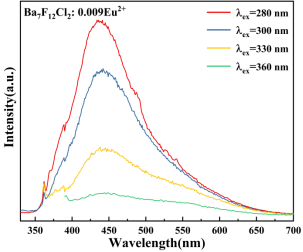
Figure 4. Excitation spectra of Ba7F12Cl2: 0.009Eu2+ phosphor under different excitation wavelengths.
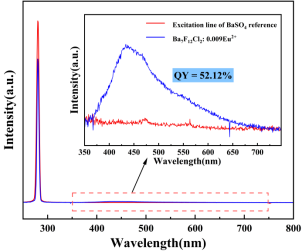
Figure 4 displays the photoluminescence emission spectra of the Ba7F12Cl2: 0.009Eu2+ phosphor recorded under four distinct near-ultraviolet excitation wavelengths of 280 nm, 300 nm, 330 nm and 360 nm. All spectra retain identical broadband profiles with emission maxima fixed at 430 nm, which confirms that the intrinsic luminescence origin from the 4f65d1 → 4f7 transition of Eu2+ remains unchanged regardless of excitation wavelength . No obvious shift of the peak position is observed across all excitation conditions, indicating that the crystal field environment around Eu2+ activators is stable and free from excitation-wavelength-dependent distortion.
Nevertheless, the luminescence intensity exhibits a remarkable declining trend as the excitation wavelength increases. The maximum emission intensity is achieved under 280 nm excitation, followed by 300 nm, 330 nm, and the weakest intensity is obtained at 360 nm. This tendency is consistent with the characteristic absorption range shown in the previous excitation spectrum: the phosphor possesses the strongest light absorption capacity within the 270–290 nm deep ultraviolet region, while absorption efficiency gradually weakens when the excitation wavelength shifts toward longer near-ultraviolet bands .
Notably, even when excited at 360 nm, the sample still maintains considerable broadband white emission covering the whole visible region. This feature demonstrates that the Ba7F12Cl2: Eu2+ phosphor can be effectively driven by a wide range of commercial near-UV LED chips spanning 280–360 nm. Combined with the CIE chromaticity coordinate variation trend mentioned above, tuning the excitation wavelength can rationally adjust the luminous color of the phosphor, which provides extra flexibility for optimizing the optical performance of near-UV pumped WLED devices .
3.3. Quantum Yield
Fluorescence quantum yield (QY) is a crucial parameter for evaluating the performance of phosphors. The spectrum of Ba7F12Cl2: 0.009Eu2+, measured with an integrating sphere under excitation at 350 nm, is shown in Figure 5. The following formula (1) can calculate the QY value of this phosphor :
QY=LSER-ES(1)
where LS represents the luminescence spectrum of the Ba7F12Cl2: 0.009Eu2+, ES represents the excitation spectrum of the sample, ER represents the excitation spectrum of reference BaSO4, and <i>♒</i>QY is the photoluminescence quantum efficiency. The calculated QY value is 52.12%, which is lower than Y3Al5O12: Ce3+ phosphors (QY = 97%) for commercial products and (Sr, Ca)AlSiN3: Eu2+ phosphors (QY = 92%) for LED application . Even so, the QY recorded for the Ba7F12Cl2:0.009Eu2⁺ luminescent powder remains far inferior to those of commercially available phosphors, which suggests that this phosphor possesses excellent practical application potential once its luminescence performance is further optimized.
Figure 5. Excitation line of BaSO4 and emission spectrum of Ba7F12Cl2: 0.009Eu2+ phosphor collected by using an integrating sphere (λex = 280 nm). The inset shows a magnification of the emission spectrum.
3.4. CIE Color Coordinate and Thermal Quenching Analysis
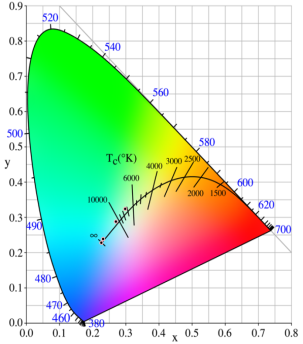
The color coordinate values describe the position of the phosphor within the color space, enabling researchers to choose the most suitable phosphor for particular applications. Figure 6 presents the CIE chromaticity coordinates of the Ba7F12Cl2: 0.009Eu2+ phosphor measured under four distinct excitation wavelengths. As the excitation wavelength increases, the corresponding chromaticity coordinate points gradually shift toward the white light region on the Planckian locus. This trend verifies that the emission color of the Ba7F12Cl2: 0.009Eu2+ phosphor can be effectively tuned to a certain extent by adjusting the near-ultraviolet excitation wavelength.
The color purity of phosphors is a crucial metric for assessing the saturation of their emitted light color, calculable via the subsequent formula (2) :
Colorpurity=x-xi2+y-yi2xd-xi2+yd-yi2×100%(2)
where (xi, yi), (xd, yd) and (x, y) represent the illumination point, dominant wavelength, and the chromaticity coordinates of phosphors, respectively. In this work, the values of (xi, yi) and (xd, yd) are (0.333, 0.333) and (0.678, 0.320), respectively. Therefore, combined with the emission spectrum data of the phosphor, the values of color purity of the Ba7F12Cl2: 0.009Eu2+ were calculated and displayed in Table 1.
Thermal stability tests show that the phosphor retains more than 95% of its initial room-temperature luminescence intensity at 85°C, demonstrating excellent thermal stability sufficient for practical commercial lighting applications.
Figure 6. The chromaticity coordinates of Ba7F12Cl2: 0.009Eu2+ sample at various excitation wavelengths.
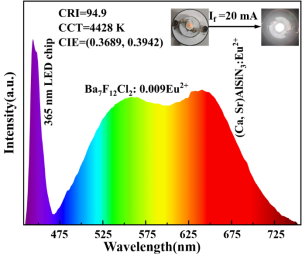
Table 1. The CIE chromaticity coordinates, color purity of Ba7F12Cl2: 0.009Eu2+ sample at various excitation wavelengths.

Ba7F12Cl2: 0.009Eu2+

CIE (x, y)

Color purity

280 nm

(0.2273, 0.2278)

45.9%

290 nm

(0.2320, 0.2383)

43.2%

320 nm

(0.2656, 0.2806)

27.6%

360 nm

(0.2976, 0.3200)

13.1%

3.5. LED Packaging
Figure 7 illustrates the WLED device fabricated by combining white phosphor Ba7F12Cl2: 0.009Eu2+ and red phosphor (Sr, Ca)AlSiN3: Eu2+ in a specific ratio, followed by encapsulation and excitation using a 365 nm UV LED chip. In addition, the packaged LED device emits bright white light, with CIE chromaticity coordinates, correlated color temperature (CCT) and color rendering index (CRI) of (0.3689, 0.3942), 4428 K and 94.9, respectively. The experiment demonstrates that the WLED device emits bright white light when a forward current of 20 mA is applied. The device delivers high brightness and stable color performance, demonstrating great potential for practical illumination applications.
Figure 7. The visible light spectrum and luminescence of Ba7F12Cl2: 0.009Eu2+ packaged WLED.

4. Conclusions
In this work, a single-component fluorochloride white-emitting Ba7F12Cl2:Eu2+ phosphor was successfully synthesized via the high-temperature solid-state reaction method. The crystal structure, optical spectroscopic characteristics, luminescence properties and thermal stability of the as-prepared materials were systematically investigated. XRD results reveal that all as-synthesized samples exhibit a pure crystalline phase. The Ba7F12Cl2 host retains its complete crystal framework at suitable Eu2+ doping levels, which proves that this fluorochloride matrix has outstanding structural tolerance toward rare-earth ion doping. Upon near-ultraviolet excitation, the Ba7F12Cl2:Eu2+ phosphor exhibits a broadband white emission band centered at 430 nm with a FWHM of 90 nm, which originates from the characteristic 4f65d1 → 4f7 electronic transition of Eu2+ ions. The realization of single-activator dominated broadband white emission effectively overcomes the inherent drawbacks of conventional multi-ion co-doped white light systems, including complex component ratio regulation, inevitable luminescence energy loss and poor color stability. Thermal stability characterization demonstrates that the luminescence intensity of the phosphor at 85°C remains higher than 95% of its room-temperature baseline value. The optimal Ba7F12Cl2:Eu2+ phosphor possesses an absolute photoluminescence quantum yield of 52.12%. Furthermore, the WLED device fabricated with this phosphor emits bright natural white light with a high color rendering index (CRI = 94.9) and a correlated color temperature of 4428 K. Overall experimental results verify that the newly developed barium fluorochloride Ba7F12Cl2 host can efficiently realize broadband white emission of Eu2+. As a high-performance single-component white phosphor with promising prospects for near-UV-excited WLEDs, this material offers a new host candidate and rational design strategy for developing healthy sunlight-simulating luminescent materials.
Abbreviations

XRD

X-ray Diffraction

FWHM

Full Width at Half Maximum

WLEDs

White Light-Emitting Diodes

QY

Quantum Yield

CCT

Correlated Color Temperature

CRI

Color Rendering Index

Author Contributions
Xianguo Meng: Conceptualization, Resources, Data curation, Supervision
Qingfeng Tu: Investigation, Experiment, Software, Writing-original draft
Yuxuan Wei: Methodology, Investigation, Experiment, Formal Analysis
Qiulin Liang: Experiment, Formal Analysis
Funding
This work was supported by the Scientific Research Project for High-Level Talents of Beibu Gulf University (23KYQD26).
Data Availability Statement
The data supporting the outcome of this research work has been reported in this manuscript.
Conflicts of Interest
The authors declare no conflicts of interest.
Appendix
Appendix should be placed at the end of the paper, numbered in Arabic numerals, and cited in the text. If the Appendix includes one or more figures, please continue the consecutive numbering from the main text.
References
[1] Wang, F., Pan, H., Mao, W., Wang, D. Optimizations of luminescent materials for white light emitting diodes toward healthy lighting [J]. Heliyon, 2024, 10(14): e34795.
[2] Ismail, M. M., Abdelglil, M. I., Ahmed, M. S., and Abo-Mosallam, H. A. Ce3+ as a single-phase white-emitting phosphor for near-UV white LEDs applications [J]. Ceramics International, 2026, 53(15): 27770-27775.
[3] Li, X. W., Xu, H. L., Xia, X. M., Xie, F. Y., Zhong, S. L., and Xu, D. K. One-step synthesis of Sc2W3O12: Eu3+ phosphors with tunable luminescence for WLED [J]. Ceramics International, 2019, 45(8): pp. 10461–10467.
[4] Han, Z., Wang, X. Y., Fu, B., Yan, H. K., and Liao, J. S. Novel double molybdate LiLu (MoO4)2: Sm3+ red phosphors with excellent thermal stability for white LEDs [J]. Journal of Luminescence, 2022, 252: 119405.
[5] Tu, Q. F., Wang, S. B., Xu, Y. C., Wei, Y. X., Du, Y. X., Chen, Z. Y., Liu, Z. F. Synthesis and luminescent properties of novel double perovskite Ca2SrWO6: Eu3+ red phosphor [J]. Journal of Materials Science: Materials in Electronics, 2026, 37(13): 994.
[6] Hagemann, H., Bill, H., Rey, J. M., Kubel, F., Calame, L., Lovy, D. Europium-Doped Ba7F12Cl2, a Single Component Near-UV Excited Tunable White Phosphor [J]. Journal of Physical Chemistry C, 2015, 119(1): pp. 141-147.
[7] Manamperi, N. T., Perera, S. S., and Rabuffetti, F. A. Luminescence of BaFBr nanoplates codoped with Eu2+/3+ [J]. Dalton Transactions, 2026, 55(21): pp. 8314-8322.
[8] Dorenbos P. The 5d level positions of the trivalent lanthanides in inorganic compounds [J]. Journal of Luminescence, 2000, 91(3-4): pp. 155-176.
[9] Hasler, C., Hauser, A., Olchowka, J., and Hagemann, H. Energy transfer between different Eu2+ ions in the white phosphor Ba7F12Cl2: Eu2+ [J]. Journal of Luminescence, 2021, 233(0): 117866.
[10] Liang, Q. H., Shi, Y., Ma, W. J., Yang, X. M., and Li, Z. Hydrothermal synthesis and characterization of Ba7F12Cl2: Eu2+ for X-ray imaging plates [J]. Imaging Science and Photochemistry, 2014, 32(2): pp. 1674-0475.
[11] Zhong, J. M., Zhao, W. R., Lan, L. C., Wang, J. Q., Chen, J. H., and Wang, N. H. Enhanced emission from Li2CaSiO4: Eu2+ phosphors by doping with Y3+ [J]. Journal of Alloys and Compounds, 2014, 592: pp. 213–219.
[12] Geng, X., Xie, Y., Ma, Y. Y., Liu, Y. Y., Luo, J. M., Wang, J. X., Yu, R. J., Deng, B., and Zhou, W. M. Abnormal thermal quenching and application for w-LEDs: Double perovskite Ca2InSbO6: Eu3+ red-emitting phosphor [J]. Journal of Alloys and Compounds, 2020, 847: 156249.
[13] Gorrotxategi, P., Consonni, M., and Gasse, A. Optical efficiency characterization of LED phosphors using a double integrating sphere system [J]. Journal of Solid State Lighting, 2015, 2: 1.
[14] Li, Y., Hu, L. L., Yang, B. B., Shi, M. M., and Zou, J. Thermal stability and reliability studies of (Sr, Ca) AlSiN3: Eu2+ phosphors for LED application [J]. Journal of Materials Science: Materials in Electronics, 2017, 28: 19155–19163.
[15] Zhang, X., Cui, R. R., Guo, K. X., Zhang, M., Zhang, J., and Deng, C. Y. Luminescence properties of Ca2GdNbO6: Sm3+, Eu3+ red phosphors with high quantum yield and excellent thermal stability for WLEDs [J]. Ceramics International, 2023, 49: pp. 15402–15412.
Cite This Article
  • APA Style

    Meng, X., Tu, Q., Wei, Y., Liang, Q. (2026). Luminescence Properties of Single-Component Broadband White Light Phosphors Based on Eu2+-Doped Ba7F12Cl2 Host. American Journal of Chemical Engineering, 14(5), 156-162. https://doi.org/10.11648/j.ajche.20261405.11

    Copy | Download

    ACS Style

    Meng, X.; Tu, Q.; Wei, Y.; Liang, Q. Luminescence Properties of Single-Component Broadband White Light Phosphors Based on Eu2+-Doped Ba7F12Cl2 Host. Am. J. Chem. Eng. 2026, 14(5), 156-162. doi: 10.11648/j.ajche.20261405.11

    Copy | Download

    AMA Style

    Meng X, Tu Q, Wei Y, Liang Q. Luminescence Properties of Single-Component Broadband White Light Phosphors Based on Eu2+-Doped Ba7F12Cl2 Host. Am J Chem Eng. 2026;14(5):156-162. doi: 10.11648/j.ajche.20261405.11

    Copy | Download

  • @article{10.11648/j.ajche.20261405.11,
      author = {Xianguo Meng and Qingfeng Tu and Yuxuan Wei and Qiulin Liang},
      title = {Luminescence Properties of Single-Component Broadband White Light Phosphors Based on Eu2+-Doped Ba7F12Cl2 Host},
      journal = {American Journal of Chemical Engineering},
      volume = {14},
      number = {5},
      pages = {156-162},
      doi = {10.11648/j.ajche.20261405.11},
      url = {https://doi.org/10.11648/j.ajche.20261405.11},
      eprint = {https://article.sciencepublishinggroup.com/pdf/10.11648.j.ajche.20261405.11},
      abstract = {With the continuous advancement of lighting technology, people’s pursuit of lighting quality has gradually shifted from simple power and brightness indicators to high-quality, healthy lighting and solar-like illumination. White light phosphors co-doped with multiple ions suffer from drawbacks including complicated ratio regulation, energy transfer loss, and thermally induced color drift, while single-component luminescent materials activated by a single rare-earth ion can effectively avoid the above deficiencies. In this work, a series of Ba7-xF12Cl2: xEu2+ fluorochloride phosphors were successfully synthesized via a high-temperature solid-state reaction method. Their crystal structures, fluorescence spectra, thermal stability, and CIE chromaticity coordinates were systematically characterized. X-ray diffraction (XRD) results confirm that all as-prepared samples are pure phases, and Eu2+ doping does not destroy the crystal structure of the host matrix. Under excitation by near-ultraviolet light, the samples exhibit broad-band white light emission centered at 430 nm with a full width at half maximum (FWHM) of approximately 90 nm, which originates from the characteristic 4f65d1 → 4f7 transition of Eu2+. Thermal stability measurements reveal that the luminescence intensity of the samples remains above 95% of the room-temperature value at 85°C. The obtained results demonstrate that Ba7F12Cl2: Eu2+ phosphors are promising single-component white light-emitting materials excited by near-ultraviolet light.},
     year = {2026}
    }
    

    Copy | Download

  • TY  - JOUR
    T1  - Luminescence Properties of Single-Component Broadband White Light Phosphors Based on Eu2+-Doped Ba7F12Cl2 Host
    AU  - Xianguo Meng
    AU  - Qingfeng Tu
    AU  - Yuxuan Wei
    AU  - Qiulin Liang
    Y1  - 2026/09/04
    PY  - 2026
    N1  - https://doi.org/10.11648/j.ajche.20261405.11
    DO  - 10.11648/j.ajche.20261405.11
    T2  - American Journal of Chemical Engineering
    JF  - American Journal of Chemical Engineering
    JO  - American Journal of Chemical Engineering
    SP  - 156
    EP  - 162
    PB  - Science Publishing Group
    SN  - 2330-8613
    UR  - https://doi.org/10.11648/j.ajche.20261405.11
    AB  - With the continuous advancement of lighting technology, people’s pursuit of lighting quality has gradually shifted from simple power and brightness indicators to high-quality, healthy lighting and solar-like illumination. White light phosphors co-doped with multiple ions suffer from drawbacks including complicated ratio regulation, energy transfer loss, and thermally induced color drift, while single-component luminescent materials activated by a single rare-earth ion can effectively avoid the above deficiencies. In this work, a series of Ba7-xF12Cl2: xEu2+ fluorochloride phosphors were successfully synthesized via a high-temperature solid-state reaction method. Their crystal structures, fluorescence spectra, thermal stability, and CIE chromaticity coordinates were systematically characterized. X-ray diffraction (XRD) results confirm that all as-prepared samples are pure phases, and Eu2+ doping does not destroy the crystal structure of the host matrix. Under excitation by near-ultraviolet light, the samples exhibit broad-band white light emission centered at 430 nm with a full width at half maximum (FWHM) of approximately 90 nm, which originates from the characteristic 4f65d1 → 4f7 transition of Eu2+. Thermal stability measurements reveal that the luminescence intensity of the samples remains above 95% of the room-temperature value at 85°C. The obtained results demonstrate that Ba7F12Cl2: Eu2+ phosphors are promising single-component white light-emitting materials excited by near-ultraviolet light.
    VL  - 14
    IS  - 5
    ER  - 

    Copy | Download

Author Information