Research Article | | Peer-Reviewed

Effect of Hydromethanolic Leaf Extract of Cordia Africana (Boraginaceae) “Wanza” on Blood Glucose Level and Serum Electrolytes in Streptozotocin-Induced Diabetic Mice

Received: 29 December 2025     Accepted: 9 January 2026     Published: 22 July 2026
Views:       Downloads:
Abstract

Diabetes mellitus is a heterogeneous group of disorders characterized by hyperglycemia due to an absolute or relative deficit in insulin production or action. Many plant species have been screened for their pharmacological properties in the treatment of diabetes mellitus. Cordia africana is a traditional medicinal plant used to treat various health problems. The objective of this study is to evaluate the effect of hydromethanolic leaf extract of Cordia africana (Wanza) on blood glucose levels, serum electrolytes, and α-amylase inhibitory activities in Streptozotocin-induced diabetic mice. The method used is an experimental study conducted on streptozotocin-induced diabetic male mice. The mice were organized into 6 groups, each having five members: normal mice (negative control), diabetics treated with distilled water (positive control), diabetics treated with glibenclamide (standard control), and the other three groups were diabetic mice treated with different doses of leaf extract. Their fasting blood sugar was measured on the 0th, 7th, and 14th days of the experiment. Serum electrolytes (Na+, K+, Cl, and Ca2+) had also been determined on the 14th day of the experiment. The antioxidant properties and in vitro α-Amylase inhibitory actions of the extract had also been evaluated. The acute toxicity profile of the extract was assessed in 5 randomly selected female mice. The results of the study revealed that the hydromethanolic leaf extract of Cordia africana has a significant blood glucose-lowering effect. On the 7th and 14th day, the mean blood glucose levels of diabetic mice treated with 5mg glibenclamide, 200 mg/kg, and 400 mg/kg extract significantly diminished. Deranged serum electrolytes (Na+, K+, Cl, and Ca2+) and reduced body weight were significantly improved at both doses of the extract, as well as in 5mg glibenclamide-treated mice. Besides, good antioxidant and α-amylase inhibitory activity were obtained from the in vitro lab tests. In conclusion, the results of this study exhibited that the hydromethanolic leaf extract of Cordia africana remarkably reduces blood sugar and body weight in streptozotocin-induced diabetic mice. Likewise, it improves deranged serum electrolytes. The extract also inhibits α-amylase activities.

Published in American Journal of Laboratory Medicine (Volume 11, Issue 3)
DOI 10.11648/j.ajlm.20261103.11
Page(s) 51-63
Creative Commons

This is an Open Access article, distributed under the terms of the Creative Commons Attribution 4.0 International License (http://creativecommons.org/licenses/by/4.0/), which permits unrestricted use, distribution and reproduction in any medium or format, provided the original work is properly cited.

Copyright

Copyright © The Author(s), 2026. Published by Science Publishing Group

Keywords

Blood Glucose, A-amylase Inhibitor, Antioxidant, Cordia Africana, Serum Electrolyte

1. Introduction
Diabetes mellitus (DM) is a heterogeneous group of disorders characterized by hyperglycemia due to an absolute or relative deficit in insulin production or action .
Currently, it is one of the most prevalent metabolic disorders that affects around 422 million people worldwide. Each year, 1.5 million deaths are directly attributed to diabetes . In 2016, about 1.6 million deaths were caused by diabetes mellitus worldwide. It affected 19.8 million people in Africa in 2013, and mortality due to diabetes in the same year was over 0.5 million, of which 75% of deaths occurred in individuals older than 60 years. The occurrence of diabetes in Africa is projected to rise to 41.5 million by the year 2035 .
In the pathogenesis of diabetes mellitus, oxidative stress plays a fundamental role. Oxidative stress is a phenomenon caused by an imbalance between the production and detoxification of reactive oxygen species (ROS) and the accumulation of these reactive products in the cells .
Metabolic disorders generate reactive oxygen species (ROS) such as hydrogen peroxide and superoxide anions , leading to oxidative stress, which harmfully affects insulin activity through several interacting pathways . Their accumulation could deteriorate the function of β-cells of the pancreas, resulting in the reduced release of insulin .
Diabetes Mellitus has many complications. Serum electrolyte disturbance is one of the complications of diabetes mellitus. These disturbances are particularly common in decompensated DM, in the elderly, and in those with renal impairment. Different factors in diabetes cause electrolyte disturbance. Hyperglycemia increases serum osmolality, resulting in the movement of water and electrolytes out of the cells and subsequently results in a reduction of serum sodium levels ([Na+]) by dilution . Drug regimens for diabetes, such as loop diuretics and thiazides, may also be associated with electrolyte disturbance. Diabetic ketoacidosis and its management also cause hypokalemia and hyponatremia .
For their survival, access to affordable treatment is crucial to those with diabetes . Even though antidiabetic medicines are present in the market, their affordability, accessibility, and side effects are a huge concern. Therefore, herbal drugs and preparations from natural plant sources with minimal side effects have become the interest of the ethnobotanical community . The phytochemical constituents derived from these medicinal plants, having anti-diabetic activity, are polysaccharides, alkaloids, peptidoglycan, guanidine, glycosides, carbohydrates, galactomannan gum, terpenoids, hypoglycin, amino acids, glycopeptides, inorganic ions, and steroids. These molecules can communicate with many metabolic cascades, which directly or indirectly affect the level of blood glucose in the human body .
Cordia africana is an early colonizer in the forest and is often found along forest margins . Its scientific classification is as follows: Kingdom: Plantae; Class: Angiospermae; Subclass: Eudicots; Superorder: Asteridae; Order: Boraginales; Family: Boraginaceae; Subfamily: Cordioideae; Genus: Cordia; Species: africana. Its scientific name is Cordia africana . The fruits are edible, and this plant has various important pharmacological properties, including antioxidant, cytotoxicity, anti-inflammatory, antihelmintic, antimicrobial, antinociceptive, and others . Other species of Cordia have been found to have anti-diabetic effects. This study aimed to evaluate the effect of the leaf extract of Cordia africana on diabetes mellitus and serum electrolytes in streptozotocin-induced diabetic mice and its in vitro α-amylase inhibitory and antioxidant effects.
2. Methods and Materials
2.1. Study Design, Study Area, Study Period, Drugs, Reagents, and Instruments
The laboratory-based experimental study was conducted on Swiss albino mice from May to September 2022 at the University of Gondar's Biochemistry, Pharmacology, and Molecular Biotechnology laboratories.
To conduct this study, different types of drugs, reagents, and instruments were used. These were: glibenclamide (Sanof Aventis, USA), streptozotocin and DNSA (Sisco Research Laboratories Pvt. Ltd, India), 3,5-dinitrosalicylic acid, starch, pellet, sodium chloride, sodium hydroxide, potassium sodium tartrate tetra hydrate, disodium hydrogen phosphate and sodium dihydrogen phosphate (BDH Laboratory Supplies Ltd, England), DPPH (Sigma Aldrich, Germany), citric acid (Lab tech chemicals, India), ascorbic acid (Lab tech chemicals, India), 5% glucose solution (Munchen, Germany), methanol absolute (Nice Chemical, India), alpha amylase (Blulux Laboratories Pvt. Ltd., Faridaban, India), acarbose (Bayer, Germany), rotary evaporator (Yamato, Japan), lyophilizer (Labfreez, China), refrigerator, oven (MeditMedizin Technik Germany), deep freezer (Labfreez instrument group, Germany), careSens glucometer (Seochu/gu,seoul 06646/Koria) and strips, pH meter (Bante Instruments, UK), electrical mill, volumetric flask, spectrophotometer (Agilent Technologies, malaysia, Jenway medel 6500), desiccator, glove, Whitman filter paper No. 1, gavage, polypropylene cages, and digital analytical balance (EPH-400 Abron Exports).
2.2. Plant Collection, Authentication, and Preparation of Plant Extract
The fresh leaves of Cordia africana were collected from Gondar town, Ethiopia, which is located 750 km away from Addis Ababa at a latitude of 12° 36' 10.8648'' N, a longitude of 37° 27' 7.6752'' E, at an elevation of 2110.74 meters (6925.0 feet) above sea level. The botanical identification and authentication of the plant materials were performed at the University of Gondar, Biology Department, by Dr. Getinet Masresha with specimen number 01/AN/2022 and deposited in the Herbarium, University of Gondar, Gondar, Ethiopia.
Firstly, the sample leaves were visually examined for any kind of distortion, discoloration, spores, or damage. Leaves were meticulously washed with distilled water to get rid of dust. Then, dried at 25°C in the shade with optimum ventilation. The dried plant material was turned into powder by the electrical mill. Then, the coarse powdered plant materials had been macerated in 80% methanol for 72 hrs, and then the extracts were filtered by using Whitman filter paper No. 1. The marc had been re-macerated two times with fresh solvent, for 72 hrs. The filtrates obtained from the successive maceration were concentrated under reduced pressure using a rotary evaporator . The semi-dried residues are taken into the deep freezer and frozen. Then, dried out utilizing a lyophilizer to eliminate the solvent residue. The dried leaf extracts were kept in a refrigerator at 4°C until further experiments .
2.3. Selection, Preparation of Experimental Animals, Grouping, and Dosing of Animals
Although diabetes affects both sexes, many basic science studies on STZ-induced diabetes prefer using male mice . From the Ethiopian Public Health Institute, Addis Ababa, Ethiopia, healthy male Swiss albino mice aged from 6 to 10 weeks and weighing 25 to 35 g were purchased. The animals were kept in polypropylene cages, maintained under standard conditions (12 hours’ light and 12 hours’ dark cycle). They were fed a standard commercial pellet diet and water ad libitum . Animals had been acclimatized to the laboratory conditions for a week before the start of the experiment. Animal handling and care were taken throughout the experiment according to international laboratory animal use and care guidelines .
The grouping was random in the diabetic mice model. It was divided into six groups. Each group has five members.
Normal mice given (0.5 mL/kg body weight) of distilled water = Group I: Negative control.
Diabetic mice given (0.5 mL/kg body weight) of distilled water = Groups II: Positive control.
Diabetic mice treated with standard medication, Glibenclamide (5 mg/kg of body weight) for two weeks orally = Group III: Standard control.
Diabetic mice treated with three different doses (100, 200, 400 mg/kg body weight) of the extract of Cordia africana for two weeks orally, respectively = Groups IV, V, and VI.
According to the OECD guideline, the doses of the extract to be administered were known from the acute toxicity study.
The lower dose was calculated as half of the middle dose, the middle dose was taken as one-tenth of the limit dose, and the higher dose was twice the middle dose. A volume of 1 mL/100 g of body weight of the mouse was given orally. Glibenclamide (5 mg/kg) was set as a standard drug in the study . For fourteen days, once a day, the distilled water, the standard drug, and each dose of the extract were given to the mice. Before giving all these, the fasting body weight and blood glucose level were measured as a baseline.
2.4. Blood Sample Collection and Measuring Blood Glucose Level
Fasting blood glucose measurement was conducted on days 0, 7th, and 14th by taking a drop of blood samples from the tail of the overnight (12-15) hrs fasted mice. It was measured with a CareSens glucometer, which applies a glucose oxidase method for the analysis of whole blood glucose. It is specific for β-D-glucose measurement. There is the enzyme glucose oxidase, which triggers the oxidation of glucose in the blood in the zone of reaction. The intensity of formed electrons measured by the meter relates well to the concentration of glucose in the blood sample. Results are conveyed in mg/100 mL of blood.
2.5. Assessment of Serum Electrolytes (Na+, K+, Cl, and Ca2+)
At the end of the experiment, the influence of the hydromethanolic leaf extract of C. africana on serum electrolytes was evaluated. On the 15th day, animals were anesthetized with diethyl ether, after fasting overnight, and 1.5 mL of blood was collected through cardiac puncture using a sterile 3 mL syringe. The blood sample was poured into a serum separator tube (SST) and left to clot at 25°C for 30 min immediately following collection. For 15 min, the clotted blood sample was centrifuged at 2000 rpm. Finally, it was stored in a deep freezer at -20°C until the analyses were performed. Then, it was transferred to an international Clinical Laboratory by cold chain to analyze serum electrolytes Na+, K+, Cl, and Ca2+ .
2.6. Induction of Experimental Diabetes
All groups of male mice were fasted overnight. The body weight was measured. Then, the streptozotocin solution at a dose of 150 mg/kg liquefied in 0.1 M citrate buffer, pH 4.5, was injected via the intraperitoneal route for all groups except the negative control group. 5% glucose was given to those mice after 6 hours of the streptozotocin solution administration to avoid death secondary to hypoglycemic shock. 72 hrs later, the mice had been screened for diabetes mellitus. Mice having >200 mg/dL blood glucose levels were incorporated in the investigation .
2.7. Qualitative Phytochemical Analysis and Acute Toxicity Study
Phytochemical screening tests were conducted on the hydromethanolic extracts of C. africana leaves using standard procedures to identify the presence of secondary metabolites such as flavonoids, saponins, tannins, alkaloids, phenols, steroids, glycosides, terpenoids, and anthraquinones.
An acute toxicity test was carried out for the leaf extract of Cordia africana. This test was conducted in accordance with the limit test standard of the Organization for Economic Cooperation and Development (OECD) Guideline 423 . From the five selected female Swiss albino mice for the oral toxicity test, one mouse was selected randomly and housed separately. On the first day of the test, the mouse was fasted for 4 hrs. A 2000 mg/kg body weight extract was administered orally via oral gavage and observed for physical or behavioral changes. Signs of gross behavioral and physical toxicities, such as changes in the skin, urination, lacrimation, reduction in feeding activity, excitation, paw licking, increased respiratory rate, diarrhea, and paralysis, were observed for the first 2 hours and in 2-hour intervals for 6 hours. Finally, a survivor was noted after 24 hours. Based on the results obtained in the first mouse, the remaining four mice were challenged with 2000 mg/kg, and were observed strictly in the same manner. For any signs of toxicity, the observation continued for 2 weeks.
2.8. In vitro α-Amylase Inhibitory Assay
The assessment of α-amylase inhibitory activity of hydromethanolic leaf extract of C. africana was performed using the 3,5-dinitrosalicylic acid (DNSA) method with a slight modification. The hydromethanolic leaf extract of C. africana was first dissolved in buffer prepared with NaCl (0.006M), Na2HPO4/NaH2PO4 (0.02M), at PH 6.9, and concentration ranging from 10 to 160 μg/mL by serial dilution. Equally, a positive standard drug, acarbose solution with an analogous concentration, was prepared.
200 μL of α-amylase solution, 200 μL of individual extract, and acarbose were combined. The mix was incubated at 30°C for 10 min. Each tube was then filled with 200 μL of a 1% starch solution in water (w/v). 200 μL of DNSA reagent was added after 3 min to discontinue the reaction. 12 g of sodium potassium tartrate tetra-hydrate were combined with 8.0 mL of 2 M NaOH and 20 mL of a 96 mM solution of 3,5-dinitrosalicylic acid to create the DNSA reagent. Then, all of the previously added solutions were boiled for 10 min in a water bath at 85°C.
After cooling to room temperature, the liquid was diluted with 5 mL of distilled water. The absorbance was then measured at 540 nm using a Jenway model 6500 UV-visible spectrophotometer. In a different test tube, 200 μL of buffer was added in place of the plant extract to offer a blank sample with 100% enzyme activity. In the absence of the enzyme, a blank reagent solution was made using the same method as described earlier. The IC50 values for extract and standard were calculated using the following equation, once the percentage α-amylase inhibition was plotted against the extract and acarbose concentration.
% α amylase inhibition=Ac-Acb-(As-Asb)Ac-Acb ×100
Where Ac represents the absorbance of the control (enzyme and buffer);
Acb represents the absorbance of the control blank (buffer without enzyme);
As represents the absorbance of the sample (enzyme and inhibitor), and
Asb represents the absorbance of the sample blank (inhibitor without enzyme).
2.9. Determination of in Vitro Antioxidant Assays
The DPPH assay was used to evaluate the free radical scavenging activity of the hydromethanolic leaf extract of C. africana.
The plant extract was dissolved in methanol. Various concentrations (50 g/mL, 100 g/mL, 150 g/mL, 200 g/mL, 250 g/mL, and 300 g/mL) of the plant extract and ascorbic acid (standard reference) were prepared. From each of these preparations, 1.0 mL was added to 4.0 mL of methanolic solution containing 0.1 mM of DPPH radicals. The combination was shaken vigorously and left in the dark for 30 min. Color change was observed, and the absorbance was measured at 517 nm using a UV spectrophotometer. As a control, ascorbic acid was used.
The antioxidant activity of the plant extract was calculated as% inhibition of DPPH radical absorbance activity using the formula below:
% inhibition of DPPH =Ab control-Ab sampleAb control ×100
Ab control = is the absorbance of DPPH radical in methanol;
Ab sample = is the absorbance of DPPH radical + sample extract or standard in methanol.
2.10. Data Analysis and Ethical Consideration
The data obtained from the experiments were entered into Epi-Data version 4.6 and exported to SPSS version 26.0 software for further analysis. Statistical analysis was carried out using the Independent Sample T–test and one-way ANOVA, followed by Tukey’s post hoc test to compare the levels of significance between the control and experimental groups. The result obtained from each group was expressed based on mean ± standard deviation. Finally, the values of p ≤ 0.05 were considered significant.
Formal ethical approval was obtained from the School of Medicine Ethical Review Committee, College of Medicine and Health Sciences, University of Gondar, with protocol number: SOM/1797/2022, and a supportive letter from the Department of Biochemistry.
3. Results
3.1. Percent Yield of CALE
In preparation of crude hydromethanolic leaf extract of C. africana from 600 g coarse powder leaves, 12.5% (75 g) of yield was obtained.
Percentage yield =Weight of crude extractWeight of starting plant powder×100% =75g600g×100% =12.5%
3.2. Phytochemical Screening
The hydromethanolic leaf extract of C. africana was analyzed for the presence of various phytochemical constituents, and the results are summarized in Table 1.
Table 1. Results of preliminary phytochemical analysis of the crude extract of C. Africana.

No

Secondary metabolite

Tests performed

Result

1

Terpenoids

Salkowske test

+

2

Polyphenols

FeCl3

++

3

Saponins

Foam test

++

4

Anthraquinones

Born Trager's test

+

5

Flavonoids

Shinoda test

++

6

Tannins

FeCl3 test

-

7

Alkaloids

Wagner test

++

8

Glycosides

Keller Kilian test

+

9

Steroid

Salkowske test

+

++ = strongly positive,
+ = indicates positive,
- = negative
3.3. Acute Toxicity Study
Physical and behavioral observations of the experimental mice revealed that there was no visible sign of toxicity at a dose of 2000 g/Kg. Also, there was no death of mice in the 14-day follow-up period. This indicates that the Median Lethal Dose (LD50) of the hydromethanolic leaves extract of C. africana is greater than 2000 g/Kg.
3.4. Effect of CALE on Fasting Blood Glucose Level in Diabetic Mice
The effect of different doses of hydromethanolic extract of C. africana on the fasting blood glucose level in diabetic mice was evaluated. After 72-hrs administration of 150 mg/Kg STZ, the fasting blood glucose level of the mice was increased. In diabetic mice, treated with 200 mg/Kg and 400 mg/Kg hydromethanolic leaves extract of C. africana and 5mg/Kg Glibenclamide, the fasting blood glucose level significantly reduced on the 7th and 14th day of treatment as compared to diabetic control mice. The extraction at a dose of 200 mg/Kg produced a reduction of 21.93% and 37.64% in the fasting blood glucose level of diabetic mice on the 7th and 14th day, respectively. Whereas, a dose of 400 mg/Kg resulted in 24.13% and 38.67% reduction of fasting blood glucose on day 7th and 14th, respectively. Treatment with Glibenclamide at a dose of 5 mg/kg resulted in 25% on the 7th day and 41.5% on the 14th day, which was the maximum fall in fasting blood glucose level. The results are summarized in Table 2.
Table 2. Effect of hydromethanolic leaves extract of C. africana on Fasting Blood Glucose Level (FBGL) in STZ-induced diabetic mice.

Group

Fasting Blood Sugar

On day 0

On the 7th day

On the 14th day

Healthy control

112.40 ± 3.130

116.60 ± 1.140b

127.60 ± 4.393b

Dm control

288.20 ± 7.050a

311.80 ± 5.263a

344.60 ± 5.550a

Dm + GLC 5 mg/kg

287.20 ± 5.070a

215.40 ± 10.310ba

168.00 ± 1.581ba

Dm + CALE 100 mg/kg

282.00 ± 16.233a

245.40 ± 23.287bac

190.60 ± 8.473 bac

Dm + CALE 200 mg/kg

286.40 ± 17.855a

223.60 ± 21.732ba

178.60 ± 4.615ba

Dm+ CALE 400 mg/kg

298.40 ± 14.433a

226.40 ± 7.470ba

183.00 ± 11.225ba

The values indicate mean ±S.E.M (n=5).
‘a’ p<0.05 compared with normal control values,
‘b’ p<0.05 compared with diabetic control values,
‘c’ p<0.05 compared with standard drug-treated values,
CALE = Cordia Africana leaves extract,
Dm = Diabetic Mellitus, GLC= Glibeneclamide.
Statistical analysis was carried out by using one-way ANOVA followed by Tukey’s post hoc test.
3.5. Effect of CALE on Body Weight of Diabetic Mice
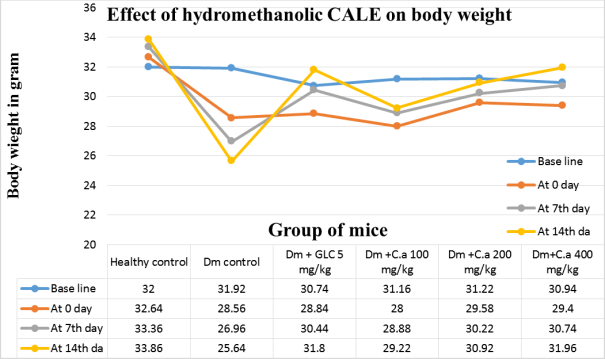
After administration of 150 mg/kg STZ, the body weight of all diabetic mice was significantly reduced at day 0 of treatment from their baseline body weight. However, the body weight of the healthy control group was not reduced from its baseline; rather, it increased to the end of the experiment. During the experiment, the body weight of diabetic mice treated with hydromethanolic CALE and 5 mg/Kg Glibenclamide was increased on the 7th and 14th day of treatment, as compared to the diabetic control group, as displayed in Figure 1.
Figure 1. The effect of hydromethanolic CALE on the body weight of STZ-induced diabetic mice.
3.6. Influence of CALE on Serum Electrolytes (Na+, K+, Cl, and Ca2+)
Table 3 presents the results of alterations in serum electrolyte concentrations in diabetic mice treated for 14 days with CALE at doses of 100 mg/kg, 200 mg/kg, 400 mg/kg, and 5 mg/kg of Glibenclamide. According to the results, the concentrations of all electrolytes were attenuated in STZ-induced diabetic mice (Group-II) compared to Group-I (normal control). Treatment with CALE and 5 mg/Kg Glibenclamide significantly (P<0.05) improved the altered concentration of all the estimated electrolytes.
Table 3. Consequence of hydromethanolic CALE on serum electrolytes in Streptozotocin-induced diabetic mice.

Groups

Sodium (mEq/L)

Potassium (mEq/L)

Calcium mEq/L)

Chlorine (mEq/L)

Healthy control

142.80 ± 1.020

5.0200 ± 0.09695

9.5800 ± 0.28531

101.60 ± 1.140

Diabetic control

128.40 ± 0.510a

3.4200 ± 0.05831a

7.4200 ± 0.45978a

92.20 ± 4.970a

Diabetic + GLC 5 mg/kg

142.00 ± 0.447b

4.9600 ± 0. 27019b

9.3800 ± 0.16553b

98.60 ± 3.192b

Dm + 100 mg/kg extract

131.60 ± 0.748ab

3.6600 ± 0.12083ac

8.2800 ± 0.17720a

95.40 ± 5.030ac

Dm + 200 mg/kg extract

137.60 ± 0.510b

4.600 ± 0.07071ab

8.8200 ± 0.29223b

97.60± 2.074ab

Dm + 400 mg/kg extract

140.40 ± 0.812b

4.9000 ± 0.07071b

9.2000 ± 0.21448b

98.00 ± 1.871ab

The values indicate mean ±S.E.M. (n=5).
‘a’ p<0.05 compared with normal control values,
‘b’ p<0.05 compared with diabetic control values,
‘c’ p<0.05 compared with standard drug-treated values.
C.a = Cordia africana,
Dm = Diabetic Mellitus,
GLC= Glibeneclamide.
Statistical analysis was carried out by using one-way ANOVA followed by Tukey’s post hoc test.
3.7. Alpha-Amylase Inhibition Assay
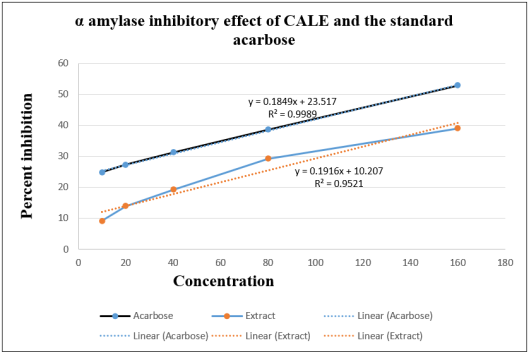
Figure 2. Percentage inhibition of α-amylase enzyme by CALE and standard Acarbose at different concentrations.
Pancreatic alpha-amylase (PAA) is the principal carbohydrate-hydrolyzing enzyme located in the brush border of the small intestine. In this study α-amylase inhibition assay of CALE was performed using the 3,5-dinitrosalicylic acid (DNSA) method. The test displayed that the hydromethanolic leaf extract of Cordia africana has an appreciable α-amylase inhibitory effect at concentrations ranging from 10-160µg/mL, as revealed in Figure 2.
The IC50 (the concentration required to quench 50% of the α-amylase enzyme activity) was computed from the graph to be 143.23 μg/mL for acarbose and 207.69 μg/mL for CALE.
An independent T-test was performed to compare the percent α-amylase inhibition for acarbose and CALE. There was no significant mean difference between the percent inhibition of acarbose and CALE.
3.8. The Result of Antioxidant Assay
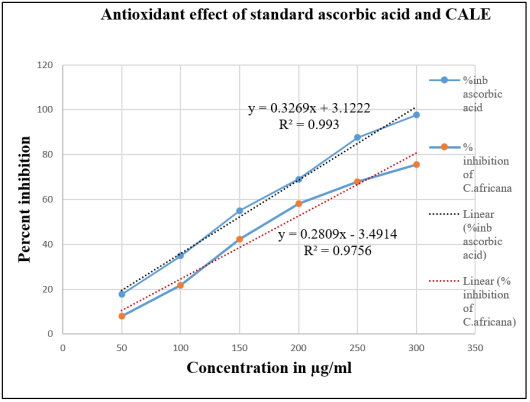
DPPH radical scavenging activity is the most widely used assays for screening antioxidant activity of plant extract. Hydromethanolic CALE evaluation exhibited a good DPPH scavenging activity at a concentration between 50 - 300 µg/mL of the extract, as displayed in Figure 3.
Figure 3. Percentage inhibition of DPPH by ascorbic acid and hydromethanolic leaves extract of C. africana at different concentrations.
The IC50, which is the concentration required to quench 50% of the DPPH radical, was computed to be 143.4 µg/mL of ascorbic acid and 165.57 µg/mL of hydromethanolic leaf extract of C africana. As the concentration of the sample increased, the percent inhibition of DPPH radical also increased.
An independent T-Test was performed to compare the percent inhibition of DPPH for ascorbic acid and the leaf extract of C africana. There was no significant difference between the mean percent inhibition for ascorbic acid and the leaf extract of C. africana.
4. Discussion
Diabetes mellitus is a heterogeneous group of disorders characterized by hyperglycemia due to an absolute or relative deficit in insulin production or action . For those with diabetes, access to affordable treatment, including insulin, is crucial to their survival . Although antidiabetic medicines are available on the market, herbal drugs and preparations from natural plant sources with minimal side effects have become the focus of interest for the ethnobotanical community . There is strong evidence that many dangerous pathophysiological processes, such as cancer, diabetes, cardiovascular, and neurodegenerative diseases, are associated with the accumulation of free radicals .
Antioxidants turn free radicals into waste by-products and eliminate them from the body . These antioxidants are found in various parts of different plants, including Cordia species. Electrolyte abnormalities are common in diabetic patients and might be associated with increased morbidity and mortality . Diabetic patients may experience disorganization of water and electrolyte balance, resulting from insulin inadequacy, hyperglycemia, and hyperketonemia . In the use of synthetic medicines for the treatment of various diseases, free radicals are often generated in the body, which might result in an additional disease. The antidiabetic and antioxidant effects of the hydromethanolic leaf extract of C. africana, as well as its effects on serum electrolytes, were evaluated in this study.
4.1. Qualitative Phytochemical Screening
In our qualitative phytochemical screening, hydromethanolic leaf extract of C. africana was positive for alkaloids, saponins, steroids, terpenoids, anthraquinones, flavonoids, phenols, and glycosides, and negative for tannins. A study conducted in Nigeria in 2015 also reported that ethanolic stem bark extract of Cordia africana Lam. was positive for Alkaloids, Flavonoids, Saponins, Terpenoids, Carbohydrates, and negative for Anthraquinones and Tannins . The results of this study are consistent with our results for Alkaloids, Flavonoids, Saponins, Terpenoids, and Tannins. However, it was in contrast regarding Anthraquinones. This observed difference might be due to the part of the plant (leaf versus stem bark). Furthermore, biological factors such as genotype, as well as environmental factors such as temperature, salinity, water, stress, light intensity, and the polarity of the solvent system, contribute to the variation of the results .
4.2. Acute Oral Toxicity Test
In the acute oral toxicity study at the limit dose of 2000 mg/kg hydromethanolic leaf extract of C. africana, no behavioral and physical as well as mortality of mice was observed during the study period. Therefore, the oral median lethal dose LD50 (the dose at which half of the population given will die) of hydromethanolic leaf extract of C. africana can be considered to be more than 2000 mg/kg. Its safety profile is supported by a study that reported the median lethal dose (LD50) of the ethanolic stem bark extract of C. africana Lam in rats was found to be greater than 5000 mg/kg via the oral route . In general, no toxicity incidents have been reported related to C. africana so far .
4.3. Anti-Hyperglycemic Effect of CALE
Induction of diabetes mellitus is most commonly and effectively performed by using STZ due to its higher inductive rate and selectivity. These STZ-induced events are responsible for the necrosis of pancreatic β-cells and the induction of experimental diabetes mellitus in laboratory animal models . Because STZ enters the cell via GLUT2 and competes with glucose for transport via the pancreatic beta cell membrane transporter, it is given to laboratory animals in a fasting state to overcome competition by glucose for entry .
In this study, diabetes mellitus was effectively induced by administering STZ solution (150 mg/ kg) to all groups of mice except the normal control group. It was validated after 72 hours of STZ injection with sustained hyperglycemia. In repeated daily dose experiments, groups treated with hydromethanolic leaf extract of C. africana at a dose of 100 mg/kg, 200 mg/kg, and 400 mg/kg, and 5 mg Glibeneclamide exhibited a significant (p < 0.05) reduction in blood glucose level (BGL) on the 7th and 14th day compared to the diabetic control group. The result is in agreement with the studies conducted on C. morelosana , C. Myxa (36), and Cordia sebestena , which are in the same family as our plant. The anti-hyperglycemic activity of this plant might be due to its biologically active phytochemicals and secondary metabolites. These phytochemicals include phenolic compounds, alkaloids, terpenoids, flavonoids, and sterols, among others. The phytochemical contents have a blood glucose-lowering effect through different mechanisms. These mechanisms include induction of pancreatic insulin release and increases plasma insulin levels, restoration of insulin response and improving insulin signaling , inhibiting disaccharidase activity and gluconeogenesis , inhibiting glycogen synthesis activation , inhibition of α-glucosidase activity , inhibit mRNA expression of glycogen phosphorylase and glucose 6 phosphatase and induce the expression of Glut4 . On the other hand, this plant extract displayed noticeable α-amylase inhibitory activity, and this is one of the biochemical mechanisms of this plant to reduce blood glucose levels. Moreover, this plant extract presented a significant antioxidant effect. Oxidative stress plays a fundamental role in the pathogenesis of diabetes mellitus . This antioxidant activity of the plant may contribute to the restoration of pancreatic function as well as improve insulin secretion and action.
4.4. The Influence of Leaf Extract of C. africana on Body Weight
Weight loss in the mice is often associated with STZ and hyperglycemic complications . Compared to the baseline body weight of the mice, there was a decrease in the body weight of the mice following administration of STZ. Following the experiment, the body weight of the mice treated with hydromethanolic leaf extract of C. africana at a dose of 100 mg/kg, 200 mg/kg, and 400 mg/kg, and 5 mg Glibenclamide was increased when compared to the diabetic control group. In a diabetic patient, insufficient insulin prevents the body from getting glucose from the blood into the body’s cells to use as energy. When this occurs, the body starts burning fat and muscle for energy, causing a reduction in overall body weight . Therefore, the restoration of insulin concentration and function may prevent the burning of fat and muscle for energy. This may be one mechanism of the extract to improve the weight of the mice. The leaf extract of C. africana has the potential to increase water and electrolyte absorption or decrease the secretion of fluid and electrolytes . This may also prevent weight loss secondary to dehydration. In addition to lowering the blood glucose effect, the extract may prevent water and electrolyte losses.
4.5. The Influence of Leaf Extract of C. africana on Serum Electrolytes
Electrolyte disturbance is one of the complications of diabetes mellitus. Our study revealed that, in diabetic mice treated with distilled water, the levels of sodium, potassium, calcium, and chloride were significantly decreased compared to the non-diabetic group. Rashid, in 2019, reported that, as fasting blood glucose rises, electrolytes, mainly sodium, chloride, and potassium, become more deranged significantly . After treatment for 14 days with 5 mg Glibenclamide and 100 mg/kg, 200 mg/kg, and 400 mg/kg leaf extract of C. africana, serum levels of sodium, potassium, calcium, and chloride have displayed an increase to near their normal levels. Particularly, the serum level of these electrolytes approaches its normal level in mice treated with the standard drug. The mice treated with 400 mg/kg exhibited better correction of their serum electrolyte compared to mice treated with 200 mg/kg and 100 mg/ kg. The result is in line with the study, which reported that the ethanolic extract of Cordia Sebestena fruit significantly reversed altered serum electrolyte concentration in STZ-induced diabetic rodents . This normalization of serum electrolytes may be secondary to the blood glucose-lowering effect of Cordia africana, since the derangement of these electrolytes is mostly attributed to hyperglycemia. It may also be due to the potential of the leaf extract of C. africana to increase water and electrolyte absorption or decrease the secretion of fluid and electrolytes .
4.6. The α-amylase Inhibitory Assay
Pancreatic α-amylase (PAA) is the principal carbohydrate-hydrolyzing enzyme located in the brush border of the small intestine. It catalyzes the breakdown of the complex dietary carbohydrates (starch) into easily absorbable monosaccharides (glucose) or disaccharides (maltose). Thus, one therapeutic approach in DM treatment is the prevention of carbohydrate absorption after food intake by inhibition of these enzymes. Moreover, lowering the digestion and breakdown of starch may have beneficial effects on insulin resistance and glycemic index control in people with diabetes (29). In our study, hydromethanolic leaf extracts of C. africana had α-amylase inhibitory potential with the IC50 of 143.23 μg/mL for acarbose and 207.69 μg/mL for the hydromethanolic leaf extract of C. africana. The plant is a potential source of polyphenolic compounds, which have the potential to reduce α-amylase activity . Therefore, the activity of this plant extract against α-amylase might be due to its phenolic and other bioactive phytochemical content. This in vitro result also showed one of the mechanisms of the plant to lower blood glucose levels.
4.7. The Antioxidant Assay
Antioxidants act as radical scavengers, inhibit lipid peroxidation and other free-radical-mediated processes, to protect the human body from the attack of free radicals. This study demonstrated that the hydromethanolic leaf extract of C. africana has an IC50 (concentration of substrate that provides a 50% loss of the DPPH activity) value of 165.57 µg/mL. The result is somewhat comparable to the radical scavenging activity of ascorbic acid IC50 value of 143.4 µg/mL. A study conducted in Sudan on different parts of C. africana (stem, bark, and fruit) showed their antioxidant activity via the DPPH assay. The methanol extract of stem, bark, and fruit gave antioxidant activity of 88, 74, and 37%, respectively . A study conducted on the antioxidant effect of ethanolic stem and bark extract of Cordia africana in Nigeria reported that there was a significant (p < 0.05) reduction in absorbance of DPPH free radical with an IC50 value of 20.12 at 518 nm wavelength using a UV spectrophotometer . The difference in IC50 value from other research might be due to the variation in the laboratory methods and the solvent used. It could also be due to the part of the plant and the difference in phytochemical concentration of the plant, like phenols and flavonoids .
4.8. Limitations of the Study
This study was conducted with the crude extract only. Due to this fact, we were not in a position to point out the exact active ingredient and mechanism of action responsible for the effect. Given those limitations, further studies are needed to isolate and purify the active constituents present in the leaves of Cordia africana. Also, further investigation is needed to elucidate the biochemical mechanism by which the leaf extract reduces the raised blood glucose levels.
4.9. Practical Implications of the Study
The study titled "Effect of Hydromethanolic Leaf Extract of Cordia Africana (Boraginaceae) “Wanza” on Blood Glucose Level and Serum Electrolytes in Streptozotocin-Induced Diabetic Mice" has several practical implications:
Clinical practice: The findings could help healthcare professionals to be well-informed about the alternatives and opportunities of new medications. This knowledge can inform clinical decision-making and treatment strategies for managing diabetic patients.
Public health: The study’s findings can help public health officials and policy-makers develop targeted interventions to manage diabetes-related conditions.
Research: The findings of this study can provide valuable insights for future research on the detection of new, cost-effective, safer, and accessible drug alternatives. This knowledge can help researchers recognize potential targets for drug development and other interventions to improve patient outcomes.
In summary, the findings have important practical implications for clinical practice, public health, research, and healthcare systems. By understanding new and alternative drugs, we can work towards improving patient outcomes and reducing the burden of diabetes and related conditions on individuals and society as a whole.
5. Conclusion
In this study, hydromethanolic leaf extract of Cordia Africana exhibited a potential anti-hyperglycemic activity in STZ-induced diabetic mice. It also has the potential to improve the STZ-induced disturbances of body weight and serum electrolytes. Moreover, the extract has respectable antioxidant and α-amylase inhibitory activities. The overall findings of the present study suggested that the leaf part of Cordia africana has great potential in reducing elevated blood glucose levels and may help to reduce the risk of diabetic complications.
Abbreviations

CALE

Cordia africana Leaf Extract

DM

Diabetes Mellitus

FBS

Fasting Blood Sugar

OECD

Organization for Economic Cooperation and Development

STZ

Streptozotocin

Acknowledgments
The authors would like to thank all the contributors to this work. We would also like to express our sincere gratitude to the University of Gondar, Department of Biochemistry, Department of Pharmacology, and Department of Molecular Biotechnology for supporting and providing their laboratory facilities during the experimental work of this study.
Author Contributions
Kibur Hunie Tesfa: Conceptualization, Data curation, Formal Analysis, Investigation, Methodology, Project administration, Resources, Supervision, Visualization, Writing – original draft, Writing – review & editing
Amare Nigatu Zewdie: Conceptualization, Data curation, Formal Analysis, Investigation, Methodology, Project administration, Resources, Software, Visualization, Writing – original draft, Writing – review & editing
Gashaw Dessie: Methodology, Supervision, Writing – review & editing
Yadelew Yimer: Methodology, Supervision, Writing – review & editing
Hassen Ahmed: Methodology, Writing – review & editing
Chernet Desalegn Gebeyehu: Methodology, Writing – review & editing
Mulugeta Kassaw: Methodology, Writing – review & editing
Data Availability Statement
Data used to support the results of this study are available from the corresponding author upon request.
Conflicts of Interest
The authors have no conflicts of interest.
References
[1] Alam U, Asghar O, Azmi S, Malik RA. General aspects of diabetes mellitus. Handbook of Clinical Neurology. 2014; 126: 211-22.
[2] Saeedi P, Petersohn I, Salpea P, Malanda B, Karuranga S, Unwin N, et al. Global and regional diabetes prevalence estimates for 2019 and projections for 2030 and 2045: Results from the International Diabetes Federation Diabetes Atlas. Diabetes research and clinical practice. 2019; 157: 107843.
[3] Peer N, Kengne A-P, Motala AA, Mbanya JC. Diabetes in the Africa Region: an update. Diabetes research and clinical practice. 2014; 103(2): 197-205.
[4] Pizzino G, Irrera N, Cucinotta M, Pallio G, Mannino F, Arcoraci V, et al. Oxidative Stress: Harms and Benefits for Human Health. Oxid Med Cell Longev. 2017; 2017: 8416763.
[5] Rösen P, Nawroth P, King G, Möller W, Tritschler HJ, Packer L. The role of oxidative stress in the onset and progression of diabetes and its complications: asummary of a Congress Series sponsored byUNESCO‐MCBN, the American Diabetes Association and the German Diabetes Society. Diabetes/metabolism research and reviews. 2001; 17(3): 189-212.
[6] Fukunaka A, Fujitani Y. Role of zinc homeostasis in the pathogenesis of diabetes and obesity. International journal of molecular sciences. 2018; 19(2): 476.
[7] Alberici LC, Vercesi AE, Oliveira HC. Mitochondrial energy metabolism and redox responses to hypertriglyceridemia. Journal of bioenergetics and biomembranes. 2011; 43(1): 19-23.
[8] Evans JL, Maddux BA, Goldfine ID. The molecular basis for oxidative stress-induced insulin resistance. Antioxidants & redox signaling. 2005; 7(7-8): 1040-52.
[9] Liamis G, Milionis HJ, Elisaf M. Hyponatremia in patients with infectious diseases. Journal of Infection. 2011; 63(5): 327-35.
[10] Liamis G, Liberopoulos E, Barkas F, Elisaf M. Diabetes mellitus and electrolyte disorders. World J Clin Cases. 2014; 2(10): 488-96.
[11] Franjic S. In Shortly About Diabetes. Arch Cancer Sci Treat. 2018; 1(1): e101.
[12] Babby A, Elanchezhiyan C, Suhasini S, Chandirasegaran G. Antihyperglycemic effect of tannic acid in streptozotocin induced diabetic rats. Int J Curr Res. 2014; 6(3): 5396-8.
[13] Prabhakar PK, Doble M. Mechanism of action of natural products used in the treatment of diabetes mellitus. Chinese journal of integrative medicine. 2011; 17(8): 563-74.
[14] Bekele T, Naslund B-A. Population structure and regereration of woody species in a broad-leaved afromontane rain forest, south-west Ethiopia. Ethiopian Journal of Natural Resources. 2003.
[15] Fichtl R, Adi A. Honeybee flora of Ethiopia: Margraf; 1994.
[16] Mohmmed FSE. Antibacterial Activity of Leaves and Fruits Extracts Of the Gumbil Tree (Cordia africana L.): University of Gezira; 2015.
[17] Nigussie G, Ibrahim F, Neway S. A Phytopharmacological Review on a Medicinal Plant: Cordia africana Lam. Journal of Tropical Pharmacy and Chemistry. 2021; 5(3): 254-63.
[18] Kifle ZD, Belayneh YM. Antidiabetic and anti-hyperlipidemic effects of the crude hydromethanol extract of Hagenia abyssinica (Rosaceae) leaves in streptozotocin-induced diabetic mice. Diabetes, Metabolic Syndrome and Obesity: Targets and Therapy. 2020; 13: 4085.
[19] Geleta B, Makonnen E, Debella A, Tadele A. In vivo antihypertensive and antihyperlipidemic effects of the crude extracts and fractions of Moringa stenopetala (Baker f.) Cufod. leaves in rats. Frontiers in pharmacology. 2016; 7: 97.
[20] Sarker SD, Latif Z, Gray AI. Natural product isolation. Natural products isolation. 2006: 1-25.
[21] Saadane A, Lessieur EM, Du Y, Liu H, Kern TS. Successful induction of diabetes in mice demonstrates no gender difference in development of early diabetic retinopathy. Plos one. 2020; 15(9): e0238727.
[22] Fawcett A, Rose M. Guidelines for the housing of mice in scientific institutions. Animal Welfare Unit, NSW Department of Primary Industries, West Pennant Hills Anim Res Rev Panel. 2012; 1: 1-43.
[23] Care IoLARCo, Animals UoL. Guide for the care and use of laboratory animals: US Department of Health and Human Services, Public Health Service, National …; 1986.
[24] Tamiru W, Engidawork E, Asres K. Evaluation of the effects of 80% methanolic leaf extract of Caylusea abyssinica (fresen.) fisch. & Mey. on glucose handling in normal, glucose loaded and diabetic rodents. BMC complementary and alternative medicine. 2012; 12(1): 1-7.
[25] Sharma S, Choudhary M, Bhardwaj S, Choudhary N, Rana AC. Hypoglycemic potential of alcoholic root extract of Cassia occidentalis Linn. in streptozotocin induced diabetes in albino mice. Bulletin of Faculty of Pharmacy, Cairo University. 2014; 52(2): 211-7.
[26] Bowe JE, Franklin ZJ, Hauge-Evans AC, King AJ, Persaud SJ, Jones PM. Metabolic phenotyping guidelines: assessing glucose homeostasis in rodent models. Journal of endocrinology. 2014; 222(3): G13-G25.
[27] Baquer NZ, Kumar P, Taha A, Kale R, Cowsik S, McLean P. Metabolic and molecular action of Trigonella foenum-graecum (fenugreek) and trace metals in experimental diabetic tissues. Journal of biosciences. 2011; 36(2): 383-96.
[28] Jonsson M, Jestoi M, Nathanail AV, Kokkonen U-M, Anttila M, Koivisto P, et al. Application of OECD Guideline 423 in assessing the acute oral toxicity of moniliformin. Food and chemical toxicology. 2013; 53: 27-32.
[29] Wickramaratne MN, Punchihewa J, Wickramaratne D. In-vitro alpha amylase inhibitory activity of the leaf extracts of Adenanthera pavonina. BMC Complementary and Alternative Medicine. 2016; 16(1): 1-5.
[30] Islam S, Nasrin S, Khan MA, Hossain AS, Islam F, Khandokhar P, et al. Evaluation of antioxidant and anticancer properties of the seed extracts of Syzygium fruticosum Roxb. growing in Rajshahi, Bangladesh. BMC Complement Altern Med. 2013; 13: 142.
[31] Gilgun-Sherki Y, Rosenbaum Z, Melamed E, Offen D. Antioxidant therapy in acute central nervous system injury: current state. Pharmacological reviews. 2002; 54(2): 271-84.
[32] Rahman MM, Islam MB, Biswas M, Khurshid Alam AHM. In vitro antioxidant and free radical scavenging activity of different parts of Tabebuia pallida growing in Bangladesh. BMC Research Notes. 2015; 8(1): 621.
[33] Sunmonu TO, Afolayan AJ. Evaluation of antidiabetic activity and associated toxicity of Artemisia afra aqueous extract in wistar rats. Evidence-Based Complementary and Alternative Medicine. 2013; 2013.
[34] Tijjani R, Zezi A, Shafiu R, Umar M. Anti-inflammatory and antioxidants properties of the ethanolic stem bark extract of Cordia africana (Lam.). Annals of Phytomedicine. 2015; 4(2): 83-7.
[35] Ksouri R, Megdiche W, Falleh H, Trabelsi N, Boulaaba M, Smaoui A, et al. Influence of biological, environmental and technical factors on phenolic content and antioxidant activities of Tunisian halophytes. Comptes Rendus Biologies. 2008; 331(11): 865-73.
[36] Abdel-Aleem ER, Attia EZ, Farag FF, Samy MN, Desoukey SY. Total phenolic and flavonoid contents and antioxidant, anti-inflammatory, analgesic, antipyretic and antidiabetic activities of Cordia myxa L. leaves. Clinical Phytoscience. 2019; 5(1): 29.
[37] rights are reserved by Busineni A, Goud J. Streptozotocin-A Diabetogenic Agent in Animal Models. 2015.
[38] Szkudelski T. The mechanism of alloxan and streptozotocin action in B cells of the rat pancreas. Physiological research. 2001; 50(6): 537-46.
[39] Lenzen S. The mechanisms of alloxan-and streptozotocin-induced diabetes. Diabetologia. 2008; 51(2): 216-26.
[40] Giles-Rivas D, Estrada-Soto S, Aguilar-Guadarrama AB, Almanza-Pérez J, García-Jiménez S, Colín-Lozano B, et al. Antidiabetic effect of Cordia morelosana, chemical and pharmacological studies. Journal of Ethnopharmacology. 2020; 251: 112543.
[41] Sachin C, Harish Chandra V, Mandeep Kumar G, Hitesh K, Sudhansu Ranjan S, Ramesh Kumar G, et al. Antidiabetic Aptitude of Cordia sebestena and its Outcome on Biochemical Parameters, Serum Electrolytes, and Hematological Markers. Pharmacognosy Journal. 2019; 11(2).
[42] Elekofehinti O, Kamdem J, Kade I, Rocha J, Adanlawo I. Hypoglycemic, antiperoxidative and antihyperlipidemic effects of saponins from Solanum anguivi Lam. fruits in alloxan-induced diabetic rats. South African Journal of Botany. 2013; 88: 56-61.
[43] Lee K-T, Jung TW, Lee H-J, Kim S-G, Shin Y-S, Whang W-K. The antidiabetic effect of ginsenoside Rb2 via activation of AMPK. Archives of pharmacal research. 2011; 34(7): 1201-8.
[44] Choudhary N, Khatik GL, Suttee A. The possible role of saponin in type-II diabetes-a review. Current diabetes reviews. 2021; 17(2): 107-21.
[45] Plants IM. CMAUP: A Database of Collective Molecular Activities of Useful Plants. Food Chem. 173: 972-8.
[46] Deng Y, He K, Ye X, Chen X, Huang J, Li X, et al. Saponin rich fractions from Polygonatum odoratum (Mill.) Druce with more potential hypoglycemic effects. Journal of Ethnopharmacology. 2012; 141(1): 228-33.
[47] McAnuff MA, Harding WW, Omoruyi FO, Jacobs H, Morrison EY, Asemota HN. Hypoglycemic effects of steroidal sapogenins isolated from Jamaican bitter yam, Dioscorea polygonoides. Food and Chemical Toxicology. 2005; 43(11): 1667-72.
[48] Bhavsar SK, Föller M, Gu S, Vir S, Shah MB, Bhutani K, et al. Involvement of the PI3K/AKT pathway in the hypoglycemic effects of saponins from Helicteres isora. Journal of ethnopharmacology. 2009; 126(3): 386-96.
[49] Furman BL. Streptozotocin‐induced diabetic models in mice and rats. Current Protocols. 2021; 1(4): e78.
[50] Nair KS, Halliday D, Matthews DE, Welle SL. Hyperglucagonemia during insulin deficiency accelerates protein catabolism. American Journal of Physiology-Endocrinology and Metabolism. 1987; 253(2): E208-E13.
[51] Asrie AB, Abdelwuhab M, Shewamene Z, Gelayee DA, Adinew GM, Birru EM. Antidiarrheal activity of methanolic extract of the root bark of Cordia africana. Journal of Experimental Pharmacology. 2016; 8: 53.
[52] Khan RN, Saba F, Kausar SF, Siddiqui MH. Pattern of electrolyte imbalance in Type 2 diabetes patients: Experience from a tertiary care hospital. Pak J Med Sci. 2019; 35(3): 797-801.
[53] Chaudhary S, Verma HC, Gupta MK, Kumar H, Swain SR, Gupta RK, et al. Antidiabetic aptitude of Cordia sebestena and its outcome on biochemical parameters, serum electrolytes, and hematological markers. Pharmacognosy Journal. 2019; 11(2).
[54] Kim Y, Keogh JB, Clifton PM. Polyphenols and glycemic control. Nutrients. 2016; 8(1): 17.
[55] Alhadi EA, Khalid HS, Alhassan MS, Ali AA, Babiker SG, Alabdeen EMZ, et al. Antioxidant and cytotoxicity activity of Cordia africana in Sudan. Advancement in Medicinal Plant Research. 2015; 3(2): 29-32.
Cite This Article
  • APA Style

    Tesfa, K. H., Zewdie, A. N., Dessie, G., Yimer, Y., Ahmed, H., et al. (2026). Effect of Hydromethanolic Leaf Extract of Cordia Africana (Boraginaceae) “Wanza” on Blood Glucose Level and Serum Electrolytes in Streptozotocin-Induced Diabetic Mice. American Journal of Laboratory Medicine, 11(3), 51-63. https://doi.org/10.11648/j.ajlm.20261103.11

    Copy | Download

    ACS Style

    Tesfa, K. H.; Zewdie, A. N.; Dessie, G.; Yimer, Y.; Ahmed, H., et al. Effect of Hydromethanolic Leaf Extract of Cordia Africana (Boraginaceae) “Wanza” on Blood Glucose Level and Serum Electrolytes in Streptozotocin-Induced Diabetic Mice. Am. J. Lab. Med. 2026, 11(3), 51-63. doi: 10.11648/j.ajlm.20261103.11

    Copy | Download

    AMA Style

    Tesfa KH, Zewdie AN, Dessie G, Yimer Y, Ahmed H, et al. Effect of Hydromethanolic Leaf Extract of Cordia Africana (Boraginaceae) “Wanza” on Blood Glucose Level and Serum Electrolytes in Streptozotocin-Induced Diabetic Mice. Am J Lab Med. 2026;11(3):51-63. doi: 10.11648/j.ajlm.20261103.11

    Copy | Download

  • @article{10.11648/j.ajlm.20261103.11,
      author = {Kibur Hunie Tesfa and Amare Nigatu Zewdie and Gashaw Dessie and Yadelew Yimer and Hassen Ahmed and Chernet Desalegn Gebeyehu and Mulugeta Kassaw},
      title = {Effect of Hydromethanolic Leaf Extract of Cordia Africana (Boraginaceae) “Wanza” on Blood Glucose Level and Serum Electrolytes in Streptozotocin-Induced Diabetic Mice},
      journal = {American Journal of Laboratory Medicine},
      volume = {11},
      number = {3},
      pages = {51-63},
      doi = {10.11648/j.ajlm.20261103.11},
      url = {https://doi.org/10.11648/j.ajlm.20261103.11},
      eprint = {https://article.sciencepublishinggroup.com/pdf/10.11648.j.ajlm.20261103.11},
      abstract = {Diabetes mellitus is a heterogeneous group of disorders characterized by hyperglycemia due to an absolute or relative deficit in insulin production or action. Many plant species have been screened for their pharmacological properties in the treatment of diabetes mellitus. Cordia africana is a traditional medicinal plant used to treat various health problems. The objective of this study is to evaluate the effect of hydromethanolic leaf extract of Cordia africana (Wanza) on blood glucose levels, serum electrolytes, and α-amylase inhibitory activities in Streptozotocin-induced diabetic mice. The method used is an experimental study conducted on streptozotocin-induced diabetic male mice. The mice were organized into 6 groups, each having five members: normal mice (negative control), diabetics treated with distilled water (positive control), diabetics treated with glibenclamide (standard control), and the other three groups were diabetic mice treated with different doses of leaf extract. Their fasting blood sugar was measured on the 0th, 7th, and 14th days of the experiment. Serum electrolytes (Na+, K+, Cl−, and Ca2+) had also been determined on the 14th day of the experiment. The antioxidant properties and in vitro α-Amylase inhibitory actions of the extract had also been evaluated. The acute toxicity profile of the extract was assessed in 5 randomly selected female mice. The results of the study revealed that the hydromethanolic leaf extract of Cordia africana has a significant blood glucose-lowering effect. On the 7th and 14th day, the mean blood glucose levels of diabetic mice treated with 5mg glibenclamide, 200 mg/kg, and 400 mg/kg extract significantly diminished. Deranged serum electrolytes (Na+, K+, Cl−, and Ca2+) and reduced body weight were significantly improved at both doses of the extract, as well as in 5mg glibenclamide-treated mice. Besides, good antioxidant and α-amylase inhibitory activity were obtained from the in vitro lab tests. In conclusion, the results of this study exhibited that the hydromethanolic leaf extract of Cordia africana remarkably reduces blood sugar and body weight in streptozotocin-induced diabetic mice. Likewise, it improves deranged serum electrolytes. The extract also inhibits α-amylase activities.},
     year = {2026}
    }
    

    Copy | Download

  • TY  - JOUR
    T1  - Effect of Hydromethanolic Leaf Extract of Cordia Africana (Boraginaceae) “Wanza” on Blood Glucose Level and Serum Electrolytes in Streptozotocin-Induced Diabetic Mice
    AU  - Kibur Hunie Tesfa
    AU  - Amare Nigatu Zewdie
    AU  - Gashaw Dessie
    AU  - Yadelew Yimer
    AU  - Hassen Ahmed
    AU  - Chernet Desalegn Gebeyehu
    AU  - Mulugeta Kassaw
    Y1  - 2026/07/22
    PY  - 2026
    N1  - https://doi.org/10.11648/j.ajlm.20261103.11
    DO  - 10.11648/j.ajlm.20261103.11
    T2  - American Journal of Laboratory Medicine
    JF  - American Journal of Laboratory Medicine
    JO  - American Journal of Laboratory Medicine
    SP  - 51
    EP  - 63
    PB  - Science Publishing Group
    SN  - 2575-386X
    UR  - https://doi.org/10.11648/j.ajlm.20261103.11
    AB  - Diabetes mellitus is a heterogeneous group of disorders characterized by hyperglycemia due to an absolute or relative deficit in insulin production or action. Many plant species have been screened for their pharmacological properties in the treatment of diabetes mellitus. Cordia africana is a traditional medicinal plant used to treat various health problems. The objective of this study is to evaluate the effect of hydromethanolic leaf extract of Cordia africana (Wanza) on blood glucose levels, serum electrolytes, and α-amylase inhibitory activities in Streptozotocin-induced diabetic mice. The method used is an experimental study conducted on streptozotocin-induced diabetic male mice. The mice were organized into 6 groups, each having five members: normal mice (negative control), diabetics treated with distilled water (positive control), diabetics treated with glibenclamide (standard control), and the other three groups were diabetic mice treated with different doses of leaf extract. Their fasting blood sugar was measured on the 0th, 7th, and 14th days of the experiment. Serum electrolytes (Na+, K+, Cl−, and Ca2+) had also been determined on the 14th day of the experiment. The antioxidant properties and in vitro α-Amylase inhibitory actions of the extract had also been evaluated. The acute toxicity profile of the extract was assessed in 5 randomly selected female mice. The results of the study revealed that the hydromethanolic leaf extract of Cordia africana has a significant blood glucose-lowering effect. On the 7th and 14th day, the mean blood glucose levels of diabetic mice treated with 5mg glibenclamide, 200 mg/kg, and 400 mg/kg extract significantly diminished. Deranged serum electrolytes (Na+, K+, Cl−, and Ca2+) and reduced body weight were significantly improved at both doses of the extract, as well as in 5mg glibenclamide-treated mice. Besides, good antioxidant and α-amylase inhibitory activity were obtained from the in vitro lab tests. In conclusion, the results of this study exhibited that the hydromethanolic leaf extract of Cordia africana remarkably reduces blood sugar and body weight in streptozotocin-induced diabetic mice. Likewise, it improves deranged serum electrolytes. The extract also inhibits α-amylase activities.
    VL  - 11
    IS  - 3
    ER  - 

    Copy | Download

Author Information
  • Department of Biochemistry, University of Gondar, Gondar, Ethiopia

  • School of Medicine, Woldia University, Woldia, Ethiopia

  • Department of Biochemistry, University of Gondar, Gondar, Ethiopia

  • Department of Biochemistry, University of Gondar, Gondar, Ethiopia

  • School of Medicine, Woldia University, Woldia, Ethiopia

  • Department of Biomedical Sciences, Mattu University, Metu, Ethiopia

  • School of Medicine, Bahir Dar University, Bahir Dar, Ethiopia
  • Abstract
  • Keywords
  • Document Sections

    1. 1. Introduction
    2. 2. Methods and Materials
    3. 3. Results
    4. 4. Discussion
    5. 5. Conclusion
    Show Full Outline
  • Abbreviations
  • Acknowledgments
  • Author Contributions
  • Data Availability Statement
  • Conflicts of Interest
  • References
  • Cite This Article
  • Author Information