Methodology Article | | Peer-Reviewed

Case Exploration of Visualization of Diffusion Mass Transfer at Microscale — Teaching Innovation in Transport Processes

Received: 24 June 2026     Accepted: 8 July 2026     Published: 24 July 2026
Views:       Downloads:
Abstract

"Transport Processes" is a core yet challenging course in chemical engineering, with the primary difficulty lying in its heavy reliance on theoretical mathematical descriptions to elucidate the laws of momentum, heat, and mass transfer. Students often struggle to intuitively understand diffusion mass transfer phenomena at the microscale, leading to rote memorization without constructing a corresponding physical picture. To address this pedagogical challenge, we turn to actual microfluidic experiments rather than simulations or theoretical derivations, and propose two visualization-based teaching cases that enable in-situ observation of diffusion at the microscale. The first case utilizes the one-dimensional diffusion of fluorescent nanoparticles in a microchannel, while the second case involves the diffusion of nitrogen dioxide (NO2) gas into a hydrogen peroxide (H2O2) solution, combined with high-speed microscopic imaging and image analysis to determine the diffusion coefficient based on Fick's second law. Both cases transform the theoretical diffusion differential equations into intuitive, dynamic concentration distribution evolution images. Post-teaching questionnaire surveys indicate that 96.30% of the students greatly favored these visualization cases, and the 98.15% of students believed that it improved learning efficiency. More than 90% of the students considered the visualized cases relatively easy to understand. The survey results indicate that introducing microfluidic visualization technology into "Transport Processes" teaching effectively builds a cognitive bridge between mathematical formulations and physical reality, stimulates students' learning interest, reduces the difficulty of conceptual comprehension, and improves lecture atmosphere. This teaching innovation provides a novel perspective for the instruction of the mass transfer module within the "Transport Processes" course.

Published in Education Journal (Volume 15, Issue 4)
DOI 10.11648/j.edu.20261504.11
Page(s) 133-139
Creative Commons

This is an Open Access article, distributed under the terms of the Creative Commons Attribution 4.0 International License (http://creativecommons.org/licenses/by/4.0/), which permits unrestricted use, distribution and reproduction in any medium or format, provided the original work is properly cited.

Copyright

Copyright © The Author(s), 2026. Published by Science Publishing Group

Keywords

Transport Processes, Visualization, Microscale, Molecular Diffusion Equation

1. Introduction
"Transport Processes" is a compulsory course for students majoring in Chemical Engineering and Technology after completing the "Principles of Chemical Engineering" course. Studying this course not only helps students gain a deep understanding of the essence of transport phenomena underlying the unit operations in "Principles of Chemical Engineering," but also enables them to learn subsequent specialized courses from the perspective of "transport," thus playing a pivotal bridging role in the students' educational journey. "Transport Processes" aims to cultivate students' ability to identify, formulate, and solve complex engineering problems by utilizing mathematics, natural sciences, engineering fundamentals, and professional knowledge. In this course, transport phenomena in natural and engineering problems are typically taken as research objects. Specific problems are simplified to establish physical models, and mathematical models are constructed based on transport theorems, laws, and conservation principles. The equations are then simplified for specific problems, initial and boundary conditions are determined, analytical or numerical solutions are obtained, and the conclusions are applied to interpret physical phenomena and solve engineering problems.
The course "Transport Processes" has been consistently reported by students as being highly difficult to comprehend. Recent teaching observations have identified four primary contributing factors: (1) an extensive body of knowledge coupled with insufficient class hours; (2) monotonous and conceptually challenging content; (3) disconnection from practical engineering applications; and (4) a lack of adequate online course resources . Traditional instruction predominantly relies on a combination of slides and blackboard writing. In response to these challenges, educators have continuously enriched and diversified their teaching methodologies, experimenting with various innovative approaches. These include the gradual adoption of flipped class under the influence of the Outcome Based Education (OBE) concept, the establishment of online education platforms that allow students to repeatedly access instructional videos, the integration of research and teaching, and the utilization of software tools such as Fluent, Computational Fluid Dynamics (CFD), and MATLAB for simulating transport phenomena. The application of these novel teaching technologies offers a promising means to overcome the limitations inherent in describing microscopic models and presenting dynamic processes through static board demonstrations, which fail to capture temporal evolution effectively .
"Transport Processes" encompasses three major modules—fluid mechanics, heat transfer, and mass transfer—which are highly integrated within the course. Students are required to adopt a scientific approach to investigate the laws governing momentum, heat, and mass transfer, and to grasp the analogies among these transport phenomena. Without a solid command of the common principles underlying these three transport processes, students are prone to conceptual confusion and may find themselves increasingly disoriented as they progress through the course. The core difficulty lies in the fact that the formulation and solution of mass transfer differential equations demand from students both a strong mathematical foundation and a well-developed capacity for theoretical physical visualization . Throughout the instruction, different physical models are employed to reveal the unified laws of transport phenomena; however, the precise description of these physical models relies on rigorous mathematical language, which inevitably involves complex mathematical tools. The establishment, simplification, and solution of partial differential governing equations impose considerable demands on students' modeling and problem-solving skills. Key concepts in the course, such as "shear stress" and "concentration boundary layer," are highly theoretical in nature. Research has shown that students commonly exhibit learning anxiety and diminished interest when confronted with the derivations of Fick's law, the continuity equation, and the mass transfer differential equations. Prerequisite courses, such as University Physics, predominantly feature static and idealized models, whereas the models in "Transport Processes" are largely dynamic and based on continuous media. In previous teaching practices, the lack of physical visualization has resulted in students remaining at the level of symbolic manipulation. Although traditional blackboard instruction effectively demonstrates step-by-step derivations, it falls short of intuitively presenting microscopic, dynamic physical pictures—such as concentration distributions and diffusion fluxes—leading students to "see only equations, not phenomena." Consequently, they resort to rote memorization without acquiring genuine engineering analytical capabilities.
In response to the above challenges, educators both domestically and internationally have explored pedagogical reforms from multiple perspectives. Among these, experimental demonstrations and student-designed experiments have been shown to significantly enhance students' understanding of Fick's law and the diffusion equation through a complete "design-experiment-analysis" learning cycle . Computer simulation has also emerged as a prominent focus in teaching reform. Romero-Cano employed MATLAB-Simulink to construct modular simulation models in the heat transfer module, enabling students to intuitively "visualize" the heat conduction process . The core philosophy underlying such approaches is consistent: transforming theoretical mathematical language into interactive and observable visual representations, thereby helping students establish a conceptual mapping from mathematical models to physical reality . However, in the instruction of mass transfer processes, even when combined with CFD model calculations, the presentation remains insufficiently vivid. Although computer simulations offer considerable flexibility, students often perceive a disconnect between virtual simulations and real-world phenomena. The scarcity of experimental cases that directly visualize mass transfer phenomena further exacerbates the difficulty for students in grasping the underlying concepts.
Throughout the course, the elaboration of specific case studies cultivates students' ability to observe transport phenomena in daily life and industrial processes, to identify and formulate problems, and to analyze and solve them accordingly. The three major domains of transport phenomena exhibit a high degree of similarity in the formulation of differential equations and the approaches to handling boundary conditions. Ren systematically reviewed the analogies among the three transport equations, pointing out that Fick's law, Fourier's law, and Newton's law of viscosity can be unified into the general form: flux = coefficient × gradient . Jia found in teaching practice that employing an analogy-based approach to explain the similarity between gas absorption and convective heat transfer significantly reduced the difficulty for students in understanding mass transfer coefficients . Instructional methods that introduce momentum and heat transfer through scenario-based examples—such as airfoil shapes and chip heat dissipation—offer valuable precedents. Visualization experimental cases provide a novel pedagogical innovation for constructing the physical picture required for mass transfer, transforming theoretical concepts into intuitive representations. Microfluidic technology enables the direct visualization of diffusion phenomena as described by Fick's law, allowing students to intuitively observe mass transfer driven by concentration gradients. Sun, in the context of integrating research with teaching, proposed that transforming frontier research topics directly into teaching cases yields favorable outcomes . To this end, we turned to actual microfluidic experiments rather than simulations. By incorporating the determination of diffusion coefficients for nanoparticles and NO2 into these experiments, we sought to bridge the research platform with classroom teaching, ultimately leading to the development of teaching case studies.
2. Teaching Cases and Teaching Effectiveness
2.1. Experimental Case of Mass Transfer Model
The content of the mass transfer module in the course is relatively complex. During learning, students encounter numerous complex mass transfer differential equations. Some students find it difficult to distinguish between the two mass transfer mechanisms of "molecular diffusion" and "convective mass transfer," while others experience certain difficulties in understanding and applying the two mass transfer differential equations, namely the "convective mass transfer differential equation" and the "molecular diffusion differential equation." The various equations are similar and theoretical, and traditional instruction often emphasizes mathematical derivation of differential equations while neglecting the construction of physical pictures. This leads students to favor rote memorization for the sake of passing examinations rather than understanding the underlying essence . In response to these practical issues, we have explored and applied two experimental cases related to in-situ visualization of diffusion mass transfer phenomena at the microscale. The cases include experimental procedures, experimental results, and the application of Fick's second law in data processing.
2.1.1. Experimental Case for Determination of Nanoparticle Diffusion Coefficient
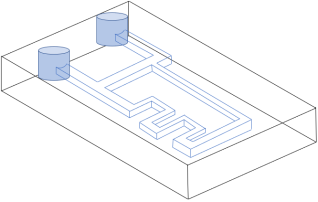
The experiments were conducted at ambient temperature of 25°C. The experimental procedure was as follows: first, deionized water was injected into the microfluidic chip using a syringe; then, the chip was sealed within a stainless-steel fixture through a glass cover plate. The entire assembly was subsequently placed under a microscope connected to a high-speed camera, and the focus was adjusted to obtain a clear image. Next, the nanoparticle suspension was injected, and the fluorescent interface could be observed. When the fluorescent interface became stable, the inlet and outlet valves were sequentially closed to prevent external convective interference. After the valves were closed, the nanoparticle population gradually diffused into the aqueous phase. In the in-situ imaging, a gradual change in fluorescence intensity from the initial fluorescent interface with increasing diffusion distance could be observed, indicating that the nanoparticle concentration also gradually decreased with increasing diffusion distance. Figure 1 is a schematic diagram of the chip used in the experiment.
Figure 1. Schematic diagram of the chip used in the experiment.
The in-situ imaging images captured by the high-speed camera were processed with pseudo-color treatment using ImageJ software. The relationship between the fluorescence intensity of the nanoparticles and the nanoparticle distance could be obtained and analyzed using the software. Assuming that the fluorescence intensity of deionized water under the microscope was zero, a calibration curve relating the nanoparticle fluorescence intensity to the nanoparticle concentration could be established by third-order polynomial fitting. Subsequently, based on this calibration curve, the fluorescence intensity of the nanoparticles in the in-situ images could be converted into nanoparticle concentrations to generate a concentration distribution map. The specific process is shown in Figure 2.
Figure 2. Flowchart of concentration distribution data acquisition.
2.1.2. Experimental Case for Determination of NO2 Diffusion Coefficient
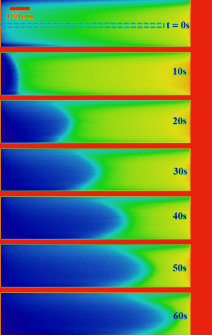
The experimental procedure was similar to that of the nanoparticle diffusion experiment. At an ambient temperature of 22°C, the microchannel was first filled with a H2O2 solution labeled with a pH-sensitive fluorescent indicator. Then, NO2 gas was introduced into the microchannel using a gas syringe pump. The stable one-dimensional diffusion phenomenon of NO2 inside the chip could be observed and recorded using a microscope connected to a high-speed camera, as shown in Figure 3. It could be observed that the NO2 diffused into the H2O2 solution, acidified the solution, and caused the fluorescence signal to diminish.
Figure 3. Image sequence of the visualized NO2 diffusion process.
2.1.3. Application of Molecular Diffusion Differential Equations in the Case Studies
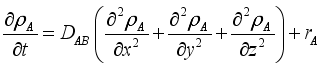
If substance A diffuses in a stagnant medium B, the molecular diffusion differential equation can be derived.
(1)
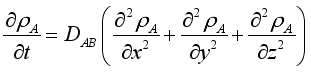
For the molecular diffusion differential equation in the absence of chemical reaction, it is:
(2)
For the experiment of determining the diffusion coefficient of nanoparticles, it can be observed from the captured in-situ imaging images that the fluorescence distribution of the nanoparticles is symmetric about the radial center axis of the microchannel. Therefore, the diffusion of the nanoparticles in the microchannel can be considered as one-dimensional diffusion, which satisfies the requirement of Fick's second law for measuring the diffusion coefficient.
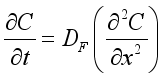
At this point, the molecular diffusion differential equation in terms of molar concentration can be used to calculate the diffusion coefficient, and the calculation formula is as follows:
(3)
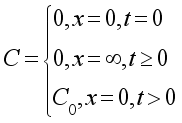
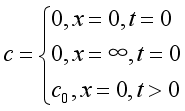
The boundary conditions are:
(4)
Three different sets of tests were conducted, and the obtained data were calculated using Fick's second law for each set, then averaged to obtain the diffusion coefficients corresponding to different times. By averaging these diffusion coefficients, the average value of the nanoparticle diffusion coefficient inside the microchannel at 25°C was determined to be 4.5 × 10⁻¹¹ m2·s-1, with a standard deviation of 2.6 × 10⁻¹² m2·s-1. The details are presented in the paper .
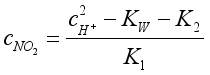
For the experiment of determining the diffusion coefficient of NO2, the NO2 and H2O2 system exhibits a relatively fast reaction rate and a relatively low diffusion rate. Under the assumption of such a system with fast reaction rate and low diffusion rate, it can be considered that the chemical reaction equilibrium in the local region can be reached rapidly; therefore, can be described as a function of :
(5)
Where K1 represents the equilibrium constant of the reaction in the system, K2 represents the dissociation equilibrium constant of H2O2, and Kw represents the dissociation equilibrium constant of water. Therefore can be calculated from in the equation by measuring the pH value. Based on the above calculations, without considering the reaction-dominated zone between the gas–liquid interface and the diffusion region in the microchannel, and assuming that NO2 undergoes one-dimensional diffusion in the H2O2 system within the microchannel, Fick’s second law can be applied to determine the diffusion coefficient:
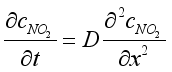
(6)
In the experiment, the concentration of H2O2 satisfies the assumption of a dilute solution. Under this assumption, the diffusion coefficient hardly varies with the concentration of NO2, and because the amount of reactants is extremely small and the chip scale is much larger than the microchannel scale, heat dissipation is rapid, so temperature fluctuations caused by the reaction heat are negligible. The fluorescence intensity distribution along the axial diffusion direction was obtained using ImageJ software, and the corresponding pH distribution was obtained by combining the calibration curve of fluorescence intensity versus pH fitted from discrete data using a fifth-order polynomial. According to Equation (5), the concentration distribution of NO2 can then be obtained.
The boundary conditions are:
(7)
Three different sets of tests were conducted, and the obtained data were calculated using Fick's second law for each set, then averaged to obtain the diffusion coefficients corresponding to different times. By averaging these diffusion coefficients, the average value of the NO2 diffusion coefficient inside the microchannel at 22°C was determined to be 8.55 × 10⁻⁹ m2·s-1, with a standard deviation of 5.53 × 10⁻¹¹ m2·s-1. The details are presented in the paper .
Through these two case studies, students were shown the complete transformation pathway of molecular diffusion processes at the microscale, from invisible to "visible." These cases vividly illustrated that the molecular diffusion differential equation is a quantitative description of the evolution of real concentration distributions, and that the diffusion phenomenon can be directly observed through imaging. The visualized cases reinforced the closed-loop connection among "theory, experiment, and modeling." The two cases, seemingly different yet essentially analogous, enabled students to appreciate the flexible application of mass transfer equations under various boundary conditions and reaction terms, thereby breaking the rigid mindset of "rote memorization of formulas." Through this juxtaposition and comparison, students not only grasped the universal laws of molecular diffusion but also initially cultivated engineering awareness in selecting simplified models and solution strategies for complex transport problems.
2.2. Teaching Effectiveness
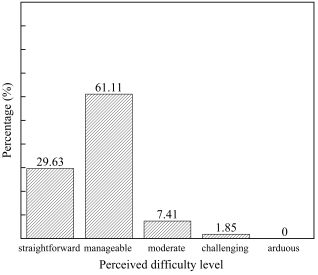
To evaluate the effectiveness of these visualized teaching cases and methods, we conducted an anonymous questionnaire survey among 54 volunteer students who had completed the "Transport Processes" course. The survey was designed not only as a satisfaction measurement, but also specifically to capture students' self-reported learning gains—that is, their perceived improvement in understanding, their enhanced ability to connect abstract equations with physical phenomena, and their perceived reduction in conceptual difficulty. This approach is grounded in the educational principle that students' awareness of their own cognitive progress provides meaningful evidence of learning effectiveness, as it reflects a shift from surface-level memorization to deeper conceptual understanding. First, we investigated the level of difficulty in understanding the cases, as shown in Figure 4. The statistics indicate that 29.63% of the students considered the cases straightforward to understand, 61.11% considered them manageable, 7.41% rated them as moderate in difficulty, and 1.85% regarded them as challenging, while none of the students found the cases arduous. These results suggest that the visualized cases successfully lowered the cognitive barrier to understanding abstract diffusion concepts.
Figure 4. Distribution of perceived difficulty level in understanding the visualized cases (N=54).
The purpose of implementing these case-assisted teaching activities is to ensure the achievement of teaching objectives. In addition to considering the level of difficulty in understanding the cases, we also examined the teaching effectiveness. Table 1 presents a survey on the recognition of teaching effectiveness, revealing that the vast majority of students considered the teaching effectiveness of these visualized cases to be excellent, particularly with respect to (i) the need for innovative teaching content in the "Transport Processes" course. (ii) recognition of similar visualized cases, and (iii) the contribution of visualized cases to enhancing learning interest. Recognition Rate refers to the proportion of students who agreed with the corresponding statement.
Table 1. Recognition of teaching effectiveness.

Items

Recognition Rate

Need for innovative teaching content

94.44%

Satisfaction with the visualized cases

96.30%

Satisfaction with enhancing learning interest

98.15%

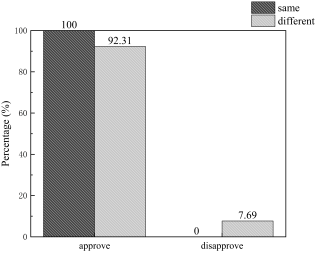
Whether this new teaching case approach can be successfully implemented depends on the perceptions of the students. Therefore, we conducted a cross-statistical survey regarding whether students approve of such visualized cases. The survey results are shown in Figure 5. In the pilot teaching sessions, 51.85% of the students had the same instructor for "Transport Processes" as the teacher delivering the case-based pilot sessions, while 48.15% of the students were taught "Transport Processes" by other instructors.
Figure 5. Results of the cross-statistical survey.

3. Conclusion
Based on the training objectives, we have incorporated two visualized experimental cases based on microfluidic technology into the "mass transfer" teaching module, enabling in-situ observation of the diffusion processes of nanoparticles and NO2 gas, respectively. The results of teaching practice and survey reports suggest that this teaching approach of "transforming theoretical concepts into tangible representations" appears to facilitate an intuitive cognitive connection between mass transfer theory and partial differential equations, may help reduce students' apprehension toward complex mathematical derivations, and seems to positively influence their learning interest. By using actual microfluidic experiments instead of simulations, the real-time microscopic imaging of the diffusion evolution process driven by concentration gradients enables students to visualize the physical picture described by Fick's second law, thereby connecting abstract formula symbols and calculations with real concentration field variations, while also integrating diffusion coefficient calculation into the learning process. The visualized cases offer a new perspective that bridges research platforms with classroom teaching. This approach appears to deepen students' understanding of the physical meaning of diffusion equations, and may also positively influence their learning interest and classroom interaction.
The survey results indicate that the vast majority of students accepted and recognized this teaching case approach, which demonstrates favorable teaching effectiveness. The practice of these two teaching cases shows that the well-designed microfluidic visualization platform can effectively stimulate students' interest, reduce the difficulty of conceptual understanding, deepen the depth of conceptual comprehension, and provide a novel perspective for other instruction in the "Transport Processes" course.
Abbreviations

NO2

Nitrogen Dioxide

H2O2

Hydrogen Peroxide

OBE

Outcome Based Education

CFD

Computational Fluid Dynamics

Author Contributions
Guangzuo Jia: Data curation, Formal Analysis, Investigation, Software, Writing – original draft, Writing – review & editing
Bo Bao: Conceptualization, Funding acquisition, Methodology, Project administration, Resources, Supervision, Visualization
Conflicts of Interest
The authors declare no conflicts of interest.
References
[1] Liu, Zhang, Du. Preliminary Exploration and Continuous Improvement of the Teaching Reform of Chemical Engineering Transfer Course in the OBE Theory. Yunnan Chemical Technology. 2023, 50(5), 208-211.
[2] Li, Li. Exploration of Teaching "Principles of Chemical Transfer Process", Education and Teaching Forum. 2020, (5), 238-240.
[3] Liu, Xu, Gao. Research on Teaching Reform of Transmission Process Principle, Shandong Chemical Industry. 2018, 47(12), 182+188.
[4] Li, Cai. Construction of Course Resources and Teaching Practice for Fundamentals of Chemical Transport Processes, China Journal of Multimedia and Network Teaching. 2020, (11), 224-226.
[5] Sun, Zong, Liang. On the Teaching Reform of Transport Phenomena in Chemical Engineering, Proceedings of the National Conference on Educational and Teaching Research Achievements in Colleges and Universities, Jointly Organized by the Beijing University Electronic and Information Engineering Program Group and the Virtual Teaching and Research Office of Electronic and Information Engineering, Ministry of Education. Beijing University of Posts and Telecommunications Press. 2025, 267-271.
[6] Wang, Xiong. A Brief Talk about the Teaching Quality Improvement of Professional Engineering Curriculum—Taking the Teaching of Chemical Engineering Transport Process as an Example, Higher Education in Chemical Engineering. 2020, 37(5), 7-10.
[7] Wu, Yan, Ma. Exploration of Teaching Reform of Chemical Engineering Transport Processes Based on Engineering Education Accreditation, Higher Education in Chemical Engineering. 2021, 38(2), 57-61.
[8] Gao, Jiao, Liu. Teaching Reform and Practice of Chemical Engineering Transport Process Course Oriented to Professional Accreditation for Engineering Education, Higher Education in Chemical Engineering. 2021, 38(5), 60-65+117.
[9] Augusto P A, Castelo-Grande T, Estevez A M. Practical Demonstrations Designed and Developed by the Students for Pedagogical Learning in Transport Phenomena, Education for Chemical Engineers. 2018, 26, 48-57.
[10] Romero-Cano L A. Modular simulation as a teaching tool: Integrating MATLAB-simulink into Heat Transfer courses to promote active learning and conceptual understanding, Education for Chemical Engineers. 2025, 53(c), 171-177.
[11] Marco A. Zárate-Navarro, Schiavone-Valdez S D, José E. Cuevas, et al. STEM activities for heat transfer learning: Integrating simulation, mathematical modeling, and experimental validation in transport phenomena education, Education for Chemical Engineers. 2024, 49(000).
[12] Ren. Reform and Practice of Transport Process Principle Curriculum from the Perspective of Professional Accreditation of Engineering Education and National Standards for Teaching Quality, Chinese Journal of Chemical Education. 2019, 40(18), 54-61.
[13] Jia, Li. Exploration on Teaching Innovation of Transfer Process Principle, Guangzhou Chemical Industry. 2021, 49(20), 121-122.
[14] Sun, Ren, Zhang. Teaching Reform and Practice of Chemical Engineering Transport Principle Course——A Case Study of Momentum Transfer Process Influenced by Surface Characteristics of Water Purification Membrane, Modern Chemical Research. 2024, 3, 144-146.
[15] Mario M. Valero, Maria Martinez, Francesc Pozo. A successful experience with the flipped classroom in the Transport Phenomena, Education for Chemical Engineers. 2019, 26, 67-79.
[16] Wang Z, Yu H, Liyanage A. Collective diffusion of charged nanoparticles in microchannel under electric field, Chemical Engineering Science. 2022, 248, 117264.
[17] Qiu J, Bao B, Zhao S. Microfluidics-based determination of diffusion coefficient for gas-liquid reaction system with hydrogen peroxide, Chemical Engineering Science. 2020, 231, 116248.
Cite This Article
  • APA Style

    Jia, G., Bao, B. (2026). Case Exploration of Visualization of Diffusion Mass Transfer at Microscale — Teaching Innovation in Transport Processes. Education Journal, 15(4), 133-139. https://doi.org/10.11648/j.edu.20261504.11

    Copy | Download

    ACS Style

    Jia, G.; Bao, B. Case Exploration of Visualization of Diffusion Mass Transfer at Microscale — Teaching Innovation in Transport Processes. Educ. J. 2026, 15(4), 133-139. doi: 10.11648/j.edu.20261504.11

    Copy | Download

    AMA Style

    Jia G, Bao B. Case Exploration of Visualization of Diffusion Mass Transfer at Microscale — Teaching Innovation in Transport Processes. Educ J. 2026;15(4):133-139. doi: 10.11648/j.edu.20261504.11

    Copy | Download

  • @article{10.11648/j.edu.20261504.11,
      author = {Guangzuo Jia and Bo Bao},
      title = {Case Exploration of Visualization of Diffusion Mass Transfer at Microscale — Teaching Innovation in Transport Processes},
      journal = {Education Journal},
      volume = {15},
      number = {4},
      pages = {133-139},
      doi = {10.11648/j.edu.20261504.11},
      url = {https://doi.org/10.11648/j.edu.20261504.11},
      eprint = {https://article.sciencepublishinggroup.com/pdf/10.11648.j.edu.20261504.11},
      abstract = {"Transport Processes" is a core yet challenging course in chemical engineering, with the primary difficulty lying in its heavy reliance on theoretical mathematical descriptions to elucidate the laws of momentum, heat, and mass transfer. Students often struggle to intuitively understand diffusion mass transfer phenomena at the microscale, leading to rote memorization without constructing a corresponding physical picture. To address this pedagogical challenge, we turn to actual microfluidic experiments rather than simulations or theoretical derivations, and propose two visualization-based teaching cases that enable in-situ observation of diffusion at the microscale. The first case utilizes the one-dimensional diffusion of fluorescent nanoparticles in a microchannel, while the second case involves the diffusion of nitrogen dioxide (NO2) gas into a hydrogen peroxide (H2O2) solution, combined with high-speed microscopic imaging and image analysis to determine the diffusion coefficient based on Fick's second law. Both cases transform the theoretical diffusion differential equations into intuitive, dynamic concentration distribution evolution images. Post-teaching questionnaire surveys indicate that 96.30% of the students greatly favored these visualization cases, and the 98.15% of students believed that it improved learning efficiency. More than 90% of the students considered the visualized cases relatively easy to understand. The survey results indicate that introducing microfluidic visualization technology into "Transport Processes" teaching effectively builds a cognitive bridge between mathematical formulations and physical reality, stimulates students' learning interest, reduces the difficulty of conceptual comprehension, and improves lecture atmosphere. This teaching innovation provides a novel perspective for the instruction of the mass transfer module within the "Transport Processes" course.},
     year = {2026}
    }
    

    Copy | Download

  • TY  - JOUR
    T1  - Case Exploration of Visualization of Diffusion Mass Transfer at Microscale — Teaching Innovation in Transport Processes
    AU  - Guangzuo Jia
    AU  - Bo Bao
    Y1  - 2026/07/24
    PY  - 2026
    N1  - https://doi.org/10.11648/j.edu.20261504.11
    DO  - 10.11648/j.edu.20261504.11
    T2  - Education Journal
    JF  - Education Journal
    JO  - Education Journal
    SP  - 133
    EP  - 139
    PB  - Science Publishing Group
    SN  - 2327-2619
    UR  - https://doi.org/10.11648/j.edu.20261504.11
    AB  - "Transport Processes" is a core yet challenging course in chemical engineering, with the primary difficulty lying in its heavy reliance on theoretical mathematical descriptions to elucidate the laws of momentum, heat, and mass transfer. Students often struggle to intuitively understand diffusion mass transfer phenomena at the microscale, leading to rote memorization without constructing a corresponding physical picture. To address this pedagogical challenge, we turn to actual microfluidic experiments rather than simulations or theoretical derivations, and propose two visualization-based teaching cases that enable in-situ observation of diffusion at the microscale. The first case utilizes the one-dimensional diffusion of fluorescent nanoparticles in a microchannel, while the second case involves the diffusion of nitrogen dioxide (NO2) gas into a hydrogen peroxide (H2O2) solution, combined with high-speed microscopic imaging and image analysis to determine the diffusion coefficient based on Fick's second law. Both cases transform the theoretical diffusion differential equations into intuitive, dynamic concentration distribution evolution images. Post-teaching questionnaire surveys indicate that 96.30% of the students greatly favored these visualization cases, and the 98.15% of students believed that it improved learning efficiency. More than 90% of the students considered the visualized cases relatively easy to understand. The survey results indicate that introducing microfluidic visualization technology into "Transport Processes" teaching effectively builds a cognitive bridge between mathematical formulations and physical reality, stimulates students' learning interest, reduces the difficulty of conceptual comprehension, and improves lecture atmosphere. This teaching innovation provides a novel perspective for the instruction of the mass transfer module within the "Transport Processes" course.
    VL  - 15
    IS  - 4
    ER  - 

    Copy | Download

Author Information
  • School of Chemical Engineering, East China University of Science and Technology, Shanghai, China

  • School of Chemical Engineering, East China University of Science and Technology, Shanghai, China

    Biography: Bo Bao received his Ph.D. degree from the University of Toronto. He is currently associate professor and Ph.D. supervisor at East China University of Science and Technology. Dr. Bao has been working in micro/nanofluidic technology and has developed novel pressure-resistant micro/nanofluidic chip experimental instrument. His research expertise covers the scientific mechanisms of phase behaviors, mass transfer and multiphase-flow in porous media at the micro/nano confinement. He has published more than 40 academic papers including Energy, Fuel, Lab on a Chip, AIChE J., Chem. Eng. J., and Chem. Eng. Sci..

    Research Fields: microfluidic technology, nanofluidic technology, scientific mechanisms of phase behaviors, mass transfer, multiphase-flow in porous media.