Abstract
In the era of artificial intelligence, the cultivation of application-oriented talents in higher education is undergoing a fundamental transformation from the traditional knowledge-centered model to a competency-oriented one. Aiming at the prominent pain points in the training of computer majors in application-oriented universities, such as the disconnection between ideological and political education and professional education, the separation of theoretical teaching and practical application, the low efficiency of innovation and entrepreneurship education, and the lack of organic integration between disciplinary competitions and daily teaching, this study explores and constructs an AI-empowered "Ideology, Specialty, Innovation, and Competition (ISIC)" four-in-one talent cultivation paradigm. Based on the analysis of national policy guidance and the current research status of talent cultivation at home and abroad, this paper systematically expounds the core connotation and inherent advantages of the ISIC paradigm, and identifies the key problems in its implementation, including the mismatch between curriculum system and industrial demands, the shortage of practical teaching resources and interdisciplinary faculty, the homogenization of evaluation system, and the emerging risks of technological ethics. Furthermore, targeted implementation plans are proposed from four dimensions: the construction of AI-empowered integrated curriculum system, the establishment of AI-driven practice and competition incubation platform, the cultivation of interdisciplinary faculty team, and the improvement of support mechanism and resource supply system. The practical application results show that this paradigm effectively improves the precision of education and teaching, enhances the practical and innovative abilities of students, optimizes the efficiency of talent cultivation, and strengthens the professional adaptability and employment competitiveness of graduates. It provides a feasible and replicable implementation path for the reform and innovation of application-oriented talent cultivation in the digital era, and also offers a reference for the deep integration of AI technology and higher education teaching reform.
Keywords
AI Empowerment, ISIC Paradigm, Application-Oriented Talent Cultivation, Computer Majors
1. Introduction
In the era of artificial intelligence (AI), the cultivation of application-oriented talents calls for a shift from a knowledge-based model to a competency-based and holistic development model. Consequently, cultivating high-quality graduates with strong values, solid professional knowledge, an innovative spirit, and practical abilities has become a critical issue in higher education research.
The new “Ideology, Specialty, Innovation, and Competition (ISIC)” four-in-one paradigm for cultivating application-oriented talents bears distinct characteristics of the times. It gives full play to the value-leading role of ideological and political education, the knowledge-carrying role of professional education, the practice-transforming role of innovation and entrepreneurship education, and the efficiency-driving role of competitive activities. This embodies the concrete implementation of the “three-wide education” philosophy in the cultivation of application-oriented talents. From a broader perspective, the exploration of this paradigm reflects a core issue commonly faced by global higher education: how to break disciplinary barriers, bridge the gap between theory and practice, and achieve the unity of knowledge impartment and value guidance.
The robust implementation of the AI-empowered "ISIC" four-in-one paradigm for cultivating application-oriented talents is driven by policy support at both national and sectoral levels. The Opinions on Accelerating the Digital Transformation of Education
, jointly issued by nine ministries including the Ministry of Education, explicitly call for the development of education-specific large models and explore their vertical application in thematic fields such as ideological and political education, science education, aesthetic education, and mental health. The Opinions of the State Council on Deepening the Implementation of the "Artificial Intelligence+" Initiative
provide a systematic framework for the integrated application of artificial intelligence across all economic and social sectors. Furthermore, the 2024–2035 Master Plan for Building China into a Leading Country in Education
, released in 2024, identifies artificial intelligence as a key driver for advancing the high-quality development of education and promotes the in-depth integration of ideological and political work with information technology.
Guided and supported by relevant policies, numerous application-oriented universities in China have in recent years recognized the importance of integrating ideological and political education, professional education, innovation and entrepreneurship education, and disciplinary competitions. The integration of "ISIC" has become a focal point in educational reform, with in-depth explorations carried out in pilot majors across various disciplines
| [4] | Ren Z X. Research on constructing the integrated training mode of "Ideology-Specialty-Innovation" innovative talents: Taking the integrated circuit major as an example [J]. Journal of Beijing University of Posts and Telecommunications (Social Sciences Edition), 2023, 25(5): 112-118.
https://doi.org/10.19722/j.cnki.1008-7729.2023.0068 |
| [5] | Liao W J, Lin F, Wang H W. Construction of the practical education community of "Ideology-Specialty-Innovation" in application-oriented universities [J]. Modern Business Trade Industry, 2024, (23): 151-153.
https://doi.org/10.19311/j.cnki.1672-3198.2024.23.050 |
| [6] | Zhang X, Shi X R. Exploration on the collaborative education mode of three-dimensional integration of "Ideology-Specialty-Innovation" in universities [J]. Journal of Tangshan Normal University, 2025, 47(1): 140-144.
https://doi.org/10.3969/j.issn.1009-9115.2025.01.022 |
| [7] | Zhang Q Z, Jia Z J. Research on the training mode of innovative and entrepreneurial talents with the integration of "Ideology-Specialty-Innovation" [J]. Journal of Zhengzhou Normal Education, 2025, 14(2): 75-78. |
| [8] | Wu D, Wang C, Fu J. Construction of the progressive innovation and entrepreneurship talent training mode integrating "learning-training-competition-innovation": Taking computer majors of Hebei University of Engineering as an example [J]. Journal of Hebei University of Engineering (Social Science Edition), 2025, 42(3): 122-128.
https://doi.org/10.3969/j.issn.1673-9477.2025.03.016 |
[4-8]
. Admittedly, the conceptual understanding of AI empowerment within the ISIC paradigm has gradually deepened and developed. Early studies mainly focused on the application of AI technology in individual components, such as the use of intelligent teaching tools in professional courses and technical support for competition projects. With the deepening of practice, researchers have begun to pay attention to the empowering effect of AI technology on the overall ISIC paradigm. For example, Qilu University of Technology
| [9] | Faculty of Computer Science and Technology, Qilu University of Technology. Undergraduate Training [EB/OL]. (2025-11-04) [2026-02-22]. http://jsxb.scsc.cn/list_66/ |
[9]
constructed a four-in-one system of "Teaching–Research–Transformation–Practice," offered courses including Introduction to Artificial Intelligence and the HarmonyOS Ecosystem, integrated AI technology into core professional courses and experimental sessions, and formed a three-tier progressive curriculum structure of "General Education–Core Courses–Specialized Courses." Yang F et al. from Xi’an University of Finance and Economics
| [10] | Yang F, Liu S F. Reform and practice of the application-oriented innovative talent training mode of insurance with the integration of "Ideology-Specialty-Innovation": Taking Xi'an University of Finance and Economics as an example [J]. Research and Practice on Innovation and Entrepreneurship, 2024, 7(15): 121-125. |
[10]
proposed an application-oriented innovative talent training model for insurance based on the integration of "Ideology, Specialty, and Innovation," established a "3-3-4" training system for application-oriented innovative insurance talents, and built a three-tier progressive practical teaching chain of "Basic–Comprehensive–Innovative," achieving remarkable outcomes in educational reform. Li N et al. from Harbin Normal University
moved beyond the two-way construction model of specialty-innovation integration and ideology-innovation integration in universities and realized the organic integration of ideological and political education, professional education, and innovation and entrepreneurship education. Yang X from Shandong Normal University
| [12] | Yang X Y. Exploration on the integration path of "Ideology, Specialty and Innovation" in universities under the background of artificial intelligence [J]. Journal of Heilongjiang Institute of Teacher Development, 2025, 44(4): 8.
https://doi.org/10.3969/j.issn.2096-8531.2025.04.016 |
[12]
proposed an integration path of "Ideology, Specialty, and Innovation" against the backdrop of artificial intelligence, featuring "AI empowerment, ideological and political guidance, interdisciplinary integration, and cooperative symbiosis."
Overall, scattered experience has been accumulated both in China and abroad regarding the integration of "Ideology, Specialty, and Innovation" as well as competition-education integration, with most studies
| [13] | Zhao M, Li S F, Yao Z W. Exploration on the Talent Training Path of Integrating "Ideology, Labor and Innovation" in Colleges and Universities in the New Era [J]. Journal of Shijiazhuang University., 2025, 27(02): 138-141.
https://doi.org/10.13573/j.cnki.sjzxyxb.2025.02.018 |
| [14] | Ge D D, Zhang Z D, Zhu X. Research on Curriculum Reconstruction of "Two Innovations and Three Lines" in Industrial Internet Major Based on Integration of "Ideology, Professionalism and Innovation"[J]. Industrial Technology and Vocational Education., 2025, 23(04): 96-100+112.
https://doi.org/10.16825/j.cnki.cn.13-1400/tb.2025.04.014 |
| [15] | Song Y P, Wang J, Zhou H T. Research on the Talent Training Mode of "Ideology, Major and Innovation" Integration for Energy Majors in Application-oriented Universities — Taking Henan University of Urban Construction as an Example [J]. The Guide of Science & Education, 2023, (31): 16-18. https://doi.org/10.16400/j.cnki.kjdk.2023.31.006 |
[13-15]
focusing on the construction of theoretical frameworks. However, a research gap remains: there is a lack of systematic studies that deeply integrate artificial intelligence technology into the "ISIC" four-in-one talent cultivation model for computer majors in application-oriented undergraduate universities. This gap provides research space for this project.
2. The AI-Empowered ISIC Integrated Talent Cultivation Model and Its Advantages
2.1. The Connotation of ISIC
The headings or subheadings should be numbered in order as the given style. Each headings or subheadings should not exceed 3 lines. There should be at least 2 subheadings but no more than 10 subheadings under one heading.
As the discipline most closely associated with and most profoundly affected by artificial intelligence advancements, computer-related majors provide an ideal testing ground for AI-empowered talent cultivation. The AI-empowered talent training model integrating "ISIC" aims to construct an integrated cultivation system characterized by "coherence of ideology and specialty, coordination of innovation and competition, AI empowerment, and closed-loop education," based on the goal of cultivating application-oriented talents. By deeply embedding AI technology into the entire process of talent training and reconstructing key links such as teaching, practice, and evaluation, this model addresses the pain points in the traditional training model—including the disconnection between ideological and political education and professional education, the separation of theory and practice, the inefficiency of innovation education, and the misalignment between competitions and teaching—to meet the core demand for interdisciplinary and application-oriented talents in the era of the digital economy.
2.2. The Advantages of ISIC
Based on AI technology, this training model achieves a full-dimensional integration and forms a differentiated and precise education path. In the integration of ideological and political education and professional education, AI intelligently mines ideological and political elements in professional courses, accurately pushes ideological and political content suitable for professional scenarios, and dynamically analyzes students' ideological dynamics, thus realizing resonance between ideological and political education and professional teaching. In the integration of specialty and innovation and entrepreneurship education, AI builds virtual simulation training platforms and personalized learning paths, assists students in transforming professional knowledge into innovative projects, and provides project guidance and feasibility analysis through AI algorithms to lower the threshold of innovation. In the integration of innovation competitions and teaching, AI aggregates competition resources and establishes an intelligent evaluation system, realizing precise alignment of competition topics with course content and industrial demands. Meanwhile, competition achievements are transformed into teaching cases to feed back into classroom teaching, forming a closed loop of "teaching–practice–competition–improvement."
Compared with the traditional talent training model, the AI-empowered ISIC integrated model presents significant advantages. First, it improves the precision of education. Through academic analysis and behavior monitoring, AI provides students with personalized training programs, meets the learning needs of students at different levels, and realizes "teaching students in accordance with their aptitude." Second, it enhances practical effectiveness. Technologies such as AI virtual simulation and digital twin break spatial and temporal limitations, enrich practical scenarios, solve the problems of insufficient training resources and high practice costs, and improve students' practical and innovative abilities. Third, it optimizes education efficiency. AI replaces part of the repetitive teaching work, helping teachers focus on core teaching and guidance, and simultaneously promotes the coordinated improvement of students' ideological and political literacy, professional ability, innovative thinking, and competition practical ability. Fourth, it strengthens talent adaptability. Focusing on industrial demands, this model integrates AI application capabilities throughout the training process, effectively enhancing students' employment competitiveness and post adaptability.
3. Problems in the AI-Empowered ISIC Integrated Talent Cultivation Model
3.1. Disconnect Between the Curriculum System and Industrial Demands, and Insufficient Depth of Interdisciplinary Integration
At present, the core contradiction in the AI-empowered "ISIC" integrated model lies in the inadequate dynamic alignment between the curriculum system and industrial needs. Various educational modules often function in isolation, lacking effective linkages among ideological and political education, professional education, innovation and entrepreneurship education, and disciplinary competitions—a phenomenon commonly referred to as the "two separate systems" problem. Approximately 45% of teachers surveyed report that the integration of ideological and political elements with professional knowledge is not seamless, and curriculum-based ideological and political education often appears forced. On-campus and off-campus educational resources are fragmented, the collaborative education mechanism remains underdeveloped, and a multi-stakeholder synergy involving governments, enterprises, universities, and industries has not yet been truly established. While computer-related majors hold technological advantages, systematic research on the in-depth integration of the four-in-one ISIC model is lacking. Practical implementations vary significantly across universities, and there is no standardized, replicable, or scalable model, making it challenging to promote and replicate successful experiences on a broader scale.
3.2. Dual Shortages in Practice Teaching & Faculty Capacity, Blocked Achievement Transformation
The level of intelligence in practical teaching is a critical factor limiting the effectiveness of the ISIC model. First, the relevance and suitability of practical teaching resources in universities are inadequate. AI-driven tools such as virtual simulation platforms and digital twin technologies have low coverage, making it difficult for students to simulate real industrial technology implementation processes. Second, there is a mismatch between faculty capabilities and training requirements. Most university teachers have a single disciplinary background, lacking interdisciplinary competencies and industry practical experience, which hinders their ability to guide students in integrating AI technologies with real industry pain points. Nationwide, only 34% of teachers have obtained certifications in AI teaching capabilities, and the AI application skills of computer science teachers vary greatly, making it difficult for them to meet the demands of intelligent teaching. Teachers need to continuously update their AI knowledge and skills, but systematic training opportunities are insufficient. Some teachers also have a vague understanding of the boundaries of AI tool usage and relevant academic integrity requirements. The rapid pace of technological iteration means AI technologies are updated frequently, leading to outdated course content and placing significant pressure on teachers to keep pace with technological frontiers. Meanwhile, the uneven distribution of resources is prominent: there is a substantial gap between leading universities and ordinary institutions in terms of computing and data resources. Approximately 65% of ordinary universities lack comprehensive AI experimental platforms, which hinders the balanced development of integrated education.
3.3. Homogenized Evaluation, Unbalanced Allocation and Technological Ethics Risks
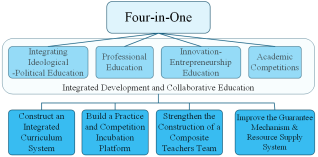
Figure 1. Specific Implementation Plan of the AI - Empowered Integrated Talent Training Mode.
The existing evaluation system and resource allocation mechanisms have become obstacles to the sustainable development of the ISIC model. On one hand, evaluation criteria prioritize theory over practice, focusing primarily on exam scores and academic paper publications as core indicators while neglecting the assessment of students' practical abilities, innovative thinking, and teamwork skills. For instance, in the context of the ISIC model, students' projects are often undervalued due to the lack of quantitative outcomes such as patents or commercialization cases, which dampens students' motivation for innovation. The shift from "outcome-based evaluation" to a "comprehensive process-and-ability evaluation" has not yet been fully realized. On the other hand, ethical norms for AI applications are lacking, data privacy protection is inadequate, and AI-generated code has raised issues related to academic integrity—problems that disproportionately affect computer majors. Additionally, the disconnect between theoretical research and practical application persists: systematic research on the ISIC model is scarce, and international comparative studies are insufficient. There is also limited research on drawing on and localizing relevant foreign experience. The long-standing issue of industry-education disconnection remains unresolved, with gaps between university training and enterprise demands, asynchronous updates of technology stacks, and room for improvement in students' employability and adaptability.
4. Specific Implementation Plan for the AI-Empowered "ISIC" Integrated Talent Cultivation Model
To address the challenges—such as curriculum disconnection, insufficient practical training, weak faculty competence, and inadequate support systems—encountered during the implementation of the AI-empowered "ISIC" four-in-one application-oriented talent cultivation model in computer majors, and to effectively transform the integrated education concept into actionable, implementable, and effective practical measures, the following specific implementation plan is formulated based on the technical characteristics of computer majors, the goals of application-oriented talent cultivation, the trends of AI technology iteration, and industry talent demands. The specific implementation plan is shown in
Figure 1, which outlines the concrete implementation pathways and operational methods. Through a progressive, multi-layer approach with coordinated efforts, this plan promotes the deep integration of AI technology with " ISIC " ensures the successful implementation of the talent cultivation model, and effectively enhances the ideological and political literacy, professional competence, innovative spirit, and practical competitiveness of computer majors, thereby providing solid support for the reform of application-oriented talent cultivation.
4.1. Construct an AI-Empowered Integrated Curriculum System for "ISIC"
Based on the curriculum system of computer majors, this section aims to achieve in-depth integration of "ISIC" with the support of AI technology, breaking down the barriers that separate ideological and political education from professional teaching, theoretical courses from innovation and entrepreneurship practice, and classroom teaching from discipline competitions. On the one hand, AI technology is used to explore the ideological and political elements embedded in the core courses of computer majors. In courses such as Artificial Intelligence, Big Data, and Software Engineering, AI-Enhanced Curriculum Ideology and Politics modules are developed to accurately link knowledge points—such as programming development and system design—with data security ethics, network civilization construction, and the spirit of serving the country through science and technology. Through an AI intelligent push system, targeted ideological and political cases are delivered to students based on their profession-al orientations (e.g., Artificial Intelligence, Network Engineering), achieving the seamless integration of ideological and political education with professional teaching. On the other hand, curriculum content (including Data Structures, Machine Learning, and Fundamentals of Innovation and Entrepreneurship) is integrated with computer-related competition content, and AI virtual teaching tools are introduced. Links such as algorithm competition simulation and project development training are embedded into professional courses. By leveraging AI-based academic performance analysis, personalized learning paths are customized for students, catering to their diverse needs for professional improvement, innovative project development, and competition preparation. This ensures that the curriculum system not only consolidates the foundation of computer majors but also emphasizes innovation and competition, aligning with the talent training requirements of computer majors.
4.2. Establish an AI-Driven Practice and Competition Incubation Platform
Focusing on the practical characteristics and competition needs of computer majors, an AI-driven practice and competition incubation platform tailored to these majors is established to address the pain points of insufficient professional training resources and the lack of effective competition guidance. The platform integrates three core functions: AI-enabled virtual simulation training, incubation of computer-related innovation and entrepreneurship projects, and discipline competition management, providing students with full-process support for practice and competitions. In the practice phase, AI digital twin and virtual simulation technologies are used to build training environments that closely align with computer professional scenarios, such as software development, cybersecurity, big data analysis, and AI model training. Students can independently conduct practical training and project simulations, while the AI system provides real-time feedback on code vulnerabilities and offers suggestions for algorithm optimization. In the competition incubation phase, AI tools conduct feasibility analysis and vulnerability detection on software projects and algorithm models developed by students, recommend award-winning cases and technical support resources from similar competitions (e.g., Blue Bridge Cup, Computer De-sign Competition). Additionally, AI virtual mentors are deployed to provide specialized guidance on algorithm optimization and project defense, improving the quality of students' projects and their competitiveness in competitions. Furthermore, the platform enables intelligent management of the entire process of competition registration, code review, and achievement display, simplifying the organization process and ensuring in-depth linkage between competitions, professional practice, and classroom teaching. This helps students enhance their learning through competitions and promote innovation through competitions.
4.3. Strengthen the Construction of a Multidisciplinary Faculty Team
With the empowerment of computer faculty as the cornerstone, an interdisciplinary faculty team for computer majors suited to the AI-empowered ISIC integrated model is built through a combination of training, recruitment, and collaboration. First, tiered and targeted training programs are implemented. Specialized courses on AI technology application and integrated teaching design are offered to all computer science faculty, focusing on enhancing the proficiency of senior faculty members in machine learning and AI teaching tools (e.g., virtual simulation platforms, code evaluation systems). For young teachers, special training on guiding computer-related innovation and entrepreneurship projects and coaching discipline competitions is provided to help them master the integrated teaching methods of "AI + ISIC," meeting the teaching needs of computer majors. Second, interdisciplinary talent is recruited. Priority is given to recruiting teachers with comprehensive capabilities in AI technology, computer professional skills, and innovation and entrepreneurship project development to supplement the faculty team, with a focus on key areas such as artificial intelligence and big data. Third, collaborative teaching and research teams are established, integrating ideological and political teachers, professional course teachers, innovation and entrepreneurship instructors, and AI technology teachers in computer majors to carry out regular teaching and research activities, explore integrated teaching models, and solve practical problems. Meanwhile, a two-way exchange mechanism for university-enterprise faculty is established, which invites technical experts and senior industry professionals from IT and AI companies to participate in professional teaching and competition guidance, thereby enhancing the practical capabilities and industry adaptability of the faculty team.
4.4. Improve the Support Mechanism and Resource Supply System
A comprehensive support mechanism tailored to computer majors is established and refined, and resource supply is strengthened to provide strong support for the implementation of the AI-empowered ISIC integrated model. In terms of mechanism construction, a collaborative education mechanism involving departments responsible for ideological and political education, computer professional teaching, innovation and entrepreneurship, and competitions is established. The responsibilities of each department are clarified, and communication and collaboration are strengthened around the talent training goals of computer majors to create synergy in educational efforts. A scientific evaluation and incentive mechanism is formulated, incorporating teachers' achievements in AI-integrated teaching, guidance of computer-related innovation and entrepreneurship projects, and competition coaching into assessments. Rewards for teachers who guide students to win competitions and those who develop high-quality integrated courses are increased to motivate teachers and enhance their engagement. A long-term investment mechanism is established, incorporating AI technology application, professional training platform construction, and faculty training into the annual budget, with key support for the construction of AI virtual simulation training rooms and computer competition incubation centers. In terms of resource supply, investment in AI teaching resources and training equipment for computer majors is increased, resource allocation is optimized, and the timely upgrading of existing AI training platforms and code evaluation systems is promoted. University-enterprise collaboration is deepened: joint artificial intelligence laboratories and software development training bases are built with IT companies, AI enterprises, and industry associations to introduce core enterprise technologies and real project resources. Meanwhile, various computer-related competition resources are integrated to establish an AI competition re-source library, focusing on curating algorithm problem banks and project cases to ensure that resource supply aligns with the talent training needs of computer majors and industry demands.
5. Conclusions
In this section, authors are advised to provide a thorough analysis of the results and make comparisons with relevant literature, not a short summary or conclusion. Any future research directions could also be stated in the discussion.
The advent of the artificial intelligence era has injected unprecedented momentum into the new "ISIC" four-in-one paradigm for cultivating application-oriented talents. Focusing on computer majors in application-oriented undergraduate universities, this study systematically explores the theoretical foundations, practical models, and implementation pathways of AI-empowered ISIC integration, revealing the unique advantages of this paradigm in addressing traditional pain points such as the disconnection between ideology and specialty, the separation of theory and practice, and the inefficiency of innovation cultivation. By constructing an integrated cultivation system characterized by "coherence of ideology and specialty, coordination of innovation and competition, AI empowerment, and closed-loop education," AI technology is deeply embedded in the entire process of curriculum development, practice platform construction, faculty development, and evaluation mechanism improvement, realizing a paradigm shift from standardized teaching to precision education, from knowledge impartment to competency orientation, and from isolated breakthroughs to systemic integration.
However, AI-empowered ISIC integration still faces numerous challenges, including the disconnect between curriculum systems and industrial demands, dual shortages in practical resources and faculty competence, homogenization of the evaluation system, and emerging risks of technological ethics. Future research needs to continuously deepen explorations in areas such as technological application mechanisms, empirical studies on integration effects, the clarification of ethical boundaries, and the enhancement of teachers' digital literacy, promoting the development of AI empowerment from "technological embedding" to "ecological reshaping." Oriented toward the strategic goal of building a leading country in education, application-oriented universities should uphold the fundamental mission of fostering virtue through education, take AI technology as a link, and truly achieve the in-depth integration of ideological and political education, professional education, innovation and entrepreneurship education, and disciplinary competitions, thereby cultivating more high-quality application-oriented talents with firm ideals and convictions, solid professional foundations, outstanding innovative capabilities, and strong patriotic commitment in the era of the digital economy.
Abbreviations
AI | Artificial Intelligence |
ISIC | Ideology, Specialty, Innovation, and Competition |
Acknowledgments
The authors would like to thank the teachers and students of the College of Electronic Information Engineering, Langfang Normal University, for their participation in the questionnaire survey and empirical practice. We also appreciate the technical support from the Institute of Pattern Recognition and Intelligent System of Langfang Normal University.
Author Contributions
Yue Feng: Conceptualization, Resources
Bing Zhang: Data curation, Methodology
Tong Li: Formal analysis, Investigation
Yeqin Cui: Formal Analysis, Investigation
Xinghua Zhang: Supervision, Visualization
Xinyuan Liu:Data curation, Resources
Funding
This work is one of the phased achievements of the fund-funded projects: 2026 Hebei Province Higher Edu-cation Teaching Reform Research and Practice Project(2026GJJG356 Exploration of a Four-in-One "Ideology-Majority-Innovation-Competition" Talent Cultivation Model Enabled by Digital Intelligence in Application-Oriented Universities: A Case Study of Computer Science); 2025 Hebei Provincial Soft Science Research Project (25350306D); Langfang Normal University 2025 Applied Demonstration Course Construction Project (YYS-FKC-2025-10); 2025 Langfang Normal University Innovation and Entrepreneurship Course (Specialization-Innovation Integration Course) Construction Project (PX-53251069); Langfang Normal University 2025 University-level Research Fund Project (XBQ202510).
Data Availability Statement
The data is available from the corresponding author upon reasonable request.
Conflicts of Interest
The authors declare no conflicts of interest.
References
| [1] |
Ministry of Education, Central Cyberspace Affairs Commission, National Development and Reform Commission, et al. Opinions on Accelerating the Digital Transformation of Education [EB/OL]. (2025-04-15).
http://www.moe.gov.cn/srcsite/A01/s7048/202504/t20250416_1187476.html
|
| [2] |
Central Committee of the Communist Party of China, the State Council. Opinions on Deepening the Implementation of the "AI+" Initiative [EB/OL]. (2025-08-21).
http://www.gov.cn/gongbao/2025/issue_12266/202509/content_7039598.html
|
| [3] |
Central Committee of the Communist Party of China, the State Council. 2024–2035 Master Plan for Building China into a Leading Country in Education [EB/OL]. (2025-01-19).
http://www.gov.cn/gongbao/2025/issue_11846/202502/content_7002799.html
|
| [4] |
Ren Z X. Research on constructing the integrated training mode of "Ideology-Specialty-Innovation" innovative talents: Taking the integrated circuit major as an example [J]. Journal of Beijing University of Posts and Telecommunications (Social Sciences Edition), 2023, 25(5): 112-118.
https://doi.org/10.19722/j.cnki.1008-7729.2023.0068
|
| [5] |
Liao W J, Lin F, Wang H W. Construction of the practical education community of "Ideology-Specialty-Innovation" in application-oriented universities [J]. Modern Business Trade Industry, 2024, (23): 151-153.
https://doi.org/10.19311/j.cnki.1672-3198.2024.23.050
|
| [6] |
Zhang X, Shi X R. Exploration on the collaborative education mode of three-dimensional integration of "Ideology-Specialty-Innovation" in universities [J]. Journal of Tangshan Normal University, 2025, 47(1): 140-144.
https://doi.org/10.3969/j.issn.1009-9115.2025.01.022
|
| [7] |
Zhang Q Z, Jia Z J. Research on the training mode of innovative and entrepreneurial talents with the integration of "Ideology-Specialty-Innovation" [J]. Journal of Zhengzhou Normal Education, 2025, 14(2): 75-78.
|
| [8] |
Wu D, Wang C, Fu J. Construction of the progressive innovation and entrepreneurship talent training mode integrating "learning-training-competition-innovation": Taking computer majors of Hebei University of Engineering as an example [J]. Journal of Hebei University of Engineering (Social Science Edition), 2025, 42(3): 122-128.
https://doi.org/10.3969/j.issn.1673-9477.2025.03.016
|
| [9] |
Faculty of Computer Science and Technology, Qilu University of Technology. Undergraduate Training [EB/OL]. (2025-11-04) [2026-02-22].
http://jsxb.scsc.cn/list_66/
|
| [10] |
Yang F, Liu S F. Reform and practice of the application-oriented innovative talent training mode of insurance with the integration of "Ideology-Specialty-Innovation": Taking Xi'an University of Finance and Economics as an example [J]. Research and Practice on Innovation and Entrepreneurship, 2024, 7(15): 121-125.
|
| [11] |
Li N, Guo L, He M Y. Optimization path of the "Ideology-Specialty-Innovation" talent training mode in universities [J]. Heilongjiang Researches on Higher Education, 2023, 41(5): 123-128.
https://doi.org/10.19903/j.cnki.cn23-1074/g.2023.05.020
|
| [12] |
Yang X Y. Exploration on the integration path of "Ideology, Specialty and Innovation" in universities under the background of artificial intelligence [J]. Journal of Heilongjiang Institute of Teacher Development, 2025, 44(4): 8.
https://doi.org/10.3969/j.issn.2096-8531.2025.04.016
|
| [13] |
Zhao M, Li S F, Yao Z W. Exploration on the Talent Training Path of Integrating "Ideology, Labor and Innovation" in Colleges and Universities in the New Era [J]. Journal of Shijiazhuang University., 2025, 27(02): 138-141.
https://doi.org/10.13573/j.cnki.sjzxyxb.2025.02.018
|
| [14] |
Ge D D, Zhang Z D, Zhu X. Research on Curriculum Reconstruction of "Two Innovations and Three Lines" in Industrial Internet Major Based on Integration of "Ideology, Professionalism and Innovation"[J]. Industrial Technology and Vocational Education., 2025, 23(04): 96-100+112.
https://doi.org/10.16825/j.cnki.cn.13-1400/tb.2025.04.014
|
| [15] |
Song Y P, Wang J, Zhou H T. Research on the Talent Training Mode of "Ideology, Major and Innovation" Integration for Energy Majors in Application-oriented Universities — Taking Henan University of Urban Construction as an Example [J]. The Guide of Science & Education, 2023, (31): 16-18.
https://doi.org/10.16400/j.cnki.kjdk.2023.31.006
|
Cite This Article
-
APA Style
Feng, Y., Zhang, B., Li, T., Cui, Y., Zhang, X., et al. (2026). Exploration and Practice of AI-Empowered "Four-in-One" New Paradigm for Application-Oriented Talent Cultivation: Ideology, Specialty, Innovation, and Competition. International Journal of Education, Culture and Society, 11(2), 62-68. https://doi.org/10.11648/j.ijecs.20261102.15
 Copy
|
Copy
|
 Download
ACS Style
Feng, Y.; Zhang, B.; Li, T.; Cui, Y.; Zhang, X., et al. Exploration and Practice of AI-Empowered "Four-in-One" New Paradigm for Application-Oriented Talent Cultivation: Ideology, Specialty, Innovation, and Competition. Int. J. Educ. Cult. Soc. 2026, 11(2), 62-68. doi: 10.11648/j.ijecs.20261102.15
Copy
|
Download
AMA Style
Feng Y, Zhang B, Li T, Cui Y, Zhang X, et al. Exploration and Practice of AI-Empowered "Four-in-One" New Paradigm for Application-Oriented Talent Cultivation: Ideology, Specialty, Innovation, and Competition. Int J Educ Cult Soc. 2026;11(2):62-68. doi: 10.11648/j.ijecs.20261102.15
Copy
|
Download
-
@article{10.11648/j.ijecs.20261102.15,
  author = {Yue Feng and Bing Zhang and Tong Li and Yeqin Cui and Xinghua Zhang and Xinyuan Liu},
  title = {Exploration and Practice of AI-Empowered "Four-in-One" New Paradigm for Application-Oriented Talent Cultivation: Ideology, Specialty, Innovation, and Competition},
  journal = {International Journal of Education, Culture and Society},
  volume = {11},
  number = {2},
  pages = {62-68},
  doi = {10.11648/j.ijecs.20261102.15},
  url = {https://doi.org/10.11648/j.ijecs.20261102.15},
  eprint = {https://article.sciencepublishinggroup.com/pdf/10.11648.j.ijecs.20261102.15},
  abstract = {In the era of artificial intelligence, the cultivation of application-oriented talents in higher education is undergoing a fundamental transformation from the traditional knowledge-centered model to a competency-oriented one. Aiming at the prominent pain points in the training of computer majors in application-oriented universities, such as the disconnection between ideological and political education and professional education, the separation of theoretical teaching and practical application, the low efficiency of innovation and entrepreneurship education, and the lack of organic integration between disciplinary competitions and daily teaching, this study explores and constructs an AI-empowered "Ideology, Specialty, Innovation, and Competition (ISIC)" four-in-one talent cultivation paradigm. Based on the analysis of national policy guidance and the current research status of talent cultivation at home and abroad, this paper systematically expounds the core connotation and inherent advantages of the ISIC paradigm, and identifies the key problems in its implementation, including the mismatch between curriculum system and industrial demands, the shortage of practical teaching resources and interdisciplinary faculty, the homogenization of evaluation system, and the emerging risks of technological ethics. Furthermore, targeted implementation plans are proposed from four dimensions: the construction of AI-empowered integrated curriculum system, the establishment of AI-driven practice and competition incubation platform, the cultivation of interdisciplinary faculty team, and the improvement of support mechanism and resource supply system. The practical application results show that this paradigm effectively improves the precision of education and teaching, enhances the practical and innovative abilities of students, optimizes the efficiency of talent cultivation, and strengthens the professional adaptability and employment competitiveness of graduates. It provides a feasible and replicable implementation path for the reform and innovation of application-oriented talent cultivation in the digital era, and also offers a reference for the deep integration of AI technology and higher education teaching reform.},
 year = {2026}
}
Copy
|
Download
-
TY  - JOUR
T1  - Exploration and Practice of AI-Empowered "Four-in-One" New Paradigm for Application-Oriented Talent Cultivation: Ideology, Specialty, Innovation, and Competition
AU  - Yue Feng
AU  - Bing Zhang
AU  - Tong Li
AU  - Yeqin Cui
AU  - Xinghua Zhang
AU  - Xinyuan Liu
Y1  - 2026/04/13
PY  - 2026
N1  - https://doi.org/10.11648/j.ijecs.20261102.15
DO  - 10.11648/j.ijecs.20261102.15
T2  - International Journal of Education, Culture and Society
JF  - International Journal of Education, Culture and Society
JO  - International Journal of Education, Culture and Society
SP  - 62
EP  - 68
PB  - Science Publishing Group
SN  - 2575-3363
UR  - https://doi.org/10.11648/j.ijecs.20261102.15
AB  - In the era of artificial intelligence, the cultivation of application-oriented talents in higher education is undergoing a fundamental transformation from the traditional knowledge-centered model to a competency-oriented one. Aiming at the prominent pain points in the training of computer majors in application-oriented universities, such as the disconnection between ideological and political education and professional education, the separation of theoretical teaching and practical application, the low efficiency of innovation and entrepreneurship education, and the lack of organic integration between disciplinary competitions and daily teaching, this study explores and constructs an AI-empowered "Ideology, Specialty, Innovation, and Competition (ISIC)" four-in-one talent cultivation paradigm. Based on the analysis of national policy guidance and the current research status of talent cultivation at home and abroad, this paper systematically expounds the core connotation and inherent advantages of the ISIC paradigm, and identifies the key problems in its implementation, including the mismatch between curriculum system and industrial demands, the shortage of practical teaching resources and interdisciplinary faculty, the homogenization of evaluation system, and the emerging risks of technological ethics. Furthermore, targeted implementation plans are proposed from four dimensions: the construction of AI-empowered integrated curriculum system, the establishment of AI-driven practice and competition incubation platform, the cultivation of interdisciplinary faculty team, and the improvement of support mechanism and resource supply system. The practical application results show that this paradigm effectively improves the precision of education and teaching, enhances the practical and innovative abilities of students, optimizes the efficiency of talent cultivation, and strengthens the professional adaptability and employment competitiveness of graduates. It provides a feasible and replicable implementation path for the reform and innovation of application-oriented talent cultivation in the digital era, and also offers a reference for the deep integration of AI technology and higher education teaching reform.
VL  - 11
IS  - 2
ER  -
Copy
|
Download





 Share This Article
 Twitter
 Linked In
 Facebook