Abstract
This research in Iraq deals with the study of the effect of teaching mathematics using the combination of Wheatley's A and Hands and Minds models on firstyear intermediate female students. The research included (80) firstyear intermediate female students, who were randomly selected to represent Section (A). The subject was taught using Wheatley 's A and Hands and Minds models, while Section (C) was taught using the traditional method. The researcher implemented the study during the first semester of the academic year 2022025, and a multiplechoice achievement test in mathematics was conducted to verify the validity of the results. Reliability was extracted using the " T test " For two samples "on a sample of (80) Student, the research results showed that there is a statistically significant relationship between the study variables, In light of the findings, a set of recommendations was presented to enhance the possibility of abstracting mathematics using various strategies. The researchers also suggested future research.
Keywords
Wheatley Model, Hands and Minds Model, Abstract Mathematics, Analysis
1. Introduction
1.1. The Research Problem
Mathematics is a complex, sequential subject, requiring an understanding of basic concepts and results. Learners must be familiar with the basic concepts, principles, and main ideas related to the topics, which necessitates the pursuit and use of diverse intellectual approaches. Any decision in this context will directly impact problemanalysis skills. Memory still struggles with comprehending mathematics, especially in the primary stage, which relies on multiple techniques related to basic concepts and principles, leading to poor performance.
| [21] | Butta, J. (1998): A comparison of Traditional Science Instructions to hands on science Instruction. |
[21]
.
In the context of analyzing the results of the sixthgrade primary school general examinations (first term), researchers noted that the lowest scores were often in mathematics. This raises concerns and calls for an investigation into the causes of poor academic achievement in this subject. Therefore, it has become necessary to study the influencing factors and devise ways to improve students' performance in mathematics by enhancing their understanding of basic concepts. This requires focusing on developing their critical thinking skills, which helps them better engage with the academic content. It is also important to emphasize the importance of providing appropriate support to students to ensure better results in this subject
| [20] | Bryant, F. B., Kastrup, H., Mallow, MUG, Hislop, N., Shefner, R. (2013): Science Anxiety, Science Attitudes and Constructivism: A Binational Study. Journal of Science Education Technology. 22, 43 448. |
[20]
.
Abstract Strategies and Realities addresses multiple models of abstraction, focusing on how surface structures shape specific claims based on sound foundations. This begins by directing efforts toward developing internal models using surface criteria.
Wheatley presents three basic indicators: superficiality, presentation, and taste. He also follows certain models that indicate that Wheatley defines the form and method of presentation by offering general guidelines. Researchers have seen the importance of research regarding the dialectic between models and fictional themes, focusing on their attempts to integrate these elements with models of kinetic narrative, which contributes to the development of mechanisms for analyzing ideas, superficiality, and processing taste.
| [22] | Contlon, D. (1998): Mathematics Power, Teaching Children Mathematics 5(2), P (108112). |
[22]
.
The aim of this research is to explore the various aspects of the options available in the field of mathematics, where complex concepts are sometimes used to explain certain phenomena. Throughout the study, emphasis was placed on a set of methods such as analysis, correlation, and evaluation, which represent essential tools for understanding mathematical topics.
The researchers decided to develop specific strategies based on integrating different theoretical models, with a focus on defining the roles of both teacher and student, whether in the context of direct instruction or through study groups. These strategies are organized sequentially to achieve the desired learning objectives.
These efforts are likely to contribute to enhancing understanding of mathematical topics, which will positively impact the educational process. This research also serves as a blueprint for clarifying the mechanisms of teaching mathematics in different contexts. In this context, the researcher has included a set of research questions that will guide their study.
What is the effect of integrating the Wheatley and Hands and Minds models in teaching mathematics and their impact on the achievement of firstgrade middle school students?
1.2. The Importance of the Research
Mathematics is considered one of the fundamental foundations of any scientific progress, and it plays a vital role in developing critical thinking skills. It occupies a prominent position among the basic sciences for several reasons, including that its study contributes to shaping students' mental abilities and developing higherorder thinking skills that enhance the study of other sciences. In addition, the practical and theoretical applications of mathematics are essential in everyday life, making it a vital tool in meeting future challenges. With the rapid developments in the world of science and technology, mathematics has become an integral part of scientific research and is increasingly used in multiple fields, both in scientific applications and in everyday life. Therefore, it is imperative to focus on improving teaching and learning methods in this field.
| [23] | Denisar, D et. al., (2004): Cultivating Kids Who Care Unit Studying Agrarian Concerns Around the Word, Sarasota Christian School, 5415 Vista Street Sarasota Florida 34232. |
[23]
.
In evaluating general phenomena, especially in mathematical fields, it is essential for the user to adapt to ongoing changes. No update or change in any field occurs without indepth study regarding the paths of future developments. There must be interaction in every field, and we must be aware of the causes of disintegration and sudden changes in broad educational contexts.
| [19] | Bruder, I. (1993): Redefining science: Technology and the new literacy Electronic learning, 12(6), 2024. |
[19]
.
Every teacher must strive to achieve the highest levels of understanding and comprehension among students, enabling them to engage with curricula and life contexts intelligently and effectively. They must seek new methods and approaches to achieve the desired goals, and some educational approaches must be tested to simplify and protect concepts.
| [18] | Baroody, AJ, RT Cosnick. 1993: Problem Solving, Reasoning and Communicating K8: Helping Children Think Mathematically, Macmillan Publishing Company, New York. |
[18]
.
Enhancing imaginary characters in teaching and learning represents an effective mechanism for abstracting mathematical concepts, using appropriate and effective abstraction techniques. This research examines teaching strategies and methods, with researchers and students focusing on the application of these techniques to abstract mathematical concepts.
models include the use of experiments, questions, and interactive activities, in addition to active learning models. These methods aim to expand students' understanding and enhance their ability to view concepts from different perspectives.
| [16] | Anastasia, A (1976): Psychological testing Macmillan publishing New York. |
[16]
.
When using active learning strategies, information is organized into groups, each representing a particular perspective. These groups can be complementary or interconnected, making it easier for students to gain a deeper understanding of mathematical concepts.
The results of previous studies in various tests have proven the effectiveness of strategies in analyzing data using a variety of methods. Among other models in experiments, Wheatley's living model is considered an example of a model that focuses on deepening to enhance understanding or improve records. This model contributes to the indepth analysis of data and enhances understanding of phenomena related to evaluating outcomes in life, leading to the achievement of desired goals. These models have also been used in applications related to improving performance and the efficiency of outcome evaluation
| [17] | Ates, O. & Erilmaz, A. (2011): Effectiveness of Hands On and Minds – On Activities on Students Achievement and Attitudes towards Physics", Journal of AsiaPacific Forum On Science Learning and Teaching. 12(6); 19. |
[17]
.
Researchers have shown that numerous psychological studies and research have recommended enhancing abstract facts in general, and abstract mathematics in particular, by utilizing generalizing figures and modern models. One such study was conducted in 2020 at Mutah University.
In another context, the research aims to shed light on the experience of female high school students, who suffer from academic, psychological, and social pressures and problems, in addition to a general lack of understanding and opinions, which can impact their academic achievement.
| [9] | Abu Shaer, Abdullah Saadi Faris, (2015). The effectiveness of problemsolving strategies and the learning cycle (5 E's) in developing mathematical thinking and academic achievement among sixthgrade students in mathematics: A comparative study. Master's thesis, AlAzhar University Gaza. |
[9]
.
Based on the Above, the Current Research Addresses the Following Points.
This research deals with the topic of integrating models. In mathematics, it seeks to enhance their abilities in secondary school and beyond.
The research aims to explore modern strategies that rely on the use of advanced educational models and methods that are in line with individual differences, which contributes to activating the role of students. In the learning process.
The research also includes a theoretical and applied analysis of specific topics, with a focus on the integration mechanism and the application of abstract strategies through analyzing abstract concepts related to the Wheatley model and the hands and minds.
1.3. Research Objective
The research aims to identify the effect of integrating the Wheatley model and the hands and minds model on mathematics achievement among firstyear middle school female students.
1.4. Research Hypothesis
The researcher put forward the following hypothesis:
"There is no statistically significant difference at the significance level (α≥ 0.05) between the average mathematics achievement scores of seventhgrade female students who studied according to the strategy of integrating Wheatley's model and hands and minds and seventhgrade female students who studied according to the traditional method."
2. Research Limits
This research is limited to:
Time limits: Firstyear middle school students in mathematics.
Population boundaries: secondary records and statistics of the general planning survey have been comprehensively prepared.
Demographic boundaries: First statistical report for the year 2022025.
Educational Frontiers: Statistical Reports (First, Second, Third, etc.) for Mathematics for the Academic Year (2025) Sixth Edition.
2.1. Terminology Analysis
Hands and Minds Model
“The teaching and learning model is considered a means of employing the learner’s senses, as it contributes to developing his mental skills while performing various activities related to research and investigation processes, with the aim of achieving his d goals”
| [15] | Suha M. Muhammad Abu AlFath (2010): “The effectiveness of the hands and minds model in teaching science to develop higherorder thinking skills among firstgrade students,” published master’s thesis, Faculty of Education, Benha University, Egypt. |
[15]
.
The researcher defines it as: “An educational model that includes specific and sequential steps during the presentation of a mathematics lesson to fourthgrade primary school students (the experimental group), which enables students to use manual and mental skills together in learning mathematics through their interaction with manual activities using their various senses.”
Wheatley Model
This model is considered one of the methods of constructivist theory which It relies on group work. It allows learners to build meaningful understanding by linking prior knowledge to newly learned information. This strategy begins by presenting a real problem facing learners, which is then analyzed and appropriate solutions sought using the acquired knowledge and skills. This strategy consists of three basic elements: tasks, collaborative group work, and participation
| [14] | Abu Ubaid, Ahmed (2002): “ The effect of a training program in teaching mathematics based on social interaction through education in developing verbal communication skills and the ability to socialize among primary school students,” unpublished doctoral dissertation, Arab Open University, Jordan. |
[14]
.
The researcher defined this model procedurally as a teachinglearning model that focuses on developing an instructional plan that begins with the teacher presenting the topics of a fourthgrade mathematics unit in the form of authentic tasks that include problems. Students begin by thinking about these problems and searching for solutions through engaging in activities within small, cooperative groups. The process ends with all groups participating in a discussion and evaluation of their findings under the teacher's supervision.
Collection
It is the amount of knowledge that the learner acquires from the lesson, and it is measured by the score he obtains on the achievement test prepared for this purpose
| [12] | Ibrahim, Ahed and others (1991): “Using Wheatley's model (problemcentered learning) in teaching the unit of ratio and proportion on academic achievement and attitude towards mathematics among sixthgrade primary school students. |
[12]
.
The researcher defines it procedurally: What students learn is considered the result of what they have studied systematically. This is measured by the total score they obtain based on their responses to the items on the achievement test designed for this purpose.
| [10] | Ibrahim, Shaaban Hamed Ali (2002): “ The effect of using the hands and minds model in simple scientific investigation tasks on the achievement of ordinary gifted students in the first year of secondary school and their acquisition of scientific thinking and practical trends, ” National Center for Educational and Development Research, Third Annual Scientific Conference, May, pp. 33392, Egypt. |
[10]
.
Theoretical Background and Previous Studies:
1. Theoretical Background
2. The Hands and Minds Model
The Hands and Minds model belongs to constructivist theory, which relies on students' interaction with their peers and their environment during the active learning process. In this context, the teacher's role is that of a guide and facilitator, as learning is viewed as a positive process, and students are built upon this as active learners, helping them construct their own understanding rather than receiving readymade knowledge from the teacher
| [13] | Abu Alam, Raja Mahmoud, (2004). Research Methods in Psychological and Educational Sciences (Fourth Edition). University Publishing House, Cairo, Egypt. |
[13]
.
Constructivism emphasizes the importance of the student's role in constructing and shaping knowledge, and views learning as a dynamic process that adapts to how new experiences or knowledge interact with prior knowledge in the learner's mind. Prior experience is modified and complemented by new knowledge within the framework of personal and social interaction that the student engages in within the learning environment
| [11] | Abu Alam, Raja Mahmoud, (1989). Introduction to Educational Research Methods. Kuwait: AlFalah Library for Publishing and Distribution. |
[11]
.
The basic principles on which the Hands and Minds model is based are:
Knowledge is available to everyone.
Learning requires the interaction of the mind with the senses.
Children should be trained from an early age to observe, experiment, analyze, and draw conclusions.
Developing the student’s abilities and intelligence.
Students practice manual activities.
| [1] | Abu Hamad, Kholoud Younis Suleiman, (2016). The Effect of Using the ProblemCentered Learning Strategy on Developing Mathematical Thinking Skills among Ninth Grade Students in Gaza. Unpublished Master's Thesis, Islamic University, Gaza. |
[1]
.
Objectives of the Hands and Minds Model:
The Hands and Minds model aims to achieve the following:
Students observe things concretely through their five senses.
It gives students the opportunity to present diverse ideas and discover their mental skills.
Students learn to dialogue in a logical manner to discuss their ideas, which helps them build their knowledge.
Students acquire scientific concepts, scientific and mental skills, and scientific thinking, which contributes to raising their oral and written level.
Stages of the Hands and Minds Model:
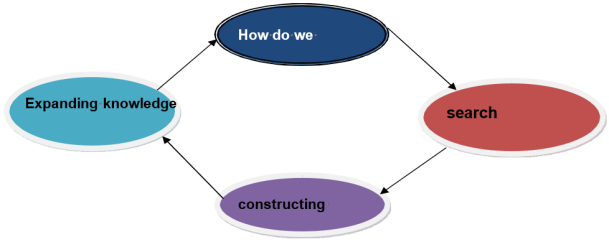
The Hands and Minds model presents scientific material in the form of simple, handson activities, utilizing students' senses and working to unpack them together. This model consists of four main stages identified by
| [2] | Hesham Barakat Bashar (2021): The effectiveness of a proposed program for skills development. “Mathematical Communication among Primary School Students,” a study published in the Egyptian Journal of Mathematics Education, Faculty of Education, Benha University, Egypt. |
[2]
. as follows:
Stage One: How to Get Started:
At this stage, the teacher poses questions to stimulate students' thinking, allowing them to express their prior experiences and knowledge related to the lesson topic. It also provides them with ample space to freely express their ideas, even if they are incorrect. This stage represents one of the essential roles of both the teacher and the students.
2.2. Research and Discovery
The teacher divides students into small working groups, each consisting of 3 to 6 students. Students engage in a variety of scientific and practical activities. Group work may be accompanied by increased student voices. This is not considered an obstacle, but rather a catalyst for idea generation.
2.3. Building Meaning
At this stage, the attributes represented are gathered into a specific group, and students are analyzed during the research and discovery phase. Emphasis is placed on the ideas and relationships that arise from comparisons between different results, leading to proposed solutions. This stage is extremely important.
3. Expanding Knowledge
At this stage, students connect new ideas and information with previous ideas. They also apply the new ideas they have discovered to reallife situations
| [3] | Abu Zeina, Farid Kamel, (1998). Fundamentals of Measurement and Evaluation in Education. Kuwait: AlFalah Office. |
[3]
.
The stages of the model can be expressed as follows:
Figure 1. Stages of the hands and minds model (prepared by the researcher).
This model is based on constructivist theory, which is based on the fundamental premise that the learner creates or constructs his or her own understanding and knowledge based on his or her personal experiences. The learner uses these experiences to interpret the ambiguity of the surrounding environment or to solve problems. Constructivism has led to the imposition of a new philosophy in teaching and learning, which has changed the roles of teachers, making it necessary for them to make a continuous effort to develop their professional skills to understand the principles of constructivism
| [5] | Abu Zeina, Farid and Abaya, Abdullah, (2007). Mathematics teaching methods for the first grades. Amman: Dar AlMasirah. |
[5]
.
Some argue that the nature of a constructivist learning environment focuses more on learning than teaching, encouraging students to engage in discussions with their peers and promoting collaborative learning. It also emphasizes the importance of reallife situations in which learning occurs, moving away from theoretical or abstract teaching that lacks practical application. Instead, the focus is on field experience as the primary source of educational activity, given its effective role in the learning process
| [4] | Hussein Ali Iman (2017): “ The Effect of the Thinking Hand Strategy on the Expressive Performance of FirstYear Intermediate Female Students,” unpublished master’s thesis, College of Education, Ibn Rushd, University of Baghdad, Iraq. |
[4]
.
Teaching Steps According to Wheatley's Model
Based on the components of this model, learning follows the following steps:
Identify prior knowledge: The teacher begins by assessing what the students already know by asking some questions related to the lesson or presenting activities related to the lesson topic, while recording the students’ opinions on the board.
Divide the students into groups: Small groups are formed, each of which includes an outstanding student, an average student, and a lowachieving student.
3.1. Students Are Given Tasks That Include Problems They Must Solve
These tasks can be practical or in the form of inquiries or questions that require them, after understanding the requirements, to discuss ways to solve them
| [6] | Faiza Ahmed Hamada (2002): “ Using reciprocal teaching to develop mathematical thinking and written communication in the preparatory stage in light of some school mathematics standards,” Scientific Journal, Assiut University, 52(1), pp. 23292, Egypt. |
[6].
During group work, the teacher monitors the dialogue and discussions taking place between individuals, encouraging them to think and offering assistance when needed without directly providing the correct answers. He also offers hints if he notices that some groups are having difficulty completing the task.
Each group presents the solutions, results, or interpretations they have reached, and then a discussion is opened to deepen understanding, build clear explanations, and clarify concepts and principles. The teacher manages this discussion among the students, and finally, he or she accurately presents the concept and formulates the principle in a conventional form.
| [7] | Abu Zeina, Farid and Abayneh, Abdullah, (2010). Mathematics teaching curricula for the first grades. Amman: Dar AlMasirah for Publishing, Distribution and Printing. |
[7]
.
Characteristics of the Wheatley Model
The Wheatley Model Has Several Main Characteristics, Which We Summarize as Follows:
Lessons are organized around real educational problems or tasks, or social issues that are meaningful to students, making these problems a central focus of the teaching and learning process.
Students bear primary responsibility during the learning process, investigating the problems they encounter and engaging in investigative activities to reach solutions. While the teacher acts as a facilitator and guide, the bulk of the learning process falls on the students.
This model contributes to enhancing the concept of selflearning and contributes to developing many social skills, such as communicating with others, persuading others using arguments and evidence, respecting different opinions, and listening to colleagues.
Wheatley’s model focuses on enhancing students’ confidence in using and applying what they learn in life situations
| [8] | Muhammad Mahmoud Hamada (2002): “ The effectiveness of metacognitive strategies with stories in developing reading comprehension, achievement, and reading tendencies in mathematics for thirdgrade primary school students, ” Journal of Mathematics Education, Issue 1, pp. 931. |
[8]
.
3.2. Previous Studies
This section includes a review of previous studies, some of which relate to models of hands and minds, while others address mathematical communication. The researcher presented indicators and implications for these studies, and then explained their benefits as follows:
A. Previous Studies That Dealt with Models of Hands and Minds
“The effectiveness of the hands and minds model in enhancing the tendency towards manual work and decisionmaking related to chemistry achievement among firstyear secondary school students
| [17] | Ates, O. & Erilmaz, A. (2011): Effectiveness of Hands On and Minds – On Activities on Students Achievement and Attitudes towards Physics", Journal of AsiaPacific Forum On Science Learning and Teaching. 12(6); 19. |
[17]
.”
The aim is to identify the effectiveness of the hands and minds model in developing the attitude towards manual work, decisionmaking, and chemistry achievement among firstyear secondary school students.
The research sample consisted of (76) students divided into two groups (43) students for the experimental group, (33) students for the control group. When using statistical methods, the following resulted There is a statistically significant difference at the significance level (α = 0.01) between the average scores of the students of the experimental group and the control group in the postapplication of the scale of attitude towards manual work in favor of the experimental group.
There is also a statistically significant difference at the significance level (α = 0.01) between the average scores of the students of the experimental and control groups in favor of the students of the experimental group in the postdecisionmaking skills test.
In addition, there is a statistically significant difference at the level of the t test, the adjusted gain ratio, and the effect size for the manual work attitude scale, the decisionmaking skills test, and the experimental achievement test for the first secondary grade.
B. Previous Studies That Dealt with Wheatley’s Model
Using Wheatley's model (problemcentered learning) in teaching the unit of ratio and proportion on academic achievement and attitude towards mathematics among sixthgrade primary school students
| [12] | Ibrahim, Ahed and others (1991): “Using Wheatley's model (problemcentered learning) in teaching the unit of ratio and proportion on academic achievement and attitude towards mathematics among sixthgrade primary school students. |
[12]
.
This study was conducted in the Kingdom of Saudi Arabia and aimed to explore the effect of using Wheatley's model (problemcentered learning) in teaching a unit on ratio and proportion on academic achievement and attitudes toward mathematics among sixthgrade primary school students. The researcher adopted an experimental design that included two equivalent groups. The study sample included 60 sixthgrade primary school students, divided into two equal groups. The experimental group studied the unit on ratio and proportion using Wheatley's model, while the control group studied the same unit using the traditional method. The researcher used a set of statistical tools, including the difficulty coefficient, analysis of variance, Cronbach's alpha coefficient, and Holsti's equation. An achievement test and an attitude scale were also used. The results of the study showed a statistically significant difference between the mean scores of the experimental and control groups on the achievement test, in favor of the experimental group.
Search Procedures
To Achieve the Research Objectives, the Researchers Relied on the Following Procedures.
4. Choosing the Experimental Design
The researchers chose the appropriate experimental design for the study group, which includes a specific test to analyze what is appropriate to the research topic, and achieves the objectives explained below:
Table 1. Experimental design for the research.
The group | The independent variable is teaching according to | Posttest dependent variable |
Experimental | Integrating the Hands and Minds Model | Scholastic Aptitude Test |
Officer | The usual way | Scholastic Aptitude Test |
4.1. Selecting the Research Sample
A sample of secondyear secondary school students from AlShorouk School was selected, and the research experiment was systematically implemented. The aim of the research was to study the impact of implementing the experiment on academic achievement.
Section (A) was chosen as an experimental sample, while Section (C) was chosen as a control sample, with the exclusion of students who did not achieve good results in previous tests to avoid the influence of negative factors. The research sample consisted of (80) female students, who were randomly distributed into the two classes, as shown in
Table 2 below:
Table 2. Details of the research sample.
the school | The group | The branch | Number of students before exclusion | failed students | Number of students after exclusion |
AlShorouk Secondary School for Boys | Experimental | A | 41 | 1 | 40 |
Officer | C | 45 | 5 | 40 |
| | | 86 | 6 | 80 |
4.2. Equivalence of the Two Research Groups
The researchers were assigned to conduct procedural equivalence in variables believed to affect and control the results of the experiment. This concerned the academic achievement of sixthgrade primary school students in mathematics during the 2024-2025 academic year, in addition to the storytelling score. The arithmetic mean and standard deviation of the students' scores were extracted for each of the aforementioned variables. The ttest for the two research groups was also determined for each of the aforementioned variables. The results are listed in the following table:
Table 3. Results of the equivalence procedures between the two research groups.
Variables | The group | number | arithmetic mean | standard deviation | The calculated | sig significance value |
The age | Experimental | 40 | 159,525 | 7.5718 | 0.577 | 0.565 |
Officer | 40 | 155,375 | 6,194 |
Average | Experimental | 40 | 71,575 | 11,622 | 1.406 | 0.164 |
Officer | 40 | 75,150 | 11.107 |
Mathematics | Experimental | 40 | 72,800 | 15,825 | 1.301 | 0.197 |
Officer | 40 | 77,100 | 13,675 |
IQ | Experimental | 40 | 18,675 | 5,708 | 0.577 | 0.565 |
Officer | 40 | 19.6 | 8.375 |
The results of the previous tables indicate that the probability value (sig) for each of the equivalence variables was greater than the significance level α = 0.05, which means that there is no statistically significant difference between the means of the students of the experimental and control groups for each variable. The equivalence of the students of the two groups was also verified using a single regression line for the experimental principle.
The readiness hypothesis for the study variables was verified through the following procedures:
Use of reliable measurement tools related to the analysis test for the thighs of the research group.
Verifying the research variable by analyzing the experimental group with treatment for the students of the two groups, as it began on (10/10/2024) and ended on (10/1/2025), taking into account the equivalence between the two groups.
Variables of my research group:
There was no interference or change in the research process related to students transferring to another school, postponement, or change of school, as the experiment was implemented in the first semester.
To implement the experiment fairly, the researcher agreed with the school administration to organize the distribution of classes for the mathematics teachers in the research group at close times, with the duration of each class being (20) minutes.
The evaluation examines the external factors of the following processing variables:
The experiment demonstrated an impact on the lives of female students at one school. The study was selected from a single school due to its conducive environment and the availability of facilities that contributed to supporting secondary school students, such as quiet, ventilation, and lighting. The study also focused on the impact of the conducive environment.
The researcher studied the experimental and control experiments according to the experimental plans and sound models, with the integration of Wheatley's model and the control for the experimental group and the regular control group.
The researcher studied the content of the mathematics textbook for the first intermediate grade (20082009) by analyzing the approved version for the year 2008, within the framework of a research project aimed at abstracting the data of the female students of the research group.
4.3. Research Components
The process of verifying the quality of research and its topics includes several elements, including:
4.4. Analysis of the Core Standards
The core standards in Chapters 1, 2, and 3 of the firstgrade mathematics textbook were analyzed.
4.5. Formulating Educational Objectives
The researchers formulated (300) educational objectives based on an analysis of the first three criteria, where the objectives represent 10%, 20%, and 30% of the total objectives.
C Preparing abstract plans: An abstract plan was prepared for the experimental group according to the strategy of integrating the Whitley model and hands and minds, where 20 abstract plans were developed, which were previously mentioned in the statistical analysis.
A model of an abstract plan based on conventional megaplans was also run. The model was tested on a sample of participants to clarify my current views and the extent to which the results were consistent with the abstract plans according to the strategy adopted for the experimental group and the conventional megaplans for the control group, and with their suitability to the demographic objectives. Necessary adjustments were made based on my views.
The remaining abstract plans were also prepared according to the rapid model, with 20 plans developed for each group, making them ready for implementation.
4.6. Preparation of the Achievement Test
The researcher developed an achievement test in mathematics for the first intermediate grade, consisting of eight optional items. These items were distributed according to specific criteria aimed at achieving the cognitive and skill objectives of the target group. The validity and reliability of the test were verified by applying it to a sample of 100 students, with the results showing that all items achieved an acceptable level of validity and reliability. The difficulty coefficient for each item was also calculated, and the difficulty rate ranged between 8% and 20%. To confirm the test's reliability, the Kuder Ritterson equation was used, reflecting the test's effectiveness in measuring students' level of academic achievement.
5. Inactive
Preparing the Achievement Test: The researchers developed an achievement test in mathematics for the first intermediate grade, consisting of eight optional items. These items were distributed according to specific criteria aimed at achieving the cognitive and skill objectives of the target group. The validity and reliability of the test were verified by applying it to a sample of 100 students, with the results showing that all items achieved an acceptable level of validity and reliability. The difficulty coefficient for each item was also calculated, and the difficulty level ranged between 8% and 20%. To confirm the test's reliability, the Kuder Ritterson equation was used, reflecting the test's effectiveness in measuring students' academic achievement.
Study results and discussion:
The research hypothesis was verified, which states: “ There is no statistically significant difference at the significance level (α≥ 0.05) between the average mathematics achievement scores of seventhgrade female students who studied according to the strategy of integrating the Wheatley and Ska’a model, and seventhgrade female students who studied according to the traditional method.”
The researcher analyzed the minimum and standard deviation of the scores of the students of the two groups in the achievement test. The independent sample t test was applied, and the results were included in the following table:
Table 4.
Table 4. Test results of the two groups.
The group | number | arithmetic mean | standard deviation | homogeneity | The calculated | Significant value sig | Effect size |
Levene's test | sig | Eta square | effect |
empiricism | 40 | 350.14 | 3.1568 | 0.167 | 0.684 | 2,058 | 0.43 | 0.052 | small |
The officer | 40 | 12,825 | 3.463 |
The current results indicate that the statistical significance value (sig) for the sample homogeneity test reached 0.684, which is greater than 0.80, indicating that the sample is homogeneous. The sig value for the ttest also indicates 8.22, which is less than the critical value of 8.80, which leads to a reduction in the level of qualitative error. This means that there is a statistically significant difference between the mean scores of the students in the experimental group and the control group in the achievement test.
The results also indicate that the effect size was small in the context of the effect of experience on achievement. These findings are consistent with previous studies by Hands and Minds and Wheatley, which showed similar effects on achievement variables. The researchers attribute these results to potential errors in measuring variables, calling for further studies using accurate measurement tools to deepen understanding in this area.
This method aims to enhance students' understanding. For academic subjects, this helps them improve their performance on tests. The bell also focuses on providing basic information on how to apply the required skills in the student 's context, which positively impacts their answers on achievement test questions. This, in turn, contributes to student excellence. In classrooms, where their role is effective and influential in achieving academic success.
Conclusions: Based on the previous study, the researchers reached the following conclusions:
The student's role in dealing with negative data was clear in the classroom, as her academic achievement was excellent.
The student was able to integrate the study plan with Wheatley's methods under the teacher's guidance, which contributed to enhancing the understanding of her classmates in various subjects. This positively impacted the retention of information in innovative ways, helping to reduce academic obstacles.
The challenges facing the educational environment are represented by the need to improve classroom conditions and enhance interactive activities, as Wheatley's methods contributed to guiding students. Towards critical and creative thinking in the classroom, which made the student more able to follow the lesson topic in a positive way.
In light of the research results, some recommendations were presented, including:
Improving mathematics teaching methods: by focusing on interactive teaching strategies that contribute to integrating educational models.
Wheatley and Hands and Minds seek to activate the student's role in the lesson.
The argument for creativity and experimentation in general nature includes holding experimental courses for mathematics teachers, focusing on the Wheatley model and the hands and minds, how to apply it, and the mechanism for integrating them using an abstract strategy to abstract mathematical topics.
Recommendations: Based on the results of the current research, the researchers suggest conducting the following studies:
Study the effect of integrating Wheatley and Hands and Minds models in abstract mathematics on the acquisition of basic concepts by thirdyear middle school female students.
Evaluating the integration of Wheatley's and Hands and Minds models in abstract mathematics and its impact on the development of critical thinking among firstyear secondary school female students.
Author Contributions
Ammar Awad Saleh: Conceptualization, Data curation, Formal Analysis, Funding acquisition, Investigation, Methodology, Project administration, Resources, Software, Supervision, Validation, Visualization, Writing – original draft
Conflicts of Interest
The author declares no conflicts of interest.
References
| [1] |
Abu Hamad, Kholoud Younis Suleiman, (2016). The Effect of Using the ProblemCentered Learning Strategy on Developing Mathematical Thinking Skills among Ninth Grade Students in Gaza. Unpublished Master's Thesis, Islamic University, Gaza.
|
| [2] |
Hesham Barakat Bashar (2021): The effectiveness of a proposed program for skills development. “Mathematical Communication among Primary School Students,” a study published in the Egyptian Journal of Mathematics Education, Faculty of Education, Benha University, Egypt.
|
| [3] |
Abu Zeina, Farid Kamel, (1998). Fundamentals of Measurement and Evaluation in Education. Kuwait: AlFalah Office.
|
| [4] |
Hussein Ali Iman (2017): “ The Effect of the Thinking Hand Strategy on the Expressive Performance of FirstYear Intermediate Female Students,” unpublished master’s thesis, College of Education, Ibn Rushd, University of Baghdad, Iraq.
|
| [5] |
Abu Zeina, Farid and Abaya, Abdullah, (2007). Mathematics teaching methods for the first grades. Amman: Dar AlMasirah.
|
| [6] |
Faiza Ahmed Hamada (2002): “ Using reciprocal teaching to develop mathematical thinking and written communication in the preparatory stage in light of some school mathematics standards,” Scientific Journal, Assiut University, 52(1), pp. 23292, Egypt.
|
| [7] |
Abu Zeina, Farid and Abayneh, Abdullah, (2010). Mathematics teaching curricula for the first grades. Amman: Dar AlMasirah for Publishing, Distribution and Printing.
|
| [8] |
Muhammad Mahmoud Hamada (2002): “ The effectiveness of metacognitive strategies with stories in developing reading comprehension, achievement, and reading tendencies in mathematics for thirdgrade primary school students, ” Journal of Mathematics Education, Issue 1, pp. 931.
|
| [9] |
Abu Shaer, Abdullah Saadi Faris, (2015). The effectiveness of problemsolving strategies and the learning cycle (5 E's) in developing mathematical thinking and academic achievement among sixthgrade students in mathematics: A comparative study. Master's thesis, AlAzhar University Gaza.
|
| [10] |
Ibrahim, Shaaban Hamed Ali (2002): “ The effect of using the hands and minds model in simple scientific investigation tasks on the achievement of ordinary gifted students in the first year of secondary school and their acquisition of scientific thinking and practical trends, ” National Center for Educational and Development Research, Third Annual Scientific Conference, May, pp. 33392, Egypt.
|
| [11] |
Abu Alam, Raja Mahmoud, (1989). Introduction to Educational Research Methods. Kuwait: AlFalah Library for Publishing and Distribution.
|
| [12] |
Ibrahim, Ahed and others (1991): “Using Wheatley's model (problemcentered learning) in teaching the unit of ratio and proportion on academic achievement and attitude towards mathematics among sixthgrade primary school students.
|
| [13] |
Abu Alam, Raja Mahmoud, (2004). Research Methods in Psychological and Educational Sciences (Fourth Edition). University Publishing House, Cairo, Egypt.
|
| [14] |
Abu Ubaid, Ahmed (2002): “ The effect of a training program in teaching mathematics based on social interaction through education in developing verbal communication skills and the ability to socialize among primary school students,” unpublished doctoral dissertation, Arab Open University, Jordan.
|
| [15] |
Suha M. Muhammad Abu AlFath (2010): “The effectiveness of the hands and minds model in teaching science to develop higherorder thinking skills among firstgrade students,” published master’s thesis, Faculty of Education, Benha University, Egypt.
|
| [16] |
Anastasia, A (1976): Psychological testing Macmillan publishing New York.
|
| [17] |
Ates, O. & Erilmaz, A. (2011): Effectiveness of Hands On and Minds – On Activities on Students Achievement and Attitudes towards Physics", Journal of AsiaPacific Forum On Science Learning and Teaching. 12(6); 19.
|
| [18] |
Baroody, AJ, RT Cosnick. 1993: Problem Solving, Reasoning and Communicating K8: Helping Children Think Mathematically, Macmillan Publishing Company, New York.
|
| [19] |
Bruder, I. (1993): Redefining science: Technology and the new literacy Electronic learning, 12(6), 2024.
|
| [20] |
Bryant, F. B., Kastrup, H., Mallow, MUG, Hislop, N., Shefner, R. (2013): Science Anxiety, Science Attitudes and Constructivism: A Binational Study. Journal of Science Education Technology. 22, 43 448.
|
| [21] |
Butta, J. (1998): A comparison of Traditional Science Instructions to hands on science Instruction.
|
| [22] |
Contlon, D. (1998): Mathematics Power, Teaching Children Mathematics 5(2), P (108112).
|
| [23] |
Denisar, D et. al., (2004): Cultivating Kids Who Care Unit Studying Agrarian Concerns Around the Word, Sarasota Christian School, 5415 Vista Street Sarasota Florida 34232.
|
Cite This Article
-
APA Style
Saleh, A. A. (2026). The Effectiveness of Integrating the Wheatley and Hands and Minds Models in Teaching Mathematics and Their Impact on the Achievement of First Grade Middle School Students. International Journal of Elementary Education, 15(1), 1-10. https://doi.org/10.11648/j.ijeedu.20261501.11
 Copy
|
Copy
|
 Download
ACS Style
Saleh, A. A. The Effectiveness of Integrating the Wheatley and Hands and Minds Models in Teaching Mathematics and Their Impact on the Achievement of First Grade Middle School Students. Int. J. Elem. Educ. 2026, 15(1), 1-10. doi: 10.11648/j.ijeedu.20261501.11
Copy
|
Download
AMA Style
Saleh AA. The Effectiveness of Integrating the Wheatley and Hands and Minds Models in Teaching Mathematics and Their Impact on the Achievement of First Grade Middle School Students. Int J Elem Educ. 2026;15(1):1-10. doi: 10.11648/j.ijeedu.20261501.11
Copy
|
Download
-
@article{10.11648/j.ijeedu.20261501.11,
  author = {Ammar Awad Saleh},
  title = {The Effectiveness of Integrating the Wheatley and Hands and Minds Models in Teaching Mathematics and Their Impact on the Achievement of First Grade Middle School Students},
  journal = {International Journal of Elementary Education},
  volume = {15},
  number = {1},
  pages = {1-10},
  doi = {10.11648/j.ijeedu.20261501.11},
  url = {https://doi.org/10.11648/j.ijeedu.20261501.11},
  eprint = {https://article.sciencepublishinggroup.com/pdf/10.11648.j.ijeedu.20261501.11},
  abstract = {This research in Iraq deals with the study of the effect of teaching mathematics using the combination of Wheatley's A and Hands and Minds models on firstyear intermediate female students. The research included (80) firstyear intermediate female students, who were randomly selected to represent Section (A). The subject was taught using Wheatley 's A and Hands and Minds models, while Section (C) was taught using the traditional method. The researcher implemented the study during the first semester of the academic year 2022025, and a multiplechoice achievement test in mathematics was conducted to verify the validity of the results. Reliability was extracted using the " T test " For two samples "on a sample of (80) Student, the research results showed that there is a statistically significant relationship between the study variables, In light of the findings, a set of recommendations was presented to enhance the possibility of abstracting mathematics using various strategies. The researchers also suggested future research.},
 year = {2026}
}
Copy
|
Download
-
TY  - JOUR
T1  - The Effectiveness of Integrating the Wheatley and Hands and Minds Models in Teaching Mathematics and Their Impact on the Achievement of First Grade Middle School Students
AU  - Ammar Awad Saleh
Y1  - 2026/06/30
PY  - 2026
N1  - https://doi.org/10.11648/j.ijeedu.20261501.11
DO  - 10.11648/j.ijeedu.20261501.11
T2  - International Journal of Elementary Education
JF  - International Journal of Elementary Education
JO  - International Journal of Elementary Education
SP  - 1
EP  - 10
PB  - Science Publishing Group
SN  - 2328-7640
UR  - https://doi.org/10.11648/j.ijeedu.20261501.11
AB  - This research in Iraq deals with the study of the effect of teaching mathematics using the combination of Wheatley's A and Hands and Minds models on firstyear intermediate female students. The research included (80) firstyear intermediate female students, who were randomly selected to represent Section (A). The subject was taught using Wheatley 's A and Hands and Minds models, while Section (C) was taught using the traditional method. The researcher implemented the study during the first semester of the academic year 2022025, and a multiplechoice achievement test in mathematics was conducted to verify the validity of the results. Reliability was extracted using the " T test " For two samples "on a sample of (80) Student, the research results showed that there is a statistically significant relationship between the study variables, In light of the findings, a set of recommendations was presented to enhance the possibility of abstracting mathematics using various strategies. The researchers also suggested future research.
VL  - 15
IS  - 1
ER  -
Copy
|
Download





 Share This Article
 Twitter
 Linked In
 Facebook