
The use of electronic nicotine delivery systems (ENDS) is increasing rapidly across Sub-Saharan Africa (SSA), particularly among young women, while endometriosis remains substantially underdiagnosed in the region. Emerging evidence suggests that vaping may influence hormonal, inflammatory, and oxidative pathways relevant to endometriosis. This scoping review followed PRISMA guidelines and searched PubMed, Web of Science, Scopus, African regional databases, and grey literature to identify studies examining vaping exposure in relation to reproductive or hormonal outcomes and gynecologic pathology. Eligible studies were appraised using the Newcastle–Ottawa Scale and STROBE criteria, and findings were narratively synthesized due to methodological heterogeneity. Across epidemiologic and mechanistic domains, the evidence indicates that nicotine-product use is associated with higher odds of dysmenorrhea and suspected endometriosis; disrupts the hypothalamic–pituitary–gonadal axis and estrogen–progesterone signaling; induces oxidative stress, mitochondrial dysfunction, and NF-κB activation; and may drive epigenetic and immune alterations that promote endometrial adhesion, angiogenesis, and impaired fertility. Contextual vulnerabilities in SSA including environmental co-exposures, infectious disease burden, limited diagnostic capacity, and dual use of vaping with alcohol may further amplify these risks. Although direct causal data from SSA remain limited, the convergence of biological plausibility and emerging epidemiologic signals highlights vaping as a potential reproductive health concern, underscoring the need to integrate vaping into sexual and reproductive health guidelines and to prioritize region-specific research.
| Published in | Journal of Gynecology and Obstetrics (Volume 14, Issue 1) |
| DOI | 10.11648/j.jgo.20261401.12 |
| Page(s) | 13-29 |
| Creative Commons |
This is an Open Access article, distributed under the terms of the Creative Commons Attribution 4.0 International License (http://creativecommons.org/licenses/by/4.0/), which permits unrestricted use, distribution and reproduction in any medium or format, provided the original work is properly cited. |
| Copyright |
Copyright © The Author(s), 2026. Published by Science Publishing Group |
Vaping, Endometriosis, Sub-Saharan Africa, Women of Reproductive Age, Public Health
Domain / Focus Area | Mechanism or Observation | Key Findings (Study Type / Evidence Source) | Subgroup / Regional Relevance (SSA Context) |
|---|---|---|---|
Epidemiologic associations | Vaping exposure ↔ endometriosis prevalence/severity | Case–control & cross-sectional studies from mixed settings suggest higher odds of dysmenorrhea and diagnosis among nicotine product users; heterogeneity prevents meta-analysis. | Underdiagnosis due to limited laparoscopy, stigma; rising youth e-cigarette uptake in urban Nigeria, Ghana; peri-urban mining zones (heavy metals) may interact with vaping exposures. |
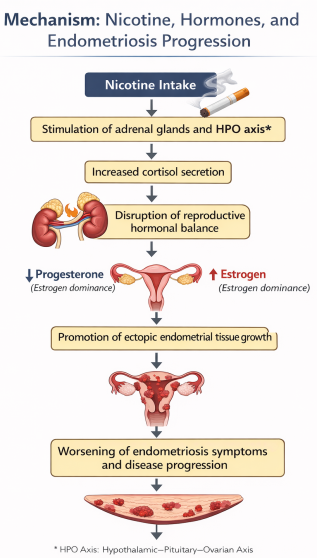
Nicotine & hormonal dysregulation | Nicotine → HPG axis disruption, altered ER/PR signaling | Experimental and human biomarker studies show increased inflammatory markers and disrupted progesterone signaling after nicotine exposure. | In West Africa, contraceptive access gaps and high adolescent pregnancies may amplify hormonal vulnerability. |
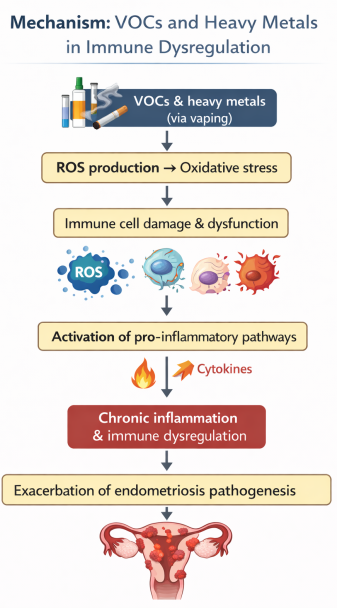
Oxidative stress & inflammation | E-cig aerosols → ROS, mitochondrial damage | In vitro & animal studies show ROS, NF-κB activation; human studies link biomarkers to vaping/alcohol co-use. | Malnutrition and infectious comorbidities (e.g., malaria) could worsen oxidative damage in West African populations. |
Epigenetic / miRNA | Altered DNA methylation, miR expression (HOXA10, miR-200) | Smoking literature robust; early vaping epigenetic signals emerging. | Environmental pollutants (artisanal mining) + vaping may create cumulative epigenetic risk in coastal and inland mining communities. |
Immune & angiogenic pathways | Flavors → macrophage polarization, ↑VEGF | Preclinical pro-angiogenic findings; early human inflammatory marker elevation in young initiators. | High rates of pelvic infection could mask or modify immune signals from vaping. |
Fertility & implantation | Nicotine delays implantation, reduces receptivity | Animal and limited human fertility studies show implantation delays and poorer outcomes. | Fertility services are limited; such effects could have large social impact in contexts where family size is highly valued. |
Duration & intensity | Long-term / high-nicotine use → worse symptoms | Observational correlation between use duration and menstrual pain severity. | Young urban professionals and students increasingly use high-nicotine pods; occupational exposure (mining) matters. |
Concurrent exposures | Vaping + alcohol/tobacco → synergistic harm | Mixed-exposure studies show amplified oxidative/hormonal disruption. | Social nightlife culture in cities like Lagos/Accra increases dual exposures among women. |
Policy & interventions | Weak regulation, low reproductive education | WHO/AU recommend action; few region-specific guidelines exist. | Need to integrate vaping education in adolescent reproductive health programs and mining occupational health policies. |
Domain / Focus Area | Mechanism or Observation | Key Findings (Study Type / Evidence Source) | Subgroup / Regional Relevance (SSA Context) |
|---|---|---|---|
Epidemiologic associations | Rising urban vaping ↔ endometriosis symptoms | Cross-sectional surveys in tertiary clinics indicate associations between nicotine exposure and pelvic pain but limited diagnostics. | Kenya/Uganda show increasing e-cig uptake among youth; rural healthcare access gaps lead to late presentation. |
Nicotine & hormones | Nicotine alters estrogen/progesterone signaling | Lab and clinical biomarker studies show upregulated inflammatory pathways, aromatase activity. | Limited hormone monitoring capacity and contraceptive counseling in peripheral facilities. |
Oxidative stress | Aerosol constituents cause ROS and lipid peroxidation | In vitro and animal evidence; human biomarker studies show higher oxidative markers in dual-users. | High burden of infectious diseases (HIV/TB) could amplify oxidative pathways. |
Epigenetics | miRNA shifts regulating endometrial adhesion | Early evidence from smokers; vaping epigenetic evidence emerging. | Urban pollution (traffic) + vaping may have combined epigenetic impacts in cities like Nairobi and Dar es Salaam. |
Immune & angiogenesis | Flavored condensates → VEGF, macrophage shift | Animal models show pro-angiogenic changes relevant to lesion growth. | High STI prevalence and pelvic inflammation could confound diagnosis of endometriosis. |
Fertility | Reduced uterine receptivity after nicotine | Mouse models + small human cohorts show implantation issues. | Assisted reproduction limited; fertility impacts have outsized social consequences. |
Duration/intensity | Chronic use → severe dysmenorrhea | Observational link between years of vaping and pain scores. | University students and young professionals in capital cities are an at-risk group. |
Concurrent use | Alcohol/Tobacco/vaping interactions | Synergistic oxidative & endocrine disruption reported. | Cultural alcohol consumption patterns at social events may increase joint exposures. |
Policy | Few reproductive guidelines referencing vaping | Regional health policy lags behind use trends. | Opportunities for school-based prevention and adolescent SRH programming. |
Domain / Focus Area | Mechanism or Observation | Key Findings | Subgroup / Regional Relevance |
|---|---|---|---|
Epidemiology | Sparse data; probable underestimation of vaping-related gynecologic disease | Clinic case series suggest links but diagnostic capacity limited. | DRC, CAR: few laparoscopies; artisanal mining exposures (lead, mercury) common — potential synergists. |
Nicotine & hormones | Nicotine → endocrine disruption demonstrated experimentally | Limited human biomarker work; animal studies generalizable. | Nutritional deficiencies and anemia prevalent — could worsen hormonal effects. |
Oxidative stress | Aerosol-induced ROS exacerbated by infections | Preclinical evidence strong; human data limited. | High infectious disease burden may amplify oxidative/inflammatory pathways. |
Epigenetics | Environmental pollutants + vaping may change epigenome | Smoking literature strong; vaping not well-studied. | Mining towns (Lubumbashi) are priority areas to study combined exposures. |
Immune pathways | Proinflammatory shifts with flavored aerosols | Animal studies: macrophage polarization and angiogenesis. | Coexisting pelvic infections increase diagnostic complexity. |
Fertility | Nicotine harms implantation in animal models | Relevant but poorly documented in human Central African cohorts. | Social importance of fertility and very limited ART services increase impact of subfertility. |
Duration & intensity | Chronic users show worse menstrual outcomes elsewhere; local data lacking | Need longitudinal tracking. | Young urban migrants to mining towns may be high-risk group. |
Concurrent exposures | High prevalence of multi-toxin exposures (smoke, mining pollutants) | Likely synergistic but under-researched. | Occupational exposures create unique exposure profiles. |
Policy & interventions | Minimal e-cig regulation, limited SRH integration | Public health priorities often focus on infectious disease. | Integrate vaping topics into maternal/occupational health guidance for mining regions. |
Domain / Focus Area | Mechanism or Observation | Key Findings | Subgroup / Regional Relevance |
|---|---|---|---|
Epidemiology | Rising urban vaping (SA) with some clinic data on pelvic pain associations | Case–control and hospital series from South Africa more numerous than other SSA regions. | South Africa leads in vaping prevalence and diagnostic capacity; neighboring countries show emerging uptake. |
Nicotine & hormones | Robust experimental evidence for endocrine disruption | Human biomarker studies available; vaping data building. | Better lab capacity (Cape Town, Johannesburg) enables mechanistic studies. |
Oxidative stress | Aerosols cause ROS & mitochondrial damage | Both in vitro and small clinical studies support this. | Intersection with high HIV prevalence and TB could magnify impacts. |
Epigenetics | Smoking and vaping associated with methylation changes | South African cohorts feasible for epigenetic studies. | Urban industrial pollution + vaping → cumulative exposures. |
Immune & angiogenesis | Flavors → angiogenic pathways in animal models | Mechanistic signals present. | Pelvic infection patterns may complicate diagnosis. |
Fertility | Nicotine reduces implantation in models; limited human data | Feasible to study at fertility clinics in major cities. | Fertility clinics concentrated in SA enable cohort studies. |
Duration & intensity | Chronic, high-nicotine users experience worse symptoms | Observational data align with global findings. | University student cohorts and nightlife cultures are clear target groups. |
Concurrent exposures | Alcohol + vaping common in nightlife settings | Synergistic damage observed in mixed-use studies. | Strong nightlife economy in SA increases dual exposures among young women. |
Policy & interventions | Some regulatory movement but gaps remain | South Africa has some policy activity; regional harmonization lacking. | Opportunity to pilot reproductive-health integration into tobacco control programs. |
AJOL | African Journals Online |
AU | African Union |
CAR | Central African Republic |
DRC | Democratic Republic of the Congo |
ENDS | Electronic Nicotine Delivery Systems |
ER | Estrogen Receptor |
GnRH | Gonadotropin-Releasing Hormone |
HPO Axis | Hypothalamic–Pituitary–Ovarian Axis |
HPG Axis | Hypothalamic–Pituitary–Gonadal Axis |
HIV | Human Immunodeficiency Virus |
LMICs | Low- and Middle-Income Countries |
NF-κB | Nuclear Factor Kappa-Light-Chain-Enhancer of Activated B Cells |
NOS | Newcastle–Ottawa Scale |
PR | Progesterone Receptor |
PRISMA | Preferred Reporting Items for Systematic Reviews and Meta-Analyses |
ROS | Reactive Oxygen Species |
Scopus | Scientific Citation Index Database (Elsevier) |
SSA | Sub-Saharan Africa |
SRH | Sexual and Reproductive Health |
VEGF | Vascular Endothelial Growth FactorSTI – Sexually Transmitted Infection |
STROBE | Strengthening the Reporting of Observational Studies in Epidemiology |
TB | Tuberculosis |
VOCs | Volatile Organic Compounds |
WHO | World Health Organization |
| [1] | Agaku, I. T., Sulentic, R., Dragicevic, A., Njie, G., Jones, C. K., Odani, S.,... & Ayo-Yusuf, O. (2024). Gender differences in use of cigarette and non-cigarette tobacco products among adolescents aged 13–15 years in 20 African countries. Tobacco Induced Diseases, 22, 10-18332. |
| [2] | Agaku, I. T., Egbe, C. O., & Ayo-Yusuf, O. A. (2021). Geospatial spread of e-cigarette vape shops in South Africa and the relationship with tobacco product use among adults. Health & Place, 68, 102507. |
| [3] |
Tobacco Control:
https://www.afro.who.int/health-topics/tobacco-control accessed on the 05th of june 2025. |
| [4] | Egbe, C. O., Gwambe, S., Londani, M., Erinoso, O., & Ayo-Yusuf, O. A. (2023). Trends in the use and dual use of factory-made combustible cigarettes, other tobacco products and electronic cigarettes: Results from South African Social Attitudes Surveys during 2007 to 2018. Tobacco Induced Diseases, 21, 94. |
| [5] | Londani, M., & Oladimeji, O. (2024). Tobacco use and behaviour among South African adolescents and young adults: systematic review and meta-analysis. BMJ open, 14(2), e079657. |
| [6] | De Silva, R., Silva, D., Piumika, L., Abeysekera, I., Jayathilaka, R., Rajamanthri, L., & Wickramaarachchi, C. (2024). Impact of global smoking prevalence on mortality: a study across income groups. BMC Public Health, 24(1), 1786. |
| [7] | Carreras, G., Lugo, A., Gallus, S., Cortini, B., Fernández, E., López, M. J.,... & Perez, P. (2019). Burden of disease attributable to second-hand smoke exposure: a systematic review. Preventive medicine, 129, 105833. |
| [8] | Adokiye, E. A. (2024). EFFECTS OF ENDOMETRIOSIS ON QUALITY OF LIFE (Benefit of combined hystero-laparoscopic surgery on quality of life and fertility performance in endometriosis) (Doctoral dissertation, University of Pécs (Hungary)). |
| [9] | Giudice, L. C., Oskotsky, T. T., Falako, S., Opoku‐Anane, J., & Sirota, M. (2023). Endometriosis in the era of precision medicine and impact on sexual and reproductive health across the lifespan and in diverse populations. The FASEB Journal, 37(9), e23130. |
| [10] | Price, L. R., & Martinez, J. (2020). Cardiovascular, carcinogenic and reproductive effects of nicotine exposure: A narrative review of the scientific literature. F1000Research, 8, 1586. |
| [11] | Mecha, E. O., Njagi, J. N., Makunja, R. N., Omwandho, C. O., Saunders, P. T., & Horne, A. W. (2022). Endometriosis among African women. Reproduction and Fertility, 3(3), C40-C43. |
| [12] | Awad, A. A., Itumalla, R., Gaidhane, A. M., Khatib, M. N., Ballal, S., Bansal, P., ... & Shabil, M. (2024). Association of electronic cigarette use and suicidal behaviors: a systematic review and meta-analysis. BMC psychiatry, 24(1), 608. |
| [13] | Green, M. M. (2023). Maturation of the Endocannabinoid System in the Medial Prefrontal Cortex and the Effect of Perinatal Cananbinoid Exposure. Indiana University. |
| [14] | Sreeramareddy, C. T., & Acharya, K. (2021). Trends in prevalence of tobacco use by sex and socioeconomic status in 22 sub-Saharan African countries, 2003-2019. JAMA Network Open, 4(12), e2137820-e2137820. |
| [15] | Pierce, J. P., Luo, M ., McMenamin, S. B., Stone, M. D., Leas, E. C., Strong, D.,... & Messer, K. (2025). Declines in cigarette smoking among US adolescents and young adults: indications of independence from e-cigarette vaping surge. Tobacco Control, 34(3), 286-293. |
| [16] | Nyatsanza, S., Isip, U., Bongos-Ikwue, O., Adamu, F., Olajide, O. C., Emoruwa, A.,... & Shettima, I. (2025). The Evolution of Tobacco Marketing to Women and Girls in sub-Saharan Africa. medRxiv, 2025-02. |
| [17] | Ogbuabor, D. C., Ogbuabor, A. O., & Igwe, M. C. (2023). Determinants of cigarette smoking and smoking frequency among women of reproductive age in Nigeria: evidence from a nationwide cross-sectional survey. Substance Abuse Treatment, Prevention, and Policy, 18(1), 20. |
| [18] | Yan, Duo, Zicheng Wang, Linnea Laestadius, Kavita Mosalpuria, Fernando A. Wilson, Alice Yan, Xiaoyang Lv, Xiaotian Zhang, Soumitra S. Bhuyan, and Yang Wang. "A systematic review for the impacts of global approaches to regulating electronic nicotine products." Journal of Global Health 13 (2023): 04076. |
| [19] | Murphy, John D., Benmei Liu, and Mark Parascandola. "Smoking and HIV in Sub-Saharan Africa: a 25-country analysis of the demographic health surveys." Nicotine and Tobacco Research 21, no. 8 (2019): 1093-1102. |
| [20] | Hampsher-Monk, S. C., Prieger, J. E., & Patwardhan, S. (2024). E-cigarette Regulations and Why They Fail. In Tobacco Regulation, Economics, and Public Health, Volume III: Clearing the Air on E-Cigarettes and Harm Reduction (pp. 1-130). Cham: Springer Nature Switzerland. |
| [21] | Montjean, D., Godin Pagé, M. H., Bélanger, M. C., Benkhalifa, M., & Miron, P. (2023). An overview of e-cigarette impact on reproductive health. Life, 13(3), 827. |
| [22] | Larcombe, A. (2023). Dispelling misconceptions about who uses e‐cigarettes and why. Medical Journal of Australia, 218(3). |
| [23] | Kabuya, K. E., & Mwelwa, M. K. (2024). The Impact of Sharing a Shisha (Hookah) Mouthpiece during Smoking: Case of Tuberculosis and Hepatitis in South Saharan Africa. Journal of Tuberculosis Research, 12(1), 34-55. |
| [24] | Theis, R. P., Pilla, J., Okker-Edging, K., Pluta, K., LeLaurin, J. H., Hanby, E.,... & Tan, A. S. (2025). Perspectives of sexual and gender minority youth on anti-vaping messages in social media. Nicotine and Tobacco Research, 27(2), 291-299. |
| [25] | Smith, M. J. (2022). Understanding the role of evidence in e-cigarette regulation and policy development (Doctoral dissertation, University of Glasgow). |
| [26] | O’Connell, M., & Kephart, L. (2022). Local and state policy action taken in the United States to address the emergence of e-cigarettes and vaping: a scoping review of literature. Health Promotion Practice, 23(1), 51-63. |
| [27] | Kundu, S., Shaw, S., Khan, J., Chattopadhyay, A., Baptista, E. A., & Paswan, B. (2023). Age, gender and socioeconomic patterns of awareness and usage of e-cigarettes across selected WHO region countries: evidence from the Global Adult Tobacco Survey. BMJ open, 13(1), e070419. |
| [28] | Namazi, M., Behboodi Moghadam, Z., Zareiyan, A., & Jafarabadi, M. (2021). Impact of endometriosis on reproductive health: an integrative review. Journal of Obstetrics and Gynaecology, 41(8), 1183-1191. |
| [29] | Nri-Ezedi, C., Mbwele, B., Ikwuka, D., Phiri, P., Elneil, S., Delanerolle, G.,... & Ikechebelu, J. I. (2025). Menstrual Health and Endometriosis: An Urgent Issue in Africa. |
| [30] | Taylor, L. (2025). Black Women’s Experiences of Reaching a Diagnosis of Endometriosis. |
| [31] | Tohit, N. F. M., & Haque, M. (2024). Forbidden conversations: A comprehensive exploration of taboos in sexual and reproductive health. Cureus, 16(8). |
| [32] | Kocas, H. D., Rubin, L. R., & Lobel, M. (2023). Stigma and mental health in endometriosis. European journal of obstetrics & gynecology and reproductive biology: X, 19, 100228. |
| [33] | Hudson, N. (2022). The missed disease? Endometriosis as an example of ‘undone science’. Reproductive biomedicine & society online, 14, 20-27. |
| [34] | Bergen, S., Murimi, D., Gruer, C., Munene, G., Nyachieo, A., Owiti, M., & Sommer, M. (2023). Living with endometriosis: a narrative analysis of the experiences of Kenyan women. International journal of environmental research and public health, 20(5), 4125. |
| [35] | Vallée, A., Feki, A., Josseran, L., & Ayoubi, J. M. (2025). Smoking and endometriosis: A narrative review. Tobacco Induced Diseases, 23, 10-18332. |
| [36] | Trapphoff, T., Ontrup, C., Krug, S., & Dieterle, S. (2024). Consumption of hookahs, e-cigarettes, and classic cigarettes and the impact on medically assisted reproduction treatment. Scientific Reports, 14(1), 9597. |
| [37] | Szumilas, K., Szumilas, P., Grzywacz, A., & Wilk, A. (2020). The effects of e-cigarette vapor components on the morphology and function of the male and female reproductive systems: a systematic review. International journal of environmental research and public health, 17(17), 6152. |
| [38] | Marczylo, T. (2020). How bad are e‐cigarettes? What can we learn from animal exposure models?. The Journal of physiology, 598(22), 5073-5089. |
| [39] | Corona, G., Sansone, A., Pallotti, F., Ferlin, A., Pivonello, R., Isidori, A. M.,... & Jannini, E. A. (2020). People smoke for nicotine, but lose sexual and reproductive health for tar: a narrative review on the effect of cigarette smoking on male sexuality and reproduction. Journal of endocrinological investigation, 43, 1391-1408. |
| [40] | Wiafe, S., Mihan, A., & Davison, C. M. (2021). Neighborhood-level influences and adolescent health risk behaviors in rural and urban Sub-Saharan Africa: A systematic review. International journal of environmental research and public health, 18(14), 7637. |
| [41] | Kabuya, K. E., Mwelwa, M. K., & Sangany, C. M. (2025). Air Pollution and Non-communicable Diseases (NCDs) in Sub-Saharan African Cities: A Review. |
| [42] | Waghmare, B. V., & Jajoo, S. (2024). Navigating the challenges: A comprehensive review of adolescent gynecological problems. Cureus, 16(3). |
| [43] | Brillinger, J. (2020). A Mixed Methods Investigation of Bar Atmospherics and Smoking in New Zealand (Doctoral dissertation, University of Otago). |
| [44] | Omiyale, W. (2020). Adiposity and smoking in relation to risk of endometrial cancer (Doctoral dissertation, University of Oxford). |
| [45] | Patel, P. S. Nicotine addiction and vaping in post-pandemic adolescents: Investigating the prevalence, neurodevelopmental impact, and pulmonary pathogenesis in relation to Covid-19-driven behavioral shifts. |
| [46] | Das, P. K., Mukherjee, J., & Banerjee, D. (2023). Female reproductive physiology. In Textbook of veterinary physiology (pp. 513-568). Singapore: Springer Nature Singapore. |
| [47] | Interdonato, L., Siracusa, R., Fusco, R., Cuzzocrea, S., & Di Paola, R. (2023). Endocrine disruptor compounds in environment: Focus on women’s reproductive health and endometriosis. International Journal of Molecular Sciences, 24(6), 5682. |
| [48] | Babaniyi, G. G., Ajao, B. H., Akor, U. J., & Babaniyi, E. (2024). Reproductive endocrinology drug development: Hormones, metabolism, and fertility in female reproductive health. In Perspectives of Quorum Quenching in New Drug Development (pp. 187-206). CRC Press. |
| [49] | Marquardt, R. M., Kim, T. H., Shin, J. H., & Jeong, J. W. (2019). Progesterone and estrogen signaling in the endometrium: what goes wrong in endometriosis?. International journal of molecular sciences, 20(15), 3822. |
| [50] | Chantalat, E., Valera, M. C., Vaysse, C., Noirrit, E., Rusidze, M., Weyl, A.,... & Lenfant, F. (2020). Estrogen receptors and endometriosis. International journal of molecular sciences, 21(8), 2815. |
| [51] | Harding, A. T., & Heaton, N. S. (2022). The impact of estrogens and their receptors on immunity and inflammation during infection. Cancers, 14(4), 909. |
| [52] | Buzzaccarini, G., Vitagliano, A., Andrisani, A., Santarsiero, C. M., Cicinelli, R., Nardelli, C.,... & Cicinelli, E. (2020). Chronic endometritis and altered embryo implantation: a unified pathophysiological theory from a literature systematic review. Journal of Assisted Reproduction and Genetics, 37, 2897-2911. |
| [53] | Schrager, S., Larson, M., Carlson, J., Ledford, K., & Ehrenthal, D. B. (2020). Beyond birth control: noncontraceptive benefits of hormonal methods and their key role in the general medical care of women. Journal of Women's Health, 29(7), 937-943. |
| [54] | Adilbayeva, A., & Kunz, J. (2024). Pathogenesis of endometriosis and endometriosis-associated cancers. International journal of molecular sciences, 25(14), 7624. |
| [55] | Ansariniya, H., Yavari, A., Javaheri, A., & Zare, F. (2022). Oxidative stress‐related effects on various aspects of endometriosis. American Journal of Reproductive Immunology, 88(3), e13593. |
| [56] | Lavacchi, D., Roviello, G., & Rodriquenz, M. G. (2020). Electronic nicotine delivery systems (ENDS): not still ready to put on END. Journal of thoracic disease, 12(7), 3857. |
| [57] | Özcan, S., Öğüt, E. G., Levent, S., & Can, N. Ö. (2024). Review of an up-to-date, emphatic, and concise perspective on e-cigarettes. European Journal of Life Sciences, 3(1), 31-43. |
| [58] | Quinones Tavarez, Z., Li, D., Croft, D. P., Gill, S. R., Ossip, D. J., & Rahman, I. (2020). The interplay between respiratory microbiota and innate immunity in flavor e-cigarette vaping induced lung dysfunction. Frontiers in Microbiology, 11, 589501. |
| [59] | Emma, R., Caruso, M., Campagna, D., Pulvirenti, R., & Li Volti, G. (2022). The impact of tobacco cigarettes, vaping products and tobacco heating products on oxidative stress. Antioxidants, 11(9), 1829. |
| [60] | Ebersole, J., Samburova, V., Son, Y., Cappelli, D., Demopoulos, C., Capurro, A.,... & Khlystov, A. (2020). Harmful chemicals emitted from electronic cigarettes and potential deleterious effects in the oral cavity. Tobacco induced diseases, 18, 41. |
| [61] | Nicholson, T., Scott, A., Newton Ede, M., & Jones, S. W. (2021). The impact of E-cigarette vaping and vapour constituents on bone health. Journal of Inflammation, 18(1), 16. |
| [62] | Bhardwaj, J. K., Siwach, A., & Sachdeva, S. N. (2025). Nicotine as a female reproductive toxicant A review. Journal of Applied Toxicology, 45(4), 534-550. |
| [63] | Schwartz, A., & Bellissimo, N. (2021). Nicotine and energy balance: A review examining the effect of nicotine on hormonal appetite regulation and energy expenditure. Appetite, 164, 105260. |
| [64] | Cui, J., & Wang, Y. (2024). Premature ovarian insufficiency: a review on the role of tobacco smoke, its clinical harm, and treatment. Journal of Ovarian Research, 17(1), 8. |
| [65] | Ogbodo, J. O., Arazu, A. V., Iguh, T. C., Onwodi, N. J., & Ezike, T. C. (2022). Volatile organic compounds: a proinflammatory activator in autoimmune diseases. Frontiers in immunology, 13, 928379. |
| [66] | Ebrahimi, M., Khalili, N., Razi, S., Keshavarz-Fathi, M., Khalili, N., & Rezaei, N. (2020). Effects of lead and cadmium on the immune system and cancer progression. Journal of Environmental Health Science and Engineering, 18, 335-343. |
| [67] | Ohiagu, F. O., Chikezie, P. C., Ahaneku, C. C., & Chikezie, C. M. (2022). Human exposure to heavy metals: toxicity mechanisms and health implications. Material Science & Engineering International Journal, 6(2), 78-87. |
| [68] | Hossein-Khannazer, N., Azizi, G., Eslami, S., Alhassan Mohammed, H., Fayyaz, F., Hosseinzadeh, R.,... & Noorisepehr, M. (2020). The effects of cadmium exposure in the induction of inflammation. Immunopharmacology and immunotoxicology, 42(1), 1-8. |
| [69] | Morris, A. M., Leonard, S. S., Fowles, J. R., Boots, T. E., Mnatsakanova, A., & Attfield, K. R. (2021). Effects of e-cigarette flavoring chemicals on human macrophages and bronchial epithelial cells. International Journal of Environmental Research and Public Health, 18(21), 11107. |
| [70] | Tommasi, S., Blumenfeld, H., & Besaratinia, A. (2023). Vaping dose, device type, and e-liquid flavor are determinants of DNA damage in electronic cigarette users. Nicotine and Tobacco Research, 25(6), 1145-1154. |
| [71] | McNestry, C., Killeen, S. L., Crowley, R. K., & McAuliffe, F. M. (2023). Pregnancy complications and later life women's health. Acta Obstetricia et Gynecologica Scandinavica, 102(5), 523-531. |
| [72] | Sibo, M., Esimo, M., Lobota, M., Monka, I., Kayembe, K. K., Grace, T.,... & Darai, E. (2023). Diagnosis Delay and Assessment of the Quality of Life of Patients with Endometriosis Using the Endometriosis Health Profile 5 Questionnaire in a Sub-Saharan Population. Open Journal of Obstetrics and Gynecology, 13(5), 907-917. |
| [73] | Wang, Y., & Torbica, A. (2024). Investigating the relationship between health and gender equality: What role do maternal, reproductive, and sexual health services play?. Health policy, 149, 105171. |
| [74] | Crawford, B. J., & Waldman, E. G. (2020). Period poverty in a pandemic: harnessing law to achieve menstrual equity. Wash. UL Rev., 98, 1569. |
| [75] |
Africa.unwomen:
https://africa.unwomen.org/en/stories/news/2024/05/period-poverty-why-millions-of-girls-and-women-cannot-afford-their-periods Accessed on the Sept 24. |
| [76] |
Tobacco: E-cigarettes:
https://www.who.int/news-room/questions-and-answers/item/tobacco-e-cigarettes?utm_source=chatgpt.com Accessed on the Sept 24. |
| [77] | Konstantinidou, F., Stuppia, L., & Gatta, V. (2020). Looking inside the world of granulosa cells: the noxious effects of cigarette smoke. Biomedicines, 8(9), 309. |
| [78] | Sun, X., He, L., & Wang, S. (2025). Knowledge and awareness of endometriosis among women in Southwest China: a cross-sectional study. BMC Women's Health, 25(1), 113. |
| [79] | Xu, S., Zhang, Y., Ye, P., Huang, Q., Wang, Y., Zhang, Y.,... & Ding, J. (2025). Global, regional, and national burden of endometriosis among women of childbearing age from 1990 to 2021: a cross-sectional analysis from the 2021 global burden of disease study. International Journal of Surgery, 111(9), 5927-5940. |
| [80] | Beguy, D., Mberu, B., & Nyamai, K. (2025). Sexual and Reproductive Health of Young People in Urban Africa. Urban Health in Africa, 213. |
| [81] | Anadón, A., Ares, I., Martínez-Larrañaga, M. R., & Martínez, M. A. (2022). Cigarette and E-cigarettes smoking and reproductive and developmental toxicity. In Reproductive and Developmental Toxicology (pp. 395-420). Academic Press. |
| [82] | Allen, M. S., & Tostes, R. C. (2023). Cigarette smoking and erectile dysfunction: an updated review with a focus on pathophysiology, e-cigarettes, and smoking cessation. Sexual Medicine Reviews, 11(1), 61-73. |
| [83] | Li, R., Zhang, L., & Liu, Y. (2025). Global and regional trends in the burden of surgically confirmed endometriosis from 1990 to 2021. Reproductive Biology and Endocrinology, 23(1), 88. |
| [84] | Mhazo, P., Swartz, A., Asfar, T., & Wallace, M. (2024). Knowledge, perceptions, and experiences of e-cigarettes among young adults in Cape Town, South Africa: Insights from focus groups to inform regulations and prevention strategies. Tobacco prevention & cessation, 10, 10-18332. |
| [85] | Doyle, T. (2025). Delayed and Misdiagnosed Endometriosis. |
| [86] | Petch, S., Nolan, C., Glover, L., Crosby, D., Petch, S., & Nolan, C. The impact of e-cigarette use (vaping) on ovarian reserve and outcomes of fertility treatment. A systematic review. |
| [87] |
Electronic cigarettes: call to action:
https://www.who.int/publications/m/item/electronic-cigarettes---call-to-action?utm_source=chatgpt.com Accessed on the Sept 24. |
| [88] | Egbe, C. O., Khan, A., Scheibe, A., & Ayo-Yusuf, O. A. (2024). E-cigarettes and harm reduction: a view from sub-Saharan Africa. Tobacco Control, 33(4), 419-421. |
| [89] | Guerrero, F., Lucar, N., Garvich Claux, M., Chiappe, M., Perez-Lu, J., Hindin, M. J.,... & Bayer, A. M. (2020). Developing an SMS text message intervention on sexual and reproductive health with adolescents and youth in Peru. Reproductive health, 17(1), 116. |
| [90] | Diaz, L. A. (2023). Improving Informed Decision Making to Reduce the Health Risks of Vaping Among Adolescents: A Quality Improvement Project. |
| [91] | Roy, D. (2024). Closing the Gaps: Optimizing Emergency Department Protocols for Vaping-Related Respiratory Illnesses (Doctoral dissertation, Walden University). |
| [92] | Jouanny, C., Abhyankar, P., & Maxwell, M. (2024). A mixed methods systematic literature review of barriers and facilitators to help-seeking among women with stigmatised pelvic health symptoms. BMC Women's Health, 24(1), 217. |
| [93] | Poku, N. K. (2021). Sexual and reproductive health and rights in Sub-Saharan Africa. Springer Nature. |
| [94] | Bahceci, M., Bozdag, G., Boynukalın, F. K., Gultomruk, M., & Ozkavukcu, S. (2024). P-706 The pregnancy rates in a large cohort of patients with thin endometrium when stratified according to estradiol levels on the day of triggering. Human Reproduction, 39(Supplement_1), deae108-1036. |
| [95] | Roupret, M., Babjuk, M., Burger, M., Capoun, O., Cohen, D., Comperat, E. M.,... & Shariat, S. F. (2021). European Association of Urology guidelines on upper urinary tract urothelial carcinoma: 2020 update. European urology, 79(1), 62-79. |
| [96] | Antin, T. M. (2023). Routledge handbook of intoxicants and intoxication. G. Hunt, T. M. Antin, & V. A. Frank (Eds.). London: Routledge. |
| [97] | Golden, S. D., Baggett, C. D., Kuo, T. M., Kong, A. Y., Delamater, P. L., Tao, V. Q., & Ribisl, K. M. (2022). Trends in the number and type of tobacco product retailers, United States, 2000–2017. Nicotine and Tobacco Research, 24(1), 77-84. |
| [98] | Weissig, V., & Edeas, M. (2023). Targeting Mitochondria 2023 Abstract Book. Journal of Mitochondria, Plastids and Endosymbiosis, 1(sup1), 2270281. |
| [99] | Prasad, K. N., & Bondy, S. C. (2022). Electronic cigarette aerosol increases the risk of organ dysfunction by enhancing oxidative stress and inflammation. Drug and Chemical Toxicology, 45(6), 2561-2567. |
| [100] | Ní Dhonnabháin, B., Relton, R., Rodrigues Vaz, S., Vasavan, T., Getreu, N., & ONeill, H. (2024). P-697. The effect of smoking and vaping on hormonal ovarian reserve markers in women of reproductive age in the United Kingdom. Human Reproduction, 39(Supplement_1), deae108-1027. |
| [101] | Bravi, F., Parazzini, F., Cipriani, S., Chiaffarino, F., Ricci, E., Chiantera, V.,... & La Vecchia, C. (2014). Tobacco smoking and risk of endometriosis: a systematic review and meta-analysis. BMJ open, 4(12), e006325. |
| [102] | Ussher, M., Fleming, J., & Brose, L. (2024). Vaping during pregnancy: a systematic review of health outcomes. BMC Pregnancy and Childbirth, 24(1), 435. |
| [103] | Alkattan, R., Tashkandi, N., Mirdad, A., Ali, H. T., Alshibani, N., & Allam, E. (2025). Effects of Electronic Cigarettes on Periodontal Health: A Systematic Review and Meta-Analysis. International Dental Journal. |
| [104] | Maulenkul, T., Kuandyk, A., Makhadiyeva, D., Dautova, A., Terzic, M., Oshibayeva, A.,... & Sarria-Santamera, A. (2024). Understanding the impact of endometriosis on women’s life: an integrative review of systematic reviews. BMC women's health, 24(1), 524. |
| [105] | Parsa, S., Noroozpoor, R., Dehghanbanadaki, H., Khateri, S., & Moradi, Y. (2025). Endometriosis and risk of cardiovascular disease: a systematic review and meta-analysis. BMC public health, 25(1), 245. |
| [106] | Petraglia, F., Vannuccini, S., Dolmans, M. M., Speciale, A. R., Bourdon, M., Marcellin, L., ... & Chapron, C. (2025). The endocrine aspects of endometriosis. European journal of endocrinology, 193(4), R17-R30. |
| [107] | Bushi, G., Khatib, M. N., Balaraman, A. K., Ballal, S., Bansal, P., Tomar, B. S.,... & Shabil, M. (2024). Prevalence of dual use of combustible tobacco and E-cigarettes among pregnant smokers: a systematic review and meta-analysis. BMC Public Health, 24(1), 3200. |
| [108] | Khodaee, A., Reed, A., & Khodaee, M. (2025). Electronic cigarette use (vaping) among adolescents: a narrative review of an emerging public health epidemic. Cureus, 17(8). |
| [109] | Kabani, Z., Ramos-Nino, M. E., & Ramdass, P. V. (2022). Endometriosis and COVID-19: a systematic review and meta-analysis. International Journal of Molecular Sciences, 23(21), 12951. |
| [110] | Peitsidis, P., Tsikouras, P., Laganà, A. S., Laios, A., Gkegkes, I. D., & Iavazzo, C. (2023). A systematic review of systematic reviews on the use of aromatase inhibitors for the treatment of endometriosis: the evidence to date. Drug Design, Development and Therapy, 1329-1346. |
APA Style
Kabuya, K. E., Sangany, M. C. (2026). The Potential Role of Vaping in the Increasing Burden of Endometriosis Among Women of Reproductive Age in Sub-Saharan Africa: A Public Health Concern. Journal of Gynecology and Obstetrics, 14(1), 13-29. https://doi.org/10.11648/j.jgo.20261401.12
ACS Style
Kabuya, K. E.; Sangany, M. C. The Potential Role of Vaping in the Increasing Burden of Endometriosis Among Women of Reproductive Age in Sub-Saharan Africa: A Public Health Concern. J. Gynecol. Obstet. 2026, 14(1), 13-29. doi: 10.11648/j.jgo.20261401.12
@article{10.11648/j.jgo.20261401.12,
  author = {Kalala Elisee Kabuya and Mukasa Charline Sangany},
  title = {The Potential Role of Vaping in the Increasing Burden of Endometriosis Among Women of Reproductive Age in Sub-Saharan Africa: A Public Health Concern},
  journal = {Journal of Gynecology and Obstetrics},
  volume = {14},
  number = {1},
  pages = {13-29},
  doi = {10.11648/j.jgo.20261401.12},
  url = {https://doi.org/10.11648/j.jgo.20261401.12},
  eprint = {https://article.sciencepublishinggroup.com/pdf/10.11648.j.jgo.20261401.12},
  abstract = {The use of electronic nicotine delivery systems (ENDS) is increasing rapidly across Sub-Saharan Africa (SSA), particularly among young women, while endometriosis remains substantially underdiagnosed in the region. Emerging evidence suggests that vaping may influence hormonal, inflammatory, and oxidative pathways relevant to endometriosis. This scoping review followed PRISMA guidelines and searched PubMed, Web of Science, Scopus, African regional databases, and grey literature to identify studies examining vaping exposure in relation to reproductive or hormonal outcomes and gynecologic pathology. Eligible studies were appraised using the Newcastle–Ottawa Scale and STROBE criteria, and findings were narratively synthesized due to methodological heterogeneity. Across epidemiologic and mechanistic domains, the evidence indicates that nicotine-product use is associated with higher odds of dysmenorrhea and suspected endometriosis; disrupts the hypothalamic–pituitary–gonadal axis and estrogen–progesterone signaling; induces oxidative stress, mitochondrial dysfunction, and NF-κB activation; and may drive epigenetic and immune alterations that promote endometrial adhesion, angiogenesis, and impaired fertility. Contextual vulnerabilities in SSA including environmental co-exposures, infectious disease burden, limited diagnostic capacity, and dual use of vaping with alcohol may further amplify these risks. Although direct causal data from SSA remain limited, the convergence of biological plausibility and emerging epidemiologic signals highlights vaping as a potential reproductive health concern, underscoring the need to integrate vaping into sexual and reproductive health guidelines and to prioritize region-specific research.},
 year = {2026}
}
TY  - JOUR
T1  - The Potential Role of Vaping in the Increasing Burden of Endometriosis Among Women of Reproductive Age in Sub-Saharan Africa: A Public Health Concern
AU  - Kalala Elisee Kabuya
AU  - Mukasa Charline Sangany
Y1  - 2026/01/20
PY  - 2026
N1  - https://doi.org/10.11648/j.jgo.20261401.12
DO  - 10.11648/j.jgo.20261401.12
T2  - Journal of Gynecology and Obstetrics
JF  - Journal of Gynecology and Obstetrics
JO  - Journal of Gynecology and Obstetrics
SP  - 13
EP  - 29
PB  - Science Publishing Group
SN  - 2376-7820
UR  - https://doi.org/10.11648/j.jgo.20261401.12
AB  - The use of electronic nicotine delivery systems (ENDS) is increasing rapidly across Sub-Saharan Africa (SSA), particularly among young women, while endometriosis remains substantially underdiagnosed in the region. Emerging evidence suggests that vaping may influence hormonal, inflammatory, and oxidative pathways relevant to endometriosis. This scoping review followed PRISMA guidelines and searched PubMed, Web of Science, Scopus, African regional databases, and grey literature to identify studies examining vaping exposure in relation to reproductive or hormonal outcomes and gynecologic pathology. Eligible studies were appraised using the Newcastle–Ottawa Scale and STROBE criteria, and findings were narratively synthesized due to methodological heterogeneity. Across epidemiologic and mechanistic domains, the evidence indicates that nicotine-product use is associated with higher odds of dysmenorrhea and suspected endometriosis; disrupts the hypothalamic–pituitary–gonadal axis and estrogen–progesterone signaling; induces oxidative stress, mitochondrial dysfunction, and NF-κB activation; and may drive epigenetic and immune alterations that promote endometrial adhesion, angiogenesis, and impaired fertility. Contextual vulnerabilities in SSA including environmental co-exposures, infectious disease burden, limited diagnostic capacity, and dual use of vaping with alcohol may further amplify these risks. Although direct causal data from SSA remain limited, the convergence of biological plausibility and emerging epidemiologic signals highlights vaping as a potential reproductive health concern, underscoring the need to integrate vaping into sexual and reproductive health guidelines and to prioritize region-specific research.
VL  - 14
IS  - 1
ER  -
Department of Public Health, Africa University, Manicaland-Mutare, Zimbabwe
Department of Health Science, School of Laboratory of Medicine and Medical Science, University of Kwazulu-Natal, Durban, South Africa

Information



 Share This Article
 Twitter
 Linked In
 Facebook
 Copy
Copy Download