Background: Transversus abdominis plane (TAP) block has been demonstrated to be an effective post-operative analgesic modality for caesarean section. However, various adjuncts have been used to prolong the analgesic effect of TAP block. The study aimed to evaluate the analgesic effect of dexamethasone and ketamine as adjuncts to plain bupivacaine for TAP following caesarean section. Subjects and Methods: Forty six eligible patients were randomized into two groups D and k (21 each) to receive TAP block. Group D received 40ml of 0.25% bupivacaine + 6mg dexamethasone and group K received 40ml of 0.25% bupivacaine +0.5mg/kg ketamine respectively. The duration of analgesia, pain scores, hemodynamic variables, and patient satisfaction using Likert- 5 scale were assessed and recorded. Data was collected and assessed using SPSS 21 for Windows. Numerical data was analyzed using unpaired Student t-test, while categorical data was analyzed using chi-square test. A p-value < 0.05 was considered significant. Result: The duration of analgesia was significantly (p<0.000) longer in dexamethasone group (1140.0±227.68) compared to ketamine group (846.0±211.37). The mean VAS score became significantly (p<0.000) lower in dexamethasone group (2.25±1.12) at 12hrs of the block compared to ketamine group (4.37±2.01). 95% of the patients (20) in group dexamethasone were satisfied with the procedure compared to 60% of patients (12) in ketamine group. This difference was statistically significant. Conclusion: The study concluded that 6mg dexamethasone when used as an adjuvant to plain bupivacaine via TAP block provided better analgesic profile after caesarean section compared to ketamine as an adjuvant.
This is an Open Access article, distributed under the terms of the Creative Commons Attribution 4.0 International License (http://creativecommons.org/licenses/by/4.0/), which permits unrestricted use, distribution and reproduction in any medium or format, provided the original work is properly cited.
Tap Block with Bupivacaine, Adjuvants, Dexamethasone, Ketamine, Post-Operative Analgesia, Caesarean Section
1. Introduction
Postoperative pain is one of the commonest complications of cesarean section with an incidence of 82.2% in Ethiopia and 54.7% in Nigeria.
[1]
Hussen I, Worku M, Geleta D, Mahamed AA, Abebe M, Molla W, et al. Post-operative pain and associated factors after cesarean section at Hawassa University Comprehensive Specialized Hospital, Hawassa, Ethiopia: A cross-sectional study. Ann Med Surg. 2022. 81: 104321.
Kolawole IK, Fawole AA. Postoperative pain management following caesarean section in university of Ilorin Teaching Hospital (UITH), Ilorin, Nigeria. WestAfrJMed 2003: 22(4): 305-309.
. It is known to be associated with increased oxygen consumption, increased morbidity, impaired physical function, slow recovery, increased cost of care and increased liability to chronic persistent pain if poorly managed
Different modalities have been employed to reduce pain following c/s, such as non steroidal anti-inflammatory drugs, systemic opioid, epidural analgesia, wound infiltration and regional nerve blocks
[4]
Mansour R. F, Afifi M. A, Abdelghany M. S. Transversus Abdominis Plane (TAP) Block: A Comparative Study between Levobupivacaine versus Levobupivacaine plus Ketamine in Abdominoplasty. Pain Res Management. 2021;
Tranversus abdominal plane block is a peripheral nerve block that provides analgesia for anterior abdominal wall from T6 - L1 following lower abdominal surgeries.Local anaesthetics introduced into the neurofascial plane between the internal oblique and transversus abdominis muscles bathes and inhibits abdominal neural afferents. It can be performed using classical or landmark and ultrasonography-guided approach
[5]
Sinha S, Palta S, Saroa R, Prasad A. Comparison of ultrasound-guided transversus abdominis planeblock with bupivacaine and ropivacaine as adjuncts for postoperative analgesia in laparoscopic cholecystectomies. Indian J Anaesth. 2016 April; 60(4): 264-9.
Innamorato M. A, Vittori A, Natoli S, Perna P, Farinelli I, Petrucci E, et al. Bilateral transversus Abdominis plane (TAP) block reduces pain and the need for additional analgesics after elective caesarean section under opioid- free spinal anaesthesia: findings from a randomized clinical trial. J Anaesth Analg and critical care. 2023 June; 3(1): 20.
, they reported that TAP block following cesarean section for postoperative pain management under spinal anaesthesia reduced pain and the need for postoperative analgesics. Due to the limited duration of analgesia by local anaesthetics, the analgesic profile of TAP block can be prolonged with the addition of adjuvants like opioids, steroids, ketamine, clonidine, and epinephrine, or the use of a catheter, thus providing intermittent bolus or continuous TAP injection
[7]
Jankovic Z. Transversus abdominis plane block: The Holy Grail of anaesthesia for (lower) abdominal surgery. Period boil 2009; 111(2): 203-208.
[7]
.
The use of adjuvant drugs increases the duration of local anaesthetics while reducing the side effects of the local anaesthetics which is dose-dependent, when used for single-shot peripheral nerve blocks. However, dose-dependent effects of local anesthetics are not eliminated with adjuvant drug use
[8]
Edinoff A. N, Houk G. M, Patil S, Siddaiah H. B, Kaye A. J, Iyengar P. S, et al. Adjuvant Drugs for Peripheral Nerve Blocks: The Role of Alpha-2 Agonists, Dexamethasone, Midazolam, and Non-steroidal Anti-inflammatory Drugs. Anesth Pain Med. 2021; 11(3): e117197.
. The mechanism of action of dexamethasone when used as an adjuvant is significantly unknown, however, it is postulated to produce extended analgesia through vasoconstriction and reduced absorption of local anaesthetic or direct action on the nerve cell to reduce neural discharge
[8]
Edinoff A. N, Houk G. M, Patil S, Siddaiah H. B, Kaye A. J, Iyengar P. S, et al. Adjuvant Drugs for Peripheral Nerve Blocks: The Role of Alpha-2 Agonists, Dexamethasone, Midazolam, and Non-steroidal Anti-inflammatory Drugs. Anesth Pain Med. 2021; 11(3): e117197.
. Ketamine is a potent analgesic which can interact with several types of receptors including adrenergic, serotonergic, muscarinic, opioids, and N-methyl D-aspartate (NMDA)
[9]
Zhangi J, Shi K, Jia H. Ketamine and bupivacaine attenuate post?operative pain following total knee arthroplasty: A randomized clinical trial. Experimental and therapeutic medicine. 2018; 15(6): 5537-5543.
. A thorough literature search revealed paucity of documented studies comparing dexamethasone and ketamine as adjuncts for postoperative pain relief using TAP block after caeseraen section. This study is aimed at comparatively evaluating the analgesic effects of dexamethasone and ketamine as adjuvants to bupivacaine in TAP block following caesarean section.
2. Subjects and Methods
This is a randomized double-blind comparative study. Ethical clearance was obtained from the institutional Health Research and Ethics Committee with number FTH/OW/HREC/VOL.1/049 as well as a written informed consent from the patients before they were enrolled into the study. Female parturient aged 20 - 40 years with American Society of Anaesthesiologist (ASA) physical status classes II and III scheduled to undergo elective caesarean section under spinal anesthesia between February 13th 2024 and March 2nd 2025 were recruited for this study. Exclusion criteria included patient refusal to participate in the study, body mass index (BMI) ≥ 35kg/m2, emergency caesarean section, patients with known hypersensitivity to bupivacaine, patients who required general anesthesia, patients with emotional instability, psychiatric patients, and hypersensitivity to the study drugs. Pre-operative assessment was done at least a day before surgery, and informed written consent was obtained. The recruited and eligible patients were randomized into group D (n=21) and group K (n=21) using a computer generated random numbers that was enclosed in a sealed opaque envelope, and they received bilateral TAP block with 38ml of 0.25% bupivacaine plus 6mg dexamethasone, made up to a total volume of 40ml (20ml on each side) and 38ml of 0.25% bupivacaine plus 0.5mg/kg ketamine, made up to a total volume of 40ml (20ml on each side) respectively. The study drug was prepared by a research assistant, while the researcher established the TAP block and administered the sample drug to the patients, as well as collected the data. The researcher and the patient were blinded to the study regimen. All the patients received oral ranitidine 150 mg and metoclopramide 10 mg the night before surgery and fasted overnight. Clear liquids were allowed till 2 h before surgery. In the theatre, the patients were wheeled into the operating suite and the baseline noninvasive blood pressure (BP), pulse rate, and peripheral oxygen saturation (SPO2) readings were recorded; and a peripheral 16-gauge intravenous cannula was also inserted. All patients received intravenous ondansetron 8mg and were preloaded with lactated Ringer’s solution 15 mL/ kg given over 30 minutes.
Spinal anesthesia was instituted in the sitting position at the level of L3-4 or L4-5 by introducing 2ml 0.5% hyperbaric bupivacaine (Marcaine, AstraZeneca) intrathecally using a 27-gauge Quincke needle after ascertaining free backflow of cerebrospinal fluid. Subsequently, patients were returned to the supine position with left lateral uterine displacement using a Crawford wedge. Fluid was maintained with Intravenous lactated Ringer’s solution till the end of surgery. At the end of the surgery, rectal diclofenac was administered to all the patients. Subsequently, the patients received TAP block with the study solutions. The study solutions were prepared by a Research Assistant, while the TAP block was instituted by the researcher after achieving asepsis using the classical/landmark technique.
[10]
Young MJ, Gorlin AW, Modest VE, Quraisi SA. Clinical Implications of the Transversus Abdominis Plane Block in Adults. Anesthesiol Res Pract. 2012;
Aspiration of the needle was done to exclude malposition of the needle tip into a vessel, and thereafter, 20 ml of study agent D (0.25% plain bupivacaine plus 6mg Dexamethasone) or K (0.25% plain bupivacaine plus 0.5mg/kg ketamine) was injected on each side of the abdomen. After instituting the TAP block, complications like intravascular injection, local anesthetic toxicity were assessed and recorded.
Postoperatively, the patients were evaluated in the post-anesthesia care unit and the ward at 2, 4, 6, 12, 18, and 24 hours by the investigator blinded to group assignment. Pain was assessed with a 10 cm visual analog scale (VAS) pain score (0 = no pain and 10 = worst pain). Time to administer the first rescue analgesic (i.v tramadol) either on demand or at VAS > 4 was recorded (duration of analgesia) as the primary objective, while pain scores at specific times and patient satisfaction using a 5-point scale were also assessed as secondary objectives. After receiving rescue analgesics, the patient was placed on the hospital protocol for postoperative analgesia which consisted of intramuscular diclofenac 75 mg 8 hourly and injection paracetamol 15mg/kg on demand or if pain scores remain high (VAS > 4). At 24 hours after instituting the TAP block, the degree of satisfaction with regard to early ambulation and early start of breastfeeding was assessed and recorded.
The sample size was calculated using the formula for comparison of mean
[11]
Raveedran R, Gitanjali B. Sample size estimation in a practical approach to postgraduate dissertation. Jaypee publisher 1997; 1: 40-43.
[11]
from a similar study conducted by Bakheet et al
[12]
Bakheet A. S, Hassan A. H, Darweesh E. E, Soliman F. E. Comparative study between Ketamine and dexamethasone added to bupivacaine in ultrasound guided infra clavicular brachial plexus block for upper limb surgeries. Sohag Med J. 2017; 21(2): 19-30.
with a reported Duration of analgesia of 1255.20 ± 94.742 in the Dexamethasone group and 862.52 ± 106.529 in the Ketamine group, an estimated 19 patients were recruited into each group. Considering drop out and non-response (10% contingency), a total of 21 patients per group were included in this study. Data was manually collected and entered into a data collection form and analyzed with the statistical package for social sciences (SPSS) 25 for Windows. Tables and figures were used to present the results. Categorical variables were expressed as proportions and percentages and were analyzed using Chi-square test, while Continuous data were expressed as mean and standard deviation for normally distributed data. The normally distributed data were analyzed using unpaired Student’s t-test. A p-value of <0.05 was considered significant.
3. Results
Forty two patients were recruited and randomized into the dexamethasone and ketamine groups but one patient did not complete the study in ketamine group.
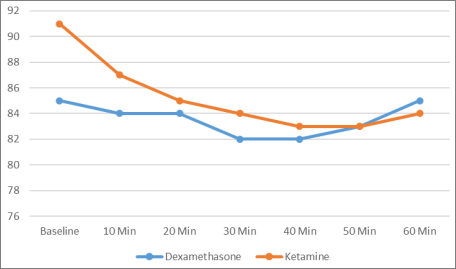
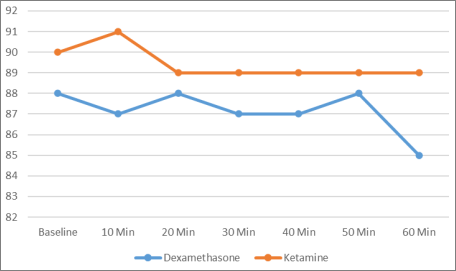
The study groups were comparable in demographic data (p<0.21, p<0.96) (Table 1) and post TAP haemodynamic profile at all times of assessment. (Figures 1 & 2). The incidence of nausea, vomiting and bradycardia were comparable in both groups (P=0.10, p=0.48, p=1.0) (Table 4).
The duration of analgesia in group D (1140.0±227.68 min) was significantly (p<0.000) longer compared to group K (846.0±211.37min) (Table 2).
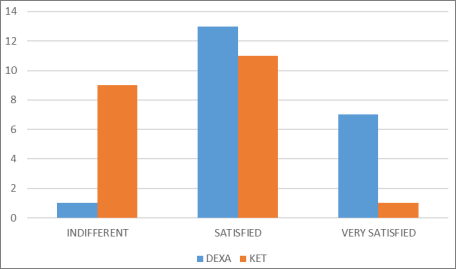
The pain scores were comparable in both groups at 2hr, 4hr and 6hr (p<0.97, p<0.09, p<0.08), however the pain scores in group D (2.25±1.12) (4.67±2.09) became significantly (p<0.000)(p<0.001) lower at 12hr, 18hr compared to group K (4.37±2.01)(6.75±0.71). (Table 3) All the patients in group K received rescue analgesia by the 18th hr of the block, however seven patients in group D did not receive rescue analgesia all through the period of the study. 95% (20) of the patients in group D were satisfied with the procedure compared to 60%(12) in the ketamine group with p<0.006 (Figure 3).
Table 1. Comparison of demographics between group D and group K.
Variable
Dexamethasone Group
Ketamine Group
P-value
Age
32.8±2.46
30.0±8.0
0.21
BMI
30.95±3.70
29.0±3.61
0.96
Table 2. Comparison of the duration of analgesia between the groups.
Variable
Dexamethasone Group
Ketamine Group
t
P value
Duration of Analgesia (mins)
1140.0±227.68
846.0±211.37
4.287
0.000
Table 3. Comparison of pain scores at specific times between dexamethasone and ketamine groups.
Variable
Dexamethasone mean±SD
Ketamine mean±SD
T
P value
VAS @ 2hr
0.05±0.22
0.05±0.22
-.034
0.97
VAS @ 4hr
0.24±0.44
0.55±0.69
-1.727
0.09
VAS@ 6hr
1.19±1.21
1.8±1.0
-1.759
0.08
VAS@ 12hr
2.25±1.12
4.37±2.01
-4.045
0.000
VAS@ 18hr
4.67±2.09
6.75±0.71
-3.776
0.001
VAS@ 24hr
6.29±0.49
VAS@Rescue Analgeia
6.10±0.83
6.20±0.83
-.403
0.68
VAS= visual analogue scale; p<0.05 is significant
Table 4. Comparing the incidence of complications among the groups.
Figure 3. The degree of satisfaction among the groups.
4. Discussion
The result of the study demonstrated a better analgesic profile acquired when dexamethasone was added to bupivacaine as an adjunct in terms of longer duration of analgesia, lower pain scores, lower total analgesic consumption and better patient satisfaction compared to ketamine as an adjunct in TAP block following caesarean section. Previous studies used between 0.5mg/kg to 1.5mg/kg of ketamine and 6mg to 8mg of dexamethasone to achieve similar outcome, hence 0.5mg/kg of ketamine and 6mg of dexamethasone was used in the present study to reduce the risk of associated side effects while still achieving good analgesia.
In the present study, a longer duration of analgesia was observed when dexamethasone (1141.0±227.68) was added as adjunct to bupivacaine as compared to when ketamine (846.0±211.37) was used. These findings were similar to those reported by Youssef et al
[13]
Youssef MY, Elsayed SFH, Abd El-Mottalb EA, Tarabai GA. Efficacy of adding ketamine, dexamethasone, and epinephrine with bupivacaine in ultrasound-guided supraclavicular brachial plexus block. Res Opinion Anaesth Int Care.2020; 7(2): 188-196.
Bakheet A. S, Hassan A. H, Darweesh E. E, Soliman F. E. Comparative study between Ketamine and dexamethasone added to bupivacaine in ultrasound guided infra clavicular brachial plexus block for upper limb surgeries. Sohag Med J. 2017; 21(2): 19-30.
. However, in the present study the duration of analgesia in the dexamethasone group was 1141.0±227.68 min compared to (1294.2 ±1.36 min) (1255.20±94.742min) that was reported in the studies by Youssef et al
[13]
Youssef MY, Elsayed SFH, Abd El-Mottalb EA, Tarabai GA. Efficacy of adding ketamine, dexamethasone, and epinephrine with bupivacaine in ultrasound-guided supraclavicular brachial plexus block. Res Opinion Anaesth Int Care.2020; 7(2): 188-196.
Bakheet A. S, Hassan A. H, Darweesh E. E, Soliman F. E. Comparative study between Ketamine and dexamethasone added to bupivacaine in ultrasound guided infra clavicular brachial plexus block for upper limb surgeries. Sohag Med J. 2017; 21(2): 19-30.
respectively. This difference can be attributed to the dose of dexamethasone used in the respective studies; while 8mg of dexamethasone was used in Youssef et al
[13]
Youssef MY, Elsayed SFH, Abd El-Mottalb EA, Tarabai GA. Efficacy of adding ketamine, dexamethasone, and epinephrine with bupivacaine in ultrasound-guided supraclavicular brachial plexus block. Res Opinion Anaesth Int Care.2020; 7(2): 188-196.
Bakheet A. S, Hassan A. H, Darweesh E. E, Soliman F. E. Comparative study between Ketamine and dexamethasone added to bupivacaine in ultrasound guided infra clavicular brachial plexus block for upper limb surgeries. Sohag Med J. 2017; 21(2): 19-30.
, 6mg of dexamethasone was used in the index study. This explanation is corroborated by Amani et al
[14]
Abdel-Wahab AH, Osman EA, Ahmed AY. Comparison of postoperative analgesic effects of two doses of dexamethasone in ultrasound-guided transversus abdominis plane block for inguinal hernia repair: a randomized controlled trial. Ain-Shams J Anesthesiol. 2021 March; 13(1): 20-8.
Demirci A, Efe EM, Turker G, Gurbet A, Kaya FN, Anil A et al. Iliohypogastric / ilioinguinal nerve block in inguinal hernia repair for postoperative pain management: comparison of the anatomical landmark and ultrasound guided techniques. Rev Bras Anestesiol. 2014; 64(5): 350-356.
[15]
who stated in their studies that the duration of analgesia depends on the dose of local anaesthetics used in the block and the dose of dexamethasone.
In the present study the mean VAS score in the two groups were comparable till 6hr after caesarean section. Thereafter they were significantly lower in the dexamethasone group (Table 3). These results were similar to those reported by Youssef et al
[13]
Youssef MY, Elsayed SFH, Abd El-Mottalb EA, Tarabai GA. Efficacy of adding ketamine, dexamethasone, and epinephrine with bupivacaine in ultrasound-guided supraclavicular brachial plexus block. Res Opinion Anaesth Int Care.2020; 7(2): 188-196.
despite using different doses of bupivacaine and adjuvants. The similarity in the results of the index study and Youssef et al
[13]
Youssef MY, Elsayed SFH, Abd El-Mottalb EA, Tarabai GA. Efficacy of adding ketamine, dexamethasone, and epinephrine with bupivacaine in ultrasound-guided supraclavicular brachial plexus block. Res Opinion Anaesth Int Care.2020; 7(2): 188-196.
can be attributed to the analgesic effect of the higher total volume of the bupivacaine and adjuncts used in the present study which cancels out the analgesic effect of higher concentration and doses but lower total volume of bupivacaine and adjuncts in Youssef et al
[13]
Youssef MY, Elsayed SFH, Abd El-Mottalb EA, Tarabai GA. Efficacy of adding ketamine, dexamethasone, and epinephrine with bupivacaine in ultrasound-guided supraclavicular brachial plexus block. Res Opinion Anaesth Int Care.2020; 7(2): 188-196.
. This explanation is in agreement with studies by Carney et al
[16]
Carney J, Finnerty O, Rauf J, Bergin D, Laffey G, Mc Donnell JG. Studies on the spread of local anaesthetic solution in transversus abdominis plane blocks. Anaesthesia. 2011; 66: 1023-1030.
Suresh S, Taylor LJ, De Oliveira GS. Dose effect of local anesthetics on analgesic outcomes for the transversus abdominis plane (TAP) block in children: A randomized, double-blinded, clinical trial. Paed J Anaesth 2015; 25(5): 506-10.
, which reported that the spread of local anaesthetic used for TAP block, as well as the duration of analgesia can be influenced by the volume of the local anaesthetic used. In contrast, Bakheet et al
[12]
Bakheet A. S, Hassan A. H, Darweesh E. E, Soliman F. E. Comparative study between Ketamine and dexamethasone added to bupivacaine in ultrasound guided infra clavicular brachial plexus block for upper limb surgeries. Sohag Med J. 2017; 21(2): 19-30.
reported that the mean VAS score became significantly lower in the dexamethasone group after 16hr following caesarean section despite using relatively similar total volume of the bupivacaine and adjuncts. The difference can be due to higher concentration of bupivacaine used in Bakheet et al
[12]
Bakheet A. S, Hassan A. H, Darweesh E. E, Soliman F. E. Comparative study between Ketamine and dexamethasone added to bupivacaine in ultrasound guided infra clavicular brachial plexus block for upper limb surgeries. Sohag Med J. 2017; 21(2): 19-30.
Unal M, Mete SS, Kaya M, Dunmez A, Senel GO, Kadiogullari N. Comparison of the analgesic effects of different bupivacaine concentrations in continuous femoral block after total knee arthroplasty surgery. Challenge Journal Perioperative Med. 2024; 2(1): 10-15.
reported that in the presence of equal volumes, higher concentrations of bupivacaine provides better analgesic profile than lower concentrations.
All the patients in ketamine group received rescue analgesia by the 18th hr of the TAP block in the index study while 11 (52%) of the patients in the dexamethasone group received rescue analgesia within the same period. However, 7 (33%) of the patients in the dexamethasone group did not receive rescue analgesia all through the period of the study. This indicates that the amount of rescue analgesia and the number of patients that received rescue analgesia were significantly lower in Dexamethasone group compared to ketamine group. These results were similar to that reported by Youssef et al
[13]
Youssef MY, Elsayed SFH, Abd El-Mottalb EA, Tarabai GA. Efficacy of adding ketamine, dexamethasone, and epinephrine with bupivacaine in ultrasound-guided supraclavicular brachial plexus block. Res Opinion Anaesth Int Care.2020; 7(2): 188-196.
Johnson C. Measuring pain. Clinical Update - Visual Analog Scale versus Numeric Pain Scale: What is the difference? J Chiropract Med 2005; 4(1): 43 - 44.
which stated that there is a relationship between good postoperative analgesia and reduced analgesic consumption.
The post-operative hemodynamics (heart rate and mean arterial pressure) of both dexamethasone and ketamine groups in the present study were stable and comparable. Youssef et al
[13]
Youssef MY, Elsayed SFH, Abd El-Mottalb EA, Tarabai GA. Efficacy of adding ketamine, dexamethasone, and epinephrine with bupivacaine in ultrasound-guided supraclavicular brachial plexus block. Res Opinion Anaesth Int Care.2020; 7(2): 188-196.
El Mourad MB, Fawzy AA. Effects of adding dexamethasone or ketamine to bupivacaine for ultrasound-guided thoracic paravertebral block in patients undergoing modified radical mastectomy: A prospective randomized controlled study. Indian J Anaesth. 2018; 62(4): p 285-291
similarly reported that the hemodynamic profile of dexamethasone and ketamine groups were stable with no significant difference. The poor vascularization of the transversus abdominis plane is associated with a reduction in the absorption of drug from TAP resulting in a delay in drug metabolism and reduced systemic effect of the drug on the hemodynamics with prolonged duration of analgesia of TAP block
[22]
Imarengiaye CO, Idehen H, Edomwonyi E. Abstract PR301: Ultrasound -guided unilateral transversus abdominis plane block improves post-operative analgesia after open appendicectomy under spinal anaesthesia. Anaesth Analg. 2016; 123(3S): 383-390.
[22]
.
The incidence of nausea and vomiting was comparable between the dexamethasone and ketamine groups of the index study. This is similar to the report by Mourad et al
[21]
El Mourad MB, Fawzy AA. Effects of adding dexamethasone or ketamine to bupivacaine for ultrasound-guided thoracic paravertebral block in patients undergoing modified radical mastectomy: A prospective randomized controlled study. Indian J Anaesth. 2018; 62(4): p 285-291
, though they differ in surgical procedure and regional technique with the index study. This similarity can be attributed to the doses of the adjuncts used in both studies. Although dexamethasone has anti-emetic effect, the higher number of patients that developed nausea and vomiting in dexamethasone group in the index study could be explained by other confounding factors including history of motion sickness, previous history of postoperative nausea and vomiting, intraoperative gut manipulation during the surgery etc which the index study did not set out to assess.
The satisfaction rates for the procedure were more in the dexamethasone group (Figure 3). Similar results were reported by Urfali et al
[23]
Urfalı, S, Hakimo˘glu S, Turhano˘glu S, Koyuncu O. Transversus Abdominis Plane Block Following Cesarean Section: A Prospective Randomized Controlled Study Comparing the Effects on Pain Levels of Bupivacaine, Bupivacaine + Dexmedetomidine, and Bupivacaine + Dexamethasone. J. Clin. Med. 2024 July; 13(14): 4270.
. The higher degree of satisfaction in the dexamethasone group could be attributed to the better analgesic profile revealed in this group, characterized by a longer duration of analgesia, lower pain scores, and lower total analgesic consumption, thereby influencing patient satisfaction.
5. Conclusion
The study showed that dexamethasone when added as an adjunct to bupivacaine for a TAP block for caesarean section provides better post-operative analgesic profile in terms of longer duration of analgesia, lower pain score, lower total analgesic consumption and better patient satisfaction after caesarean section compared to ketamine adjunct to bupivacaine. However, with respect to side effects they were comparable.
Abbreviations
ASA
American Society of Anaesthesiologists
BMI
Body Mass Index
BP
Blood Pressure
NMDA
Methyl D- Aspartate
SPSS
Statistical Package for Social Science
TAP
Transversus Abdominis Plane block
VAS
Visual Analogue Scale
Acknowledgments
We acknowledge Mrs Uchenna Anokwute for her technical support for this work.
Author Contributions
Iheanyi Ihunanya Anokwute: Conceptualization, Data curation, Formal Analysis, Investigation, Methodology, Project administration, Resources, Supervision, Validation, Writing – original draft
Alex Maduakolam Oham: Conceptualization, Data curation, Methodology, Resources, Supervision, Writing – original draft, Writing – review & editing
Paschal Nnamezie Anozie: Data curation, Formal Analysis, Methodology, Resources, Supervision, Writing – original draft, Writing – review & editing
Olumide Samuel Agunbiade: Data curation, Investigation, Resources, Supervision, Writing – original draft, Writing – review & editing
Ebe Kalu: Investigation, Methodology, Resources, Supervision, Writing – original draft, Writing – review & editing
Chukwuma Grant Madubuko: Data curation, Investigation, Methodology, Project administration, Resources, Writing – original draft, Writing – review & editing
Data Availability Statement
The data is available from the corresponding author upon reasonable request.
Conflicts of Interest
The authors declare no conflicts of interest.
References
[1]
Hussen I, Worku M, Geleta D, Mahamed AA, Abebe M, Molla W, et al. Post-operative pain and associated factors after cesarean section at Hawassa University Comprehensive Specialized Hospital, Hawassa, Ethiopia: A cross-sectional study. Ann Med Surg. 2022. 81: 104321.
Kolawole IK, Fawole AA. Postoperative pain management following caesarean section in university of Ilorin Teaching Hospital (UITH), Ilorin, Nigeria. WestAfrJMed 2003: 22(4): 305-309.
Mansour R. F, Afifi M. A, Abdelghany M. S. Transversus Abdominis Plane (TAP) Block: A Comparative Study between Levobupivacaine versus Levobupivacaine plus Ketamine in Abdominoplasty. Pain Res Management. 2021;
Sinha S, Palta S, Saroa R, Prasad A. Comparison of ultrasound-guided transversus abdominis planeblock with bupivacaine and ropivacaine as adjuncts for postoperative analgesia in laparoscopic cholecystectomies. Indian J Anaesth. 2016 April; 60(4): 264-9.
Innamorato M. A, Vittori A, Natoli S, Perna P, Farinelli I, Petrucci E, et al. Bilateral transversus Abdominis plane (TAP) block reduces pain and the need for additional analgesics after elective caesarean section under opioid- free spinal anaesthesia: findings from a randomized clinical trial. J Anaesth Analg and critical care. 2023 June; 3(1): 20.
Jankovic Z. Transversus abdominis plane block: The Holy Grail of anaesthesia for (lower) abdominal surgery. Period boil 2009; 111(2): 203-208.
[8]
Edinoff A. N, Houk G. M, Patil S, Siddaiah H. B, Kaye A. J, Iyengar P. S, et al. Adjuvant Drugs for Peripheral Nerve Blocks: The Role of Alpha-2 Agonists, Dexamethasone, Midazolam, and Non-steroidal Anti-inflammatory Drugs. Anesth Pain Med. 2021; 11(3): e117197.
Zhangi J, Shi K, Jia H. Ketamine and bupivacaine attenuate post?operative pain following total knee arthroplasty: A randomized clinical trial. Experimental and therapeutic medicine. 2018; 15(6): 5537-5543.
Raveedran R, Gitanjali B. Sample size estimation in a practical approach to postgraduate dissertation. Jaypee publisher 1997; 1: 40-43.
[12]
Bakheet A. S, Hassan A. H, Darweesh E. E, Soliman F. E. Comparative study between Ketamine and dexamethasone added to bupivacaine in ultrasound guided infra clavicular brachial plexus block for upper limb surgeries. Sohag Med J. 2017; 21(2): 19-30.
Youssef MY, Elsayed SFH, Abd El-Mottalb EA, Tarabai GA. Efficacy of adding ketamine, dexamethasone, and epinephrine with bupivacaine in ultrasound-guided supraclavicular brachial plexus block. Res Opinion Anaesth Int Care.2020; 7(2): 188-196.
Abdel-Wahab AH, Osman EA, Ahmed AY. Comparison of postoperative analgesic effects of two doses of dexamethasone in ultrasound-guided transversus abdominis plane block for inguinal hernia repair: a randomized controlled trial. Ain-Shams J Anesthesiol. 2021 March; 13(1): 20-8.
Demirci A, Efe EM, Turker G, Gurbet A, Kaya FN, Anil A et al. Iliohypogastric / ilioinguinal nerve block in inguinal hernia repair for postoperative pain management: comparison of the anatomical landmark and ultrasound guided techniques. Rev Bras Anestesiol. 2014; 64(5): 350-356.
[16]
Carney J, Finnerty O, Rauf J, Bergin D, Laffey G, Mc Donnell JG. Studies on the spread of local anaesthetic solution in transversus abdominis plane blocks. Anaesthesia. 2011; 66: 1023-1030.
Suresh S, Taylor LJ, De Oliveira GS. Dose effect of local anesthetics on analgesic outcomes for the transversus abdominis plane (TAP) block in children: A randomized, double-blinded, clinical trial. Paed J Anaesth 2015; 25(5): 506-10.
Unal M, Mete SS, Kaya M, Dunmez A, Senel GO, Kadiogullari N. Comparison of the analgesic effects of different bupivacaine concentrations in continuous femoral block after total knee arthroplasty surgery. Challenge Journal Perioperative Med. 2024; 2(1): 10-15.
Johnson C. Measuring pain. Clinical Update - Visual Analog Scale versus Numeric Pain Scale: What is the difference? J Chiropract Med 2005; 4(1): 43 - 44.
El Mourad MB, Fawzy AA. Effects of adding dexamethasone or ketamine to bupivacaine for ultrasound-guided thoracic paravertebral block in patients undergoing modified radical mastectomy: A prospective randomized controlled study. Indian J Anaesth. 2018; 62(4): p 285-291
Imarengiaye CO, Idehen H, Edomwonyi E. Abstract PR301: Ultrasound -guided unilateral transversus abdominis plane block improves post-operative analgesia after open appendicectomy under spinal anaesthesia. Anaesth Analg. 2016; 123(3S): 383-390.
[23]
Urfalı, S, Hakimo˘glu S, Turhano˘glu S, Koyuncu O. Transversus Abdominis Plane Block Following Cesarean Section: A Prospective Randomized Controlled Study Comparing the Effects on Pain Levels of Bupivacaine, Bupivacaine + Dexmedetomidine, and Bupivacaine + Dexamethasone. J. Clin. Med. 2024 July; 13(14): 4270.
Anokwute, I. I., Oham, A. M., Anozie, P. N., Agunbiade, O. S., Kalu, E., et al. (2026). Comparative Analgesic Effect of Dexamethasone and Ketamine as Adjuncts to Plain Bupivacaine Using TAP Block For Elective Post-Caesarean Pain Relief. Journal of Gynecology and Obstetrics, 14(5), 101-107. https://doi.org/10.11648/j.jgo.20261405.11
Anokwute, I. I.; Oham, A. M.; Anozie, P. N.; Agunbiade, O. S.; Kalu, E., et al. Comparative Analgesic Effect of Dexamethasone and Ketamine as Adjuncts to Plain Bupivacaine Using TAP Block For Elective Post-Caesarean Pain Relief. J. Gynecol. Obstet.2026, 14(5), 101-107. doi: 10.11648/j.jgo.20261405.11
Anokwute II, Oham AM, Anozie PN, Agunbiade OS, Kalu E, et al. Comparative Analgesic Effect of Dexamethasone and Ketamine as Adjuncts to Plain Bupivacaine Using TAP Block For Elective Post-Caesarean Pain Relief. J Gynecol Obstet. 2026;14(5):101-107. doi: 10.11648/j.jgo.20261405.11
@article{10.11648/j.jgo.20261405.11,
  author = {Iheanyi Ihunanya Anokwute and Alex Maduakolam Oham and Paschal Nnamezie Anozie and Olumide Samuel Agunbiade and Ebe Kalu and Chukwuma Grant Madubuko},
  title = {Comparative Analgesic Effect of Dexamethasone and Ketamine as Adjuncts to Plain Bupivacaine Using TAP Block For Elective Post-Caesarean Pain Relief},
  journal = {Journal of Gynecology and Obstetrics},
  volume = {14},
  number = {5},
  pages = {101-107},
  doi = {10.11648/j.jgo.20261405.11},
  url = {https://doi.org/10.11648/j.jgo.20261405.11},
  eprint = {https://article.sciencepublishinggroup.com/pdf/10.11648.j.jgo.20261405.11},
  abstract = {Background: Transversus abdominis plane (TAP) block has been demonstrated to be an effective post-operative analgesic modality for caesarean section. However, various adjuncts have been used to prolong the analgesic effect of TAP block. The study aimed to evaluate the analgesic effect of dexamethasone and ketamine as adjuncts to plain bupivacaine for TAP following caesarean section. Subjects and Methods: Forty six eligible patients were randomized into two groups D and k (21 each) to receive TAP block. Group D received 40ml of 0.25% bupivacaine + 6mg dexamethasone and group K received 40ml of 0.25% bupivacaine +0.5mg/kg ketamine respectively. The duration of analgesia, pain scores, hemodynamic variables, and patient satisfaction using Likert- 5 scale were assessed and recorded. Data was collected and assessed using SPSS 21 for Windows. Numerical data was analyzed using unpaired Student t-test, while categorical data was analyzed using chi-square test. A p-value Result: The duration of analgesia was significantly (pConclusion: The study concluded that 6mg dexamethasone when used as an adjuvant to plain bupivacaine via TAP block provided better analgesic profile after caesarean section compared to ketamine as an adjuvant.},
 year = {2026}
}
TY  - JOUR
T1  - Comparative Analgesic Effect of Dexamethasone and Ketamine as Adjuncts to Plain Bupivacaine Using TAP Block For Elective Post-Caesarean Pain Relief
AU  - Iheanyi Ihunanya Anokwute
AU  - Alex Maduakolam Oham
AU  - Paschal Nnamezie Anozie
AU  - Olumide Samuel Agunbiade
AU  - Ebe Kalu
AU  - Chukwuma Grant Madubuko
Y1  - 2026/09/02
PY  - 2026
N1  - https://doi.org/10.11648/j.jgo.20261405.11
DO  - 10.11648/j.jgo.20261405.11
T2  - Journal of Gynecology and Obstetrics
JF  - Journal of Gynecology and Obstetrics
JO  - Journal of Gynecology and Obstetrics
SP  - 101
EP  - 107
PB  - Science Publishing Group
SN  - 2376-7820
UR  - https://doi.org/10.11648/j.jgo.20261405.11
AB  - Background: Transversus abdominis plane (TAP) block has been demonstrated to be an effective post-operative analgesic modality for caesarean section. However, various adjuncts have been used to prolong the analgesic effect of TAP block. The study aimed to evaluate the analgesic effect of dexamethasone and ketamine as adjuncts to plain bupivacaine for TAP following caesarean section. Subjects and Methods: Forty six eligible patients were randomized into two groups D and k (21 each) to receive TAP block. Group D received 40ml of 0.25% bupivacaine + 6mg dexamethasone and group K received 40ml of 0.25% bupivacaine +0.5mg/kg ketamine respectively. The duration of analgesia, pain scores, hemodynamic variables, and patient satisfaction using Likert- 5 scale were assessed and recorded. Data was collected and assessed using SPSS 21 for Windows. Numerical data was analyzed using unpaired Student t-test, while categorical data was analyzed using chi-square test. A p-value Result: The duration of analgesia was significantly (pConclusion: The study concluded that 6mg dexamethasone when used as an adjuvant to plain bupivacaine via TAP block provided better analgesic profile after caesarean section compared to ketamine as an adjuvant.
VL  - 14
IS  - 5
ER  -
Anokwute, I. I., Oham, A. M., Anozie, P. N., Agunbiade, O. S., Kalu, E., et al. (2026). Comparative Analgesic Effect of Dexamethasone and Ketamine as Adjuncts to Plain Bupivacaine Using TAP Block For Elective Post-Caesarean Pain Relief. Journal of Gynecology and Obstetrics, 14(5), 101-107. https://doi.org/10.11648/j.jgo.20261405.11
Anokwute, I. I.; Oham, A. M.; Anozie, P. N.; Agunbiade, O. S.; Kalu, E., et al. Comparative Analgesic Effect of Dexamethasone and Ketamine as Adjuncts to Plain Bupivacaine Using TAP Block For Elective Post-Caesarean Pain Relief. J. Gynecol. Obstet.2026, 14(5), 101-107. doi: 10.11648/j.jgo.20261405.11
Anokwute II, Oham AM, Anozie PN, Agunbiade OS, Kalu E, et al. Comparative Analgesic Effect of Dexamethasone and Ketamine as Adjuncts to Plain Bupivacaine Using TAP Block For Elective Post-Caesarean Pain Relief. J Gynecol Obstet. 2026;14(5):101-107. doi: 10.11648/j.jgo.20261405.11
@article{10.11648/j.jgo.20261405.11,
  author = {Iheanyi Ihunanya Anokwute and Alex Maduakolam Oham and Paschal Nnamezie Anozie and Olumide Samuel Agunbiade and Ebe Kalu and Chukwuma Grant Madubuko},
  title = {Comparative Analgesic Effect of Dexamethasone and Ketamine as Adjuncts to Plain Bupivacaine Using TAP Block For Elective Post-Caesarean Pain Relief},
  journal = {Journal of Gynecology and Obstetrics},
  volume = {14},
  number = {5},
  pages = {101-107},
  doi = {10.11648/j.jgo.20261405.11},
  url = {https://doi.org/10.11648/j.jgo.20261405.11},
  eprint = {https://article.sciencepublishinggroup.com/pdf/10.11648.j.jgo.20261405.11},
  abstract = {Background: Transversus abdominis plane (TAP) block has been demonstrated to be an effective post-operative analgesic modality for caesarean section. However, various adjuncts have been used to prolong the analgesic effect of TAP block. The study aimed to evaluate the analgesic effect of dexamethasone and ketamine as adjuncts to plain bupivacaine for TAP following caesarean section. Subjects and Methods: Forty six eligible patients were randomized into two groups D and k (21 each) to receive TAP block. Group D received 40ml of 0.25% bupivacaine + 6mg dexamethasone and group K received 40ml of 0.25% bupivacaine +0.5mg/kg ketamine respectively. The duration of analgesia, pain scores, hemodynamic variables, and patient satisfaction using Likert- 5 scale were assessed and recorded. Data was collected and assessed using SPSS 21 for Windows. Numerical data was analyzed using unpaired Student t-test, while categorical data was analyzed using chi-square test. A p-value Result: The duration of analgesia was significantly (pConclusion: The study concluded that 6mg dexamethasone when used as an adjuvant to plain bupivacaine via TAP block provided better analgesic profile after caesarean section compared to ketamine as an adjuvant.},
 year = {2026}
}
TY  - JOUR
T1  - Comparative Analgesic Effect of Dexamethasone and Ketamine as Adjuncts to Plain Bupivacaine Using TAP Block For Elective Post-Caesarean Pain Relief
AU  - Iheanyi Ihunanya Anokwute
AU  - Alex Maduakolam Oham
AU  - Paschal Nnamezie Anozie
AU  - Olumide Samuel Agunbiade
AU  - Ebe Kalu
AU  - Chukwuma Grant Madubuko
Y1  - 2026/09/02
PY  - 2026
N1  - https://doi.org/10.11648/j.jgo.20261405.11
DO  - 10.11648/j.jgo.20261405.11
T2  - Journal of Gynecology and Obstetrics
JF  - Journal of Gynecology and Obstetrics
JO  - Journal of Gynecology and Obstetrics
SP  - 101
EP  - 107
PB  - Science Publishing Group
SN  - 2376-7820
UR  - https://doi.org/10.11648/j.jgo.20261405.11
AB  - Background: Transversus abdominis plane (TAP) block has been demonstrated to be an effective post-operative analgesic modality for caesarean section. However, various adjuncts have been used to prolong the analgesic effect of TAP block. The study aimed to evaluate the analgesic effect of dexamethasone and ketamine as adjuncts to plain bupivacaine for TAP following caesarean section. Subjects and Methods: Forty six eligible patients were randomized into two groups D and k (21 each) to receive TAP block. Group D received 40ml of 0.25% bupivacaine + 6mg dexamethasone and group K received 40ml of 0.25% bupivacaine +0.5mg/kg ketamine respectively. The duration of analgesia, pain scores, hemodynamic variables, and patient satisfaction using Likert- 5 scale were assessed and recorded. Data was collected and assessed using SPSS 21 for Windows. Numerical data was analyzed using unpaired Student t-test, while categorical data was analyzed using chi-square test. A p-value Result: The duration of analgesia was significantly (pConclusion: The study concluded that 6mg dexamethasone when used as an adjuvant to plain bupivacaine via TAP block provided better analgesic profile after caesarean section compared to ketamine as an adjuvant.
VL  - 14
IS  - 5
ER  -

 ,
Alex Maduakolam Oham,
Paschal Nnamezie Anozie,
Olumide Samuel Agunbiade,
,
Alex Maduakolam Oham,
Paschal Nnamezie Anozie,
Olumide Samuel Agunbiade,



 Share This Article
 Twitter
 Linked In
 Facebook
 Copy
Copy Download